
The Khawchung Tribe: History, Cultural Identity, Societal Structure, and Struggles in Modern India
The ethnographic map of Northeast India is among the most intricate, culturally diverse, and historically layered regions anywhere in South Asia. Spanning mountain ridges, dense bamboo tracts, riverine valleys, and international frontiers shared with Myanmar and Bangladesh, the indigenous populations of this highland corridor represent ancient genealogies, oral histories, and socio-political systems of remarkable resilience.
Within the broader tapestry of the Zo/Kuki-Chin peoples—who inhabit Mizoram, Manipur, Assam, Tripura, the Chittagong Hill Tracts of Bangladesh, and the Chin State of Myanmar—the Khawchung hold a distinct and telling place.
Often identified as an ancestral clan, sub-tribe, or historic lineage group closely integrated within the Mizo and Kuki-Chin constellations, the Khawchung narrative illuminates how highland communities formed settlements, defended ancestral land, navigated the profound ruptures of British colonial rule, adapted to conversion and modernisation, and continue to confront the multi-faceted challenges of identity, economic transition, and social development in twenty-first-century India.

1. Ethno-Historical Origins and Migration Narratives
The Broader Zo/Kuki-Chin Tapestry
To understand the Khawchung, one must first locate them within the broader demographic and linguistic landscape of the Tibeto-Burman speaking highland peoples. Known across colonial and contemporary administrative texts alternately as Kukis, Chins, or Mizos, these related groups trace their collective heritage through shared legends of origin, cognate dialects, traditional legal jurisprudence, and structural customs.
The name Khawchung is rooted etymologically in the highland dialects:
-
Khaw / Kho: Meaning “village,” “settlement,” or “locality.”
-
Chung: Signifying “upper,” “above,” “central,” or “elevated.”
Historically, highland tribal nomenclature often reflected settlement geography, the ancestral seat of a founding chief, or the lineage’s strategic position along prominent mountain spines. Clan oral traditions recount that groups identified as Khawchung were associated with elevated settlements (Khaw-chung), often positioned strategically atop ridges for defense, vantage, and communal surveillance during centuries marked by inter-village raids and expansionist warfare.Oral Epics, Chhinlung, anncestral Cve
Like their kin communities across Mizoram and Manipur, ancestral Khawchung lore intersects with the foundational myth of Chhinlung (or Sinlung / Khul). According to pan-Zo folklore, the ancestors emerged from the bowels of the e
a great subterranean cavern sealed by a colossal stone slab.
Oral chants handed down through generations of bards (Zai) preserve accounts of migration:
-
The Cave Emergence (Chhinlung / Khul): The emergence into a world of primal forests, mythical beasts, and supernatural forces.
-
The River Crossings: Crossings over formidable rivers, traditionally linked by anthropologists to the Chindwin and Irrawaddy valleys in Upper Burma.
-
The Shan Plateau Encampments: Prolonged periods of settlement alongside Shan principalities, where ancestral groups learned metallurgy, loom construction, and terraced farming techniques before moving westward due to demographic pressure.
-
Ascent to the Indo-Burma Ridges: Relocation into the Chin Hills, the Lushai Hills (modern Mizoram), and adjacent highlands, where rugged topography favoured defensible ridge-top habitations.
Within this epic itinerary, the Khawchung ancestors carved out fortified village bastions, intermarrying with neighboring clans while maintaining strict patrilineal genealogies (Chanchin / Hnam Tha) that traced lineage back dozens of generations to common patriarchal forebears.
Interactions with Colonial British Administration
The arrival of the British East India Company—and later the British Crown following the mid-nineteenth century—shattered the sovereign isolation of the highland clans. Throughout the 1800s, British commercial interests expanded aggressively into the foothills of Assam, Cachar, Sylhet, and Chittagong to establish lucrative tea plantations.
Highland raiding parties, reacting to colonial clear-cutting of ancestral hunting reserves, launched punitive strikes on British tea estates. The British responded with full-scale military counter-insurgencies, notably:
-
The Lushai Expeditions of 1871–1872
-
The Chin-Lushai Expedition of 1889–1890
These expeditions forced village chiefs to submit to the Pax Britannica. The Khawchung, situated within these targeted hill belts, saw their traditional political sovereignty subverted. Colonial administrators such as J. Shakespeare, N.E. Parry, and Bertram Carey surveyed, classified, and demarcated administrative boundaries across the hills. Under the Inner Line Regulation of 1873 and the subsequent categorization of the hills as “Excluded” or “Partially Excluded” areas under the Government of India Acts of 1919 and 1935, communities like the Khawchung were insulated from plains politics, yet placed under administrative surveillance that altered traditional chieftainship and inter-clan alliances.
2. Societal Architecture, Clan Structure, and Kinship
Patrilineal Genealogies and Kinship Systems
The social structure of the Khawchung is strictly patrilineal, structured around agnatic descent lines that determine inheritance, clan obligations, ceremonial responsibilities, aLineage Protection: Agnatic kin are bound by reciprocal duties of mutual defense and assistance in blood-feuds or legal disputes.
-
Exogamy and Endogamy: While some primary clans historically practised clan exogamy (marrying outside the direct patrilineage to forge political pacts with other clans such as the Sailo, Hmar, or Thadou lineages), marriage within the broader tribal/sub-tribal horizon was encouraged to maintain cultural cohesion.
-
Bride Price (Man): Traditional unions require the negotiation and transfer of customary bride price, traditionally paid in mithuns (gayal or Bos frontalis), ceremonial brass gongs (Darmang), heirloom beads, and woven fabrics. The payment of the man not only solemnises the marriage but also establishes institutional relations between the paternal lineages of the bride and the groom.
Traditional Governance: The Chieftainship (Lal or Haosa) and the Elders
Before post-independence democratic reforms altered tribal administration, local political life centered on the institution of the Chief (Lal in Mizo-Chin dialects, or Haosa in Kuki dialects).
The Chief was not merely a political ruler; he served as the sovereign guardian of village territory, the chief commander in war, and the ultimate arbitrator of customary disputes. However, the Chief did not rule as an unchecked autocrat. His authority was balanced and guided by:
-
The Council of Elders (Upas): Respected elder men chosen for their wisdom, genealogical memory, and knowledge of customary law.
-
The Village Priest (Puithiam): Spiritual intermediary who diagnosed illnesses, performed sacrificial propitiations (Inthawina), and ensured that village agricultural cycles were in harmony with mountain spirits.
-
The Village Crier (Tlangau): Conveyed the Chief’s decrees across the village ridges.
-
The Blacksmith (Thirdeng): Forged agricultural implements and weapons, occupying an indispensable seat in village security and production.
Land belonged communally to the village, with the Chief and his council allocating cultivation plots annually among households through traditional lottery or rotational systems, ensuring subsistence security for every family.

The Bachelor’s Dormitory (Zawlbuk / Sawm) as a Crucible of Citizenship
One of the most profound socio-cultural institutions of traditional Khawchung society was the youth dormitory—known as the Zawlbuk among the northern Mizos or Sawm among related Kuki groups.
Located near the Chief’s residence at the physical heart of the village, the dormitory was the mandatory residence for all unmarried young men from adolescence until marriage. The dormitory operated as:
-
A Military Garrison: Young warriors could be mobilized in seconds during sudden night raids or forest fires.
-
A Finishing School for Ethics: Senior youths rigorously trained juniors in discipline, physical endurance, hunting tactics, oral poetry, and tribal jurisprudence.
-
The Fountainhead of Civic Duty: Youths housed in the dormitory were the village’s civic laborers—constructing houses for widows, clearing community trails, digging graves, and carrying out tasks that required communal mobilization without compensation.
Within the dormitory, the egalitarian principle reigned supreme: social standing was earned not through inherited wealth, but through physical courage, generosity, service to the sick, and adherence to customary ideals of masculine honour.
3. Cultural Matrix: Belief Systems, Rituals, and Material Heritage
Animistic Worldview and the Spirit Realm
Prior to the mass conversion to Christianity during the late nineteenth and twentieth centuries, the Khawchung subscribed to an animistic, pan-vitalist cosmology common to highlanders across the Indo-Burma ranges.
Key dimensions of this cosmological system included:
-
Pathian (or Chung Pathian): The supreme creator god, perceived as benevolent, distant, and the architect of cosmic order.
-
Huai (Spirits of Nature): While Pathian was benevolent, everyday human misfortune, epidemic diseases, crop failure, and hunting accidents were attributed to malignant spirits inhabiting ancient trees, crags, waterfalls, and mountain passes (Ramhuai).
-
Inthawina (Sacrificial Propitiation): The Puithiam (priest) diagnosed which specific spirit had been offended and prescribed animal sacrifices—pigs, fowls, goats, or dogs—to appease the spirit and restore equilibrium between humanity and nature.
-
Pialral and Mithi Khua (The Afterlife): Souls of ordinary men traveled after death to Mithi Khua (the Village of the Dead), an underworld characterized by melancholy. In contrast, those who had earned immense social and spiritual merit—by providing lavish communal feasts (Khuangchawi) or by exhibiting exceptional hunting prowess (Thangchhuah)—earned passage to Pialral, a celestial paradise of abundance, ease, and honor.
The Moral Ideal of Tlawmngaihna
No discussion of the Khawchung cultural psyche is complete without examining the foundational philosophical concept of Tlawmngaihna (with cognate concepts present throughout the Kuki-Chin continuum).
Tlawmngaihna defies simple translation into modern English. It encompasses:
-
Selflessness, altruism, and placing the collective welfare above individual comfort.
-
Reluctant deference in accepting personal reward, paired with prompt readiness to shoulder community burdens.
-
Stoicism in hardship, refusal to complain, courage in the face of danger, and hospitality toward the poor, orphaned, or stranger.
A person who exhibited Tlawmngaihna was revered above wealthy individuals. If a river bridge washed away, the Tlawmngai man was the first to dive into the current; if famine struck, he quietly ensured neighboring households received provisions before feeding his own hearth. This ethos remains a primary moral foundation for modern social organizations within the community.
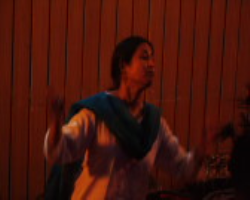
Material Culture: Looms, Weaving, and Adornment
Material survival in the high ranges compelled the Khawchung to master ecological craftsmanship using bamboo, wood, natural clays, and cotton.
-
Textile Weaving (Puan): Handloom weaving was—and remains—the artistic crown of female craftsmanship. Using traditional backstrap (loin) looms, women spun indigenous tree cotton and dyed threads using natural forest extracts (such as indigo, bark resins, and wild madder). Traditional shawls, known collectively as Puan, are marked by geometric motifs, bold stripes of red, black, and white, and intricate woven bands that signaled clan affiliation, martial valor, or high status earned through feasts of merit.
-
Bamboo Architecture and Artifacts: Highland architecture adapted to seismically active, rainfall-heavy mountain ridges. Dwellings were built on timber or bamboo stilts (Chang) driven into sloped hillsides. Split bamboo matting (Dap) formed the walls, while roofs were thatched with wild grass (Dillenia leaves or cane thatch). Bamboo was fashioned into water carriers (Tuium), carrying baskets (Thlangra, Paikawng), winnowing trays, and rodent traps of remarkable mechanical ingenuity.
┌────────────────────────────────────────────────────────────────────────┐│ CORE TRAITS OF TRADITIONAL KHAWCHUNG MATERIAL LIFE │├─────────────────┬──────────────────────────────────────────────────────┤│ Housing Type │ Elevated stilt-frame dwellings (bamboo, timber thatch)│├─────────────────┼──────────────────────────────────────────────────────┤│ Primary Tools │ Dao (all-purpose billhook/machete), hunting spears │├─────────────────┼──────────────────────────────────────────────────────┤│ Textile Arts │ Backstrap-loomed *Puan* with geometric, clan motifs │├─────────────────┼──────────────────────────────────────────────────────┤│ Domestic Animal │ Mithun (*Bos frontalis*), free-ranging mountain pigs │├─────────────────┼──────────────────────────────────────────────────────┤│ Musical Heritage│ Hollowed-log gongs, bamboo mouth-organs, hand drums │└─────────────────┴──────────────────────────────────────────────────────┘
Traditional Festivals and Dances
Community life was organized around the seasonal rhythm of slash-and-burn farming, with festivals celebrating critical junctures in the agrarian calendar:
-
Chapchar Kut: Held in early spring (typically March) after the heavy clearing of forest plots for jhum and before the onset of the burning season. It remains a joyous festival of feasts, songs, and communal bonding.
-
Mim Kut and Pawl Kut: Harvest celebrations where first fruits were offered to ancestral spirits, accompanied by the drinking of rice beer (Zu) and celebratory feasts.
-
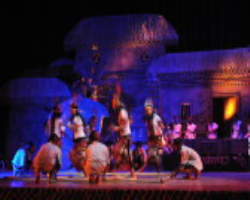
Cheraw and Khullam: Traditional dances characterized by rhythmic precision. In Cheraw (the famous bamboo dance), female dancers step gracefully in and out of cross-laid bamboo grids beaten rhythmically by men seated on the ground. These performances required rigorous physical timing, stamina, and spatial awareness.
4. Traditional Economic Subsistence: The Jhum Cultivation Matrix
The Agro-Ecological Cycle of Shifting Cultivation
Historically, the economic foundation of Khawchung society rested almost entirely on rotational slash-and-burn agriculture, locally known as Jhum (Huan or Lo ruat). Far from being a chaotic technique, traditional jhum was a sophisticated system deeply tuned to tropical mountain ecology, provided that land-to-population ratios remained balanced and fallow cycles were long enough for soil recovery.
Phase 1 (Winter: Dec - Jan)Forest Selection & Slashing│▼Phase 2 (Late Winter: Feb - Mar)Drying & Controlled Burning (*Mei Chhem*)│▼Phase 3 (Spring: Apr - May)Ash Mixing & Direct Sowing│▼Phase 4 (Summer: Jun - Aug)Intensive Hand-Weeding (*Hlo thlawh*)│▼Phase 5 (Autumn: Sep - Nov)Harvesting, Threshing, & Granary Storage
-
Site Selection (Lo En): During the winter months, the village council evaluated forest tracts, selecting slopes that had lain fallow for 10 to 15 years to ensure the regeneration of soil organic matter.
-
Slashing (Hram Sah): Mature trees and bamboo stands were cut using the versatile Dao (machete). Large canopy trees were often lopped rather than completely uprooted, preserving root networks to curb hillside erosion.
-
The Burn (Lo Hal): After drying under the dry winter sun, the debris was burned in a controlled fire. The resulting ash layer acted as a natural fertilizer rich in potash, neutralizing the acidic mountain soil without synthetic inputs.
-
Dibbling and Sowing: With the first pre-monsoon showers, villagers used pointed digging sticks to deposit seeds into small indentations on the hillsides.
-
Poly-Cropping Architecture: Jhum plots were models of agricultural biodiversity. Rather than planting a monoculture, Khawchung farmers sowed dozens of varieties simultaneously within the same plot: upland rice varieties, maize, millet, job’s tears, ginger, chilies, sweet potatoes, yams, pumpkins, and cotton. Crops matured at staggered intervals, providing steady nutrition from midsummer through late autumn.
-
Fallowing: Once harvested, the plot was abandoned to secondary forest succession for over a decade, allowing natural forest regrowth to restore soil fertility.
Hunting, Foraging, and Riverine Fishing
Agricultural subsistence was supplemented by hunting (Sapel) and seasonal gathering. Highland forests provided an abundance of game: wild boar, barking deer, serow, civets, pheasant, and jungle fowl.
Hunting was not merely a subsistence activity; it was intimately tied to masculine status. Achieving success against dangerous beasts (such as wild boars, bears, or tigers) earned the hunter the title of Galyam or celebrated hunter, elevating his household’s rank within the village.
Forests also provided an inexhaustible apothecary and pantry:
-
Edible bamboo shoots (Mau tuai), harvested fresh or fermented (Bawng pui / Tuai rep) for year-round protein and flavor.
-
Wild forest mushrooms, wild yams (Ruh), leafy greens, medicinal ferns, and wild honey.
-
Communal river poisoning (Tuikhoh), where non-toxic plant roots were crushed into mountain streams to stun fish temporarily, allowing the village to harvest seasonal riverine catches without permanently destroying local fish stocks.
5. The Great Metamorphosis: Modernity, Education, and Identity Shifts
Christianization and the Erosion of Ancient Lore
Beginning in the late 1890s through the Welsh Presbyterian Mission in the Lushai Hills and Baptist missions in neighboring territories, the traditional religious world of the highlanders underwent a rapid transformation.
┌────────────────────────────────────────────────────────────────────────┐│ COLONIAL & POST-COLONIAL TRANSFORMATION MATRIX │├─────────────────┬──────────────────────────────────────────────────────┤│ Former Beliefs │ Animism, propitiatory sacrifices (*Inthawina*) ││ Modern Religion │ Christianity (Presbyterian, Baptist, Evangelical) │├─────────────────┼──────────────────────────────────────────────────────┤│ Literacy Medium │ Roman Script, vernacular Bible translations │├─────────────────┼──────────────────────────────────────────────────────┤│ Civic Center │ Replaced the *Zawlbuk* with Village Church/YMA/YPA │├─────────────────┼──────────────────────────────────────────────────────┤│ Political System│ Transition from Hereditary *Lal* to Elected Councils │└─────────────────┴──────────────────────────────────────────────────────┘
The adoption of the new faith had sweeping sociological implications:
-
The Eclipse of Animist Rituals: The Puithiam priesthood, seasonal sacrifices, and fear of nature spirits were largely abandoned. Sacred heirlooms linked to spirit worship were discarded.
-
The Abolition of the Zawlbuk: The traditional bachelor dormitory system declined and ultimately dissolved as formal Christian schools, boarding hostels, and churches took over the educational, civic, and moral training of youths.
-
Literacy in the Roman Script: Missionaries (notably J.H. Lorrain and F.W. Savidge) developed a phonetic Roman script for the local dialects, translating the Bible and foundational readers. This triggered a historic surge in literacy, turning communities with purely oral traditions into highly literate populations within two generations.
-
A New Community Hub: The local church replaced the Chief’s hearth and the Zawlbuk as the central institution of village life, serving as the town hall, social welfare bureau, musical stage, and primary civic forum.
Integration into the Indian Union and Political Realignments
India’s independence in 1947 brought profound political reorganization across the Northeast frontier. The abolition of the hereditary Chieftainship under the Assam Lushai Hills District (Acquisition of Chiefs’ Rights) Act of 1954 dismantled the centuries-old governance of the Lal. Power shifted to democratic Village Councils (VCs) under the framework of the Sixth Schedule of the Indian Constitution.
Simultaneously, the geopolitical trauma of the 1960s to 1980s—including the Mizo National Front (MNF) uprising and subsequent counter-insurgency operations involving the grouping of villages (Khawkhawm)—profoundly disrupted the highland interior. Entire rural populations were forcibly uprooted and concentrated into fortified roadside villages. This broke the traditional relationship between clans and their ancestral tracts, permanently altering migration trajectories and dispersing families across urban centers like Aizawl, Churachandpur, and Shillong.
Within this churning landscape, smaller lineages like the Khawchung had to make strategic choices:
-
Subsumption: Integrating fully into the broader, unified Mizo political identity to secure administrative, linguistic, and electoral solidarity.
-
Autonomous Preservation: Organizing clan-level welfare associations (Khawchung Welfare Committee / Inpui) to ensure that their distinct genealogical memories, ancestral histories, and dialectal nuances were not erased by dominant regional dialects (such as Duhlian).
6. Contemporary Struggles: Land, Economy, and Structural Margins
Despite remarkable advances in literacy and civic solidarity, the Khawchung face significant structural, economic, and geopolitical obstacles in contemporary India.
The Agrarian Dilemma: The Degradation of the Jhum Cycle
The traditional ecological balance of shifting cultivation has broken down under contemporary demographic and environmental pressures:
-
Shortened Fallow Cycles: The traditional 10–15 year jhum cycle has collapsed in many mountain districts to just 3 to 5 years. Soils do not have adequate time to regenerate humus and minerals, causing precipitous drops in crop yields.
-
Hillside Soil Erosion and Deforestation: Heavy monsoons wash away nutrient-rich topsoil from prematurely cleared slopes, silting downstream rivers and triggering devastating monsoon landslides that sever village road access for weeks.
-
Subsistence Insecurity: Declining yields have forced rural households into dependence on subsidized grains under the National Food Security Act (NFSA), undermining the historic self-reliance of the highland village.
-
The Struggle to Transition: State initiatives aimed at moving farmers away from jhum toward settled horticulture—such as rubber, oil palm, ginger, and areca nut plantations—face poor market linkage, volatile commodity prices, and high transport costs across rugged terrains.
Demographic Growth & Land Pressures│▼Fallow Cycle Collapses (15 yrs ➔ 3 yrs)│▼┌──────────────────────────┴──────────────────────────┐▼ ▼Topsoil Depletion & Lower Yields Landslides & Siltation│ │└──────────────────────────┬──────────────────────────┘▼Economic Distress in Rural Foothills│▼Migration toward Urban Slums & Metros
Infrastructure Deficits, Healthcare, and Human Development
In remote hill pockets, basic social overhead capital remains underdeveloped, directly impacting human development indicators:
┌────────────────────────────────────────────────────────────────────────┐│ HUMAN DEVELOPMENT BOTTLENECK ANALYSIS: INTERIOR TRACTS │├───────────────────┬────────────────────────────────────────────────────┤│ Sector │ Primary Bottlenecks & Impacts │├───────────────────┼────────────────────────────────────────────────────┤│ Physical Mobility │ Unpaved, single-lane roads; seasonal isolation │├───────────────────┼────────────────────────────────────────────────────┤│ Healthcare │ Understaffed PHCs; severe maternal health transit │├───────────────────┼────────────────────────────────────────────────────┤│ Education │ High primary literacy, but few STEM/technical units│├───────────────────┼────────────────────────────────────────────────────┤│ Economy │ Scarce formal manufacturing; dependence on MGNREGA │├───────────────────┼────────────────────────────────────────────────────┤│ Digital Grid │ Weak telecom towers; high transaction friction │└───────────────────┴────────────────────────────────────────────────────┘
-
Physical Isolation: Road infrastructure in remote areas often consists of unpaved, single-lane earth tracks that become impassable during monsoon months. This isolation limits the transport of perishable farm produce to market hubs and sharply increases consumer prices for basic goods.
-
Emergency Healthcare Bottlenecks: Primary Health Centres (PHCs) frequently suffer from chronic shortages of medical officers, functional diagnostic machines, and life-saving medications. Transporting emergency patients, pregnant women experiencing complications, or trauma victims across rough dirt tracks to tertiary hospitals in distant urban hubs remains a life-threatening ordeal.
-
The Paradox of High Literacy vs. Low Employment: While primary education rates are commendable thanks to church and mission schools, access to quality higher technical, vocational, and scientific education remains constrained. Educated tribal youths face a saturated public sector—the traditional employer of choice—with virtually no local industrial or corporate manufacturing base to absorb them.
Border Realities, Geopolitics, and Transnational Kinship
The Khawchung do not live in geographic isolation; they inhabit a strategic frontier zone bounded by the international borders of Myanmar and Bangladesh.
The political instability in Myanmar following the 2021 military coup has pushed tens of thousands of Chin refugees across the unfenced border into Mizoram and Manipur. Because these refugees share direct kinship, linguistic roots, and clan lineages with Indian border communities, local organizations have hosted and sustained them with hospitality rooted in Tlawmngaihna.
However, this influx places severe strains on fragile local economies, healthcare centers, and forest resources. Furthermore, debates surrounding the cancellation of the Free Movement Regime (FMR)—which historically permitted border tribals to travel up to 16 kilometers into neighboring territory without visas—and proposals for extensive border fencing threaten to slice through ancestral homelands, separating families, clan networks, and traditional farmland.
7. Institutional Innovations, Civil Society, and the Road Ahead
The Vital Umbrella of Modern Tribal Associations
In the absence of robust corporate development or fully responsive local state machinery, the social safety net of modern tribal society is held together by civil society institutions:
-
Youth Organizations (YMA / YPA): Bodies like the Young Mizo Association (YMA) and Young Paite Association (YPA), alongside clan-specific youth wings, act as de facto emergency services. They construct disaster shelters, coordinate blood donations, repair infrastructure following landslides, and organize search parties during missing-person crises.
-
Women’s Collectives (MHIP and Church Fellowships): The Mizo Hmeichhe Insuihkhawm Pawl (MHIP) and denominational women’s committees run drug de-addiction programs, support micro-lending circles, assist battered women, and campaign for equitable inheritance rights for tribal daughters.
-
Preserving Clan Lineage History: Educated Khawchung elders and urban intellectuals are increasingly using digital archives, print literature, and clan gatherings to record oral genealogies, compile traditional folk songs, and ensure that younger generations retain a tangible bond with their ancestral heritage.
Traditional Heritage Contemporary Channels┌──────────────────────────────┐ ┌───────────────────────────────┐│ • Oral Genealogies (*Zai*) │ │ • Digital Clan Archives ││ • Chieftainship History │ ─────► │ • Vernacular History Books ││ • *Zawlbuk* Communal Ethics │ │ • Youth Welfare Bodies ││ • Handloom Motifs (*Puan*) │ │ • Sustainable GI Weaving Hubs │└──────────────────────────────┘ └───────────────────────────────┘
A Sustainable Blueprint for the Future
For the Khawchung and their highland neighbors, genuine development does not require surrendering their indigenous cultural identity; it requires the deliberate democratization and green modernization of their traditional ecosystems:
-
Agro-Ecological Transformation: Transitioning away from unsustainable, short-cycle jhum toward multi-tiered agroforestry systems. Combining timber species with high-value native shade crops—such as large cardamom, turmeric, wild honey, and indigenous black pepper—can rehabilitate degraded hillsides while generating substantial cash income.
-
Community-Owned Eco-Cultural Tourism: The ridge-top geography, scenic waterfalls, historic caves, and rich weaving traditions of the Khawchung offer prime opportunities for high-value, low-impact community tourism. Establishing village homestays directly run by youth collectives ensures that tourism profits remain within the village rather than leaking to external tour agencies.
-
Geographical Indication (GI) and Textile Value Addition: Traditional Puan handloom products command premium prices in ethical fashion markets. Formalizing micro-cooperatives for rural female weavers, standardizing natural plant dyeing techniques, and securing direct online market links can convert traditional domestic skills into engines of financial independence.
-
Decentralized Renewable Infrastructure: Harsh mountainous terrain makes centralized power and road grids vulnerable to severe weather. Installing off-grid solar-microgrids for rural PHCs, decentralized cold-storage facilities for agricultural harvests, and satellite-linked telemedicine clinics can leapfrog traditional infrastructure deficits.
-
Preserving Oral Traditions in the Digital Era: State cultural departments, academic linguists, and community youth forums must collaborate to document the dialects, oral folk songs, medicinal botanical knowledge, and genealogical trees of the Khawchung elders before this irreplaceable oral heritage is lost forever.
8. Core Demographic and Cultural Summary
┌────────────────────────────────────────────────────────────────────────┐│ THE KHAWCHUNG AT A GLANCE │├───────────────────┬────────────────────────────────────────────────────┤│ Ethno-Linguistic │ Tibeto-Burman; Zo / Kuki-Chin family │├───────────────────┼────────────────────────────────────────────────────┤│ Traditional Lands │ Mizoram, Manipur, adjacent Indo-Burma highlands │├───────────────────┼────────────────────────────────────────────────────┤│ Social Structure │ Patrilineal clans; historically led by Chiefs │├───────────────────┼────────────────────────────────────────────────────┤│ Core Moral Ethic │ *Tlawmngaihna* (altruism, courage, community duty) │├───────────────────┼────────────────────────────────────────────────────┤│ Ancestral Faith │ Animism (Pathian; spirit propitiation via priests) │├───────────────────┼────────────────────────────────────────────────────┤│ Current Faith │ Christianity (Presbyterian, Baptist, Evangelical) │├───────────────────┼────────────────────────────────────────────────────┤│ Historic Economy │ Rotational slash-and-burn jhum, hunting, weaving │├───────────────────┼────────────────────────────────────────────────────┤│ Modern Challenges │ Jhum soil exhaustion, remote healthcare, jobs │└───────────────────┴────────────────────────────────────────────────────┘
The Khawchung embody the broader historic arc of India’s highland tribal peoples: navigating the delicate balance between ancient memory and modern citizenship. From the fortified ridge-top settlements of ancestral memory to modern university campuses, elected councils, and global networks, their journey demonstrates that true resilience lies not in resisting all change, but in anchoring transformation to the enduring moral foundation of community solidarity, cultural self-respect, and deep environmental connection. Understanding their history, cultural identity, and contemporary struggles is not merely an academic exercise; it is an essential step toward realizing an inclusive, diverse, and equitable India where every indigenous voice is heard, respected, and empowered.
