
The Khawthlang Tribe: Culture, History, Identity, and Modern Struggles of Northeast India’s Western Highlanders
1. Introduction: Unveiling the Khawthlang
In the rugged terrain, rolling mist, and deep river valleys of Northeast India and adjacent transnational borderlands lives a confederation of indigenous clans known historically and ethnologically as the Khawthlang (often rendered in historical British colonial archives as Khowathlang, Khawtlang, or Thado/Kuki-Chin western branches).
The term itself is deeply evocative of landscape, geography, and ancestral migration: in several dialects of the Tibeto-Burman Zo/Chin-Kuki-Mizo linguistic cluster, “Khaw” signifies village, settlement, or earth, while “Thlang” denotes the west, sunset, or downhill orientation. Thus, the Khawthlang are essentially the “Western Villagers” or the “People of the West.”
Yet, despite their centuries-old history, rich oral traditions, and vital role in shaping the ethnopolitical contour of the Indo-Burma and Indo-Bangladesh frontiers—specifically spanning present-day Tripura, Mizoram, Manipur, the Chittagong Hill Tracts of Bangladesh, and the hills of southern Assam—the Khawthlang remain one of the most underrepresented tribal communities in contemporary discourse.
TRANSNATIONAL INDIGENOUS CORRIDOR |
||
TRIPURA
|
MIZORAM
|
ASSAM / CHITTAGONG
|
At a time when conversations around tribal empowerment, indigenous land alienation, sustainable development, and ethnic identity assertion are surging across India, understanding the Khawthlang is not merely an academic exercise. It is a necessary window into how small, geographically peripheral tribal groups navigate:
-
Border fencing and partition legacies
-
Modern state administrative classifications (such as Scheduled Tribe lists)
-
Agrarian transitions from shifting cultivation (Jhum) to settled cash-crop farming
-
The delicate balance between preserving ancestral animistic heritage and adapting to modern institutions
2. Historical Foundations and Etymology
The Meaning Behind the Name: Geography and Oral Memory
Tribal identities across the highlands connecting southwest China, upper Myanmar, and Northeast India have always been dynamic, shaped by cycles of settlement, migration, clan warfare, and state encounters. In local indigenous taxonomy:
-
Khawchhak: Settlements of the East (towards the Chin Hills and upper Chindwin).
-
Khawthlang: Settlements of the West (the western frontiers flanking the Arakan hills, Tripura, Chittagong, and the Surma Valley).
Oral genealogies passed down by elders through songs (Hla) and folktales (Thawnthu) recall an era when ancestral patriarchs led distinct clans out from legendary dispersion points—often tied to the cave or rock cleft myths common to the Kuki-Chin-Mizo peoples (such as Chhinlung or Sinlung). As these groups migrated westward away from the primary centers of power in the central Chin Hills and Lushai Hills, they established fortified ridge-top villages along the western perimeter, becoming collectively labeled by surrounding kindred clans as Khawthlang.
Colonial Cartography and the ‘Kuki’ Exonym
The arrival of the British East India Company and subsequently the British Raj fundamentally disrupted indigenous land relations and terminologies. British administrators, surveying the eastern borders of Bengal from Chittagong, Sylhet, and Comilla, confronted highlanders who launched punitive raids against colonial plains settlements and tea plantations.
Unable to decipher the complex clan systems, British cartographers and frontier officers divided these highlanders into sweeping administrative buckets:
-
“Old Kukis”: Groups encountered earliest in the 18th and early 19th centuries (including Halam, Aimol, Chorei, Darlong, and various Khawthlang sub-clans).
-
“New Kukis”: Groups emerging in the mid-19th century under patriarchal aristocratic chiefs (primarily Thado and allied lineages).
-
“Lushais”: The dominant clans united under the Sailo chiefs who held sway over what became the Lushai Hills District (now Mizoram).
In records by colonial officers such as Captain T.H. Lewin, Alexander Mackenzie, and Major J. Shakespeare, the Khawthlang are repeatedly mentioned as seasoned frontier builders and cultivators whose settlements functioned as buffer zones between the plains of East Bengal, the Kingdom of Tripura (Twipra), and the central Lushai chiefdoms.
3. Geographic Distribution and Transnational Reality
Unlike centralized indigenous groups anchored around a single district or river basin, the Khawthlang inhabit an ecologically stunning yet geopolitically fragmented homeland.
| Region / State | Specific Locations / Pockets | Ecological Characteristics | Primary Economic Pursuits |
| Tripura | Jampui Hills, Kanchanpur, Dhalai District, foothills adjoining Gomati | Ridge tops, humid subtropical forests, gentle hill terraces | Betel nut, orange horticulture, rubber plantations, Jhum |
| Mizoram | Mamit District, border areas of Lunglei and Lawngtlai (Tlabung corridor) | Steep evergreen forest ridges, swift-flowing rivers (Khawthlangtuipui/Karnaphuli) | Subsistence paddy, bamboo harvesting, cross-border localized barter |
| Assam | Dima Hasao (North Cachar Hills), Cachar border belts | Sub-Himalayan low hills, mixed bamboo-deciduous jungle | Mixed agriculture, small-scale service sector, homestead farming |
| Bangladesh (Borderlands) | Northern tracts of Chittagong Hill Tracts (Sajek valley, Bandarban, Rangamati) | Rugged ridges running parallel north-to-south | Shifting cultivation, seasonal forest produce collection |
GEOPOLITICAL DISPERSION▲│[North: Assam/Cachar] ◄───────┼───────► [East: Central Mizoram]│[West: Tripura / Plains] ◄────┴───────► [South: Chittagong Hill Tracts]
This geography presents unique opportunities and challenges. While living on high ridges protected ancestral villages from waterborne diseases and lowland invasions, modern border regimes, international frontiers, and state lines have fragmented their social kinship ties.
4. Social Hierarchy, Clan Structures, and Traditional Governance
Kinship and Patrilineal Organization
The social architecture of the Khawthlang is rooted in a strict patrilineal kinship framework. Descent, clan inheritance, and traditional social status pass down from father to son.
Within the Khawthlang fold, several prominent sub-clans and lineages exist, closely tied to the larger Halam, Kuki, and Mizo constellations:
-
The Hearth and the Family: The basic social unit is the nuclear or extended joint family sharing a single hearth (Tapchaw or Meipui). The hearth is not merely a cooking apparatus; it is the spiritual and social axis of the home where elders pass down oral laws, genealogical lines, and customary rituals.
-
Clan Exogamy vs. Endogamy: While clan endogamy occurs in specific administrative subgroups, clan exogamy has historically been favored to build regional alliances and prevent hereditary conflicts.
-
Property Inheritance: Traditionally, rules of inheritance varied between primogeniture (inheritance by the eldest son) and ultimogeniture (inheritance by the youngest son who remains with aging parents to maintain the ancestral hearth).
The Village Council and Customary Justice
Before the advent of modern statutory District Councils and village panchayats, the Khawthlang village was an independent, self-governing political commonwealth.
TRADITIONAL KHOLAKPA VILLAGE HEIRARCHY |
|
[ Lal / Kholakpa ] [ V(Village Chief) |
[ Village Elders ] (Upas / Mantris) |
[ Customary Priest ] (Thiampui / Puthai) |
|
[ Customary Priest ] [ Youth Dormitory ] |
|
TRADITIONAL KHOLAKPA VILLAGE HEIRARCHY│┌───────────────┴───────────────┐▼ ▼[ Lal / Kholakpa ] [ Village Elders ](Village Chief) (Upas / Mantris)│ │└───────────────┬───────────────┘│┌───────────────┴───────────────┐▼ ▼[ Customary Priest ] [ Youth Dormitory ](Thiampui / Puthai) (Zawlbuk System)
-
The Chief (Lal or Kholakpa): The political head of the village, responsible for territorial defense, village relocation decisions, allocating jhum lands, and presiding over disputes. While respected, the chief did not wield unchecked tyrannical power; he was guided by a council of elders.
-
The Council of Elders (Upas or Mantris): Seasoned heads of respected clans who acted as judges, parliamentarians, and guardians of customary law (Rilam/Dan). They mediated disputes over land encroachments, marriage settlements, theft, and interpersonal conflicts.
-
The Village Priest (Thiampui or Puthai): The spiritual intermediary who diagnosed illnesses, read animal omens, determined auspicious dates for field burning, and conducted community purification rituals.
-
The Traditional Youth Institution (The Dormitory System): Akin to the Zawlbuk of the Mizos or the Morung of the Nagas, youth dormitories existed where young men were trained in warfare, hunting, bamboo craft, village defense, and folklore. This institution instilled self-discipline, communal loyalty, and public service (Tlawmngaihna).
5. Cultural Heritage, Customs, and Religious Metamorphosis
Animistic Roots: The Sacred World of Natural Spirits
Before Christian missionaries arrived in the late 19th and early 20th centuries, the Khawthlang lived in a spiritual universe animated by divine forces, protective ancestral spirits, and potentially malevolent forest entities:
-
The Supreme Creator: Believed to be a benevolent supreme deity (conceptually aligned with Pathian) who created the universe, sustained crop cycles, and looked over human destiny without requiring daily propitiation.
-
Spirits of Nature (Ramhuai): Streams, ancient trees, limestone caverns, and steep cliffs were inhabited by unseen spirits. Misfortune, poor crop yields, and chronic illnesses were understood as spiritual disruptions requiring propitiation through animal offerings (fowls, pigs, or goats) led by the Thiampui.
-
Sacred Groves: Specific pockets of forest around the village perimeter were left untouched to protect natural springs and keep spirits undisturbed.
The Great Conversion: Christianity and Identity Transformation
Beginning in the late 1890s through the mid-20th century, pioneering Welsh Presbyterian, Baptist, and New Zealand Baptist missionaries established mission stations across the Lushai Hills, Tripura borders, and Chittagong foothills.
RELIGIOUS EVOLUTION│[ Pre-Colonial Animism & Spirit Veneration ]│▼[ Colonial Contact: Missionary Schools & Medicine ]│▼[ Contemporary Christianity: Church as Community Axis ]
The transformation was fast and comprehensive:
-
Literacy and Education: Missionaries translated religious texts into local dialects using the Roman script, igniting high literacy rates across isolated hills.
-
Abolition of Headhunting and Raids: Inter-clan skirmishes, revenge raids, and institutional warfare ceased entirely, replaced by shared religious fraternity.
-
Loss of Traditional Lore: Conversely, many oral chants, indigenous wood-carving practices, drinking songs, and village youth institutions were discarded as antithetical to Christian piety.
Today, while the majority of Khawthlang practice Christianity, there is a burgeoning cultural renaissance among indigenous scholars to document, preserve, and celebrate their pre-conversion folklore, textiles, and musical rhythms without religious conflict.
Traditional Attire, Handloom, and Visual Identity
Handloom weaving is the artistic crown jewel of Khawthlang women. Using back-strap loin looms and frame looms, Khawthlang artisans weave identity directly into their textiles (Puan):
-
Color Palette: Dominated by deep indigo, black, vibrant red, and pale white, dyed naturally in ancestral times using forest roots, wild madder, and crushed leaves.
-
Geometric Symmetry: The patterns feature strict horizontal and vertical bands, diamond checks, and chevron lines that denote social status, hunting achievements, and clan lineages.
-
Personal Adornment: Traditional ceremonial wear included amber beads, boar tusk necklaces, brass hairpins, and ear ornaments crafted from silver coins acquired through regional barter trade.
TRADITIONAL TEXTILE COMPOSITION┌─────────────────────────────────────────────────────────┐│ [=== Red Line Border (Valor / Warrior Ancestry) ======] ││ [░░░ Indigo/Black Base (The Fertile Earth / Night) ░░░] ││ [◊◊◊ Diamond Motifs (Eyes of the Ancestors/Spirits) ◊◊◊] ││ [=== White Line Accents (Purity / Harmony) ===========] │└─────────────────────────────────────────────────────────┘
Festivals and Rhythms of Life
Traditional festivals (Kut) were organized around the agrarian calendar:
-
Chapchar Kut / Spring Festival: Celebrated after clearing the bamboo forests for shifting cultivation, while waiting for the cut vegetation to dry under the hot sun before burning. It is marked by communal feasting, vibrant dancing, and community reconciliation.
-
Mim Kut / Maize Harvest: A more somber, reverent festival historically dedicated to remembering deceased relatives, with fresh seasonal offerings placed in tribute.
-
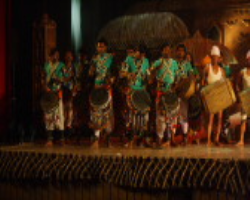
Pawl Kut / Winter Harvest: Celebrated at the completion of the main paddy harvest; a time of joy, sports, competitive dancing, and community praise.
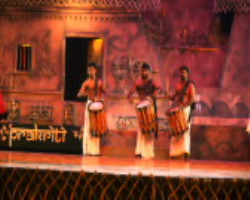
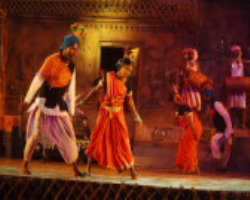
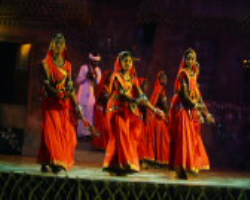
The iconic Cheraw (bamboo dance)—where dancers step between rhythmic grids of clapping bamboo poles—alongside the Khuallam (guest dance) remain central visual representations of their artistic discipline and physical agility.
6. Economic Systems: Between Shifting Fields and Horticultural Terraces
The Shifting Cultivation (Jhum) Cycle
For generations, the economic engine of the Khawthlang was shifting cultivation, known locally as Jhum or Hnathawh. This traditional agro-ecological system was attuned to the fragile tropical hill soils:
TRADITIONAL JHUM CYCLE│┌──────────────────────┴──────────────────────┐▼ ▼1. Forest Selection & Slashing 2. Drying & Controlled Burning(Winter: Dec - Jan) (Early Spring: Feb - Mar)│ │└──────────────────────┬──────────────────────┘│┌──────────────────────┴──────────────────────┐▼ ▼3. Multi-Crop Sowing 4. Staggered Harvests & Fallow(Spring: Apr - May) (Autumn - Winter / 5-10 yrs)
Unlike monoculture, traditional Jhum was a polyculture system. Within a single hillside plot, families grew:
-
Upland dry paddy (staple grain)
-
Maize, millet, and job’s tears
-
Pumpkins, chilies, ginger, and yams
-
Cotton and leafy hill vegetables
This multi-crop mix provided ecological insurance: if unseasonal rains damaged the paddy, root crops and millet averted starvation.
The Ecological Crisis: Shortened Fallow Cycles
Historically, a jhum plot was cultivated for one or two seasons and then left fallow for 10 to 15 years, allowing bamboo and secondary forest canopies to regenerate, rebuild topsoil nitrogen, and prevent erosion.
In modern times, population growth, village settlement stabilization, wildlife sanctuary declarations, and infrastructure projects have squeezed available community forest lands. Consequently:
-
Fallow periods have plummeted to 3 to 5 years.
-
Soils are unable to regain full biomass and fertility.
-
Crop yields have steadily dropped, exposing families to structural food insecurity and agrarian debt.
PAST (Sustainable Equilibrium)[ Slash/Burn: 1 yr ] ──► [ Regeneration Fallow: 12-15 Years ] ──► Soil RestoredPRESENT (Ecological Stress)[ Slash/Burn: 1 yr ] ──► [ Truncated Fallow: 3-5 Years ] ──► Soil Depletion / Erosion
The Horticultural Shift: Oranges, Betel Nut, and Rubber
To adapt to the limitations of shifting cultivation, Khawthlang families across areas like the Jampui Hills (Tripura) transformed their economy through commercial horticulture.
-
The Jampui Orange Revolution: During the mid-to-late 20th century, the Jampui hills, inhabited largely by Mizo, Halam, and Khawthlang clans, became famous for producing sweet, high-grade mandarin oranges. The crop raised family living standards, funded higher education, and financed modern pucca housing.
-
Ecological Challenges and Diversification: In recent decades, viral infections (such as citrus greening) and declining soil micro-nutrients damaged older orchards. Farmers have adapted by shifting their terraces into areca nut (betel nut), high-value black pepper, coffee, and rubber plantations.
While commercial crops provide cash liquidity, they introduce a new risk: vulnerability to external market price fluctuations, supply chain shocks, and middleman exploitation.
7. Human Development, Education, and Healthcare Challenges
Assessing human development indicators among the Khawthlang reveals striking contrasts between high educational attainment and persistent structural vulnerabilities.
HUMAN DEVELOPMENT DICHOTOMY┌──────────────────────────────────────┬──────────────────────────────────────┐│ STRENGTHS & RESILIENCE │ STRUCTURAL DEFICIENCIES │├──────────────────────────────────────┼──────────────────────────────────────┤│ • High basic literacy │ • Severe specialist healthcare deficits││ • Strong civil society & solidarity │ • High out-migration of educated youth││ • Deep female community participation│ • Road washouts & digital disconnect ││ • Clean village living environments │ • Fragile single-source water systems│└──────────────────────────────────────┴──────────────────────────────────────┘
Education: A Pathway to Social Mobility
Thanks to historical church-run educational initiatives and state investments in rural schooling, basic literacy among the Khawthlang is relatively high compared to the national tribal average.
-
Linguistic Versatility: Most young Khawthlang are multilingual, speaking their mother dialect, standardized Duhlian/Mizo, Hindi, and English, alongside regional state languages like Bengali (in Tripura/Assam).
-
The Brain Drain Dilemma: High local literacy rates have outpaced the local job market. Because interior hill districts lack industrial centers, research institutes, or corporate hubs, thousands of educated youth migrate to metro centers—Guwahati, Kolkata, Delhi, Bengaluru, and Hyderabad—to work in hospitality, BPOs, aviation, and nursing.
While remittances sustain rural family homesteads, this ongoing out-migration hollows out villages of their most energetic, forward-looking talent.
 Healthcare Vulnerabilities in Remote Geographies
The primary development bottleneck for remote Khawthlang settlements is healthcare access:
-
The Infrastructure Gap: Primary Health Centers (PHCs) and Community Health Centers (CHCs) in frontier hill blocks often suffer from doctor absenteeism, lack of medical specialists, unreliable electricity for cold chains, and shortages of critical medicines.
-
Maternal Health and Emergency Transit: When obstetric complications arise during the monsoon season, washed-out rural roads turn hospital transfers into life-threatening delays. Expectant mothers are often transported on improvised bamboo litters across mud-choked tracks to reach distant district centers.
-
Endemic Vector-Borne Diseases: The humid, densely forested river valleys surrounding Khawthlang settlements remain breeding grounds for falciparum malaria, scrub typhus, and waterborne illnesses during seasonal transitions.
8. Modern Struggles: Identity, Land Alienation, and Frontiers
The modern challenges faced by the Khawthlang are common to smaller, borderland communities whose homelands were divided by post-colonial boundary lines and state reorganizations.
VECTORS OF MODERN STRAIN│┌──────────────────────────────┼──────────────────────────────┐▼ ▼ ▼[ Border Fencing & ] [ Internal Tribal ] [ Administrative & ST ][ Transnational Rupture ] [ Marginalization ] [ Classification Ambiguity ]
The Transnational Border and Severed Kinship
The historic homeland of the Khawthlang spans the borders of India, Bangladesh, and Myanmar. The partition of India in 1947, the Bangladesh Liberation War of 1971, and the ongoing construction of the Indo-Bangladesh International Border Fence fundamentally altered daily life.
-
Separated Families: Clansmen residing in Tripura or southern Mizoram find themselves physically cut off from cousins, in-laws, and clan councils living in the Chittagong Hill Tracts.
-
Farmland Trapped Beyond the Fence: In multiple border villages, segments of ancestral community farmlands fall beyond the perimeter security fence (between the fence and the zero line). Farmers must navigate security gates with restricted opening times, identity checks, and strict agricultural movement curfews, disrupting their farming schedules.
The Identity Dilemma: Assimilation vs. Sub-Tribal Erasure
In Northeast India’s complex ethnic landscape, smaller tribal populations constantly face the pressure of assimilation into larger tribal umbrellas:
-
The Mizo Integration: In Mizoram and the Jampui hills, many Khawthlang clans have naturally integrated into the overarching Mizo (Zomi) umbrella, adopting Duhlian as their common language and celebrating broad Mizo cultural events.
-
The Halam/Kuki Nomenclature in Tripura: In Tripura, families with historic Khawthlang lineages are often administratively classified under the Halam or Kuki Scheduled Tribe categories, creating identity debates over cultural preservation versus political unity.
Many Khawthlang intellectuals face a difficult balance: How do you maintain regional unity with brother tribes for shared political representation without letting your distinct dialect, clan history, and unique social heritage be erased?
Development-Induced Displacement and Land Rights
Because customary tribal land rights across the hills were historically held communally—managed through traditional chiefs and village councils without formal individual land deeds (Patta)—indigenous communities are vulnerable to displacement:
-
Protected areas, such as wildlife sanctuaries, environmental reserves, and defense infrastructure corridors, have sometimes been designated without fully consulting ancestral settlements.
-
When high-speed roads, border surveillance tracks, and transmission lines cut through ridge-top community forests, families without individual land titles often struggle to secure fair compensation, threatening both their economic stability and social cohesion.
9. Sustainable Pathways for Socio-Economic Empowerment
Addressing the multifaceted challenges faced by the Khawthlang requires moving away from top-down administrative charity. Instead, policy must focus on community-led, geographically tailored development that leverages the region’s cultural and ecological strengths.
STRATEGIC ROADMAP FOR EMPOWERMENT│┌──────────────────────────────┼──────────────────────────────┐▼ ▼ ▼[ Agro-Ecological Value ] [ Community Eco-Tourism ] [ Administrative Clarity ](Direct Processing: (Homestays, Birding, (FRA Titles, AutonomousAreca, Citrus, Rubber) Living Heritage Trails) Council Representation)
1. Agro-Processing and Direct Producer Cooperatives
-
Cold Chain and Local Value Addition: Rather than selling raw areca nut, wild honey, and citrus at low farm-gate prices to roving middlemen, government support (via TRIFED and mission-mode horticultural schemes) should fund village-level solar dehydration units, organic processing cooperatives, and packaging plants.
-
Organic Certification: Mountain lands farmed with minimal synthetic fertilizers should be certified organic, allowing Khawthlang farmer producer organizations (FPOs) to command premium prices in regional urban markets.
2. Community-Managed Ecotourism and Cultural Preservation
The ridge-top landscapes inhabited by the Khawthlang—featuring cool highland weather, sweeping valley vistas, bamboo forests, and rich avian biodiversity—make them natural destinations for sustainable ecotourism.
-
Indigenous Homestays: Rather than building large, disruptive resort hotels, state tourism bodies should incentivize family-run homestays built in traditional bamboo-wood architectural styles.
-
Living Heritage Tourism: Visitors can experience community walking trails, organic farm harvests, traditional loin-loom weaving demonstrations, and traditional music performances without commercializing or compromising sacred customs.

3. Full Implementation of the Forest Rights Act (FRA, 2006)
Securing ancestral land tenure is fundamental to long-term tribal stability:
-
Granting Community Forest Rights (CFR) titles under the Scheduled Tribes and Other Traditional Forest Dwellers (Recognition of Forest Rights) Act empowers village councils to protect, sustainably harvest, and regenerate their traditional forest resources.
-
Formalizing community title ownership protects villages from arbitrary displacement, giving them legal standing and administrative leverage in infrastructure planning negotiations.
4. Digital Tele-Health and Frontier Infrastructure Upgrades
Bridging the physical isolation of the hills requires modern technological solutions:
-
All-Weather Connectivity: Paving critical arterial roads linking ridge-top settlements to state highway networks prevents seasonal isolation during the monsoon.
-
Equipped Tele-Medicine Kiosks: Equipping Primary Health Centers with stable satellite internet, high-capacity solar battery backups, and diagnostic testing kits enables village health workers to consult medical specialists in Agartala, Aizawl, or Silchar in real time, saving lives during medical emergencies.
10. Comprehensive Comparison: Past Traditions vs. Modern Realities
| Dimension | Pre-Colonial / Early Ancestral Era | Modern 21st Century Reality | The Way Forward / Strategic Need |
| Social Organization | Autonomous villages led by hereditary chiefs (Lal) and elder councils | Integrated into District Councils, Village Councils, and Statutory Panchayats | Harmonizing customary mediation with democratic local governance |
| Spiritual World | Animism, natural spirit veneration, ancestral rites led by Thiampui | Dominantly Christian; church forms the civic and spiritual village core | Preserving oral literature, songs, and textiles as living cultural heritage |
| Primary Economy | Subsistence shifting cultivation (Jhum) with long 10-15 year fallows | Cash crops (areca nut, rubber, ginger) and shortened, stressed Jhum cycles | Community-led agro-forestry, processing cooperatives, and organic certification |
| Education & Literacy | Oral traditions, youth dormitories, apprenticeship learning | High formal literacy via formal schooling, multilingual fluency | Vocational education, digital skills, and local entrepreneurship incubators |
| Kinship & Territory | Fluid migrations across natural hill valleys and ridge lines | Divided by international border fences and state lines | Cross-border trade points, eased border-pass protocols, and cultural forums |
| Healthcare | Traditional herbal remedies and spirit propitiation rituals | Access to rural sub-centers, but facing chronic specialist shortages | Solar-powered tele-medicine kiosks and improved all-weather emergency roads |
11. The Path Forward: Preserving Heritage While Embracing Progress
The story of the Khawthlang is a microcosm of the wider indigenous experience across modern India: a tale of resilience, self-reliance, cultural pride, and active adaptation to changing political and environmental landscapes.
From their origins as the “People of the West,” setting up fortified villages along high frontier ridges, to their role as modern farmers, scholars, civil servants, and artisans, the Khawthlang have shown that a community does not have to sacrifice its cultural roots to embrace modern progress.
THE MODERN BALANCING ACT│┌───────────────────────┴───────────────────────┐▼ ▼ROOTS & HERITAGE MODERN HORIZONS* Kinship & Oral Traditions * Higher Education & Tech* Handloom Weaving Patterns * Value-Added Agro-Commerce* Community Solidarity Values * Statutory Constitutional Rights│ │└───────────────────────┬───────────────────────┘│▼[ SUSTAINABLE INDIGENOUS ][ EMPOWERMENT ]
However, genuine empowerment cannot occur in a vacuum. It requires conscious, empathetic statecraft that moves beyond looking at borderland tribes purely through the lens of security or administrative convenience:
-
Listen to Local Voices: Planners must consult traditional village councils and community elders on local development decisions.
-
Protect the Land: Formalize ancestral community land rights to give families long-term security.
-
Invest in Youth: Support the next generation with local employment, value-added processing, and digital infrastructure so they do not have to leave their ancestral hills just to build a livelihood.
By investing in all-weather connectivity, community-directed agro-forestry, tele-medicine, and cultural documentation programs, India can ensure that small, historic communities like the Khawthlang are not left on the margins.
Their deep ecological knowledge, community solidarity (Tlawmngaihna), and artistic traditions are not relics of a forgotten past—they are vibrant, indispensable threads in the diverse tapestry of the nation.
