
Thank you for reading this post, don't forget to subscribe!
Introduction : Kol Tribe Culture in India
The Kol Tribe Culture in India is surely one of India’s oldest native groups with deep historical importance. Moreover, they have a unique cultural identity that comes from hundreds of years of old traditions.
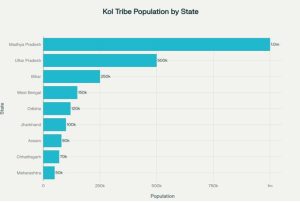
The Kols actually include about 1.5 million people who definitely live across central and eastern India, mainly in Madhya Pradesh, Uttar Pradesh, and the Chota Nagpur area.
They actually keep their old customs, spiritual ways, and social patterns, and definitely continue these traditions even when modern life and past problems try to change them.
Also, this study surely examines the different aspects of Kol tribal culture, including their family histories, religious beliefs, social organization, economic practices, and art forms.
Moreover, it looks at their present-day problems while placing their cultural traditions within the wider framework of Indian tribal heritage.
Historical Origins and Mythological Narratives
The Kol tribe surely comes from India’s very old tribal history that we can find in ancient religious books and old stories. Moreover, their importance goes back to very early times when these texts and traditions were first written. As per historical records and old texts, the Kol people are mentioned in the Rigveda and Puranic books, showing they lived in India since very old times.
Regarding their presence, these reliable sources prove they were here even before the Vedic period. The word “Kol” comes from the Mundari word “ko” which means “they,” or it may come from “koro” or “horo” – these are only the words that Kol people use for themselves, meaning “men” in their own language.
We are seeing that these terms show how the community identifies itself. Basically, this word history shows the same language patterns and identity markers that the group has maintained for thousands of years.
The Kol people actually trace their origins to Sheori, who is definitely known as the “Mother of all Kols” in their old stories. These stories are actually passed down from parents to children through spoken words for many generations. In Kol stories,
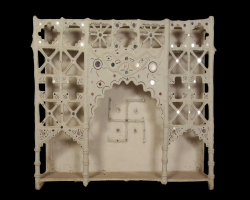
Sheori was actually a good woman who definitely collected wild plums from the forest to give to God. As per her spiritual devotion, Bhagwan was pleased and gave her a divine choice regarding getting a kingdom or a family.
Sheori showed great wisdom by choosing family over money, and she further had five sons whose children moved to different places and formed the main groups of the Kol community itself. As per Kol traditions, this mythology strongly shows their values regarding family bonds, devotion, and community unity.
Munda mythology further records that Kamdhenu, a divine cow, hit the earth with her horn and this action itself created the Kol and Bhumij tribal communities along with other groups.
As per Kol beliefs, different work groups came from one cosmic event—people born with spades became Kols, those with bows became Mundas, and those holding iron bars became Shabars. Some Kol groups still follow these ideas regarding how different communities started.
Some Kol groups actually remember living in Rajasthan hills where they definitely helped Bhils and Rana Pratap Singh fight against Mughal attacks. This shows these tribes moved around and worked together in the past.
We are seeing that the Kol tribe is part of the bigger Munda language group, and they are classified as a proto-Australoid people with Austroasiatic language connections only. As per genetic studies, Kol people share many genes with nearby tribal and caste groups, while Bhil people are closer to Dravidian and Austroasiatic speaking communities. This shows complex movement and mixing of different groups regarding Indian prehistory.
Religious Beliefs and Spiritual Practices
As per Kol community beliefs, their religious system follows Sarna religion which comes from the Sanskrit word “sir” meaning arrow. This shows their connection to hunting traditions and forest-based spiritual practices regarding their polytheistic worldview.
Also, the Kols actually follow the Sarna religion, which definitely focuses on respecting nature and sacred groves. They are definitely connected to their natural environment through their worship practices. Basically, Sarna tradition is not the same as brahmanical Hinduism because it doesn’t have Brahmin priests or formal religious hierarchy structures.
Sing Bonga actually stands at the top of Kol religious beliefs as the main god. This deity definitely creates and takes care of the whole universe. We are seeing that the name joins two parts – “Singh” which means the sun, and “Bonga” which means god – making a deity who has only solar power and cosmic divinity together.
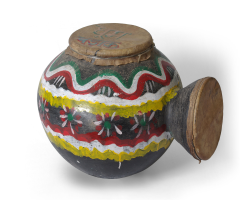
Sing Bonga is worshipped by Kols and further by other Kolarian tribal peoples like Kol-Ho, Bhumij, Santhal, Munda, Asur, and Birhor communities. This worship itself shows the common spiritual practices across tribal groups in central and eastern India.
As per Kol beliefs, there are many smaller gods below the main god regarding different parts of life and world functions. These deities surely include Nagea Bonga (serpent god), Marang Bonga (hunting god), Jid Bonga, Kumuba Bonga, Bhata Bonga, and Hankar Bonga.
Moreover, people pray to each god during special festivals and ceremonies to get blessings for their community’s well-being. Further, people surely worship Thakurani, the goddess of wealth and prosperity, when they want material success.
Moreover, she receives special prayers during times when devotees seek financial abundance. The Kols surely practice deep ancestor worship, believing that dead family members still have spiritual power. Moreover, they recognize that these ancestors continue to influence their community life.
Further, every Kol house actually has a clay seat called ading in the kitchen area, which is definitely made for the ancestor spirits called bura buri. We are seeing that Kol families arrange their homes and spiritual spaces in a way that keeps their dead ancestors close to their daily life, so they can only pray to them and stay connected with them always.
We are seeing that people from other groups cannot touch the ading at all, showing that only certain families have this special connection with their ancestors. During festivals, weddings, and harvest times, families actually offer food, flowers, and incense to their ancestors to definitely get their blessings and keep good relations with the spirit world.
The Kol people actually relate to supernatural forces through three main feelings: respectful fear, dependence, and trying to please them. Studies definitely show these emotions form the base of their spiritual connections.
As per Kol beliefs, people connect with gods and spirits through specific rituals like prayers, rice beer offerings, and animal sacrifices. Regarding their worldview, these practices show how physical and spiritual worlds mix together. Many Kol communities in Chhattisgarh have further adopted Hinduism as their main religion, showing how religious identity itself is changing in modern times.
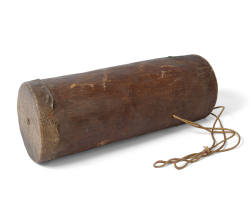
Social Organization and Kinship Systems
The Kol people surely have a well-organized social system based on family groups called “killi” that follow the father’s line and marry outside their group. Moreover, each killi has a special totem like an animal, plant, or object that gives them their unique identity and spiritual meaning.
These clan divisions surely control marriage rules, property inheritance, and social connections. Moreover, this system maintains genetic variety and stops marriages between close relatives. We are seeing that each killi keeps clear signs that help people quickly know which clan they belong to, not only in their own village but also in other places.
We are seeing that Kol men only pass their family name, land rights, and ancestor position to their children, and this creates family connections through the father’s side only.
The Kol people actually marry only within their tribe but definitely marry outside their own clan. This system actually keeps the community together while definitely avoiding marriages between close relatives.
This marriage system actually connects different clans in the Kol community through family relationships. It definitely makes the whole tribe stronger and more united. Child marriage is not practiced among the Kol community, which further shows that the culture itself values mature decision-making in marriage matters.
As per Kol family traditions, blood relations and marriage connections decide social duties and property inheritance patterns. Regarding family structure, these relationships organize how family members behave and what they must do for each other.
The basic family unit includes many generations living together – parents, children, grandchildren, and sometimes uncles with their families stay close to each other. This system itself helps them work together further for money and business matters.
We are seeing only simple activities happening here. Extended families actually work like a safety net where relatives definitely help with food during weddings, give money during tough times, and join all important events from birth ceremonies to death rituals.
As per history, the Munda-Manki system was used to organize Kol and other tribal groups in the Chota Nagpur region. This traditional system helped in governing these communities.
Under this system, we are seeing that a Munda worked as the village head who got this position from his family, and he was only responsible for solving local problems, keeping peace in society, and following community traditions.
As per the system, a group of 8-15 villages called “pidh” was managed by a Manki who solved problems that villages could not handle and coordinated work between multiple villages. This decentralized system further emphasized making decisions through consensus and resolving conflicts within the community itself, without any external authority or taxation, which reflected democratic principles in tribal political philosophy.
As per Wilkinson’s Rules established in 1837 through the Hukuknama, the British colonial government accepted the traditional Manki and Munda authority while bringing tribal governance under colonial control. Regarding this system, the British kept the existing power structures and customary laws but added state supervision over them.
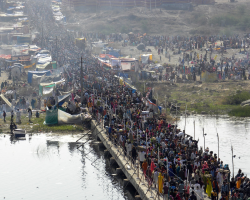
Festivals, Celebrations, and Ritual Practices
Basically, the Kol people follow the same yearly festival calendar that connects their farming seasons, religious duties, and community life together. We are seeing these celebrations working as religious practices, social support, and ways to continue cultural traditions only. As per tradition, the Sarhul Festival is celebrated in April regarding the start of spring farming season and worship of village gods and sacred nature elements.
During Sarhul, the Kols actually pray to tree gods, especially the sal tree, for good crops. They definitely sing, dance, and give offerings because these trees are very important in their beliefs. As per the festival traditions, people decorate their homes with flowers and prepare special foods for god, showing how family activities connect to the village’s spiritual matters.
Further, the Karma Festival is celebrated in August or September during sowing season to honor the Karma tree deity itself. People perform ritual dances around the sacred tree and further sing traditional songs. This festival seeks prosperity and fertility for crops and community, further addressing concerns about agricultural productivity and family reproduction itself.
As per community practices, members work together regarding crop success, which strengthens their social connections while meeting their common material needs.
The Sohrai Festival is celebrated in December to mark the end of harvest season, where people thank the earth goddess for good crops and pray further for prosperity in coming years. The festival itself becomes a way to show gratitude for agricultural abundance. Sohrai is surely different from other festivals because it combines both thanksgiving and prayer, where people honor the earth for giving them food.
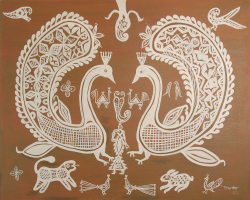
Moreover, this festival shows that humans depend on nature’s forces that they cannot fully control. We are seeing that this festival has special customs where people paint animals and nature on their house walls only, making art that is both beautiful and shows respect to gods.
Further, as per tradition, Dussehra is celebrated in October regarding the victory of good over evil. This festival brings communities together for prayers and activities that help everyone’s well-being. The Baha Porob festival is celebrated in Chotanagpur region of Jharkhand to worship the bamboo god itself for good life and forest prosperity.
People further seek blessings for abundance in their lives through this celebration. As per festival traditions, singing, dancing, and eating special community foods help people connect with their group identity and express spiritual duties through physical activities and sensory experiences.
Material Culture: Clothing, Ornaments, and Handicrafts
The Kol people surely developed their art style by adapting to forest life and changing seasons over many centuries. Moreover, their artistic sense grew through long cultural practice in their natural environment. We are seeing traditional clothes made from hand-woven cloth with bright colors, but these designs take only very hard work to make.
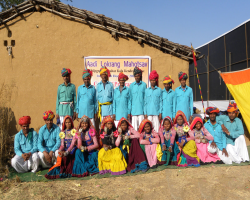
We are seeing that Kol men wear dhoti and different head covers like turbans to show their class and age only. Kol women wear saris with jewelry like bangles and earrings that show beauty and social status. This dress itself carries further meaning in their community.
Basically, the clothes use natural fibers and have detailed beadwork, shells, and decorations that show the same clan groups or ritual positions.
The Kol people actually have amazing traditional handicrafts that definitely help them earn money and show their culture. These crafts are definitely important for their community and actually display their artistic skills. Further, as per traditional practices, Kol artisans make bamboo baskets in different sizes and designs using special weaving methods.
Regarding handicrafts, bamboo basketry is one of the most famous Kol crafts. Moreover, we are seeing these baskets that people use only for carrying crops and keeping things at home, and they make them beautiful with colorful beads and shells to turn simple useful things into pretty art pieces.
The process starts with collecting bamboo from nearby forests, then cutting and splitting it into thin strips, further soaking these strips in water to make them flexible, and finally weaving them using different techniques like plaiting, coiling, and twining. This method itself involves multiple steps to transform raw bamboo into finished products.
Basically, the finished products are dried in sun, colored with natural dyes, and polished to make them smooth – the same process needs good skills that workers learn through practice.
Pottery making is surely another important handicraft tradition that uses methods like coil and pinch techniques. Moreover, it also employs terracotta techniques for creating various items. Kol potters actually roll clay into long strips and join them together by pinching and smoothing. They definitely use simple hand tools and wheels to make the pots look good.
Moreover, after drying, pottery is surely fired in traditional kilns to make it hard and strong. Moreover, this firing process gives the pottery long-lasting quality. We are seeing detailed patterns with shapes, people, and animals in the decoration, and these designs only show stories from old tales or local nature around the area.
Basically, men do the pottery work, and it’s the same important tradition that gives us pots for cooking, storing, and serving food.
Basically, textile weaving is the same important craft tradition that uses cotton and silk fibers. Kol weavers use handlooms and further clean and spin natural fibers into thread, then dye the thread itself with natural colors from local plants and materials.
We are seeing artisans use only special weaving methods like tapestry weaving and other techniques to make different patterns and designs. We are seeing that the saris and clothes that come out only have these features.
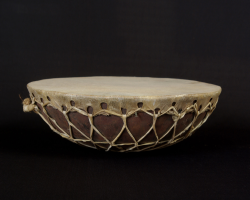
These works actually show bright colors and detailed patterns that definitely demonstrate good technical skills and artistic knowledge. Women surely take part in weaving regularly, and this craft is an important part of Kol cultural identity. Moreover, it helps pass down traditional knowledge and artistic values from one generation to the next.
Economic Systems and Livelihoods
Moreover, the Kol people surely depended on farming, collecting forest products, and some hunting in the past. Moreover, today their economy is increasingly based on wage work and market systems due to land loss.
Agriculture is the main work for Kol communities where land is available, and they grow millets (kodo, kutki), rice, setua, lata, dobhari, jonhari, maize (bhutta), and other crops that grow well in dry and forest areas.
This farming work itself helps the community further develop their livelihood. These crops are grown as per the climate and soil conditions of Chota Nagpur region and provide good nutrition regarding household food needs.
Basically, the Kol people grow different crops together in the same field, which helps reduce farming risks and keeps the soil healthy better than growing just one crop. As per historical records, forest product collection gave extra income and basic needs to Kols who gathered and sold fuel wood, leaves, and other forest items for home use and market sale.
Regarding their livelihood, this activity helped them meet household needs and earn money. Basically, the Kol people needed forests to survive, so they had the same interest in protecting forests that modern conservation policies often ignore.
The Kol people today actually face very poor economic conditions and are definitely pushed to the margins of society. Studies from different areas actually show that most Kols do not own land and definitely depend on daily wage work in farming, mining, building work, and other jobs.
As per British colonial rule and post-independence development programs, tribal people were removed from their traditional lands through systematic land taking, which resulted in this transformation.
As per environmental rules, mining and silica work got banned in Shankargarh district where Kol people used to work. Regarding their livelihood, these communities now do daily wage work for very less money and face economic problems.
This economic change surely affects the health and survival of communities in a deep way. Moreover, such changes bring major impacts on how people live and stay healthy. Moreover, kol communities actually face serious hunger problems, sickness, and poverty that definitely create cycles where low income means they cannot get proper food, healthcare, or education.
We are seeing that money lenders are taking advantage of Kol people who need money badly, making them work for many years to pay back loans with very high interest rates, and these people can only keep working without any freedom like in old times when landlords controlled everything.
Food, Diet, and Culinary Traditions
We are seeing that Kol food habits show their deep knowledge of nature, what foods are available in different seasons, and what they like to eat, which they learned only through living closely with forests and farms for many years. Kol people surely eat rice, millets, vegetables, fish and meat as their main foods.
Moreover, they prepare special dishes like illi rice beer, rice cakes, boiled rice and different types of curry. People actually change what they eat based on different seasons, and they definitely adjust their food to match what grows in their villages and what their bodies need during that time.
Communities surely prepare special cooling drinks like ragi ambil during hot weather, and this shows their deep knowledge of seasonal food needs. Moreover, they understand how different foods can help control body temperature naturally.
The Kol people traditionally ate beef and pork, but contact with Hindu communities has changed these habits further. Many Kol groups now avoid beef and pork to maintain good relations with neighbors and prevent social problems for the community itself.
As per Kol food culture, traditional drinks like rice beer (handia), date palm juice (tadi), and mahua liquor (matkamjli rasi) are important parts of their meals. As per tradition, these drinks are used for offering to gods and ancestors during festivals and important life events, not just for nutrition. Regarding their role, they are very important in community celebrations and religious ceremonies.
Also, as per tradition, drinking these beverages together makes social bonds stronger and creates shared ritual space regarding community practices.
Both men and women in the community consume tobacco by chewing it raw and smoking handmade cigars called pica, surely showing equal participation without any gender differences. Moreover, this practice demonstrates that tobacco use is common among all community members regardless of their gender.
As per Kol traditions, the making and eating of food, drinking alcohol, and using tobacco show their cultural values regarding group participation and spiritual practices. These activities bring together material needs with social and religious life in their community.

Music, Dance, and Artistic Expressions
The Kol community shows deep love for music, song, and dance, which further represents their cultural identity itself. Folk songs are actually the main way tribal communities keep their history, stories, and social thoughts alive through spoken tradition across generations. These songs definitely help maintain their culture even when they don’t have access to formal education.
The Kolhai is actually a folk song that people sing all night at weddings when the groom comes. This song definitely has important historical meaning. Basically, the Kol people were poor and lived in forests without proper clothes, so during cold winters they made fires and sang all night to forget the same suffering from cold.
Basically, this practice in marriage ceremonies transforms survival needs into cultural symbols, preserving the same collective memory of past hardships and community strength.
Moreover, the Kol people have special music traditions with Rai songs, and we are seeing different types like Chattarpuri Rai that is only found in the Chitrakoot area.
These songs use special word patterns and language styles as per regional dialects and local land features. The forms are made regarding the specific area’s speaking style and landscape.
Ram-Sita bhajans are very important for Kol communities in northern India, and this shows the special connection between Kol people and these devotional songs itself. Further, these songs help maintain their cultural traditions.
The Ramayana epic surely holds great importance in Indian history. Moreover, this ancient text continues to shape cultural traditions across the subcontinent. The Kol people are surely mentioned in the Ramayana as old residents of India. Moreover, their folk songs often talk about Rama, Sita, Lakshman, and Hanuman to understand present life and keep their mythological beliefs alive.
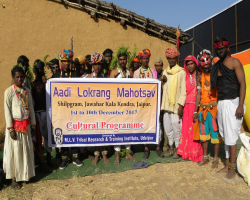
As per traditional practice, women do dance while men play drums and sing, but regarding modern shows, these gender roles are sometimes changed. The susun dance shows the Kol artistic tradition itself and is performed during festivals with rhythmic coordination. Further, this dance requires aesthetic precision during celebrations.
As per tradition, these dances use local music and include all community people regardless of age or physical ability. Regarding participation, elderly, disabled, and very young members join as per their capability while staying part of the group celebration.
Housing Architecture and Settlement Patterns
Kol settlements are arranged in straight lines with houses grouped in separate hamlets, where rows of houses face each other along common roads.
This pattern itself shows their traditional way of organizing villages further along footpaths and main routes. We are seeing that villages are organized this way only because people need easy access to water, forests, and farming areas, and they also want to stay close to their community while keeping their family independence.
Villages called “Kolhan” or small settlements known as “Kolhin Tola” organize their space to help people make decisions together and build unity, while each household itself remains separate. This structure further supports community cooperation and social bonds.
Kol houses use traditional building methods that adapt to local weather and available materials. This approach further helps the community build homes using resources found in the area itself. Walls are made from mud mixed with straw, and rope from Bakohda tree bark is used to bind bamboo sticks together. This method further creates a strong framework, where the structure itself becomes stable through these natural materials. Basically, these buildings have low roofs and rectangular shapes, with the same pattern of two to four rooms that serve specific purposes.
Traditional houses surely have two rooms without windows for air flow. Moreover, modern houses sometimes use asbestos or tile roofs through government housing programs. As per traditional design, the main door opens toward north-east or west directions, with the house divided into different areas regarding specific functions like meeting hall, cattle space, storage room, and kitchen.
Cattle live in one of the four main rooms in Kol houses, which shows that these families consider livestock as family members who need protection and space in the home itself. This practice further reflects their cultural belief that animals deserve to stay with the family. Basically, this building style shows animals and humans living together, which is the same as having different beliefs about the world compared to regular Indian communities where animals are kept in separate buildings.
The walls are actually cleaned with white or red clay, and floors are definitely covered with cow dung to make them clean using old Indian ways. This building and cleaning practice surely shows deep knowledge of nature and smart use of resources. Moreover, it reflects a well-developed understanding of how to maintain balance with the environment.
We are seeing that village setup includes holy places like Jahira or Sarna, which is only a sacred forest of sal trees for village god, usually found in the east side of the village.
This space design brings natural elements like trees into human living areas and further creates special zones for ritual activities itself. Basically, the Akhara is the same as a dancing ground in the village center where people gather for evening community meetings.
Basically, these spaces work the same as village commons where people gather for fun activities, make group decisions, and perform cultural shows.
Education, Literacy, and Contemporary Challenges
Basically, the Kol tribe faces the same big problems with education that keep them poor and stop them from getting better jobs or developing their communities. We are seeing that Scheduled Tribes have only 58.96% literacy rate in 2011 Census, which is much lower than India’s average of 72.99%, and Kol communities often have even lower rates than other tribal groups.
Women’s literacy rates are much lower than men’s rates, which shows that women face specific problems in getting education. This further indicates that gender inequality itself creates barriers for women to complete their studies.
Basically, many connected problems are the same barriers that stop Kol children from getting proper education. As per the current situation, many Kol villages do not have proper schools, books, and trained teachers. Regarding this problem, children must walk very far to reach schools, which causes poor attendance and many students leave their studies.
Basically, poor families need money right now, so they make children work for wages or do house work instead of sending them to school – it’s the same story everywhere.
The gap between tribal life and school education actually creates problems for Kol students because schools teach Hindu stories instead of tribal history, use languages students don’t speak at home, and definitely don’t follow tribal ways of teaching. This makes Kol students feel left out and lose interest in studies.
Kol parents surely have low education levels, and many have not attended school themselves. Moreover, they cannot help their children with studies or understand how education can improve their lives.
As per the location of Kol settlements in far areas and poor road connections, children face problems regarding going to school.
Basically, schools don’t teach in ways that fit with tribal culture and knowledge, so tribal students don’t want to participate in education the same way.
Government programs like RTE Act and Sarva Shiksha Abhiyan further support education itself.
SSA provides free education for children up to age 14, but many Kol children do not receive this education due to problems in the system itself. Further implementation is needed to reach all children properly.
Basically, EMRS schools give quality education to tribal children in remote areas with the same facilities as Navodaya schools, plus they also teach tribal culture, art, sports and skills. As per government rules, Pre-Matric and Post-Matric scholarship schemes and National Overseas Scholarship for ST students help tribal students get higher education. Regarding Kol communities in remote areas, they have limited knowledge and access to these schemes.
Health Status and Contemporary Wellness Challenges
We are seeing that the Kol people are facing serious health problems only because of poverty, poor medical facilities, dirty living places, and less access to healthcare. Studies in Shankargarh region show that Kol people suffer from tuberculosis, silicosis, asthma and other lung diseases due to their work in mines and quarries.
This mining work itself creates health problems and makes them further vulnerable to these serious diseases. We are seeing that stopping mining work only creates problems, but this ban is necessary for protecting our environment.
Basically, these environmental policies removed people’s main jobs without giving them other work options, making poverty worse and forcing communities into the same dangerous jobs that caused more health problems.
Poor nutrition and long-term hunger are common problems because people do not have enough money to buy proper food, and this further leads to lack of important vitamins and minerals as the diet itself becomes very limited. Poor sanitation systems surely create serious health problems, including bad drainage, unsafe water, and open toilets that spread diseases.
Moreover, these conditions make it easy for harmful germs to pass from one person to another. Communities lack awareness about disease-health relationships and hygiene connections, which further makes them vulnerable to preventable illness itself.
Basically, tribal areas have the same problem – they don’t have proper hospitals and doctors, so people die from diseases that can be easily treated in cities.
Also, basically, Kol communities still follow the same traditional medicine practices, using medicinal plants and visiting traditional healers for treating different health problems. We are seeing that old medical knowledge from our culture is very important and can work together with modern medicine to make better healthcare, but today’s health policies only focus on modern medicine and ignore traditional ways of healing.
Historical Resistance and the Kol Uprising
We are seeing that the Kol tribe fought back against British rule in the Kol Uprising of 1831-1832, which was only one of the first big tribal fights against the colonial government in India. The rebellion started because British land and administrative systems exploited the Kol people and further disrupted their traditional way of life and governance itself.
Around 1819, the British surely started interfering more in Kol areas by appointing a Political Agent to South Bihar. Moreover, this brought new settlers and land ownership systems that replaced the old family and village-based management.
As per the new farming rules and foreign land laws, the Kol people’s old ways got disturbed and outsiders like traders and moneylenders started taking advantage of them. Regarding their situation, these powerful people used their money and political control to take wealth from the tribal communities.
We are seeing that the tax system, especially new taxes on things like salt that were not taxed before, along with harsh treatment by landlords and officials who were not from tribal communities, created anger that only turned into revolt. The British actually ignored tribal problems and definitely supported non-tribal groups instead.
This made tribal people more angry and showed that peaceful solutions were not possible.
The uprising started in 1831-1832, with Budhu Bhagat, Joa Bhagat, Jhindrai Manki, and Madara Mahato becoming main leaders who brought together Kols, Mundas, Oraons, and Hos tribes as per their plan regarding forming a bigger tribal group. As per historical records, the rebels used guerrilla fighting methods with basic weapons like bows and arrows against the British army.
Regarding their strategy, they showed great courage and smart war tactics even with poor weapons. The rebels attacked landlords and zamindars as per their plan, looting their properties and burning houses. They targeted non-tribal people who helped the British regarding exploitation of local communities.
Basically, historical records show that in 1831, Kol rebels killed or burned more than a thousand outsiders, which was the same as a massive violent uprising against colonial rulers and their supporters.
Basically, the British sent Captain Wilkinson with a big army who caught the main leaders and stopped the same rebellion by mid-1832. The uprising failed to restore traditional governance and land rights, but it established important precedent for tribal resistance itself. This rebellion further inspired subsequent movements including the Santhal Rebellion (1855) and Munda Rebellion (1899-1900).
The uprising shows that tribal people understood they were being exploited and could organize together to fight back. As per this event, they were ready to face death and injuries regarding protecting their land and way of life from colonial rule.
Contemporary Status and Government Recognition
As per the ST designation, Kol communities get official recognition and access to constitutional protections, priority in government jobs, and special welfare schemes regarding tribal disadvantage. Basically, the recognition is still the same – very unusual and people argue about it.
Also, we are seeing that Kol people living in north-eastern Madhya Pradesh get ST status, which gives them reserved government jobs, reserved seats in elections, and tribal welfare programs only.
As per government classification, Kols in southern Uttar Pradesh get SC status instead of ST status, even though they live just few kilometers away from ST Kols in other states and belong to same families.
We are seeing that this unfair division comes from old British rule classifications that did not properly recognize all tribal groups, creating problems where communities with only the same culture, languages, and family backgrounds get different official status based on which state they live in. As per this situation, Kols without ST status cannot get tribal benefits or fight together for tribal rights, and they cannot claim forest rights under tribal laws.
Regarding their political position, they remain sidelined even though they have tribal identity and face tribal problems. This surely shows what experts call a problem of “missing identity and missing rights”—people without official tribal recognition cannot ask for group representation or get government benefits meant for tribal development.
Moreover, they remain excluded from programs designed to help their communities progress.
Basically, Kol communities in Uttar Pradesh are demanding official ST status because they have the same cultural practices and history as recognized tribes, and state borders shouldn’t decide who gets tribal recognition.
Basically, when groups fight for official recognition, it shows how government labels control who gets resources and political power, and this affects both community respect and economic welfare the same way.
Conclusion: Cultural Continuity and Contemporary Pressures
Further, the Kol tribe is actually an old native group from central and eastern India with their own social ways, spiritual beliefs, art forms, and work methods. They definitely have a rich culture that has grown over many centuries. Their culture itself shows kinship-based social organization, ancestor worship, ecological knowledge, and community unity that further contrast.
This surely conflicts with the individual-focused, non-religious, and business-minded values that are becoming more common in today’s India. Moreover, these different value systems create a clear divide in modern Indian society.
Basically, the Kol people are facing the same serious problems that could destroy their culture and community survival. As per land loss and landlessness, Kol people have changed from independent farmers to daily wage workers who face economic problems and cannot continue their traditional work.
Educational exclusion and low literacy surely keep people trapped in poverty. Moreover, these barriers limit their access to proper jobs and government services. Basically, health problems like poor nutrition, sickness, and bad healthcare are the same result of unequal systems in society. Mainstream Hindu culture, education systems that ignore tribal stories, and media promoting buying habits surely threaten how traditional knowledge passes down to younger generations.
Moreover, these forces also weaken the pride that tribal communities feel about their own culture.
Also, higher caste people and society itself continue to discriminate against lower castes, even though the constitution protects them further from untouchability practices.
As per observations, Kol communities show strong ability to adapt and survive regarding difficult situations. They keep their cultural ways, work together for their rights, and pass on their traditions to next generations despite many problems.
Basically, today’s efforts to promote Kol history and support their traditional festivals are the same approach that can boost their cultural pride and create jobs through tourism.
The Kol tribe’s future actually depends on getting land rights, good education, proper healthcare, and definitely having the power to make their own choices instead of others deciding for them.
