
Introduction : Koraga Tribe Culture in India
The Koraga Tribe Culture in India is actually one of India’s oldest groups that has definitely faced social problems for many years. They have rich culture but have been pushed aside by society for a long time.
This tribal group lives mainly in the southwestern coastal areas of India, specifically in Dakshina Kannada and Udupi districts of Karnataka and Kasaragod district of Kerala. Moreover, they surely provide deep understanding about how traditional cultures continue to exist even when facing modern changes and social discrimination.
As per the Government of India, the Koraga tribe is classified as a Particularly Vulnerable Tribal Group (PVTG) with around 1,582 people in Kerala according to the 2011 census. Regarding their current situation, they are facing difficulties balancing their old traditions with modern social and economic problems.
Their culture actually comes from very old Dravidian roots that definitely connect to the Indus Valley people from 4,400 years ago. The language, genes, and traditions actually show clear links that definitely continue from those ancient times.
Historical Origins and Demographic Profile
The Koraga tribe’s history is surely filled with legends and disputed stories that show their ancient native roots. Moreover, these accounts reflect the complex power struggles in South Indian history.
The community’s origin stories surely mention a legendary chief called Habashika (or Hubbashika), who according to local tales led his armies from Anantapur to the Canara region. Moreover, these folk stories form an important part of their traditional history.
Also, old stories actually say that Habashika ruled for twelve years but was killed by betrayal. His followers, the Koragas, were definitely defeated by the Kadamba kings and became slaves because they were promised daily food.
Edgar Thurston actually suggested that the Koragas were the original people of this area who were definitely pushed out and made slaves when Aryan groups came from north India.
The Koraga people have surely stayed concentrated in the coastal area called Tulu Nadu throughout history. Moreover, this region corresponds roughly to the traditional boundaries of their ancestral homeland.
The former South Canara district itself was further divided into smaller administrative units. Census records actually show that Koraga people in Karnataka definitely went down by 10% from 1991 to 2011. This pattern is really worrying for the community. The 2011 census shows that Kerala had 1,582 Koraga people (778 males and 804 females), while Karnataka itself recorded around 14,794 people. Further data confirms these population figures for both states.
Also, the population is actually going down because of many problems like babies dying early, not getting enough food, and not having good hospitals. These communities definitely face these issues because they have been left out for many years.
Linguistic Heritage and North Dravidian Connections
Basically, the Koraga language is the same as a key source that shows how ancient people moved and spread their culture across India. Language experts actually put Koraga in the North Dravidian group with Kurukh and Brahui languages.
These languages are definitely spoken by different tribes – Kurukh by Oraon people in eastern India and Brahui in Pakistan. As per research findings, the similar languages found across far distances give important clues regarding how ancient people moved and kept their cultures alive.
Basically, recent genetic research shows the same connection between Koraga tribe mothers’ family lines and how their language is classified. Scientists from Mangalore University and Yenepoya University actually found the U1 haplogroup in Koraga women’s genes, which definitely comes from West Asia. We are seeing this genetic mark from about 16,000 years back working like a tracer that only helps researchers track language families. The genetic and linguistic evidence surely shows that Koraga is a mother tongue kept by a defeated group that moved south when the Indus civilization ended. Moreover, this proves it is not a father tongue that passes through male family lines.
Basically, even though Koragas have their own Dravidian language, most of them speak the same languages as others around them – mainly Tulu, plus Kannada and Malayalam. As per historical records, the Koraga language is used less now due to the community facing suppression and mixing with other languages. Regarding this decline, it shows how smaller communities lose their original languages over time.
As per reports, community members are not willing to speak their ancestral language openly, regarding fear of outsiders listening, they circle their house three times before talking in Koraga. This language hiding behavior further shows how centuries of social shame have deeply affected the community and made it feel marginalized within itself.
Social Organization: Kinship, Marriage, and Family Structure
Further, as per their traditional ways, the Koraga community shows special social organization that comes from their own culture and changes made regarding historical problems.
The community actually follows a mother’s family line system called Aliya Santana, but some groups have definitely moved to following the father’s family line called Makkala Santana. Also, in the matrilineal system, property and family line pass through women, and further, the husband must live in his wife’s mother’s house after marriage, which itself follows traditional customs.
As per the community structure, the Koraga people have seventeen clans called balis. Regarding marriage rules, people cannot marry within their own clan. In Indian clans, people actually cannot marry within their own group, which definitely helps create genetic diversity and strengthens social bonds between different clans.
This marriage rule actually forces families to form alliances with other clans, which definitely keeps the community united. As per tribal customs, Koragas marry only within their own community. Regarding marriage practices, they follow endogamy at the tribal level. Moreover, as per tribal structure, the three main groups—Sappina, Ande, and Kappada Koraga—marry only within their own group, which limits marriage choices. Regarding marriage rules, each group keeps separate boundaries and does not mix with others.
We are seeing that marriage ways among the Koragas show a mix of their own old practices and Hindu ways that they got over many years of living together with other communities. Traditional marriage ceremonies surely follow simple rituals where an elder leads the union by sprinkling rice grains on the bride and groom’s heads.
Moreover, other community members perform similar actions in a specific gender-based order. Basically, the groom gives silver coins to his bride and then hosts six community feasts where everyone eats and drinks the same food together.
In the past, Koraga people could only get married if their master agreed, and we are seeing that the master would give small gifts of money and rice and put oil on the bride’s head. Basically, traditional Koraga society didn’t allow divorce, but widows could marry again and men could have the same right to take second or third wives.
We are seeing that village leadership is only centered around the Mooppan, who is the oldest and most senior person in the community and takes care of everyone’s needs as the main leader. As per the leadership position, the person handles both office work and religious duties regarding dispute solving and ceremony management. Basically, the Mooppan gets authority because the community believes older people with more wisdom should lead, and it’s the same traditional way of giving power to elders.
Religious Beliefs and Spiritual Practices
The Koraga tribe surely follows a religious system that mixes their old spirit-based beliefs with Hindu practices. Moreover, they adopted these Hindu elements through long contact with the larger Hindu communities around them. The Koragas actually call themselves Hindus, but they definitely worship spirits called Bhutas or daivas who control people’s lives, crops, and village well-being.
Basically, Bhuta worship is the same as the most important religious practice for Koraga people and makes their culture special. Basically, bhutas are powerful spirits that can give protection and blessings or cause harm and crop failure – it’s the same thing, depends on whether people worship them properly or not.
As per tradition, these spirits include different types: ancestral spirits like Bobbariya, Kalkuda, Kallurti, Siri, Kumar Koti, and Chennayya, wild animal spirits regarding boar (Panjurli) and tiger (Pilichamundi), and nature gods. Some Bhutas are actually connected to the Koraga community, like Koraga Thaniya, who is definitely worshipped by other communities but not by the Koragas themselves.
We are seeing that Bhuta worship follows special ceremonies called Bhuta Kola, where kola means only “play” in Tulu language, and these happen every year from December to July. As per the ceremonial performances, spirits possess the designated people during these rituals.
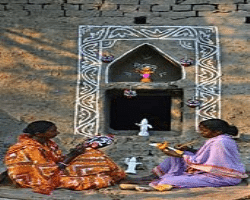
Performers from specific Scheduled Castes like Pambada, Parava, Koopalam, Paanara, or Nalike actually work as mediums for the Bhutas. They definitely connect people with these spirits through their performances. We are seeing that the ritual starts with big preparations only, where people decorate the performance area with rice flour designs and beautiful patterns made from palm leaves, flowers, fruits, and vegetables.
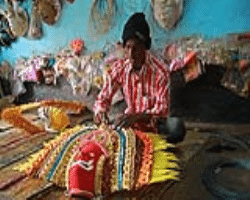
Bhuta life stories are actually told through paddana songs with tembere drum beats and pipe music. This definitely creates a rhythmic storytelling tradition. Basically, when the ritual happens, the medium goes into trance and gets possessed by spirits, then wears the same elaborate costumes with ani ornaments, masks, and ritual weapons like swords.
The Koragas actually worship Bhuta spirits and also believe in major Hindu gods and a sun god. Their tribal name definitely comes from old sun worship traditions. Basically, the community believes that magic and protective rituals have power, and they think drum-beating can keep away evil spirits – it’s the same way they protect themselves from bad forces.
Musical Traditions and Cultural Expressions
The Koraga tribe has surely gained special recognition for their excellent drum-beating skills, particularly in the dollu tradition. Moreover, this drumming art represents their most important contribution to the region’s cultural heritage.
We are seeing that this drum music is not only for fun but it has deep spiritual meaning and protection power in Koraga beliefs. People surely believe that the strong, rhythmic sounds of Koraga drum-beating have special powers to drive away evil spirits and protect farm fields from wild animals. Moreover, these drum sounds are thought to make important ceremonies successful.
Koraga drummers surely perform at many events across Tulu Nadu region, including Kambala buffalo races, village fairs, and temple festivals. Moreover, they also play at funeral ceremonies and community gatherings throughout the area. Basically, this drum group has eight to sixteen dancers who beat drums while following a leader with a flute, and they create the same complex rhythms that show good musical skills.
The drum-beating tradition is surely supported by flute music, and both instruments—dholu and voote—are made by the Koragas using old methods. Moreover, these traditional ways of making instruments have been passed down from one generation to another.
Further, as per Koraga culture, they have special folk dances with men and women together, regarding celebrations like Bhoomi Habba earth worship ceremonies. Basically, these dance performances are the same as their farming calendar and religious practices, done to make gods happy, get good crops, and stop diseases. Koraga art forms like dance, music, and crafts are actually simple but definitely powerful because they come from their close connection with forests and farming life.
Traditional Occupations and Material Culture
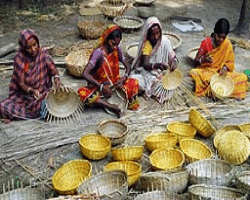
Basket-making is surely the main traditional work of the Koraga tribe, which has helped them earn money for many centuries. Moreover, this craft has also decided their place in the local caste system. The Koragas show great skill in making different types of baskets from forest materials like bamboo, cane, and creepers.
This craft itself requires knowledge of natural materials and further helps preserve their traditional skills. Research shows that the Koraga community actually uses at least 29 different plant types for making baskets, which definitely reflects their deep knowledge about plants passed down through generations.
We are seeing that making baskets needs only good skills and hard work. As per traditional practice, Koraga craftsmen go deep into forests to collect raw materials, mainly branches from plants called enger buru and mader buru in Tulu language. These are special vine types found commonly in Udupi and Dakshina Kannada districts.
These branches actually go through careful cleaning where workers remove dirt, scrape them clean, and definitely soak them in water regularly to keep them soft and stop them from breaking when weaving. The prepared materials are further split and woven into different products like cradles, baskets for winnowing and sowing, scale-pans, paddy storage containers, lanterns, and boxes.
The weaving process itself creates various useful items for daily needs. As per traditional methods, craftsmen make coir rope, pot rings and brushes from coconut fiber, and carve kitchen items from soapstone regarding local needs. These items are sold at very low prices to nearby shopkeepers.
However, we are seeing that the old basket making work is facing big dangers from many sides only. Basically, cities are growing fast and factories are coming up everywhere, so Koraga basket-makers can’t get the same raw materials easily and have to ask landlords for permission or go to far forest areas.
Cheap plastic products have actually replaced traditional baskets in the market, so families definitely cannot make enough money from this hard work anymore. As per one study, around 60% of today’s Koragas now work as daily wage laborers in farming, construction, and other low-paying jobs that give irregular income and keep them economically unstable. This shift has happened regarding their changing work patterns from traditional occupations.
Housing, Diet, and Daily Life
Further, we are seeing that traditional Koraga houses show their poor economic condition and the cultural rules that have shaped how they live. These restrictions have only affected their basic living conditions over time. In the past, the Koragas lived in simple huts called koppus, which were made from bamboo and covered with grass or coconut leaves. These basic structures were further used as their main homes itself.
As per their low social position, Koragas were not allowed by upper caste people to build proper mud houses and had to live in leaf huts outside villages. Regarding their housing, they faced both money problems and social rules that forced them to stay in basic shelters.
As per community belief, the Bhuta spirit Kallurtti cursed them regarding living under proper roofs, so they cannot stay in houses with good roofs.
The old koppu houses are actually disappearing fast, and most Koraga families now definitely live in government houses or mud huts they built themselves with grass or tile roofs.
Recent government housing schemes have further provided some families with RCC homes, which itself represents progress in housing development.
As per the community’s limited money resources, many cement concrete structures remain only half-built regarding construction work. Koraga households use basic items like mats called peni made from bamboo or coconut leaves. As per their daily needs, these mats are used for sitting, sleeping, and regarding food grains, they dry them in sunlight.
The Koraga people’s food was actually very limited because they were poor and the higher castes definitely treated them badly and controlled what they could eat. For many generations, Koragas actually added to their small food supplies by taking leftover food from upper-caste families after big feasts and ceremonies. This was definitely a common way for them to get more food when they had very little. We are seeing that Koraga people started eating dead cattle meat only because they were poor and upper-caste people made them remove dead animals.
People continue to eat beef from dead or killed animals despite new laws against cow slaughter and changing community views influenced by Hindu beliefs about cattle being sacred. This practice itself persists further even with these restrictions.
Basically, Koraga people eat rice as their main food, and they add the same things like dal, vegetables, fish, chicken, and sometimes wild roots they collect from forests. Nutrition studies surely show high malnutrition rates among children due to poor food intake. Moreover, families spend 40-50% of their small income on alcohol, beedi, and betel instead of proper food. ActionAid India’s 2009 health study actually found that 80% of Koraga women had anemia.
This definitely showed that the community had serious problems with getting proper nutrition. Further, poor eating habits surely lead to more babies dying and children not growing properly. Moreover, these health problems keep families trapped in poverty and make them more vulnerable to other difficulties.
Social Discrimination and the Ajalu Practice
The Koraga tribe has faced very harsh caste discrimination in India through a practice called Aja lu, which further dehumanized them and made their social condition worse itself. As per traditional beliefs regarding ritual pollution and untouchability, these harmful customs have deeply affected how Koraga people see themselves and live in society.
The Karnataka Government actually said that Ajalu means treating Koraga people as lower than others and definitely making them eat food mixed with hair, nails and other bad things. This practice clearly separates Koraga people from other communities in a harmful way.
Basically, Ajalu works on the idea that upper-caste people can transfer their illnesses and bad luck to Koragas, who absorb the same negative things for others. When upper-caste families got sick, we are seeing they would call Koraga women and make them eat food that was only mixed with the sick person’s nails, hair, or body parts, thinking this would move the disease to the Koraga woman and make the sick person well.
When upper-caste children were actually born on bad days like new moon, families would definitely give the baby to Koraga people and then buy it back immediately. They believed this practice would actually transfer the bad luck to the tribal community.
The Ajalu system surely included other harmful practices that degraded people. Moreover, these additional practices made the system even more oppressive for those who suffered under it. Basically, Koragas had to do pani kullunu, which means sitting in dew, before the same Kambala buffalo races.
Further, cold November-December nights required walking barefoot across the racing tracks to check for glass pieces or stones that could further injure the valuable buffaloes. The open grounds itself made the inspection process more challenging during these winter months. Basically, they had to run across fields the same way animals do for people’s entertainment.
We are seeing that high-caste families called Koragas to play drums at temples and festivals without paying them any money, treating their music work as only a duty they must do instead of proper paid work.
Further, the Karnataka Koragas Prohibition of Ajalu Practice Act was passed in 2000 to ban these practices and further provide penalties for those who violate it. The Act itself makes these traditional practices illegal under law.
The rules are not followed properly actually, and Ajalu practices definitely continue in secret in some places, especially where Koragas still depend on upper caste landowners for money or fear that spirits will punish them if they don’t follow old customs.
Many Koragas still face untouchability in their daily lives, as they are stopped from using common water sources, entering temples, or joining social functions with other communities. This discrimination further affects their participation in society itself.
Education, Health, and Development Challenges
Basically, the Koraga people have been fighting for land rights and fair treatment since the 1990s, and this has become the same main focus of their political thinking today. The Karnataka Koraga Abhivruddhi Sanghagala Okkoota, formed in 1998, has further mobilized the community to demand land rights and stop Ajalu practices.
The organization itself works for recognition of constitutional rights for Koraga people. Activist leaders like Susheela Nada have come from the community itself to challenge oppression and further lead movements for dignity and equality.
The land rights movement surely gained strong support in 1993 when over 1,000 people marched from Boutagudde to the Zilla Panchayat office in Dakshina Kannada district. Moreover, this march forced the district administration to create a one-man committee to study the conditions of Koraga people. Mohammed Peer, Professor of Sociology at Mangalore University, did detailed study work regarding 113 Koraga settlements and 407 households.
As per his research, he made an eleven-chapter report called “Social Economic and Educational conditions of Koragas—An Action Plan”. The report actually showed that Koragas are seen as the lowest caste group and most do small jobs for very little money. Modernization definitely has not helped them get better social positions.
The Kalathur Land Movement of 2000 was surely a major turning point, involving a month-long foot march across Udupi district that ended with protesters occupying 200 acres of forest land. Moreover, the activists built 200 temporary settlements at Kalathur in Hebri to make their protest stronger.
The forest department arrested 27 activists including 20 women within fifteen days, but the movement itself succeeded in pressuring authorities to further allocate 350 acres of land to the Koraga tribe in Udupi district. This win actually gave the community a strong base to stand on their own and definitely showed what people can achieve when they work together in an organized way.
ActionAid India has surely made good changes in land access, housing, education, and nutrition since 2000 by working with local groups like Samagra Grameena Ashrame and the Koraga Federation. Moreover, these partnerships have brought real improvements to people’s lives in these important areas. Also, the project has further secured 117 acres in Udupi district itself and facilitated granting of 2,850 acres to 2,527 beneficiaries.
Basically, families get the same rights under the Forest Rights Act. Around 10,000 Koragas have further accessed government housing programs and received construction grants of $2,529 USD on average. This program itself has helped the community get proper housing support. Further, basically, Kerala government’s Operation Smile project gave land papers to Koraga families in Kasaragod district, solving the same old problem where they had no land and were always in trouble.
Land Rights Movements and Contemporary Activism
Further, education levels in the Koraga community are very low, which further keeps families poor and limits chances for progress. This problem itself continues from one generation to the next. Studies surely show that about 42.4% of Koragas cannot read or write. Moreover, fewer Koragas join higher education as the level goes up. Moreover, we are seeing that more tribal children are joining primary schools because of government help and money schemes, but only too many students are still leaving school early, especially girls.
Traditional gender roles and economic pressures force children to work instead of study, which further creates educational problems. Remote areas lack proper schools and these communities have been kept away from mainstream education, making the situation worse by itself.
Basically, the Koraga community’s health situation shows the same alarming problems. We are seeing high death rates in babies and poor nutrition problems, especially in children and pregnant mothers only. Most women have blood problems and they cannot reach hospitals easily.
Certain genetic disorders like congenital deafness, retinal disease, anemia, and neurological conditions are common due to marriages within the same community for many generations. This problem became worse due to population bottlenecks that happened 750-1020 years ago, which further reduced genetic diversity and made the community itself more prone to these inherited diseases.
Alcohol, beedi, and betel use surely makes health problems worse. Moreover, these habits waste money that families could spend on food and medical care instead.
As per government plans, the Ministry of Tribal Affairs runs schemes for PVTGs including Development of Particularly Vulnerable Tribal Groups and PM JANMAN initiative. These programs give complete help regarding housing, health, education, jobs, and saving tribal culture. Basically, these programs don’t work properly because government officers are not sensitive to people’s needs, communities don’t know about their rights, and service providers have the same discriminatory thinking.
Genetic Heritage and Proto-Dravidian Ancestry
Recent genetic research has further positioned the Koraga tribe itself at the center of understanding ancient Indian population history and Dravidian linguistic origins. Recent studies from Mangalore University, Yenepoya University, and the University of Bern have surely found a new sixth ancestral part in Indian genetics called “Proto-Dravidian” ancestry.
Moreover, this ancestry is strongly present in the Koraga community’s genetic makeup. This ancient genetic signature appeared around 4,400 years ago when the Indus Valley Civilization itself began, and it further supports the Elamo-Dravidian language theory showing a “Dravidian heartland” from the Iranian plateau to the Indus Valley area.
Also, basically, genetic studies show that Koraga people are a mix of three main groups – the ancient Önge hunters from Andaman Islands, early farming communities from Indus area, and western populations connected to 10,000-year-old samples from Iran’s Zagros mountains. The same mixing pattern reveals how these three different ancestral groups combined to form the modern Koraga genome.
As per genetic studies, the shared ancestry time between Koraga and Ganj Dareh people matches well with language experts’ estimates regarding the early Elamo-Dravidian mother language in ancient times. Basically, the U1 haplogroup in Koraga women comes from West Asia and shows the same pattern as their North Dravidian language roots, proving that Koraga is their original mother tongue.
Groups of people moved further south after the Indus Valley Civilization itself started to decline.
Professor George van Driem, the well-known language expert working on this study, noted that the mixed ethnic and language groups of Indian people create a historical puzzle that is interesting to solve further. This complexity itself shows how different communities developed over time. The Koraga tribe surely serves as a crucial substitute for missing ancient DNA from south India, as their genetic patterns and old North Dravidian language provide clear evidence of past population movements.
Moreover, they offer valuable insights into how cultures and languages spread across the Indian subcontinent thousands of years ago.
Conclusion: Cultural Resilience and Future Prospects
The Koraga tribe actually shows how indigenous cultures can survive strongly, but they definitely face serious harm from social discrimination in society. Moreover, we are seeing that even after hundreds of years of bad treatment and being pushed aside, this community has only kept their special ways like their own language, drum playing, basket making, Bhuta worship, and following the mother’s family line.
Their genes connect them to Asia’s first farming civilizations, while their language itself links coastal Karnataka to distant groups in Pakistan and eastern India further across thousands of kilometers.
This cultural wealth surely exists with deep weaknesses. Moreover, these two aspects go together in complex ways. The Koraga community actually faces many problems like fewer people, less education, poor health, and caste discrimination. Their future is definitely uncertain because of these challenges. Traditional ways of earning money are surely getting lost due to environmental damage and market changes.
Moreover, tribal communities cannot fully join mainstream economic opportunities, which keeps them trapped in poverty and exclusion.
Basically, the Koraga community needs help in education, healthcare, jobs, and fair treatment, but the same time their culture and freedom should be respected. Basically, land rights that activists have already fought for give people the same foundation they need for self-sufficiency and dignity. Educational programs must surely be sensitive to local culture and have proper funding to overcome past disadvantages.
Moreover, these initiatives need adequate resources to address historical problems in education. Further, healthcare actions must surely tackle immediate food crises and long-term genetic health problems. Moreover, both these challenges need equal attention for effective treatment. Removing unfair treatment against Koraga people actually needs long-term social change and definitely requires giving Koraga communities the power to decide their own future. Laws alone cannot solve this problem completely.
The Koraga tribe’s story actually shows us important questions about tribal rights and keeping their culture safe in today’s changing world. This definitely helps us understand bigger issues about fairness and respect for all people in modern society.
We are seeing that their old family history, which connects them to the very beginning of human society, means they should only get the respect and support they deserve today.
