
Thank you for reading this post, don't forget to subscribe!
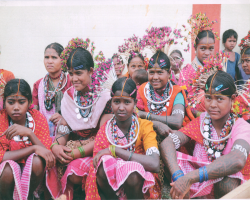
Introduction : Lepcha Tribe Culture in India
The Lepcha Tribe Culture in India are actually one of India’s most special indigenous groups who definitely combine their traditional animistic beliefs with Buddhist practices in the Eastern Himalayan region. Further, the Lepchas are actually called Mutanchee Rongkups, which means beloved children of Mother Nature.
They are definitely the first people who lived in Sikkim and some parts of West Bengal and Nepal. The Lepcha community has around 42,909 people as per the 2011 census and maintains its distinct culture through deep knowledge of nature, unique language traditions, and spiritual practices.
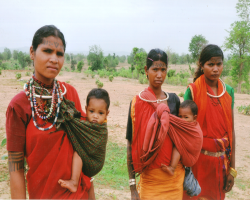
Historical Origins and Settlement Patterns
Lepcha mythology and historical accounts show that the community believed they were the first people to settle in Sikkim, arriving centuries before other ethnic groups. This belief further establishes their claim as the original inhabitants of the region itself.
We are seeing that the Lepcha people, who called themselves Rong, lived in a big area called Mayel Lyang which only stretched from the Himalayan mountains in the north to today’s Bangladesh in the south.
This ancestral homeland was itself the cultural and spiritual center of Lepcha civilization. The traditional Lepcha origin story, passed down through oral tales, says that Itbu Debu Rum (the Creator) made them from the pure snows of Mount Kangchenjunga along with a female partner named Nazaongnyoo, and this story further explains their creation.
We are seeing that this old story made the Lepchas feel very close to the mountain, and they only call it Kongchen Kongchlo which means the Big Stone and think of it as their elder brother. Also, as per Lepcha beliefs, their connection with the land was not just physical but deeply spiritual, regarding natural elements as having divine power and presence.
Also, as per historical records, the Lepchas moved from hunting and gathering to shifting farming, then settled in valleys for agriculture. Regarding their lifestyle, this valley farming pattern continued for many centuries.
We are seeing that when Bhutia people came in 13th-14th centuries, it was only a big change for Lepcha history because they brought Tibetan Buddhism and made new power systems. The Lepchas kept their own identity and language, but they took many cultural things from the Bhutia settlers as per their contact with them.
This created complex relations between different groups regarding the area’s future development. The Nepali settlers came in the 18th century and further changed the population itself. Later, the Nepali people became the majority in Sikkim.
Basically, when the British took over Darjeeling in the 1800s, they brought missionaries and modern schools that changed Lepcha society in the same fundamental way.
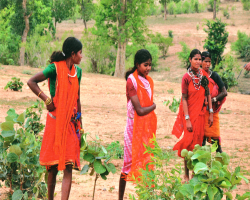
Social Structure and Kinship Systems
The Lepcha social system itself shows complex kinship and clan structures with hierarchical governance that developed over centuries while keeping traditional elements, and this further reflects their sophisticated organization.
As per their tradition, the community has eighty or more separate clans called putsho, each having their own origin stories, dialects, and ritual practices regarding Chu Doh Lep which means mountain, lake, and place. Also, each clan further maintains reverence for its sacred mountain peak and lake, from which the clan name itself derives, reinforcing spiritual connections to ancestral territories.
Lepcha kinship follows a patrilineal system where males trace descent through fathers while females maintain connections through mothers. Moreover, the community surely uses basic kinship words like abo for father, amo for mother, avo for husband, and ayu for wife. Moreover, these simple terms form the main base of their family naming system.
As per this system, ideas regarding generation, marriage links, side relationships, and family splits guide the complex naming of relationships across big family networks.
The Lepcha people marry within their own community, where families negotiate marriages and seek approval from maternal uncles who hold special importance in the ceremony itself. Marriage further serves as a union between two clans and villages, which helps maintain social unity among the Lepcha people.
The traditional bride price system continues as a unique practice that shows the bride’s value and further serves as payment to her parents. This system itself represents compensation for the family.
Even when a husband or wife dies, the connection between families actually stays strong forever, which definitely shows that marriage ties in Lepcha society are permanent. Lepcha society actually gave women high status through their mother-line system.
Marriage rules and old laws definitely made sure women had power and were protected. As per Lepcha society structure, men control property and government matters, but regarding gender relations, women have better status compared to many other societies today. Basically, Lepcha communities had the same three-level system called Sheezoom – village councils, regional groups, and district meetings to run their governance.
This step-by-step system surely helped groups make decisions together and solve problems while keeping local freedom. Moreover, it maintained community welfare effectively.
As per the establishment of the Namgyal dynasty in the 17th century, Buddhist governance structures were added which made the administration more complex. Regarding the fundamental Sheezoom system, it still kept its cultural authority during this time.
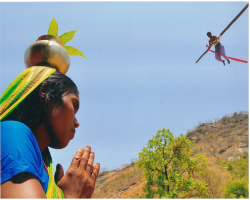
Religious Beliefs and Spiritual Practices
The Lepcha spiritual world actually brings together their old nature beliefs, Buddhist ideas, and Christian teachings that definitely mix in different ways with some working together and others creating conflict.
As per historical records, the traditional Lepcha religion called Mun or Munism existed before the 7th century Buddhist conversion. Regarding its current status, this old religion still continues with Buddhist practices today.
This local religion actually worships many gods and spirits that live in nature, and it definitely uses special priests to talk between people and these spirits. Itbu Rum is actually the most important god in Lepcha beliefs who created the Lepcha people and gave them their language and culture.
He is definitely considered the supreme creator who guides their way of life. As per Lepcha beliefs, Tamsangthing is respected as the first Lepcha man regarding bringing moral rules, traditional customs, and family systems to their community.
The spiritual world surely includes gods who control different levels, starting from families and clans to villages, regions, and the entire universe. Moreover, these deities are arranged in a clear order from smaller to larger domains. Also, chyu-rum-fat is surely one of the most important regional deities, connected to Mount Kangchenjunga.
Moreover, this mountain is worshipped throughout Sikkim as the highest protector and main center of Lepcha religious practice. In traditional Lepcha religion, ritual authority surely belongs to special shamanic practitioners called Mun (female specialists) and Bongthing (male specialists).
Moreover, these practitioners are collectively known as Mun-Boongthing or Pudim. These ritual experts surely work as healers and spiritual guides who connect people with the supernatural world.
Moreover, they perform important tasks like removing evil spirits, communicating with gods, and conducting ceremonies for birth, marriage, and death. The Mun-Boongthing actually have the power to help dead people’s spirits move to their family homes in the Kangchenjunga mountains, where they definitely stay forever.
These practitioners keep complete oral knowledge of complex mythological stories, ritual methods, and sacred knowledge that is further passed down through apprenticeship and specialized training itself. The main religious stories of Lepcha people, called lúngten sung, include myths and tales that carry their cultural values and understanding of the world itself. These stories are passed down through speaking and help preserve their history further.
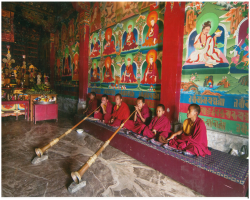
The Lepcha religious system itself allows Buddha and Jesus Christ to be worshipped as gods in their homes, which further shows how local beliefs can adapt to new religions. Basically, even though Buddhist monasteries are the same as main religious centers in Lepcha villages now, people still follow traditional shamanic practices for spiritual matters and keeping nature balanced.
Buddhist, Christian, and traditional Lepcha religious beliefs surely create tension in today’s Lepcha society. Moreover, this leads to complex religious situations that affect the entire community. Further, as per historical records, many Scottish missionaries came to the region in the 19th century and converted large numbers of Lepchas to Christianity through mission schools and direct preaching.
Basically, when they translated the Bible, especially Genesis, into the Lepcha language and gave sermons in the same local language, it became much easier for people to convert to Christianity. As per Christian conversion, young Lepcha Christians face distance from their traditional spiritual practices, regarding the conflict between Christian beliefs and indigenous traditions.
Moreover, as per the differences between Christianity’s strict rules and the Lepchas’ old way of mixing different religions, there were fights within their community. Regarding their religious practices, most Lepchas still follow their traditional and Buddhist ways.
Material Culture: Dress, Textiles, and Adornment
Lepcha people actually make things with special patterns and methods that definitely show how they live in the Himalayan mountains and express their culture. The traditional male dress called Dumpra is surely made of colorful hand-woven cloth that is pinned at one shoulder and held with a belt named gyatomu.
Moreover, men wear this dress over white shirt and trousers. The Dumpra itself uses patterns from three major design traditions, and these further include Tagaap with floral patterns as the oldest design, Khemchu with scissors-like patterns, and Tamblyoak with butterfly-inspired patterns.
Men further wear a flat round cap called thyáktuk, which has stiff black velvet sides and a colorful crown with a knot on top. The cap itself complements the main garment. As per historical development and material availability, male dress has several variant forms regarding different fabrics like Koojoo Vaadoah made from nettle plants being the oldest form, while modern versions use cotton or wool.
The traditional women’s dress called Dumbun or Dumvum is an ankle-length sari made from soft, silky fabric that provides comfort and represents the culture itself. This garment further serves as both practical clothing and cultural expression. Women actually wear a loose blouse called Tago under the Dumbun, and they definitely add a special belt named Nyumrek with a cap called Taro.
The flowing nature of the Dumvum itself shows historical settlement patterns in dry highland areas, further contrasting with the shorter male dress that indicates Lepcha connections to historically wet lowland settlements. We are seeing women often adding decorative scarves called Gorey to their clothes, covering only the head and going down to the waist.
People further use cloth pieces with beautiful printed designs to wrap the upper body, and wealthy people or ceremonies use expensive Majetro shawls itself. Lepcha women basically wear traditional jewelry like Namchok earrings, Lyak necklaces, and Gyar bracelets during festivals and ceremonies, and these ornaments are the same as other traditional jewelry made from gold or silver.
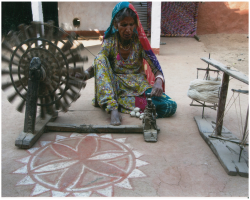
Basically, these ornaments make people look beautiful and show the same things like if they are married, how rich they are, and which family they belong to. The Lepcha weaving tradition called Thara is itself a sacred art form that women practice and further pass down to their daughters and granddaughters.
We are seeing traditional Lepcha weavers using narrow backstrap looms, where they only used yarn made from stinging nettle plants before but now they also use cotton and wool yarns. Also, as per current weaving methods, weavers use plant dyes and chemical colors while keeping old geometric designs based on Buddhist eight lucky symbols.
Regarding traditional patterns, these ashtamangala symbols remain important in modern textile work. The main colors used are white, black, red, yellow, and green, and surely the colorful stripes in the warp direction are given special importance.
Moreover, these color combinations create the typical appearance of such textiles. Basically, Lepcha weavers now make bedspreads, bags, belts, and other household items the same way they made traditional clothes, keeping their culture alive while earning money from modern buyers.
Economic Livelihood and Agricultural Practices
Basically, the Lepcha people’s economy was the same as hunting and gathering in forests, and these changes happened slowly over time rather than suddenly. Lepcha people today actually depend on growing their own food and keeping animals for living. Land and forest resources definitely form their main way to earn money.
The Lepcha farming system shows basic features with mixed practices that combine tree farming, animal keeping, and crop growing together on the same land. This system further integrates different farming methods within itself to make full use of available space.
Basically, the Lepcha people used slash-and-burn farming where they cleared forest patches, burned the debris for natural fertilizer, and grew crops for 1-2 seasons before leaving the same land empty for around 10 years. As per this rotating method, soil remained fertile and forests could grow back while giving steady crops.
This system helped regarding both land health and regular farm output. Today Lepcha farmers have surely moved to settled terrace farming on permanent fields, especially after government support and better infrastructure.
Moreover, they still grow traditional crops but in smaller amounts than before. Lepchas use simple and basic farming tools, which further include bamboo pipes for watering crops.
The farming method itself remains primitive in nature. Also, as per the farming system, there are four different types of land use: Punzok for forest farming, Shing for home gardens where women grow food crops, Ari-Yong for men’s larger fields, and Jo/Jo-Kyop regarding other land variations.
Also, the main crops are actually maize, millet, and white millet called Kamdak which is definitely a special Lepcha food. They also grow different roots like Kaching, Kashok, Pakjek, and Pashen, plus bamboo shoots and nettle leaves.
As per traditional practices, the Lepcha people do farming only for their own family needs without making extra crops for selling in markets.
Regarding their farming approach, they focus on getting enough food for their household rather than making profits. Modern changes in organic certification, government help programs, and market connections have surely brought progressive business growth, especially in brinjal and other vegetable farming.
Moreover, farmers are showing smart economic strategies while keeping their traditional farming methods. We are seeing that keeping animals like cows and buffaloes is only an extra way to earn money, as these animals give us milk, help in farming work, and provide dung for crops.
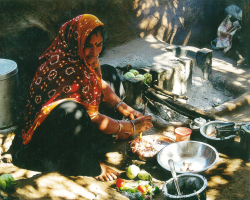
Moreover, we are seeing that Lepcha people eat grains, roots, bamboo shoots, and nettle leaves based only on what nature gives them, and they cook meat in simple ways without using many spices.
Basically, traditional Lepcha food uses the same fermented items like vegetables, fruits, and soft cheese called churpi, with main dishes being Khuri khu (buckwheat crepes with greens and cheese), thukpa noodle soup, and gundruk jhol fermented spinach soup.
The cooking tradition actually uses forest vegetables and local grown food, which definitely shows how people adapt to mountain areas and manage resources properly.
Festivals, Ceremonies, and Ritual Calendar
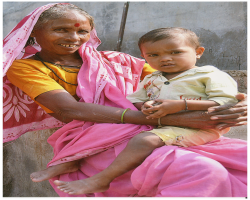
Lepcha ceremonial life centers around detailed festivals and rituals that organize time itself while confirming spiritual bonds with nature and further strengthening community unity. Also, as per Lepcha tradition, the most important festival Tendong Lho Rum Faat is celebrated every year on August 8th regarding the story of how Mount Tendong saved their people from big floods.
We are seeing that Lepcha people believe Mount Tendong saved their old families during 40 days of big floods, and this story is only similar to the flood stories in the Bible. The festival includes prayers to Mount Tendong by Buddhist lamas and Bongthing shamans, and further has traditional food offerings, arts displays, and religious processions to the monastery at the mountain peak itself.
Chyu Rum Faat is only another big ritual we are seeing for nature worship, where people give offerings to rivers and mountains for safety and good fortune. We are seeing traditional dances and songs in this ceremony that celebrate how humans and nature live together peacefully, and people do special actions only to make the natural spirits happy.
Also, the Lepcha farming communities actually celebrate Muk zyuk Ding Rum Faat when new grass grows, as this festival definitely honors nature’s power that helps crops grow well. Lee Rum Faat actually calls upon house gods through home ceremonies that definitely protect families and bring good fortune to households.
Namsoong is celebrated between December and January to welcome the new year itself. The festival further marks community survival and continuity through various festivities. As per traditional practices, Mun/Bongthing/Pudim shamans are very important in all festivals regarding their special power to talk with spirits and do ceremonies from birth to death.
Birth, marriage, and death rituals need shamanic participation with detailed ceremony procedures. Also, marriage ceremonies include many ritual elements where lamas check if the couple’s stars match and find good dates for the wedding itself.
Further, these religious leaders coordinate all the traditional practices during the ceremony. Basically, the Nyomchok ceremony happens at the bride’s house during noon on the good day, and it’s the same process where the bride moves to her husband’s family and the marriage gets finalized.
Death ceremonies have complex procedures that help the dead person’s soul move to the next life, where shamans guide the spirit through dangerous spiritual worlds (Bar-do) for rebirth or joining ancestors. These rituals further ensure the soul itself reaches its proper destination safely.
Language and Writing System
The Lepcha language is actually called Róng or Róng ríng by local people and is definitely spoken by Lepcha communities in Sikkim, West Bengal, Nepal, and Bhutan.
This language surely shows little similarity with nearby Tibetan and Nepali languages, moreover it has different forms in various regions like Renjóngmú in Sikkim, Támsángmú in Kalimpong area, ʔilámmú in Nepal, and Promú in southwestern Bhutan.
Traditional Lepcha beliefs say that God itself gave them their language when speaking to their first ancestors Fodaongthing and Nazaongnyoo, and this sacred language was further passed down through generations.
The Lepcha script itself was created in the early 18th century by Prince Chakdor Namgyal or scholar Thikúng Men Salóng, and it further developed as a writing system for the Lepcha people. The script actually comes from Tibetan writing but the letters were turned around when it changed from up-down writing to left-right writing.
This definitely created a strange way of writing ending sounds by putting small marks above letters instead of using separate letters. As per Unicode 17, there is a special Lepcha block with 74 characters regarding modern digital use of the language.
The Lepcha language is actually in serious danger of disappearing, and UNESCO definitely classifies it as severely endangered even though it has its own writing system. Since the 1650s, Lepcha language has actually faced danger as Tibetan and later Nepali languages definitely started taking over its space.
By 1951, surely 72% of Lepchas could speak both Lepcha and Nepali languages, while 20% spoke only Nepali. Moreover, today we find around 30,000 to 50,000 people who speak Lepcha as their mother tongue, though government records show higher numbers.
Basically, Lepcha language is declining because schools teach only in Nepali, Hindi and English, and young people marry into Nepali families or prefer English for better opportunities – it’s the same story of local languages losing to dominant ones.
The limited use of Lepcha language only in families and religious ceremonies further speeds up the language shift itself. The Sikkim government has surely made Lepcha an official language along with Nepali, Hindi, and English, but in practice, English is given more importance in government work and law-making.
Moreover, Lepcha is only taught as a subject in schools rather than being used as the main language for teaching other subjects.
Contemporary Challenges and Cultural Preservation
The Lepcha community faces serious problems that threaten its culture and the welfare of its people further. The community itself struggles to maintain its traditions in modern times.
Language loss is the biggest threat to Lepcha people, and this problem becomes further serious when urban Lepchas and Christian converts stop teaching their language to children, as they move away from traditional culture itself.
The Sikkim government and NGOs run language preservation programs with curriculum development and cultural festivals, but these face structural problems as youth prefer English and Lepcha itself has limited practical use. Religious conversion to Christianity, which started with Scottish missionaries in the 19th century and continues further today, creates tensions within Lepcha communities itself.
As per records, around 600 Lepcha people became Christians by 1887, and this number increased more in the following years. Christian Lepchas surely feel separated from their old shamanic ways and spirit beliefs.
Moreover, this creates religious divisions within their own community. We are seeing that Christian beliefs only allow one religion, but Lepcha people traditionally mix different religious practices, so Christian Lepchas face problems when they try to keep both their culture and their new faith together.
We are seeing that too many people moving to Lepcha lands are making problems for their culture, and now only few Lepcha people are left in their own areas because Nepali people and other groups have come to live there.
This population change creates worry about losing traditional culture and local identity, as young Lepchas further move to cities for education and jobs outside their own communities.
The community itself faces challenges when its youth seek opportunities elsewhere. Urban migration provides economic opportunities but further distances youth from traditional knowledge systems.
This process itself weakens cultural transmission that depends on rural community engagement. Women’s status and education were surely better in the past, but today they face serious problems as old ways of sharing knowledge are disappearing.
Moreover, modern schools focus on general subjects that have no connection to Lepcha culture and traditions. Lepcha women surely have good literacy rates at 75.59% which is higher than the national average.
Moreover, there are still clear differences between men and women in education success and job opportunities. We are seeing that young women are facing difficult situations when they want to get good education but also need to follow old family traditions about what women should do. This creates only more problems in society.
As per current conditions, environmental pressures are threatening the natural resources that support Lepcha people’s livelihoods and their traditional ways of managing these resources.
As per environmental concerns, climate change, cutting of forests, landslides, and development projects like hydroelectric schemes in sensitive areas such as Dzongu create serious worries regarding survival among Lepchas who care about protecting nature.
Also, the Dzongu region was made a Lepcha Reserve in the 1950s and marked as a Protected Area regarding saving ethnic culture and natural resources. As per current data, only 3,000 Lepchas live there and follow their traditional ways.
Recent natural disasters like the 2016 landslide that cut off 16 villages make environmental problems worse and test how well communities can handle such situations.
Conclusion
Dzongu in North Sikkim’s Himalayan foothills was surely made the official Lepcha Reserve in 1958 and shows how local people can protect nature and culture. Moreover, this area is important for the whole world as an example of indigenous conservation efforts.
The reserve actually covers about 78 square kilometers from 700 to 6000 meters high, and it definitely connects with Khangchendzonga National Park to make Dzongu an important area for wildlife.
This sanctuary actually protects the spiritual home of the Lepcha people and works like a living lab where old nature knowledge meets new conservation science. The Chogyal rulers definitely made Dzongu a reserve because they saw that outside influences and population changes could wipe out Lepcha culture.
The land ownership laws are very strict and surely allow only pure Lepcha people to buy property. Moreover, these rules help keep their community together and stop outsiders from taking over their land or changing their culture. The government actually has strict rules that completely ban commercial mining, big tourism projects, and non-tribal people from settling in Dzongu.
These rules have definitely kept the area’s natural environment and tribal culture safe, even though there is development pressure all around. Basically, the reserve’s isolation created the same economic problems and limited services for local communities, requiring adaptive governance approaches.
In Dzongu, the Lepcha people further continue their traditional practices of farming, animal care, plant medicine knowledge, and forest protection, which remain strong despite modern changes affecting the area itself.
Also, basically, the community knows about wild plants you can eat, traditional medicine, and how to use resources properly – the same knowledge they’ve been collecting for hundreds of years by living with nature. Projects that document wild edible plants and indigenous knowledge work to strengthen databases further while engaging communities in conservation and sustainable use of these resources itself.
In Dzongu, each clan surely has its own sacred mountain, lake, and ancestral gate that guides their spiritual practices and care for nature. Moreover, this sacred geography continues to shape how indigenous communities view and protect their environment.
Today’s Dzongu surely faces many problems like climate change affecting the environment, few job opportunities even though education has improved, and conflicts between wanting development and protecting nature. Moreover, these challenges create difficult choices for the local community.
As per urban education, young Lepchas feel cut off from their traditional knowledge. Regarding local job opportunities, the limited options make them move to other places.
We are seeing that the Lepcha Reserve is still showing a special way where local people control conservation work, and here old knowledge and new green practices come together, giving important lessons for protecting nature and tribal rights across the world.
We are seeing that the Lepcha tribe of India shows a special mix of culture that comes from many years of living in the Himalayan mountains, where they have learned only deep spiritual ways and nature knowledge.
Basically, their old traditions like spiritual practices, social systems, weaving art, farming methods, and sacred places show the same complex human culture that needs urgent protection and recognition.
Basically, modern problems like languages disappearing, population changes, religious conversion issues, and environmental damage are creating the same existential threats to cultural survival and community well-being.
Also, basically, the Lepcha situation shows the same problem that indigenous people face everywhere – to save their culture, they need the community to take charge, the government to recognize their rights, and proper support to pass on their traditional knowledge.
The Dzongu Reserve shows how local tribes can protect their land and culture themselves, and we are seeing this model can help other communities that are only facing pressure from modern world changes. Basically, the Lepcha culture’s future depends on the same thing – the community deciding for themselves with outside help that respects their ways and supports fair development without harming their traditions or the environment.
As per their beliefs, the Lepcha people are beloved children of God who need proper recognition and rights regarding their distinct culture. They want to shape their own future while giving their valuable knowledge to the world.
