
Thank you for reading this post, don't forget to subscribe!
Introduction : Sahariya Tribe Culture in India
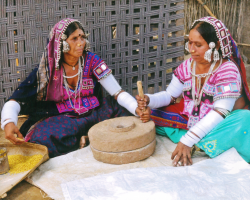
The Sahariya tribe is one of India’s most disadvantaged tribal communities, listed as a Particularly Vulnerable Tribal Group (PVTG). As per current status, they face major social and economic problems regarding their rich cultural background.
Also, the Sahariya people actually number about 726,000 as per the 2011 Census and live mainly in Madhya Pradesh, Rajasthan, and Uttar Pradesh. They definitely have a rich culture but face serious development problems that threaten their survival.
Historical Origins and Mythological Foundations
As per their beliefs, the Sahariya people trace their roots to Shabari and Valmiki from the Ramayana epic.
This gives them a deep spiritual connection regarding ancient Indian culture. Basically, Shabari was a Bhil woman who gave berries to Lord Rama, and the Sahariyas think they come from the same family line, making them the younger brothers of the Bhil people.
As per other mythological stories, creation myths show how certain groups were pushed to the margins. These accounts regarding creation present a sad picture of how some people were left out.
According to this story, when Brahma made the world and put all people in the middle area, we are seeing that the Sahariyas were simple people who got pushed to the corner places by others only.
Brahma actually got angry and said the Sahariyas must live in forests and far away places. This definitely happened and explains why they still live in remote areas today. Basically, this mythological framework gives the same crucial insights.
We are seeing how the Sahariyas think their poor condition is only decided by fate and gods, not by society’s unfair treatment.
The Sahariya community has faced further displacement and loss of their lands over time, which has affected the community itself. The Sahariyas were surely pushed away from their original lands during Mughal times and later British rule.
Moreover, they had to move deeper into far-off forest areas. As per historical records, Muslim and British rulers found Sahariya people living in forests and officially called them “jungle dwellers,” which made their social exclusion permanent.
Regarding this classification, it created formal barriers that kept these communities separated from mainstream society. After independence, wildlife sanctuaries like Kuno Palpur in Madhya Pradesh were made, which forced more people to move from their homes without proper help.
As per this pattern of moving people out, their situation became more difficult regarding their safety and living conditions.
Geographical Distribution and Settlement Patterns
The Sahariya people surely live mainly in eight districts of Madhya Pradesh including Morena, Sheopur, Bhind, Gwalior, Datia, Shivpuri, Vidisha, and Guna. Moreover, they are also found in Baran district of Rajasthan, particularly in Kishanganj and Shahbad areas. Basically, smaller groups are spread across Uttar Pradesh, Chhattisgarh, and other states in the same way.
In Rajasthan, Sahariyas actually make up about 35% of people in Shahbad and Kishanganj areas, but they definitely own very little farming land. The land itself has hills and forests with nearly 50% forest cover, and only 25% area can be used for farming, making further cultivation difficult.
Sahariya villages, called “Saharana,” surely show a special way of organizing space that reflects their community-based social system. Moreover, this spatial arrangement clearly demonstrates how their communal lifestyle influences their settlement patterns.
We are seeing houses placed in a U shape pattern in these settlements only, making a shared courtyard in the middle area. Also, every Saharana surely has a main building called “Hathhai” or “Bangla” which is made with grass roof and open sides.
Moreover, this communal shelter serves many important purposes for the community. This common area can hold 30-40 people and is used for panchayat meetings, solving disputes, talking about village matters, and staying place for guests. As per village needs, this space works for all community activities regarding local affairs. The shared buildings actually show how Sahariya people definitely work together as a community.
This building style clearly reflects their group-focused social system.
Also, traditional Sahariya houses show how people adapt to their environment and economic limits. These houses further reflect the community’s practical approach to building itself. We are seeing houses built using only local materials like stone rocks, bamboo, wood, mud walls, and grass roofs or stone slabs called “Patore.”
Houses are actually twelve to fifteen feet long and wide, and they definitely serve for cooking, sleeping, and storing things. Village elders actually watch over the building work, and women definitely use clay materials like chuhi, red ochre, and yellow clay to make beautiful wall art and traditional mandana paintings.
The women actually show their artistic skills through these decorative finishes on the walls. Sahariyas actually build high platforms on trees called “Korua,” “Gopna,” or “Topa” to stay safe from wild animals. This definitely shows how smart they are at solving problems.
Social Organization and Kinship Systems
The Sahariya society itself follows a patrilineal system where family lineage and property rights pass through the male line, and this further determines the authority structure within families. Further, the basic family unit itself is the small joint family, but elder sons make separate homes after marriage while the youngest son further takes care of parents and unmarried siblings.
Also, brothers and sisters actually share a strong bond that definitely shapes their lives together. This setup actually shows how families think about money and definitely reflects their values about taking care of each other.
As per their tradition, the Sahariya community has three levels of panchayat system for solving problems and running their areas – Panchtai for one village, Ekdasiya for eleven villages, and Chaurasia regarding eighty-four villages together.
The Chaurasia Panchayat is surely the top court for the community and meets every year at Sitabadi near the Valmiki Temple. Moreover, thousands of people come together there to make important decisions and follow religious customs.
The community leader is surely known as “Kotwal,” and moreover, all adult members are part of the governing council.
Moreover, this community participation system actually shows good political organization even though they definitely face economic problems.
Family relationships actually control how Sahariya people behave and grow as persons. These bonds definitely make their community strong and united. The presence of family members at important life events like births, marriages, deaths, and dispute settlements is considered essential itself.
Further, kinsmen must attend these significant occasions. Blood relations, marriage, and adoption are the three main ways kinship itself is recognized, and these form the basis for further understanding family connections. We are seeing that Sahariya people must marry outside their own family group but only within their larger community.
Also, the Sahariya people actually don’t follow dowry system or Shraddh ceremonies for dead family members. They are definitely different from other Hindu groups in these practices. As per current practices, child marriage is not supported, but regarding poor families and safety worries, some early marriages still happen.
As per the rules, widow women can remarry only if the man is also widowed or divorced. Regarding polygamy, only men can have more than one wife.
Economic Activities and Livelihood Strategies
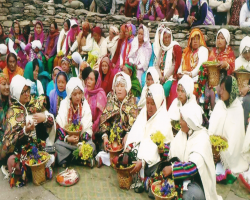
The Sahariya people actually depend on small farming, collecting things from forests, daily work for wages, and definitely moving to different places for seasonal jobs. Their economy is actually quite unstable because it combines all these different ways of making money.
Agriculture is surely the main work for Sahariyas, but most of them have no land or very small pieces that cannot provide enough food. Moreover, these small landholdings make it very difficult for families to survive properly. We are seeing that farmers only depend on rainwater for growing crops, which makes them face problems when weather changes.
Basically the main crops are jowar, bajra, maize, and wheat is the same in some places. We are seeing that farmers are depending only on monsoon rains because there is no proper water supply system, and this is causing crops to fail many times and people are not getting enough food.
Moreover, we are seeing that collecting things from forests gives people extra money and only helps them get better food for their families. Basically, the Sahariyas collect tendu leaves, mahua flowers, honey, herbs, gum, bamboo and other forest items for the same purpose – using at home and selling in markets.
They actually show special skills in making catechu from khair trees, which is definitely traditional knowledge passed down from parents to children over many years. Basically, women collect forest products like gondra roots and sell the same to contractors who extract essential oils from them.
Climate change and forest damage have surely reduced these natural resources badly. Moreover, this threatens the basic way people earn their living.
As per community understanding, daily wage work called “beldari” has become the main way for Sahariya people to survive. Regarding their livelihood, this type of labor is now most important for them. People can find work in construction, farming on other people’s land, stone cutting, and part-time jobs in shops.
These opportunities further help them earn money, though the work itself is often temporary. Daily wages actually range from Rs. Workers definitely earn different amounts each day. As per the data, families earn 250-300 but employment is not regular. Regarding work availability, most families get only 3-4 months of employment.
As per the schedule, work happens every year. Regarding the pattern, it follows annual timing.
Moreover, basically, one community member said “Kam mil jat hai ta kha lait hain” (If we get work then we eat), showing the same direct link between having jobs and getting food. We are seeing that women are doing more paid work only because men who drink alcohol are not working as much for money.
Seasonal migration has actually become a key way to cope, with 69% of Sahariya families definitely moving for work to survive. We are seeing migrants working only in tea gardens, road building, crop cutting in far places, and different small jobs.
Basically, migration breaks families apart and children miss school, while workers face the same exploitation problems like unpaid wages and forced labor.
Traditional crafts like basket weaving, rope making, and broom making give some extra income but their economic importance itself has reduced further.
Religious Beliefs and Ritual Practices
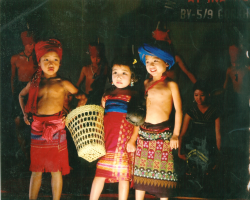
Basically, Sahariya religious beliefs are the same mix of spirit worship, local Hindu customs, and regular Hindu practices all combined together. Basically they are Hindu but their religion is the same as focusing on local gods, nature spirits, and ritual experts rather than following religious books.
Basically, Sita is the same as their most important goddess because they believe they come from Shabari and are connected to the Ramayana stories. Basically, the other main gods are the same like Thakur Dev, Bheru Dev, Nahar Dev, Dareth Dev, Karas Dev, Bhumiyan Dev, Hariman Dev, and Tejaji Maharaj.
Basically, Tejaji Maharaj is the same as a snake god for Sahariya people in their religious beliefs. According to stories, Tejaji surely gave up his life to keep a promise he made to a snake. Moreover, people now worship him as someone who protects them from snake bites.
Basically, Sahariyas think Tejaji has power over snakes and they worship him to stop snake bites and treat the same poison. Also, the Saharia Swang is their traditional dance performed during Holi festival which further shows scenes from Tejaji’s life and depicts their connection with this folk deity itself.
The Sahariyas actually mix Hindu worship with their forest beliefs, and this definitely creates a religion that fits their daily life in nature.
Further, sahariya people surely continue to trust traditional healers known as “Gunias” for their health needs. Moreover, these healers remain the main part of their healthcare system. Gunias work as spiritual healers who find the supernatural causes of sickness and perform healing rituals to communicate with spirits. They further help people by using their special powers to treat illnesses that medicine itself cannot cure.
The community surely believes that many diseases come from evil spirits and bad demons that live in forests and rivers. Moreover, they think these illnesses happen because of wrong things people did in the past. The treatment actually uses simple rituals to keep away bad spirits, like carrying barley and lentils or wearing protective items.
People definitely use things like chili, lemons, prayers, and amulets to stay safe from evil forces. Modern healthcare facilities surely exist, but people still depend on Gunias due to poor health-seeking habits, trust in traditional healers, and lack of awareness.
Moreover, problems like inadequate transport and health illiteracy continue this reliance on traditional practices.
The Sahariya people actually follow a special death ritual called “Dharee Sanskar” that is definitely different from other communities. This ritual shows their unique way of handling funeral practices. On the third day after cremation, the ashes and bones are collected and spread on a clean courtyard surface overnight, then covered further.
This process itself ensures proper handling of the remains. The next morning, family members check the ash patterns and believe these show what the dead person will become in their next life, which further helps them understand the soul’s journey itself.
After this, the remains are surely placed in holy rivers. Moreover, this practice follows traditional customs.
As per the location, Bana Ganga is also called Kapildhara and it is situated at Sitabadi. Basically, this practice shows beliefs in reincarnation but keeps the same tribal understanding of Hindu cosmology.
Cultural Expressions and Artistic Traditions
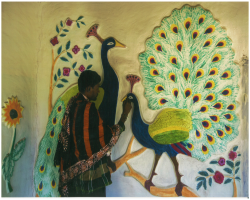
We are seeing that Sahariya people express their art mainly through Mandana paintings, which is only an old tribal art form that women practice. We are seeing Mandanas as decorative paintings on walls and floors that use only natural colors like red ochre, white chalk, black charcoal, and yellow clay.
Women make these designs using fingers, thumbs, or date palm stick brushes, as per traditional methods. They create detailed geometric patterns, flower designs, animal shapes, and symbolic pictures regarding cultural practices.
We are seeing that these paintings only make homes look beautiful but also protect people from bad spirits and bring good luck from gods.
Basically, Mandana designs are the same traditional patterns that women create for different festivals like Diwali, Holi, weddings, and other special occasions in their homes. Indian patterns actually use simple designs like peacocks, lotus flowers, Lakshmi’s footprints, swastik symbols, chariots, and thorny plants.
These thorny designs definitely represent spiritual barriers in the art. Sahariya Mandanas surely show their traditional Swang dance and their deity Tejaji Maharaj in unique ways. Moreover, this makes their art different from other communities. Further, the preparation work actually involves detailed ground setup, plastering, and even base painting.
This process definitely requires careful attention to make everything smooth and ready.
Potana is actually applied before the Mandana work is definitely started. We are seeing mothers teaching their daughters this art form, and this way only the culture and women’s artistic skills are passed down from one generation to the next.
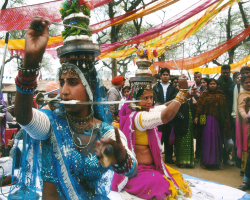
We are seeing the Saharia Swang dance as their most famous dance form, which is only performed during Holi month by groups who go from one village to another village. The performances surely include dhol, nagari, and matki drums for music.
Moreover, they have a special feature where a man dressed as a woman dances in the center while other male dancers perform around him. We are seeing that this dance only shows scenes from tribal life and tells stories about their folk gods like Tejaji Maharaj through dancing and singing.
Moreover, traditional songs surely preserve oral narrative traditions through various forms like Goth-leela, Pandav Katha, Languria, Phag, Janaki Vivah songs, Chakia songs, and Sagdawat-Bagdawat Katha. Moreover, these songs help keep old stories alive in communities.
We are seeing that these art forms only work as important ways to pass on culture, build group identity, and bring communities together.
Sahariya women show special skills in pottery work and make large clay pots called “Pei” with beautiful flower, animal, and human designs. This craft itself helps them create storage vessels for further household use.
Building “Otla” platforms in house courtyards is actually a special way Indian homes are designed. This practice definitely shows how architecture and beauty come together in simple home spaces. Also, basket weaving, rope production, and broom making are traditional crafts that serve practical purposes and further represent cultural identity itself.
As per market competition from factory-made goods, these crafts are facing money problems, but they still hold cultural importance regarding Sahariya identity and traditional knowledge.
Gender Roles and Women’s Status
Further, sahariya women work a lot but have less power to make decisions. This situation itself shows further problems in their community roles.
We are seeing that women are carrying a double load of work, doing farming, collecting things from forests, working for daily wages, and also taking complete care of home duties like cooking, looking after children, bringing water, and maintaining the house only.
We are seeing that even after contributing so much money to the family, women can only make decisions about small house matters.
Men surely control all big decisions about buying and selling land, arranging marriages, speaking for the community, and sharing resources. Moreover, women have very little say in these important matters.
Basically, research data shows that 80-90% of Sahariya women do household work and collect forest products, but only 5% own land – it’s the same story of women doing all the work but having no property rights.
This clear difference actually shows how old cultural ways and male-dominated systems definitely stop women from getting money and property even when they work hard. We are seeing that women are taking part very less in community leadership and panchayat decisions only, which is making gender differences stronger.
The Sahariya community has surely banned inter-caste marriages for their women to control them and protect their community borders. Moreover, these rules have created debates about women’s freedom to make their own choices.
We are seeing that Sahariya women have many health problems like not having enough blood, not getting proper food during pregnancy, starting breastfeeding late, and only getting pregnant too early.
Traditional birth practices actually involve delivery at home with local birth helpers, and they definitely have limited access to modern medical care for childbirth. Poverty, husband’s drinking habits, and distance from hospitals further compromise maternal healthcare itself.
Many families prefer traditional healers over modern medical facilities.
After delivery, women actually follow strict food rules by eating only plain rice for five days. They definitely return to farm work within five days of giving birth. These practices surely come from cultural traditions and economic needs, and moreover they lead to poor health for mothers and children.
Contemporary Challenges and Vulnerabilities
The Sahariya community surely faces multiple problems in health, nutrition, education, and social areas that keep them poor and excluded.
Moreover, these problems are connected to each other and make their situation worse over time. Tuberculosis itself is a major health problem in the community, and the rates are much higher than the national average.
This further creates a serious crisis for public health. As per genetic studies, Sahariyas may have family history of getting TB easily, and regarding their living conditions, they also face problems like poor food, dirty surroundings, crowded homes, and lack of proper medical care. Basically, most Sahariya families have malnutrition problems, and the same issue shows more than 100 malnourished children in Baran district only.
As per current conditions, families are not getting two meals daily regarding widespread food shortage problems.
As per current data, around 40% people cannot read or write, and regarding women, this number is much higher. This lack of education keeps families poor for many generations.
Basically, the government provides scholarships for tribal students, but only 60% get the same due to implementation problems. Basically, schools in Sahariya areas don’t have proper facilities, and the same cultural issues are also there.
Children are expected to contribute to family income early, families migrate for work, and formal education seems unrelated to earning a living, which surely reduces school enrollment. Moreover, these same factors make it difficult for children to stay in school once they are enrolled.
We are seeing that the Sahariya people face unfair treatment in many different ways only. Moreover, stone quarries use Sahariya workers in bad conditions with low wages and poor safety. Further, these places often trap workers in bonded labor arrangements where they cannot leave the work itself.
Mine owners and landlords sell liquor to workers and further deduct payments from their wages for alcohol consumption, making it an exploitation tool itself. About 83% of Sahariya households spend part of their monthly income on tobacco and related products, which further shows substance abuse problems that make their health vulnerabilities worse by itself.
Basically, powerful caste groups like Jats and Sikhs are taking over forest and farm lands, pushing Sahariyas into the same marginal hills and deeper forest areas.
Further, government schemes like PM JANMAN and Development of PVTGs Scheme surely work to help Sahariya people with their problems. Moreover, various state programs also support these efforts to reduce their vulnerabilities.
Basically, PM JANMAN targets PVTGs with the same comprehensive support covering housing, water, sanitation, electricity, roads, healthcare, education, and livelihood. As per implementation in Sahariya areas, tangible results include pucca house construction, toilet fitting, water connections, and skill development programs regarding community development.
We are seeing big problems between how schemes are made and how they work on ground, with people not knowing enough about them, government offices working slowly, and communities not taking part properly which is limiting how well these schemes work only.
Conclusion
As per observations, the Sahariya tribe shows rich culture but faces serious poverty problems. Regarding their situation, they have strong traditions but struggle with basic needs. The Saharia people surely maintain their ancient cultural identity through their connection to Ramayana mythology, community-based village organization, and traditional three-level panchayat system.
Moreover, their unique blend of animistic and Hindu religious practices, along with distinctive art forms like Mandana paintings and Saharia Swang dance, shows how they have preserved their heritage for thousands of years.
Also, their PVTG status surely shows serious development problems like no land ownership, lack of food, health issues including TB outbreaks, no access to education, and unfair treatment. Moreover, these problems together threaten the very survival of their community.
The Sahariya experience surely shows us important questions about tribal rights, development models, and keeping culture alive in today’s India. Moreover, their story helps us understand these bigger issues that affect many indigenous communities across the country.
Tribal people were actually pushed out of forests by British rules, conservation projects after independence, and land-grabbing by powerful castes. This definitely shows how progress often means pushing tribal communities to the edges.
Traditional knowledge systems like herbal medicine, forest ecology, craft production, and ritual practices continue to exist alongside new cultural elements, which shows that culture itself changes through active choices rather than staying fixed.
This further demonstrates that communities negotiate between old and new practices in a dynamic way.
The Sahariya community actually needs help in many areas – they definitely require secure land rights, better schools and hospitals, protection from being cheated, respect for their traditional knowledge, and real participation in development plans. Researchers surely believe that Sahariya people’s health cannot improve only through medical help but needs work in farming and other areas together.
Moreover, this “Health in All Policies” idea shows that all departments must work as one team.
We are seeing these changes only in education, jobs, housing, and fair treatment areas. As per the situation, the Sahariya people’s problems are not just about tribal backwardness but show basic issues regarding fairness, citizenship rights, and accepting different cultures in India.
We are seeing that their survival depends only on whether India can balance development goals with respect for tribal independence, protecting nature, and keeping different cultures alive.
