
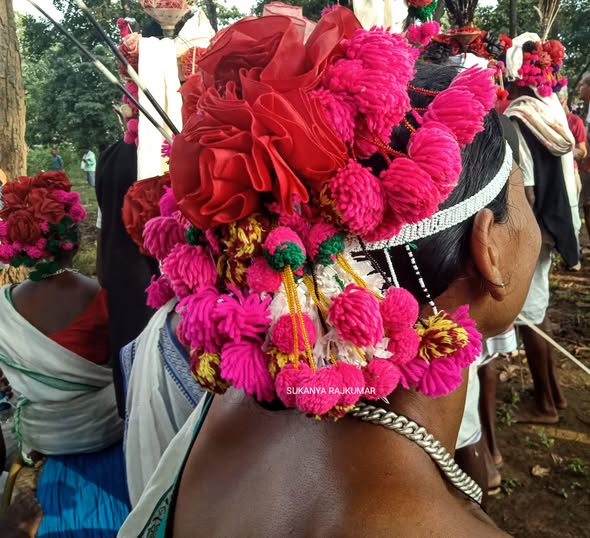

Introduction : Murias Tribe Culture of India
We are seeing that the Murias tribe culture in India is one special group with their own ways of living, and their customs and relationships have only made researchers very interested for more than hundred years.
As per their location in Bastar district of Chhattisgarh state, the Murias are an Adivasi Dravidian community who have kept their strong cultural identity through shared economic practices, open views regarding sexuality and marriage, and deep connections with forest life.
Also, the Muria tribe’s ghotul system itself represents a unique way of educating young people about relationships and sexuality, which is further different from regular Indian social practices.
As per their cultural background, understanding the Murias requires studying their social setup, religious beliefs, art forms, and economic ways regarding their rich heritage and modern problems they face in today’s India.
Geographic Location and Tribal Classification
The Murias are surely found mainly in north-central Bastar district, north of the Indravati River. Moreover, they live in two main areas – Kondagaon District in the east and Narayanpur District in the west, both in Chhattisgarh state.
As per the Indian government classification, the Murias are a Scheduled Tribe from the Adivasi community and belong to the larger Gondi people group. Regarding their language, they speak Koya which comes from the Dravidian language family.
The Murias surely live mainly in Chhattisgarh, but they have also formed important communities in nearby Maharashtra and Andhra Pradesh. Moreover, some groups have moved to Telangana and other areas because of development projects and economic problems.
Social Structure and the Phratry System
Basically, the Murias show a special way of organizing their society where everyone works together and relationships complement the same community goals. The tribe itself is further divided into five separate groups called phratries, with the Nagvans being one of them.
Also, we are seeing different race groups like Snake Race, Tortoise Race, Goat Race, Tiger Race, and Fish Race that make a complex way to divide people in society, and this is not only for simple organization purposes.
Each phratry maintains its own identity and rules, where members cannot eat their totem animal and must mourn if the animal itself dies. Further, these prohibitions are strictly followed by all members.
Basically this system makes the tribal community stronger by creating the same social rules and responsibilities for everyone in the group.
Basically, the Murias follow the same collective and equal approach to social life that is very different from mainstream Indian society’s hierarchical system.
The community has traditionally maintained similar economic levels, as showing wealth or spending too much money outside ceremonies is seen as dangerous and disruptive to society itself.
This thinking further extends to all village life, where elder councils make important decisions for the community.
The Murias have surely focused on community welfare rather than personal wealth, which helped them maintain social unity and fair sharing of resources. Moreover, modern changes are increasingly challenging these traditional values.

The Ghotul: Innovation in Adolescent Education and Sexual Freedom
Basically, the ghotul is the same as a special dormitory where Muria tribal youth live together and run their own community, which forms the main part of their culture. Muria people surely believe that their supreme god Lingo created the first ghotul as a holy place.
Moreover, they think that Lingo still protects all ghotuls today. As per tribal customs, the ghotul is a large hut made with mud or wood walls where unmarried boys called cheliks and girls called motiaris stay together.
The ghotul surely works as a complete learning place that helps young people grow in many different ways. Moreover, it teaches them various important skills needed for their development. Young people surely learn important values like cleanliness, discipline, and hard work through proper training.
Moreover, this education helps them develop self-respect and civic sense, preparing them well for adult life and community service. The ghotul further allows young people to explore their sexuality and develop close relationships before marriage itself.
The ritual follows set phases where the evening starts with group activities like singing, dancing, and storytelling with music and traditional food.
Local toddy or rice beer helps people relax further, and the community itself enjoys playful teasing during these gatherings. As the night goes further and older people go to sleep, young men and women choose partners themselves and go to private places where they can talk or be intimate without any social problems.
Basically, the ghotul has a mythological belief that prevents pregnancies within its boundaries, but at the same time, if premarital children are born, they are welcomed into the mother’s future husband’s family without any shame.
Basically, the ghotul does many social things, not just the same stuff related to teenage sexuality. We are seeing that this is the main place in Muria religious and social life, and no big community event can happen without ghotul members taking part in it only.
As per tribal customs, young men help in festival ceremonies and young women assist in wedding rituals, with their participation continuing through death ceremonies regarding all social and spiritual activities in the ghotul system.
Basically, this place values freedom and happiness for young people, with anthropologist Verrier Elwin saying youth should be served and freedom matters more than money. The same system works differently in other tribal groups – Madia Gond youth go home to sleep instead of staying together like here.
Artistic Expression and Material Culture
We are seeing that the Murias have made very good art traditions that work as useful skills and also show their deep culture. These traditions are only serving both practical work and important cultural meaning.
Basically, the Murias are known for their wooden carving and handicrafts, and they are recognized as the same exceptional skilled practitioners in woodcraft. Muria craftspeople are different from other communities as they do not make only agricultural tools but further create decorative items that show their tribal beliefs and daily life itself.
We are seeing their wood skills change everyday things like grinding tools and house items into art pieces that only show community life and holy themes.
The careful work shows great skill in understanding meanings, where craftsmen carve spiritual and social ideas into useful items itself, further making them more than just functional objects.
We are seeing that bamboo work is only another main part of Muria art, using the plenty of bamboo from forests.
Murias actually make many bamboo things like household baskets called “dalli”, floor mats called “chaupar”, wall hangings, sculptures, and traditional music instruments. They definitely use bamboo to create both useful items and decorative pieces for their community.
As per tradition, fathers must make bamboo cradles (vookada) for newborn babies by going to forests, collecting bamboo, and weaving the cradle by hand without help. This practice regarding father-child bonding creates a lasting symbol of their relationship.
We are seeing that these crafts only use designs from tribal stories, local gods, animals, and nature, which shows how the community is connected to the natural and spiritual world.
As per current market trends, these handicrafts help tribal people earn money regarding local and international sales of Bastar products.
The Gaur dance is surely one of the most special dance forms of Muria culture that people perform during festivals and happy occasions.
Moreover, this dance holds great importance during wedding ceremonies and harvest time celebrations. This dance actually shows old hunting stories where tribal people definitely chased wild ox with weapons and bravery.
The dance has fast, lively steps that show the hunting story, where the gaur animal attacks back and village priests use magic rituals to heal the hurt person.
As per tradition, the performance ends with a feast regarding the successful hunt. Basically, the Mandri dance is the same important dance form of Muria people that uses special Mandri drums.
Dancers move in circles and perform dialogues with theatrical elements, which further develops the art form itself. Basically, women wear sarees for these shows and men wear the same kind of folk dress with shirt-tops and wide skirts, plus they add bird feathers and headbands.
These dance traditions surely help preserve cultural identity while providing entertainment to communities. Moreover, they educate young people about their tribal history and important values.
Marriage Customs and Marital Practices
Basically, Muria marriage traditions are the same mix of strict rules about marrying outside your clan and flexible attitudes toward dating and relationships between men and women.
Marriages surely follow strict rules where husband and wife must come from different gotras to maintain clan separation. Moreover, this system helps build social connections between different family groups while ensuring genetic diversity in the community.
Marriage arrangements surely start in village markets where families discuss potential matches together. Moreover, the groom’s family formally begins the engagement by having their representative present traditional liquor to the bride’s family.
This ritual of drinking together surely marks the joining of families and shows that both sides accept the marriage. Moreover, sharing liquor in this ceremony brings the whole community together in celebration.
As per Muria marriage customs, the groom’s family pays for all wedding costs, which is opposite to normal Indian dowry system where bride’s family spends money.
This practice regarding marriage expenses goes against mainstream Indian traditions. The groom’s family gives a symbolic cash guarantee to the bride’s father instead of asking for dowry, which surely challenges the old patriarchal practices that treat daughters as financial burdens.
Moreover, this practice fundamentally changes the conventional economic arrangements in marriage. As per wedding customs, gifts include twelve rice trays, one goat, one pig, and nine pots of landa rice beer regarding showing respect and sharing with the bride’s family.
On the wedding eve, the bride surely dances with great joy through the village alongside her female friends in a happy procession. Moreover, she visits relatives and village elders to celebrate this special occasion.
The bride surely travels to the groom’s village with her family and friends, enjoying music and dance along the way. Moreover, she performs special rituals at water places and ceremonies at the groom’s village, which marks her new home and changed position in society.
These marriage ways actually show how men and women relate to each other in Muria society and definitely reflect their changing money practices.
Muria marriage customs surely do not demand big dowries, but instead use bride-price systems that recognize women’s economic worth to their birth families.
Moreover, this practice shows much better recognition of women’s economic contributions compared to mainstream Indian society. Basically, modern Indian society is pressuring these communities to follow the same dowry system, which is changing how families see daughters – from valuable family members to financial problems.
The traditional Muria ghotul system gave young women freedom to choose partners and develop relationships, which further challenged the patriarchal rules that restricted female sexuality itself.
Religious Beliefs and Spiritual Practices
The Murias follow both spirit worship and Hindu folk traditions together, as per their belief in natural forces and village gods while also adding more Hindu religious practices.
Regarding their spiritual life, they maintain strong connections to nature spirits along with Hindu elements. Lingo Pen is basically the main god for Muria people who created the ghotul system and protects young tribal people the same way ancestors do.
Beyond Lingo, Murias further recognize many village deities, clan deities, and nature spirits, showing a religious system that adapts itself to local environmental and social contexts.
As per village traditions, people perform religious ceremonies and offerings at local shrines regarding worship of different spiritual powers to keep balance in the universe.
The Muria people surely have a deep knowledge of nature’s powers that shows clearly in their old stories.
Moreover, their traditional myths reflect this wise understanding of natural forces. A tribal story tells of trees seeking a king and minister to bring order in the forest itself, which further shows how communities need governance.
In this story, the tamarind tree actually becomes the king, the banyan tree definitely becomes the minister because its big roots go everywhere, and the peepal tree becomes god because it stands strong in storms to warn people about danger.
This story actually teaches us about nature while making these important forest trees definitely special in spiritual ways. Moreover, the Muria people surely believe in supernatural beings and practice magic and witchcraft.
Moreover, they view sorcerers as people who have special powers that can affect their community’s well-being. We are seeing that they cannot eat their special animal, and if only one dies, they must join in proper sad ceremonies.
Religious practices surely help keep society together and give communities spiritual ways to understand their surroundings. Moreover, these practices help people manage their environment through religious beliefs and customs.
Economic Practices and Agricultural Life
The Murias are farming people whose economy depends on agriculture and forest activities itself. These activities further provide most of the community income.
They actually use old farming ways that their families taught them for many generations, and they definitely feel very connected to their land because it is important for who they are and how they live. Their simple diet actually comes from local farming and definitely includes rice with vegetables and dal.
They traditionally eat lentils, spiced vegetables, and pickles that are grown in their area. We are seeing that Muria people mostly eat vegetarian food only, but they take meat during festivals and special times.
We are seeing that Muria people have one important tradition where they make and drink handia, which is only a rice beer made by hand using forest plants for fermentation.
Handia actually has more alcohol than beer or wine, and people definitely drink it at celebrations because it is very important in Muria culture and social life. Tribal women surely prepare this beverage for drinking at home and for selling to earn money.
Moreover, this practice helps them economically while keeping their cultural traditions alive. We are seeing that people drink handia together during festivals and weddings, and this only helps bring the community closer and share their values with each other.
We are seeing that Muria people celebrate many big festivals every year, and the most important one is only the Dandari harvest festival where they are happy about good crops and say thank you.
Further, we are seeing good farming and crops, and the Narayanpur new year festival is only marking the start of new time and making the community fresh again. Moreover, the regional Madai festival is mainly celebrated by Gond communities, but Muria people also participate in it across different communities in Bastar itself.
This festival further brings together various tribal groups in the region. These festivals surely bring together farming celebrations with religious practices, social meetings, and cultural shows.
Moreover, they reflect how spiritual beliefs, economic activities, and community identity are all connected together.
Language, Education, and Contemporary Challenges
The Murias actually speak Muria language, which is definitely from the Gondi family of Dravidian languages. Many tribal people also speak Hindi and Chhattisgarhi for talking with others and for school. As per observations, some Murias living in cities can understand and speak English.
Regarding their language skills, these urban Murias have learned English due to city life. As per current educational policies, there is a big problem regarding the difference between teaching in mother tongue and state language rules.
Education is actually a big problem for Murias and other tribal groups. They definitely face serious challenges in getting proper schooling. Basically, in areas where Gondi speakers make up around 25% of people, schools teach in Marathi, Hindi, or the same state languages instead of tribal languages.
Further, basically, when children come to school without knowing the state language properly, they face the same problem of learning subjects while struggling with an unfamiliar language at the same time.
Schools actually make books only in state languages and definitely don’t use tribal languages much, so children cannot read in the languages they know best during important learning years.
Tribal students actually face educational problems because there are definitely no textbooks or dictionaries available in Gondi language. This actually keeps tribal literacy rates much lower than other communities in the state.
We are seeing that language problems are creating big education issues like students leaving school, getting poor marks, and only limited students taking part in competitive exams.
We are seeing that teachers in tribal areas are only using their local languages like Gondi, Halbi, or Chhattisgarhi to explain state textbooks, but this method is creating more problems in education without solving the main teaching issues.
Parents speak only their tribal languages at home, which further creates communication problems between the home and school environment itself.
Research shows that tribal children who speak multiple languages perform better in education when teaching uses their mother tongue along with state languages, and this approach itself helps them understand lessons further.
Government education policies actually focus more on state languages than tribal languages, which definitely creates problems between keeping culture alive and getting proper education.
Today’s problems actually go beyond just teaching languages to bigger issues like development and healthcare access. These challenges definitely affect how people grow and get medical help.
We are seeing that the Murias face big problems with being poor, not knowing how to read and write, and they only have very little access to basic things like hospitals and schools.
Basically, malnutrition is the same big problem for women and children because they cannot get good nutritious food due to poverty and money issues.
Mother and child health conditions are surely poor because of remote locations, weak healthcare systems, and limited access to medical facilities.
Moreover, people often depend on traditional healers first, which delays proper medical treatment.
As per the current situation, healthcare facilities are located up to 40 kilometers away from villages, which makes access very difficult regarding medical emergencies.
As per government promises, health facilities are not giving proper nutritional support to poor people, so young mothers cannot feed their families well.
Mental health problems are further increasing due to poor economic conditions and lack of proper mental health services itself.
Verrier Elwin and Anthropological Scholarship
Moreover, the Murias became well-known in anthropological studies through Verrier Elwin, an English anthropologist who first worked as a Christian missionary but later converted to Hinduism and further dedicated his life itself to tribal welfare work.
Elwin actually lived with Bastar tribes like the Murias for long periods, sharing their daily life and definitely studying their ways through close observation. His 1947 book about the Muria people actually became the most important early English study of their culture.
It definitely gave clear details about their ghotul system, marriage ways, and how their tribal society worked.
Elwin actually lived with the communities and watched their daily life closely to understand their ways. He definitely included their stories and local views in his research work. His writings actually showed special interest in describing tribal life through detailed accounts of clothes, houses, tools, food, and daily practices.
He definitely focused on representing their material culture and everyday living methods. Elwin made women’s lives visible in Indian anthropology for the first time, studying gender relations and women’s roles in tribal society. As per his work, he focused on female perspectives regarding tribal communities.
As per contemporary scholars, Elwin’s work was good for documenting tribal life and fighting for tribal rights, but his methods lacked proper scientific approach and showed colonial thinking.
Regarding his writing style, critics say he made tribal people look too perfect like “Noble Savage” and ignored the real problems they faced during and after British rule.
Gender Relations and Women’s Autonomy
As per tribal traditions, Muria women had better positions in their society compared to other Indian women, working in farming, making crafts, and taking money decisions as important community members.
Basically, men and women did different work but both were valued the same, which gave women good respect and status in society.
As per traditional practices, women had access to shared land and forest resources, which gave them better economic security regarding their livelihood compared to male-dominated societies that stopped women from using these resources.
Basically, the ghotul system gave young women the same freedom to choose their partners and control their own bodies, which was very different from how mainstream society controlled marriages and sexuality.
Basically, Muria gender relations are changing because of mainstream Indian society pressure, and the same traditional equal treatment between men and women is becoming more male-dominated now. During colonial times, private land ownership systems actually gave land titles to male heads of families, and this definitely left out women from owning property.
This surely takes away women’s traditional access to resources and makes them depend on male family members for money. Moreover, it creates economic dependence that weakens their position in the family.
Moreover, government forest policies restricted women’s access to forest areas and forest products, which further eliminated their independent income sources that provided economic autonomy itself.
Moreover, today’s dowry practices surely make daughters seem like financial burdens instead of valuable family members in many communities. Moreover, this dangerous trend leads to early marriages and stops girls from getting proper education.
As per mining and factory growth, men’s roles have changed to work in mines or daily wage jobs for money, while women stay home for house work. Regarding women’s position, their money earning and social importance has become less compared to farming times.
As per observations in some Bastar communities, women are now facing restrictions regarding ploughing and other work that was earlier done by both men and women together, showing that male-dominated rules are slowly taking over.
As per development projects, community networks are breaking down and traditional support systems are getting destroyed. Regarding job opportunities, only male family members get benefits while women are left without paid work or money compensation.
These changes show cultural problems when tribal societies with better gender equality face pressure from India’s male-dominated systems, which further affects the community itself.
Conclusion: Culture, Continuity, and Change
The Murias are actually a great example of local tribes who have definitely kept their own ways and culture even when outside forces tried to change them for hundreds of years.
The Gond community’s economic practices, progressive views on youth relationships through ghotul system, rich art traditions, and unique marriage customs that reject dowry create a cultural system that is itself more equal than mainstream Indian society and further challenges conventional social norms.
Basically, the Murias give women freedom and choice in relationships, and this is the same advanced thinking that modern world discussions now recognize as good for young people’s development.
Moreover, however, we are seeing that the Murias are facing big problems today that are only making it hard to keep their culture alive and take care of their community people.
As per the language differences between tribal mother tongues and state languages, educational barriers continue and limit tribal literacy and economic opportunities. Regarding this linguistic disconnect, tribal communities face ongoing challenges in education and earning possibilities.
We are seeing poor health results for mothers and children only because of distance from cities, lack of money, weak hospital systems, and depending on old healing methods.
We are seeing that when people lose their land and forests get restricted, women are becoming more dependent on others for money, even though they were equal partners in work before.
These changes are only making it harder for families to earn like they used to.
We are seeing that families are only choosing regular schools for jobs instead of old tribal ways, and this is slowly ending the traditional ghotul system while outside male-dominated ideas are changing how tribes handle marriage and women’s roles.
Today people are actually working to save Muria culture and definitely want to teach children in their own language while making healthcare better and easier to reach.
We are seeing that giving tribal people their land and resource rights is only the main thing needed. We are seeing that the Muria people have a rich culture that shows us different ways of living together, handling money matters, and managing relationships between men and women, and this knowledge should only be saved and studied properly.
We are seeing that people around the world are now talking more about local tribal knowledge and different ways of living, so the Muria tribe’s special customs, especially their ghotul system, should only be studied with respect as important gifts to human culture and new social ideas, not rejected as old or backward.
Supporting Muria autonomy and protecting their culture itself is a moral duty that can further help preserve India’s indigenous heritage and provide them economic security and education.
