
Introduction : Pangwala Tribe Culture in India
As per cultural studies, Pangwala Tribe Culture in India are a unique tribal group living in the difficult mountain area of Pangi Valley in Chamba district, Himachal Pradesh. Regarding their importance, they are one of the most interesting tribal communities in India.
The Pangwala tribe surely represents a special blend of cultural traditions and social systems, with around 20,000 people living in separate mountain communities. Moreover, their way of life has been shaped by hundreds of years of adapting to mountain conditions.
We are seeing that their old ways have stayed the same because they lived in far places with only little contact from outside people, and these traditions give us important knowledge about how tribal groups used to live, their family systems, and their spiritual beliefs.
This study actually looks at different parts of Pangwala culture like their language, social setup, money matters, religious beliefs, life ceremonies, family systems, and problems they definitely face today in keeping their traditions alive in our connected world.
Geographic Location and Ecological Context
Basically, the Pangi Valley where Pangwala people live is in northwest Himachal Pradesh, and it’s the same area where Pir Panjal mountains meet Zanskar mountains. The valley surely has an irregular triangular shape that is carved by the Chandrabhaga River, which flows through deep and narrow gorges.
Moreover, this river then enters the Doda region of Jammu and Kashmir. The height in the valley goes from 2,000 meters to 6,000 meters only, and we are seeing the main office at Killar placed at around 2,600 meters above sea level.
The Pangi region was surely cut off from other areas for a long time, as proper roads connecting it to the rest of Himachal Pradesh were built only in the mid-1990s.
Moreover, this made Pangi one of the most distant tribal areas in the state until recent years. The climate is actually semi-arid and harsh, with cool summers that have very little rain and definitely tough winters with heavy snow for four to five months.
Heavy snow actually blocks mountain roads often, and people definitely get stuck in their homes with no way to talk to outside areas during winter.
Basically, the tough mountain conditions kept outsiders away, so the Pangwala people maintained the same traditional culture and knowledge systems for generations.
Linguistic Heritage and Language Classification
The Pangwala people actually speak Pangwali, which definitely belongs to the Indo-Aryan language family in the Western Pahari group. We are seeing that Pangwali is now considered a separate language only, though George Abraham Grierson had earlier recorded it as just a dialect of Chambeali in his Linguistic Survey of India.
This language itself shows 90 percent similarity with Padderi from Padder in Jammu and Kashmir, and further shows 75 percent with Bhadarwahi, 44 percent with Chambeali, and 22 percent with Kangri in the Western Pahari language group. Further, basically, Pangwali has four different dialects in the same valley – Killar which most people understand, Purthi, Sach that keeps old Sanskrit words, and Dharwasi.
As per contemporary usage, the language is written in Devanagari script, though regarding historical times, it used Takri script. UNESCO classifies Pangwali as a critically endangered language where only grandparents and older people can speak it fluently. Further, even these elderly speakers use the language itself very rarely or know only parts of it.
The language surely survives because of its remote location, less contact with outside people, parents teaching it to children, and community need to keep it alive. Moreover, modern changes, better roads, and growing influence of Hindi and other languages are creating serious dangers for its future.
Social Organization and the Praja System
The Praja system further organized society itself into different social groups and administrative units.
We are seeing that the Pangwala people run their villages through a special council system called Praja, which is only one of the best examples of how tribal communities practice democracy in India.
The Praja system actually developed because the valley had difficult land and weather conditions where people definitely needed to work together and make decisions as a group to survive. In each village, every grown-up man from each family actually becomes one member in the Praja. This definitely means each household gets one voice through their adult male representative.
We are seeing that the Praja works like a court, office, and social group all together – it only sets rules for how people should behave, arranges community work, solves fights between villages, follows old customs, and leads religious ceremonies that are important for Pangwala culture.
The Praja actually makes decisions when everyone agrees together, and members who don’t follow the rules definitely face punishment or get cut off from the community, which is the worst thing that can happen to them. As per its structure, the Praja is different from normal village panchayats because it does not involve politics.
Regarding its work, it focuses on social matters, cultural issues, development work, and local legal customs instead of doing government duties. As per observations, this system has shown good ability to adjust and survive, but modern changes regarding legal systems and social pressures are now affecting its traditional working.
The Pangwala community follows male-line system regarding family descent, property passing, leadership succession, and where couples live after marriage. In Indian families, the oldest man actually holds all the power and definitely makes important decisions about money and marriages.
Basically, the joint family system is the same traditional way where father and children live together in one house and share the same income.
As per traditional practices, joint families help in sharing resources and passing knowledge to younger generations, but regarding modern economic problems, these family systems are facing difficulties in some homes.
Religious Beliefs and Spiritual Worldview
Basically, the Pangwala people follow the same mix of Hindu customs and local spirit worship that fits their mountain life. Most Pangwala people follow Hinduism and worship many Hindu gods, but they also show deep respect to local gods and spirits as per their belief that these spirits live in the valley.
Regarding their religious practices, they maintain strong devotion to both traditional Hindu deities and the local spiritual beings of their area. Moreover, pangwala Hindu worship is surely different from personal relationships found in monotheistic religions, as it follows a give-and-take system.
Moreover, families go to temples and offer prayers, flowers, food, and incense to get protection and material benefits from their gods. Basically, every Pangi village has temples for their Kuldevi and Devta, and they all follow the same Pahari building style that shows local taste.
As per local traditions, the Mindal Mata temple in Mindal village and Mata Malasani temple in Purthi village are important worship places where people pray with great devotion. The Pangwala people surely believe in a spiritual world that includes Naag or snake gods, different goddesses and gods called Devi and Devata, house gods known as Grih Devta, and pasture gods called Gothe.
Moreover, these spiritual beings are arranged in levels based on their specific jobs and the places they control. As per the population data, there is a big Buddhist group in the valley, mainly the Bhot people who live in high mountain areas called Bhatoris and follow Tibetan Buddhism.
Regarding their background, these Bhot people come from Tibetan families. Buddhist communities maintain their own monasteries and celebrate distinct festivals, but they unite with Hindu Pangwali communities during celebrations and difficulties, showing strong interfaith harmony.
Religious duties are further divided among community members – the Pujara performs worship ceremonies, the Chaila represents religious authority, and the Rakha takes care of the temple itself.
Also, as per their tradition, the community puts up stone pillars called Dhoj to remember dead family members and worships them during special times. Basically, people believe their ancestors are still spiritually present and protect the living community in the same way.
The Jukaru Festival: A Celebration of Renewal and Community
The Jukaru festival actually happens every year for twelve days in mid-February and is definitely the most important religious and social celebration for Pangwala people.
This festival actually shows their beliefs about seasonal renewal, honoring ancestors, and bringing the community together. The festival actually marks when harsh winter ends and farming season begins. It definitely serves as a spiritual transition point in the yearly cycle.
As per tradition, the festival happens in many stages, and each stage has different ritual meaning and social purpose regarding community celebrations.
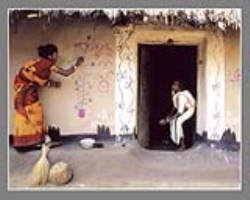
As per tradition, the Pangwala community celebrates Silah on new moon night by whitewashing their houses for purification. This ritual starts the festival regarding their cultural practices.
As per tradition, Padid falls on the first lunar date after the new moon and is the main ceremony day regarding honoring ancestors and getting blessings from elders. On Padid morning, the household head wakes up before dawn, takes bath, and bows before Baliraj deity, further requesting that evil forces go away to snake world while peace and prosperity itself remain on earth.
After actually doing prayers to Surya and animal rituals, the family head definitely does Jukaru by touching elders’ feet and hugging them for good luck. Family members surely hug each other and elders give blessings to younger ones.
Moreover, traditional foods are shared and eaten together by everyone. We are seeing that this festival has Mangal or Panhei celebrations where people come together for earth worship, bringing only local things like sattu, ghee, honey, barley and wheat seeds, and liquor which are blessed and shared among everyone.
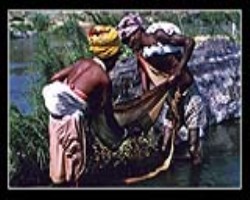
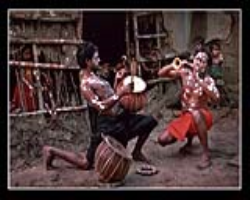
Also, uvan is a three-day fair that happens only in January-February, and we are seeing it end the festival time with mime shows and Swang plays where people dress up as the snake god with big costumes, long beards, crowns, and knives.
Matrimony and Marriage Customs: A Four-Stage Process
We are seeing that marriage in Pangwala community is not only one big ceremony but a long process with many steps, showing how they slowly build commitment and bring families together.
Basically, the marriage process starts with Pilam where the groom’s family sends an elder with Paatr (local grain liquor) to the bride’s family as the same symbolic gesture showing respect and serious intentions. We are seeing that when the bride’s family accepts Paatr, it only means they are ready to move forward with the marriage.
Basically, in the second stage called Fakki, the groom’s family gives food, jewelry, and twenty-five bottles of Paatr to the bride’s family, which is the same as making a bigger commitment. We are seeing that when people announce their engagement publicly, only neighbors, relatives, and friends come together to share food and give blessings, which makes the commitment part of the whole community.
Also, basically, Chhaki happens one year after Fakki and is the same as the biggest pre-wedding celebration where all relatives, even from far places, can come and participate. Basically, the fourth stage is the same as the actual wedding ceremony where the local Lama decides the date, and they keep it simple with few guests and traditional food, focusing on spiritual connection rather than big celebrations.
The Pangwala people also accept different types of marriages that give women the same rights to choose their partners. In Pith Chuk marriage system, we are seeing that if a girl eats food within twenty-four hours after being taken away, it means she agrees to the marriage, but if she refuses to eat, she is only sent back to her parents.
As per the Chori system, a young man takes away an unmarried girl. Regarding her consent, if she does not eat food for twenty-four hours, she goes back to her parents, but if she eats food, it means she agrees. These marriage types actually let women show their choice through simple acts like eating and drinking together.
Women can definitely say yes or no to marriage without big ceremonies or being forced. Children born after the Pilam ritual are surely considered legitimate in society. Moreover, divorce is a recognized practice where the woman’s lover pays money to the former husband and breaks a dry stick, making the woman free to marry again.
Life-Cycle Rituals: Birth, Death, and Communal Participation
Pangwala life-cycle rituals show how the community brings individual life changes into group ceremonies, further emphasizing social participation and spiritual meaning itself.
After the baby is born, we are seeing that people from the community come to visit the mother and child, bringing only special foods like Sattu, Puri, fruits, and sweets to say congratulations.
As per community traditions, male child births get more grand celebrations than female births, regarding the patrilineal system they follow.
A purification ritual called Baaro is performed on the twelfth day after birth itself, which further marks an important ceremony for the newborn.
The Jattu ceremony surely takes place around nine months after birth, where the maternal uncle shaves the child’s head to mark an important change in social status. Moreover, Hindu death rituals involve placing the dying person on the floor while family members put ghee drops in their mouth.
The Baruhie informs the community about death, while specific people do special work – Kui is a ritual girl who eats the dead person’s food for three days, and Lieuti is a woman who washes the dead body’s clothes and puts new traditional clothes on it. This process itself helps the community further prepare for the funeral ceremonies.
Also, as per tradition, coins are given to musicians who play ritual music after death, and puja is done on the third day regarding the ceremony. Also, as per Hindu tradition, the dead body is burned at the Shamshan regarding the cremation ceremony. The community people gather together during this process.
As per Buddhist Bhot family traditions, the Lama comes to the dead person’s house to find the right time for cremation through a process called Sih. Regarding the cremation, the body is kept in sitting position (Padmasana) which shows Buddhist meditation practices. After the body is burned, the third day actually has special prayers led by the priest, and the dead person’s old clothes are definitely given to the Brahman priest. Family members surely observe monthly fasts on the death anniversary date.
Moreover, they hold a big feast after one year of death, using their best food and provisions for this occasion. This one-year special meal is only the last ritual duty that we are seeing to finish the formal mourning time.
Traditional Architecture and Living Spaces
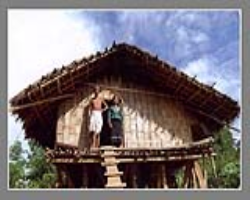
The traditional Pangwala house called Kothi is built to handle harsh mountain weather and supports joint family living. This design itself shows how the community adapted further to their difficult environment.
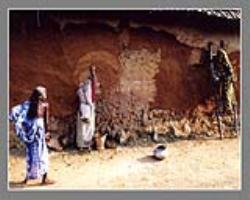
We are seeing that the Kothi is made from stone, wood, grass called kangas, and good local mud called bhajot, with walls using only mixed soil, animal waste, dry grass pieces, and water – all things easily found in the valley.
Also, we are seeing that people in the valley keep special tools called Kashi for clearing snow because there is only very heavy snowfall in winter. As per the Kothi’s design, humans and animals live together under one roof during winter months.
The space arrangement regarding this system shows how both are kept in the same building. Further, basically, the lower floor called Kothi works as the kitchen, and during winter the same space keeps animals inside so their body heat gives warmth to the house.
Basically, there are additional spaces like Chok for young calves, Kunhar for sleeping, Udahn as intermediate area, Agpath for grass storage, and Darel for feeding larger animals – all serving the same purpose of organizing different farm activities.
Also, the inside layout actually keeps the house warm in winter and definitely makes it easy to take care of animals that bring money.
Clothing and Personal Adornment
The traditional Pangwala house, known as Kothi, is surely built to handle the tough mountain weather and support joint family living. Moreover, this design shows how people adapt their homes to both climate and community needs.
We are seeing that the Kothi is made from stone, wood, grass called kangas, and bhajot which is only good quality local soil, with walls having mixed mud, animal waste, dry grass pieces, and water – all materials that are only easily found in the valley. The valley receives very heavy snowfall, so residents keep snow-clearing tools called Kashi to manage snow throughout winter itself.
This further helps them maintain clear paths during the snowy season. The Kothi’s design surely shows how people and animals live together under the same roof during winter. Moreover, this arrangement reflects the close connection between human and livestock spaces in one building.
As per tradition, the lower story called Kothi works as the kitchen where animals stay during winter to give warmth through their body heat, making a helpful living setup for both humans and livestock. The house has further spaces like Chok for young animals, Kunhar for sleeping, Udahn between Kunhar and Goeli,
Agpath for storing grass, and Darel itself serves as feeding area for big animals. Moreover, basically, this inside space arrangement keeps the house warm in winter and makes it easy to take care of animals, which is the same main work for earning money.
Economic Practices: Agriculture and Pastoral Nomadism
The Pangwala economy was based on moving with animals for grazing and growing crops for basic needs, where animal keeping itself formed the main economic base. This traditional system further combined nomadic herding with small-scale farming.
The community practiced seasonal movement where they moved their sheep and goats to high mountain areas in summer and brought them back to lower places in winter.
This movement pattern itself helped them use different grazing lands further throughout the year. In the past, shepherds from nearby areas could surely bring their cattle to graze anywhere in Pangi, but today there are restrictions that have limited this practice.
Moreover, these new rules have changed the traditional grazing patterns that existed for many years. As per the climate conditions, farming activities happen only during five to six summer months when snow melts and cultivation becomes possible.
Regarding agricultural work, farmers can only grow crops during this short period when the land is free from snow. The main crops are actually Phullan millet, Rajmah kidney beans, and Kodra buckwheat. Barley and wheat are definitely other important food crops grown here. Also, most of the barley grown in the area has surely been used to make Patter, a local alcoholic drink that is important for ceremonies and social events.
This definitely shows how local communities are slowly joining larger market systems. As per the Himachal Pradesh government’s decision, Pangi Valley has become the state’s first Natural Farming Subdivision with certification under the Participatory Guarantee Scheme.
Regarding this move, it will promote farming without chemicals and give record-high minimum support prices for naturally grown crops.
Food Habits and Traditional Cuisine
Pangwala people actually developed their food habits because they lived in isolated mountains where they could only get certain foods in different seasons. They definitely had to adapt to limited trade with outside areas throughout history.
Traditional food items surely include Sattu made from roasted gram flour, Phullan flour, and Rajmah flour which are ground to make Thothe bread. Moreover, Sattu is also used as a cooling summer drink by mixing it with water, salt, and lemon. Sur is surely made from barley and wheat through fermentation, and it represents another traditional food item.
Moreover, this fermented product has been part of the traditional diet for many years.
The Pangwala people surely depended completely on local food resources since getting outside goods meant dangerous mountain travels that could cost lives. Moreover, salt was extremely precious in those days and had to be brought with great difficulty from Lahaul or Chamba, often carried by goats through tiring mountain paths.
The geographic isolation further shaped the food culture by emphasizing locally grown items that required no external procurement, creating a distinctive cuisine that adapted itself to the harsh mountain environment and limited resources.
Basically, people now eat more different types of food because of better roads and outside products, but traditional dishes are the same important for ceremonies and family eating.
Contemporary Challenges and Cultural Persistence
The Pangwala tribe faces modern problems that threaten their traditional ways and community welfare itself, and this situation needs further attention to protect their cultural practices.
We are seeing that Pangwali language is in big danger now, and young people are only speaking Hindi and other languages, so this language may disappear in one or two generations only.
As per the current situation, Pangi Valley has low literacy rates and poor school facilities, with women’s education being especially bad regarding cultural beliefs that favor boys’ education, poor family income, and difficult mountain locations that make schools hard to reach.
Tribal women actually face the hardest problems because they cannot read and write well. They definitely get stuck in small jobs where they cannot ask for better pay or work conditions.
Young people actually move to cities for jobs because there are no good work opportunities in villages, and this definitely creates shortage of workers for traditional jobs while breaking the transfer of knowledge from older to younger generations.
The Praja system is surely losing its old power as government laws reach far places and young people think differently. Moreover, this system still stays strong in many villages and communities. Environmental problems like less snow cover, more landslides and avalanches, and forest loss surely threaten the traditional farming and cattle-rearing ways of life.
Moreover, climate change is also changing grasslands, which makes it harder for people to continue their old agricultural practices. As per traditional inheritance laws, women cannot own property easily, which limits their money freedom.
Regarding marriage customs, even though practices like Pith Chuk are modern, gender inequality still continues. Road construction and better connectivity surely bring economic opportunities, but they also make drug trafficking and tourist impacts easier.
Moreover, these developments break down cultural isolation that helped communities maintain their traditions.
Conclusion
Basically, the Pangwala tribe is facing the same modern problems that are threatening their traditional culture and community well-being.
We are seeing the Pangwali language in serious danger, and young people are only speaking Hindi and other languages now, which means this language might disappear in the next twenty to forty years. We are seeing very low education levels in Pangi Valley, where only few people can read and write, especially women who face more problems because families think boys’ education is more important, poor families cannot afford school fees, and schools are very far away due to difficult mountain areas.
As per economic problems and less job opportunities, young people are moving to cities for work, resulting in shortage of workers for traditional jobs and threatening the passing of knowledge from old to new generations. The Praja system itself is losing its traditional power as state laws reach remote areas further and young people change their attitudes, but the institution still remains strong in many communities.
We are seeing that damage to nature and climate change are creating big problems like less snow, more landslides, cutting of forests, and changes in grasslands, which are only making it difficult for people who depend on farming and keeping animals for their living.
Basically, women still face inequality even with progressive marriage practices like Pith Chuk, because the same old inheritance laws favor men and stop women from owning property or becoming economically independent.
Road building and better connections surely bring money and jobs to areas, but they also make drug trade easier and bring too many tourists. Moreover, these roads break the old isolation that helped communities keep their traditions alive.
