
1. Origins and Founding Principles RATIONAL SPIRITUALITY OF THE BRAHMO SAMAJ
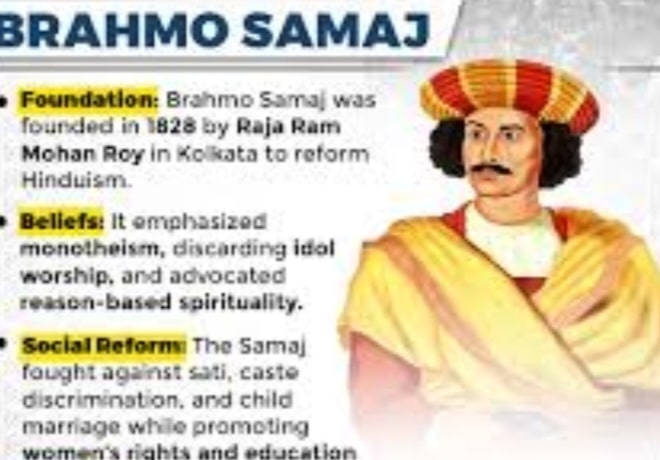
1.1. Ram Mohan Roy and the birth of Brahmo Samaj
Thank you for reading this post, don't forget to subscribe!In 1828, Roy founded the Brahmo Sabha, which later became known as the Brahmo Samaj. I remember learning about this in school and being amazed at how progressive his ideas were for that time. Roy was deeply concerned about the social and religious practices in India, and he wanted to create a space for rational and spiritual discussions.
1.2. Rejection of idolatry and polytheism
One of the big things that set the Brahmo Samaj apart was its rejection of idolatry and polytheism. Now, this was a pretty bold move in a country where most people worshipped multiple gods and used idols in their religious practices.
I recall visiting a Brahmo Samaj prayer hall once, and it struck me how different it was from traditional Hindu temples. There were no statues or images of gods, just a simple, peaceful space for contemplation and prayer.
1.3. Emphasis on monotheism and universal truths
Instead of multiple gods, the Brahmo Samaj emphasized the idea of one supreme being. They believed in monotheism, the concept that there’s only one God who is formless and universal.
What I find really cool about this is how they tried to find common ground between different religions. They looked for universal truths that could be found in various spiritual traditions. It’s like they were trying to create a big, inclusive spiritual family!
2. Core Beliefs and Philosophical Foundations
2.1. The concept of a formless, omnipresent God
The Brahmo Samaj had this idea of God that was pretty different from what most people in India were used to. They believed in a God that didn’t have a physical form and was present everywhere.
I remember talking to a Brahmo Samaj follower once, and they explained it to me like this: “Imagine God as this amazing energy that’s all around us, in every living thing, in every particle of the universe.” It’s a beautiful concept, isn’t it?
2.2. Rational interpretation of religious texts
I’ve always struggled with some of the more fantastical elements in religious stories, so I find this approach really refreshing. It’s like they’re saying, “Hey, let’s look at these texts and try to understand the wisdom behind them, rather than just accepting everything at face value.”
2.3. Reconciliation of Eastern and Western philosophies
The Brahmo Samaj didn’t just stick to Indian philosophy. They were open to ideas from all over the world. They tried to find common ground between Eastern and Western philosophies.
I think this is so relevant today, in our globalized world. We can learn so much from different cultures and traditions. The Brahmo Samaj was doing this way back in the 19th century!
3. Social Reforms and Progressive Ideals
3.1. Advocacy for women’s rights and education
Now, this is where the Brahmo Samaj really shines in my opinion. They were big advocates for women’s rights and education at a time when these ideas were pretty radical in India.
I remember reading about how they set up schools for girls and fought against practices like child marriage. As a woman, I’m so grateful for pioneers like this who paved the way for the freedoms we enjoy today.
3.2. Opposition to caste discrimination and untouchability
The caste system has been a big issue in Indian society for centuries. The Brahmo Samaj took a strong stand against caste discrimination and the practice of untouchability.
I’ve seen firsthand how damaging caste discrimination can be, even in modern India. It makes me appreciate how forward-thinking the Brahmo Samaj was in opposing these practices.
3.3. Promotion of inter-caste marriages and widow remarriage
The Brahmo Samaj also promoted inter-caste marriages and supported the remarriage of widows. These were hugely controversial ideas at the time.
I have friends who’ve had inter-caste marriages, and while it’s more accepted now, it can still be a big deal in some families. It’s amazing to think that the Brahmo Samaj was advocating for this nearly 200 years ago!
4. Spiritual Practices and Rituals
4.1. Simplified worship and meditation techniques
The Brahmo Samaj kept things simple when it came to worship and meditation. They didn’t go in for elaborate rituals or ceremonies.
I’ve tried some of their meditation techniques, and I have to say, there’s something really peaceful about their straightforward approach. It’s all about connecting with the divine in a direct, personal way.
4.2. Incorporation of music and poetry in devotional practices
Music and poetry play a big role in Brahmo Samaj worship. They use songs and poems to express their devotion and spiritual ideas.
I once attended a Brahmo Samaj service, and the music was so beautiful and uplifting. It reminded me a bit of the hymns in Christian churches, but with a distinctly Indian flavor.
4.3. Rejection of traditional Hindu rituals and superstitions
The Brahmo Samaj rejected many traditional Hindu rituals and superstitions. They felt these practices often missed the point of true spirituality.
I have to admit, I’ve always been a bit skeptical of superstitions myself. I appreciate how the Brahmo Samaj encourages people to think critically about their beliefs and practices.
Key Tenets of Rational Spirituality
The rational spirituality of the Brahmo Samaj is built on several key tenets that set it apart from traditional religious practices:
- Rejection of Scriptural Authority
Unlike many religious traditions that rely heavily on sacred texts, the Brahmo Samaj encourages followers to question and critically examine religious scriptures. This approach aligns with the movement’s emphasis on reason and individual conscience.
- Direct Communion with the Divine
Brahmo Samaj teaches that individuals can connect with the divine directly, without the need for intermediaries such as priests or gurus. This empowers followers to develop their own spiritual understanding and relationship with God.
- Ethical Living
Rather than focusing on ritualistic practices, the Brahmo Samaj emphasizes ethical living as a path to spiritual growth. This includes principles such as:
Compassion for all living beings
Pursuit of knowledge and wisdom
Service to humanity
Personal integrity and honesty
- Gender Equality
The Brahmo Samaj was revolutionary in its advocacy for gender equality, promoting women’s education and opposing practices such as child marriage and sati (widow immolation).
- Interfaith Dialogue
Embracing the idea that truth can be found in various religious traditions, the Brahmo Samaj encourages interfaith dialogue and understanding.
Influence on Indian Society
The rational spirituality of the Brahmo Samaj has had a profound impact on Indian society, particularly in the areas of social reform and education. Some notable contributions include:
Women’s Empowerment: The movement played a crucial role in promoting women’s rights, including advocating for women’s education and opposing child marriage.
Education Reform: Brahmo Samaj leaders established schools and colleges that combined Western scientific education with Indian cultural values.
Caste Reform: The movement opposed the caste system and promoted social equality.
Religious Tolerance: By promoting interfaith understanding, the Brahmo Samaj contributed to religious harmony in India.
Cultural Renaissance: The movement inspired a revival of Indian art, literature, and music, fostering a sense of national pride.
For more information on the social reforms initiated by the Brahmo Samaj, visit the Indian National Congress website.
Modern Relevance and Global Impact
The rational spirituality of the Brahmo Samaj continues to be relevant in the modern world, offering a bridge between traditional spirituality and contemporary rationalism. Its influence can be seen in various ways:
Interfaith Movements: The Brahmo Samaj’s emphasis on interfaith dialogue has inspired numerous modern interfaith initiatives.
Secular Humanism: The movement’s focus on ethical living and social reform aligns with many principles of secular humanism.
New Age Spirituality: Elements of Brahmo Samaj philosophy can be found in various New Age spiritual movements that emphasize personal spiritual experience over dogma.
Global Peace Initiatives: The Brahmo Samaj’s teachings on universal brotherhood have influenced global peace movements.
5. Impact on Indian Society and Beyond
5.1. Influence on the Indian Renaissance and social reform movements
The Brahmo Samaj had a huge impact on what’s often called the Indian Renaissance. They inspired many other social reform movements in India.
When I studied Indian history, I was amazed at how many reformers and freedom fighters were influenced by Brahmo Samaj ideas. It really was a catalyst for change in many ways.
5.2. Contributions to education and literature
The Brahmo Samaj made significant contributions to education and literature in India. They established schools and colleges and produced a wealth of written works.
I’ve read some poetry by Rabindranath Tagore, who was associated with the Brahmo Samaj, and it’s just beautiful. Their emphasis on education and the arts really enriched Indian culture.
5.3. Global outreach and interfaith dialogue
Finally, the Brahmo Samaj didn’t just stay within India. They reached out to the world and engaged in interfaith dialogue.
In our increasingly connected world, I think we can learn a lot from their approach to interfaith understanding. They showed that it’s possible to stay true to your own beliefs while also respecting and learning from others.
Conclusion
The rational spirituality of the Brahmo Samaj represents a unique approach to religion that combines the best of Eastern and Western philosophical traditions. By emphasizing reason, ethics, and social reform, it offers a path for those seeking a spiritual practice grounded in rationality and humanism.
