
Introduction : Singpho Tribe Cultlure in india
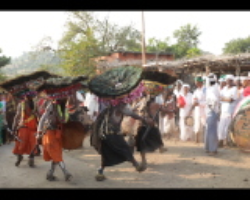
Singpho Tribe Cultlure in india are one of the most culturally important peoples of North East India and live on or near the frontiers cut by lines between North eastern India, Myanmar and China.
Numbering around 7200 the trans- boundary ethnic group living in India, has an unique cultural identity which had developed due to their strategic positioning along the Patkai mountain ranges and their historical occupation as warrior communities who held key trade routes.
Social Organization and Kinship Structure
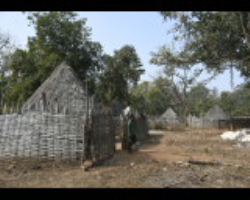
The social structure The Singpho society has a feudal nature, and it is organised around the patriachal clan system that forms a hierarchical framework of society and are divided represented groupwise into three different primary groups – Sisen, N’Khum, Mirip which in turn consists of several clans called ‘Gams’.
-The leading Gams are those of Bessa, Duffa, Luttao and Luttora, Tesari and Mirip and the three other Boma villages in Uru-Kizok; of Lophae also among Koi-su (but E.N.); of La-jong in Dongma-oli; Latong among Nu-chyi; Magrong among Jong-do-li and elsewhere in Nya-nyima (but E.N.), each with its hereditary chief who claims a judicial as well as administrative jurisdiction.
The office of chieftain is important among the Singphos as a chief used to have direct control over vast areas, and judged cases in his own way through village council called rung jata while he also had power to expel criminals who are rebels or disobedient.
The Jangams marry in a dual system of cross-cousin marriage and sister exchange, with the rule of exogamy strictly observed requiring members to marry outside their own clan; and conducting marriage through negotiation.
Monogamy is the preferred norm but, under some circumstances, polygyny is morally and socially acceptable (including cases where a man’s first wife has died, or if she was infertile, childless or had only daughters), particularly for men with substantial socioeconomic resources.
The family unit is largely patriarchal and joint in nature, reflecting Indian society’s own character; the inheritance of property follows a system wherein it goes directly down the male line and is practised as an extremely strict region-specific custom (with daughters not having any rights to their father’s property).
Religious Beliefs and Spiritual Practices
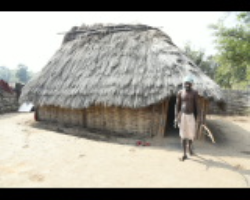
Religious beliefs among the Singphos are a mixture of Theravada Buddhism and animist tradition, from years of co-habitation with various surrounding cultural groups. Most Indian Singphos practice Buddhism; the Theravada form of Buddhism, mainly concentrated in Assam but animism is followed to a very high level as part of daily life and ritual.
At the core of their animist belief system is the worship of Madai, whom they believe to be an ancestral spirit or a god from which all Singphos evolved.
The community has a holistic cosmological perspective in which spirits, called nats, can reside in all aspects of the natural and supernatural worlds—from the sun to animalstheir spirit animals as well as plants and geographical features—and these spirits bring either good or bad luck.
This is a vision that requires special care to be taken within the realm of day to day life, including plant work and even in cases of warfare, where all living beings are believed to have souls.
Religious functions are conducted by priests called as Dumsawa or Dumsa, who can be hired depending upon requirement from a place where they stay for the time being and not live permanently in all villages.
The Singpho creation myth is associated with a highly unique account of the fall of humanity, who, they believe, lost their immortality after bathing in impure waters or bathing in forbidden water which caused human beings to die – an idea not present within Buddhist and Hindu cosmologies.
This religious assimilation also continues through their continued sacrifice of animals, generally buffaloes during important festivals, showing that the native pre-Buddhist elements are still followed in modern religious practices.
Material Culture and Traditional Crafts
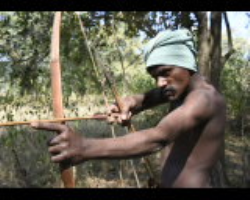
The Singpho are an established weaving culture whose material culture has developed around textiles, bamboo and metallurgy, weaving being pragmatic, economic necessity as well as a cultural signifier.
All Singpho women are weavers from their childhood being taught on how to weave and weaving is essential part of a female identity where complete set of weaving is gifted as dowry in marriage custom.
Women create all fabrics made by hand looms of ancient pattern and make; all dyes extracted from the barks of such trees as terminalia citrina (a black), Indian gooseberry for light brown, and luchet tree extracts to produce violet.
The community has developed a number of unique types of fabric: Mikhen Pakang (a rough texture with alternate red black and green stripes), Mathat Pakang (thin white stripes on Black), Mukiy Pakang (Thin green and purple lines printed on black in muga thread).
Traditional dress is quite distinct for males and females: males wear the khaithung (woven black and green chequer pattern lungi with yarn of red, yellow or white colour), samtong (shirt), khak (bag) and khuphok (turban), while women wear choi or pipa (tops) singket (wrapper skirts), manmaokring (hats), phugak – neck ornaments, ningwat – waistband, bathang -lower leg wrappings..
The marital status can also be reflected through the clothing of a woman which indicate if a women is an unmarried, married or widowed.
The Singphos also created some of the most sought after weapons – like daos (machetes) – using simple-sized stones and hammers as anvils to forge it, hardening its iron with carbon.
The community also produces shields of up to four feet in length, from buffalo hide and helmets, both described as being made of bison or rattan work painted black and adorned with boar’s tusks.
Another major craft tradition is bamboo and cane work, the Singphos making a variety of utility products such as carrying baskets for heavy loads, haversacks (karang) for men’s use and singnai for women’s use, and various kinds of household articles–several covered with rubber to make it waterproof or provide spiritual protection.

Economic Life and Subsistence Patterns
Economy The Singpho people traditionally practised wet-rice cultivation (along with tea farming and forest product exploitation) unlike most of the other hill tribes, who generally practised shifting cultivation.
Though jhum was in vogue, the Singpho mainly depended on fixed agricultural fields and they became the symbol of traditional tea planting experts, for instance the community had traditional practices that fetched them CTC/Crushed-Tea-dust which they introduced to the British invaders during 1820s.
The traditional Singpho method of tea preparation is to pluck the tender leaves, dry those in the sun; then keep them overnight in bamboo tubes and smoke over fire in the final stage and store that way for years together without loosing taste, retaining fragrance.
This tea, called phalap (from ph/kha meaning “what” and lap “leaf”) was the object of both ceremonial and medicinal interest in the village.
The staple food is rice, which is supplemented by sago, millet, maize and pulses including beans as well edible tubers such as yams that are collected from the forest. Singpho diet is mainly non-vegetarian with entry of smoked pork, chicken curry and fish cooked in bamboo shoots.
There are three traditional types of rice beer, Tsa, Sing Kong Khu and Lalo and other than tea is an important beverage used in everyday life as well as for ceremonial purposes, especially where the medicinal property of the tea for curing stomach ailments has been mentioned).
‘The present economic scenario is not very encouraging, and almost all the families quartered below the poverty line (Buelah 2011).The average annual income of Singpho households in recent such studies is abysmally low at Rupees 26,193 only.
The unemployment & underemployment rates are also significantly higher in this community,Rural employment opportunities have dwindled over the last few years leading to a heavy dependence on dwindling natural resources.
Agriculture is the main occupation and more than 78.8% of Singpho population are dependant on cultivation, although labor force participation among women is quite high (43.8%) as compared to several other communities getting involved in various economic activities right from field level activities up to household production.
The Shapawng Yawng Manau Poi is the most important festival of Singpho society and manifests itself as an all-encompassing cultural extravaganza which expresses the collective identity, historical memory and social coherence.
Held in February 12 15 every year, though the central day is the 14th of that month (Valentine\’s Day), Shapawng Yawng Manau Poi translates as “Dance Festival” Poi means festival and Manau meaning to dance, which commemorates Shapawng Yawng, ancestor of all Singpho.
The festival was said to have been inspired by a legend that people who saw dancing birds at their feast long ago learned the Manau tour dance, danced under Ma Den Yau’s leadership.
Central to the festival is the raising of wooden carved and painted multifaceted totem posts, called Manau Shadungs (which themselves represent maIe and ‘feminine’ principles), with a tying beam that has one half in the form of the hornbill’s head while it tapers into a tail at its other end, symbolic colouring denoting tones traditionally believed by Buddhists to be associated with ‘creator figures’, that emphasis man’s relationship with forces in nature.
clad in warrior garments as they do the Gidhing Gumdin Manau Dance of Unity) around a set of sacred Shadung pillars, to the tune of indigenous drums known as the Gong and Thong characterises unity among their people, accomplishment and community worship.
Head men and women dress in black jackets embellished with pieces of silver (Kumphong Plong) and pants of bright red wool, others wear more colorful lungis with white shirts and helmets for headgear: the young in white helmets, adults in black.
Festival Celebrations and Cultural Expression
The festival serves multiple contemporary objectives: To conserve and promote the ancient culture preservation among a small tribal community, to foster social relationship and communication leading towards unity in the society, to evoke oneness of the people known as Singphos with mainstream Indian population, generation of employment opportunity through displaying local cuisines, ethnic handlooms & handicrafts items products.items.
The yearly gathering brings together Jingpho from over the world – a testimony to strong international ethnic bonds – and offers the youth, who would otherwise be confronted by modern way of living, an opportunity for cultural transmission.
Housing and Settlement Patterns
Singpho housing shows striking features particular of the forested, hilly conditions of their home land and traditional houses were two-storied and oval in shape with walls made from wood or bamboo.
These stilt houses, called chang-ghars, are excellent examples of engineering where the ground floor is used as drying rooms/stable/for storage etc., and the second floors are used as their living quarters.
Villages, known as miriyeng in the Singpho language are usually very big villages with houses spreading over a lot of area facing different directions, and rarely in planned patterns.
It has a typical house-with-raised platform traditional design, useful for keeping away wild animals, for air circulation in the humid environment and for separating domestic pests from humans.
Modern studies have shown that as much as 89.88% of Singpho households still reside in house with raised platforms, however they are also being made increasingly more often using better raw materials and technology.
The chief’s compound formed the nucleus of each village, with the village structure and organization spreading outwards from the center.
Conclusion : Singpho Tribe Cultlure in india
The villages generally takes up forest land with access to arable land, water supply and trade rout, thus indicating the dual dependence on agriculture and trade for this community.
Settlement structure Population villages have been quite stable, information is recently gathered about population displacement and the trend to migrate towards towns at search of education and labour opportunities these are causing changes in traditional settlement pattern as well as demographics of the area.
