


Ever notice how some students can study for 20 minutes and ace an exam while others pull all-nighters and barely pass? It’s not about natural genius—it’s about smart study habits that actually work.
Let’s cut through the noise. By the end of this post, you’ll have practical study habits for students that will transform how you learn, without sacrificing your sleep or sanity.
The difference between struggling and succeeding often comes down to strategy, not effort. Those top-performing classmates aren’t necessarily working harder—they’re working differently.
But here’s what nobody tells you: the most effective study techniques are often counterintuitive to what most students think they should be doing…
Creating an Effective Study Environment
A. Organizing your physical workspace
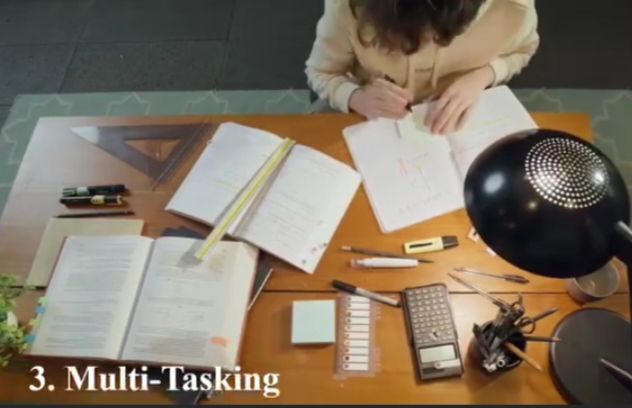
Ever tried studying on a desk that looks like a tornado hit it? Yeah, not fun. A cluttered workspace equals a cluttered mind. Start by clearing everything you don’t need. Keep only your textbooks, notes, laptop, and maybe that lucky pen.
Create zones for different activities – a reading corner, writing space, and tech area. Use drawer organizers, desk trays, and storage boxes to sort materials by subject or project. Your future self will thank you when you’re not frantically searching for that one crucial note at 2 AM.
B. Minimizing digital distractions
Your phone is probably the #1 study killer. Period. Those “quick checks” turn into 30-minute scrolling sessions before you know it.
Try this: put your phone in another room or use apps like Forest or Focus@Will. Turn off notifications on your laptop too. If willpower isn’t your strong suit (it isn’t for most of us), website blockers like Cold Turkey or Freedom can lock you out of distracting sites.
C. Setting up proper lighting and ergonomics
Bad lighting gives you headaches. Poor posture gives you back pain. Both kill your study mojo.
Position your desk near natural light when possible. For evening sessions, use a desk lamp with adjustable brightness. Your chair should support your back and keep your feet flat on the floor. Computer screen at eye level. Wrists straight when typing.
Take a quick body check every hour. Slouching? Fix it. Squinting? Adjust your light.
D. Choosing the right study location
The perfect study spot isn’t one-size-fits-all. Some people crush it at coffee shops with background chatter. Others need library-level silence.

Test different environments to see what works for you. Maybe you need complete silence for math but enjoy soft music for reading. Switch locations to avoid getting bored – try the library, a quiet café, or a dedicated study room.
The key? Consistency. Once you find your groove spots, stick with them. Your brain will associate these places with focus mode, making it easier to get in the zone.
Time Management Strategies
A. Breaking down study sessions with the Pomodoro Technique
The Pomodoro Technique isn’t just another fancy term – it’s a game-changer for your brain. Set a timer for 25 minutes, focus completely on one task, then take a 5-minute break. That’s it!
Your brain works in sprints, not marathons. After four pomodoros, reward yourself with a longer 15-30 minute break. This technique works because it aligns with your natural attention span.
I used to try studying for 3 hours straight and wonder why nothing stuck. Breaking it down into these manageable chunks literally doubled my productivity overnight.
B. Creating realistic weekly study schedules
Here’s the truth about study schedules – if you can’t stick to it, it’s useless.
Start by tracking how long tasks actually take you (not how long you think they should take). Most students underestimate by 40%!
Build your schedule backward:
- Block off non-negotiables (classes, work, sleep)
- Add study blocks during your peak energy times
- Include buffer time between activities
The magic happens when you respect your schedule enough to say “no” to things that throw it off track.
C. Prioritizing assignments based on deadlines and difficulty
Not all assignments deserve equal attention. I use this simple matrix:
The trick is being honest about what’s actually difficult for YOU.
When multiple deadlines collide, ask yourself: “Which task has the biggest impact on my grade?” and “Which professor is least likely to grant extensions?”
Weight your decisions using the 80/20 rule – 20% of your work typically generates 80% of your results.
D. Avoiding procrastination traps
Procrastination isn’t about laziness – it’s about emotions. When you put something off, you’re actually trying to avoid negative feelings.
Common traps and how to escape them:
- Perfectionism: Set a “good enough” standard before starting
- Overwhelm: Break massive tasks into ridiculously small steps
- Distraction: Use website blockers and put your phone in another room
- Low energy: Match difficult tasks to your peak energy hours
The 5-minute rule works wonders – commit to just five minutes of work. Once you start, continuing is much easier

E. Using time-blocking methods
Time-blocking transforms vague intentions into concrete commitments.
Instead of a regular to-do list, assign each task to a specific time slot in your day. This forces you to be realistic about what you can accomplish.
Color-code your calendar for different activities:
- Blue for classes
- Green for study blocks
- Yellow for breaks and self-care
- Red for deadlines
The secret sauce is including transition time between blocks. It takes your brain about 23 minutes to fully switch between complex tasks.
Deep work blocks (90-120 minutes) should be reserved for your most challenging subjects, while shallow work can fill shorter time slots.
Active Learning Techniques
A. Taking effective notes by hand vs. digital
Ever noticed how some students frantically type every word a professor says while others scribble away in notebooks? Both methods have their merits.
Handwritten notes force you to process and summarize information on the spot. Your brain works harder to decide what’s important, which means better retention. Plus, research shows the physical act of writing creates stronger neural connections.
Digital notes? They’re searchable, organized, and you can type faster than you write. Perfect for fast-talking professors.
Here’s a quick breakdown:
 Mix and match for the win. Try handwriting notes in class, then organizing them digitally later. This gives you two exposure points to the material – double the learning!
B. Using the SQ3R method for reading comprehension
Textbooks putting you to sleep? SQ3R will change your life.
This five-step method transforms passive reading into active learning:
- Survey: Skim headings, summaries, and diagrams first
- Question: Turn headings into questions you’ll answer
- Read: Actually read the material, hunting for answers
- Recite: Close the book and explain what you just learned
- Review: Revisit the material regularly to cement it
The magic happens because you’re engaging with the content multiple times in different ways. Your brain forms connections instead of just skimming words.
Most students skip straight to reading without context. Big mistake. The survey stage primes your brain to recognize important concepts when you encounter them.
C. Teaching concepts to others to reinforce learning
Want to know if you really understand something? Try explaining it to someone else.
The “protégé effect” shows that teaching material forces you to organize your thoughts, identify gaps in understanding, and articulate concepts clearly. You can’t fake understanding when someone’s asking questions!
No willing study buddy? No problem. Try:
- Recording yourself explaining a concept
- Writing an explanation as if for a younger student
- Using the “rubber duck method” (explaining to an inanimate object)
Teaching exposes your weak spots instantly. That moment when you stumble mid-explanation? That’s your cue to revisit that section of material.
D. Creating mind maps and visual study aids
Your brain processes visuals 60,000 times faster than text. So why are you still using text-only notes?
Mind maps organize information visually, showing connections between concepts. Start with a central idea, then branch out with related topics. Use colors, symbols, and images to strengthen memory associations.
Other powerful visual tools include:
- Flowcharts for processes
- Comparison tables for similar concepts
- Infographics for statistical information
- Timeline diagrams for historical events
Visual aids work because they tap into spatial memory and create multiple retrieval paths in your brain. When test time comes, you’ll literally “see” the information in your mind.
Try color-coding related concepts across different visual aids. Your brain will thank you by making connections you might have missed.
Leveraging Technology for Academic Success
Best apps and tools for note-taking
Gone are the days of messy notebooks and lost papers. Digital note-taking has completely changed the game for students everywhere.
Notion stands out as my top pick. It’s like your digital brain – organizing notes, tasks, and projects all in one place. The templates are absolute lifesavers during exam season.
Evernote remains solid for quick notes and web clippings. Their search function is crazy good – just type a keyword and find that random lecture note from weeks ago.
For visual thinkers, try MindMeister or Miro. These mind-mapping tools help connect concepts in ways linear notes never could.
iPad users? Goodnotes and Notability let you handwrite digitally while recording lectures simultaneously. Absolute game-changers.
Using spaced repetition software for memorization
Remember cramming the night before an exam? Yeah, your brain hates that.
Anki is the holy grail of memorization tools. Its spaced repetition algorithm shows you cards right before you’re about to forget them. Science-backed studying at its finest.
Quizlet takes a more fun approach with games and matching activities. Perfect for language classes or terminology-heavy subjects.
RemNote combines note-taking with spaced repetition. Take notes normally, then convert important points into flashcards with one click.
The real magic happens when you use these tools consistently. Just 15-20 minutes daily beats a 3-hour cram session every time.
Managing research with citation tools
Citation management used to be the worst part of any research paper. Not anymore.
Zotero saves citations while you browse, organizes PDFs, and creates bibliographies in seconds. The browser extension alone will save you hours of manual work.
Mendeley goes beyond citations by connecting you with other researchers and recommending papers based on your interests.
For quick citations, the Cite This For Me extension generates them in any format instantly.

Google Scholar’s “Cite” button is super handy too – just click and copy the format you need.
Finding reliable online study resources
The internet is packed with study materials, but quality varies wildly.
Khan Academy offers free, high-quality videos on nearly every subject. Their step-by-step explanations have saved countless students from confusion.
For STEM subjects, check out MIT OpenCourseWare. It’s literally MIT courses for free – lectures, notes, assignments, the works.
YouTube channels like Crash Course break down complex topics in engaging, bite-sized videos.
JSTOR and Google Scholar give you access to peer-reviewed papers when you need solid sources for research.
Course Hero and Studocu have study guides and past exams, but verify the information with your own course materials.
Building Healthy Study Habits
A. Incorporating regular breaks and movement
The irony of studying is that pushing through for hours actually makes you less productive. Your brain isn’t designed for marathon study sessions. It needs breaks to recharge.
Try the Pomodoro Technique: 25 minutes of focused study followed by a 5-minute break. After four cycles, take a longer 15-30 minute break. It’s like interval training for your brain.
During breaks, move your body. Stretch, walk around, do jumping jacks – anything to get your blood flowing. Physical movement sends oxygen to your brain and releases stress hormones that build up during intense concentration.
Stand up every 30 minutes even if it’s just for a minute. Your future back will thank you.
B. Maintaining proper nutrition and hydration
Ever tried studying with a growling stomach or a sugar crash? Not fun.
Your brain burns through calories when you’re studying hard. Feed it properly:
- Keep a water bottle at your desk and actually drink from it
- Choose brain foods: nuts, berries, dark chocolate, and avocados
- Prep small, balanced snacks before study sessions
- Avoid massive sugar dumps that lead to energy crashes
That vending machine candy bar might give you 15 minutes of focus before the crash hits. Not worth it.
C. Ensuring adequate sleep for memory consolidation
Pulling all-nighters is the academic equivalent of taking out a high-interest loan. You’re borrowing energy from tomorrow at a steep cost.
Sleep isn’t optional. It’s when your brain transfers information from short-term to long-term memory. Skip sleep, and you’re basically erasing hours of study time.
Most college students need 7-9 hours. Your mileage may vary, but anything under 6 hours consistently will tank your performance.
The hour before bed matters too. Put the textbooks away and do something relaxing. Your brain needs time to wind down.

D. Managing stress through mindfulness techniques
Study anxiety is real. Your thoughts spiral: “I’m behind, I’ll never catch up, I’m going to fail.”
Stop that train with these quick mindfulness tricks:
- Take 5 deep breaths, counting to four on each inhale and exhale
- Notice 5 things you can see, 4 things you can touch, 3 things you can hear, 2 things you can smell, and 1 thing you can taste
- Download a meditation app and use it for 5 minutes before studying
Stress makes your prefrontal cortex (your thinking brain) shut down. Calming your nervous system gets it back online.
E. Creating accountability through study groups
Studying alone can be isolating. When motivation tanks, you have no one pushing you forward.
Find your study people. They don’t need to be your best friends—just reliable, focused students with similar goals.
Effective study groups:
- Meet regularly (weekly is good)
- Set clear goals for each session
- Teach concepts to each other
- Hold each other accountable for deadlines
- Keep group size manageable (3-5 people)
Teaching others is one of the most powerful ways to solidify your own understanding. If you can explain it clearly, you know it well.
