

The Synteng Tribe represents one of Northeast India’s lesser-known indigenous communities, carrying centuries of unique cultural heritage and traditional wisdom. This guide serves students, researchers, cultural enthusiasts, and anyone curious about India’s diverse tribal populations who want to understand the Synteng people beyond surface-level information.
You’ll discover their fascinating origins and how historical events shaped their identity as a distinct community. We’ll explore their traditional lifestyle, including the social customs and cultural practices that define Synteng society today. Finally, we’ll examine how this resilient tribe navigates modern challenges while working to preserve their ancestral language and way of life for future generations.
Origins and Historical Background of the Synteng People
Ancient migration patterns and settlement in Meghalaya
The Synteng Tribe traces its roots back to ancient migration waves that swept across the northeastern hills of India centuries ago. These early settlers belonged to the broader Austroasiatic linguistic family, sharing ancestral ties with other Mon-Khmer speaking communities across Southeast Asia. Archaeological evidence suggests that the Synteng people arrived in the Jaintia Hills region of Meghalaya through multiple migration phases, possibly between the 13th and 15th centuries.
The tribe’s settlement patterns reveal a strategic choice of locations, primarily concentrated in the present-day Jaintia Hills district. They established villages on elevated terrain that offered natural protection and access to fertile valleys below. The Synteng people developed sophisticated agricultural terracing systems that maximized the hilly landscape’s potential for cultivation, demonstrating remarkable adaptation to their chosen environment.
Migration stories passed down through oral traditions describe journeys from eastern regions, with some accounts pointing to connections with Myanmar and other parts of Southeast Asia. These narratives, while varying in detail, consistently emphasize the tribe’s purposeful movement toward the mineral-rich hills of Meghalaya, where they found abundant resources and favorable conditions for permanent settlement.
Cultural evolution through centuries of tribal development
The Synteng Tribe developed a distinctive cultural identity that blended their ancestral traditions with influences absorbed during their settlement journey. Their social organization evolved around clan-based structures, with each clan maintaining specific roles and responsibilities within the larger community framework. Traditional governance systems emerged that balanced democratic decision-making with respect for elders and customary leaders.
Religious practices underwent significant transformation over the centuries, initially centered around animistic beliefs that honored forest spirits and natural forces. The tribe developed elaborate rituals for agricultural cycles, birth ceremonies, and ancestral worship that reflected their deep connection to the land. Traditional festivals like Chad Sukra became central to community life, reinforcing social bonds and cultural continuity.
Craft traditions flourished as the Synteng people perfected techniques for weaving, pottery, and metalwork using local materials. Their textile patterns incorporated symbolic elements that told stories of their origins and beliefs, while their architectural styles adapted to the monsoon climate with raised structures and steep-roofed designs. Musical traditions evolved to include distinctive instruments and vocal styles that accompanied religious ceremonies and social gatherings.
Relationship with neighboring Khasi and Jaintia communities
The Synteng Tribe developed complex relationships with their Khasi and Jaintia neighbors that shaped their cultural and political landscape for centuries. Despite sharing the broader Meghalayan cultural sphere, each group maintained distinct languages, customs, and territorial boundaries. Trade relationships flourished between these communities, with the Synteng people often serving as intermediaries in commerce between the hills and plains regions.

Intermarriage between communities occurred regularly, creating kinship networks that crossed tribal boundaries while still preserving distinct cultural identities. The Synteng people adopted certain Khasi administrative practices while maintaining their unique social structures, creating a hybrid system that served their community’s needs effectively.
Territorial disputes occasionally arose over resource-rich areas, particularly coal mines and limestone quarries that became increasingly valuable over time. However, traditional conflict resolution mechanisms usually prevented these disagreements from escalating into prolonged conflicts. The three communities developed protocols for sharing sacred sites and managing common resources that reflected their understanding of regional interdependence.
Impact of British colonial period on tribal structure
British colonial administration dramatically altered traditional Synteng governance and social organization starting in the mid-19th century. The colonial government’s indirect rule policy initially preserved some traditional structures while gradually introducing new administrative layers that undermined customary authority. Traditional leaders found themselves navigating between colonial expectations and community obligations, often leading to internal tensions.
The introduction of cash economy through coal mining and limestone extraction fundamentally changed Synteng livelihood patterns. Many community members transitioned from subsistence agriculture to wage labor, altering family structures and social hierarchies that had remained stable for centuries. Women’s roles shifted as men left villages for mining work, creating new responsibilities and challenges for maintaining cultural practices.
Educational policies implemented by colonial authorities and Christian missionaries introduced formal schooling that competed with traditional knowledge systems. While literacy rates improved, the emphasis on English education and Christian values created generational divides within Synteng communities. Some traditional practices faced suppression or modification under colonial influence, while others adapted to survive in the changed environment.
Land ownership concepts introduced by the British conflicted with traditional communal land management systems, leading to legal complications that persist today. The colonial period established administrative boundaries that sometimes divided traditional Synteng territories, creating bureaucratic challenges for community cohesion and resource management that the tribe continues to address in contemporary times.

Geographic Distribution and Living Environment
Primary settlements across Ri Bhoi and East Khasi Hills districts
The Synteng Tribe has established their primary communities across two key districts in Meghalaya – Ri Bhoi and East Khasi Hills. In Ri Bhoi district, major Synteng settlements include Nongpoh, Umsning, and Byrnihat areas, where they form significant portions of the local population. These communities have thrived in the district’s central location, benefiting from improved connectivity and access to markets.
East Khasi Hills district houses several important Synteng villages, particularly around Shillong’s periphery and extending into the rural hinterlands. Villages like Mawphlang, Laitkor, and surrounding areas have witnessed substantial Synteng presence for generations. The distribution pattern shows clusters of settlements rather than scattered individual families, reflecting their preference for community-based living.
Population density varies significantly across different areas, with higher concentrations found near major towns and transportation routes. Remote villages in both districts maintain stronger traditional practices and cultural preservation, while settlements closer to urban centers show greater integration with modern economic activities.
Traditional village organization and territorial boundaries
Synteng villages follow a distinctive organizational structure based on clan-based territorial divisions. Each village typically comprises multiple clans or lineages, with specific areas designated for different family groups. The Synteng community recognizes traditional boundaries that often extend beyond official administrative divisions, encompassing agricultural lands, forest areas, and water sources.
Village governance operates through a council of elders representing various clans. These leaders make decisions regarding land use, conflict resolution, and community ceremonies. Traditional territorial boundaries include:
- Cultivation zones: Designated areas for jhum cultivation and permanent agriculture
- Forest reserves: Community-managed forest areas for timber and non-timber products
- Water sources: Streams, springs, and ponds under collective ownership
- Sacred groves: Protected forest patches with religious significance
- Settlement areas: Residential zones allocated based on clan affiliations
Boundary markers include natural features like streams, ridges, and distinctive trees, along with man-made stone markers placed at key points. Inter-village boundaries are generally well-respected, with disputes resolved through traditional mediation processes involving elders from neighboring communities.
Adaptation to hilly terrain and monsoon climate patterns
The Synteng Tribe has developed sophisticated strategies for living in Meghalaya’s challenging hilly terrain and heavy monsoon climate. Their traditional houses feature elevated construction on stilts, protecting against flooding and providing ventilation during humid months. Roofing materials traditionally include thatch and bamboo, though corrugated iron sheets have become common in recent decades.
Agricultural practices show remarkable adaptation to steep slopes through terracing techniques and strategic crop selection. The Synteng community practices:
- Jhum cultivation: Rotating slash-and-burn agriculture on hillsides
- Terrace farming: Modified slopes for rice and vegetable cultivation
- Mixed cropping: Combining different crops to maximize yield and reduce erosion
- Seasonal timing: Planting and harvesting aligned with monsoon patterns
Water management involves creating channels and retention systems to handle the region’s annual rainfall of over 2,500mm. Villages construct community water tanks and drainage systems to prevent landslides and soil erosion. Traditional knowledge includes weather prediction methods based on natural indicators like bird behavior, cloud formations, and wind patterns.
Housing clusters follow contour lines rather than grid patterns, working with natural topography instead of against it. Pathways and roads wind along ridges and valleys, connecting settlements while minimizing environmental disruption. This adaptation strategy has allowed the Synteng community to maintain sustainable livelihoods in one of India’s wettest regions.

Cultural Traditions and Social Practices
Unique matrilineal society structure and inheritance customs
The Synteng Tribe follows a fascinating matrilineal system where lineage and inheritance flow through the mother’s side of the family. Women hold significant power in decision-making processes, owning property and passing it down to their daughters. The youngest daughter, known as the “Ka Khadduh,” typically inherits the ancestral home and becomes responsible for caring for aging parents. This system ensures that family property stays within the maternal clan and creates strong bonds between mothers and daughters.
Men in Synteng society take their mother’s clan name and move to their wife’s home after marriage. This arrangement might seem unusual to outsiders, but it creates a stable social structure where women maintain continuity in family traditions and property management. The matrilineal system also means that children belong to their mother’s clan, strengthening female networks and support systems throughout the community.
Traditional festivals celebrating harvest and ancestral spirits
Synteng festivals blend agricultural cycles with spiritual beliefs, creating vibrant celebrations that bring the entire community together. The most significant festival, “Chad Sukra,” marks the end of the harvest season with elaborate feasts, traditional dances, and offerings to ancestral spirits. During this time, families prepare special rice dishes and locally brewed rice beer to share with neighbors and visitors.
Another important celebration is the “Wangala Festival,” where the Synteng people honor their creator god Saljong and give thanks for a successful harvest. The festival features energetic drum beats, colorful traditional costumes, and competitive folk dances that showcase the tribe’s artistic heritage. Young people use these festivals as opportunities to meet potential partners, while elders share stories and pass down cultural knowledge to younger generations.
Sacred groves and environmental conservation practices
Sacred groves, called “Law Kyntang,” represent the heart of Synteng environmental conservation philosophy. These protected forest areas serve as natural temples where the community believes ancestral spirits reside. The Synteng Tribe has maintained these groves for centuries, creating biodiversity hotspots that preserve rare plant species and provide clean water sources for surrounding villages.
Traditional laws strictly prohibit cutting trees, hunting animals, or disturbing the natural balance within these sacred spaces. Community leaders act as guardians, ensuring that younger generations understand the importance of environmental protection. This indigenous conservation approach has proven remarkably effective, with many sacred groves containing species that have disappeared from surrounding deforested areas.
Oral storytelling traditions preserving tribal wisdom
Storytelling forms the backbone of Synteng cultural transmission, with elderly community members serving as living libraries of tribal knowledge. These master storytellers, known as “Daloi,” gather children and adults around evening fires to share creation myths, moral lessons, and historical accounts that would otherwise be lost to time.
Popular Synteng folktales often feature talking animals, brave warriors, and wise women who overcome challenges through cleverness rather than force. These stories teach important values like respect for nature, the importance of community cooperation, and the consequences of breaking traditional customs. The oral tradition also includes detailed knowledge about medicinal plants, seasonal patterns, and agricultural techniques passed down through generations without written records.

Marriage customs and community bonding rituals
Synteng marriage ceremonies involve elaborate rituals that strengthen bonds between families and clans. The process begins with formal negotiations between families, where elders discuss compatibility, family backgrounds, and the exchange of gifts. Traditional wedding ceremonies can last several days, featuring special songs, dances, and feast preparations that involve the entire community.
The “Ka Shad Suk Mynsiem” dance performed during weddings symbolizes the joy of unity and prosperity. Bride and groom exchange handwoven shawls and traditional jewelry while community members offer blessings and advice for a successful marriage. These ceremonies reinforce social connections and ensure that marriage bonds extend beyond individual couples to encompass entire family networks within the Synteng community.
Language Preservation and Communication Systems
Distinctive Synteng Dialect within Austroasiatic Language Family
The Synteng language stands as a unique branch within the vast Austroasiatic language family, sharing linguistic roots with languages spoken across Southeast Asia and eastern India. This dialect showcases remarkable phonetic complexity, featuring tonal variations that distinguish meaning between otherwise identical words. The language contains approximately 15 distinct vowel sounds and employs a rich system of prefixes and suffixes that modify word meanings in subtle but significant ways.
What makes Synteng particularly fascinating is its retention of ancient grammatical structures that have disappeared from many related languages. The verb system includes aspectual markers that precisely indicate whether an action is completed, ongoing, or habitual. Word order follows a subject-verb-object pattern, though speakers can rearrange elements for emphasis or poetic effect.
The vocabulary reflects the tribe’s deep connection to their forest environment, containing hundreds of terms for different types of trees, plants, and natural phenomena. Many words have no direct English equivalents, representing concepts and experiences unique to Synteng worldview. Color terminology particularly showcases this linguistic richness, with specific words describing subtle variations in green that correspond to different seasons and forest conditions.
Efforts to Maintain Linguistic Identity in Modern Education
Modern educational challenges pose significant threats to Synteng language continuity, as younger generations increasingly favor Hindi and English for academic and professional advancement. Community leaders have responded by establishing weekend language schools where children learn traditional vocabulary, stories, and cultural concepts in their native tongue.
Several innovative approaches have emerged to bridge this educational gap. Local teachers create bilingual materials that present scientific concepts in both Synteng and mainstream languages, helping students maintain cultural connections while acquiring modern knowledge. Digital initiatives include smartphone applications featuring audio recordings of fluent speakers, allowing young people to practice pronunciation and expand vocabulary at their own pace.

The community has also developed a writing system using modified Roman script, making the language more accessible to children already familiar with English letters. This adaptation helps preserve traditional songs, stories, and cultural practices in written form, creating resources for future generations. Parent-teacher associations actively encourage families to designate specific times for Synteng-only conversations, reinforcing the language’s importance in daily life.
Role of Elders in Transmitting Oral Literature
Elder community members serve as living repositories of Synteng oral tradition, carrying forward centuries of accumulated wisdom through storytelling, ceremonial chants, and historical narratives. These respected figures possess extensive knowledge of genealogies, migration stories, and traditional ecological wisdom that younger generations desperately need to preserve.
Evening gatherings around communal fires provide natural settings for oral transmission, where elders share creation myths, moral tales, and practical knowledge about forest survival. Their storytelling techniques employ rhythmic patterns, repetitive phrases, and musical elements that aid memorization and create emotional connections to cultural content.
Recognizing the urgency of this knowledge transfer, communities have established formal mentorship programs pairing experienced storytellers with motivated young adults. These apprentices learn not just the stories themselves, but the proper contexts, seasonal timing, and ceremonial protocols surrounding different narratives. Audio recording projects capture elder voices for posterity, though community members emphasize that these technological aids cannot replace live human interaction and the subtle nonverbal cues that accompany traditional storytelling.
The elders’ role extends beyond entertainment, encompassing practical knowledge about medicinal plants, weather prediction, and agricultural timing. Their linguistic expertise includes understanding archaic terms and ceremonial language variants that appear in religious contexts but have fallen out of everyday use.
Economic Activities and Livelihood Patterns
Traditional jhum cultivation and sustainable farming methods
The Synteng people have mastered the art of jhum cultivation, a traditional slash-and-burn agricultural practice that has sustained communities for generations. This rotating farming system involves clearing small patches of forest land, burning the vegetation to create nutrient-rich ash, and cultivating crops for two to three years before allowing the land to regenerate naturally for 7-10 years.
Rice serves as the primary staple crop in their jhum fields, alongside maize, millet, sesame, and various vegetables like pumpkins, beans, and chilies. The Synteng farmers demonstrate remarkable ecological wisdom by planting multiple crops together, creating a natural pest control system and maximizing soil fertility. Women play crucial roles in seed selection, planting, and harvesting, passing down traditional knowledge about crop rotation and soil management through oral traditions.

The community follows strict guidelines about when and where to practice jhum, ensuring forest regeneration and preventing soil degradation. Village councils regulate the allocation of jhum plots, maintaining a delicate balance between agricultural needs and environmental conservation. This sustainable approach has allowed the Synteng people to maintain food security while preserving their forest ecosystem for centuries.
Forest-based occupations including honey collection and timber
Dense forests surrounding Synteng villages provide abundant resources that form the backbone of their traditional economy. Honey collection stands as one of the most significant forest-based activities, with skilled collectors climbing towering trees to harvest wild honey from giant honeybee colonies. The community follows seasonal patterns, typically collecting honey during winter months when bees are less aggressive and honey quality peaks.
Timber extraction, conducted under community regulations, supplies construction materials for traditional bamboo and wood houses. The Synteng people selectively harvest mature trees while ensuring forest regeneration through natural succession. Bamboo cultivation and harvesting provide materials for basketry, house construction, and various household items.
Non-timber forest products include medicinal plants, wild fruits, mushrooms, and fodder for livestock. Women often lead collection activities for medicinal herbs, maintaining extensive knowledge about plant properties and traditional healing practices. The community practices sustainable harvesting methods, taking only what they need and leaving enough for natural regeneration.
Fishing in forest streams and small-scale hunting for protein sources supplement their forest-based economy, though these activities have declined due to environmental changes and legal restrictions.
Modern employment opportunities in government and private sectors
Education has opened new doors for young Synteng individuals seeking employment beyond traditional occupations. Government jobs in education, healthcare, and administration attract many community members, with teaching positions being particularly popular among educated youth. The Indian Forest Service and various state government departments offer career opportunities that allow Synteng people to utilize their traditional forest knowledge in modern conservation efforts.
Private sector employment has grown significantly in recent decades, with many Synteng individuals working in urban areas while maintaining strong village connections. Construction, transportation, and small-scale trading businesses provide income sources for families. Some community members have established successful enterprises in nearby towns, creating employment opportunities for others.
Migration for work has become common, particularly among younger generations who move to cities like Shillong, Guwahati, and even Delhi for better job prospects. However, most maintain strong ties to their villages, sending remittances home and returning for important festivals and ceremonies.
The challenge lies in balancing modern employment opportunities with traditional lifestyle preservation, as many families struggle with the cultural changes that come with urbanization and modern work patterns.
Handicraft production and cultural tourism potential
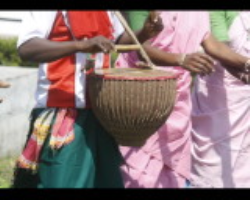
Synteng artisans create beautiful traditional handicrafts that reflect their rich cultural heritage and deep connection with nature. Bamboo and cane work represents their most developed craft tradition, with skilled weavers producing intricate baskets, mats, and decorative items using techniques passed down through generations. Women excel in traditional textile weaving, creating colorful fabrics with distinctive patterns that tell stories of Synteng history and mythology.
Wood carving has gained popularity among male artisans who craft traditional musical instruments, household utensils, and decorative pieces. The use of locally available materials like bamboo, cane, wood, and natural dyes makes these crafts authentic and environmentally sustainable.
Cultural tourism presents significant untapped potential for the Synteng community. Their unique festivals, traditional dances, and authentic village life could attract tourists seeking genuine cultural experiences. Homestay programs could provide additional income while allowing visitors to experience traditional Synteng hospitality and lifestyle.
However, developing tourism requires careful planning to prevent cultural commodification and environmental degradation. Community-based tourism models that involve local people in decision-making and profit-sharing could help preserve cultural authenticity while generating sustainable income.
The combination of handicraft production and cultural tourism could create a viable economic alternative that celebrates Synteng culture while providing modern livelihood opportunities for community members.
Contemporary Challenges and Adaptation Strategies
Balancing Modernization with Cultural Preservation Needs
The Synteng Tribe faces a delicate juggling act between embracing modern conveniences and safeguarding their ancestral traditions. Many community members now own smartphones and motorcycles, yet they continue to practice age-old rituals during harvest seasons and marriage ceremonies. This dual existence creates both opportunities and tensions within the community.
Young Synteng people often find themselves caught between two worlds. They want access to modern healthcare, education, and employment opportunities, but they also feel the pull of their cultural roots. Village elders worry that traditional knowledge about medicinal plants, folk songs, and storytelling techniques might disappear as younger generations become more absorbed in digital entertainment and urban lifestyles.
The community has developed creative solutions to bridge this gap. Some villages organize weekend cultural workshops where elders teach traditional crafts and oral histories to children who attend modern schools during weekdays. They’ve also started documenting their customs through video recordings, creating a digital archive that preserves their heritage while using contemporary technology.
Local leaders recognize that complete isolation from modernity isn’t realistic or desirable. Instead, they focus on selective adoption – embracing changes that improve quality of life without undermining their core identity as the Synteng people.
Educational Advancement While Maintaining Tribal Identity
Education presents both the greatest opportunity and the biggest challenge for the Synteng community. Parents desperately want their children to receive quality schooling that opens doors to better employment prospects, yet they fear that formal education might distance their kids from tribal values and customs.
Most Synteng children now attend government schools where instruction happens in Hindi or English, creating a significant language barrier. Many students struggle academically not because they lack intelligence, but because they’re learning in languages that aren’t spoken at home. This educational disconnect often leads to high dropout rates, particularly among girls who face additional cultural pressures.

Progressive members of the Synteng Tribe have begun advocating for mother-tongue education in early grades. They’ve approached state education officials to incorporate Synteng language and cultural elements into local school curricula. Some communities have established evening classes where children learn traditional stories, songs, and customs alongside their regular studies.
The tribe has also produced several scholars and professionals who serve as role models, proving that academic success doesn’t require abandoning cultural identity. These educated tribal members often return to their villages to establish tutoring centers and mentor programs, creating a supportive network that encourages educational achievement while celebrating Synteng heritage.
Political Representation and Community Development Initiatives
Political representation remains a significant concern for the Synteng people. Despite their sizeable population in certain regions, they often lack adequate voice in local governance structures. This underrepresentation affects their ability to secure resources for community development projects and advocate for policies that address their specific needs.
Recently, several educated Synteng individuals have entered local politics, running for village council positions and state assembly seats. These leaders bring firsthand understanding of tribal challenges and work to secure funding for infrastructure improvements like better roads, healthcare facilities, and clean water systems. They’ve also pushed for recognition of traditional land rights and protection of sacred sites.
Community development initiatives have gained momentum through collective action. The Synteng have formed self-help groups that pool resources for small business ventures, particularly in agriculture and handicrafts. Women’s cooperatives have become especially successful, producing traditional textiles and food products that sell in regional markets.
The tribe has also partnered with non-governmental organizations to implement sustainable development projects. These collaborations focus on organic farming techniques, renewable energy solutions, and eco-tourism ventures that generate income while preserving environmental resources. Such initiatives demonstrate how the Synteng can pursue economic progress without compromising their connection to the land and traditional practices.
The Synteng tribe stands as a remarkable example of cultural resilience and adaptation in modern times. From their rich historical origins to their current efforts in language preservation, this indigenous community has managed to maintain their unique identity while navigating the complexities of contemporary life. Their traditional social practices, economic activities, and strong connection to their geographic homeland continue to shape their daily existence and community bonds.
Looking ahead, the Synteng people face the ongoing challenge of balancing cultural preservation with modern development. Supporting indigenous communities like the Synteng means recognizing their valuable contributions to cultural diversity and helping them access resources for education, healthcare, and economic opportunities without compromising their traditions. Whether you’re a researcher, policymaker, or simply someone interested in indigenous cultures, learning about and advocating for communities like the Synteng helps ensure that their voices and traditions remain vibrant for future generations.
