
Introduction :
Thank you for reading this post, don't forget to subscribe!When it comes to the growth of Women’s education growth in Northeast India, it can be said that it has not increased proportionally over the 75 years since independence.The past two decades have seen clear advances in girls’ and women’s education across the eight states of India’s Northeast (Assam, Arunachal Pradesh, Manipur, Meghalaya, Mizoram, Nagaland, Tripura and Sikkim). These advances appear in increasing female literacy levels, improved primary and secondary-level enrolment rates and more rapid growth in female enrolment at higher education — but also reflect substantial variation across states, as well continued weaknesses in quality, retention and transition to employment.
The numbers (big trends) : Women’s education growth in Northeast India
There has been a distinctive rise in the women’s enrolment and attendance patterns at the national level and also for the Northeast. School level data reported on UDISE+ indicates that enrolments are expanding and gender parity is improving in several grades over the recent past, especially at primary and upper-primary levels. National surveys and education statistics also indicate that girls’ enrollment in higher education has increased markedly over the past decade — girls enrolled in higher education rose significantly by the late-2010s and early 2020s.
A dramatic recent success: Mizoram has recently been widely reported as India’s first ‘fully literate’ state, following a state campaign focused on adult and functional literacy — see how state-level mobilization can eradicate our remaining pockets of basic illiteracy! This achievement underlines the Mizo society’s decades old commitment for education and community learning.
State variation — best and worst use Dispatch
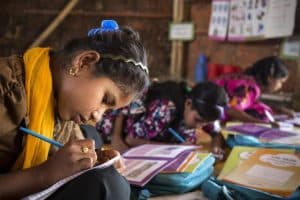
The Northeast is not uniform. Mizoram, Tripura and Sikkim consistently have high female literacy and good school participation; Mizoram’s recent success shows how near universal literacy can be achieved through an approach that incorporates schooling along with adult learning. Assam — the biggest state in terms of population here — has shown improvement in female enrolment and retention
It continues to be an issue in rural-remote pockets and among certain sections like Scheduled Castes (SCs) and Scheduled Tribes (STs). Arunachal Pradesh, Nagaland and areas of Manipur exhibit lower female literacy and high dropout rates, which are often the result of remoteness and lack of infrastructure, as well as lingering socio-economic issues. Numerous academic studies examining inter-regional disparities using census and state data have documented these intra-regional differences.
Drivers of progress
- Targeted education programmers and UDISE+ monitoring: Enhanced monitoring (UDISE+) and state-led initiatives on girls’ enrollment, scholarships, mid-day meals have increased enrolment and reduced gender gap in school entry/ graduation.
- Cultural and community support in many tribal societies : In some hill and tribal areas of the Northeast, cultural attitudes around girls’ schooling are more positive than in much of mainland India — extended matrilineal or more gender-egalitarian social traditions in certain places make it easier for girls to stay on at school. (This is evident in states with higher female literacy rates like Mizoram and Meghalaya.)
- Higher education outreach and expansion: The All India Survey on Higher Education (AISHE) reveals an upward trend in women’s participation in tertiary education at the national level; these trends are also visible, albeit uneven, among universities and colleges within the North East where access has been broadened through outreach efforts and localized colleges.

Persistent challenges
- Change-over and drop-out at the secondary and higher-secondary levels. While access to primary education is nearly universal in many nations, transition to or completion of secondary and higher education is not. The gender gap can widen at these transition points due to economic pressures, early marriage in pockets, care roles and distance to institutions. Recent analyses of participation rates have shown that inequalities pop up again and again at higher grade levels.
- Quality and learning outcomes. (State campaigns) have not necessarily resulted in higher foundational learning or school learning outcomes. Journalistic and scholarly writing about the region has highlighted a “literacy paradox” in some areas, where literacy rates — focused on basic reading and writing skills — are high but students’ classroom learning outcomes and competencies are low.
- Infrastructure and outreach in rural areas. Together with long distance to school, poor roads and lack of safe transport or separate sanitation for girls in schools make attendance and retention particularly difficult in remote hill and border districts.
- Conflict and instability. Intermittent unrest (e.g., in some areas of Manipur) interrupts school, and parents are less likely to send girls to school when the region is unstable.
- Labour market linkages. Even where women do gain diplomas and degrees, job availability commensurate with qualifications are scarce in much of the Northeast, reducing the incentive for further education as an avenue towards economic independence.
Policy responses and promising practices
- Adult literacy & functional learning campaigns:
In Mizoram, the formal schooling was paired with adult learning, volunteer tutors and community drives — a model for bridging literacy gaps that still exist on paper.
- Scholarships and conditional transfers:
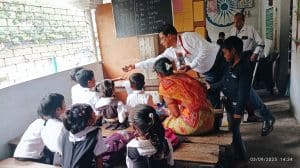
State and central scholarships for girls, along with incentives for completing upper primary, have helped increase enrolment as well as attendance. Local college expansion: Establishing colleges in small towns, and better distance education/online learning facilities can be especially helpful for girls who cannot move to a bigger town or city to study. An analysis of AISHE data reveals the need to increase the capacity of institutions to accommodate enhanced female demand.
- Focus on learning quality:
A number of state reports and NGOs are now focusing on remedial coaching, teacher training, as well as the bottom-of-the-class ‘literacy programmers’ to ensure that rising enrolment figures actually yield skills.
What needs to happen next
To turn gains in enrolment and literacy into lasting empowerment and economic participation, the Northeast should take a two-pronged approach: (a) continue expanding access (infrastructure, scholarships, safe transport, conflict-sensitive schooling), and (b) obsess about quality — foundational skills, bridging courses for out-of-school children of migrant workers who attended school but left to work early, vocational pathways that lead somewhere instead of nowhere when they’re done; deeper linkage between colleges’ programmers and local labour markets.
Community specific interventions (tribal, displaced and conflict affected) and mapping/district-wise surveillance are essential.

Conclusion
Education for women in Northeast India: Some strides taken Women’s education in the region has shown improvement on several counts such as increased female enrolment across levels, higher presence in higher education, and commendable endeavors at state level as demonstrated by Mizoram’s literacy feat. But the region’s is a mixed tale — shining successes alongside stark gaps in learning quality, retention through upper grades and economic translation of education.
Ongoing commitment is needed in terms of access as well as learning – and additional work will be to make education policies context sensitive for remote and conflict affected areas, if the educational gains that the region has seen in girls’ enrolment are to become durable drivers of women’s social and economic empowerment.
