

Thank you for reading this post, don't forget to subscribe!
Introduction : Female athletes in North East India
Best Female athletes in North East India have contributed their utmost efforts in a very small scale. The eight-state Northeast – Assam, Manipur, Meghalaya, Mizoram, Nagaland, Tripura, Arunachal Pradesh and Sikkim – has become one of India’s most fertile regions for producing elite female athletes over the last two decades.
Recent high-impact achievements (2024–mid-2025)
Female athletes in North East India CONTINUE TO BREAK THROUGH Notable achievements headline the ongoing ascent of Northeast women in a variety of sports. In June 2025 Arunachal Pradesh’s Hillang Yajik created history by winning gold (and silver) at the 15th South Asian Bodybuilding & Physique Sports Championships — the first woman from her state to have achieved that feat at that level. This is also a symbol of how athletes from the relatively smaller Northeastern states have been venturing into newer sporting disciplines.
Star personalities who had made their reputations in the region were still on stage, continuing to act and create conversation. Mirabai Chanu (Manipur) who already became a figure of national attraction post her Olympic silver in Tokyo, remained reminiscent on the global weightlifting stage during 2024-2025 seasons to streamline the elite lifter channel from Manipur.
Track and field continues to be a Northeast stronghold. Hima Das (Assam) remains the national record holder even today and, more importantly the travail of her mid-2018 has inspired junior sprinters across guar areas to finally believe there can be a future in it here.
On the team-sport front, in 2025 news like Assam Rifles’ riflewoman Ranjana Chanu having made it into the Indian women’s football squad for AFC Women’s Asian Cup Qualifiers reflects a broadening of participation in mainstream national teams to beyond individual sports as has been customary.
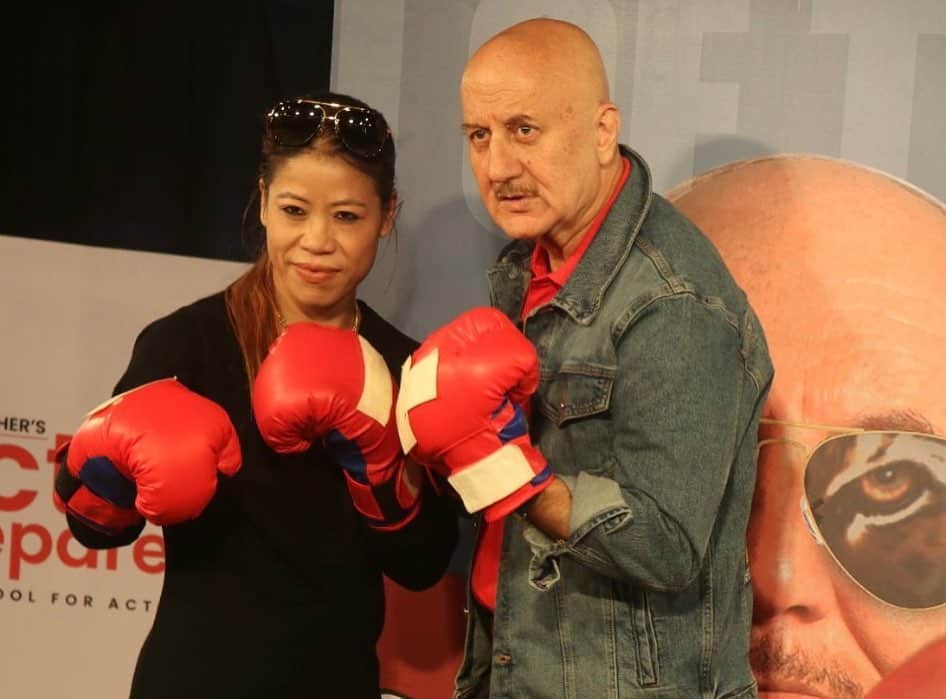
Finally, the region’s veteran stars — Mary Kom (Manipur), most notably — continue to provide a central base of operations for promoting Northeast sport, even as they transition in and out of roles like retirements announcements to advocacy to foundation work, because they provide not just coaching, mentoring, but also visibility for women’s sport.
Breeding ground for Female athletes in North East India
A combination of socio-cultural, physiological and institutional circumstances can help to explain the Northeast’s disproportionate sporting output:
• “Cultural acceptance of female physicality.” Physical activity for women, from everyday work to traditional sports and dance, is more socially acceptable in many Northeastern communities, partly helping explain the reduced cultural barriers seen in parts of these regions compared with other parts of India.
• ”High baseline physical activity and talent density.” Heights, hills and an active lifestyle promote muscle resistant endurance.
• “Role models and visibility.” Icons like Mary Kom and Mirabai Chanu build aspirational pathways; men from the village succeed, give all the boys hope, feed regional pride and investment.
• “Targeted entities and arms forces connections.” Players feel the financial security through Assam Rifles, Services and other paramilitary/defence establishments with sports quotas gives them career assurance, letting them pursue their sport.
Structural strengths and growing infrastructure
Recent statement would indicate that visibility of North Eastern athletes in various disciplines (e.g., body building, weightlifting, athletics, boxing etc.) is enhanced. States — occasionally with the help of central schemes — have started to celebrate and endorse their winners in public, which strengthens the sports ecosystem.
State academies, local federations, school-level competitions and scholarship programs are the source of talent identification. The ascendancy of youth athletes from hitherto under-represented states such as Arunachal (for example Hillang Yajik) is a testimony to the fruit borne by these systems.
Persistent barriers and challenges of Female athletes in North East India
Despite successes, important constraints remain:
1. “Not enough high performing infrastructure in smaller states.” If Manipur and Assam have relatively better facilities, some smaller states are yet to offer world-class gyms, tracks, sports science support and top-quality coaches on a regular basis.
2. “Funding volatility and job insecurity”. The major avenues of financial support for many athletes are scattered grants, occasional sponsorships and government jobs through sports quotas. This uncertainty can truncate careers.
3. ” Gendered expectations and dual burdens”. Even in countries where cultural acceptability is raised, women struggle to combine family obligations with the demands of training and travel — which leads to retention challenges particularly after junior levels.
4. “Sports medicine, nutrition and sports science available for everyone”. Those supports (and a few others not mentioned) are so essential for high performance, yet are only found in big cities mostly on the East side far away from states like ours.

Policy and ecosystem responses
There are a few trends and efforts to note:
• Celebratory and supportive state policies. Public praises, cash rewards and promises of jobs for medal winners are big political banners that make participation tempting. (You can see this in images of medal ceremonies and state responses.
Civil-society and foundation programs. NGOs and sports foundations stamp talent hunt programs, scholarships and life skills training with an eye on female athletes that bridge pre-elite to elite transition.
Recommendations: pragmatic steps for a faster impact
1. Regional high performance hubs: Develop at least 2 multi-sports high-performance centers in the North East which include sports science, physiotherapy, nutritionists and internationally competitive facilities. And these ought to be subsidized and connected with dormitory scholarship programs.
2. Coach eduction and retention: Fund Level 3 coaching qualifications and incentives for coaches to stay in the district (accommodation, pay, career progression).
3. Women-friendly training environments – Provide safe hostels, transport and childcare facilities for athlete-mothers or those performing caregiving duties for their families.
4. Career opportunities that are sustainable: Build out partnerships of scale with public and private sector employers to give athletes meaningful, secure jobs during and after their careers as pro athletes (not just another token hire).
5. Decentralised data-lite talent ID: Have district talent scouts and a central database that also includes progression, injuries and support needs so interventions are timely.
6. Commercial and sponsorship activation: Proactively sell female athletes in the Northeast to national and regional sponsors — great storytelling is worth its weight in audience share (which equals private money).
Conclusion
The latest crop of female athletes from the Northeast — icons like Mary Kom and Mirabai Chanu or new champions like Hillang Yajik, and to soccer players on the ascendancy — is proof of a rich and evolving sports ecosystem.
But to turn promise into regular podiums on the world stage, investment is required in high performance infrastructure, coaching development, welfare and career sustainability. And if policymakers, federations, civil society and private sponsors align their collective work around the six pragmatic ideas above, the Northeast can not only sustain but grow its output of world-class female athletes.
