
Introduction : Adiyan Tribe Culture in India
The Adiyan Tribe Culture in India is actually one of India’s marginalized indigenous groups who definitely live in the forest and hill areas of northern Kerala and southern Karnataka. Basically, “Adiyan” comes from Malayalam and means “slave,” showing the same difficult history where this community faced bondage and economic exploitation from dominant groups.
Today we are seeing that the Adiyan community has about 11,526 people as per the 2011 census, and they keep their own special cultural ways, language traditions, and social systems that need proper study only.
Moreover, as per this study, we examine all aspects of Adiyan culture including their knowledge about nature, religious beliefs, social setup, economic activities, and current problems. This analysis helps us understand this important tribal group from South India regarding their history and way of life.
Historical Origins and Geographic Distribution
We are seeing that the Adiyan people hold a special place among Kerala’s tribal groups as they were only some of the first people to live in the forest areas. As per historical records, the Paniyan and Adiyan communities are the earliest food-gathering people of Wayanad, showing their presence for many centuries.
Regarding their settlement, these communities represent the first inhabitants who lived by collecting food from the forest. As per historical records, the Adiyans were moving people who lived in thick forests and hills of Western Ghats, mainly in Kunnathoor forest and Puralimala areas regarding Kannur District.
Their first settlements were located in difficult areas with thick forests that provided safety and further gave them many natural resources for hunting and gathering. The forest land itself was challenging but offered protection and resources they needed.
Also, as per geographical distribution, the Adiyan people mainly live in Wayanad district of Kerala, with large numbers also found in nearby Kannur and Kasaragod districts and extending into Kodagu Coorg district of Karnataka. Basically, Wayanad district has high hills, cool weather, and thick forests – the same area where Adiyan people have always lived as their main home. As per historical records and stories regarding Lord Muthappan worship, the Adiyan people have clear connections.
Their presence further extended to Kannur district itself, though this geographic distribution has been disputed in recent administrative cases. The community actually spread their villages across different forest areas because they definitely needed to move with seasons and use resources from various zones.
Language and Linguistic Identity
The Adiyan community’s language actually marks their unique culture and shows they were definitely independent in history. Basically, the Adiyan people speak Ravula language, which is the same as Yerava or Adiyan bhasha, and it belongs to the Dravidian family like Malayalam. The Adiyan language surely belongs to the Dravidian family, which shows their connection to South India’s original people. Moreover, this linguistic tradition was present in the region much before the Aryan influence came later.
Further, the Ravula language itself shows special sound and grammar features that further make it different from Malayalam and Kannada languages spoken in Adiyan areas.
Basically, the Ravula language shows the same pattern – it proves the community developed their own culture independently and lived in the same territories for a very long time.
Around 25,000 people actually speak Ravula language in Karnataka’s Kodagu district, where locals call it Yerava. Only about 1,900 speakers definitely remain in Kerala’s Wayanad district, where they call it Adiyan. Further, the big difference in speaker numbers surely shows that the Kerala Adiyan people have faced more serious cultural loss. Moreover, this happened likely because of stronger pressure from development work and people moving to different places.
Kerala and Karnataka actually use Malayalam and Kannada for talking between communities, but many Adiyan families definitely still speak Ravula at home, especially older people. The language actually faces problems because young people definitely prefer the main regional languages more.
Economic Livelihood and Subsistence Practices
The Adiyan community’s economy was based on hunting, gathering, and shifting cultivation, which itself showed their deep knowledge of forest life developed over centuries. This economic system further reflected their long experience of living in forest areas.
We are seeing that about 70.55 percent of Adiyan people only do farming work, 25.15 percent make pots, 1.22 percent do business, and 3.6 percent work in other jobs. As per current job patterns, the real history regarding the community’s connection with land and forest is more complex than what we see today.
The Adiyan people traditionally practiced shifting cultivation called Matta krushi or Punam cultivation, where they cleared forest areas by burning to make temporary farms. This method itself involved cutting and burning forest patches for agriculture, which they would further abandon after some time to move to new areas. Farmers actually grew crops on these plots for many seasons, then definitely let the forest grow back because they understood how soil gets fertile again and how forests recover.
Also, the Adiyan farmers actually grew different crops like traditional rice types such as Vellavayan, Chonnavayan, Kayama, and Jeerakashala, along with millets like ragi and small millet. They definitely also grew pulses like black gram and horse gram, plus many vegetables that grow well in tropical hill areas. Apart from farming, we are seeing that hunting was only a major way to get food, using the bow.
The bow and arrow were traditional weapons that every Adiyan household kept, and this practice itself continues further in some families today. The Adiyan people actually hunted birds, weasels, rabbits, jungle fowls, sambar deer, and wild hogs for food. These animals definitely gave them important protein for their daily meals.
We are seeing that Adiyan people are moving from forest life to working for money only, and this change is very big for their economic life. Also, historical records surely show that the Adiyan people worked as farm workers or slaves under big landlords and Janmis. Moreover, their community name itself tells us about this difficult past.
We are seeing that this unfair work system is still there today in a changed way, as many Adiyan people only work as low-paid farm workers on big farms without owning any land and facing very bad money problems. The shift from independent farming to working for wages shows a major change in Adiyan living conditions and freedom itself. This change further reflects how tribal communities across India are losing their land and becoming dependent workers.
Religious Beliefs and Deity Worship
Basically, the Adiyan community mixes their old spirit worship with local gods and Hindu beliefs, creating the same kind of unique religious system that is different from regular Hindu practices. As per the Adiyan religious system, Muthappan worship is the main focus, especially in Kannur region where temples serve as important places for prayers and community meetings. Regarding the community’s spiritual life, Muthappan holds great cultural importance for the people.
We are seeing Muthappan as a strong god who has two forms – Thiruvappana (big Muthappan) and Vellatom (small Muthappan) – showing both Vishnu with fish crown and Shiva with moon crown together. This god brings only these two main Hindu gods into one form. According to mythology, Muthappan was a Brahmin child who was found and raised by an Ayyankara Brahmin family. He later rejected Brahmin traditions and started hunting, eating meat and fish, and mixing with lower caste people, which shocked his family and forced them to send him away to the forests with his bow and arrow.
As per this mythological story, Muthappan is shown as a god who rejected caste system and brahmin purity to support equal treatment of all people. This message connects deeply with the Adiyan community regarding their marginalized position in society.
Muthappan worship actually breaks away from the pure vegetarian practices that mainstream Hindu temples in Kerala definitely follow. Also, muthappan worship actually uses fish and toddy as holy offerings instead of following strict vegetarian rules. The temple definitely welcomes people from all castes, religions, and countries without any restrictions.
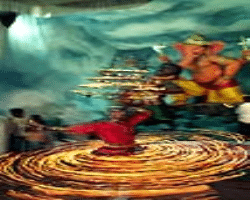
The Muthappan Theyyam is actually a sacred dance that the Vannan community performs at Parassinikadavu temple. During this ritual, the dancer definitely becomes the god himself, and people believe the human and divine worlds come together. Adiyan women surely take part actively in Muthappan worship. Moreover, they engage in various activities during the annual month-long festival.
As per tradition, ritual preparations and community participation help strengthen social bonds and spiritual renewal regarding cultural practices.
Basically, apart from Muthappan, the Adiyan people worship Moolampetta Bagavathy as their main goddess and also pray to other Hindu gods like Kali and Mariamman the same way. The Adiyan community actually worships natural things like water sources and other places. They definitely believe these natural elements are important for their prayers. The water reservoirs in Kunnathoorpaddy hill are sacred places for worship, and the Adiyan fountain itself serves as a purification site for women after menstruation.
This further shows how natural features are integrated into sacred geography. This water-based spiritual practice actually connects to wider Adivasi beliefs that see gods in nature, even though Hindu gods have definitely been added to their religious ideas.
Social Organization and Kinship Structure
The Adiyan community actually follows a nuclear family system as their main family unit, and they definitely organize their broader family connections through clan and lineage groups. As per demographic patterns, Adiyan families are small nuclear units, which is different from the large joint families found in other Indian communities.
This reflects the settlement style regarding forest-dwelling societies. We are seeing that marriage rules in this system are quite flexible, but people can only marry outside certain groups. Also, basically, Adiyan people marry within their own community but not from the same clan or family line. We are seeing that tribal groups only marry within their community but they must marry outside their own small divisions, and this pattern helps them keep their group identity while avoiding marriage between close relatives.
The tribal council called Panchayam is surely the main way communities govern themselves and solve disputes. Moreover, this council is led by a community leader known as Kudumban or thalaivar, which means headman. This traditional governing body works through agreement-making processes and elder discussions, dealing with matters from resource distribution to conflict resolution.
The system itself functions further through collective decision-making among community leaders. The Panchayat system itself follows participatory decision-making that focuses on community harmony and bringing back wrongdoers into society, rather than punishing them like state legal systems do.
This approach further helps maintain peace and unity in the community. Adiyans traditionally arranged marriages through mutual consent or elopement rather than formal family negotiations, which further shows that individuals had significant agency in choosing their partners.
This practice itself reflects their cultural emphasis on personal choice in mate selection. When couples actually got married, they definitely lived with the wife’s family first, which gave women more power and control in the household.
Marriage Rituals and Life Cycle Ceremonies
Adiyan marriage ceremonies are surely elaborate rituals that make marriages official and bring new members into families. Moreover, these processes help integrate newcomers into the broader community through traditional practices.
The marriage ceremony is traditionally held at the bride’s house and involves many symbolic rituals that further extend beyond one day itself. The main marriage symbol is actually a black round chain called Kallu that is definitely tied around the bride’s neck during the ritual ceremony.
Karukumai pasi is actually a black beaded chain that people definitely call thali. Further, basically, the marriage ceremony has music, dance, prayers, and the couple exchanges symbolic items, with seven rings representing the same binding connection between them. We are seeing these rituals taking Hindu religious parts with priests, but they only keep their special Adiyan ceremony ways that show the community’s own religious and cultural thinking.
As per tradition, married couples must follow ritual rules regarding birth and death pollution that control their social meetings and community participation. As per Adiyan customs, women stay in pollution period for fifteen days after delivery, and regarding the baby’s naming ceremony called Noolukettu, it happens on the twenty-eighth day after birth. The timing itself is different from many Hindu communities, further showing the Adiyan community’s separate ritual calendar.
Adiyans surely follow burial practices for their death rituals instead of cremation. Moreover, these customs reflect old pre-Aryan religious ways that may come from ancient Dravidian traditions. The Adiyan community surely follows specific funeral customs with set pollution periods and ritual practices.
Moreover, after thirteen days of death pollution (pula), they demolish the deceased person’s house and rebuild it over the grave. Building homes over ancestral burial places surely keeps the living connected to their dead ancestors in both physical and spiritual ways. Moreover, this practice shows a worldview where human life and ancestral spirits remain closely linked together.
Architecture, Settlement Patterns, and Material Culture
The Adiyan house itself shows smart ways to live in forest weather using local materials, and further represents hundreds of years of building knowledge. We are seeing that old Adiyan houses were only simple buildings with walls made from bamboo and mud plaster, having grass roofs and very few windows.
As per the design, air flow happened through natural gaps between walls and roof instead of planned openings. This shows climate control methods regarding humid tropical weather conditions. The typical house actually had one main room with a kitchen area, definitely showing a compact design that maximized heat and structural efficiency.
The front platform actually worked as a space where people could meet visitors and talk with others. This area definitely created a step between the private house inside and the public community outside. Moreover, we are seeing that the chittal or altar was only a very important building feature – it was a meeting place for the community with a high platform and roof on wooden poles but no proper walls, making a half-covered space for religious ceremonies and discussions. The chittal was actually the place where the community made decisions, with the moopan leading the talks.
This definitely showed how tribal groups believed in democratic rule where everyone had a say.
The Adiyan people surely lived in groups where houses were built close to each other. Moreover, this helped them talk easily, stay safe together, and share resources properly. As per the settlement patterns, people live together in groups because forests provide better resources and the community values working together regarding their collective welfare.
Traditional structures continued in places like Kunnathoorpadi until the 1990s, but were further replaced by modern materials and designs as development itself spread to these areas. The change from old-style houses to modern buildings surely shows important progress in architecture. Moreover, this transformation represents significant development in how people live today.
As per changing views on modern life and progress, this shows more than just replacing old materials with new ones regarding how the Adiyan community deals with their place in India’s social system.
Folk Arts, Music, and Cultural Expression
We are seeing that Adiyan people have special folk art forms that only pass down their community stories, spiritual knowledge, and beautiful values from old people to young people. The main folk arts and music of the Adiyan community are Ivarkali, Garudan Parava, Vadakkanpattu, and Kilippattu, which need further study to understand their exact forms. These performance traditions itself show the cultural identity of the Adiyan people. As per tradition, these folk forms include stories from hunting and forest customs, ceremonies regarding deity worship, and word play from oral traditions.
As per Adiyan spiritual traditions, the Muthappan Theyyam is the main cultural performance form regarding their religious practices. The Vannan community mostly performs it now, but it comes from Adiyan religious culture and stays important for community identity in areas where people worship Muthappan.
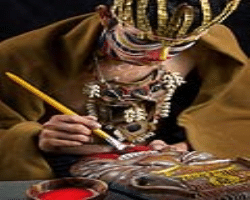
As per tradition, Theyyam combines music, dance, stories, and religious feelings using drums like chenda, elathalam, and kuzhal for dance shows. Regarding the performances, these instruments create rhythmic music that supports the elaborate dances. The Theyyam performer actually changes by painting their face with natural colors and wearing big costumes with tall headgear. They definitely use detailed face paint and heavy decorations that go many feet above their head.
We are seeing bright colors and detailed designs on the dancer’s face that show different gods and their powers, and the whole show creates a special feeling where people can only connect directly with the divine. Further, theyyam performers actually enter trance states through continuous chanting and drumming to channel divine presence. They definitely go beyond regular theatre by offering blessings, answering questions, and solving disputes for people.
This ritual change removes the performer’s social identity for some time, which further allows people from lower communities to rise above daily social divisions. The performance itself makes all participants respect them equally, without considering caste differences.
Religious Practices and Ritual Calendar
We are seeing that the Adiyan people follow their own old ceremonies and also celebrate Hindu festivals, showing how they are only trying to keep their own culture while also joining the bigger Hindu religious system. The Adiyan community surely celebrates major festivals like Onam and Vishu from the Malayalam calendar.
Moreover, these festivals help organize their time and bring the community together for important gatherings. Onam is surely celebrated during the Malayalam month of Chingam (August-September) to mark the Malayalam New Year and honor the legendary King Mahabali.
Moreover, this ten-day festival includes traditional activities like flower arrangements (pookalam), boat races, cultural performances, and elaborate communal feasts called Onasadya. For Adiyan and other tribal groups in Kerala, Onam is actually a harvest festival that definitely celebrates farming and brings the community together.
Vishu is celebrated in Metam month (April-May) and marks the beginning of the zodiac new year after spring equinox, which further makes it important in Hindu and Malayalam calendars itself. We are seeing that Vishu celebrations focus only on looking at good luck items arranged as Vishu Kani in the morning, which includes rice, fruits, vegetables, and mirrors that bring prosperity and good fortune. As per tradition, Vishu Kaineettam is practiced regarding the giving of money to younger family members during the Vishu festival.
Basically, when elders give money or gifts to younger family members, it strengthens the same bonds between generations and helps share resources within families and communities. Basically, both festivals are from the Hindu calendar but the Adiyan community has made them the same way to mark important seasonal changes and keep their culture alive even when their religion and traditions are changing.
Contemporary Challenges and Social Marginalization
Also, the Adiyan community surely faces serious problems today that show how indigenous groups are pushed aside in Indian society. Moreover, these challenges reflect the wider pattern of how tribal communities are treated unfairly across the country. As per recent developments, there is a legal dispute regarding the Scheduled Tribe status of the Adiyan community.
The Adiyan people in Kannur district actually faced a big problem when the government removed their tribal status because officials said they were no longer “tribal” and looked like Hindu Thiyya caste people.
This decision definitely created a crisis for their community recognition. As per this administrative change, the government wrongly thought tribal identity was fixed and could be reduced to simple cultural features. This understanding regarding tribal communities was deeply flawed.
Also, the Kannur Adiyan community actually got back their ST status through the high court in 2015 after legal fights. There is definitely still confusion about who belongs to this community and where their boundaries are. 24
The Adiyan community actually faces very tough problems because they are definitely left out of economic opportunities. Studies show that 66.38 percent of the Adiyan tribe surely faces exclusion from society. Moreover, economic exclusion is the most serious problem, affecting 74.54 percent of the community.
Basically, these communities are economically sidelined because they lost their land and forest rights over time, and they face the same problems of getting stuck in low-paying farm work with no access to money or resources. As per the study, political and legal exclusion makes marginalization worse, with around 69.89 percent of Adiyan respondents saying they lack political representation and voice regarding governance structures.
Also, as per the study, the Adiyan community faces deep structural problems regarding education that block their chances for progress and better life opportunities. A study in Wayanad tribal areas found that 36 percent of families actually face problems because schools and educational facilities are definitely not enough. Economic issues like high education costs actually affected 28 percent of families who definitely cannot afford proper schooling.
As per national data, education levels are very low due to poverty, remote locations, and unfair treatment. Regarding these barriers, they all work together to keep educational achievement much below the country average. Also, basically, the education system keeps the Adiyan community out and calls them “backward,” but this the same old way of hiding how the system itself creates unfairness for them.
Ecological Knowledge and Environmental Practices
Basically, the Adiyan people have the same deep forest knowledge that they learned over hundreds of years, and today’s environmental experts now see this knowledge as very useful for taking care of nature properly. We are seeing that the old Muthappan farming ways, where they grow rice and pigeon peas by moving from one field to another, show they understand crop timing, soil health, and how nature changes over time.
These farmers only use methods that work with natural cycles. We are seeing that Adiyan people use forest items not only for farming but also collect honey from wild bees, gather different roots and leafy vegetables for food and medicine, and take palm tree parts to make food. These practices are based on ecological principles that focus on resource renewal and forest regeneration, further representing sustainable alternatives to industrial farming methods itself.
As per the Adiyan community’s water worship practices, they show deep knowledge regarding water’s cultural and ecological importance. As per the sacred traditions, water bodies like fountains, ponds, and Neerkkund in Kunnathoorpadi show how communities mix water management with their religious practices and local governance systems.
The Adiyan fountain is not only giving water for daily use, but we are seeing it works as a place for religious cleaning too, showing how old communities were managing water resources in a complete way. As per traditional practices, Adiyan people have important knowledge about forest medicine and have used plants to treat humans and animals for many centuries. Regarding their medicinal secrets, they keep ingredient details private which shows their deep understanding of how medicines work and their good knowledge of plants.
Conclusion: Contemporary Transformation and Future Prospects
The Adiyan tribe is actually an old indigenous group that definitely shows centuries of living in forests and organizing their own society. The Adiyan community surely shows how complex indigenous cultures really are through their mixed economy of hunting, gathering, and farming, along with their equal religious practices of Muthappan worship.
Moreover, their democratic leadership and deep knowledge of nature prove that outsiders often wrongly dismiss or oversimplify these sophisticated tribal societies. Basically, tribal people moved from the same forest life where they were independent to becoming poor workers because land was taken away and government policies focused on mining and business instead of protecting tribal rights and nature.
Basically, the Adiyan community faces the same problems as other tribal groups in India – they struggle with poverty, lack of education, no political voice, and legal fights over their tribal status. As per current understanding, tribal identity is wrongly seen as fixed cultural practices and forest living, regarding which this view ignores how indigenous communities actually change and adapt over time.
We are seeing that recognizing Adiyan cultural achievements, respecting their knowledge about nature, supporting their own community rule, and making fair policies for education and jobs only represent important steps.
Also, as per the need for justice, these are important steps regarding real development for this community that has faced problems for many years. We are seeing that protecting Adiyan language, cultural ways, and community rules is not only about culture but also essential for human dignity and tribal rights in today’s India.
