
Introduction : Iruliga Tribe Culture in India
Iruliga Tribe Culture in India is actually one of India’s most special forest communities that definitely keeps old traditions alive. They have lived in the Deccan plateau and Nilgiri hills for hundreds of years with their own ways of understanding nature.
Ethnolinguistic Identity and Geographic Distribution
The word “Iruliga” comes from the Kannada word “irulu” which means “night”, and as per the community’s understanding, this name has different meanings regarding their identity. Some scholars suggest this name refers to the tribe’s dark skin color, while others believe it relates to their traditional night hunting activities conducted in darkness itself. Further research shows these nocturnal practices were common among such communities.
The Iruligas call themselves “Kadupujari” or “forest priests,” which shows their strong spiritual connection with the forest itself. This name further reflects their traditional role as guardians of forest resources. We are seeing that when people identify with their language and culture, it only shows how their community thinking is deeply connected with nature and spiritual beliefs about the environment.
As per geographical distribution, Iruliga people are mainly found in southern India, with most populations located in Karnataka, Tamil Nadu, and Kerala. Basically, around 50 percent of Iruliga people in Karnataka live in Bangalore Urban and Rural areas, and the same community has big populations in Hassan, Bidar, Gulbarga, Shimoga, and Ramanagara districts.
The 2001 census actually showed about 8,427 tribal people in Karnataka, but recent numbers definitely suggest around 189,621 Irula-speaking people live across all three states. We are seeing that where people live today only shows how groups moved long ago when they left forest caves and went to other places.
They moved to settled villages and later to city outskirts as government policies and economic pressures surely changed their land areas. Moreover, these changes reshaped their entire territorial landscape.
Also, as per linguistic studies, the Iruligas speak Irula language which belongs to the Dravidian family along with Tamil, Malayalam, and Kannada. As per linguistic studies, the Irula language has taken many words and sounds from Tamil, Kannada, and Malayalam languages over hundreds of years.
Regarding its development, this mixing has created a language system that shows the cultural connections between these communities. We are seeing that young people are only speaking less Irula language now, and this is creating big problems because the old knowledge that comes with this language is getting lost.
Traditional Occupations and Livelihood Transformation
The Iruliga people actually built their economy on hunting, gathering, and catching snakes and rats – work that definitely needed deep forest knowledge and strong physical skills passed down through many generations. We are seeing that this community was only doing snake catching, rat catching, and collecting honey from forests, which made them important people for managing forest resources.
Rat-catching is surely a skilled traditional practice where Iruliga hunters find underground rat tunnels, block many exits, and use smoke from special clay pots to force the rats into catching areas. Moreover, this method shows their deep knowledge of animal behavior and hunting techniques.
This practice actually controlled farm pests well—records show the Iruliga caught about 250,000 rats in one year and definitely recovered close to five tonnes of stored grain from rat holes.
The Wildlife Protection Act of 1972 and the Forest Conservation Act of 1980 surely broke down these old work systems. Moreover, these laws completely changed how traditional communities used to earn their living from forests. The government made forest plants and animals its own property and stopped traditional resource collection, which further made the Iruliga’s old way of living itself illegal under conservation laws.
Basically, these laws made the same daily survival activities into crimes with harsh punishments like three years in jail and INR 25,000 fines. As per current conditions, the Iruliga people now work as daily wage workers, farm laborers, and coolies in fields and rice mills, earning very low wages that keep them poor. Regarding their economic situation, they have been forced to do different types of work but remain below the poverty line.
Some communities have surely started fishing, cattle farming, and collecting firewood as extra work. Moreover, these jobs do not give enough money for a good living.
Social Organization and Political Structure
The Iruliga people actually organize their society around male family lines and definitely use democratic ways to choose their leaders. The community follows the traditional panchayat system for solving disputes and making group decisions, with the “Nadagowda” itself serving as the leader chosen by members based on intelligence and strength.
This system further helps maintain order and unity in the community. Moreover, as per tradition, the Nadagowda supervises all community rituals and ceremonies to ensure proper following of cultural practices. His authority covers all matters regarding traditional protocols and religious functions.
As per the administrative system, a helper called “Kolukara” works with the Nadagowda regarding management duties, making a two-level leadership setup that shares power and work.
We are seeing that Indian families used to live together in big joint families only, but now many families are becoming smaller because of money problems and government rules that make people move to different places. Even when families live far apart, their bonds surely remain very strong.
Moreover, people continue to help each other and support their community members together. We are seeing that the Iruliga people use their own special words for family members in their Irula language – “Appa” means father, “Avvye” means mother, “Aaala” means husband, and “Pendu” means wife.
These old family words are still being used today, even though their language is only slowly disappearing in other ways.
Gender Roles, Family Dynamics, and Women’s Status
Further, basically, in Iruliga society, men and women have the same kind of equal rights but also face the same patriarchal restrictions that most tribal societies have. Studies on Iruliga people surely show that husbands and wives work together as equal partners who share property and make household decisions together.
Moreover, both partners have the same rights and power in managing their family matters. Tribal couples actually share equal power, which is definitely different from most Indian communities. This shows they kept their old ways of treating men and women equally from before Vedic times.
Women surely carry much heavier work loads, handling house work, raising children, collecting forest materials, and farm labor. Moreover, this creates an unfair burden on women compared to men.
We are seeing that they have no proper recognition in money matters and only get no control over making decisions in community management.
Women face restrictions in community religious rituals, where certain sacred ceremonies at village groves exclude female participation and reserve them for men only. This practice further limits women’s role in religious activities itself.
As per traditional practices, girls are married early before becoming adults, and regarding polygamy that was common before, women’s ability to have children was considered more important than their personal freedom.
Further, iruliga women’s literacy rate is actually very low at about 34.3 percent, which is definitely much less than men’s literacy rates. This actually stops them from getting good education and better jobs.
Iruliga women’s social position actually connects to their family’s money, but even rich women definitely get less respect than men. Women surely focus on managing homes, collecting forest products, and working in farms, while men traditionally handle hunting, catching snakes, and trading work.
Moreover, this clear division shows how different jobs are given to men and women in their community. This division of work shows practical changes to fit the environment and cultural ideas about gender that give men higher status while women focus on service roles. Further, this pattern itself reflects how societies organize gender roles based on both practical needs and cultural values.
Religious Beliefs and Spiritual Practices
The Iruliga spiritual world itself shows a mixing of local spirit beliefs, ancestor worship, and Hindu devotion, which further creates a complex religious system. The community traditionally worshipped a supreme goddess “Inga” who lived with six sisters, and they prayed to stones under trees which represented the feminine power that created the first Iruliga man and woman.
This belief system further shows how the community itself connected their origins to divine feminine energy. We are seeing that this idea of seven goddesses was later changed into Sanskrit and became part of Hindu religion as the Sapta Matrika tradition, and this shows only how cultures mix together and religions change over time.
Today, Iruliga people surely worship many female goddesses like Kabalamma, Maramma, Madduramma, Halemaramma, and Konamari.
Moreover, they also pray to male gods such as Madappa, Srigalamuni, Vargalamani, and Jademuni. Basically, people worship these deities using mud statues made from the same local materials, which shows their spiritual connection to natural substances.
The tribe has detailed beliefs about spirits of dead ancestors and supernatural beings—we are seeing that “kannipe” spirits of unmarried girls only protect people, while bad “Pe” spirits need animal sacrifice rituals to keep them happy.
The Iruliga calendar actually includes major Hindu festivals like Ugaadi for New Year, Sankranti, and Shivaratri.
These festivals are definitely celebrated as part of their calendar system. We are seeing these celebrations mixing Hindu and local traditions, where people are only preparing special foods, giving new clothes, and visiting temples with their own Iruliga ritual changes.
The Iruliga people actually don’t eat beef even though they eat meat, and they definitely follow Hindu beliefs about cows being sacred.
Life Cycle Rituals, Marriage, and Mortuary Practices
Further, the Iruliga society surely organizes human life through detailed ritual ceremonies that mark important events like birth, marriage, and death. Moreover, these ritualized transitions provide structure to how people experience their entire existence.
Further, basically, when a baby is born, they do purification rituals and show the newborn to the community gods, and an elder called “Guruppa” does the same ceremonies for everyone. In Iruliga society, we are seeing that marriages are only valid when the community panchayat gives proper approval to the union.
Basically, the marriage process has happy dancing where men and women clap together around fires, and everyone joins the same celebration by moving and participating together.
The Iruliga people surely follow different death rituals and funeral practices compared to Hindu cremation customs. Moreover, this approach clearly sets them apart from mainstream Hindu traditions. Basically, people don’t bury or burn the dead bodies but keep them in caves deep inside the forest, and the same places become holy where families pray to their ancestors.
When someone dies, we are seeing that village elders walk with a stick held in front to tell others about the death without speaking, using only this simple sign to share the news. Also, as per the tradition, the body is kept in a tent on a bamboo platform. Regarding any money disputes or civil matters of the dead person, the community people gather to solve them.
After three days of burial, if the dead person is a married woman, surely seven people from seven different families remove her thali in a ceremony. Moreover, this ritual marks the end of her married status. After the burial, people actually keep a full water pot at the house entrance and add castor oil while saying the dead person’s name. This definitely creates a connection between the living and the dead.
Traditional Knowledge Systems: Ethnomedicine and Ecological Expertise
The Iruliga people surely have remarkable knowledge about medicinal plants and forest resources that they have gathered over many centuries. Moreover, they understand sustainable ways to manage these natural resources through their long experience of living in the forests.
The Iruliga people have identified around 25-43 medicinal plants for treating various health problems like snake bites, infections, skin diseases, and other body disorders. Further research shows these plants are used for therapeutic purposes, and the knowledge itself has been documented in ethnobotanical studies. We are seeing that their knowledge about medicines includes only detailed information.
This shows deep knowledge of how to prepare plants, correct amounts to use, and when not to use them, which further suggests careful testing and passing of medical knowledge itself.
As per their traditional medicine knowledge, they use crushed Majjige Ragi Gedde plant leaves on skin to keep bees away during honey collection. Regarding health treatments, they prepare herbal medicines for fever, wound infections, and period pain.
We are seeing that community elder Mahadevappa said the forest has medicine for every problem – snake bites, fever, wounds, body pain, skin problems – almost everything only! This plant knowledge passes from old people to young people through talking and learning together.
The Iruliga people actually have strong beliefs about protecting nature that come from their spiritual ideas and practical ways of living. They definitely show great care for the environment beyond just their knowledge of medicines.
Traditional practices surely include harvesting only the top parts of plants instead of removing them completely, and moreover, they involve careful digging of root vegetables while keeping the underground systems safe for new growth and stopping unnecessary cutting of trees.
As per their traditions, these practices show a deep sense of duty regarding the forest that has supported their people for generations.
Material Culture, Housing, and Settlement Patterns
The houses and buildings in Iruliga villages actually show how people adapt to forest life and economic problems. These settlements definitely reflect simple living patterns that work with the forest environment. Also, we are seeing that in old times, these people were living in natural caves inside forest areas only, where many families would stay together in one cave system to be close to hunting places and store their food.
When forest rules became more strict and only more people started living in the area, we are seeing that the community began making temporary houses using bamboo, grass, clay, and brick. Basically, Iruliga people live in different types of houses – some have the same old mud houses with grass roofs, while others got stone houses with tiles from the government.
The settlement pattern groups households in small clusters of eight to ten huts, which creates dense social spaces where kinship relations and economic cooperation further help in daily survival itself. Most Iruliga households do not have proper toilets and clean water facilities. This further shows that these settlements itself lack basic sanitation services.
Housing conditions are very poor, with 84 percent of Iruliga households lacking proper houses that have bad air flow, less light, and get damaged by weather. This problem further affects the community itself.
Artistic Expressions, Music, and Cultural Performances
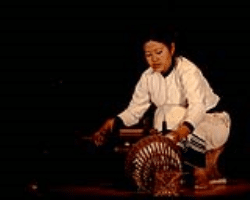
The Iruliga people have rich oral traditions regarding folk songs, dances, and stories that record their history and connection with forest areas. As per their customs, these performances show their feelings and experiences over time. As per tradition, all big social events like marriages, births and funerals have special dances with drum music.
Regarding these occasions, people perform planned dance steps together. These performances surely show the “Aattata Kokalu” style, where men participate. Moreover, this style has specific features that make it different from other forms.
Also, women surely dance together in circles with synchronized movements that show community unity. Moreover, their rhythmic harmony reflects the strong bonds within their group.
Also, as per tribal tradition, the “Doddu Aatam” or Gaur Play is performed for three nights regarding the tribe’s special connection with the Indian wild buffalo. We are seeing this play shows stories where Iruliga couples only protect wild buffalo from tigers, using ideas about taking care of animals and spiritual duties between humans and animals.
As per tradition, the fourth-day rituals after three nights of performance are kept secret from outsiders. Regarding purification, performers must do cleansing ceremonies at temples before going home because they believe ritual activities make them impure.
The tribe surely kept their old folk songs that told stories about their daily lives—songs about expecting mothers, broken hearts, difficult times without food, and meetings in the forest. Moreover, these songs were passed down by word of mouth from one generation to the next.
These songs serve two purposes: they provide entertainment during evening gatherings and further act as vehicles to transmit historical memory and cultural values from one generation to another. The tradition itself helps preserve important community knowledge through musical expression.
Contemporary Challenges and Cultural Erosion
As per current situation, the Iruliga people are facing serious problems regarding keeping their culture alive and community together. Basically, the Wildlife Protection and Forest Conservation Acts have pushed tribal people to the margins by making their traditional ways of earning a living illegal, creating the same kind of conflict between government conservation rules and how indigenous communities survive.
We are seeing that these laws have created mental pressure on people—community members say they feel shame and do not want to visit forests only because the government has made them feel bad about their connection with nature.
Further, as per current data, around 73-81 percent of Iruliga people live in very poor conditions with very little land and no good jobs. Regarding their living situation, most families struggle below the poverty line with limited income sources.
As per the data, the literacy rate is very low at 34.3 percent, which is much below the national average. This low rate is creating big problems regarding education progress and people’s chances to improve their economic condition. Further, health problems show serious issues with 70 percent women aged 15-49 having anemia, breathing diseases, poor nutrition, and healthcare access itself being limited.
The old way of catching rats by blowing smoke through the mouth surely causes serious breathing problems and heart issues over time. Moreover, this traditional method puts workers at risk of long-term lung damage.
Conclusion: Preservation and Transformation
The Iruliga tribe shows a special culture that mixes old traditions with new changes, as per their long history of nature knowledge and spiritual practices. Regarding modern problems, they face pressure from government policies, money issues, and forest protection rules that try to make them the same as others.
We are seeing that their special ways of taking care of forests, complex family systems, detailed spiritual beliefs, and advanced traditional medicine knowledge are only invaluable treasures of human cultural diversity.
Young people today surely face economic pressure to work for wages, which disrupts the passing of knowledge from older to younger generations. Moreover, this reduces their participation in traditional learning relationships where elders teach cultural skills and wisdom.
The way ahead actually needs proper bringing together of Iruliga communities. This definitely requires real work to include them properly.
Forest management decisions should surely include their participation and recognize their conservation work. Moreover, sustainable livelihood options and institutional support for language preservation and cultural education must be provided.
The unique Iruliga cultural world itself may become just a historical record without proper action that puts indigenous people’s rights first. Further intervention is needed to keep this living tradition active through community participation.
