
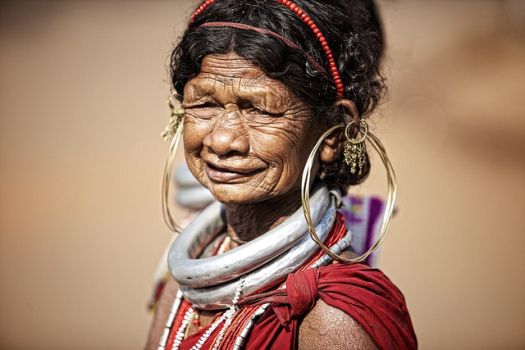
The Asur tribe represents one of India’s most fascinating indigenous communities, with roots stretching back thousands of years. This guide is perfect for students, researchers, cultural enthusiasts, and anyone curious about India’s tribal heritage who wants to understand the rich traditions and current realities of the Asur people.
We’ll explore the ancient origins and historical significance of this remarkable community, tracing their journey from prehistoric times to today. You’ll discover their traditional settlements across Jharkhand, Bihar, and West Bengal, along with the unique cultural practices that have shaped their identity for generations.
We’ll also examine how the Asur tribe faces modern challenges while working to preserve their ancestral way of life, including efforts to maintain their traditional iron-smelting skills and spiritual practices in an increasingly connected world.
Historical Origins and Ancient Heritage of the Asur People
Tracing prehistoric settlements and archaeological evidence
Archaeological discoveries across eastern India reveal that the Asur tribe has deep roots stretching back thousands of years. Excavations in Jharkhand, Odisha, and parts of West Bengal have uncovered tools, pottery fragments, and settlement remains that point to continuous habitation by proto-Asur communities. Stone implements found in these regions show sophisticated metallurgical knowledge, particularly in iron smelting – a skill the Asur people became renowned for throughout history.
Recent archaeological work near Ranchi and in the Chota Nagpur plateau has revealed ancient furnaces and slag deposits, suggesting that Asur ancestors were among India’s earliest iron workers. Carbon dating of these sites places some settlements as far back as 1500 BCE, making the Asur one of the oldest continuously inhabiting tribal groups in the region.
Rock paintings discovered in caves around their traditional territories depict hunting scenes, ritualistic practices, and early agricultural activities. These artistic expressions provide glimpses into their prehistoric lifestyle and social organization. The consistency of certain symbols across different sites indicates a shared cultural identity that has persisted through millennia.
Connection to ancient Indus Valley civilization
Scholars have identified intriguing parallels between Asur cultural practices and elements found in Harappan civilization sites. The Asur tribe’s traditional knowledge of metallurgy, urban planning concepts in their village layouts, and certain religious symbols bear striking resemblances to Indus Valley artifacts.
Archaeological evidence suggests possible migration routes from the declining Harappan cities toward the mineral-rich regions of present-day Jharkhand around 1900 BCE. The Asur’s sophisticated understanding of copper and bronze working, along with their knowledge of drainage systems in settlements, mirrors technological achievements of the Indus Valley people.
Some researchers propose that displaced Harappan communities, particularly those skilled in metalworking, may have integrated with local tribal populations, eventually forming what we recognize today as the Asur tribe. This theory gains support from genetic studies showing diverse ancestry patterns within Asur communities, suggesting multiple waves of settlement and integration over centuries.
Evolution through different historical periods
The Asur people navigated various political and social changes throughout Indian history while maintaining their distinct identity. During the Mauryan period (322-185 BCE), they likely served as skilled metalworkers for the empire, contributing iron tools and weapons. Ancient texts mention tribes in the eastern regions known for their metallurgical expertise, possibly referring to Asur ancestors.
Medieval period records show Asur communities establishing themselves as essential suppliers of iron implements to local kingdoms. The Chola and Gupta empires valued their craftsmanship, leading to protected status for many Asur settlements. This period saw the development of their traditional blast furnace technology, which remained largely unchanged until the colonial era.
During British colonial rule, the Asur faced significant disruptions. Colonial policies that commercialized forest lands and mineral resources undermined their traditional livelihood systems. Many communities were forced to adapt their metalworking skills to colonial demands while others retreated deeper into forested areas to preserve their way of life.
The post-independence period brought new challenges as industrialization affected their traditional roles. Government policies aimed at tribal welfare had mixed results, with some communities benefiting from education and healthcare initiatives while others struggled to maintain cultural continuity in rapidly changing economic conditions.
Mythological references in Hindu scriptures
Hindu scriptures contain several references to the Asur people, though these texts often blur the lines between historical communities and mythological beings. The word “Asur” itself has dual meanings in Sanskrit – referring both to a class of supernatural beings and to specific tribal communities known for their skills.
The Mahabharata mentions skilled metalworkers and craftsmen in the eastern regions who possessed knowledge of creating powerful weapons and tools. Some scholars interpret these references as describing the historical Asur tribe rather than mythological entities. The epic’s descriptions of their technological prowess align remarkably well with archaeological evidence of Asur metallurgical capabilities.
Puranic literature describes Asur communities as guardians of ancient knowledge, particularly in metallurgy and earth sciences. The Markandeya Purana references tribes in the eastern hills who could “breathe life into metal,” likely describing the Asur’s renowned skill in iron smelting and tool-making.
Local folk traditions preserved in oral histories often merge historical events with mythological narratives. These stories typically portray the Asur as possessing special relationships with earth spirits and having supernatural abilities to locate and extract metals from the ground. While mythological in nature, these narratives preserve important cultural memories about the tribe’s traditional ecological knowledge and their role as master metallurgists in ancient India.
Geographic Distribution and Traditional Settlements
Primary locations across Jharkhand, Bihar, and West Bengal
The Asur tribe predominantly inhabits the eastern Indian states, with the highest concentration found in Jharkhand’s Gumla, Lohardaga, and Palamu districts. These regions serve as the cultural heartland for the Asur people, where ancient traditions remain most intact. In Bihar, Asur communities have established settlements primarily in the Rohtas and Aurangabad districts, while smaller populations exist in West Bengal’s Purulia district.
Jharkhand’s forested hills and mineral-rich terrain have historically provided the Asur tribe with ideal conditions for their traditional iron-smelting practices. The undulating landscape offers natural protection and abundant resources that have sustained their communities for generations. Villages are typically situated near water sources and iron ore deposits, reflecting the tribe’s deep connection to metallurgy.
Population estimates suggest approximately 22,000 Asur people across these three states, with nearly 70% residing in Jharkhand. The scattered nature of settlements reflects historical migration patterns and the search for suitable locations that support their traditional occupations. Many villages maintain strong kinship ties despite geographic separation, creating an interconnected network of Asur communities.
Village organization and community structure
Asur villages typically consist of 20-50 households organized around extended family units called “khunt.” Each khunt represents several generations of families sharing common ancestry, land rights, and ritual responsibilities. The headman, known as “Pahan,” serves as both spiritual leader and village administrator, making decisions on land disputes, marriage arrangements, and community ceremonies.
Traditional Asur settlements follow a distinctive pattern where houses are arranged in clusters rather than linear formations. Central courtyards serve as communal spaces for festivals, meetings, and daily social interactions. The village structure includes designated areas for specific activities: iron-smelting furnaces are positioned downwind from residential areas, while sacred groves occupy elevated locations.
Social hierarchy within Asur villages remains relatively egalitarian compared to mainstream Indian society. Age and wisdom command respect rather than birth or wealth. Decision-making processes involve collective discussions where community elders guide younger members through consensus-building. Women play crucial roles in household management and agricultural activities, though traditional patriarchal elements influence inheritance patterns and political leadership positions.
Relationship with surrounding tribes and communities
The Asur tribe maintains complex relationships with neighboring tribal and non-tribal communities throughout their geographic range. Historical interactions with the Munda, Oraon, and Kharia tribes have resulted in cultural exchanges, intermarriages, and shared territorial boundaries. These relationships often involve mutual support during agricultural seasons and collaborative participation in regional festivals.
Trade relationships have traditionally connected Asur communities with broader economic networks. Their renowned iron-working skills created demand for agricultural tools, weapons, and household implements among surrounding populations. This specialization established the Asur as essential contributors to regional economies, earning them respect despite their relatively small population.
Contemporary challenges have strained some traditional relationships. Development projects, mining operations, and land acquisition have created competition for resources among different communities. However, many Asur villages continue practicing reciprocal labor arrangements with neighboring tribes during harvest seasons and maintain ceremonial exchanges that strengthen inter-community bonds.
The Asur tribe’s unique position as traditional metallurgists has historically protected them from complete assimilation while facilitating necessary economic relationships with dominant populations. This balance continues to evolve as modernization pressures challenge traditional occupations and settlement patterns.
Cultural Practices and Social Structure
Traditional Governance Systems and Leadership Roles
The Asur tribe follows a distinctive hierarchical governance structure centered around the Munda system, where village headmen called Pradhan or Munda hold primary authority. These leaders inherit their positions through patrilineal succession, though the community can remove ineffective leaders through collective decision-making processes. The Pradhan oversees land distribution, settles disputes, and maintains order within the village boundaries.
Supporting the main leader, the Asur community relies on a council of elders known as the Panch, consisting of respected family heads who advise on important matters. Religious leadership falls under the Laya or priest, who conducts ceremonies and maintains spiritual traditions. Women hold significant influence in household decisions, though formal leadership roles traditionally remain male-dominated.
Marriage Customs and Family Arrangements
Asur marriage practices blend traditional customs with evolving social norms. The tribe practices both arranged marriages and love marriages, with parental consent remaining crucial in both scenarios. Cross-cousin marriages are preferred, strengthening kinship bonds within the community. The bride price system, called gondli, involves the groom’s family providing money, livestock, or goods to the bride’s family.
Wedding ceremonies span several days, featuring elaborate rituals including the sindur ceremony where vermillion is applied to the bride’s forehead. Post-marriage, the bride typically moves to the groom’s household, though some families practice ghar jamai where the groom joins the bride’s family. Divorce is permissible under specific circumstances, with community elders mediating such decisions.
Festivals and Ceremonial Celebrations
The Asur celebrate numerous festivals throughout the year, with Sarhul marking their most significant celebration during spring. This festival honors nature spirits and includes tree worship, traditional dancing, and community feasting. Karma festival celebrates the harvest season, featuring the worship of the Karma tree and performances of the Karma dance.
Baha festival welcomes the flowering season with sal flower decorations and cultural performances. During Sohrai, the community celebrates cattle and agricultural prosperity through elaborate decorations and livestock worship. Each festival reinforces social bonds while preserving ancestral traditions passed down through generations.
Art Forms Including Music, Dance, and Storytelling
Asur artistic expression encompasses rich musical traditions featuring instruments like the dhol, nagara, and shehnai. Traditional songs accompany various life events, from birth ceremonies to funeral rites. The Karma dance remains their most prominent dance form, performed during harvest festivals with men and women forming circles around musicians.
Storytelling traditions preserve tribal history through oral narratives passed between generations. These stories often feature mythological characters, moral lessons, and historical events significant to Asur identity. Wood carving and bamboo craft represent their visual arts, creating functional items like baskets, furniture, and decorative pieces that showcase intricate traditional patterns.
Clothing Traditions and Ornamental Practices
Traditional Asur attire reflects their cultural identity through distinctive patterns and colors. Women wear sari or lahenga with specific tribal motifs, often in red, white, and black combinations. Men traditionally don dhoti and kurta, though modern clothing has become increasingly common among younger generations.
Ornamental practices include silver jewelry for both men and women, with women wearing hansuli (neck ornaments), kantha (arm bands), and elaborate ear decorations. Tattoos hold cultural significance, particularly among women, featuring geometric patterns and symbols representing protection and identity. Hair ornaments like tikli and flower decorations complete traditional attire during ceremonial occasions.
Economic Activities and Traditional Livelihoods
Iron Smelting Expertise and Metallurgical Skills
The Asur tribe has earned legendary status for their exceptional iron smelting abilities, passed down through countless generations. These skilled artisans mastered the art of extracting iron from ore using traditional furnaces called “bhatti” long before modern industrial methods emerged. Their expertise goes beyond simple metalworking – they understand the intricate process of selecting the right ore, controlling temperatures, and creating tools that last for decades.
The tribal smiths create everything from agricultural implements to household items using techniques that remain largely unchanged. Their knowledge of metal composition and heat treatment rivals that of trained metallurgists. Each family typically specializes in specific types of tools, whether it’s farming equipment like sickles and plows or domestic items such as knives and cooking vessels.
What makes the Asur metallurgical tradition unique is their sustainable approach. They carefully select materials, waste nothing, and repair rather than replace whenever possible. The community views this craft not just as work but as a sacred responsibility to maintain their ancestral legacy.
Agricultural Practices and Crop Cultivation
Agriculture forms the backbone of Asur tribal economy, with families practicing both subsistence and small-scale commercial farming. The tribe primarily cultivates rice, maize, and various millets adapted to their regional climate. They’ve developed sophisticated crop rotation systems that maintain soil fertility without chemical fertilizers.
Traditional farming methods include:
- Shifting cultivation (jhum) in hilly areas
- Terraced farming on slopes to prevent erosion
- Mixed cropping to maximize land use
- Organic composting using household and agricultural waste
The Asur people grow vegetables like onions, chilies, and leafy greens alongside their main crops. Many families maintain kitchen gardens where women cultivate herbs and spices used in daily cooking and traditional medicine. Their agricultural calendar aligns with seasonal festivals and lunar cycles, reflecting the deep connection between farming and spiritual beliefs.
Water management remains a crucial aspect of their farming practices. The tribe constructs small dams and channels to direct rainwater to their fields, showing remarkable engineering skills passed down through generations.
Forest-Based Occupations and Resource Utilization
Forests provide essential resources and income opportunities for the Asur community. The tribe has developed sustainable harvesting practices that ensure forest resources remain available for future generations. They collect medicinal plants, honey, mushrooms, and various non-timber forest products that serve both subsistence needs and generate cash income.
Traditional forest occupations include:
- Honey collection from wild bee colonies
- Medicinal plant gathering for local healers and outside markets
- Bamboo crafting for baskets, mats, and construction materials
- Resin tapping from specific tree species
The tribe’s extensive knowledge of forest ecosystems helps them identify the best times for harvesting different products without damaging the environment. Many families specialize in particular forest crafts, such as creating intricate bamboo products or weaving grass into functional items.
However, deforestation and government regulations have restricted access to traditional hunting and gathering grounds, forcing many tribal members to seek alternative livelihoods.
Modern Employment Opportunities and Challenges
Contemporary economic pressures have pushed many Asur tribal members toward wage labor and modern employment sectors. Young people increasingly work in construction, mining, and service industries in nearby towns and cities. Some have found jobs in government schemes designed to provide employment to tribal populations.
Modern employment patterns include:
| Sector | Percentage of Workers | Challenges Faced |
|---|---|---|
| Agriculture | 45% | Climate change, market access |
| Manual Labor | 30% | Low wages, seasonal work |
| Government Jobs | 15% | Limited positions, educational barriers |
| Small Business | 10% | Lack of capital, competition |
Education remains a significant barrier to better employment opportunities. While government initiatives have increased school enrollment, many children still lack access to quality education that could open doors to professional careers. Language barriers and cultural differences make it difficult for tribal youth to compete in mainstream job markets.
The challenge lies in balancing traditional livelihoods with modern economic needs. Many families split their time between ancestral occupations and wage work, creating a hybrid economic model that helps them survive in changing times while maintaining cultural connections.
Religious Beliefs and Spiritual Practices
Nature Worship and Animistic Traditions
The Asur tribe maintains a profound connection with the natural world through their deeply rooted animistic beliefs. Every element of nature – from towering mountains to flowing rivers, ancient trees to sacred rocks – holds spiritual significance and divine presence. The Asur people believe that spirits inhabit all living and non-living entities, creating an intricate web of spiritual relationships that governs daily life.
Sacred groves, known as “devrais,” serve as natural temples where the Asur community conducts important rituals and ceremonies. These protected forest areas remain untouched by human interference, preserving both biodiversity and spiritual sanctity. The tribe considers specific trees, particularly sal, mahua, and banyan trees, as dwelling places for powerful spirits that can influence crop yields, health, and community welfare.
Water bodies hold special reverence in Asur spiritual practices. Natural springs, rivers, and ponds are viewed as life-giving forces inhabited by water spirits who must be appeased through offerings and prayers. Before important agricultural activities or community events, the Asur people perform rituals near these sacred water sources, seeking blessings for prosperity and protection from natural disasters.
Ancestor Veneration and Tribal Deities
Ancestor worship forms the cornerstone of Asur spiritual life, with deceased family members and tribal heroes elevated to divine status. The tribe believes that ancestral spirits continue to guide and protect their descendants, influencing everything from personal decisions to community affairs. Family shrines, typically constructed in courtyards or designated areas within homes, serve as focal points for regular offerings of rice, flowers, and traditional beverages.
The Asur pantheon includes several prominent tribal deities who govern different aspects of life. Singbonga, the supreme creator deity, represents the sun and serves as the ultimate source of life and energy. Marang Buru, the mountain god, protects the tribe from evil spirits and natural calamities while ensuring successful hunts and harvests. Jaher Era, the goddess of the sacred grove, oversees fertility, childbirth, and the well-being of women and children.
Tribal festivals celebrate these deities through elaborate ceremonies involving music, dance, and communal feasts. The Sarhul festival, dedicated to flowering trees and ancestral spirits, marks the beginning of the agricultural season. During this celebration, the Asur community gathers to offer prayers, share traditional foods, and strengthen social bonds through collective worship.
Shamanic Practices and Healing Rituals
Traditional healers, known as “sokhas” or “ojhas,” play crucial roles in Asur spiritual and medical practices. These shamanic practitioners possess deep knowledge of herbal medicine, spiritual healing, and communication with supernatural forces. They undergo rigorous training and initiation processes, often beginning their journey through divine calling or hereditary succession.
Healing rituals combine physical remedies with spiritual interventions, addressing both symptoms and underlying spiritual causes of illness. The sokhas use medicinal plants, ritual objects, and sacred chants to diagnose ailments and perform healing ceremonies. Common practices include exorcism rituals to remove evil spirits, protective charms to ward off supernatural threats, and purification ceremonies to restore spiritual balance.
Divination practices help the Asur community make important decisions and understand supernatural messages. Shamans interpret natural signs, animal behavior, and dream symbols to provide guidance on agricultural timing, marriage arrangements, and conflict resolution. These practices maintain the tribe’s connection to ancestral wisdom while adapting to contemporary challenges facing the Asur people.
Language and Communication Systems
Asuri Language Characteristics and Dialects
The Asuri language belongs to the Munda family of Austroasiatic languages, sharing linguistic roots with other tribal communities across eastern and central India. This ancient tongue carries the distinctive tonal patterns and grammatical structures characteristic of Munda languages, featuring agglutinative morphology where words are formed by adding multiple meaningful elements together.
The Asur tribe speaks primarily two main dialects: the Netarhat dialect, spoken by communities in Jharkhand’s Netarhat plateau region, and the Gumla dialect, found among groups settled in the Gumla district. These dialectical variations emerged due to geographical isolation and varying degrees of contact with neighboring communities. The Netarhat variety preserves more archaic features, while the Gumla dialect shows greater influence from Hindi and regional languages.
Asuri phonology includes several unique sound patterns not found in Indo-Aryan languages. The language employs a rich system of vowel harmony and contains distinctive consonant clusters that reflect its ancient heritage. Word order typically follows subject-object-verb patterns, contrasting sharply with Hindi’s subject-verb-object structure.
Grammar complexity appears in the elaborate system of verbal inflections that indicate not just tense and aspect, but also evidentiality – whether the speaker witnessed an event directly or learned about it secondhand. This linguistic feature reflects the community’s emphasis on accuracy and truth in communication.
Oral Traditions and Folklore Preservation
The Asur community maintains a vibrant oral tradition that serves as the primary vehicle for transmitting cultural knowledge across generations. Their storytelling tradition encompasses creation myths, heroic tales, historical narratives, and moral instruction stories that define tribal identity and values.
Sacred narratives often center around their ancestral connection to iron-working and metallurgy, with elaborate stories explaining how their ancestors received divine knowledge of smelting techniques. These tales interweave practical metallurgical knowledge with spiritual beliefs, creating a unique fusion of technical and mythological understanding.
Traditional songs, called karma geet, accompany seasonal festivals and life-cycle ceremonies. These musical compositions preserve ancient melodies and lyrical patterns that have remained largely unchanged for centuries. The songs serve multiple functions: entertainment, education, religious expression, and community bonding.
Riddles and proverbs form another crucial component of Asur oral literature. Elders use these linguistic puzzles to sharpen young minds while transmitting practical wisdom about agriculture, social relationships, and survival skills. The riddling tradition particularly flourishes during evening gatherings when families share stories around cooking fires.
Genealogical recitations help maintain family and clan histories, with specialized storytellers memorizing complex lineage patterns that trace relationships back several generations. This practice proves essential for maintaining social organization and marriage regulations within the community.
Impact of Modernization on Linguistic Heritage
Modern educational systems pose significant challenges to Asuri language preservation. Children now attend schools where Hindi and English dominate instruction, leaving little time for mother tongue development. Many young people struggle to achieve full fluency in their ancestral language, understanding basic conversation but lacking vocabulary for traditional practices and ceremonies.
Urban migration has accelerated language shift as Asur families relocate to cities for employment opportunities. In urban settings, Hindi becomes the primary language of communication, and children often grow up with limited exposure to Asuri. Parents sometimes actively discourage mother tongue use, believing that Hindi proficiency offers better economic prospects.
Digital technology presents both opportunities and threats for language preservation. While smartphones and internet access connect scattered community members, the overwhelming presence of content in dominant languages reinforces the marginalization of Asuri. Social media platforms rarely support tribal languages, making digital communication difficult in the mother tongue.
Government policies promoting tribal language education show mixed results. While some schools now offer Asuri language classes, qualified teachers remain scarce, and standardized teaching materials are practically nonexistent. The absence of a widely accepted writing system complicates efforts to develop educational resources.
Documentation efforts by linguists and cultural activists have increased awareness about language endangerment, but community participation in preservation initiatives varies considerably. Younger generations sometimes view language maintenance as backward-looking, while elders worry about losing their cultural identity entirely.
Contemporary Challenges and Preservation Efforts
Educational Development and Literacy Initiatives
The Asur tribe faces significant educational hurdles that have persisted for generations. Many Asur children struggle to attend school regularly due to poverty, geographical isolation, and the need to contribute to family income. Remote settlements often lack proper educational infrastructure, with schools located miles away from tribal habitations.
Recent initiatives have started making a difference. Mobile schools and residential facilities specifically designed for tribal children have emerged in several states where the Asur community resides. These programs focus on bilingual education, teaching in both the local dialect and Hindi to preserve cultural identity while enabling integration with mainstream education.
Adult literacy programs have gained momentum, particularly targeting Asur women who traditionally had limited access to education. Community learning centers provide flexible timing to accommodate work schedules, especially for those involved in traditional iron smelting and agricultural activities.
The introduction of scholarship programs specifically for Asur students pursuing higher education has shown promising results. Several tribal youth have successfully completed professional courses, returning to their communities as teachers, healthcare workers, and development coordinators.
Digital literacy initiatives have begun reaching some Asur settlements, though internet connectivity remains a major challenge. Solar-powered learning devices and offline educational content are being tested in pilot programs to bridge the technology gap.
Healthcare Access and Modern Amenities
Healthcare accessibility remains one of the most pressing issues for the Asur community. Traditional settlements often lack basic medical facilities, forcing community members to travel long distances for even minor health issues. This geographical barrier becomes life-threatening during medical emergencies.
Mobile health clinics have become lifelines for many Asur villages, providing regular health check-ups, vaccinations, and basic medical treatments. These units are staffed with healthcare workers who understand local customs and can communicate in regional languages, making medical consultations more effective.
Maternal and child healthcare has received special attention through targeted programs. Traditional birth attendants receive training in modern delivery practices while maintaining respect for cultural birthing traditions. This approach has successfully reduced infant and maternal mortality rates in several Asur communities.
Nutrition programs addressing widespread malnutrition have been implemented, focusing on pregnant women and children under five. These initiatives combine traditional dietary knowledge with modern nutritional science, introducing iron-rich foods that complement the community’s existing food habits.
Access to clean drinking water and sanitation facilities has improved through government-sponsored projects. Hand pumps, community wells, and household toilets have been constructed in many settlements, though maintenance and sustainability remain ongoing challenges.
Government Schemes and Tribal Welfare Programs
The Indian government has launched multiple schemes specifically targeting tribal communities like the Asur tribe. The Tribal Sub Plan allocates dedicated funds for development projects in areas with significant tribal populations, covering education, healthcare, infrastructure, and livelihood support.
Employment generation programs have created opportunities for Asur youth while respecting their traditional skills. The MGNREGA (Mahatma Gandhi National Rural Employment Guarantee Act) provides guaranteed employment for at least 100 days annually, helping stabilize household incomes during agricultural off-seasons.
Housing schemes have replaced traditional mud houses with concrete structures in many settlements. While these provide better protection from weather, some community members express concerns about losing their traditional architectural heritage and the environmental suitability of modern materials.
Forest rights recognition under the Forest Rights Act has empowered many Asur communities to legally claim their ancestral lands. This legislation acknowledges their traditional relationship with forest resources and provides legal protection against displacement.
Skill development programs focus on enhancing traditional crafts and introducing complementary modern techniques. Iron smelting workshops combine ancient Asur methods with contemporary safety measures and quality standards, enabling artisans to access wider markets.
Balancing Modernization with Cultural Identity
The Asur community stands at a crossroads between embracing modernity and preserving their rich cultural heritage. Younger generations increasingly migrate to urban areas for education and employment, creating a generational divide that challenges traditional knowledge transfer.
Cultural documentation projects have become vital for preserving Asur traditions. Ethnographers work closely with community elders to record oral histories, traditional songs, folk tales, and technical knowledge about iron smelting. These efforts create archives that future generations can access to reconnect with their roots.
Language preservation faces particular challenges as Hindi and regional languages become dominant in daily communication. Community schools now include mother tongue instruction, while cultural centers organize regular gatherings where traditional Asur dialects are actively used and celebrated.
Traditional festivals and rituals adapt to modern contexts while maintaining their spiritual significance. Some communities have successfully integrated modern elements like sound systems and photography into traditional ceremonies without compromising their sacred nature.
Economic modernization presents both opportunities and threats. While improved market access allows Asur artisans to earn better incomes from their traditional crafts, mass-produced alternatives often undercut handmade products. Certification programs for authentic Asur handicrafts help distinguish traditional products in competitive markets.
Young Asur professionals working in cities often become cultural ambassadors, sharing their heritage through urban platforms while bringing modern ideas back to their communities. This two-way exchange creates new possibilities for cultural evolution that honors the past while embracing beneficial changes.
The Asur tribe stands as a living testament to India’s incredible cultural diversity, carrying forward thousands of years of ancient traditions while navigating the complexities of modern life. From their historical roots and unique geographic settlements to their rich spiritual practices and distinctive social structures, the Asur people have maintained their identity through generations of change. Their traditional economic activities and language systems continue to play vital roles in preserving their heritage, even as they face mounting pressures from urbanization and cultural assimilation.
Today, the Asur community needs our support more than ever. Their struggles with land rights, educational access, and cultural preservation reflect broader issues facing indigenous communities across the globe. By raising awareness about their rich heritage and supporting initiatives that protect their traditional knowledge, we can help ensure that future generations will still have the opportunity to learn from the Asur people’s wisdom. Take time to learn more about indigenous communities in your area – their stories, challenges, and contributions to our shared human heritage deserve recognition and respect.
