
The Barman Tribe of Assam: History, Culture, Social Fabric, and the Modern Struggle for Indigenous Identity
Introduction: Who Are the Barman People?
Across the riverine plains, foothills, and fertile river basins of Northeast India lies a tapestry of indigenous communities whose histories are intricately woven into the subcontinent’s political and ecological landscape. Among these, the Barman community—predominantly concentrated in the Barak Valley and neighbouring pockets of southern and central Assam—occupies an extraordinary cultural, political, and historical position.
Thank you for reading this post, don't forget to subscribe!Officially recognized as Barman of Cachar under the Scheduled Tribes (Plains) category in Assam, this community represents a unique branch of the larger Dimasa Kachari ethno-linguistic family. Their identity tells a profound story of migration, medieval statecraft, royal transformation, linguistic adaptation, and socio-religious evolution.
For generations, the Barman people have bridged indigenous tribal autonomy and pan-Indian classical traditions. Yet, in contemporary India, they find themselves navigating acute modern challenges: political marginalization, ecological pressures on traditional agrarian lands, linguistic transitions, and the persistent quest for institutional safeguards.
Understanding the Barman community requires moving beyond textbook categorizations to explore their living traditions: their village life, matrilineal and patrilineal heritage, indigenous cosmology, handloom crafts, and present-day aspirations for sustainable human development.
Historical Roots: The Dimasa Royal Legacy and the Cachar Kingdom
The Great Bodo-Kachari Horizon
To trace the ancestry of the Barman people, one must trace the wider Bodo-Kachari continuum—the earliest known indigenous settlers of the Brahmaputra and Barak river basins. As part of the Tibeto-Burman linguistic branch, the Dimasa Kacharis established formidable medieval polities that resisted external incursions for centuries.
From their early historic capital at Dimapur (now in Nagaland) to their subsequent administrative seats at Maibang in the North Cachar Hills (Dima Hasao) and eventually Khaspur in the plains of Cachar, the Dimasa ruling dynasty governed extensive territories spanning hills, river valleys, and frontier trade routes.
Dimapur (Up to 1536 CE)
      ↓
Maibang (1536 – 1750s CE)
      ↓
Khaspur / Cachar Plains (1750s – 1832 CE)
      ↓
Barman Community Identity in the Plains of Barak Valley
The Shift to the Plains and the Emergence of the “Barman” Title
During the mid-18th century, sustained conflicts with neighboring hill polities and the expansionist Ahom kingdom prompted the Dimasa rulers to shift their capital downward from Maibang to Khaspur in the plains of southern Assam.
This geographic migration brought the hill-dwelling Dimasa into direct, sustained interaction with the Bengali-speaking agrarian populations of the Surma-Barak basin and the Brahmanical institutions of the plains.
-
The term “Barman” (derived from the Sanskrit honorific Varman, meaning “armored” or “protector”) was historically conferred upon, or adopted by, the Dimasa nobility, royal officers, soldiers, and plains settlers who established their roots in the Cachar district.
-
Over decades of administration and settlement, the descendants of these plains Dimasas coalesced into a distinct socio-political entity: The Barmans of Cachar.
The annexation fragmented the administrative unity of the Dimasa kingdom. While their kin in the North Cachar Hills retained territorial administrative frameworks under the British “excluded/partially excluded areas” system, the Barmans in the plains became absorbed into general district administration, setting the stage for distinct socio-political paths.
Demographic Distribution and Geographic Landscape
Core Settlements in the Barak Valley
The Barman community resides primarily in the southern districts of Assam, comprising:
-
Cachar District: Silchar, Udharbond, Lakhipur, Sonai, and Borkhola circles.
-
Hailakandi District: Peripheral settlements along riverine margins.
-
Karimganj District: Select pocket villages adjacent to tea estate belts and river corridors.
Beyond the Barak Valley, small populations of Barmans are situated in parts of the Brahmaputra Valley, Hojai, and bordering tracts of Meghalaya and Tripura, where ancestral migrations took place during medieval conflicts.
Landscape and Village Morphology
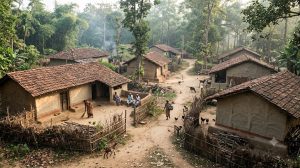
The ancestral environment of the Barman people is defined by the alluvial flats of the Barak River and its tributaries (such as the Chiri, Jiri, and Madhura rivers), flanked by undulating hillocks (tillas) and evergreen forests.
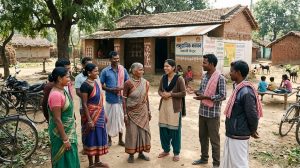
A traditional Barman village (Raji) is typically structured with deliberate proximity to freshwater streams and fertile paddy soils. The settlement layout reflects communal kinship:
-
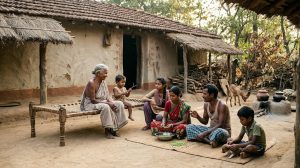
Homesteads (Nok): Constructed traditionally using local timber, bamboo slats (bhang), mud-plastered walls, and thatched roofs made of wild grasses (ulu kher), though modern homes increasingly feature corrugated tin roofs and brick structures.
-
Courtyard (Uthan): Central domestic courtyards serve as spaces for drying grain, weaving on waist-looms, processing bamboo, and hosting village councils.
-
Granary (Mai-khol): Elevated granaries built on stilted posts protect harvested paddy from damp soil, rodents, and seasonal flash floods.
Socio-Cultural Organization: Clan Systems and Kinship
One of the most remarkable contributions of the Dimasa-Barman complex to indigenous anthropology is its double descent system—a rare societal structure combining patrilineal and matrilineal descent lines operating simultaneously.
       Dual Descent Structure in Barman Society
       ┌───────────────────┴───────────────────┐
       ▼                                       ▼
  Sengphong (Patriclan)                  Jaddi / Julu (Matriclan)
  • Transmitted Father → Son             • Transmitted Mother → Daughter
  • Governs Ancestral Lineage            • Governs Ritual & Culinary Lineage
  • Historically 40+ Patriclans          • Historically 42+ Matriclans
Sengphong and Jaddi: The Dual Clan Framework
In Barman society, an individual belongs concurrently to two distinct kin groups:
-
The Sengphong (Male Clan): Traced strictly from father to son. Historically, there are over 40 recognized sengphongs, named after ancestral trades, royal titles, or natural motifs.
-
The Jaddi or Julu (Female Clan): Traced strictly from mother to daughter. A woman inherits her mother’s clan, which her brothers cannot transmit to their children. There are approximately 42 distinct recognized jaddis.
This bilateral system prevents social imbalance:
-
Exogamy Rules: Marriage within one’s own Sengphong or one’s own Jaddi is considered a serious breach of customary law. A Barman marriage is valid only when both clans on the bride’s and groom’s sides are distinct.
Family Structure and the Village Council
At the village level, customary administration was historically overseen by traditional leaders:
-
The Gaonburha (Village Headman): Assisted by village elders, the headman resolves civic conflicts, family disputes, and boundary contestations.
-
Customary Consensus: The Barman justice tradition prioritizes restorative mediation, communal reconciliation, and ritual atonement over punitive exclusion.
Language, Dialect, and Oral Traditions
The Linguistic Landscape: Dimasa to Plains Bilingualism
The ancestral language of the Barman community is Dimasa, belonging to the Bodo-Garo branch of the Tibeto-Burman language family. Characterized by tonal variations, agglutinative morphology, and descriptive nature-based vocabulary, Dimasa is spoken with fluency in the hill districts of Dima Hasao.
Among the Barmans of Cachar, centuries of co-existence with the non-tribal plains populations generated a unique linguistic shift:
-
Bilingual Fluency: Most Barman villagers are proficient in both Dimasa and Sylheti/Bengali, which serves as the regional lingua franca of the Barak Valley.
-
Linguistic Erosion: Due to historical isolation from Dima Hasao, schooling in Bengali or English mediums, and an absence of formal Dimasa-medium schooling in the plains, many younger-generation Barmans in Cachar speak a colloquial dialect infused with Bengali loanwords, while some urban families have transitioned away from daily Dimasa usage.
-
Revival Initiatives: Cultural bodies such as the Barman Sanskritik Parishad and literary youth organizations are actively organizing language revitalisation classes, standardising instructional primers, and encouraging Dimasa-language immersion at village festivals.
Oral Literature, Proverbs, and Lore
Despite linguistic challenges, Barman oral literature remains rich:
-
Mythological Epics: Oral songs recall the migrations along the Dhansiri and Kopili rivers, the heroic exploits of legendary generals like Veer Sambhudhan Phonglo, and historical anecdotes of royal courts.
-
Proverbs (Gamosha/Dimasa Phakho): Traditional sayings impart moral codes, agrarian wisdom, weather forecasts, and respect for river spirits.
-
Folk Tales: Stories often feature animals—the wise hornbill, the crafty tiger, the faithful deer—teaching community values of environmental stewardship and mutual aid.
Religious Traditions: The Sacred Synthesis of Tribal Cosmology and Hinduism
The religious identity of the Barman community exemplifies dynamic syncretism: the harmonious coexistence of primal indigenous animism and classical Brahmanical traditions.
       The Spiritual Tapestry of the Barman Tribe
       ┌───────────────────────┴───────────────────────┐
       ▼                                               ▼
Traditional Dimasa Cosmology                    Plains Hindu Synthesism
• Worship of Sibrai (Supreme Deity)              • Devotion to Lord Shiva
• Reverence for Sacred Forest Spirits            • Celebrations of Durga Puja, Kali Puja
• Ancestral Respect via Daikho Shrines           • Influence of Vaisnavism & Local Deities
Sibrai and Traditional Animism
At the apex of traditional Dimasa-Barman belief stands Sibrai, the supreme creator deity, widely understood as the primordial ancestral father. In local tradition, Sibrai is closely identified with Lord Shiva, symbolizing a bridge between indigenous and pan-Indian worldviews.
Below the supreme deity are numerous regional, riverine, and forest spirits (Daikhos). Traditionally, the Dimasa territory was divided into twelve sacred territorial jurisdictions (Daikho), each presided over by a protective deity:
-
The Hojai (Priest): Sacrifices, seasonal propitiations, and healing rituals are conducted by indigenous priests known as Hojai or Zonthai.
-
Nature Veneration: Ancient Barman rituals involved sanctifying sacred groves, seeking blessings before clearing land for seasonal crops, and placating river deities prior to monsoon floods.
The Royal Adoption of Hinduism
When the Dimasa court shifted to Khaspur in the 1700s, the royal family underwent formal initiation into Hinduism. Under royal patronage, grand temples such as the Snan Mandir, Ranachandi Temple, and Shiva shrines were erected at the Khaspur capital complex:
Historical Synthesis at Khaspur:
Royal Dimasa Courts ──▶ Sanskritization & Shaivite Alignment ──▶ Fusion with Indigenous Animism
This court-level transformation influenced the plains population:
-
Modern Barmans observe major Hindu festivals, including Durga Puja, Kali Puja, Shivaratri, and Janmashtami, with great community fervor.
-
Crucially, the community did not abandon its ancestral rituals. Tribal fertility rites, seasonal ancestral worship, and indigenous birth and death customs continue alongside mainstream Hindu practices.
Death Rituals: The Journey of the Soul
The Barman community practices cremation. Funeral rites involve careful spiritual preparation:
-
The deceased is ritually bathed with pure water infused with holy basil (tulsi) or wild medicinal leaves.
-
Offerings of cooked rice, sesame seeds, and small brass coins are presented to assist the spirit’s transit across the great ancestral river.
-
A memorial feast is later held for the clan members, reinforcing lineage solidarity across the village.
Fairs, Festivals, and Cultural Celebrations
Community celebrations are tied to the seasons, the agricultural calendar, and the harvest. These gatherings reinforce communal ties and preserve ancestral practices.
Bushu Dima: The Grand Harvest Festival
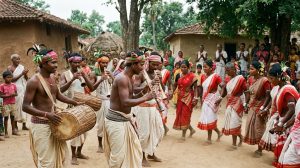
The preeminent cultural festival of the Barman and Dimasa people is Bushu (or Bushu Dima), celebrated after the winter harvest, typically in January. Bushu is an expression of thanksgiving to Sibrai and the village ancestors for bountiful grain, good health, and communal harmony.
Bushu is celebrated in three variations depending on village resources and duration:
| Festival Form | Duration | Characteristics |
| Surem Bushu | Celebrated over 3 Days | Common annual celebration; includes village feasts, music, and community games. |
| Hangseu Bushu | Celebrated over 7 Days | Organized by the village youth organization (Hangseu); features grand feasting and dancing. |
| Jidap Bushu | Celebrated for 1 Day | A streamlined, single-day community prayer and harvest thanksgiving. |
Key Elements of Bushu:
1. Midnight purification and animal blessings
2. Communal banquets featuring Judima (rice wine) and indigenous delicacies
3. Continuous drumming using the traditional Khram
4. Intergenerational participation in Bai-mai dancing
Music and Musical Instruments
Music is central to Barman celebrations. Traditional melodies are performed on specialized handcrafted instruments:
-
Khram: A long, double-headed cylindrical wooden drum slung over the shoulders, providing rhythmic tempo for dances.
-
Muri: A traditional wind instrument, similar to a high-pitched wooden flute or fife, producing haunting, melodic lines that echo through the river valleys.
-
Suphin: A slender bamboo flute used for love ballads and pastoral tunes.
-
Kharham: Small bronze or brass cymbals keeping time during energetic circle dances.
Traditional Dance Forms
The hallmark of any Barman festival is the Bai-mai or Baidima dance:
-
Dancers wear hand-woven ceremonial attire and form winding lines or concentric circles.
-
Women execute synchronized footwork, swaying gently while holding hand-woven scarves (Rikhaosa) or brass plates.
-
Men leap, spin, and play the drum, demonstrating martial grace, physical vitality, and coordination.
Traditional Attire, Handloom, and Material Culture
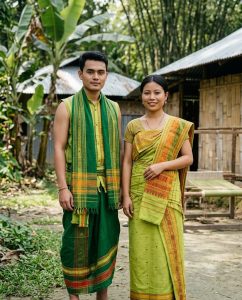
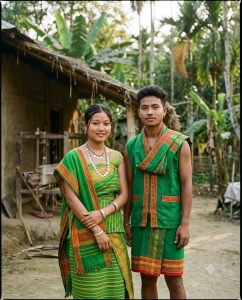
Textiles are a cornerstone of Barman identity. Handloom weaving is considered an essential skill among Barman women, who operate indigenous waist-looms and frame-looms to craft intricate fabrics.
       Traditional Barman Attire
       ┌─────────────────────┴─────────────────────┐
       ▼                                           ▼
  Women's Garments                            Men's Garments
  • Rigu (Wraparound lower cloth)             • Risa / Sula (Dhoti/Loincloth)
  • Rijphai (Upper body drape)                • Gainthao (Upper cotton wrap)
  • Rikhaosa (Ornate scarf / muffler)         • Pagri (Turban for elders)
Women’s Costume
Barman female attire is elegant, durable, and colorful:
-
Rigu: A thick, hand-woven wraparound skirt worn from the waist to the ankles, often featuring bold stripes and contrasting borders.
-
Rijphai: A carefully draped chest cloth wrapped securely around the upper body, adorned with woven geometric motifs.
-
Rikhaosa: A vibrant, narrow shawl or muffler worn over the shoulders, often given as a sign of affection, hospitality, or matrimonial honor.
-
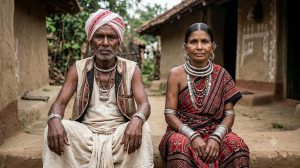
Jewelry: Traditional ornaments include heavy silver necklaces (Khadu), silver armlets, bead necklaces made of red coral and semi-precious stones, and ornate silver earrings (Jhumka).
Men’s Costume
Traditional male dress reflects practicality for an agrarian lifestyle:
-
Risa or Sula: A hand-loomed lower cotton garment worn wrapped around the waist.
-
Gainthao: A long, lightweight upper cloth or vest worn over the shoulders during public gatherings.
-
Turbans: Elderly men and village leaders historically wore simple white or patterned cotton turbans during judicial councils, weddings, and sacred ceremonies.
Bamboo and Cane Craft
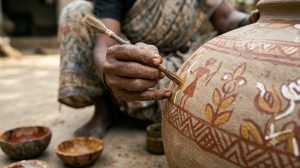
Beyond weaving, the Barman community possesses deep mastery over bamboo, reed, and cane craft. Household tools, fishing baskets (polo, jakoi), winnowing trays, storage bins, and furniture are hand-fashioned from locally harvested bamboo species, reflecting an environmentally sustainable way of life.
Traditional Livelihoods, Agriculture, and Food Systems
Agrarian Life
Historically, the Barman economy in the plains was organized around settled agriculture, contrasting with the shifting cultivation (jhum) common among hill communities.
-
Wet Paddy Cultivation (Sali and Ahu): Rice is the primary staple and economic engine of the Barman homestead. Farmers cultivate seasonal varieties in the fertile alluvial plains of the Barak basin.
-
Homestead Gardens (Bari): Every family homestead typically maintains a kitchen garden planted with areca nut palms, betel vines, bananas, ginger, turmeric, leafy greens, chilies, and bamboo groves.
-
Livestock Rearing: Cattle, goats, ducks, and indigenous fowl are raised for dairy, meat, ritual offerings, and agricultural traction.
       Core Components of Barman Food Heritage
       ┌───────────────────────┴───────────────────────┐
       ▼                                               ▼
Traditional Diet                                 Cultural Beverage
• Fermented Fish (Napham)                       • Judima (Traditional Rice Wine)
• Bamboo Shoots (Muya)                          • Herbal fermentation starters
• Steamed Vegetables & River Fish               • Used in ceremonies & hospitality
Culinary Culture
The Barman cuisine focuses on natural, unadulterated flavors, relying on wild greens, riverine fish, fresh herbs, and minimal cooking oils:
-
Napham (Fermented Fish): An iconic delicacy prepared by fermenting dried small fish mixed with mashed wild edible leaves, sealed in bamboo tubes for months. It is used to flavor broths, vegetable stews, and chutneys.
-
Muya (Bamboo Shoots): Tender bamboo shoots, eaten fresh, sun-dried, or fermented, are stewed with meats, fish, or river snails.
-
Judima (Rice Beer): A naturally brewed rice wine central to festivals, weddings, and hospitality. Brewed with local herbs and roots (collectively called Humao), Judima possesses a sweet, subtle flavor and is shared as a sign of friendship and respect.
-
Riverine Harvests: Small fish, crabs, and river prawns caught with woven bamboo traps form an essential source of daily protein.
Socio-Economic Profile and Human Development
Literacy, Education, and Youth Aspirations
Over recent decades, educational attainment among the Barman community has steadily risen, driven by state school networks and community organizations.
-
Literacy Growth: Literacy rates among Barman youth in Cachar match or exceed the average for plains Scheduled Tribes in Assam. Many young women and men are earning university degrees in Silchar, Guwahati, Shillong, and beyond.
-
Professional Diversification: While farming remains the baseline, younger generations are entering civil services, school teaching, banking, healthcare, engineering, and information technology.
-
Access Disparities: In rural and riverbank hamlets, government schools often face challenges: teacher shortages, inadequate infrastructure, and lack of digital connectivity, creating an educational divide between rural villages and urban centers.
Healthcare and Public Infrastructure
-
Primary Health Infrastructure: Most Barman villages rely on state Primary Health Centres (PHCs). While maternal healthcare and immunization coverage have improved, access to tertiary medical facilities requires travel to Silchar Medical College.
-
Traditional Medicine: Knowledge of local ethnobotanical remedies—using forest herbs, tree bark, and wild roots for joint ailments, digestive disorders, and seasonal fevers—persists among village elders, though this knowledge is declining as younger generations migrate.
-
Connectivity: While all-weather rural roads under the Pradhan Mantri Gram Sadak Yojana (PMGSY) have expanded, interior hamlets near river bends face seasonal isolation during the monsoon.
Challenges in Modern India: Struggles for Recognition and Land
Despite their historical heritage and cultural vitality, the Barmans of Cachar face systematic socio-economic, political, and ecological headwinds.
                   Key Modern Challenges
                             │
       ┌─────────────────────┼─────────────────────┐
       ▼                     ▼                     ▼
 Political Disconnect   Land Pressures & Floods   Cultural & Linguistic
  (Plains ST Status vs.   (Erosion, Encroachment,        Erosion
   Hill Sixth Schedule)     Loss of Ancestral Soil) (Language Shift)
1. The Political Disparity: Plains ST Status vs. Sixth Schedule Rights
The defining political grievance of the Barman community lies in administrative asymmetry.
-
While their ethnic kin—the Dimasas of Dima Hasao—benefit from territorial self-governance under the Sixth Schedule of the Constitution of India through the North Cachar Hills Autonomous Council (NCHAC), the Barmans in Cachar hold standard Scheduled Tribe (Plains) status.
-
Lacking a dedicated autonomous district or regional council, the Barmans remain a demographic minority within the larger Bengali-dominated electorate of the Barak Valley.
-
Consequently, community leaders often express concern that their cultural interests, local developmental priorities, and political representation are overshadowed in regional legislative arenas.
2. Land Alienation and Demographic Pressure
Land is the bedrock of indigenous identity, yet Barman landholdings are under acute strain:
-
Population Influx: Over the past century, high population density in the Barak Valley has increased pressure on fertile agrarian lands, leading to gradual encroachment on ancestral tribal belts and blocks.
-
Fragmented Landholdings: Traditional inheritance patterns, combined with economic vulnerability, have fragmented family holdings into smaller parcels, reducing agricultural viability for smallholder farmers.
-
Administrative Enforcement: Community activists frequently petition state authorities for the stringent enforcement of Chapter X of the Assam Land and Revenue Regulation, 1886, which legally restricts the transfer of tribal lands to non-tribal entities in designated protected belts.
3. Ecological Vulnerability and Monsoon Inundations
Geographically situated along the floodplains of the Barak, Chiri, and Madhura rivers, Barman villages are vulnerable to environmental risks:
-
Annual Floods: Heavy monsoon downpours trigger extensive flooding that damages standing paddy crops, washes away livestock, and inundates granaries.
-
Riverbank Erosion: Chronic erosion along the Barak river system consumes hectares of fertile farmland each year, permanently displacing families into agrarian wage labor or informal urban work.
-
Climate Variability: Shifting rainfall patterns have disrupted the sowing and harvesting cycles of traditional wet-rice varieties, threatening agricultural food security.
4. Cultural Assimilation and Linguistic Marginalization
Surrounded by larger linguistic populations, the Barmans face subtle cultural assimilation:
-
Language Attrition: Without primary schooling in their mother tongue, younger generations often lack written literacy in Dimasa, relying instead on Bengali, Assamese, or English.
-
Loss of Traditional Knowledge: As younger community members migrate to metropolitan centers for employment, traditional oral epics, intricate handloom patterns, wood carving skills, and animist medicinal practices risk disappearing.
Comparative Overview: Barmans of Cachar vs. Dimasas of Dima Hasao
To understand the unique position of the Barman community, it is helpful to contrast them with their hill kin:
| Analytical Parameter | Barmans of Cachar | Dimasas of Dima Hasao |
| Geographic Terrain | Riverine plains, valleys, and foothills of Cachar/Barak Valley | Rugged mountainous terrain of Dima Hasao (North Cachar Hills) |
| Constitutional Category | Scheduled Tribe (Plains) | Scheduled Tribe (Hills) |
| Governance Framework | General District Administration / Panchayati Raj | Autonomous Self-Rule under the Sixth Schedule (NCHAC) |
| Linguistic Profile | Bilingual in Dimasa and Sylheti/Bengali | Dimasa-dominant, with Nagamese and Assamese as contact languages |
| Agricultural Pattern | Settled wet-paddy agriculture on alluvial plains | Mix of Jhum (shifting cultivation) and settled valley farming |
| Religious Nuance | Deep synthesis of indigenous animism with Plains Hinduism | Traditional animist Daikho system alongside regional Hinduism |
Pathways to Human Development and Empowerment
Securing a sustainable future for the Barman tribe requires a balanced approach combining cultural preservation, constitutional safeguards, and equitable economic development.
       A Roadmap for Holistic Community Empowerment
       ┌───────────────────────┴───────────────────────┐
       ▼                                               ▼
 Institutional Safeguards                         Economic Self-Sufficiency
 • Tribal Land Belt Enforcement                   • Handloom Cooperatives (Geographic Indication)
 • Dedicated Development Council                  • Eco-Tourism around Khaspur Archeological Ruins
 • Mother-Tongue Primary Education                • Flood Defense & Climate-Resilient Agriculture
1. Institutional Autonomy and Development Councils
To address political marginalization, state policymakers can explore strengthened administrative mechanisms:
-
The Barman Development Council: Providing meaningful budgetary allocations, programmatic authority, and infrastructure funds directly to the community’s development council ensures tribal self-determination in civic projects.
-
Protection of Tribal Belts: Rigorous enforcement of land-alienation laws to reclaim encroached tribal blocks and prevent unauthorized transfers of indigenous land.
2. Handloom Modernization and Economic Cooperatives
The weaving skills of Barman women represent a valuable economic resource:
-
Cooperative Marketing: Establishing state-supported artisan cooperatives can connect village weavers directly with national ethical fashion markets, cutting out predatory middlemen.
-
Skill Centers: Setting up design labs and silk-processing facilities in Cachar can upgrade traditional loin-loom and frame-loom production, helping weavers produce higher-yield shawls, stoles, and home decor items.
-
Intellectual Property and GI Tagging: Registering unique Barman textile motifs and indigenous products (such as Judima and Napham) under Geographic Indication (GI) frameworks safeguards cultural heritage while generating rural income.
3. Cultural Tourism and Heritage Conservation at Khaspur
The ancient ruins of the Dimasa-Barman capital at Khaspur—featuring the historic Lion Gate, the Sun Gate, and royal shrines—hold significant historical value:
-
Eco-Cultural Tourism: Thoughtful infrastructure development around Khaspur can draw students, historians, and travelers to experience Barman heritage, traditional music, and food.
-
Community-Led Heritage Hubs: Village-run home-stays and craft centers offer sustainable income streams while giving community youth a tangible stake in preserving their architectural and oral history.
4. Mother-Tongue Education and Archival Initiatives
-
Bilingual Schooling: Introducing the Dimasa language alongside regional languages in primary schools within Barman-majority villages helps preserve mother-tongue literacy for future generations.
-
Digital Archives: Partnering with regional universities, cultural institutes, and tribal research centers to record oral histories, folk songs, weaving patterns, and botanical knowledge protects community heritage from disappearing.
The Enduring Spirit of the Barman Community
The story of the Barman tribe of Assam is a testament to the resilience of Northeast India’s indigenous peoples. From their roots in the medieval Dimasa kingdom of Dimapur, Maibang, and Khaspur to their modern lives along the Barak River, the Barmans have consistently adapted to political, geographic, and cultural change without losing their identity.
Their double-descent clan system (Sengphong and Jaddi), the community celebrations of Bushu Dima, their intricate handloom traditions, and their respect for the natural world offer vital lessons in communal living and ecological balance.
As modern India strives for inclusive growth, the Barman community must not be left behind. By safeguarding their ancestral lands, honoring their unique heritage, supporting their handloom crafts, and investing in education and healthcare, we can ensure that the Barmans of Cachar continue to flourish as an essential, vibrant part of India’s cultural tapestry.
