

The Chongloi Tribe: Heritage, Cultural Fabric, Human Development, and Struggles in Modern India
Introduction: Unveiling an Indigenous Highland Lineage of Chongloi Tribe
The indigenous highland communities of Northeast India represent one of the most culturally resilient yet historically misunderstood sections of the Indian subcontinent.
Thank you for reading this post, don't forget to subscribe!Among the distinct branches that weave the cultural tapestry of the Indo-Burma frontier highlands, the Chongloi—recognized primarily as an ancestral lineage and prominent clan-community within the wider Kuki-Zo / Thadou indigenous umbrella—embody an enduring legacy of highland self-governance, rich oral literature, and intimate coexistence with nature.
In traditional indigenous historiography, the Chongloi trace their genealogy directly to the patriarch Sehtha, standing alongside brother clans such as Hangshing and Thadou.
While administrative frameworks and modern state records frequently categorize the Chongloi under generalized umbrella designations like “Any Kuki Tribes” or the broader Scheduled Tribe schedules of Manipur, Assam, and Nagaland, the community maintains its distinct clan identity, hereditary obligations, and cultural ethos.
Studying the Chongloi offers a vital lens into:
- How ancestral kinship structures survive rapid socio-political transitions.
- The intricate dynamics of traditional chieftainship (Haosa) facing modern constitutional governance.
- The socioeconomic, ecological, and human development struggles of indigenous hill dwellers in contemporary India.
Ancestral Origins and Historical Trajectory
The Myth of Khul and Highland Migrations
Like their kindred Zo groups across Manipur, the Chin Hills of Myanmar, and the Chittagong Hill Tracts, oral memory traces Chongloi roots to Khul (or Sinlung), a primordial subterranean cave or ancestral homeland from which human ancestors emerged into the mortal world.
In customary genealogical reckoning (Samin or clan lineage tracing), the Chongloi hold ancestral seniority as elder descendants in specific lineages, carrying sacred clan duties and historical titles.
Throughout the 18th and 19th centuries, the hills of Manipur (particularly areas encompassing modern Kangpokpi, Churachandpur, and Senapati districts) as well as the contiguous hill tracts of Assam and Nagaland became home to thriving Chongloi villages.
Resistance to Imperial Encroachment and the Anglo-Kuki War
The Chongloi were not passive observers of colonial expansion. When British imperial officers sought to impose forced labor (Pothang), extract arbitrary land revenues, and forcibly recruit indigenous youth for the labor corps during World War I, hill chieftains across the region rebelled.
During the historic Anglo-Kuki War (1917–1919)—also known in indigenous memory as the Kuki Rising—various clan chiefs mobilized their youth (Thingkho Le Malcha war signals) to resist imperial forces.
The British military crushed this uprising through scorch-earth tactics: burning ancestral villages, destroying grain reserves, and deporting chiefs.
The trauma of this war disrupted early village economies and fractured traditional territorial domains, forcing many Chongloi settlements to disperse and rebuild across isolated ridge tops.
Social Architecture: Kinship, Chieftainship, and Customary Law
- The Institution of the Chieftain (Haosa) At the heart of traditional Chongloi society lies the village chief, known locally as the Haosa.
- Unlike feudal landlords of lowland India, the traditional Haosa held an office rooted in ancestral trust, kinship solidarity, and collective defense.Primogeniture: Succession to the chieftainship strictly follows the principle of agnatic primogeniture—the eldest son (Upapa) inherits the mantle of authority and the ancestral home.
- The Village Council (Semang-Pachong): The Chief is never an autocrat; he governs alongside a council of elders and ministers (Semang-Pachong). These councilors represent individual clan heads, arbitrating disputes, allocating plots for cultivation, and organizing community hunting or defense.
- Communal Stewardship: While colonial records often mistook the Chief as the sole “owner” of village land, indigenous customary law views the chief as a trustee (Gam-neipa) of communal territory held on behalf of all clan residents.
2. Clan Exogamy and Marriage Alliances
Social cohesion in Chongloi communities is sustained through complex marriage systems. Traditionally, society enforces clan exogamy combined with a preference for maternal cross-cousin marriage (Nei-le-Tu relation):

Bride Price (Man): Marriage transactions involve symbolic gifts such as Mithun (Siel—the sacred bovine), traditional shawls (Saipikhup), gongs, and rice beer jars. Rather than commercializing marriage, the Man serves as a social treaty linking two distinct lineages in mutual defense and mutual aid obligations.
Support Networks (Becha and Tucha): Clan members appoint specific mediators (Becha) and maternal representatives (Tucha) to settle matrimonial disputes, ensure the welfare of daughters given in marriage, and preserve harmony.
Cultural Ethos: Festivals, Sacred Rites, and Everyday Life
The Chongloi worldview balances deep community interdependence with respect for the natural environment.
The Ethic of Selfless
ServiceCentral to clan social ethics is the principle of mutual aid and chivalry (akin to Tlawmngaihna across the Zo linguistic continuum). A member is raised to prioritize the welfare of the orphan, the widow, and the village community above personal gain. If a family’s dwelling burns or a field suffers damage, the entire village steps forward to rebuild and replant without transactional compensation.
Traditional Agricultural Cooperatives: Lawm Before modernization altered agricultural routines, young boys and girls formed organized labor guilds known as Lawm. Led by chosen youth leaders (Lawm-upa), these guilds rotated through the fields of each village household, turning arduous clearing, weeding, and harvesting into lively community events marked by competitive singing, folk storytelling, and camaraderie. Festivals and Celebrations
The ceremonial calendar revolves around the agrarian cycle and seasonal shifts:
Chavang Kut: Celebrated in the post-harvest autumn season (traditionally around November), Kut is the premier festival. It marks gratitude to the Creator for granaries filled with paddy, maize, and millet. Feasts feature traditional meat dishes, horn-trumpet blasts, and rhythmic folk dances performed around bamboo poles and brass gongs.
Mim Kut: An older, solemn ancestral remembrance festival associated with the first harvest of the Mim (job’s tears/millet) crop, honoring the souls of ancestors who passed into the netherworld (Mithi Khua).
Sa-Ai: A traditional ritual performed by skilled hunters who brought honor to the village by bagging large game. It celebrated ecological courage, discipline, and endurance. Weaving, Attire, and Material Craft
Weaving is an art form preserved by women across generations. Utilizing traditional back-strap loin looms, weavers craft geometric patterns into sacred textiles like the Khamtang, Saipikhup, and Pongdum. The colors—black, red, yellow, and white—symbolize bravery, bloodline protection, fertility, and peace.
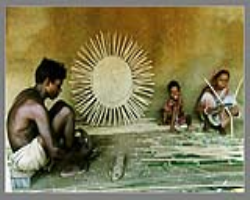
Beyond textiles, the Chongloi are master craftspeople in cane and bamboo, engineering durable storage baskets (Kho), hunting snares, and bamboo hill architecture capable of withstanding torrential monsoon rains. Socioeconomic Reality: The Jhum Economy Under Strain
The traditional economy of the Chongloi has long rested on Jhum (shifting or slash-and-burn cultivation) practiced across steep hill tracts:
| Aspect | Traditional Practice | Modern Pressure & Vulnerabilities |
| Land Allocation | Allocated annually by the Chief and Council (Haosa & Semang) | Fragmentation of land; ambiguous tenurial documentation |
| Crop Diversity | Mixed cropping: upland paddy, maize, pumpkin, ginger, legumes, chili | Transition to cash-crop monoculture; vulnerability to market shifts |
| Fallow Cycles | 10 to 15 years; soil regenerated naturally | Cycles compressed to 3–5 years due to population pressure |
| Livestock Holding | Free-range Mithun (Bos frontalis), pigs, and country fowl | Loss of foraging forest corridors and rise in animal diseases |
While shifting cultivation was ecologically sustainable when human populations were sparse and fallow periods extended beyond a decade, modern land pressures have shortened cycles drastically. This decline reduces soil fertility, promotes slope erosion, and leads to diminishing agricultural returns.
Without targeted agrarian infrastructure, cold storage, or dependable road access to regional market centers, farming families remain vulnerable to price shocks and localized food insecurity.
Human Development Realities: Gaps in the HillsDespite India’s steady national economic expansion, tribal communities in remote frontier hill districts face persistent structural deficits across human development indicators.

1. Healthcare Access:
A Geography of Exclusion
Chongloi settlements are often perched atop steep ridges, several hours away from tertiary hospital facilities.
Primary Health Centres (PHCs): Rural PHCs frequently lack qualified medical doctors, stable electricity for refrigeration (critical for vaccines and antivenoms), and emergency surgical kits.
Maternal Health: High rates of home deliveries persist in deep rural clusters due to missing ambulance networks along unpaved hill tracks. Transporting an expectant mother or critically ill patient requires carrying them in bamboo stretchers over kilometers of difficult terrain.
Water & Sanitation: Hill springs and mountain brooks remain vulnerable to seasonal dry-outs and bacterial contamination, driving periodic outbreaks of gastrointestinal diseases.
2. Education and the Youth
DilemmaPrimary School Infrastructure: Village primary schools frequently operate with single-teacher setups, absent teaching aids, and crumbling roofs.
Dropout Crises: While literacy rates among Christianized youth have improved at the basic level, dropouts surge at the transition between middle school and higher secondary education due to a shortage of high schools in nearby villages.
3. The Digital and Connectivity
DivideWhile modern welfare schemes mandate biometric identification, direct bank deposits, and online registrations, remote hill villages frequently lack cellular broadband networks.Students struggle to access modern online learning platforms.

Villagers often trek miles to neighboring semi-urban market towns just to verify banking transactions or claim agricultural subsidies.
Modern Struggles: Identity, Land, and DisplacementThe Chongloi navigate an interconnected web of socio-political challenges that threaten their traditional stability, land rights, and cultural integrity.
1. Administrative Ambiguity:
Clan vs. Tribe PoliticsOne of the most complex institutional dilemmas centers on state recognition. In parts of Northeast India, particularly Manipur, state classification lists have historically fluctuated between recognizing comprehensive umbrella categories (such as “Any Kuki Tribes”) and identifying specific sub-clans or linguistic variants.
Because the Chongloi are an ancestral clan within the broader Thadou / Kuki-Zo community, intra-community identity debates often emerge:Some advocate for broad-based unified nomenclature to consolidate political leverage.Others emphasize preserving distinctive clan rights and lineage pride.
This fragmentation complicates political representation, making it difficult for smaller clan populations to advocate uniformly for targeted developmental packages.
2. The Struggle for Land Tenurial Security
Land in tribal hill areas is more than an economic asset—it is an ancestral inheritance tied to communal survival and cultural identity. However, two divergent legal philosophies frequently collide:
Customary Chieftainship Jurisprudence: The community operates under customary unwritten law where the village jurisdiction is held communally under the stewardship of the hereditary chief.
Statutory State Land Laws: The state government applies formal cadastral regimes, declarations of Protected Forests, Wildlife Sanctuaries, and Reserved Forests.When the state government issues eviction notices or redraws forest reserves without direct, transparent consultation with local chiefs and councils, deep tensions erupt.
Indigenous villagers fear losing access to their ancestral foraging lands, sacred groves, and shifting cultivation plots, triggering protracted administrative standoffs.
3. Inter-Ethnic Conflict and Humanitarian Displacement
The hill-valley divide and historic territorial frictions in the state of Manipur have created acute volatility for communities like the Chongloi. Periodic bouts of violent ethnic confrontation disrupt life across community settlements:
Internal Displacement: Many Chongloi families have been forced into makeshift relief camps, their homes destroyed and agricultural fields abandoned.
Loss of Livelihood: Displaced farmers become dependent on emergency aid rations, severing their connection to their land and traditional agricultural cycle.
Trauma and Disrupted Education: An entire generation of children faces interrupted schooling, while communities struggle to preserve their social fabric in temporary settlements.

Preservation Efforts and Paths Forward
Despite systemic adversities, the Chongloi display great adaptability, drawing upon cultural solidarity, social institutions, and community-led initiatives to secure their place in modern India.
1. Harmonizing Customary Law with Democratic Devolution
Rather than dismantling traditional institutions like the Haosa council or trying to impose non-indigenous local governance models by force, policy makers should design cooperative models.
The traditional authority of the village council (Semang-Pachong) can be integrated with statutory District Councils (Autonomous District Councils under the Sixth Schedule or Article 371C mechanisms).
This hybrid model allows traditional elders to preserve customary arbitration over family and local land matters, while democratic committees supervise development budgets, educational grants, and rural employment guarantees (such as MGNREGA).
2. Sustainable Agro-Ecology and Value
AdditionTo replace unsustainable shifting cultivation without stripping villagers of autonomy, state agencies and agricultural universities must support locally grounded transitions:
Horticulture and Organic Cash Crops: Hill terrain is naturally suited for high-value organic crops, such as ginger, king chili (Habanero varieties), turmeric, black rice, and passion fruit.
Community Processing Units: Installing small-scale processing facilities (dehydrators, spice grinders, packaging lines) helps villages retain profits locally instead of selling raw commodities to middlemen at a discount.
Afforestation with Economic Benefit: Planting native fruit-bearing trees, bamboo plantations, and medicinal plants along slopes prevents erosion while generating sustainable, harvestable timber and non-timber forest products.
3. Documenting Oral Literature and Cultural Heritage
With each elder that passes, a library of ancestral knowledge—medicinal plant uses, ecological weather patterns, folk poetry, and genealogy—disappears. Grassroots cultural initiatives, youth clubs, and church bodies are now stepping in:
Digital Archiving: Young researchers are recording folk melodies, Kut ballads, and hunting songs sung in traditional dialects.Ethno-Botanical Repositories: Documenting traditional medicines preserved by village healers ensures indigenous science is acknowledged and protected under Intellectual Property frameworks.
Textile Collectives: Forming women-led handloom cooperatives helps weavers reach wider urban craft exhibitions and e-commerce platforms, turning heritage weaving into a steady income stream.
Conclusion:
Safeguarding an Indigenous HeritageThe story of the Chongloi reflects the broader saga of India’s indigenous tribal communities: a society holding an ancient cultural heritage while navigating the pressures of administrative integration, resource competition, and rapid modernization.
Their social fabric—anchored by community solidarity, customary stewardship, and resilient cultural institutions—provides a model of social security that modern societies often lack.
However, they cannot thrive on ancestral pride alone. The community needs:Legal clarity regarding their ancestral land rights.Modern schools that teach forward-looking skills without eroding indigenous identity.Decentralized healthcare networks capable of reaching the most isolated ridge-top hamlets.
Long-term regional peace founded on mutual respect, civil rights, and political justice.Respecting indigenous identity means recognizing that the survival of clans like the Chongloi is essential to preserving India’s cultural mosaic.
Protecting their rights, land, and culture ensures that their ancestral heritage continues to flourish alongside the progress of the nation.
