
Thank you for reading this post, don't forget to subscribe!
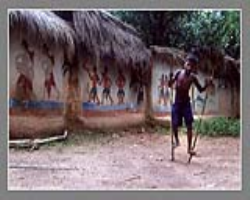
Introduction : Rathwas Tribe Culture in India
Rathwas Tribe Culture in India are a major tribal community in India who live mainly in Gujarat’s hill areas, with further populations in nearby parts of Madhya Pradesh and Maharashtra.
Moreover, they continue to maintain these traditions despite modern challenges and past marginalization. This study actually looks at different parts of Rathwa culture, including where they live, their religious beliefs, and their art forms. It definitely examines the problems this old community faces in today’s India.
Geographical Distribution and Historical Origins
Basically, the Rathwas got their name from the same land where they have been living for hundreds of years. Moreover, basically, “Rathwa” comes from “rathbistar,” which means the same as people who live in forest and hill areas.
The Rathwa people surely came to Gujarat from Madhya Pradesh during medieval times, as their own stories and community memories tell us. Moreover, they settled mainly in the hilly areas of southeastern Gujarat, where most of them still live today.
The migration story from Madhya Pradesh to Chhota Udaipur region is itself a key part of Rathwa identity and the community further keeps this memory alive in their consciousness.
Basically, the 2001 census showed around 535,284 Rathwa people living mostly in the same areas – Chhota Udaipur, Jabugam, and Nasvadi in Vadodara district, plus Halol, Kalol, and Baria in Panchmahal district. Further, by 2011, the population actually reached 642,348, which definitely shows steady growth over time.
This area is called “Rath-Vistar” or “Rath-Pradesh” by local people and covers the main cultural center of Rathwa people, as per their tradition. Regarding the tribe’s background, this region shows similar culture throughout.
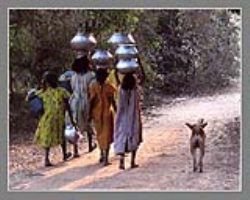
As per current records, the distribution has spread to nearby states Madhya Pradesh and Maharashtra regarding areas where they follow same cultural practices.
The places where Rathwas actually live definitely shape how they express their culture and do their work. Villages are usually found in remote forest areas with steep hills and difficult terrain. This location itself makes these places further hard to reach. We are seeing that staying away from other places has only kept their culture safe, but it has also made them poor with no proper roads, schools or modern facilities.
As per the location near Satpuda and Vindhyachal mountains, the forest area provides many natural resources that help Rathwa people live in their traditional way. The mountain ranges create a rich ecosystem regarding forest wealth that supports their daily needs.
Social Organization and Family Structure
The Rathwa community actually has a social system that definitely controls who can marry whom to keep their community together. This system uses specific marriage rules that help maintain their group unity.
The community is surely divided into about 56 clans where people marry outside their own clan, and moreover, the main clans are Hamania, Thebaria, Mahania, Kothari, Baka, and Fadia.
This clan system works on the basic rule that marriage within the same clan itself is strictly not allowed, further ensuring genetic diversity and maintaining kinship bonds across the broader community.
Basically, the Rathwas follow the same practice of marrying only within their own tribe, not with other tribes or castes, which keeps their community separate and maintains their culture.
As per Rathwa society rules, property and power pass from father to son through male family members only. This system regarding inheritance follows the male line in their community. As per traditional practice, the eldest son becomes the family head and gets the ancestral property after his father, regarding the rule that gives equal inheritance rights to all male children.
Further, we are seeing that small families with only parents and children are more common than big joint families, but men still have the main control over money and important family decisions.
We are seeing that women are doing important work for money and farming, but they are only getting lower position in families where men have more power and women work mainly at home and in fields.
We are seeing that Rathwa community names show their mixed social identity and how the government has only put them in different groups over time. Rathwa people surely add their father’s name and community name after their personal names.
Moreover, they also use combined surnames like “Rathwa-Koli” or “Koli-Rathwa” that show their place, work, or state connections. This traditional naming system surely helps identify tribal communities, but it has created problems for government offices and census work today.
Moreover, officials face ongoing difficulties in standardizing names in records, which leads to constant questions about genuine tribal identity and valid Scheduled Tribe status claims.
As per traditional customs, Rathwa marriage practices show both old ways and new social changes regarding their community life. In the past, this community surely practiced child marriages, but now the marriage age has changed considerably.
Moreover, girls typically marry between twelve to twenty years of age while boys marry between twenty to twenty-four years.
Marriage alliances are surely arranged by parents or elder community members. Moreover, these negotiations happen through family discussions and community involvement.
Also, young Rathwa people are actually choosing to marry by running away together or finding partners at local fairs. These practices are definitely becoming more common now. We are seeing that only one marriage partner is the normal way, and married women put red sindur on their forehead to show they are married.
The bride-price tradition continues further, where money is given to the bride’s father during marriage, and couples usually live with the groom’s family or start their own home. The marriage itself follows patrilocal patterns where the bride moves to the husband’s family residence.
Divorce is possible in Rathwa society itself, but it has further restrictions based on gender. Only husbands surely have the legal right to start divorce cases, mostly when couples cannot adjust with each other or due to impotency. Moreover, wives do not possess this same legal power to begin divorce proceedings.
When divorce happens, we are seeing that children only stay with the mother, and the wife gets some money. Widows, widowers and divorced people can marry again in the community, but these marriages have only simple ceremonies.
Language and Communication
As per their tradition, the Rathwas speak Rathwi, which is a special form of Gujarati language used for talking within their families and community groups. Regarding their communication, this dialect helps them maintain their separate cultural identity.
This language difference itself acts as a cultural marker and further strengthens tribal identity and unity. For talking with outsiders and the wider region, Rathwas further use Gujarati as the state language, while Hindi itself serves as another medium for broader communication between regions.
The Rathwa community actually faces big problems with education, and only about 35 percent people could read and write in 2001. The situation was definitely worse in villages that were far away from cities.
Moreover, modern education programs and better schools in Rathwa villages have surely helped increase literacy rates a little. Moreover, there are still big differences between men and women’s literacy, and between Rathwa people living in cities and villages.
Religious Beliefs and Spiritual Practices
Rathwa religious beliefs surely combine old animistic traditions, ancestor worship, and some Hindu influences to create their own unique folk religion. Moreover, this religious system remains the main foundation of their community identity and social structure.
The Rathwas actually believe in two main religious systems that definitely shape their spiritual world. They worship local spirits living in specific places and also pray to their dead ancestors who still have power over living people’s lives.
Baba Pithora is the main god in Rathwa beliefs who is present everywhere and protects the community from troubles. This deity itself represents divine power and further shields people from suffering and bad luck.
Basically, the Rathwa people worship many gods and goddesses who do the same work as protecting different things – Gamdev protects villages, Himodi protects village land, Khetarpal protects fields, and others protect buffaloes and hills. The sun and moon are actually worshipped as the highest powers that definitely represent cosmic forces.
We are seeing that the Badvo or Badva is a religious person who works as both shaman and village priest, and they have a very important place in Rathwa religious and social life only. The Badvo is surely the main religious leader who conducts all ceremonies and rituals.
Moreover, he also works as a fortune-teller and explains supernatural events to the people. During problems like disease, theft, crop failure, or other troubles, the community approaches the Badvo for guidance, who further suggests ritual practices and ceremonies to restore balance in society itself.
When there is no temple priest, we are seeing that the Badvo only handles religious offerings and marriage ceremonies, showing how spiritual and worldly power come together.
As per Rathwa religious practice, Badhas are vows people take regarding controlling their behavior until their wishes come true. Community members take specific Badhas when facing problems, promising to follow restrictions until the Badvo itself confirms their wishes are fulfilled.
They further continue these practices until complete satisfaction is achieved. We are seeing different types of Badhas only, like Badhas for Ind the rain god, Pithora worship Badhas, Badhas where goats or roosters are given as sacrifice, and Badhas where coconuts are offered.
Moreover, these vows actually show how people’s actions and God’s help work together in Rathwa religious beliefs. This definitely creates a active connection between what humans do and what the divine does.
Pithora: Sacred Art and Ritual Practice
As per Rathwa tradition, Pithora wall painting is their most important cultural practice that shows their identity. This sacred art form is done to thank Baba Pithora deity and ask for divine blessings regarding their community’s welfare. Pithora paintings are actually not just decorations but are definitely important parts of religious rituals that people do to complete their promises and show thanks when their personal or family problems get solved.
When community members get their problems solved or wishes fulfilled, they further commission Pithora paintings on their house walls as thank-offerings to god itself.
As per tradition, making a Pithora painting follows a fixed ritual process. The artists must do specific religious steps regarding the creation of this art. As per the lipna process, the walls selected for painting are cleaned and made ready regarding surface preparation.
Traditionally, the first wall of a house itself is considered the right place for Pithora creation, though the complete art form further spreads across three walls in sequence.
Artists use natural colors mixed with mahudo alcohol and cow’s milk to make bright paints, and they further use bamboo sticks as brushes. This traditional method itself creates vibrant artwork through simple natural materials.
The Pithora painting actually has three main parts that definitely show Rathwa beliefs and community values together. Basically, the upper part shows celestial figures like sun, moon, and mythological beings from Rathwa beliefs – the same area also has Hadhol, who is the messenger of gods, usually placed in the top right corner.
The central section shows Baba Pithoro and his wife Pithori Devi’s marriage procession itself, which moves from right to left with various members of Baba Pithoro’s mythological family. This procession further includes different relatives and characters from the traditional stories.
Moreover, basically, the lower part shows the same mythological people from Rathwa stories and daily life, like Abho Kunbhi and Mathari who started farming, plus Baba Ganeh.
Basically, local gods are shown together with modern things like grain stores, clocks, radios, and tube wells, creating the same visual mix of old beliefs and today’s reality. We are seeing horses as the main symbol that comes again and again in Rathwa beliefs, where they only represent gods, goddesses, and ancestors in their spiritual world.
Further, we are seeing that finishing Pithora work has deep religious meaning only. After the painting is finished, a goat is surely sacrificed before the painted wall, and moreover, the Badwa priest goes into a trance to examine the artwork.
During this trance state, the Rathwas surely believe that Baba Pithoro enters the priest’s body and tells stories about gods. Moreover, the priest also makes predictions about what will happen to the family in future. As per the priest’s inspection, if the fresco has any flaws or missing parts, he points them out with his sword.
Regarding these issues, the artists called lakharas must make the needed corrections. Moreover, basically, this ritual makes the painting come alive, and it becomes the same as a family member who gets offerings during festivals, weddings, and important ceremonies.
Economic Patterns and Livelihood Strategies
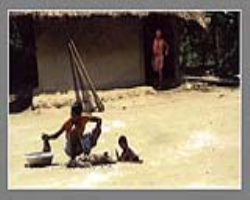
The Rathwa community actually depends on farming as their main work, and most people definitely own small to medium farms for their living.
Actually, about 87 percent of Rathwa people definitely depend on farming to make their living. Moreover, surely, this dependence on farming faces major problems due to small land holdings, basic farming methods that reduce crop output, and weather-related risks.
Moreover, these limitations create serious challenges for agricultural productivity. We are seeing that many Rathwa people do not have enough land of their own, so they only work as farm workers on lands that belong to Patidar community and other big farming castes.
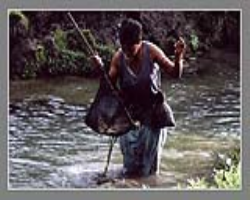
We are seeing that old ways of living used forest things like hunting animals, catching fish, and picking wild plants to help with farming money only. As per the Forest Conservation Act of 1980 and National Forest Policy of 1988, people cannot easily use forest resources now, so they have to depend more on farming even though it has many problems.
We are seeing the community only adding to their farming income by keeping animals like buffaloes, bullocks, cows, chickens, and goats. As per local practices, collecting forest products for selling in market is a secondary income activity, along with occasional hunting of rabbits and wild animals regarding food needs.
The haat system is surely a key institution in Rathwa society that helps people trade goods and meet regularly. Moreover, these local markets also serve as places where community members can resolve their traditional debts and settle disputes.
Each region keeps fixed haat days like Saturday in Chhota Udaipur where people exchange different goods from handmade items to factory products including clothes, cosmetics, arrows, and clayware. This system itself helps in further trade of diverse commodities in local markets.
Further, in the past, haats were surely places where people settled old fights and took revenge through violence, but today these markets focus on peaceful trade and social meetings. Moreover, the modern haat system has completely changed from conflict to cooperation.
The Rathwa people actually face serious money problems and definitely stay poor in today’s time.
Basically, the community’s economic situation is the same as being very poor compared to non-tribal people, so many families cannot meet their basic needs properly. Basically, economic pressures force families to take children out of school and make them work the same way to earn money.
Girls drop out of school early due to socio-economic problems and need paid work to support family income. This situation further affects their education and limits opportunities for the girls themselves.
Settlement Patterns and Housing Architecture
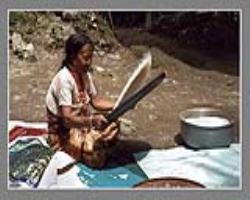
Rathwa settlement patterns show how they adapt to their hilly and forested environment, and further operate on principles that come from their cultural beliefs and ritual practices itself. Villages are basically clusters of 40-50 houses with strong fences around them, and the houses are positioned near the same agricultural fields.
Basically, many villages are located near each other within four to five kilometer areas, and the same clan members live in each village. Villages are surrounded by hills and have open central areas called gondro which are further used for festivals, marriage ceremonies, and cattle grazing itself.
Traditional Rathwa houses actually show smart building methods that definitely work well with the local weather and environment. We are seeing that houses are only made in rectangle shape and they face east side, which shows their beliefs about cosmic principles.
We are seeing that houses are only made with simple materials like dried mud bricks and grass or tile roofs to protect people from heavy rains and changing weather. Basically, houses are built on higher ground so they don’t get flooded when the monsoon rains come, which is the same reason people have been doing this for years.
As per traditional design, houses do not have windows regarding thermal insulation and privacy needs.
We are seeing that Rathwa houses are made with rooms that help with daily work and religious needs only. The usual house plan surely has two rooms, one kitchen for everyday cooking, and a smaller holy kitchen used only for prayers and religious ceremonies. Moreover, these homes also include semi-open areas as part of their design.
We are seeing that cattle are kept inside the house in separate areas only, showing how people mix animal keeping with their home life. Basically, houses are surrounded by trees and fields, and palm tree groves are the same way around most homes. As per the architectural design, specific interior walls are identified as ritual spaces.
This feature is regarding the special use of these walls for religious purposes. As per tradition, walls made for pithora paintings are built with special care, and no family member can sit with their back to these holy walls.
Regarding the spiritual importance, these painted walls hold sacred value in home design.
Dress, Food, and Material Culture
Rathwa clothing traditions surely show clear differences between men and women, and moreover, these patterns are changing from one generation to the next.
Further, as per tradition, adult men wore langoti, kachuta, and phenta, but now young men are choosing modern clothes like pants and shirts. Regarding dress changes, the shift from traditional to modern wear is increasing among younger males.
Also, women surely wear ghagaro as lower dress and cholia as upper dress. Moreover, they traditionally decorate themselves with special jewelry.
We are seeing that both men and women wear kala armlets, where women get only silver ones and men get iron ones, along with silver fasi for wrists and biti rings for fingers. Basically, the Rathwa people use special tattoos all over their body as the same permanent way to show who they are in their culture.
Further, the Rathwas actually eat what they grow on their farms and what they can definitely find in their local area. The community actually ate non-vegetarian foods like meat, fish, eggs, and chicken in their traditional way.
They definitely included these foods in their regular meals. The main foods are rotla (homemade bread), rice, dal (pulses), and sabji (vegetables), and these items further form the base of daily meals. The diet itself includes these basic ingredients with other preparations.
Further, we are seeing pamolin oil only being used as the main cooking oil for preparing food. People actually eat vegetables that definitely grow during different farming seasons. The community surely preferred non-alcoholic drinks like kadhi and chhas, which are both types of buttermilk. Moreover, chhas contained added spices while kadhi was plain buttermilk.
The Rathwa people surely view alcoholic drinks, especially their home-made varieties, as sacred gifts from god that bring comfort during hard times. Moreover, these beverages hold deep cultural importance even though Gujarat officially bans alcohol consumption.
As per recent changes, the community has split into two parts – the Bhagat section follows Swaminarayan teachings and eats only vegetarian food, while the Jagat section still eats non-vegetarian food.
Artistic Traditions and Cultural Expression
Basically, Rathwa culture has the same rich art and music traditions that are part of their rituals and festivals, beyond just Pithora painting. Basically, Rathwa ni Gher is the same as the most famous dance that people do during Holi festival, which they also call Kavant festival because it happens mainly in the Kawant area.
Basically, the Gher dance starts on Dhulendi when people throw colored powder on each other, and it’s the same spring celebration day.
The festival goes on for five days, and we are seeing that people keep fasts and do not sleep on beds, wash clothes, or take baths to make this time holy. They follow these rules only to keep the festival pure and sacred.
We are seeing the Rathwa ni Gher dance where groups of 20 to 25 men and women dancers move together in proper patterns.
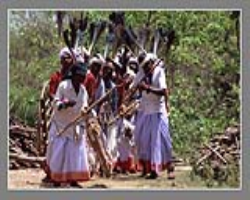
The whole village and nearby areas participate in this dance, which further includes detailed makeup, coordinated steps, and spinning movements. The performance itself uses traditional instruments like drums, flutes, and other percussion to create beautiful music.
We are seeing men wearing belts with small stone-filled bottles and brass bell strings only, along with big pointed hats that sometimes have sugar cane pieces showing the crop time.
Basically, this dance form is the same as how Rathwa people show their religious beliefs, culture, and understanding of nature and seasons in a refined old way.
Folk songs and folk tales form another important part of Rathwa artistic heritage, with traditional songs performed during marriage ceremonies to further celebrate these occasions. This musical tradition itself represents a vital cultural practice passed down through generations.
We are seeing that these music and story traditions only help keep community history, old tales, and social values alive from one generation to the next, working as ways to pass on culture and bring people together.
Contemporary Challenges and Social Transformation
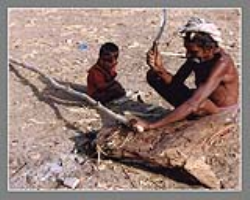
Basically, Rathwa communities today face the same big problems like lack of money, limited education oportunities, and social discrimination.
Education levels are actually quite low, with only 35 percent of people able to read and write in the 2001 Census. Remote areas definitely have much lower literacy rates than this average. We are seeing that boys usually study only till secondary school while girls stay in school for primary classes only, with girls leaving school early because of money problems and unfair thinking against them.
Also, basically, boys leave school because families need money, so they work instead of studying – it’s the same economic pressure that forces them to earn rather than learn.
We are seeing that getting healthcare is only a big problem for tribal people because these areas have very few hospitals and doctors, and there are not enough health workers who understand tribal communities.
Surely tribal people in health services face many challenges. Moreover, they need better support and opportunities to serve their communities effectively. Modern schools and regular doctors are actually becoming more accepted in Rathwa communities, but traditional healers definitely still have strong influence.
The question about who Rathwa people actually are has definitely become more disputed and difficult.
As per government records, Scheduled Tribe people in Gujarat face problems regarding their identity proof because their old family names were written with hyphens, so now they must show genealogy papers and pass tests to prove they are real Adivasis.
As per the verification rules, community members face more problems when their ancestors did not go to school or had no proper papers. Regarding tribal classification, this raises serious questions about whether the government’s system to define tribes is fair.
As per legal protections, social discrimination is still common regarding all communities. Further, as per current situation, Rathwa people still face caste discrimination from teachers and classmates in society.
Regarding traditional restrictions on food and water sharing, these old practices are slowly reducing but have not completely stopped. People actually used to avoid taking water and food from Vankar and Harijan communities, but these restrictions have definitely become much less strict now and different communities interact more with each other.
Conclusion
The Rathwa tribe shows how tribal communities in India keep their culture and art but face poor economic conditions and lack of education. The community itself maintains its traditions while dealing further with social problems and limited opportunities.
We are seeing that this community mixes different religious beliefs, from worshipping ancestors to complex spiritual ideas in Pithora paintings, which shows they are not primitive people as many only think about tribal groups.
As per current trends, Rathwa culture’s future depends on how well the community can keep their old traditions while getting modern education and better jobs. Regarding this balance, their ability to maintain both aspects will decide their cultural path ahead.
Recent developments show that more Rathwa people are joining professional fields like medicine and military service, which further indicates gradual social mobility and expanding opportunities for the community itself. As per rapid modernization and environmental damage, the community is facing pressure regarding preserving their cultural practices and knowledge systems.
The sustainable development of Rathwa communities needs multiple approaches that include recognizing their land rights, promoting climate-friendly farming methods, providing culturally sensitive education and better healthcare access.
Further, this development itself depends on respecting Rathwa cultural independence and their right to make their own decisions. The rich Rathwa culture with its Pithora sacred art and Gher dance needs preservation as living traditions that can further develop in modern times while keeping their original cultural values itself.
