
Ever wonder why we overlook Swami Vivekananda when discussing India’s freedom struggle? While Gandhi and Nehru take center stage, this saffron-robed monk was quietly rewiring the Indian psyche decades before independence became mainstream.
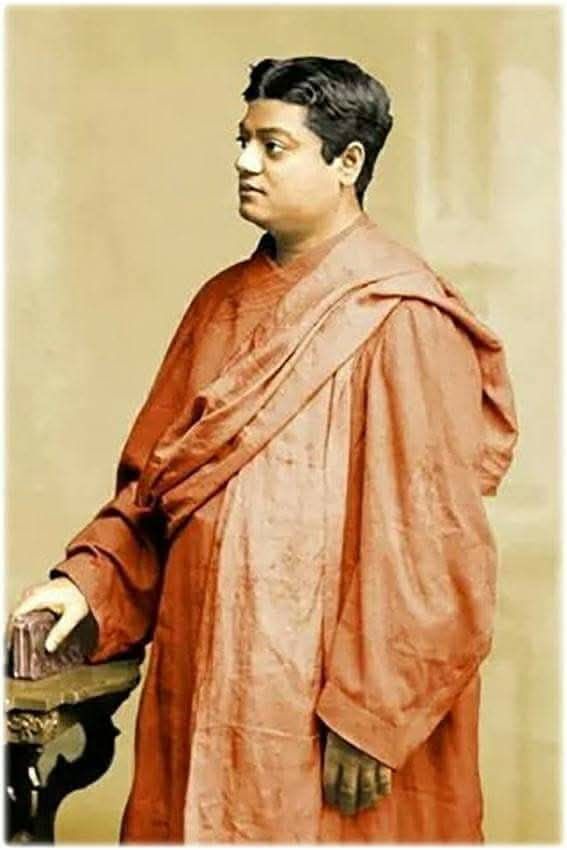
You’ve probably seen his image – intense eyes, confident posture – without realizing how he laid the groundwork for freedom. Swami Vivekananda’s role in the freedom struggle wasn’t about political rallies or prison time. It was deeper.
He did something more radical: he rebuilt Indian self-respect when we needed it most. When colonizers called us backward, he walked into Chicago in 1893 and showed the world what Indian wisdom actually looked like.
But here’s what most history books won’t tell you about how his spiritual revolution sparked a political one…
Swami Vivekananda’s Early Life and Spiritual Awakening
A. Birth and family background of Narendranath Datta
Born on January 12, 1863, in Calcutta, Narendranath Datta came from a well-respected Bengali family. His father, Vishwanath Datta, worked as a successful attorney at the Calcutta High Court and maintained a progressive outlook. His mother, Bhubaneswari Devi, was deeply religious and had a profound influence on young Narendra’s spiritual inclinations.
From an early age, Narendra showed exceptional intelligence and photographic memory. He could memorize entire books after a single reading! At the Metropolitan Institution of Ishwar Chandra Vidyasagar, and later at Presidency College, he devoured Western philosophy, history, and religious texts.
What really stood out about young Narendra? His questioning mind. He wasn’t one to accept ideas without scrutiny. When his family expected him to simply follow traditional religious practices, he demanded proof and reasoning. This skepticism would eventually lead him to his spiritual mentor.
B. Meeting with Sri Ramakrishna and spiritual transformation
In 1881, a life-changing encounter occurred when Narendra met Sri Ramakrishna at Dakshineswar Kali Temple. Initially skeptical of Ramakrishna’s spiritual experiences, Narendra challenged the mystic with his rational mind.
“Have you seen God?” he boldly asked Ramakrishna.
“Yes, I have seen God. I see Him more clearly than I see you,” came the reply that shook Narendra’s worldview.
This wasn’t an instant conversion story. Narendra tested Ramakrishna repeatedly, questioning his teachings and experiences. But Ramakrishna’s unconditional love and spiritual wisdom gradually broke down Narendra’s intellectual barriers.
After his father’s unexpected death in 1884, which plunged his family into financial hardship, Narendra found himself drawn deeper to Ramakrishna’s guidance. The passing of Ramakrishna in 1886 became another pivotal moment, cementing Narendra’s commitment to spiritual life.
C. Formation of spiritual identity and mission
Following Ramakrishna’s death, Narendra and a small group of disciples established the Ramakrishna Math at Baranagar. Taking formal monastic vows, Narendranath became Swami Vivekananda in 1887.
The next phase of his life involved extensive wandering throughout India as a penniless monk. These years were transformative. He witnessed firsthand the devastating poverty and suffering of ordinary Indians, alongside the country’s rich spiritual heritage.

This period crystallized his dual mission: spiritual upliftment and social reform. He realized that India needed both—reclaiming its spiritual wisdom while addressing crippling social issues like poverty and illiteracy.
“I am a socialist not because I think it is a perfect system, but half a loaf is better than no bread,” he would later write, showing his practical approach to India’s problems.
D. World Parliament of Religions: Establishing a global presence
In 1893, Vivekananda traveled to Chicago to represent Hinduism at the World Parliament of Religions. With limited resources and no institutional backing, this journey was a tremendous gamble.
His opening address on September 11, 1893, beginning with “Sisters and Brothers of America,” received a standing ovation that lasted two minutes. The simplicity, sincerity, and universal message of his speech captivated the audience.
Over the following days, Vivekananda delivered several more speeches, explaining Hindu concepts and challenging Western misconceptions about Indian spirituality. He wasn’t there just to defend Hinduism but to present its universal aspects—tolerance, acceptance, and the harmony of religions.
The Parliament launched Vivekananda onto the world stage. American newspapers dubbed him the “Cyclonic Monk from India” and the “Messenger of Indian Wisdom to the Western World.” His success wasn’t just personal—it marked the first significant introduction of Hindu philosophy to the Western world on its own terms.
This international recognition gave him a platform to speak about India’s spiritual contributions while gathering support for his vision of India’s regeneration. He returned to India not just as a monk, but as a national hero who had proudly represented Indian thought on the world stage.
Ideological Contributions to Freedom Movement
Ideological Contributions to Freedom Movement
A. Awakening national consciousness through spiritual revival
When Vivekananda thundered at the Parliament of Religions in 1893, he wasn’t just introducing Hinduism to the West. He was lighting a fire back home in India. His message was simple but revolutionary: Indians had no reason to feel inferior to their colonial masters.
“The same blood flows in our veins as did in the veins of our ancestors,” he declared. This wasn’t just spiritual talk – it was the fuel India’s freedom fighters desperately needed.
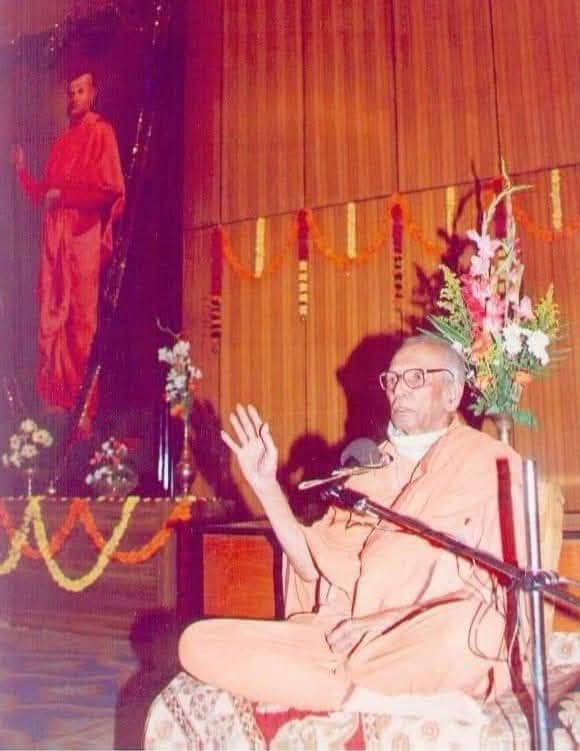
Before Vivekananda, many Indians had internalized colonial narratives about their own inferiority. He flipped the script completely. By reminding Indians of their spiritual heritage, he gave them something to be proud of again.
Freedom fighters like Aurobindo Ghosh openly acknowledged how Vivekananda’s spiritual nationalism shaped their revolutionary thinking. Subhas Chandra Bose called him “the maker of modern India” for good reason.
B. Concept of strength and self-reliance for national independence
“Arise, awake, and stop not till the goal is reached!” These weren’t just motivational words – they were Vivekananda’s battle cry for India’s youth.
Vivekananda despised weakness. He saw it as the root cause of India’s subjugation. His solution? Building strength – physical, mental, and spiritual. He told young Indians: “You will be nearer to Heaven through football than through the study of the Gita.”
His concept of strength wasn’t about violence but about self-belief and action. This philosophy directly influenced the Swadeshi Movement, which emphasized economic self-sufficiency as a path to freedom.
Gandhi’s concept of swaraj (self-rule) echoed Vivekananda’s emphasis on self-reliance. Even radical revolutionaries found inspiration in his call for fearless action.
C. Critique of colonial education and cultural hegemony
Vivekananda didn’t mince words about British education in India. He saw it as a system designed to create clerks for the colonial administration, not free thinkers.
“The child is taken to school, and the first thing he learns is that his father is a fool, the second thing that his grandfather is a lunatic, the third thing that all his teachers are hypocrites,” he observed about Western education in India.
His critique went deeper than just classroom learning. He challenged the colonial narrative that portrayed Indian culture as backward and superstitious. Instead, he presented Indian philosophical traditions as sophisticated intellectual systems with profound insights.
This intellectual rebellion created the foundation for cultural decolonization. Freedom fighters realized that political independence would be meaningless without reclaiming their cultural identity.
D. Vision of unified India transcending caste and religious divisions
Colonial rule thrived on “divide and rule,” but Vivekananda offered a powerful counter-narrative of unity. He didn’t just dream of a free India – he envisioned an India free from internal divisions.
“For our own motherland a junction of the two great systems, Hinduism and Islam – Vedanta brain and Islam body – is the only hope,” he wrote, challenging the growing religious polarization.
On caste, he was equally revolutionary. He reinterpreted Vedanta to emphasize the divine nature of all humans, regardless of birth. This spiritual egalitarianism undermined both colonial hierarchies and traditional caste discrimination.
Freedom fighters like Gandhi adopted this inclusive vision. It became crucial for mobilizing a unified independence movement across religious and caste lines.
E. Reinterpreting Hindu philosophy as a foundation for national identity
Vivekananda performed a remarkable feat – he transformed ancient Hindu philosophy into a modern national identity. He didn’t reject tradition; he reimagined it.
He stripped away superstitions while preserving core spiritual insights. He presented Vedanta philosophy as rational, universal, and compatible with modern science.
“Each soul is potentially divine,” he declared. This wasn’t just spirituality – it was revolutionary politics. If each Indian was potentially divine, how could anyone justify colonial subjugation?
His reinterpretation allowed Indians to embrace modernity without abandoning their cultural roots. It provided a philosophical framework for resistance that wasn’t merely copied from Western revolutionary movements.
This distinct intellectual foundation gave India’s freedom struggle its unique character – one that combined spiritual depth with political action, and non-violence with uncompromising resistance.
Inspiring Revolutionary Leaders and Freedom Fighters
Influence on Subhas Chandra Bose and his radical approach
Subhas Chandra Bose found his revolutionary spark in Vivekananda’s fiery words. When Bose was just a teenager, he stumbled upon Vivekananda’s writings, and they hit him like a thunderbolt. In his autobiography, Bose confessed that Vivekananda’s call for strength and fearlessness became his personal mantra.
“Stand up, be bold, be strong,” Vivekananda had written, and Bose took these words to heart. This wasn’t just philosophical inspiration – it shaped Bose’s entire political approach. While most freedom fighters were debating peaceful protests, Bose was organizing military resistance, forming the Indian National Army with Vivekananda’s vision of courage fueling his actions.
What really grabbed Bose was Vivekananda’s rejection of weakness. The Swami had declared, “Weakness is death,” and Bose transformed this spiritual teaching into political strategy, believing India needed strength and decisive action to break free from British rule.

Impact on Mahatma Gandhi’s philosophical outlook
Gandhi and Vivekananda never met in person, but their spiritual connection shaped India’s freedom struggle. Gandhi first encountered Vivekananda’s ideas while studying law in London, and later admitted: “I have gone through his works thoroughly, and after having gone through them, the love that I had for my country became a thousand-fold.”
What’s fascinating is how Gandhi absorbed Vivekananda’s spiritual nationalism but expressed it differently. Vivekananda’s emphasis on India’s spiritual heritage gave Gandhi the foundation for his unique blend of politics and spirituality. When Gandhi developed his concept of satyagraha (truth-force), he was building on Vivekananda’s vision of spiritual strength.
The two shared core beliefs about Indian identity and religious harmony. Vivekananda’s passionate advocacy for the poor deeply influenced Gandhi’s dedication to uplifting India’s marginalized communities. While their methods differed dramatically, both men saw India’s freedom as inseparable from spiritual awakening.
Inspiring Bal Gangadhar Tilak and extremist nationalists
Tilak – who boldly declared “Swaraj is my birthright” – found his nationalist fervor amplified by Vivekananda’s teachings. When Vivekananda returned from America in 1897, Tilak personally welcomed him in Bombay with tremendous enthusiasm.
What drew Tilak to Vivekananda was the Swami’s unapologetic pride in Indian civilization. Unlike moderates who admired Western systems, Tilak embraced Vivekananda’s message that India must reclaim its own cultural identity before achieving political freedom.
Vivekananda’s reinterpretation of the Bhagavad Gita as a call to national service became Tilak’s philosophical foundation. In his book “Gita Rahasya,” Tilak developed political action theories directly influenced by Vivekananda’s teachings.
The extremist faction of the independence movement – led by Tilak, Lajpat Rai, and Bipin Chandra Pal – consistently cited Vivekananda’s call for national awakening as their inspiration. They transformed his spiritual teachings into political doctrine that demanded immediate and assertive action against British rule.
Shaping the mindset of younger revolutionaries
Vivekananda’s impact on young revolutionaries was electric. His speeches didn’t just inspire – they transformed timid youth into fearless patriots. Revolutionary groups like Anushilan Samiti and Jugantar frequently distributed Vivekananda’s writings as recruitment material.
Young freedom fighters particularly connected with Vivekananda’s call to worship the motherland as a goddess. His famous declaration, “Every soul in India will be a temple for you when you have acquired the spirit of sacrifice,” became the emotional rallying cry for countless young revolutionaries willing to die for independence.
Revolutionaries like Khudiram Bose and Prafulla Chaki carried Vivekananda’s teachings into their dangerous missions. Many captured freedom fighters admitted during British interrogations that their revolutionary awakening began after reading Vivekananda.
The Swami’s emphasis on physical fitness alongside spiritual development directly influenced revolutionary training programs. His teaching that “You will be nearer to Heaven through football than through the study of the Gita” inspired revolutionaries to establish akharas (gymnasiums) that served as covers for revolutionary activities.
Creating Institutional Frameworks for National Awakening
A. Establishment of Ramakrishna Mission and its role in social reform
While many remember Swami Vivekananda for his fiery speeches, his genius lay in building institutions that would outlast him. In 1897, after returning from the West, Vivekananda established the Ramakrishna Mission – not just as a religious organization, but as a framework for national regeneration.
The Mission became a powerful vehicle for social reform when India desperately needed it. Vivekananda deliberately designed it to attack casteism and religious orthodoxy from within Hindu tradition itself. This was revolutionary – using spiritual authority to challenge social evils that kept Indians divided.
What made the Mission unique was its dual focus: spiritual enlightenment alongside practical service. As Vivekananda famously told his followers, “So long as the millions live in hunger and ignorance, I hold every person a traitor who, having been educated at their expense, pays not the least heed to them.”
The British couldn’t easily suppress this movement because it operated under spiritual guise while quietly building Indian confidence and unity. The Mission became a training ground for self-governance and independence action – teaching Indians they could organize, lead, and solve their own problems without colonial oversight.
B. Training young monks as servants of the nation
Vivekananda’s most subversive act might have been redefining what it meant to be a monk in India. He turned traditional monasticism on its head by teaching his young followers that true spirituality meant serving the nation.
“Go, all of you, wherever there is an outbreak of plague or famine, or wherever the people are in distress,” he commanded his monks. This was revolutionary in a time when spiritual seekers typically retreated from society. Instead, Vivekananda created a band of dedicated workers ready to tackle India’s problems.
His training methods were intense. Monks learned to:
- Live simply while working tirelessly
- Treat all Indians as divine, regardless of caste
- Reject British notions of Indian inferiority
- Develop practical skills alongside spiritual practices
These young monks became living examples of Vivekananda’s vision – showing that Indians could unite across regional and caste divides. They traveled extensively throughout India, spreading messages of self-reliance and national pride in a language that connected with ordinary people.
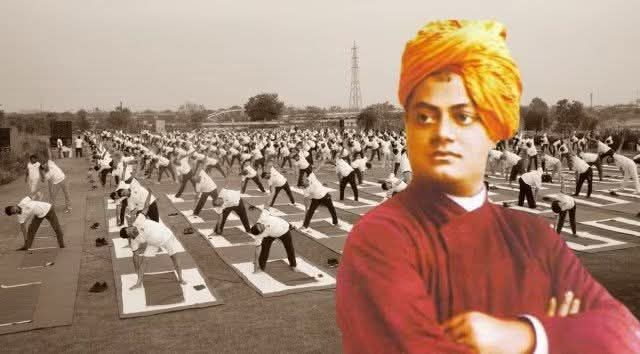
The British authorities grew increasingly wary of these saffron-robed revolutionaries who moved freely across India, inspiring people not through political speeches but through selfless service and a powerful message: India could rise again.
C. Educational initiatives challenging British systems
Vivekananda understood something crucial about colonial control – it depended on convincing Indians of their own inferiority. The British education system was designed to create “Indians in blood and color, but English in taste, in opinions, in morals, and in intellect.”
Vivekananda attacked this directly by establishing educational initiatives that celebrated Indian heritage while embracing modern knowledge. He insisted that education should build character, not just stuff heads with information.
His approach was distinctly anti-colonial. While British schools taught Indians to worship everything Western, Vivekananda’s educational philosophy:
- Combined Western scientific methods with Vedantic principles
- Emphasized physical strength alongside intellectual development
- Taught Indian history from an Indian perspective
- Focused on awakening self-confidence in students
The Belur Math became a center for this educational experiment, quietly producing Indians who weren’t ashamed of their heritage. This educational model spread through branch centers, creating spaces where Indians could imagine a future free from British rule.
Schools inspired by Vivekananda’s approach fostered independent thinking and self-reliance – precisely what colonial education tried to suppress. By the time many freedom fighters emerged in the early 20th century, these educational initiatives had already laid crucial groundwork.
D. Relief work that demonstrated self-governance capabilities
When plague struck Calcutta or famine ravaged Bengal, the British response was typically bureaucratic, slow, and inadequate. Vivekananda saw these crises as opportunities to demonstrate Indian self-governance capabilities.
The Ramakrishna Mission’s relief efforts became powerful political statements without ever explicitly challenging British rule. When Vivekananda organized monks and volunteers to:
- Set up makeshift hospitals during epidemics
- Distribute food during famines
- Provide education in neglected areas
- Offer disaster relief after floods
He was showing Indians and their colonizers alike that Indians could organize effectively without British oversight.
These relief initiatives were masterclasses in self-governance. They required planning, resource allocation, coordination across regions, and dealing with complex social problems – exactly the skills needed to run an independent nation.
The British couldn’t easily criticize humanitarian work, yet each successful relief project undermined colonial claims that Indians couldn’t govern themselves. Many Indians who participated in these efforts gained organizational experience and confidence that later fueled direct independence activities.
Through this practical service, Vivekananda demonstrated his most powerful message: Indians didn’t need to wait for permission to begin taking control of their destiny.
Legacy in the Freedom Struggle
A. Youth mobilization through Vivekananda’s message of strength
Swami Vivekananda didn’t just speak to the elite—he ignited a fire in young Indian hearts that burned through colonial oppression. His famous call to the youth, “Arise, awake, and stop not till the goal is reached,” wasn’t just a catchy phrase—it was revolutionary fuel.
Young Indians, previously demoralized by British rule, suddenly found themselves standing taller after hearing Vivekananda’s message of inner strength. He didn’t ask them to merely protest; he demanded they discover their own divine power first.
What made his approach so effective? While political leaders were organizing demonstrations, Vivekananda was rebuilding the psychological foundation of an entire generation. He convinced young Indians they weren’t members of a “weak nation” as the British painted them, but inheritors of a profound civilization temporarily in chains.
Students across Bengal, Maharashtra, and Punjab formed study circles dedicated to his teachings. They passed his books around like secret weapons. When British officials confiscated his writings, young Indians memorized passages and spread them by word of mouth.
The Ramakrishna Mission centers became unofficial headquarters for youth awakening. There, young Indians discovered something the British education system deliberately hid from them—pride in their heritage.
B. Reshaping Indian identity and pride during colonial rule
The British colonization strategy wasn’t just about physical control—it was psychological warfare. They systematically taught Indians to be ashamed of their culture, traditions, and spirituality. Enter Vivekananda, who flipped this narrative upside down.
In lecture halls across India, Vivekananda boldly proclaimed that India wasn’t spiritually bankrupt but spiritually abundant. He didn’t just defend Indian traditions—he showcased them as treasures the world desperately needed.
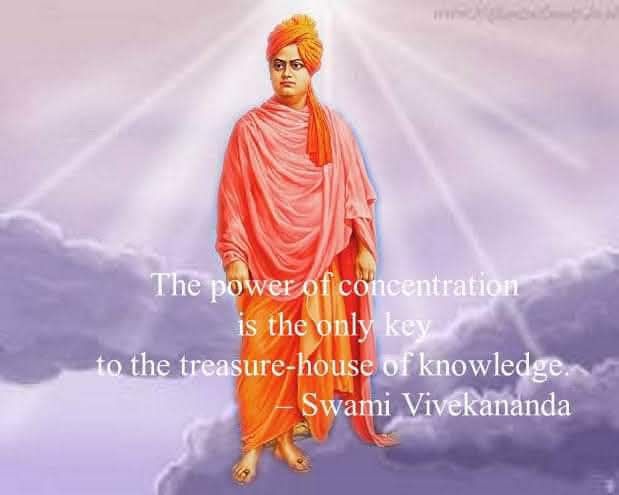
This reshaping of identity worked at multiple levels:
- He reclaimed Sanskrit texts from colonial interpretations
- He celebrated Indian philosophical achievements when Western scholars dismissed them
- He positioned India’s spiritual wisdom as the future salvation of a materialistic West
The British found this particularly threatening because it undermined their “civilizing mission” justification for colonial rule. If Indians weren’t actually primitive or backward, what right did Britain have to “improve” them?
Colonial administrators documented their concerns about Vivekananda’s influence in internal memos. One British officer wrote, “This monk speaks of Hindu glory in ways that make young men question our authority.”
Vivekananda’s reconstruction of Indian identity proved more dangerous to colonial rule than many direct political confrontations because it attacked the very foundation of colonial legitimacy.
C. Spiritual nationalism as an alternative to political movements
While Gandhi marched and Tilak protested, Vivekananda created something equally powerful but harder for the British to combat—spiritual nationalism. This approach connected Indians through something deeper than political grievances: their shared spiritual heritage.
Vivekananda’s genius was making spirituality practical and patriotic. He transformed abstract Vedantic principles into actionable national service. “Serving man is serving God” became his rallying cry—making even simple acts of community improvement into spiritual practices.
This spiritual nationalism worked brilliantly for several reasons:
- It couldn’t be easily criminalized (how do you arrest someone for meditation?)
- It built unity across caste divisions that political movements struggled with
- It engaged Indians who were uncomfortable with direct political confrontation
The British found this frustrating precisely because it operated beyond their legal framework. Colonial laws could ban meetings and imprison activists, but they couldn’t stop the internal transformation happening in millions of Indians who embraced Vivekananda’s vision.
D. International advocacy creating pressure on colonial administration
Vivekananda pulled off something extraordinary—he made India’s freedom an international moral issue decades before it was fashionable. His 1893 speech at the Parliament of World Religions wasn’t just a religious triumph; it was masterful international diplomacy.
Standing on American soil, he presented India not as a pitiable colony but as a nation with profound wisdom to offer the world. This completely contradicted the British narrative justifying their rule. Americans and Europeans who heard him speak began questioning why such a culturally rich nation remained under foreign control.
His international tours created several problems for colonial administrators:
- Foreign newspapers quoted him extensively, undermining British propaganda
- Influential Western intellectuals began supporting Indian self-determination after meeting him
- American and European financial supporters funded his Indian projects outside British control
Colonial officials tracked his international movements with growing alarm. Internal British government communications reveal their concern about his “undue influence on American opinion regarding the Indian question.”
The international pressure he generated forced British administrators to be more cautious in their repressive policies, knowing the world was watching with new interest.
E. Enduring impact on post-independence nation-building philosophy
When India finally gained independence in 1947, Vivekananda’s fingerprints were all over its founding vision. Though he died decades earlier, his ideas shaped how the new nation understood itself.
Nehru, despite his Western education and secular outlook, repeatedly referenced Vivekananda’s vision of India’s role in world affairs. The first education minister, Abul Kalam Azad, incorporated Vivekananda’s emphasis on character-building into national educational policies.
Look at these concrete examples of his lasting influence:
- The national motto “Unity in Diversity” echoes Vivekananda’s interfaith harmony vision
- India’s robust scientific institutions reflect his call to combine Western science with Eastern spirituality
- The constitution’s protection of religious freedoms stems from his universal acceptance principle
Even India’s foreign policy of non-alignment carried echoes of Vivekananda’s vision of India as a unique civilization with its own path, neither Eastern nor Western, but universally human.
Today’s politicians across the spectrum still quote him to justify their visions for India. His birthday is celebrated as National Youth Day, recognizing how he mobilized young Indians to reclaim their heritage and build a new future.
Vivekananda didn’t just contribute to freeing India—he helped define what freedom would mean once achieved.
Swami Vivekananda’s profound influence on India’s freedom struggle transcends direct political involvement, as his spiritual and philosophical teachings kindled the flames of nationalism across the country. By awakening national consciousness, instilling pride in India’s cultural heritage, and inspiring revolutionary leaders from Subhas Chandra Bose to Mahatma Gandhi, Vivekananda laid the ideological groundwork that fueled the independence movement. His establishment of the Ramakrishna Mission created an institutional framework that continued to nurture patriotic sentiments long after his untimely death.
The legacy of Swami Vivekananda in India’s journey to freedom remains an enduring testament to how spiritual awakening can transform into national renaissance. As we reflect on his contributions, we are reminded that liberation requires not just political action but also cultural confidence and spiritual strength. His vision of a proud, self-reliant India continues to inspire generations, challenging us to embody his ideals of courage, service, and unwavering faith in our nation’s potential. In Vivekananda’s own words, “Arise, awake, and stop not till the goal is reached” – a powerful call that still echoes in the hearts of Indians striving for national excellence today.