
Introduction : The Chakma Tribe and Calture in India
The Chakma are one of the largest indigenous Buddhist group on Indian subcontinent and a beautiful culture that has inherited very old script and tradition, which survived through various migrations and alteration over century. Being the largest tribe of Chittagong Hill Tracts, the Chakmas also will soon spread over to North-Eastern part of India, including Arunachal, Mizoram and Tripura; they have already large population at Assam too, but in all these States they manage their exclusivenes by maintaining ultimate identity amid baffling state spatialities.
This exercise in analysis sheds a perspective on the complex set of Chakma culture, from their migrations to present-day problems that indicate you have a resilient and cultural sophisticated community fully prepared to adapt to its exposed life-style cycle of displacement and disempowerment.
Historical Origins and Migration Patterns
The Chakmas’ historical account is a convoluted tale of dangers, culminating in their migration journeys,their mass displacement and their resettlement in the Indian subcontinent, Southeast Asia.
Chakma oral traditions and written history argue that the community descended from the Buddha’s Sakya clan, some of whom lived in Kapilavastu at the base of the Himalayas and migrated south through a series of kingdoms.
The Chakmas are believed to have settled in the Chittagong Hill Tracts during the 16th century, when Portuguese cartographer Diego de Astor recorded an area called “Chacomas” on the east bank of the Karnaphuli River in 1615. This original settlement formed the start of an independent Chakma kingdom that lasted until British intervention late 18th century.
Today’s Indian diaspora of Chakmas is primarily the result of a disastrous displacement caused by the Kaptai Dam built in the early 1960s. This huge hydroelectric dam on the Karnaphuli River was constructed in 1960, forming an enormous reservoir that inundated about 54,000 acres (some claim it annihilated as much as 100 villages) of fertile Chakma farmland.
This event, which the Chakmas call Bara Parang (the Great Escape) resulted in nearly 100,000 people being uprooted as tens of thousands fled to take refuge in India between 1962 and 1964. Approximately 35,000 Chakmas were given migration Certificates by the government of India in1964 and settled permanently in the North-Eastern Frontier Agency (now Arunachal Pradesh) under a resolute rehabilitation programme.
Other groups of Chakmas migrated to Mizoram, Tripura and Assam at different times which ensured their dispersal in the North east India but they stand as a culturally united community till date.
Religious Beliefs and Spiritual Practices
Most Chakmas are Theravada Buddhists, an identity which forms the core of their worldview, social customs and cultural practices.
But the Buddhist tradition they practise is syncretic, infused with Hindu and indigenous animistic beliefs acquired over centuries from contact with neighbouring communities. All Chakma villages have a Buddhist temple (kaang), where Bhikhus perform the religious ceremonies and festivals.
They are provided for by the laity with alms, gifts and monastic rations adding to a compound equilibrium between themselves and their community which keeps both spiritual and secular aspects of village life in balance.
Religious festivals and observances The religious calendar of the Chakmas is very much full with a lots of festival which are being followed treating mamism as main religion by intermingling with their local believes, those concepts seem to be more likely influenced from the Buddhism. Pabarana Purnima is one such example, celebrated on the full moon day after Vijaya Dashami where an event of “adopting completely” Buddhist faith occurs “without observing any of that prohibitions forbidden in Buddhism”.
On this day Chakmas offer worship to Lord Buddha and after that to Shibuli (Sivali) Arhat, who is worshipped for prosperity and fortune like Goddess Lakshmi by the Hindus. The ritual of seeking and granting forgiveness, known as “Moitri Binimoy,” is part of the ceremony besides other religious activities, practiced by Buddhists to seek and grant forgiveness which the community regards among the noblest virtues.
Chakmas also celebrate as Baishakhi Purnima, Ashwini Purnima and Falguni Purnima are the main Buddhist holy days of Buddha’s birth, enlightenment and death respectively.
Chakmas, despite being Buddhists also revere Hindu gods, specially Lakshmi as Goddess of Harvest and perform pujas offering Pigs, Chickens, rice, fruits and flowers.
This seeming paradox is reconciled in the religious practices of the Chakmas, with their Buddhist monks ignoring most animal sacrifices to appease spirits that were believed responsible for causing fevers and sickness. The Small group also believe in witchcraft, spirit possession of human bodies, and the necessity of specialist religious professionals for purging (exorcising) harmful spirits; these are called ojhas or exorcists and baidyos ( a class filled with the girls ) for treating or medicating witchcraft.
The Bizu Festival: Cultural Celebration and Agricultural Significance
Bizu is the principal festival for socio-religious celebration among the Chakma, it is a three day-long gala event that occurs during the last day of Chaitra to Baishakh Sankranti which falls on 14 April of Gizri-Mizri era.
Jhum (shifting) cultivation practices formed the original germ of Bizu, which historically has a pure agricultural connotation with observation of early showers and the social rejoice at stored dry food getting exhausted through feasting.
The festival stretches over three separate days, each day having its own customs and meaning that revolve around renewing, prosperity and connectivity.
The 1st day flower festival is called Phool Bizu, which includes thorough washing of houses and spraying perfumed water on roads and courtyards and washing household items such as mattresses, bedsteads, bookshelves,kitchen shelf stood etc., along with clothes to welcome New Year.
beginnings. The second day, Mhul Bizu, is the main festival during which villagers bathe in their rivers at dawn and put on new clothes before paying ceremonial calls to their villages.
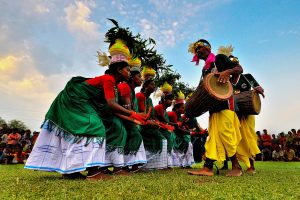
Women wear traditional Pinon (wraparound skirt) and Hadi (upper garment), other hand men put on their silum and dudi which are the traditional costumes. The day involves the cooking of “Paa Zawn Tawn” -the curry that is made out of various vegetables with a variety of sour taste, and sweet forms including Bawraa pyi-de & Tsaan-yei pyi-de, which you can eat throughout the night for partying before finishing with Bizu dance.
The fifth and final day, Gawz che Pawz che dyin Gojje Pojje din), is marked by social activities (sports and fairs) some of which are meant for attending Mass in the church followed by Godhon-wether drunk in continuance with other Pagan processes where people do worship to the land for better harvest outputs.
Social Organization and Marriage Customs
Social structure [ edit ] The Chakma are a tightly knit society, and have a very clear social structure centered on clan (goja), which is further divided in to subclans (gutti) with exogamous marriage rules that forbid marriage into the same gutti. This clan organization enforces social control and inhibits consanguineous marriage, indicating high degree of knowledge of kinship.
The marriage, known as “Chumulong,’’ is performed by Buddhist priests and involves the negotiation of a dowry — goods, and on occasion cash given by a groom’s family to his bride’s.
The ceremony of marriage is a ceremonial event that, though rooted in tradition, creates lasting memories and becomes ever so much more meaningful when personalized. The groom’s family visits the bride for three times before the weddings, they carry wine and rice cakes with them at the third visit, to fix their marriage.
About the Wedding Day The day of the wedding, a new dress and jewelry is given to the bride by the groom’s side and ceremony follows after dinner in evening. In this ceremony, the couple is tied in two relations by a white cloth and then cooked rice and prepared betel leaf are put into the groom’s mouth by the bride just after that artifacts to be finalized with a kiss —once the knot opened they become husband-wife.
Although polygyny (more than one wife) is culturally acceptable it is rare in practice, and divorce and widow remarriage are allowed suggesting a degree of flexibility in marital organisation.
Traditional Dress and Textile Craftsmanship
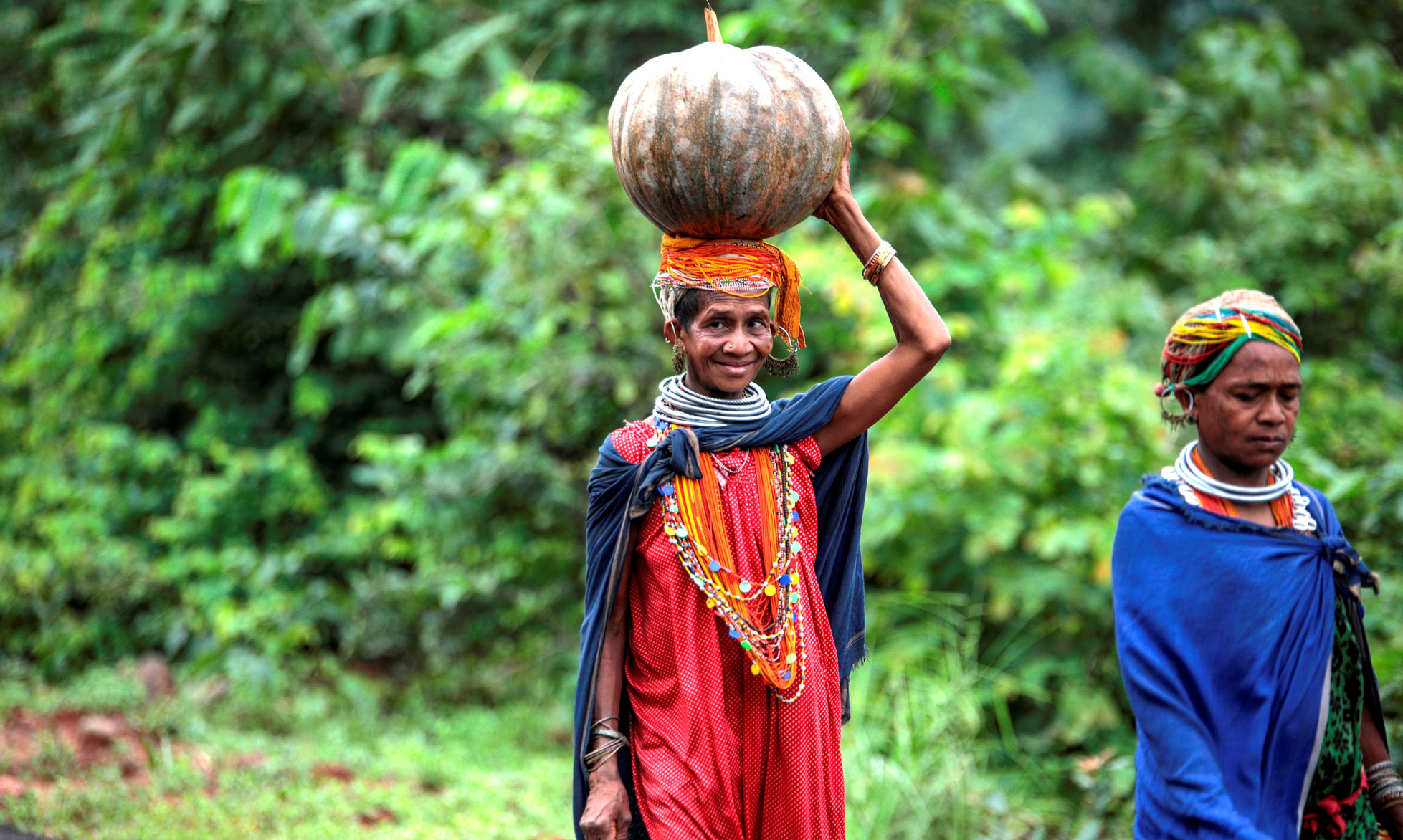
The traditional dress of the Chakmas embodies not only aesthetic allure, but also a sense of cultural identity and pride, women’s attire being especially indicative of the community’s weaving tradition and artistic flair. The traditional women attire is Pinon-Hadi wherein pinon is wrapped around waist (ankle-long), whereas hadi draped over shoulder that sometimes used as a shawl or upper garment.
The most distinctive part of the Chakma pinon is the “saabugih,” an elaborate border design at the lower edge ofthe skirt functioning as a cultural brand identifying Chakma textiles from the expressions and patterns on other fabrics among Bangladeshi ethnic communities.
Traditional pinon dark background with narrow stripes of navy and red; but modern interpretations are made in both colors combinations and patterns.
The painstaking process of making these attires is accomplished through a special backstrap loom known as “bain” – elaborated with 12 bamboo elements, all working together to weave the intricate pattern.
This centuries’ old tradition of weaving was historically interwoven with jhum cultivation in which Chakmas themselves grew their own cotton on hilly slopes, spun it into thread and dyed with natural pigments extracted from plants found in the forests.
Red was made from the root of the rong tree itself, black from kala gab bark or indigo leaves as a base; blue from indigo leaves and yellow tints were obtained by use of turmeric and the bark of mango.
Weaving is taught traditionally by mother and grandmother to every girl, who can master a repertoire of typical designs called “alam” by the time of her marriage; such design-books list for example 210 different motifs spread among various regionsclustered in comupterised libraries with names like Jhora Phul, Jongali Pajonand Begun Biji Phulmany with floral names.
Language, Script, and Literary Heritage
Chakmas have a unique language called Changma Bhajch or Changma Hodha, which has different tones that are atypical of Indo-Aryan languages.
Classification of Chakma language is controversial: while some scholars classify it into the Southeastern Bengali group of Eastern Indo-Aryan languages, thanks to centuries-long contact with the Chittagonian population, the initial language was Tibe-Burman according to the own Chakmas.
The persistence of so many non-Aryan elements in the language as it is spoken now offers support to claims of a non-Indo-Aryan provenance, and implies linguistic interference after extended comtnunicatitm with Bengali-speaking groups.
Even more compelling than the language, is the Chakma script an abugida written in its own unique script that was developed by Prince Biswambhar of Arakan Kingdom around 11th century CE.
This script is very similar to the Khmer, Lanna (Chiangmai), and Myanmar scripts, indicating a shared history with the neighboring civilizations of Southeast Asia.
In contrast to other Brahmic scripts, the vowel Ā () used in Chakma is long rather than short a, which is one of the characteristics it shares with Dravidian scripts.
It was largely retained by village medicine men (Boidyos) in the form of large medicinal compendiums containing many highly detailed herbals, and to a lesser extent by Buddhist monks belonging to the Loris/Railgari sub-sect of Mahayani Buddhists The religious texts were known as Agartara.
But in this modern era a negligible number of Chakmas have access to read and write their recorded script while literacy is limited to tribal doctors (tradition), the monks, some scholars or enthusiasts which has endangered any rich possible literature.
Economic Activities and Agricultural Practices
Historically, the Chakma economy has been based on jum (slash-and-burn) cultivation; a type of shifting cultivation in which land is cleared and cultivated for a few years before being abandoned, whereupon it reverts to secondary forest for several years. An important theme of this farming system was its symbiosis with Chakma social life, a boy’s first jhum cutting being an initiation into adulthood celebrated by the parents and a feast for relatives.
Chakmas grew various crops like paddy (rice), maize, cotton, til mugu (a kind of bean), wathalunga and ginger among others which indicated a high level of knowledge on multi cropping and sustainable use of land.
Apart from hill agriculture, the Chakmas did lowland cultivation along river valleys and follow well-established land rights not same with the plains agricultural system.
After migration and settlement in India, most effective in Arunachal Pradesh, they adjusted their agricultural practices to altered ecological conditions and constraints on the availability of land.
And, as per the latest information/record of Changlang district, data base 37.89% members of Chakma families are cultivators and 14.29% are agricultural workers respectively. Rice is the staple food, and it is farmed in 77% of houses.
Furthermore, 41% of the households grow crops such as banana and vegetables and 12% have maize as a cash crop.
New agricultural activities include small-scale tea cultivation and areca nut production, with the percentage of households growing areca nut at 47 and 2% practicing tea cultivation indicate diversification and response to market conditions.
In addition to agriculture and the associated needs for food, water, and so on, hand-loom weaving is a basic subsistence form of subsistence economy among the villagers especially women which help to promote traditional knowledge through preserving cultural means of passing information weaving with youngsters. Handicraft and weaving is practiced by around 5.68% of family members, mostly housewives and young women who weave with backstrap looms to produce traditional clothes and commercial textile products.
There is also other job diversification like in private sector (57%), small businesses, pettie shop (4.57) and only a few percentage(0.68 %_)are available in government services while 16.13% are unemployed indicating the gaps of sustainability economy’s development.
Contemporary Challenges and Identity Struggles
Despite more than 60 years of the Indian Chakmas’ residency in India, they have difficulties relating to citizenship, land rights and cultural identity, especially in Arunachal Pradesh whose claim on this community’s full legal status is blamed for information deficit regarding their respective language use. “Migrants” are a distinct category under our law (Immigration and Explosive Acts, 1983) with their rights, however, these aspects could not have been enforced due to overt and covert hindrances that were laying on process by different state authorities like local resistance and reluctance of the State Governments for implementing the rights which exist in paddy arrangement.
There have been complications due to the shift from jus soli (citizenship by birth) to jus sanguinis (citizenship by descent) in Indian citizenship law: first generation refugees born in Bangladesh cannot establish their citizenship by birth and also show that at least one of their parents were Indian citizens.
This political resistance has led to Chakmas being denied inclusion under some sections of the Citizenship Amendment Act, 2019 (CAA) despite meeting the definition as Buddhist refugees fleeing religious persecution within what is now Bangladesh. The ambiguity over citizenship status means that members of the community face barriers to education, employment, land ownership and political participation – causing many to exist in a limbo-land when it comes to their legal status.
Moreover, due to land use restrictions and environmental regulations, the colossal erosion of traditional jhum culture has disrupted customary forms of indigenous life that are connected with economic activities (such as chum cultivation) forced displacement also brings about the destruction of cultures (see Cultural genocide )And the loss in Chakma script literacy represents a final break in parents’ ability to pass down their linguistic heritage.
The Chakma encounter in India thus embodies a complex interaction of uprooting, cultural sustenance and survival, as well as persistent struggles over identity formation and political entitlement. Their vast cultural legacy— including unparalleled religious syncretization, high textile art, old scripts and adapted agriculture—make up a testimony of many centuries of indigenous ability to recreate itself.
But this community also confronts current challenges to his ibing (sense of being) that threaten cultural perpetuation and collective ity, which bring issues of citizenship and belonging or indigenous rights within the context otthe nation-state
