
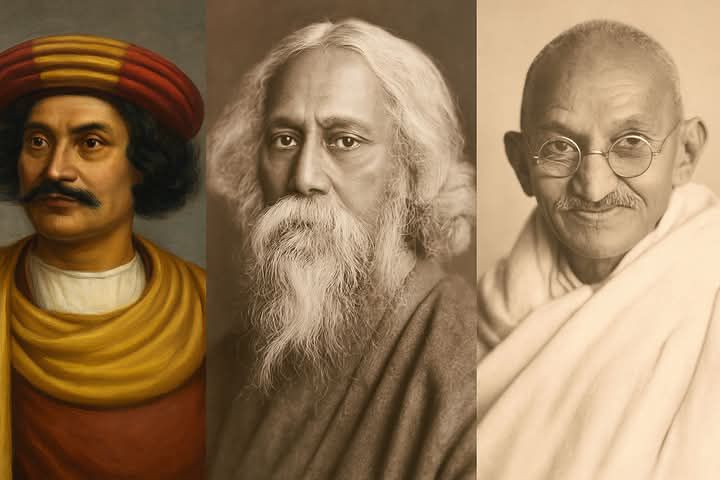
No independent Indian can deny the role of Raja Ram Mohan Roy in Indian nationalism. Ever wondered how a single man could challenge 2,000 years of tradition while the British Empire ruled your homeland? Raja Rammohan Roy did exactly that when most Indians were still struggling to comprehend colonial rule.
His story isn’t just about fighting sati or religious reform — it’s the beginning of how India started seeing itself as a nation rather than fragmented kingdoms and communities.
By examining Raja Rammohan Roy’s contributions to Indian nationalism, we’ll uncover how this 19th-century thinker laid the groundwork for an independence movement that wouldn’t fully bloom until decades after his death.
But here’s what most history books get wrong about Roy: his vision wasn’t simply about adopting Western ideas. It was something far more revolutionary.
The Intellectual Journey of Raja Rammohan Roy
Early life and educational influences
Raja Rammohan Roy wasn’t born a revolutionary – he became one through a remarkable journey of learning and growth. Born in 1772 to a wealthy Brahmin family in Bengal, his early education laid the groundwork for his progressive thinking.
Unlike most of his peers, young Rammohan had access to diverse educational streams. By age fifteen, he had mastered Sanskrit, Persian, and Arabic – the scholarly languages of Hindu, Islamic, and Persian traditions. This wasn’t just about language skills; it was about accessing entire worldviews.
His father Ramkanto Roy, a traditional Vaishnavite, arranged for his religious education, while his mother Tarini Devi instilled devotional practices. But Rammohan didn’t just absorb – he questioned. Even as a teenager, he challenged idol worship, causing friction within his orthodox family.
The real turning point came when he encountered English education. Working with the East India Company introduced him to Western philosophy, science, and political thought. He devoured works by Locke, Bentham, and Mill, comparing their ideas with traditional Indian wisdom.
Exposure to diverse philosophical traditions
Talk about a meeting of worlds! Rammohan’s intellectual journey spanned continents before he ever left India.
His immersion in Sanskrit texts gave him deep knowledge of the Vedas and Upanishads, especially their monotheistic elements. He wasn’t a casual reader – he dug into original sources, challenging common interpretations.
Meanwhile, his studies of Persian introduced him to Sufi mysticism and Islamic rationalism. The works of Muslim philosophers resonated with his questioning mind. He found particular inspiration in the monotheistic ideas and social equality principles in Islamic texts.
The Christian missionaries brought another perspective. Rammohan engaged with them not as a convert but as a critical thinker. He studied the Bible in its original Hebrew and Greek, focusing on Jesus’s ethical teachings while rejecting theological dogmas.
What made Rammohan unique was his ability to see connections between these traditions. While others saw conflicts, he identified common threads of monotheism, social justice, and human dignity across religions.
Evolution of reformist thinking
Rammohan’s reformist ideas didn’t appear overnight – they evolved through decades of reflection and practical experiences.
His early reforms focused on religious practices. The publication of “Tuhfat-ul-Muwahhidin” (Gift to Monotheists) in 1803 marked his first major statement against religious superstition. He wasn’t attacking religion itself but advocating for a return to what he saw as its rational core.
By the 1820s, his thinking expanded to social reforms. The horror of witnessing a sati (widow immolation) propelled him to action against this practice. His campaign wasn’t just humanitarian – it was grounded in scholarly arguments proving sati had no genuine scriptural basis.
Education became another pillar of his reformist vision. Breaking with tradition, he advocated for teaching modern sciences alongside traditional subjects. His founding of the Hindu College (later Presidency College) in 1817 embodied this balance between tradition and modernity.
Women’s rights gradually took center stage in his thinking. He championed women’s education, property rights, and fought against child marriage – revolutionary positions for his time.
Transition from religious reformer to national thinker
The fascinating transformation in Rammohan’s thinking came when he connected religious and social reform to larger questions of national identity.
Initially focused on reforming Hindu practices, he gradually recognized that India’s progress required addressing broader social and political issues. His establishment of the Brahmo Samaj in 1828 marked this transition – moving from individual reform to creating institutional frameworks for change.
His pioneering work in journalism shows this evolution clearly. When he launched “Sambad Kaumudi” in 1821, he created not just a newspaper but a platform for public discourse about India’s future. He used it to advocate for freedom of the press, critique colonial policies, and promote civic engagement.
Economic thinking entered his framework as he analyzed how British policies were draining India’s wealth. His memorandum to the British Parliament in 1831 articulated some of the earliest economic nationalist arguments.
What truly made Rammohan a forerunner of Indian nationalism was his vision of a society based on synthesis rather than rejection. He didn’t advocate abandoning tradition for Western models but sought a distinctly Indian path to modernity – one that would later inspire nationalist leaders from Tagore to Gandhi.
Social Reforms as Foundations of National Identity
A. Campaign against Sati and women’s rights
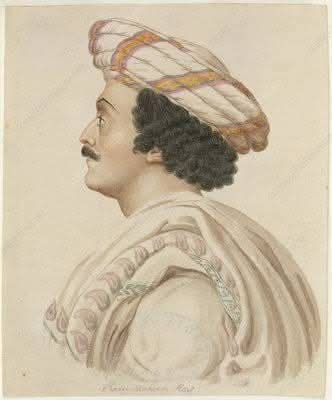
Raja Rammohan Roy’s fight against sati was more than just a humanitarian effort—it became a cornerstone of emerging Indian national identity. When Roy witnessed his sister-in-law’s forced immolation, it sparked something in him that would change India forever.
He didn’t just write polite letters to officials. Roy aggressively campaigned against this practice through his newspapers, pamphlets, and direct appeals to the British government. He argued that sati had no legitimate basis in Hindu scripture—a radical position that challenged traditional interpretations.
What made his campaign truly remarkable was how he framed it: not as westernization, but as a return to authentic Indian values. By 1829, his relentless efforts led to Governor-General William Bentinck’s historic ban on sati.
But Roy didn’t stop there. He tackled women’s property rights head-on, challenging inheritance laws that left widows destitute. He advocated for women’s education at a time when it was virtually non-existent, establishing schools that welcomed girls.
The brilliant thing about Roy’s approach? He positioned women’s rights as essential to India’s progress as a civilization. This wasn’t just social reform—it was nation-building in action.
B. Advocacy for modern education
Roy understood something profound—a modern Indian identity needed modern education. But his vision wasn’t about blindly copying Western models.
When he founded the Hindu College (later Presidency College) in 1817, he created something revolutionary: an institution where Indian students could engage with Western scientific knowledge while maintaining their cultural roots.
Roy fought aggressively for English education not because he worshipped Western culture, but because he saw it as a practical tool. “The Sanskrit system of education,” he wrote in his famous letter to Lord Amherst in 1823, “would keep this country in darkness.”
His education advocacy wasn’t confined to elite spaces. He established schools that taught in Bengali, making knowledge accessible to ordinary people. Roy understood that national consciousness required broad literacy and critical thinking.
What makes Roy’s educational vision truly remarkable was its synthesis. He advocated for teaching:
- Modern sciences and mathematics
- English language and literature
- Traditional Indian knowledge systems
- Practical skills for economic development
This wasn’t just education reform—it was laying the groundwork for a new kind of Indian who could engage with global modernity while remaining authentically Indian.
C. Religious reforms and the Brahmo Samaj
The founding of Brahmo Samaj in 1828 wasn’t just another religious movement—it was Roy’s master stroke in crafting a modern Indian identity.
Fed up with both rigid orthodoxy and the colonial narrative that Hinduism was primitive, Roy created something radical: a reformed Hindu tradition that emphasized monotheism, rejected idol worship, and abandoned practices he considered superstitious.
The Brahmo Samaj became a spiritual laboratory for what a modern Indian consciousness might look like. It drew from the Upanishads and other ancient texts while incorporating elements Roy admired from Christianity and Islam.
What’s fascinating is how Roy positioned these reforms. He didn’t present them as innovations but as returns to India’s authentic spiritual heritage, arguing that polytheism and ritual complexity were later corruptions of an originally pure tradition.
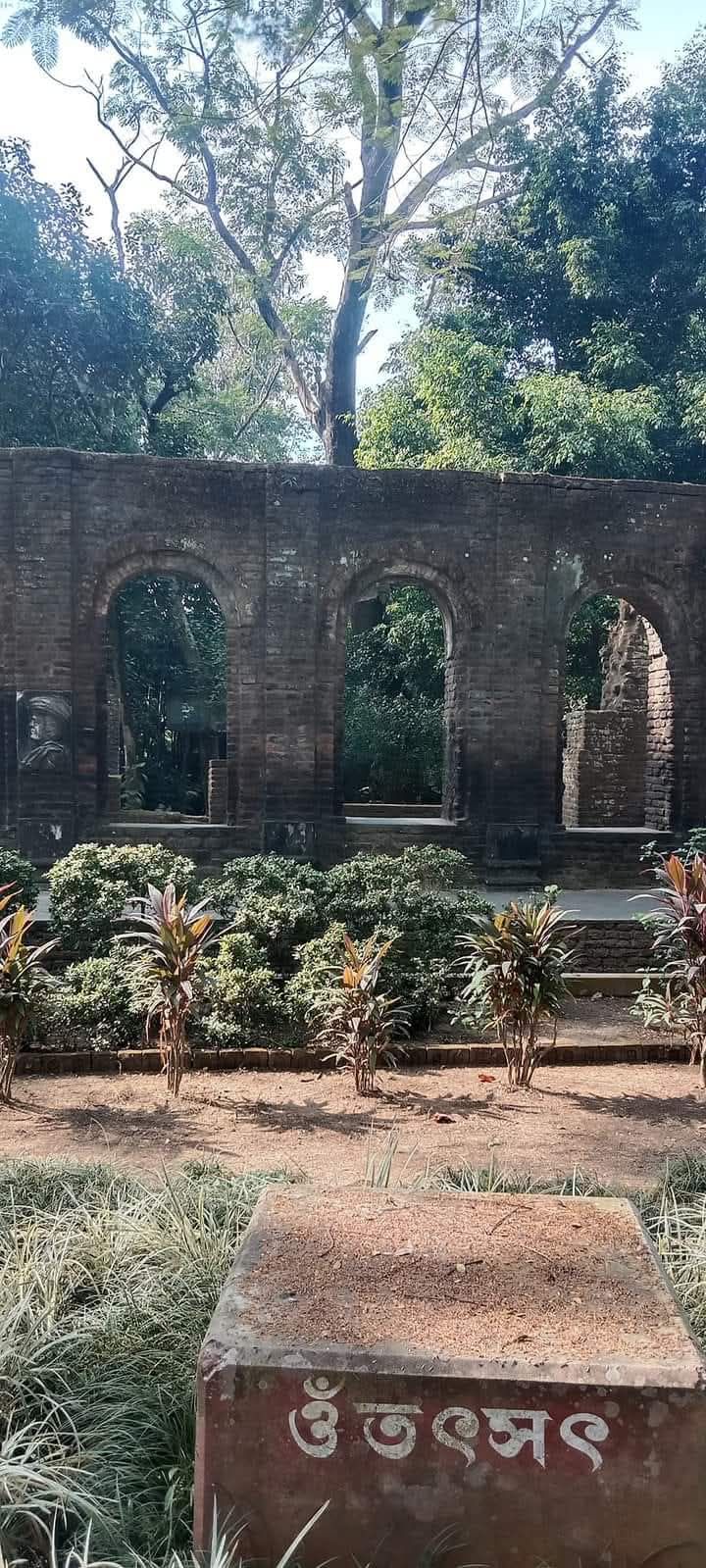
The Samaj attracted Bengali intellectuals who would become the first generation of Indian nationalists. In its meeting halls, they cultivated a new spiritual identity that was:
- Distinctly Indian rather than Western
- Modern rather than medieval
- Universal rather than sectarian
- Rational rather than superstitious
The Brahmo Samaj became much more than a religious congregation—it was an incubator for a new national consciousness that could face the West as an equal.
D. Challenging caste rigidity
Roy didn’t just talk about caste reform—he lived it, scandalizing society by dining with people of all castes and religions. This wasn’t mere personal rebellion; it was nation-building through social action.
He attacked caste restrictions on two fronts. First, he condemned them on moral grounds, arguing that human dignity transcended birth status. Second, he made a pragmatic case that caste rigidity hampered India’s progress and unity.
What’s remarkable is how Roy approached this volatile issue. Rather than rejecting Hindu tradition outright, he reinterpreted it, arguing that the original varna system was based on qualities and professions, not birth—a flexible system later corrupted into hereditary hierarchies.
His approach was shrewd. By placing his critique within tradition rather than against it, he made reform seem patriotic rather than foreign-imposed. He wrote: “The present system of Hindus is not well calculated to promote their political interest.”
Roy understood something profound: a unified national identity couldn’t emerge in a society fundamentally divided. By challenging caste while respecting tradition, he created space for Indians to reimagine their collective identity.
E. Promoting rational thinking and scientific temper
Roy didn’t just want Indians to learn science—he wanted them to develop a scientific mindset. This might seem obvious today, but in early 19th century India, it was revolutionary.
When Roy criticized superstition and blind faith, he wasn’t attacking Hinduism—he was trying to revitalize it. He insisted that true religion must stand up to rational scrutiny, arguing that India’s ancient thinkers were themselves rational inquirers whose work had been obscured by centuries of dogma.
His newspapers became platforms for spreading scientific knowledge. They introduced Bengali readers to Copernican astronomy, Newtonian physics, and modern medicine—not as Western imports but as universal truths that Indians should embrace.
Roy’s genius was in how he framed this rational outlook. He portrayed it not as westernization but as reclaiming India’s own intellectual heritage. He frequently cited the logical traditions of ancient Indian philosophy to show that critical thinking was indigenous to India.

This scientific temperament wasn’t just about technical knowledge—it was about creating citizens capable of self-governance. Roy understood that a people habituated to accepting authority without question couldn’t build an independent nation.
By promoting rationality as an essential Indian value, Roy laid the groundwork for a national identity that could engage with modernity on its own terms rather than through colonial intermediaries.
Raja Rammohan Roy’s Vision for India
A. Synthesis of Eastern wisdom and Western progress
Raja Rammohan Roy wasn’t just another reformer – he was the original bridge builder between two worlds. While most of his contemporaries either clung desperately to tradition or abandoned it entirely for Western ideas, Roy took a different path. He saw value in both.
Roy deeply studied ancient Indian texts, particularly the Vedas and Upanishads, uncovering their philosophical richness. But he didn’t stop there. He dove into Western thought too, absorbing Enlightenment principles of rationality, liberty, and human rights.
The magic happened in how he blended these seemingly opposite worldviews. Roy argued that India’s spiritual heritage offered profound insights into human existence that Western materialism lacked. At the same time, he recognized that Western scientific advancement and democratic principles could help India progress.
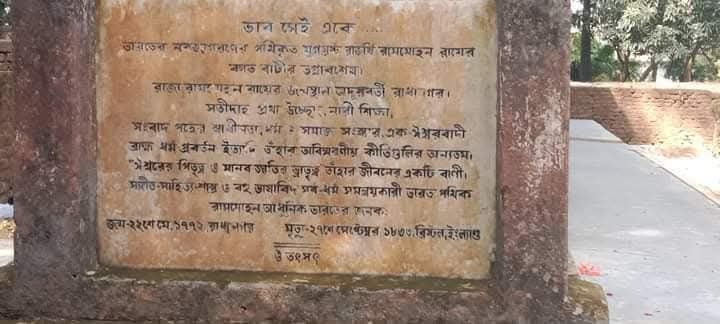
“We need not reject our roots to embrace the future,” he often said to critics from both camps. His translations of Hindu scriptures into Bengali and English weren’t just academic exercises—they were attempts to make ancient wisdom accessible and relevant in a changing world.
B. Concept of cultural revivalism with modernization
Roy’s approach to India’s future was revolutionary because it rejected the false choice between tradition and progress. He didn’t want Indians to simply copy Western models or retreat into an idealized past.
Instead, he championed what we might call “selective modernization.” Roy carefully distinguished between core cultural values worth preserving and outdated practices that needed reform. This wasn’t about wholesale westernization, but thoughtful evolution.
Take his stance on education. Roy advocated for English education not to replace Indian knowledge systems but to supplement them. He established schools that taught both Western sciences and Indian philosophy. His Brahmo Samaj meetings featured discussions of religious texts alongside scientific debates.
His approach was practical, not just theoretical. When he fought against sati (widow burning), he didn’t attack Hinduism itself—instead, he demonstrated through careful study of ancient texts that the practice had no scriptural basis. This method allowed him to advocate for change while honoring authentic tradition.

C. Blueprint for a progressive Indian society
What did Roy’s ideal India look like? In short: educated, equitable, and engaged with the world.
Education stood at the center of his vision. Roy believed deeply that widespread education—for all castes and both genders—was essential for national progress. He helped establish institutions like Hindu College (later Presidency College) that would train generations of Indian thinkers.
His progressive blueprint tackled social injustices head-on. Roy challenged the unequal treatment of women through campaigns against child marriage, promotion of widow remarriage, and advocacy for women’s property rights. These weren’t just humanitarian concerns—Roy saw gender equality as fundamental to national advancement.
Economic development also featured prominently. Roy criticized feudal landholding systems and advocated for farmers’ rights. He understood that political freedom meant little without economic justice.
Most radically, Roy envisioned an India that would be both proudly Indian and confidently global. He wanted Indians to study abroad, engage with foreign ideas, and contribute to international discourse—while maintaining their cultural identity.
D. Religious tolerance as a national value
In today’s polarized world, Roy’s religious vision seems almost prophetic. He rejected both religious extremism and forced uniformity, proposing instead a path of mutual respect and shared values.
Roy himself embodied this approach. Born a Brahmin, he studied Islamic theology with Muslim scholars, engaged with Christian missionaries, and eventually founded the Brahmo Samaj—a movement that emphasized universal spiritual principles over sectarian divisions.
His approach to religious reform was nuanced. Rather than attacking religious identity itself, Roy targeted practices he saw as corruptions of genuine spiritual teachings. He argued that all major religions contained truth, but had accumulated harmful superstitions over time.
“The core teachings of our faiths bring us together, not apart,” he wrote in one of his many pamphlets on religious harmony.
This wasn’t just abstract theology—Roy saw religious tolerance as essential to India’s national identity and future stability. In a land of incredible diversity, he recognized that forcing everyone into a single religious mold would be both impossible and undesirable. Instead, he advocated for a shared civic space where different traditions could coexist and contribute.

Through his writings, organizations, and personal example, Roy demonstrated that religious tolerance wasn’t just a nice ideal—it was a practical necessity for a unified nation.
Political Awakening and Advocacy
Critique of colonial exploitation
Raja Rammohan Roy was among the first Indians to recognize and boldly speak out against the exploitative nature of British colonial rule. While many of his contemporaries were still coming to terms with foreign domination, Roy developed a nuanced understanding of how colonial policies systematically drained India’s wealth.
He didn’t just complain – he methodically documented how British trade policies created a one-way flow of resources from India to Britain. In his writings to British parliamentarians, Roy pointed out how raw materials were extracted at artificially low prices while manufactured goods were sold back to Indians at premium rates.
“The entire system,” he wrote in 1830, “serves to impoverish this once-prosperous land while enriching distant shores.”
What made Roy exceptional was his ability to critique colonialism while still maintaining productive relationships with British reformers. He never minced words about the economic damage being done, yet strategically worked within the system to advocate for change.
Press freedom and public discourse
Roy wasn’t just talking about freedom – he created it. His pioneering Bengali newspaper “Sambad Kaumudi” (1821) and Persian journal “Mirat-ul-Akhbar” (1822) weren’t just publications; they were revolutionary platforms that gave Indians a voice when the colonial government wanted silence.
The press under Roy did something unprecedented – it transformed private frustrations into public conversations. When government censorship tightened in 1823 with the Press Regulations, Roy’s response was extraordinary. Instead of backing down, he formally protested by shutting down Mirat-ul-Akhbar and writing a powerful memorandum challenging the regulations.
His famous statement still resonates today: “Liberty of the press is the main support of the liberty of a nation.”
What’s often overlooked is how Roy’s press activism wasn’t just about politics – it was about creating an informed public. His newspapers covered everything from international events to domestic issues, helping Indians see themselves as part of a broader world while developing a collective identity.
Constitutional reforms and representation
Roy understood something crucial – real change required Indians having a say in their governance. His advocacy for constitutional reforms was groundbreaking for its time.
During the discussions leading to the Charter Act of 1833, Roy submitted detailed proposals advocating for Indian representation in legislative bodies. He didn’t just demand change – he outlined practical steps for implementation, including:
- Indian membership in the Governor-General’s Council
- Creation of representative assemblies with elected Indian members
- Equal legal rights for Indians and Europeans
- Transparent judicial processes with Indian participation
What made his approach powerful was his strategic framing. He didn’t just present these as Indian demands – he demonstrated how they aligned with Britain’s own democratic principles, effectively using their values to challenge their practices.
“A government that rules without the consent of the governed,” he argued, “contradicts the very ideals Britain claims to uphold.”
Economic nationalism
Roy pioneered economic nationalism long before it became a mainstream concept in Indian political thought. He saw economic independence as the foundation for political freedom.
His economic vision included:
- Building local manufacturing capacity
- Reforming exploitative land revenue systems
- Protecting traditional artisans and industries
- Developing technical education to create a skilled workforce
Roy personally funded initiatives to introduce modern manufacturing techniques to Indian craftsmen and advocated for the establishment of technical schools. He understood that competing with British industrial might required modernization, not just protection.
“Our economic slavery,” he wrote, “ensures our political subjugation remains unchallenged.”
The brilliance of Roy’s economic nationalism was how he connected it to cultural renaissance. He argued that economic degradation led to cultural stagnation, creating a comprehensive framework for national revival that influenced generations of freedom fighters who followed.
Diplomatic Endeavors and International Recognition
A. Journey to England as an Indian ambassador
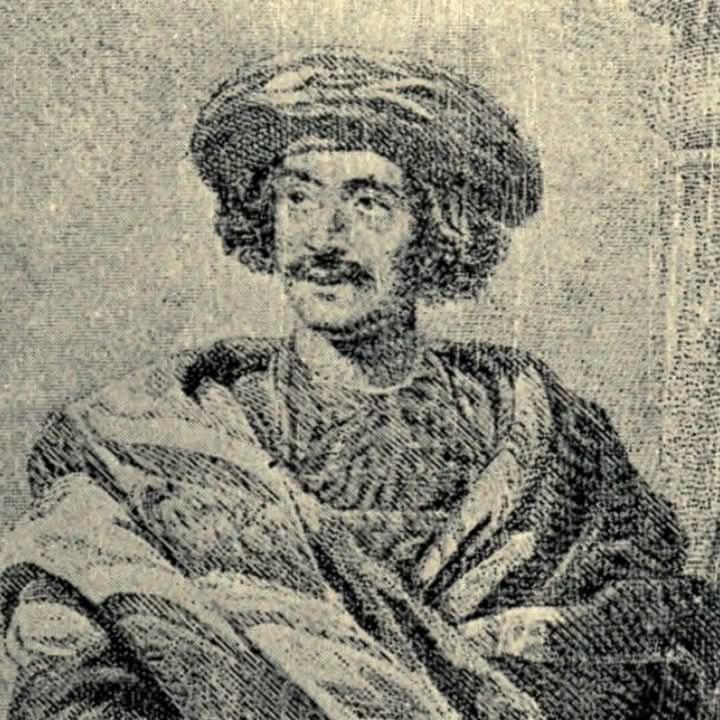
Raja Rammohan Roy’s voyage to England in 1830 wasn’t just any trip – it was a groundbreaking diplomatic mission that would reshape how the world viewed India. As the unofficial ambassador of the Mughal Emperor Akbar II, Roy carried the title of “Raja” bestowed upon him specifically for this journey.
The decision to send Roy wasn’t random. His reputation as a progressive thinker, fluent English speaker, and deep understanding of both Eastern and Western philosophies made him the perfect bridge between two worlds. When his ship docked in Liverpool after a grueling four-month journey, Roy became the first prominent Indian reformer to step on British soil with a diplomatic agenda.
What’s fascinating is how Roy refused to play into British expectations. He maintained his Indian dress while mixing it with Western elements – a physical representation of his belief that progress came through cultural exchange, not abandonment of identity.
B. Negotiations with the British Parliament
Once in London, Roy didn’t waste time. He dove straight into the complex political waters of Westminster, advocating for Indian interests during a crucial period when the East India Company’s charter was up for renewal.
His approach was brilliant. Instead of just criticizing British rule, he positioned himself as a reasonable voice offering practical solutions. In private meetings with parliamentarians and public addresses, Roy highlighted specific reforms needed in India:
- Protection of tenant farmers’ rights against zamindari exploitation
- Judicial reforms to address unfair treatment of Indians
- Greater Indian representation in administrative positions
- Removal of press restrictions in India
C. Creating global awareness about Indian issues
Roy’s genius extended beyond official diplomacy. He recognized the power of public opinion and became a media-savvy figure in 1830s London. He formed connections with:
- Prominent Unitarians and religious reformers
- Leading intellectuals and philosophers
- British journalists and publishers
- Political reformers and abolitionists
Through these networks, Roy fundamentally shifted the conversation about India. He brought attention to practices like sati not as evidence of Indian “backwardness” (as many British commentators claimed), but as problems that progressive Indians themselves were fighting to eliminate.
Roy’s lectures and writings in England created the first substantive cultural exchange between Indian and Western intellectual traditions. He introduced authentic Hindu philosophical concepts to European audiences while simultaneously advocating for modernization in India based on rationalism and scientific thinking.
His greatest achievement was making India’s cause relevant to British audiences. He connected Indian reform movements to values the British public already championed – individual rights, religious freedom, and educational opportunity – making support for Indian causes feel like a natural extension of British progressive values.
Legacy in the Evolution of Indian Nationalism
A. Influence on subsequent nationalist leaders
Raja Rammohan Roy wasn’t just a reformer—he was the spark that ignited a flame in generations of nationalist leaders who followed. His blueprint for social reform combined with political awakening created the foundation upon which later freedom fighters built their movements.
Figures like Dadabhai Naoroji and Gopal Krishna Gokhale directly credited Roy’s work as their inspiration. They picked up his torch of using reasoned arguments and evidence-based approaches when challenging colonial policies.
Even Mahatma Gandhi, who arrived on the scene nearly a century after Roy, acknowledged his debt to Roy’s principles of peaceful resistance and moral authority. Gandhi often pointed to Roy as proof that indigenous reform movements could succeed without abandoning Indian identity.
What made Roy’s influence stick was his practical approach. He didn’t just criticize—he offered alternatives. This problem-solving mindset became a hallmark of Indian nationalist leadership, from Nehru’s planning committees to Patel’s integration strategies.
B. Contribution to the Bengal Renaissance
The Bengal Renaissance wasn’t a happy accident—it was the direct result of Roy’s intellectual revolution. His Brahmo Samaj became the breeding ground for new ideas that transformed Bengal from a colonial outpost into India’s intellectual powerhouse.
Roy created the perfect storm for cultural awakening by:
- Establishing institutions that blended Eastern and Western knowledge
- Promoting vernacular literature alongside English education
- Encouraging critical examination of religious and social practices
His printing press pumped out publications that reached across Bengal, sparking conversations in homes and tea shops about what India could become. Writers like Bankim Chandra Chattopadhyay and Rabindranath Tagore built upon Roy’s foundation, creating literature that celebrated Indian identity while embracing progressive values.
The educational institutions he supported produced a new class of Indians—confident in their heritage yet equipped with modern analytical tools. This wasn’t just cultural pride; it was intellectual ammunition for the freedom movement.
C. Impact on the Indian National Congress
The DNA of the Indian National Congress contains distinct markers of Roy’s influence. When the Congress formed in 1885—more than fifty years after Roy’s death—its founding principles echoed his vision of a united India working through constitutional means for greater self-determination.
Roy’s emphasis on representative institutions and political rights became central to the Congress playbook. The early Congress leaders—mostly Western-educated professionals—operated from Roy’s template: work within the system while pushing for fundamental changes.
His strategy of engaging with British authorities while maintaining independence became the Congress’s standard operating procedure. The organization’s initial focus on civil rights, administrative reforms, and economic policies all carried Roy’s fingerprints.
Even the Congress’s evolution from a moderate debating society to a mass movement followed Roy’s belief that lasting change required both elite leadership and popular participation. When Gandhi transformed the Congress in the 1920s, he was building on Roy’s foundation—just taking it to the villages.
D. Shaping the intellectual framework of the freedom movement
Roy constructed the intellectual scaffolding upon which India’s freedom movement was built. His synthesis of traditional Indian values with progressive ideals created a uniquely Indian approach to liberation.
He pioneered what became the defining characteristics of Indian nationalism:
- Selective modernization without wholesale Westernization
- Religious reform without abandoning spirituality
- Political rights rooted in universal principles but adapted to Indian context
This framework gave the freedom movement both local credibility and international legitimacy. By demonstrating that democratic values weren’t exclusively Western but had parallels in Indian tradition, Roy helped nationalist leaders counter colonial claims that Indians weren’t “ready” for self-government.
His emphasis on the press as a tool for political education became central to nationalist strategy. Every major freedom fighter—from Tilak to Bose—leveraged newspapers and journals to spread their message, following Roy’s example.
E. Relevance to modern Indian identity
In today’s India, Roy’s fingerprints are everywhere—sometimes visible, sometimes hidden beneath layers of history. His vision of India as a synthesis of tradition and progress continues to shape how Indians understand themselves.
The constitutional values of modern India—equality, religious freedom, social justice—all trace back to debates Roy initiated. When contemporary Indians grapple with questions of secularism versus religious identity, they’re participating in conversations Roy started two centuries ago.
His approach to social reform—pushing for change while respecting cultural context—remains the template for effective advocacy in India. Modern movements against gender discrimination, caste inequality, and religious extremism all echo Roy’s methods of combining moral arguments with practical reforms.
What makes Roy especially relevant today is his demonstration that being Indian never meant being frozen in time. He showed that critical self-examination and adaptation were part of India’s intellectual heritage, not threats to it. In an era of resurgent nationalism worldwide, Roy’s inclusive, progressive vision offers a powerful alternative to narrow definitions of national identity.
Raja Rammohan Roy’s immense contributions to Indian nationalism transcended mere social reforms, creating a framework for national identity that would guide generations to come. His intellectual journey, visionary leadership, and tireless advocacy against practices like sati and child marriage fundamentally transformed Indian society, while his political awakening and diplomatic endeavors earned international recognition for Indian concerns. Through the establishment of institutions like Brahmo Samaj and his pioneering work in education and press freedom, Roy laid the groundwork for a modern, progressive Indian identity.
The seeds of nationalism planted by Raja Rammohan Roy in the early 19th century continue to influence India’s national character today. His remarkable ability to synthesize Eastern philosophical traditions with Western enlightenment principles created a uniquely Indian approach to modernization that preserved cultural integrity while embracing necessary reforms. As we reflect on the origins of Indian nationalism, we must acknowledge Roy as not merely a reformer but as a true architect of the Indian national consciousness—a visionary who saw beyond his time and whose legacy remains embedded in the very fabric of modern India.
