
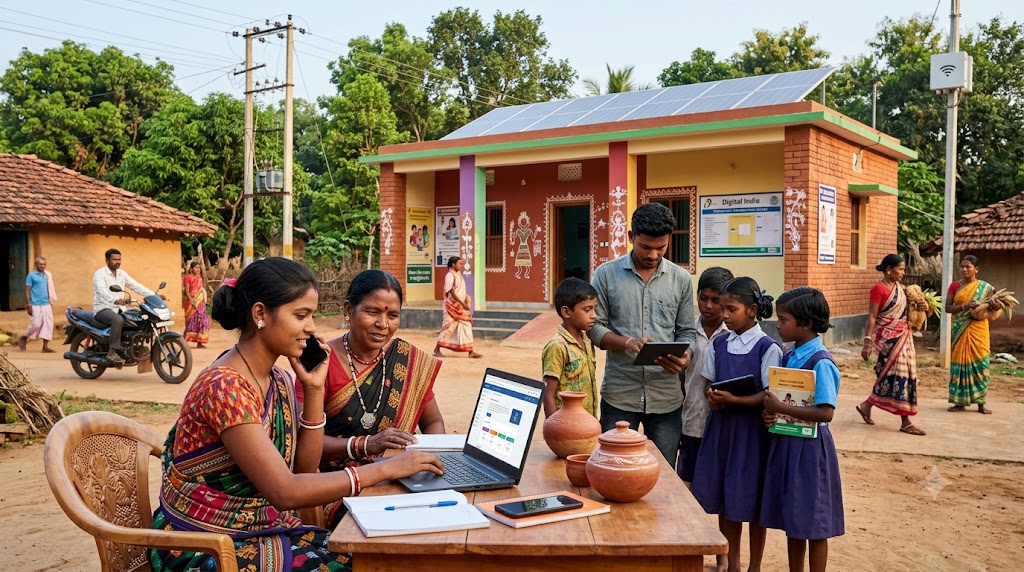
Development of Indigenous Society: Navigating Tradition, Identity, and Progress in Modern India
Meta Description
Explore the comprehensive journey of the development of indigenous society in modern India. An in-depth analysis covering constitutional safeguards, socio-economic struggles, tribal knowledge systems, cultural preservation, and sustainable community empowerment.
1. Introduction: Reimagining the Narrative of Indigenous Development
India’s indigenous peoples, collectively recognized under the constitutional umbrella as Scheduled Tribes (STs) and popularly embraced as Adivasis (“original inhabitants”), represent the foundational roots of the subcontinent’s ecological, cultural, and spiritual tapestry.
Constituting 8.6% of India’s population (numbering over 104 million individuals as per the Census of India, comprising more than 705 distinct tribal communities), indigenous societies in India are not a monolithic collective. Instead, they reflect an extraordinarily diverse spectrum ranging from settled agrarian civilizations like the Santhals, Gonds, Bhils, and Oraons of Central India, to matrilineal forest and hill communities such as the Khasi, Garo, and Mizo in the Northeast, to particularly vulnerable hunter-gatherer and foraging groups (Particularly Vulnerable Tribal Groups or PVTGs) such as the Birhor, Chenchu, Jarawas, and Sentinelese.
For centuries, development was defined externally through an urban, industrial, and hyper-capitalist lens—one that framed tribal areas primarily as resource frontiers rich in coal, bauxite, iron ore, timber, and hydroelectric potential. Within this paradigm, indigenous societies were frequently reduced to “backward” or “underdeveloped” populations that needed to be “civilized” or assimilated into the national mainstream.
Understanding indigenous development in modern India requires unpacking the historical roots of tribal marginalization, assessing constitutional and legal mechanisms, examining systemic socio-economic bottlenecks, celebrating resilient cultural heritage, and forging a rights-based path forward where tribal communities are recognized not as passive beneficiaries of welfare, but as primary custodians of their land, destiny, and development.
2. Historical Context: Colonial Disruption and Post-Independence Trajectories
Pre-Colonial Autonomy          Colonial Exploitation             Nehruvian Panchsheel              Modern Paradigm
[Communal Land Ownership] ───► [Forest Acts & Mineral Loot] ──► [Integration without Imposition] ──► [Rights & Self-Rule: FRA/PESA]
The Colonial Fracture: Creation of Resource Frontiers
Prior to British colonial rule, while tribal communities engaged in trade and barter with agrarian and urban kingdoms, they largely maintained customary sovereignty over their ancestral hills and forests (Jal, Jangal, Zameen — Water, Forest, Land). Land tenure was traditionally communal, regulated by unwritten customary codes and managed through village elders and traditional councils.
The advent of British colonial hegemony severely fractured this balance:
-
The Permanent Settlement of 1793 and Tenancy Acts: These introduced the concepts of private land ownership, commercial landlordism, and monetization into tribal habitats, opening the floodgates for non-tribal moneylenders (Dikus) and revenue collectors.
-
The Forest Acts of 1865, 1878, and 1927: The colonial state claimed eminent domain over natural resources, delegitimizing thousands of years of indigenous customary usage. Tribal communities, who had preserved forests for generations, were transformed overnight into “encroachers” and poachers on their own ancestral homelands.
-
Criminal Tribes Act of 1871: Several nomadic and semi-nomadic indigenous communities were stigmatized and legally classified as “born criminals,” embedding institutional prejudice that continues to affect denotified communities even today.
Indigenous communities did not accept this subjugation passively. The soil of India is soaked in the memory of fierce indigenous rebellions:
-
The Santhal Hool (1855–56) led by brothers Sido, Kanhu, Chand, and Bhairav.
-
The Ulgulan (The Great Tumult, 1899–1900) spearheaded by the visionary folk hero Bhagwan Birsa Munda across the Chota Nagpur plateau.
-
The Rampa Rebellions in Andhra Pradesh led by Alluri Sitarama Raju alongside tribal warriors.
-
The Bhil Uprisings in Rajasthan and Gujarat led by Govind Guru.
These historic struggles were not mere anti-tax protests; they were early assertions of indigenous sovereignty, cultural dignity, and defense against land dispossession.
The Post-Independence Dilemma: Nehru’s Tribal Panchsheel
Following Independence in 1947, India’s leadership wrestled with two polar philosophies regarding tribal development:
-
Total Isolation/Preservation (The Anthropological Approach): Advocated by colonial anthropologists like Verrier Elwin in his early writings, suggesting that tribes should be insulated inside protected reserves to preserve their purity and prevent cultural contamination.
-
Rapid Assimilation (The Modernist Approach): Advocated by social scientists and planners who believed tribes should quickly abandon their primitive habits, adopt mainstream languages and occupations, and blend into the broader working class.
Prime Minister Jawaharlal Nehru, guided by the matured vision of Verrier Elwin, sought a humane middle path known as the Tribal Panchsheel (Five Cardinal Principles):
-
Tribal people should develop along the lines of their own genius, avoiding the imposition of alien values.
-
Tribal rights in land and forests should be respected.
-
Training and building a team of indigenous people for administration and development work should be prioritized.
-
Areas should not be over-administered or overwhelmed by an influx of non-tribal administrators.
-
Success should be judged not by statistics or money spent, but by the quality of human character and social cohesion preserved.
While visionary on paper, independent India’s urgent drive for industrialization led to large-scale resource extraction. Multi-purpose dams (hailed as modern temples), open-cast mines, steel townships, and railway corridors disproportionately displaced tribal communities, sparking the modern struggle for justice.
3. The Constitutional Framework: Protective Safeguards and Autonomous Governance
The Constitution of India recognized the historical vulnerabilities and socio-cultural uniqueness of tribal populations, embedding robust affirmative action, statutory safeguards, and political devolution mechanisms.
                    CONSTITUTIONAL ARCHITECTURE FOR TRIBAL RIGHTS
                                          │
         ┌────────────────────────────────┼────────────────────────────────┐
         ▼                                ▼                                ▼
   FUNDAMENTAL RIGHTS & DPSP     FIFTH SCHEDULE (Art. 244(1))     SIXTH SCHEDULE (Art. 244(2))
   • Art. 15(4), 16(4): Quotas   • Scheduled Areas across         • Autonomous District
   • Art. 46: Educational and      10 States                        Councils (ADCs) in Assam,
     Economic Promotion          • Tribes Advisory Councils         Meghalaya, Tripura, Mizoram
   • Art. 275(1): Special Grants • Governor's Discretionary Laws    • Legislative, Executive, Judicial
1. Fundamental Rights and Directive Principles
-
Article 15(4) and 16(4): Authorizes the state to make special provisions and reservations in educational institutions and public sector employment for the advancement of Scheduled Tribes.
-
Article 19(5): Imposes reasonable restrictions on the freedom of movement and residence of non-tribals to safeguard tribal indigenous land and culture.
-
Article 46 (Directive Principles): Mandates the State to promote with special care the educational and economic interests of weaker sections, particularly Scheduled Castes and Scheduled Tribes, and protect them from social injustice and all forms of exploitation.
-
Article 275(1): Provides special central financial grants-in-aid to states for tribal welfare schemes and building administrative infrastructure in Scheduled Areas.
2. The Fifth Schedule: Shielding the Heartlands
Covering tribal-dominated districts across ten states (Andhra Pradesh, Telangana, Jharkhand, Odisha, Chhattisgarh, Madhya Pradesh, Rajasthan, Gujarat, Maharashtra, and Himachal Pradesh), the Fifth Schedule functions as a protective shield:
-
Vests extraordinary discretionary powers in State Governors to suspend or modify Central and State legislative acts that harm tribal interests.
-
Mandates the constitution of Tribes Advisory Councils (TAC), composed of tribal legislators, to counsel the government on welfare, land rights, and governance.
-
Places stringent prohibitions on the alienation and transfer of tribal lands to non-tribals.
3. The Sixth Schedule: Regional Autonomy in the Northeast
Applicable to tribal regions within Assam, Meghalaya, Tripura, and Mizoram, the Sixth Schedule establishes Autonomous District Councils (ADCs) and Regional Councils. Unlike the Fifth Schedule, ADCs hold significant legislative, executive, and judicial powers:
-
They make laws regarding land allocation, forest management (outside state reserves), village administration, inheritance of property, marriage customs, and social practices.
-
They operate local customary courts to resolve civil and minor criminal disputes according to indigenous traditions, preserving legal and cultural pluralism.

4. Key Socio-Economic Struggles Facing Adivasis in Modern India
Despite robust constitutional safeguards, a deep divide persists between statutory protections and ground realities. The human development indices (HDIs) for tribal communities consistently lag behind the national average across multiple key dimensions.
┌────────────────────────────────────────────────────────────────────────┐
│               THE VICIOUS CYCLE OF INDIGENOUS MARGINALIZATION           │
├────────────────────────────────────────────────────────────────────────┤
│   Land Alienation / Forced Displacement                                │
│       ▼                                                                │
│   Loss of Forest Livelihood & Food Sovereignty                         │
│       ▼                                                                │
│   Severe Malnutrition & Preventable Disease (Sickle Cell, Anemia)      │
│       ▼                                                                │
│   Educational Exclusion & Linguistic Barriers                          │
│       ▼                                                                │
│   Distress Migration & Exploitation as Informal Wage Laborers          │
└────────────────────────────────────────────────────────────────────────┘
4.1 Land Alienation, Mining, and Development-Induced Displacement
The paradox of the Indian tribal belt is the “Resource Curse”: the regions richest in subterranean wealth (coal in Jharkhand, bauxite in Odisha, iron ore in Chhattisgarh) are home to the most impoverished people.
-
Massive Displacement: Government committees and scholarly research (including the Fernandes and Asif Report and the Xaxa Committee Report, 2014) estimate that development projects between 1951 and 2000 displaced over 50 million people, of which more than 40% were Adivasis, despite making up less than 9% of the total population.
-
Inadequate Rehabilitation: Compensation models have historically favored individual cash pay-outs rather than the customary, communal, and intergenerational ties indigenous people hold with their land. Deprived of their traditional ecology, displaced tribals frequently transition into low-wage, precarious labor in brick kilns, stone quarries, and urban construction sites.
-
Legal Loopholes and Subversion: In many Fifth Schedule areas, land alienation prohibitions have been bypassed through fraudulent sales, coercive marriages, bureaucratic corruption, or sweeping invocations of the “Public Purpose” clause under eminent domain laws to lease land to corporate mining conglomerates.
4.2 The Health Crisis: Malnutrition, Anemia, and Remote Infrastructure
Health equity remains one of the sharpest challenges in the development of indigenous society:
-
Stunting, Wasting, and Underweight Children: The National Family Health Survey (NFHS-5) data reveals that tribal children suffer from disproportionately high levels of chronic stunting (under-height for age) and wasting (under-weight for height).
-
The erosion of forest-based nutrition—wild tubers, millets, indigenous greens, and forest meat—in favor of calorie-heavy, nutrient-poor public distribution grains (polished rice) has severely weakened dietary diversity.
-
Genetic Predispositions: Tribal populations in Central and Western India carry a high burden of Sickle Cell Disease (SCD) and Thalassemia. Historically acting as a genetic buffer against endemic malaria, sickle cell traits now manifest as chronic pain crises, severe anemia, organ damage, and early mortality without comprehensive carrier screening and pediatric treatment.
-
Maternal Health and Mortality: Indigenous women suffer from endemic iron-deficiency anemia (often exceeding 65% in remote belts) coupled with high Maternal Mortality Ratios (MMR). The absence of round-the-clock Primary Health Centres (PHCs), lack of motorable roads, and emergency transport failures in hilly terrain compound preventable obstetric deaths.
-
Cultural Competence in Medicine: Modern health workers often enter tribal hamlets with linguistic divides and patronizing attitudes. The dismissal of traditional herbal practitioners (Gunias, Vaidyas, and Bhagats) deepens community hesitation to seek institutional healthcare, widening the trust deficit.

4.3 Education: Language Gaps, Dropout Rates, and Cultural Disconnect
Education is an indispensable engine of human mobility, yet conventional schooling models in tribal areas have often operated as mechanisms of cultural alienation rather than empowerment:
-
The Medium of Instruction Barrier: When a Santhali, Gondi, Ho, or Korku child enters primary school, textbooks and instruction are predominantly delivered in state languages (Hindi, Odia, Marathi, Telugu, or Bengali).
-
Incapable of comprehending the language of instruction, the child faces psychological anxiety, leading to alarmingly high early dropout rates.
-
The Problem of “Civilizing” Curricula: Mainstream curricula often overlook indigenous history, local ecologies, folklore, and values. Textbooks rarely highlight leaders like Birsa Munda, Tilka Manjhi, or Rani Durgavati with the depth accorded to mainstream figures. Tribal lifestyles are sometimes depicted in patronizing or stereotypical ways.
-
Infrastructural Deficits: Many tribal hamlets (Tolas/Padas) remain single-teacher schools plagued by absentee instructors, lack of clean sanitation facilities for girls, and zero digital connectivity, reinforcing an enduring digital divide.
4.4 Economic Precarity: The Monopolization of Minor Forest Produce (MFP)
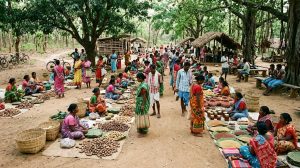
For millions of landless and smallholder tribals, survival hinges on gathering Non-Timber Forest Products (NTFPs) or Minor Forest Produce (MFP): Mahua flowers, Tendu leaves, Sal seeds, Chironji, Lac, and medicinal honey.
-
Exploitation by Middlemen: In the absence of institutional credit and village-level storage facilities, tribal gatherers are routinely forced into distress sales to private traders and moneylenders at prices far below market value.
-
Value Addition Bottlenecks: Although tribal harvesters supply raw materials for multinational pharmaceutical, cosmetic, and liquor industries, minimal processing or value addition takes place at the Gram Sabha level. Consequently, the profit margins escape the indigenous collector, leaving them trapped in seasonal poverty and indebtedness.
5. Legislative Milestones and the Path to Rights-Based Development
In response to persistent tribal movements, civil society mobilization, and progressive judicial interpretations, India’s Parliament enacted two transformative, landmark pieces of legislation designed to restore historical injustices and devolve governance down to the roots.
┌────────────────────────────────────────────────────────────────────────┐
│                        LEGAL REVOLUTIONS COMPARED                      │
├────────────────────────────────────────────────────────────────────────┤
│  PESA Act (1996)                       FRA (2006)                      │
│  ──────────────────────────────        ──────────────────────────────  │
│  • Decentralizes political power       • Recognizes historical land    │
│  • Empowers Gram Sabha over            • Tenurial rights (IFR, CFR)    │
│    natural resources, MFP, disputes    • Right to protect and manage   │
│  • Mandatory consultation for land       community forests             │
│    acquisition in Scheduled Areas      • Reverses historical injustice │
└────────────────────────────────────────────────────────────────────────┘
5.1 The PESA Act, 1996: Direct Democracy via the Gram Sabha
The Provisions of the Panchayats (Extension to the Scheduled Areas) Act, 1996 (PESA) sought to extend decentralized local governance under Part IX of the Constitution into Fifth Schedule regions, transforming rural democracy:
-
Primacy of the Gram Sabha: Unlike standard Panchayati Raj structures where power concentrates in the hands of elected Sarpanches and block bureaucrats, PESA vests supreme power in the Gram Sabha (the collective village assembly of all adult voting members).
-
Control Over Customary Traditions: The Gram Sabha is legally authorized to safeguard community identity, customary traditions, and dispute resolution mechanisms without outside police or bureaucratic interference.
-
Control Over Natural Wealth:
-
Ownership of Minor Forest Produce lies directly with the Gram Sabha.
-
Prior mandatory consultation with the Gram Sabha is required before acquiring land for development projects or rehabilitating project-affected persons.
-
Gram Sabha approval is mandatory for granting mining leases for minor minerals (sand, stones, gravel).
-
Power to enforce prohibition or regulate the sale and consumption of intoxicants, as well as supervise local village markets.
-
The Implementation Deficit of PESA
Despite its revolutionary framing, state bureaucracies have repeatedly weakened PESA. Several states delayed framing administrative rules for decades, passed diluted iterations, or subordinated Gram Sabhas to parallel joint forest management committees led by state forest departments. In many instances, “consultation” for land acquisition has been reduced to forged signatures and administrative formalities.
5.2 The Forest Rights Act (FRA), 2006: Reversing “Historical Injustice”
The Scheduled Tribes and Other Traditional Forest Dwellers (Recognition of Forest Rights) Act, 2006 (FRA) serves as one of India’s most consequential social legislations. The preamble explicitly recognizes that forest-dwelling communities suffered a “historical injustice” through colonial and post-colonial forestry regimes that denied them legal title to lands they had cultivated and conserved for generations.
Core Tenets of the Forest Rights Act:
-
Individual Forest Rights (IFR): Recognition of tenurial rights on forestland under actual cultivation (up to a ceiling of 4 hectares) prior to the cut-off date of December 13, 2005.
-
Community Forest Rights (CFR): Grants ownership, collection, processing, and disposal rights over minor forest produce, water bodies, and grazing lands historically used within customary boundaries.
-
Community Forest Resource Rights (CFRR) under Section 3(1)(i): Vests the legal right in the Gram Sabha to “protect, regenerate, conserve or manage any community forest resource which they have been traditionally protecting and conserving for sustainable use.” This effectively ends state forest department monopolies over customary community zones.
-
Protection from Arbitrary Eviction: Section 4(5) unequivocally mandates that no forest dweller shall be evicted or removed from forest land under their occupation until the verification and recognition process of their rights is formally completed.
-
Strict Inviolable Protocol for Protected Areas: Even inside National Parks and Tiger Reserves, evictions can only occur if critical tiger habitats are established, scientific proof confirms coexistence causes irreversible damage, and free, prior, and informed consent (FPIC) is granted alongside a comprehensive rehabilitation package approved by the Gram Sabha.
       STEPS IN FRA TITLE CLAIM VERIFICATION
    ┌──────────────────────────────────────────────┐
    │  1. Village Forest Rights Committee (FRC)    │
    │     Conducts field verification & boundary   │
    │     mapping (using GPS & traditional proof)  │
    └──────────────────────┬───────────────────────┘
                           │
                           ▼
    ┌──────────────────────────────────────────────┐
    │  2. Full Gram Sabha Approves Resolution      │
    └──────────────────────┬───────────────────────┘
                           │
                           ▼
    ┌──────────────────────────────────────────────┐
    │  3. Sub-Divisional Level Committee (SDLC)    │
    │     Scrutinizes claims and maps              │
    └──────────────────────┬───────────────────────┘
                           │
                           ▼
    ┌──────────────────────────────────────────────┐
    │  4. District Level Committee (DLC)           │
    │     Final authority issuing legal land patta │
    └──────────────────────────────────────────────┘
When implemented transparently—as demonstrated in progressive pockets like Gadchiroli (Maharashtra), Mayurbhanj (Odisha), and parts of Kerala—the FRA has transformed rural micro-economies. Gram Sabhas holding CFR rights have successfully harvested, auctioned, and taxed Tendu and bamboo harvests, earning crores directly for village-level social infrastructure, water harvesting, and healthcare clinics, completely bypassing middlemen.
6. Cultural Preservation: Heritage, Worldview, and Living Traditions
Development decoupled from culture leads to rootlessness and alienation. Indigenous societies possess sophisticated social structures, artistic traditions, and ecological wisdom that modern society is only beginning to comprehend.
┌────────────────────────────────────────────────────────────────────────┐
│                   PILLARS OF INDIGENOUS TRIBAL CULTURE                 │
├────────────────────────────────────────────────────────────────────────┤
│  Ecological Philosophy: Sacred Groves, Sarna Religion, Nature Deities   │
│  Artistic Traditions: Sohrai, Khovar, Warli, Gond, Pithora Visual Arts │
│  Community Solidarity: Gotul / Dhumkuria Youth Dormitories & Mutual Aid│
│  Linguistic Diversity: Austroasiatic, Dravidian, Tibeto-Burman Dialects│
└────────────────────────────────────────────────────────────────────────┘
6.1 The Spiritual Ecology: Sarna and Sacred Nature
For the majority of Indian indigenous groups, spirituality is deeply rooted in nature rather than anthropocentric deities.
-
Eco-Festivals: Indigenous festivities align directly with ecological seasons and regeneration:
-
Sarhul (Baha): Celebrates the blooming of Sal flowers, welcoming spring and natural fertility. No agricultural work occurs until ancestral spirits are honored with new Sal blossoms.
-
Karam: Honors the sacred Kadamb tree, celebrating sibling protection, family bonds, and the prosperity of green crops.
-
-
The Sarna Religious Code Debate: A central demand of contemporary tribal movements across Jharkhand, West Bengal, and Odisha is the formal recognition of a dedicated “Sarna Religious Code” in the National Census. Tribals argue that being forced to identify under other organized major religions strips them of their distinct animistic identity, culture, and constitutional distinctiveness.

6.2 Living Heritage: The Indigenous Arts of India
Tribal visual and performing arts are not merely decorative hobbies; they are visual scripts, historical archives, and communal prayers.
┌─────────────────┬───────────────────┬───────────────────────────────────────────┐
│ ART FORM        │ TRIBE / REGION    │ MEDIUM & SIGNIFICANCE                     │
├─────────────────┼───────────────────┼───────────────────────────────────────────┤
│ Warli Painting  │ Warli (Maha/Guj)  │ Ochre mud walls, rice paste; captures     │
│                 │                   │ cyclical life, dance (Tarpa), agriculture │
├─────────────────┼───────────────────┼───────────────────────────────────────────┤
│ Gond Art        │ Gond (MP/CG)      │ Intricate lines, dots, and textures;      │
│                 │                   │ records oral epics, fauna, cosmic myths   │
├─────────────────┼───────────────────┼───────────────────────────────────────────┤
│ Sohrai & Khovar │ Santhal, Oraon,   │ Natural clays (Charak, Dudhi); reflects   │
│                 │ Birhor (Jharkhand)│ marital fertility and post-harvest thanks │
├─────────────────┼───────────────────┼───────────────────────────────────────────┤
│ Pithora Murals  │ Rathwa, Bhilala   │ Sacred ritual wall paintings dedicated    │
│                 │ (Gujarat/MP)      │ to Baba Pithora to invoke protection      │
└─────────────────┴───────────────────┴───────────────────────────────────────────┘
Traditional youth dormitories—such as the Ghotul among the Muria Gonds of Bastar or the Dhumkuria among the Oraon—served historically as democratic community spaces where youth learned folklore, hunting methods, art, social responsibilities, sexuality, and egalitarian ethics without authoritarian parental control. While stigmatized by early puritanical missionaries and British officials, modern anthropologists acknowledge these spaces as advanced sociological frameworks for emotional, civic, and cultural education.
7. Human Development Innovations: Policy, Education, and Healthcare
Realizing the full potential of tribal communities requires shifting from welfare paternalism to institutional investments that build capability, agency, and self-reliance.
7.1 Mother Tongue-Based Multilingual Education (MTB-MLE)
Recognizing the medium-of-instruction barrier, education policy is increasingly adopting Mother Tongue-Based Multilingual Education (MTB-MLE), as emphasized in India’s National Education Policy (NEP) 2020:
-
How it works: In early childhood and primary classes (Kindergarten to Grade 3), children learn primarily in their native indigenous mother tongue (e.g., Santhali, Gondi, Kui, Saora). Parallelly, the state language and English are introduced organically through conversational contexts. As conceptual clarity, confidence, and literacy mature, the child smoothly transitions into multilingual proficiency.
-
Impact: Case studies in Odisha and Andhra Pradesh illustrate that schools utilizing MTB-MLE retain tribal children longer, boost mathematical and critical comprehension, and reduce the psychological anxiety tied to alien school environments.
-
Eklavya Model Residential Schools (EMRS): Set up to provide top-tier secondary education to ST students in remote pockets. To be truly transformative, these institutions must balance national curricula with indigenous history, ethno-botany, local sports, and traditional music, avoiding the pitfalls of cultural assimilation.

7.2 Rebuilding Tribal Healthcare: The Abhay Bang Committee Recommendations
In 2018, the Expert Committee on Tribal Health, chaired by Dr. Abhay Bang, submitted the first comprehensive review of tribal health in India, outlining an actionable blueprint:
                  THE BANG COMMITTEE RECOMMENDATIONS FOR TRIBAL HEALTH
                                           │
         ┌─────────────────────────────────┼─────────────────────────────────┐
         ▼                                 ▼                                 ▼
   ADMINISTRATIVE DECENTRALIZATION      HUMAN RESOURCES & TRUST          DISEASE COMBAT & RIGHTS
   • Direct 8.6% of health budget       • Train local tribal youth as    • Universal Sickle Cell Trait
     to tribal-specific healthcare        Community Health Workers         screening & counseling
   • Establish dedicated Tribal Health  • Integrate registered herbal    • Eradicate severe malaria, TB,
     Directorates at state levels         practitioners (Vaidyas)          and maternal under-nutrition
-
National Sickle Cell Anemia Elimination Mission: Launched with the goal of screening millions of tribal individuals under the age of 40, issuing genetic counseling cards to prevent homozygous births, and ensuring hydroxyurea therapy is available at primary health centers.
-
Reviving Forest Foods and Kitchen Gardens: Public distribution schemes must expand to procure and distribute traditional, drought-resistant millets (Ragi, Kodo, Kutki, Jowar) alongside pulses, directly combating micronutrient deficiencies with familiar foods.
8. Sustainable Livelihoods: Agro-Ecology, Cooperatives, and Green Tech
The economic development of indigenous society must leverage the intrinsic ecological advantages of tribal lands without degrading them.
┌────────────────────────────────────────────────────────────────────────┐
│                   SUSTAINABLE INDIGENOUS LIVELIHOOD PYRAMID            │
├────────────────────────────────────────────────────────────────────────┤
│                 Level 4: Global Carbon Credits & Ecotourism            │
│              Level 3: Direct-to-Consumer Digital Platforms             │
│           Level 2: Forest Post-Harvest Processing & TRIFED Units       │
│        Level 1: Community Agro-Ecology & Traditional Millets           │
└────────────────────────────────────────────────────────────────────────┘
1. Van Dhan Vikas Kendras (VDVKs)
Championed by the Tribal Cooperative Marketing Development Federation of India (TRIFED), the Pradhan Mantri Van Dhan Yojana organizes tribal gatherers into Self-Help Groups (SHGs) and federated producer companies:
-
Rather than selling raw, perishable Mahua blossoms, Wild Honey, Tamarind, or Amla to exploitative middlemen, VDVK clusters process, package, and brand these goods as premium, natural organic consumables.
-
Processing facilities at the village level preserve economic surplus in the community, providing year-round sustainable income to tribal women who form the backbone of the forest economy.
2. Traditional Organic Farming and Seed Sovereignty
Most tribal farming is organically clean by default, using few chemical fertilizers or pesticides:
-
Indigenous communities have preserved thousands of climate-resilient, pest-resistant heirloom landrace seeds of millets and wild grains that withstand erratic rains and droughts.
-
Initiatives led by indigenous women leaders—such as the Millet Sisters of the Deccan Development Society or community seed banks established in Koraput, Odisha—demonstrate how indigenous agro-ecology can support long-term climate resilience.
3. Indigenous Community-Led Eco-Tourism
When planned and owned directly by Gram Sabhas (rather than external luxury tour operators), community-based ecotourism allows indigenous societies to open their heritage, sustainable bamboo architecture, trekking routes, and artistic crafts to conscientious visitors on their own terms, generating income without degrading the environment.
9. The Modern Frontier: Digital Inclusion, Youth Leadership, and Climate Justice
As the 21st century accelerates, a new generation of educated, digital-native tribal youth is reshaping the indigenous movement:
┌───────────────────────────────────────────────────────────────────────┐
│               THE NEW FRONTIERS OF ADIVASI EMPOWERMENT                │
├───────────────────────────────────────────────────────────────────────┤
│  • Digital Archives: Preserving languages & oral history on the web   │
│  • Legal Literacy: Youth mapping customary lands via GPS & open data  │
│  • Intersectional Feminism: Indigenous women challenging patriarchy   │
│  • Climate Leadership: Framing Adivasis as global climate guardians   │
└───────────────────────────────────────────────────────────────────────┘
-
Digital Revitalization of Endangered Languages: With linguists warning that dozens of unwritten tribal tongues are at risk of extinction, young indigenous coders and linguists are using mobile applications, open-source dictionaries, and community podcasts to preserve and celebrate their languages. The inclusion of Santhali (Ol Chiki script) in Wikipedia and the push for Gondi and Mundari script digitization illustrate this shift.
-
GIS Mapping for Land Rights: Educated tribal youth are utilizing open-source GPS tracking and drone mapping to chart customary boundaries of their community forests, arming their Gram Sabhas with spatial data to claim and defend their CFR rights under the FRA against administrative and corporate encroachment.
-
The Rise of Adivasi Literature and Cinema: Moving past external ethnographic accounts, indigenous authors, poets, and filmmakers are telling their own stories.
-
Writers such as Jacinta Kerketta, Nirmala Putul, and Hansda Sowvendra Shekhar present raw accounts of land struggles, beauty, systemic violence, and tribal resilience.
-
Global Climate Justice Movements: In international climate forums (such as COP summits), indigenous leaders are increasingly recognized as essential custodians of biodiversity. Accounting for less than 5% of the world’s population, indigenous peoples protect 80% of Earth’s remaining biodiversity.
-
India’s Adivasis stand on the frontline of global climate stabilization; protecting their land tenure rights directly protects carbon sinks and freshwater river basins.
10. Strategic Blueprint: A 7-Point Policy Roadmap for Indigenous Empowerment
To bridge the gap between policy intent and ground reality, Indian policymakers, civil society, and tribal leaders should consider seven strategic priorities:
┌────────────────────────────────────────────────────────────────────────────────────────────────────────┐
│                                  THE 7-POINT POLICY ROADMAP                                            │
├────┬─────────────────────────────┬────────────────────────────────────────────────────────────────────┤
│ 1. │ Universal PESA & FRA        │ Pass pending state rules, honor Gram Sabha consent, cancel illegal │
│    │ Implementation              │ lease diversions, and recognize Community Forest Rights at scale.  │
├────┼─────────────────────────────┼────────────────────────────────────────────────────────────────────┤
│ 2. │ Dedicated Tribal Healthcare │ Implement the Bang Committee's funding goals (8.6%), expand        │
│    │ Systems                     │ sickle-cell care, and integrate culturally competent care.         │
├────┼─────────────────────────────┼────────────────────────────────────────────────────────────────────┤
│ 3. │ Decolonizing Curricula via  │ Scale Mother Tongue-Based education, celebrate tribal freedom      │
│    │ MTB-MLE                     │ fighters, and recruit local educators into primary schools.        │
├────┼─────────────────────────────┼────────────────────────────────────────────────────────────────────┤
│ 4. │ MSP Expansion for Minor     │ Ensure minimum support prices for all 50+ forest goods, eliminate  │
│    │ Forest Produce              │ middlemen, and expand cold-chain & processing centers.             │
├────┼─────────────────────────────┼────────────────────────────────────────────────────────────────────┤
│ 5. │ Inclusive Green Economy     │ Direct District Mineral Foundation (DMF) funds to community needs; │
│    │ & Climate Finance           │ award carbon credits directly to forest-protecting Gram Sabhas.    │
├────┼─────────────────────────────┼────────────────────────────────────────────────────────────────────┤
│ 6. │ Protection of PVTG          │ Guarantee protection against habitat destruction, disease, and     │
│    │ Survival and Territory      │ intrusions, honoring their right to self-isolation if chosen.     │
├────┼─────────────────────────────┼────────────────────────────────────────────────────────────────────┤
│ 7. │ Respect for Cultural and    │ Formally address the Sarna religious code demand; preserve sacred  │
│    │ Religious Identity          │ groves and ancestral burial sites with statutory heritage status.   │
└────┴─────────────────────────────┴────────────────────────────────────────────────────────────────────┘
11. Conclusion: Development with Dignity, Autonomy, and Pride
The historical trajectory of indigenous society in modern India has often swung between two extremes: romanticized isolation on one end, and violent, resource-extractive displacement on the other. Both extremes deny indigenous peoples their fundamental humanity, constitutional agency, and self-determination.
The path forward demands a fundamental paradigm shift: Indigenous communities must not be viewed as problems to be solved, nor as victims waiting to be saved. They are rights-bearing citizens with advanced traditions of communal solidarity, ecological stewardship, participatory democracy, and sustainable living.
       OLD PARADIGM                             NEW PARADIGM
┌───────────────────────────┐            ┌───────────────────────────┐
│ • Resource Extraction     │            │ • Ecological Stewardship  │
│ • Cultural Assimilation   │   ─────►   │ • Cultural Self-Assertion │
│ • Top-Down Bureaucracy    │            │ • Gram Sabha Sovereignty  │
│ • Beneficiary/Victim Lens │            │ • Rights-Bearing Citizens │
└───────────────────────────┘            └───────────────────────────┘
True development of indigenous society honors the soul of the Tribal Panchsheel and the radical promise of the Fifth and Sixth Schedules, PESA, and the Forest Rights Act.
It means a tribal girl can learn in her native language, access quality medical care that respects her culture, eat nutritious traditional meals, and study to become a scientist, jurist, or policymaker—without ever feeling pressured to abandon her ancestral language, her Sarna grove, or her Adivasi identity.
When India’s indigenous peoples achieve genuine self-determination, ecological sovereignty, and equitable development, they do not merely uplift themselves: they provide modern society with a vital, time-tested blueprint for living sustainably on a fragile planet.
