

Guardians of the Misty Ridges: The Complete Guide to the Thangal Tribe of Manipur
Nestled within the rugged folds of the Senapati and Kangpokpi districts of northern Manipur lies one of Northeast India’s most resilient, culturally distinctive, yet historically overlooked indigenous communities: the Thangal tribe (recognized officially in historical records and colonial ethnography as the Thangal Naga or earlier grouped under the umbrella term Koirao).
Perched across ridge tops, surrounded by dense oak, rhododendron, and bamboo groves, the Thangal people have guarded their territorial homelands and cultural sovereignty for centuries. While widely acknowledged in regional history through legends of the royal Meitei court and the anti-colonial resistance of 1891, the community’s internal social fabric, linguistic identity, customary village democracy, agro-ecological knowledge, and socio-economic realities in contemporary India demand profound exploration.
1. Who Are the Thangal People? Ethnonym, Roots, and Geographic Landscape
The Ethnonym: Reclaiming ‘Thangal’ from ‘Koirao’
For decades under British colonial surveys and early post-independence census records, the tribe was officially registered under the exonym Koirao (sometimes spelt Khoirao or Kolya). This term was an external identifier—predominantly used by neighbouring plainsmen and administrative officers.
To the community members themselves, their authentic collective identity is Thangal. The word is deeply rooted in oral genealogies, ancestral heroes, and shared village clusters. Following sustained socio-political assertion, the government recognized their distinctive constitutional status, amending the Scheduled Tribes list of Manipur to officially validate Thangal alongside their historical ties to the larger Naga family.

Geographic Footprint: Ridges, Valleys, and River Basins
The traditional homelands of the Thangal lie primarily in the central-northern hill districts of Manipur, specifically across the hill terrain of the Kangpokpi and Senapati administrative regions.
The primary traditional settlements are concentrated around the upper drainage basins of the Iril, Imphal, and Barak river systems. Key historic Thangal villages include:
-
Thangal Surung (revered as the civilizational cradle and spiritual core of the community)
-
Tumnoupokpi
-
Yaikongpao
-
Mayangkhang
-
Makui
-
Ngari clusters
-
Tinglong
These settlements sit at elevations ranging from 900 to 1,800 metres above sea level. The climate is sub-tropical to temperate montane, characterized by heavy monsoon downpours between May and September, crisp winters, and rich sub-Himalayan biodiversity. Living on these steep ridges shaped the defensive layout of their historic villages, their terracing systems, and their relationship with the forest canopy.
2. Mythological Origins, Migration Pathways, and Archaeological Footprints
The Cave of Ancestral Emergence: Thangal Surung
Like many indigenous societies across the Patkai-Naga-Chin mountain arcs, the Thangal preserve a sacred subterranean origin myth. According to oral history handed down by village elders (Khunbus and Khullakpas), the primeval ancestors of the tribe did not cross oceans or march across distant continents; they emerged directly from the bowels of the earth at Thangal Surung (Surung meaning cave or subterranean passage).
Local belief holds that a stone slab once sealed the entrance of this subterranean chamber. Various animals attempted to remove the blockage, but it was through the courage of their ancestral patriarch that the stone was moved, allowing human lineages to step out into the sunlight. Because of this, Thangal Surung is not merely a geographic village; it is an active spiritual landmark, an ethno-archaeological sanctuary, and the axis mundi of Thangal identity.
Migration Routes and Spatial Dispersion
Following their emergence and subsequent population growth, lineages gradually dispersed across the surrounding mountain saddles. Moving in kin-based bands, they cleared virgin forests, established stone village gates (Khur), and erected massive monolithic memorial stones along ridge crests to mark boundary lines and honor prominent feast-givers.
Their oral migration chants (Lup-la) recount ancestral stops across high hilltops, water springs, and forest clearings. Over generations, these movement pathways established an organic territorial network bordering the Liangmai and Rongmei (Zeliangrong) to the west, the Mao and Maram to the north, the Tangkhul to the east, and the Meitei civilisation across the southern valley plains.

3. Linguistic Identity: The Thangal Language (T’o-Thangal)
Linguistic Classification and Phonetic Nuance
Linguistically, the Thangal language belongs to the Tibeto-Burman subfamily within the broader Sino-Tibetan language family. Within Tibeto-Burman, it is often grouped under the Kuki-Chin-Naga or specifically the Northern/Central Naga sub-branch, though it shares morphological, lexical, and syntactical affinities with the neighbouring Maram, Liangmai, and Tangkhul tongues.
The language is tonal, agglutinative, and rich in monosyllabic verbal roots modified by extensive compounding and affixes. Vowel length, tonal pitch, and glottal stops carry semantic weight: a slight variation in pitch can transform an everyday agricultural term into a sacred cosmological reference.
The Challenge of Orality and Modern Script Adoption
Historically, Thangal was a purely oral language. Orality served as a living museum: legal covenants, territorial boundaries, herbal medicine formulations, and genealogies were memorized through rhythmic verse and sung laments.
In the mid-to-late 20th century, following the arrival of Christian mission schooling and native literacy efforts, the Latin (Roman) alphabet was adapted to transcribe the Thangal language. Today, school primers, religious scriptures, hymnbooks, and cultural periodicals are published in this adapted script.
However, linguists consider Thangal an endangered speech variety due to:
-
The relatively small speaker base (often estimated between 4,000 and 7,000 individuals).
-
The pressure of regional lingua francas—namely Meiteilon (Manipuri), Nagamese, and English.
-
Urban migration among youth, leading to reduced intergenerational transmission of indigenous idioms, forest vocabularies, and ceremonial speech registers.
4. Social Stratification, Kinship Structure, and Village Governance
The Patriarchal Lineage System (Clans and Sub-Clans)
Thangal society is strictly patrilineal and patrilocal. Descent, clan identification, and ancestral inheritance pass through the male line from father to son.
The tribe is organized into distinct, exogamous clans (Sageis or lineages), such as the Hangsha, Gonda, and others. Clan exogamy is absolute: marrying within one’s own patrilineal clan is taboo (Sari or pollution), believed to bring natural misfortune, crop failure, or genealogical sickness upon the village.
The Village Council: Traditional Gerontocracy and Chieftainship
Traditional Thangal villages were independent village republics. Every ridge-top village possessed its own clearly demarcated agricultural land, reserved communal forests, hunting territories, and water springs.
Governance was executed through a council of elders led by two hereditary and merit-based administrative pillars:
               [ Village Council (Gerontocracy) ]
                                |
        +-----------------------+-----------------------+
        |                                               |
  [ Khullakpa ]                                   [ Khunbu ]
(Administrative Head,                      (Spiritual Custodian,
 Diplomatic Voice, Judge)                   Earth Priest, Rites Master)
-
The Khullakpa: The secular headman or chief. He acts as the political leader, the ultimate arbiter of internal disputes, the village’s diplomatic voice in inter-tribal conventions, and the organizer of collective defense.
-
The Khunbu: The original settler lineage custodian or “earth priest.” He holds ceremonial supremacy over land distribution, ancestral sacrifices, seasonal agricultural dates, and rituals that placate earth deities.
-
The Council of Elders (Pei or Lup): Composed of clan representatives and elderly householders renowned for customary knowledge, eloquence, and integrity.
Customary law (Hao-Wai) forms the core of their judicial philosophy. Restorative justice takes precedence over punitive retribution. Disputes involving boundary encroachments, marital breakdowns, or petty theft are resolved by consensus, often concluding with compensatory feasts, symbolic gift exchanges, and formal reconciliation cups of rice beer.

5. Traditional Architecture, Morung System, and Material Culture
The Architecture of the Homestead
Traditional Thangal domestic architecture was designed to handle high-altitude winds, torrential rainfall, and seismic movement:
-
Materials: Sourced directly from local forests—mature timber posts, flattened bamboo walls (Wachet), river reeds, cane lashings, and thick thatch grass (Thatch thatch roofs).
-
Spatial Layout: Houses are elongated and built directly on leveled earth rather than high stilts, with the back portion resting securely against the hillside slope.
-
Front Façade: The front gable of an influential elder or feast-giver’s home is decorated with hand-carved wooden cross-horns (Kika), hornbill feathers, and stylized carvings of mithun (Bos frontalis) heads, symbolizing generosity, wealth, and community service.
-
Hearth (Meiphu): The domestic hearth sits at the physical and spiritual center of the house. Suspended above the continuously burning three-stone fire are three tiers of bamboo drying racks used to smoke pork, cure seed grains, dry wild mushrooms, and preserve seasonal herbs.
The Morung: Academy of Ancestral Life
Like other Naga communities, the Thangal historically practiced the youth dormitory system—the Morung (separate houses for unmarried young men and women).
The Morung served as a comprehensive indigenous university:
-
Young boys entered around early adolescence and were trained in mountain warfare, village sentry duty, archery, tracking, wrestling, and hunting lore.
-
Elders gathered at the Morung hearth to pass down oral epics, ancestral chants, customary jurisprudence, wood carving, and cane weaving.
-
The female dormitories served as centers for master weavers to instruct young women in cotton ginning, spinning, natural dye extraction from forest barks and leaves, back-strap tension weaving, and choral singing.
With the conversion to Christianity and the spread of formal Western schooling in the mid-20th century, the physical Morungs largely disappeared. However, their egalitarian communal ethos lives on in modern village youth organizations and student unions.
6. Economic Foundations: Agriculture, Ecology, and Forest Stewardship
Terrace Wet-Rice Cultivation (Dhan Kheti) vs. Jhum (Shifting Cultivation)
The economic life of the Thangal revolves around the agrarian calendar. Historically, their agricultural production operated through two primary methods:
| Cultivation Type | Terrain / Method | Primary Crops | Ecological Role |
| Paddy Terracing (Wet Rice) | Carved into lower slopes and valley corridors fed by mountain rivulets. | Indigenous heirloom varieties of glutinous and non-glutinous rice. | Permanent, labor-intensive infrastructure supporting food security. |
| Jhum (Shifting Cultivation) | Sloping mountain faces; cleared, dried, and burned in cyclical rotations. | Millets, job’s tears, upland rice, maize, ginger, chillies, pumpkins, yams. | Preserves agro-biodiversity; relies on multi-year fallow cycles. |
Hunting, Foraging, and Ethno-Botanical Medicine
The Thangal are skilled foragers with an intimate understanding of primary montane forests. Their diets and traditional medicine depend on seasonal gatherings:
-
Edible Forest Products: Young bamboo shoots (Ussoi/Soibum), fermented wild mushrooms, fern fiddleheads, wild apples, and pungent aromatic tree barks.
-
Ethno-Medicine: Elders and traditional herbalists utilize forest barks to treat intestinal parasites, crushed roots of wild gingers for sprains and fractures, and forest herbs for snakebites and fevers.
-
Livestock: The Mithun (Bos frontalis) holds supreme value as both an economic asset and a symbol of customary prestige, alongside indigenous black pigs, country fowl, and hill cattle.
7. Weaving, Attire, and Indigenous Body Ornaments
The Symbolic Geometry of Handloom Weaving
Weaving is a core artistic tradition for Thangal women, practiced using the traditional back-strap loin loom (Puan loom). Every shawl, wrap-around skirt (Phanek), and warrior sash tells a visual story through geometric codes:
[ Red / Crimson ] ===> Courage, Blood of the Ancestors, Vital Life Force
[ Black / Indigo ] ===> The Fertile Soil, Midnight Sky, Firm Identity
[ White / Cream ] ===> Purity of Intent, Peace, Truthful Ancestral Memory
-
The Thangal Shawl: Features bold horizontal bands of deep black, vivid scarlet red, and white borders, punctuated by delicate hand-embroidered geometric motifs resembling stylized diamond lozenges, animal footprints, and spearheads.
Ornaments and Festive Regalia
During grand festivals, traditional dress transforms into a vibrant display of natural materials:
-
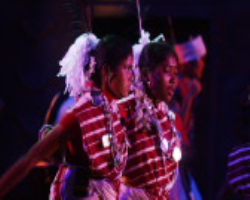
Headdresses: Woven cane chaplets adorned with the white and black tail feathers of the Great Indian Hornbill, dyed red goat hair, and wild boar tusks.
-
Necklaces: Multi-strand collars made of orange cornelian stones, natural river shells, marine conch sections, and heavy tubular brass beads.
-
Armlets and Leglets: Thick, polished brass armlets worn by men, paired with tightly bound white cotton leg-bands below the knees to highlight muscular agility during ceremonial war dances.
8. Religious Metamorphosis: From Animist Cosmology to Christianity
The Traditional Animistic Cosmology
Before the mid-20th century, Thangal spiritual life was rooted in an animistic, polytheistic cosmology that viewed nature as alive with conscious spirits.
-
The universe was populated by unseen spirits: sky deities, forest guardians (Eheing-mei), water spirits, and ancestral ghosts.
-
The Khunbu performed seasonal appeasement sacrifices at village boundary gates, mountain summits, and stone monoliths using fowls, pigs, or dogs to ward off illness and secure bountiful harvest rains.
-
Ancestor worship was central: departed kin were believed to watch over the lineage fields, rewarding righteousness and punishing customary violations.
The Christian Transformation
The mid-20th century brought a profound religious shift with the arrival of Christian missionaries (predominantly American Baptist missionaries followed later by Catholic missions).
The conversion to Christianity happened swiftly across the 1950s, 60s, and 70s. Today, nearly 98% to 100% of the Thangal population practices Christianity, with Baptist and Catholic churches anchoring village life.
+--------------------------------------------------------------------------+
|                  THE DUAL IMPACT OF RELIGIOUS CONVERSION                 |
+--------------------------------------------------------------------------+
|  ADVANTAGES & MODERNIZATION             LOSS OF CULTURAL HERITAGE        |
|  - Universal primary literacy           - Abandonment of the Morung      |
|  - Modern hygiene and healthcare        - Loss of animist ritual chants  |
|  - Eradication of opium use and head-   - End of "Feasts of Merit"       |
|    hunting vendettas                    - Destruction of old wooden      |
|  - Access to national education networks  totems and sacred megaliths    |
+--------------------------------------------------------------------------+
Today’s Thangal community balances these worlds: maintaining their Christian faith while actively working to revive their pre-Christian folk dances, weaves, musical instruments, and ancestral histories.
9. Traditional Festivals: The Rhythm of Agrarian Joy
Traditional festivals among the Thangal are timed around the agricultural seasons—celebrating forest clearance, sowing, weeding, and harvest.
       [ LOU-KHOI ]                          [ CHAK-NGI ]
(Spring Seed-Sowing Festival)          (The Post-Harvest Celebration)
             |                                       |
    PRAYER FOR GERMINATION                  COMMUNAL THANKSGIVING
             |                                       |
  Clearing field pathways;               Grand feasts of smoked meat;
  sanctifying heirloom seeds;             circle dances around bonfires;
   blessing mountain runoff.              youth wrestling and courting.
1. Lou-Khoi (The Sowing Festival)
Celebrated in spring before the first seeds hit the earth:
-
Village boundaries are ritually marked.
-
Villagers clear overgrown mountain trails, maintain community wells, and cleanse terraced plots.
2. Chak-Ngi / Post-Harvest Festival
The year’s most vibrant celebration occurs in late autumn or early winter, once granaries are filled with harvested golden paddy:
-
The Grand Feast: Every family contributes home-brewed rice beer, smoked pork, dried venison, and sticky rice cakes.
-
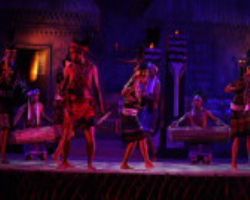
The Great Circle Dance (Lam): Men and women form massive concentric circles, performing stylized synchronized steps that mirror the flight of the hornbill, the sway of mountain bamboo in high winds, and the stalking rhythm of hunters.
-
Folk Music: Performances feature traditional wooden log drums, single-stringed fiddles, and bamboo mouth harps (Guh-she), accompanied by multi-part choral chanting where elders sing call-and-response verses with village youth.
10. Historical Encounters: The Anglo-Manipur War and Thangal General
The Thangal people have played a prominent role in the wider geopolitical history of the Manipur Kingdom and British colonial expansion. Their most celebrated historical figure is Thangal General (historically revered in Manipuri chronicles as one of the towering heroes of the late 19th century).
   [ Traditional Thangal Lineage ]
                 |
                 v
   [ Court of the Meitei Kings ]  --->  Rose through tactical brilliance
                 |                      to Supreme Military Commander
                 v
   [ Anglo-Manipur War of 1891 ]  --->  Led resistance against British forces;
                 |                      defended sovereignty at Kangla Fort
                 v
   [ Martyrdom on August 13, 1891 ] --> Publicly executed alongside Bir Tikendrajit;
                                        symbol of anti-colonial resistance
The Rise of Thangal General
Born in a Thangal village, this leader rose through personal valor, diplomatic skill, and tactical acumen to the highest echelons of the royal court of Manipur at Kangla. He served multiple kings, becoming a prime minister-level advisor, court general, and diplomat who bridged relations between the valley kingdom and northern hill tribes.
The 1891 Anti-Colonial Resistance
During the Anglo-Manipur War of 1891, when the British Empire moved to subjugate the sovereign Kingdom of Manipur, Thangal General—alongside Crown Prince Bir Tikendrajit—led armed resistance against the British military delegation:
-
He refused to capitulate to British imperial demands that threatened Manipur’s autonomy.
-
Following the escalation of conflict and the subsequent fall of Kangla Fort, Thangal General was captured by British forces.
-
On August 13, 1891, he was publicly hanged alongside Bir Tikendrajit at Pheidabung (now Bir Tikendrajit Park in Imphal).
11. Modern Challenges: Identity, Development, Land, and Survival
Despite their proud history, the Thangal face modern challenges that threaten their socio-economic stability and cultural continuity.
                            [ KEY CONTEMPORARY CHALLENGES ]
                                           |
    +------------------+-------------------+-------------------+------------------+
    |                  |                   |                   |                  |
    v                  v                   v                   v                  v
[ Demographic      [ Territorial        [ Educational &      [ Economic        [ Climate &
 Marginalization ]   Vulnerability ]      Health Gaps ]        Precarity ]       Ecology ]
  ~4k-7k people;     Caught between       Underfunded          Dependence on     Erratic monsoons;
  overshadowed in    regional ethnic      remote schools;      subsistence jhum; drying mountain
  electoral spheres  tensions & blocks    poor road links      limited youth jobs aquifers
1. Demographic Squeeze and Political Marginalization
With a total population estimated between 4,000 and 7,000, the Thangal are a numerically small community. In modern electoral politics, where representation often favors larger ethnic groups, small indigenous communities struggle for meaningful legislative representation:
-
They are frequently overshadowed by larger tribal neighbours in district-level political committees and state allocations.
-
Electoral boundaries place them in large constituencies where their voting power is diluted, making it difficult to elect a representative from their own community to the Manipur Legislative Assembly.
2. Strategic Highway Corridors and Territorial Vulnerability
The primary Thangal villages line the National Highway 2 (NH-2) corridor (the Imphal-Dimapur lifeline) and the surrounding foothills of Kangpokpi and Senapati.
While this highway provides transport access, it also exposes the community to geopolitical vulnerability during regional ethnic clashes, highway blockades, and political standoffs. The Thangal often find their village economies, transport links, and farmlands caught in territorial disputes between larger surrounding communities.

3. Infrastructure Deficits: Education, Healthcare, and Connectivity
While village primary schools exist, quality higher educational facilities are largely absent in the interior hills:
-
Education: Students must travel to Imphal, Senapati town, Shillong, or mainland Indian cities for competitive higher education, sparking a significant brain drain.
-
Healthcare: Interior villages lack well-equipped Primary Health Centres (PHCs). Expectant mothers and patients facing medical emergencies often face difficult journeys over damaged mountain roads to reach Imphal.
-
Roads: Interior link roads connecting remote village terraces to highway markets are frequently washed away by monsoon landslides, preventing farmers from selling their organic produce, ginger, and wild bamboo shoots at fair market prices.
4. Agro-Ecological Disruptions and Climate Change
Global climate shifts are impacting the fragile ecosystems of Manipur’s hill tracts:
-
Monsoon rains have turned erratic, causing dry spells during critical rice-planting months followed by unseasonal cloudbursts that destroy terrace walls.
-
Mountain springs (perennial streams) that have supplied drinking water to ridge-top villages for centuries are drying up due to regional deforestation, road construction, and shifting weather patterns.
12. Human Development Indicators and Modern Aspirations
| Metric / Dimension | Past Context (Pre-1970s) | Current Reality (2020s) | Future Aspirations |
| Literacy Rate | Low (<20%), oral culture | Substantially elevated (>75%) via Church and State schools | Advanced STEM, civil services, professional degrees |
| Primary Livelihood | Subsistence Jhum and wet-paddy terracing | Mixed farming, informal services, civil employment | Organic horticulture, food processing, eco-tourism |
| Healthcare Access | Traditional herbalists, high infant mortality | Rural Sub-Centres, dependence on Imphal hospitals | Fully equipped rural clinics, round-the-clock emergency care |
| Cultural Documentation | Living oral tradition, unwritten language | Latin script adoption, early vernacular literature | Digital archiving, school curriculum integration |
| Political Agency | Independent village republics (Khullakpa) | Autonomous District Councils, minority status | Direct legislative voice, dedicated tribal development funds |
Despite their small numbers, the Thangal demonstrate remarkable educational resilience. The community has produced respected educators, church administrators, university scholars, state civil servants, and social activists who work through organizations like the Thangal Naga Union (Thangal Union) and the Thangal Students’ Union.
Young Thangal scholars and media makers are using photography, digital archives, and cultural festivals to document their folk songs, record ancestral boundaries, and preserve their language for future generations.
13. The Path Forward: Preserving Heritage While Building Resilient Futures
Securing a sustainable future for the Thangal people requires balancing tradition and modern development:
                      [ HOLISTIC TRIBAL EMPOWERMENT ]
                                     |
    +--------------------------------+-------------------------------+
    |                                                                |
[ Cultural & Linguistic Protection ]              [ Socio-Economic Interventions ]
  - Mother-tongue primary education                 - Gravity-drip water networks
  - Digital archiving of oral epics                 - Cold storage for organic ginger/chillies
  - GI tags for authentic Thangal weaves            - Solar-powered rural health clinics
  - Protection of Thangal Surung heritage           - Autonomous council development funds
1. Linguistic Protection and Educational Institutionalization
To prevent the extinction of their language, mother-tongue primary education should be expanded. The state government, alongside tribal research institutes, should fund comprehensive Thangal dictionaries, phonological documentation, and vernacular learning materials.
2. Sustainable Agro-Enterprises and Market Access
The Thangal live on lands that naturally yield high-value organic produce:
-
King chillies, ginger, turmeric, and wild bamboo shoots could be processed locally through village-owned cooperatives.
-
Providing small-scale solar dehydration units, modern cold storage, and fair packaging networks along the NH-2 corridor would allow farmers to sell finished goods rather than cheap raw commodities.
3. Eco-Cultural Tourism Centred on Thangal Surung
The Thangal homeland offers rich potential for community-run eco-tourism:
-
The sacred cave of Thangal Surung, the megalithic stone sites, and surrounding mountain ridges can become low-impact cultural destinations.
-
Community-led tourism models ensure that economic revenues flow directly to village councils while protecting the sanctity of sacred sites.
4. Legal and Constitutional Safeguards for Micro-Tribes
India’s tribal development policy must recognize that “micro-tribes”—communities with populations under 10,000—face distinct vulnerabilities compared to larger groups:
-
The central and state governments should introduce special development packages tailored for numerically small indigenous groups.
-
Dedicated funding should target local road connectivity, primary healthcare infrastructure, and heritage preservation to protect their unique voice in the region’s cultural fabric.
