
Introduction: The Living Ancestors of Modern Humanity
Thank you for reading this post, don't forget to subscribe!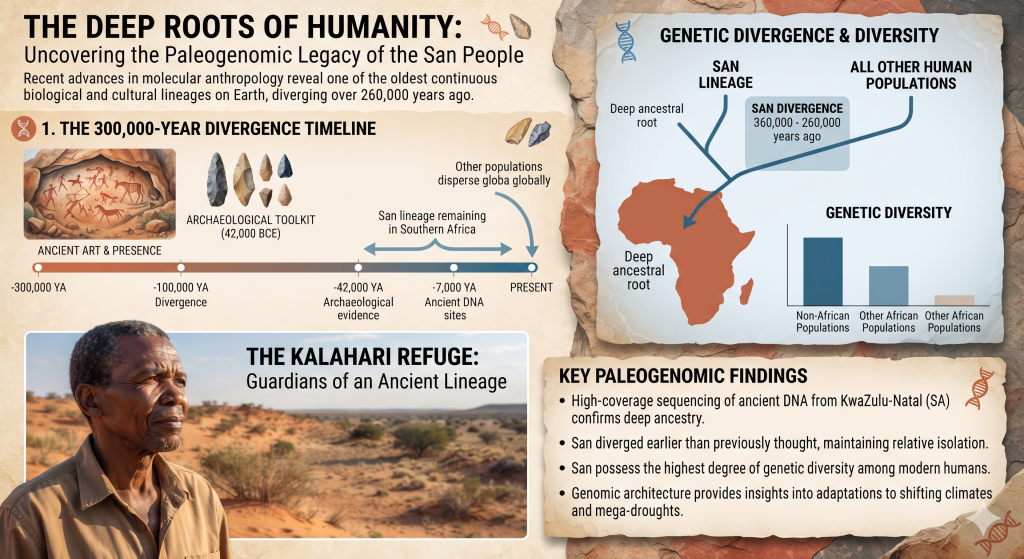
Deep within the arid expanses and fossil-rich dunefields of the Kalahari Desert, a small-statured, highly resilient group of people has preserved a lineage that stretches back to the dawn of anatomically modern humans (Homo sapiens). The San people—historically and colloquially referred to by outsiders as “Bushmen,” an exonym carrying colonial baggage—represent one of the oldest continuous cultural and biological lineages on Earth. While popular culture often reduces indigenous tribes to static, romanticized tropes of primitive survival, recent breakthroughs in paleogenomics, archaeobotany, and linguistic evolution reveal a vastly more complex reality. The San are master ecological engineers, possessors of intricate medicinal pharmacopeias, and the creators of some of the world’s most breathtaking prehistoric rock art. This comprehensive examination dives deep into peer-reviewed anthropological studies, genetic markers, and historical texts to uncover the unseen layers of San history, physiology, societal structures, and ongoing modern struggles.
1. Deep Roots and Paleogenomics:
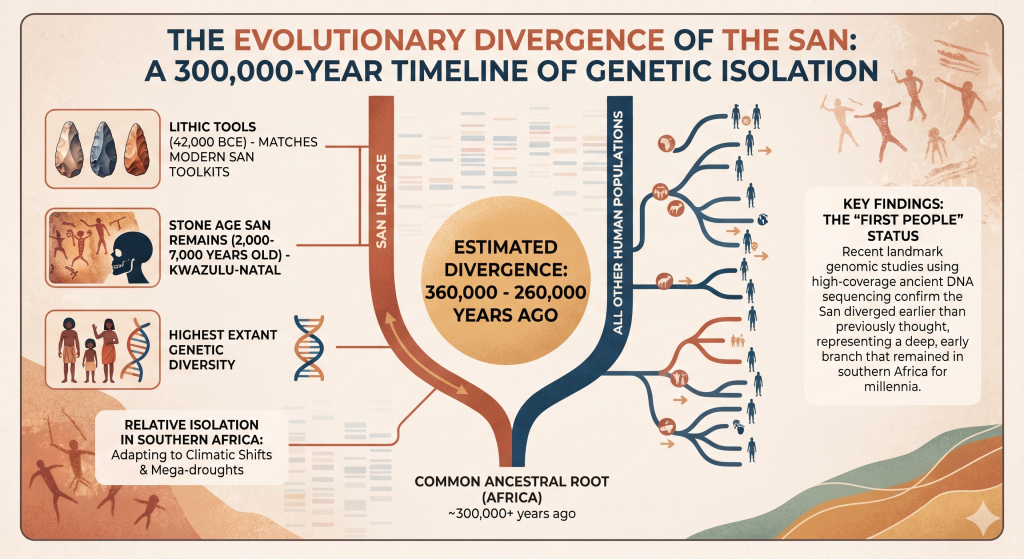
The Evolutionary Divergence of the SanRecent advances in molecular anthropology have transformed our understanding of human migration out of Africa and the internal lineage splits of early populations. According to landmark genomic studies published in journals such as Science and Nature Communications, the ancestors of the San diverged from other human populations earlier than previously imagined. The 300,000-Year Divergence TimelineHigh-coverage sequencing of ancient DNA extracted from Stone Age San remains in sites like KwaZulu-Natal, South Africa (dating back approximately 2,000 to 7,000 years, alongside even older archaeological lithic tools matching modern San toolkits dating to 42,000 BCE) has provided startling clarity:Genetic Divergence: Geneticists estimate that the San lineage diverged from all other human lineages between 360,000 and 260,000 years ago.
This means that the genetic architecture harbored within San populations contains a higher degree of genetic diversity than any other human group on the planet. The “First People” Status: While all modern humans share a common ancestral root in Africa, the San lineage represents a deep, early branch that remained relatively isolated in southern Africa for millennia, adapting successfully to shifting climatic phases, glaciations, and mega-droughts.
2. Demographics, Linguistic Diversity, and the Clicks of the Kx’a and Tuu Families
Popular imagination often lumps all San groups into a monolithic entity. In reality, the term “San” is a broad umbrella covering multiple distinct ethnolinguistic groups scattered across Botswana, Namibia, South Africa, Angola, Zambia, and Zimbabwe. Statistical Breakdown of Modern San PopulationsContemporary demographic estimates place the total global population of individuals identifying as San or bearing direct San heritage at approximately 130,000 to 160,000 individuals distributed across Southern Africa:
| Country | Estimated Population | Primary Tribal Groups / Sub-groups |
| Namibia | ~71,201 (2023 Census data) | !Kung, Ju/’hoansi, Haiǁom, Naro |
| Botswana | ~63,500 | Gana, Gwi, Kua, !Xóõ |
| South Africa | ~10,000 to 15,000 | ǂKhomani, !Xam (descendants), Khwe |
| Angola & Zimbabwe | ~5,000 combined | !Kung, Tswa, various marginalized foragers |
The Acoustic Architecture of Khoisan LanguagesPerhaps the most striking cultural marker of the San is their language families—primarily Kx’a, Tuu, and Khoe—which feature iconic click consonants. Linguists have identified up to five basic click types (dental, alveolar, palatal, lateral, and retroflex/kiss clicks), produced using distinct combinations of tongue and airflow mechanics. Phonetic studies show that these languages utilize over 100 distinct phonemes, making them among the most acoustically complex linguistic systems utilized by humans. Sadly, many southern dialects—such as |Xam—are now “sleeping” or extinct languages, preserved only through 19th-century colonial transcripts like the monumental Wilhelm Bleek and Lucy Lloyd archives.
3. Traditional Subsistence, Botanical Mastery, and Environmental Adaptations
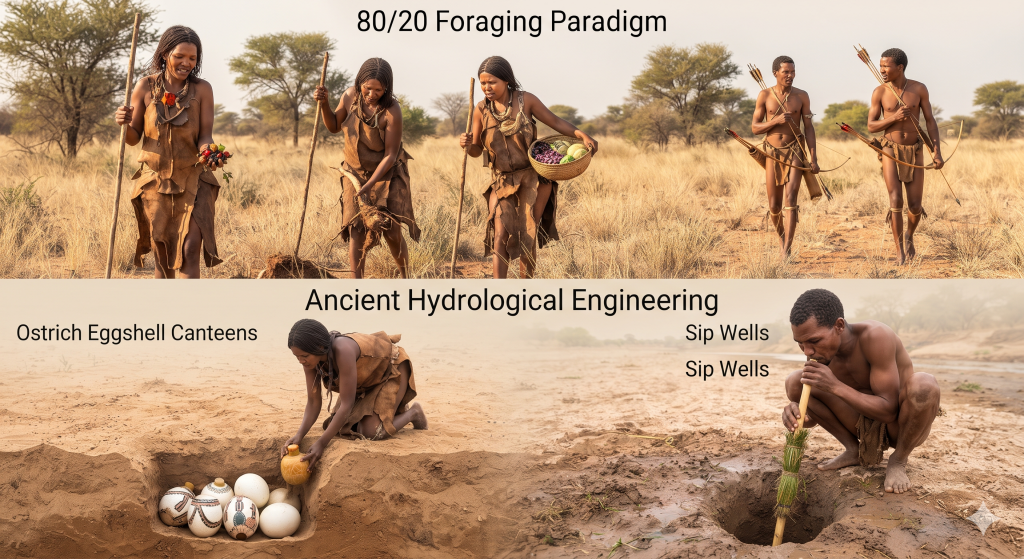
Survival in the Kalahari—a semi-arid sandy savanna where surface water vanishes for months—requires an encyclopedia-level understanding of botany and hydrology. The 80/20 Foraging ParadigmContrary to the “man-the-hunter” bias prevalent in 20th-century anthropology, ethnographic research demonstrates that San society is fundamentally sustained by gathering:
Women’s Economic Contribution: San women provide approximately 75% to 80% of the daily caloric intake through gathering wild tubers, roots, morama beans, tsamma melons, and nutrient-dense berries.
Ancient Hydrological Engineering: Ostrich Eggshells and Sip WellsWater scarcity inspired remarkable technological adaptations
Ostrich Eggshell Canteens: During rainy seasons, San groups fill hollowed-out ostrich eggshells with water, seal them with beeswax, and bury them in strategic cache sites across the desert. These served as portable, underground water reservoirs during multi-month droughts.
Sip Wells: When surface water is entirely absent, a San gatherer digs a deep shaft into dry riverbeds where subsurface moisture lingers, inserts a hollow reed wrapped in grass filtration bundles, and sucks moisture upward into the mouth—a sophisticated low-tech filtration system.
4. Egalitarianism, Consensus Governance, and Social Structure
Long before Western political philosophers conceptualized egalitarian social contracts, the San practiced a deeply rooted egalitarianism that governed every facet of daily life. Absence of Centralized ChiefsTraditional San bands do not recognize hereditary chiefs, kings, or coercive authorities.
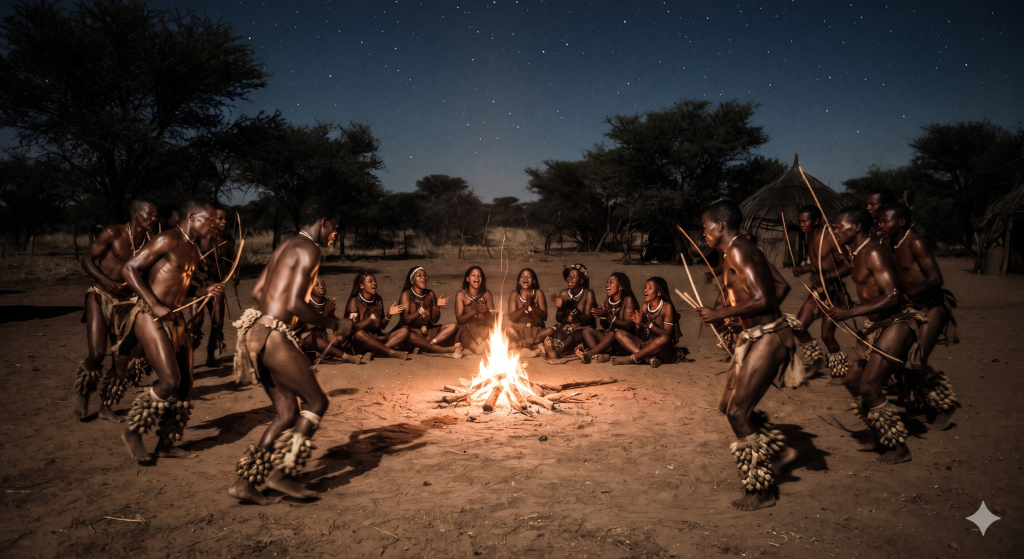
Leadership is situational: Task-Specific Guidance: An individual experienced in tracking leads the hunt; a woman with deep botanical knowledge leads gathering expeditions. Conflict Resolution via Consensus: Disputes are resolved through long, circular communal discussions around evening campfires. Decisions require total consensus, preventing the concentration of power in any single individual.
The Gift Economy: Demand-Sharing and Egalitarian LevellingTo prevent hoarding and mitigate the risks of a volatile desert environment, the San enforce a strict gift-sharing economy (known in Ju/’hoansi as hxaro).When a hunter successfully kills a large animal, the meat does not belong to him; it belongs to the community. Anthropologists have documented insulting the meat—where hunters mock a magnificent kill as scrawny and worthless—as a deliberate cultural mechanism of egalitarian levelling to curb individual arrogance and enforce humility.
5. Trance Dances, Shamanism, and Rock Art Epistemology
The spiritual life of the San is woven directly into their perception of the cosmos, accessed through altered states of consciousness and immortalized on sandstone cliffs.
The Healing Dance (KIA)
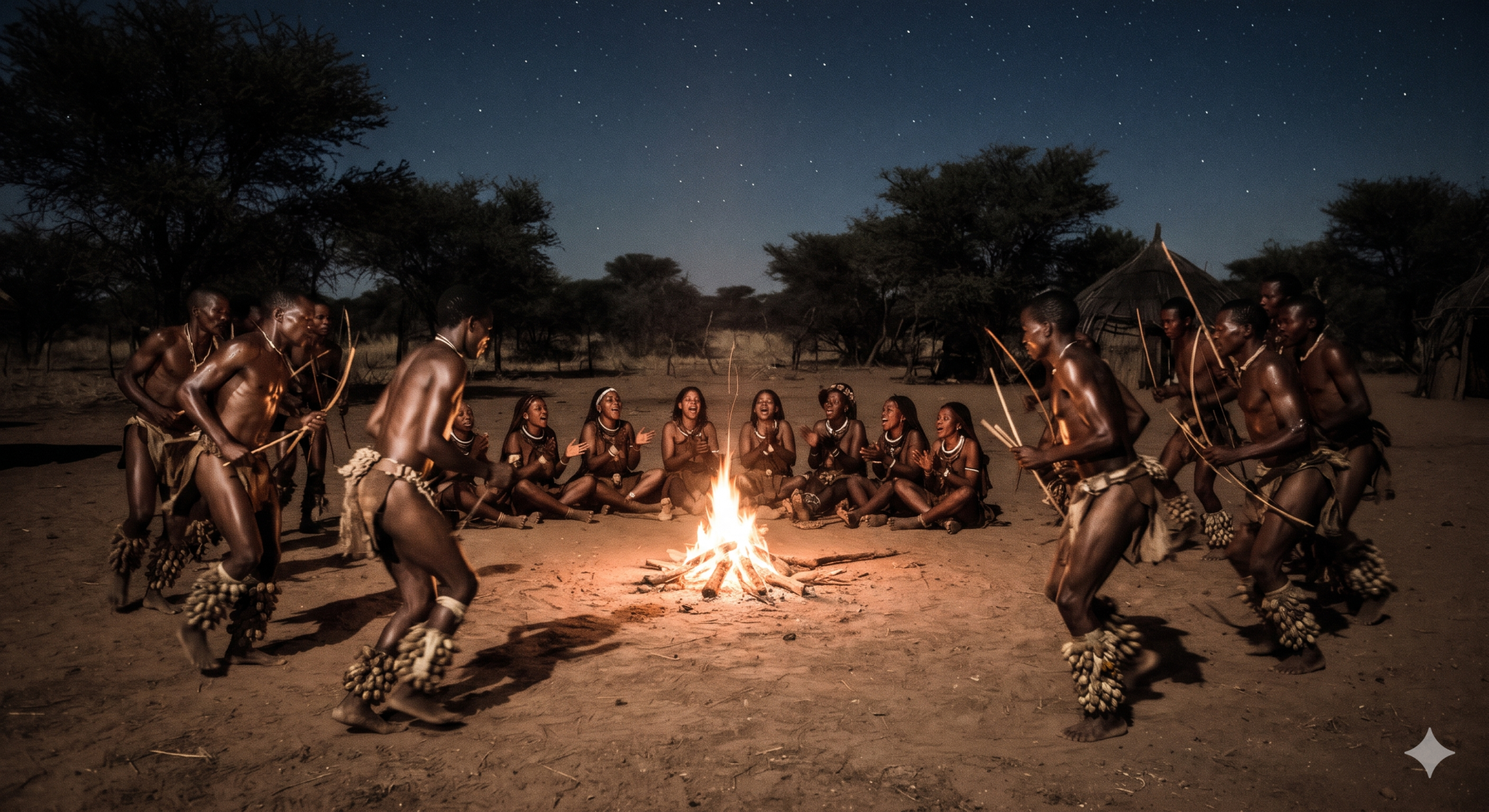
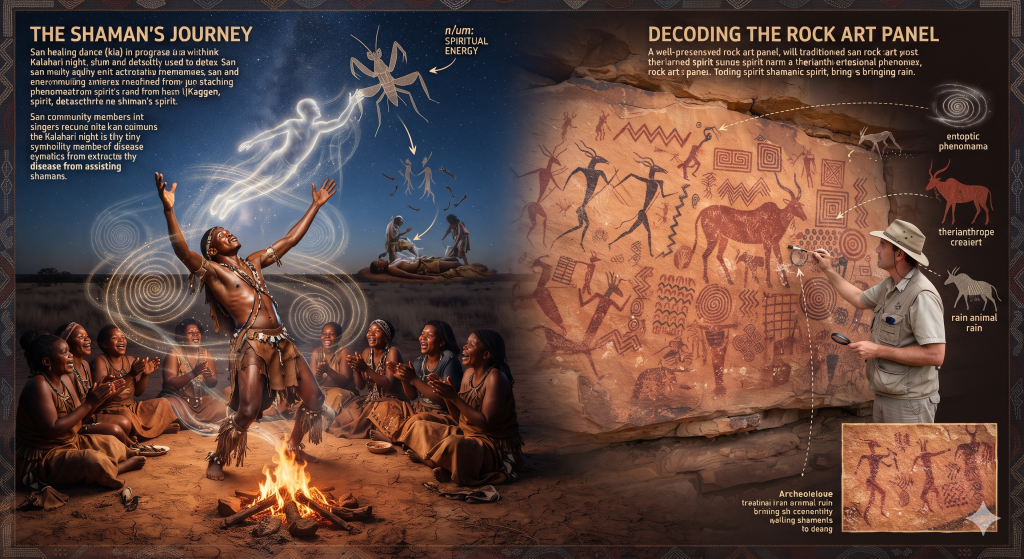
The central religious ritual of many San groups is the healing dance (kia), performed regularly throughout the year.Women sit around the fire singing rhythmic polyphonic songs and clapping, while men dance in circles around them stamping rattles.
Through hyperventilation and rhythmic movement, shamans enter a deep trance state to harness n/um (spiritual energy).In this state, shamans believe they leave their bodies to ascend to the spirit world, interceding with the creator god (ǀKaggen, the Mantis) to heal sickness, extract malevolent arrows of disease, and bring rain.
Decoding the Rock Art Pane
lSouthern Africa contains tens of thousands of rock art sites. Far from being simple hunting tallies, neuro-psychological research by scholars like David Lewis-Williams shows that these paintings depict entoptic phenomena (geometric patterns seen during neurological trances) and the spiritual transformations experienced by shamans during healing dances.
6. Historical Marginalization: Displacement, Encroachment, and Survival
The historical trajectory of the San is a tragic narrative of systematic displacement, marginalization, and colonial violence. The Three-Frontier Squeeze
1. The Bantu Expansion: Beginning roughly 2,000 years ago, iron-using agriculturalists and pastoralists migrated southwards from West/Central Africa, pushing San foragers out of fertile river valleys and into marginal arid zones.
2. European Colonial Eras: With the arrival of Dutch settlers in 1652 and subsequent British expansion, the San faced devastating commando raids, enslavement, and state-sanctioned extermination campaigns in the Cape Colony. Bounties were placed on San hunters, drastically shrinking their ancestral hunting grounds.
3. Modern Nation-State Encroachment: In post-colonial Botswana and Namibia, traditional nomadic migration routes have been bisected by wildlife conservation parks, diamond mining concessions, and cattle ranches, leading to intense legal and physical conflicts over ancestral land rights.

7. Intellectual Property Rights and Modern Bio-Prospecting
A defining chapter in modern indigenous rights involves the San people’s fight against biopiracy and their breakthrough intellectual property victories.
The Hoodia Gordonii Case
For generations, San hunters chewed the succulent stems of the Hoodia gordonii cactus to suppress hunger and thirst during long desert treks.
Following intense international advocacy, the San Council signed a historic benefit-sharing agreement in 2003, establishing a precedent for indigenous intellectual property rights over traditional botanical knowledge.
Conclusion: Preserving an Unrivaled Human Heritage
The San people are far more than relics of a bygone Stone Age; they are dynamic contemporary citizens navigating the complexities of the 21st century while guarding a biological and cultural heritage that belongs to all of humanity. Their profound ecological wisdom, radical egalitarianism, and ancient genomic lineage remind us of the deep roots of our shared species.
Safeguarding their lands, linguistic traditions, and human rights is not merely a matter of historical justice—it is an essential preservation of human diversity itself.
