
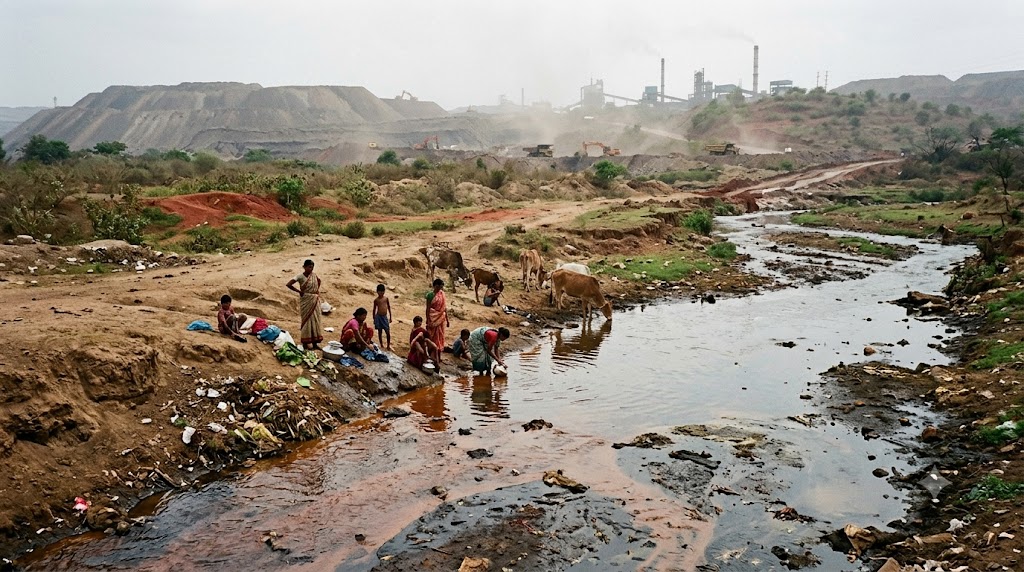
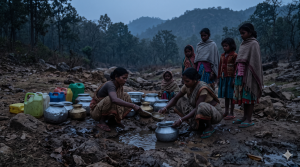
Thirst in the Forest of Rivers: The Enduring Water Crisis in Tribal Villages
The Paradox of Plenty: Dawn in an Adivasi Hamlet
Before learning about the water crisis in tribal villages, we need to go back a bit. Long before the sun breaks over the sal-forested ridges of the Chota Nagpur Plateau or illuminates the basalt escarpments of Maharashtra’s Western Ghats, a familiar, metallic cadence echoes through the mist. It is the hollow clatter of empty aluminium pots, brass vessels, and discarded plastic jerrycans knocking against one another.
Across thousands of indigenous settlements—known locally as paras, tolas, falias, or padas—the rhythm of daily life is not dictated by the rising sun, school bells, or farming schedules. An exhausting, high-stakes quest dictates it: the search for water.
In the tribal hamlets of Jharkhand, Odisha, Chhattisgarh, Madhya Pradesh, Maharashtra, and Rajasthan, women and young girls step into the predawn chill. They walk barefoot or in thin rubber slippers down precipitous, boulder-strewn paths toward seasonal ravines, drying riverbeds, or muddy depression springs known as chuans and jharnas. There, they wait for hours as cloudy water seeps sluggishly through grains of sand, ladling it out spoonful by spoonful into their containers. If they arrive late, the seepage is exhausted, leaving behind only trodden mud churned by cattle and wild boar.
This routine unfolds more than seventy-five years after India achieved independence. Over seven and a half decades of five-year plans, national rural drinking water missions, multi-billion-rupee infrastructure outlays, and ambitious administrative deadlines have come and gone. Yet, India’s indigenous peoples—the Scheduled Tribes (Adivasis), who constitute roughly 8.6% of the national population, or over 104 million citizens—remain trapped in a profound developmental contradiction.
Their ancestral homelands serve as the primary ecological catchments for peninsular India’s greatest river systems: the Narmada, Tapti, Mahanadi, Godavari, Krishna, and Damodar. Their forests regulate monsoonal rainfall, and their hills house the mineral resources fueling urban industrial growth. Yet, the people who preserve these watersheds are consistently the thirstiest citizens in the republic.
Understanding this crisis requires exploring the full extent of indigenous water needs—not merely for biological survival, but for domestic dignity, pastoral ecosystems, subsistence agriculture, forest economies, and seasonal employment—and evaluating the gulf between official policy pronouncements and lived village realities.
The Geography of Exclusion: Where Water Insecurity Deepens
The tribal landscape of India is not uniform, but across its diverse topographies, water scarcity manifests with alarming consistency. The crisis spans several distinct agro-ecological and cultural zones:
Geographic Zone |
Key States / Regions |
Core Hydro-Geological Challenge |
Central Tribal Belt |
Jharkhand, Odisha, Chhattisgarh, MP |
Hard-rock aquifers, rapid monsoon run-off, industrial mining contamination |
Western Deccan & Escarpments |
Maharashtra (Palghar, Melghat), Gujarat |
Basalt plateaus, zero water retention, acute dry-season depletion, tanker dependence |
Southern Hill Pockets |
Kerala (Attappady, Wayanad), Tamil Nadu (Jawadhu Hills), Andhra (Araku) |
Plantation runoff, drying perennial springs, fragmented stream systems |
Eastern Highlands & Chota Nagpur |
Southern Odisha (KBK belt), Purulia (WB), Santhal Parganas |
Deforestation, surface runoff, severe summer drought, drying step-wells |
1. The Central Indian Hard-Rock Bastion
Comprising the plateaued interiors of Jharkhand, Chhattisgarh, Odisha, and Madhya Pradesh, this vast landscape is underlain by crystalline granite and gneiss formations. Unlike the deep alluvial aquifers of the Indo-Gangetic plains, where subterranean water can be tapped through tubewells, hard-rock aquifers store limited groundwater in shallow, weathered fractures.
Rainfall here is often torrential during the four monsoon months, but undulating topography and depleted forest sponges cause up to 80% of precipitation to run off rapidly into downstream rivers, leaving the uplands dry within weeks of the monsoon’s departure.
2. The Western Ghats and Deccan Fractures
In districts like Palghar, Nashik, Nandurbar, and Gadchiroli in Maharashtra, and the Dangs in Gujarat, tribal villages sit atop Deccan trap basalt. These plateaus receive heavy seasonal rainfall—often exceeding 2,000 millimeters—yet face severe water shortages as early as February.
The basalt layers prevent water infiltration, causing mountain streams to dry up rapidly. Despite their proximity to metropolitan industrial corridors and reservoirs supplying water to Mumbai and Pune, tribal hamlets rely on emergency water tankers or descend hundreds of meters into valleys to carry water uphill.
3. The Eastern Ghats and Southern Highlands
From the Kondh, Paroja, and Bonda lands of the Koraput-Balangir-Kalahandi (KBK) belt in Odisha to the Irula and Kurumba settlements in the Nilgiris and Attappady valley, steep terrain accelerates runoff.
Deforestation and monoculture cash-crop plantations have disrupted natural spring hydrology, drying up the perennial mountain springs (dharas) that supplied clean drinking water for centuries.
The Spectrum of Tribal Water Needs: Beyond Mere Survival
When state planners compute rural water requirements, they frequently rely on narrow calculations: liters per capita per day (lpcd) for basic drinking and domestic cooking. The Jal Jeevan Mission (JJM), for instance, sets a service delivery target of 55 lpcd per person.
However, within tribal socio-ecological systems, water is not a compartmentalised utility piped into an isolated kitchen sink. It is the fundamental foundation of life, livelihood, culture, and communal survival.
TRIBAL WATER REQUIREMENTS SPECTRUM |
|||
DOMESTIC LIFE |
PASTORAL HERDS |
AGRO-FORESTRY |
SANITATION/HEALTH |
Hydration |
Bullocks / Plough Stock |
Millets / Paddy |
Personal hygiene |
Cooking |
- Goats, Sheep, Poultry |
NTFP Processing |
Menstrual health |
Bathing/Washing |
30-50 L/head/day |
Kitchen gardens |
Disease prevention |
(Target: 55 lpcd) |
(Vital asset base) |
(Subsistence base) |
(Waterborne threats) |
(Lived: 10-15 lpcd) |
|||
1. Domestic Life, Nutrition, and the Caloric Cost of Fetching Water
At the most basic biological level, a human requires safe water for hydration, food preparation, and personal cleanliness. In tribal areas, dietary staples such as millets (ragi, kodo, kutki), unpolished indigenous rice, pulses, and wild forest tubers require significant water for washing, boiling, and simmering.
When water is scarce, cooking practices alter drastically:
-
Families cut meals from three to one or two daily.
-
Pulses and tubers are boiled inadequately, leaving starches indigestible.
-
Vegetables and utensils are left unwashed, creating breeding grounds for enteric bacteria.
The World Health Organization (WHO) benchmarks intermediate water access at 50 to 100 liters per person per day to ensure basic health and hygiene. In arid tribal hamlets during the summer months, actual daily availability drops to 10 to 15 liters per person—a level classified as emergency survival rationing.
Furthermore, fetching water carries an enormous caloric cost. In hilly regions like the Jawadhu Hills of Tamil Nadu or the forested slopes of Melghat in Maharashtra, an Adivasi woman often makes four to six round trips daily to a water source located one to three kilometers away, navigating elevation changes of 100 to 300 meters while balancing two to three vessels weighing 15 to 25 kilograms on her head.
Physiological studies demonstrate that carrying such loads under high ambient temperatures burns between 600 and 1,000 calories daily—up to a third of a rural labourer’s daily energy intake. In communities experiencing persistent undernutrition, this expenditure contributes to chronic energy deficiencies, anaemia, and premature physical wear.
2. The Gender Burden: The Heavy Toll on Women and Girls
The water crisis in tribal India is experienced disproportionately by women and adolescent girls, who shoulder the domestic responsibility of sourcing water.
Impact Dimension |
Lived Consequence for Tribal Women and Girls |
Time Poverty |
4 to 6 hours daily spent traveling and waiting; eliminates rest and adult education |
Physical Pathology |
Cervical spondylosis, chronic spinal compression, pelvic organ prolapse, knee wear |
Educational Deprivation |
High dropout rates for girls aged 10-16; morning water duties prevent school attendance |
Psychological Stress |
Chronic anxiety over well drying, physical harassment along isolated pathways |
Extreme Social Adjustments |
Emergence of "Paani Bai" practices in water-scarce arid zones |
In the arid western fringes of Maharashtra, particularly in parts of Nashik and Thane districts, the water crisis gave rise to the phenomenon of “Paani Bai” (Water Wives). In these villages, men enter polygamous unions primarily so an additional wife can manage the logistical burden of fetching water from distant, drying wells. While informal and legally unrecognized, these arrangements highlight the severe social costs imposed by water scarcity.
For young girls, water collection creates an educational barrier:
-
When a family relies on water collection that takes several hours each morning, adolescent daughters are held back from school to assist.
-
Data across tribal education corridors indicates that female secondary school dropouts peak precisely when local water sources dry up between February and June.
-
Water scarcity also undermines menstrual hygiene. Without private washing facilities or adequate water for laundering reusable cloths, adolescent girls often skip school, isolate themselves in unhygienic conditions, and suffer recurrent reproductive tract infections.
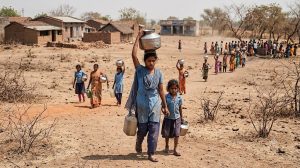
3. Pastoral and Livestock Ecosystems: Sustaining Tribal Capital
In tribal economies, livestock are not secondary agricultural assets; they represent an essential form of insurance and mobile capital.
Indigenous communities depend on indigenous cattle varieties for draught power, manure, and field preparation. Goats, sheep, and backyard poultry provide essential disposable income during medical emergencies or lean agricultural seasons.
       [ WATER SCARCITY IN TRIBAL PASTORAL SYSTEMS ]
                            |
       +--------------------+--------------------+
       |                                         |
       v                                         v
[ DIRECT DEHYDRATION & LOSS ]            [ DISTRESS ASSET SALES ]
- Cow / Bullock: 30-50 L/day required    - Cattle sold at 20-30% of true value
- Goat / Sheep: 4-8 L/day required       - Local slaughter markets flooded
- Milk yields fall by 60-80%             - Depletes household resilience buffer
- High calf & kid mortality              - Deepens rural debt and bondage
A mature indigenous cow or bullock requires between 30 and 50 liters of water daily, while sheep and goats need 4 to 8 liters. During summer months, when community ponds dry into cracked silt beds, providing water for livestock becomes nearly impossible.
Village wells are reserved for drinking, and pastoralists are often barred from drawing domestic water for their herds. Consequently:
-
Milk production declines by 60% to 80%, reducing protein intake for nursing mothers and young children.
-
Weakened livestock succumb to heat stress and opportunistic waterborne infections like hemorrhagic septicemia.
-
In severe droughts, families sell their livestock to middlemen at heavily discounted prices, eroding their economic resilience and driving them into debt.
4. Agrarian Livelihoods: The Trap of Single-Crop Agriculture
Tribal farmers cultivate undulating terrain, steep hillsides, and marginal plots characterized by shallow, gravelly soils with low water-retention capacity. The primary agrarian water requirement is supplementary irrigation to stabilize subsistence food crops.
+------------------------------------+-------------------------------------------+----------------------------------------------+
| Crop Type                          | Ecological Water Dynamic                  | Vulnerability to Water Gaps                  |
+------------------------------------+-------------------------------------------+----------------------------------------------+
| Indigenous Rain-fed Millets        | Resilient to moderate drought; requires   | Prolonged 3-week monsoonal dry spells cause   |
| (Finger/Ragi, Kodo, Kutki)         | steady early moisture for root anchoring  | complete panicle failure and yield loss      |
+------------------------------------+-------------------------------------------+----------------------------------------------+
| Highland Upland Paddy              | High transpirational demand; requires     | Lack of supplementary flow during flowering   |
| (Gora Dhan, indigenous varieties)  | saturated topsoil during booting phase    | leads to chaffy, empty grains                |
+------------------------------------+-------------------------------------------+----------------------------------------------+
| Winter Pulses & Oilseeds           | Requires 1-2 rounds of winter moisture    | Complete absence of post-monsoon irrigation  |
| (Horse gram, Niger, Mustard)       | to survive beyond December                | leaves fields barren for 7 months             |
+------------------------------------+-------------------------------------------+----------------------------------------------+
Nationally, gross irrigated area hovers near 50%, but in Scheduled Areas (governed by the Fifth and Sixth Schedules of the Indian Constitution), less than 15% to 20% of cultivated land has assured irrigation.
Most tribal farmers practice single-crop agriculture (kharif), depending entirely on the seasonal monsoon. When monsoon rains pause for two to three weeks during the critical flowering stage, crops can fail entirely due to a lack of micro-irrigation, farm ponds, or check-dam infrastructure.
          [ RAINFALL DEFICIT / NO IRRIGATION INFRASTRUCTURE ]
                                  |
                                  v
                    [ COMPLETE KHARIF CROP FAILURE ]
                                  |
                                  v
                   [ WINTER CROPPING IMPOSSIBLE ]
                   (Fields barren Dec - June; zero yield)
                                  |
                                  v
              [ HOUSEHOLD FOOD STOCKS DEPLETED BY MARCH ]
                                  |
                                  v
             ============================================
             FORCED SEASONAL DISTRESS MIGRATION OCCURS
             ============================================
Once the kharif harvest concludes in November, vast stretches of tribal agricultural land lie fallow for seven months. Cultivating winter (rabi) crops—such as mustard, chickpea, or vegetables—is impossible without access to irrigation or managed aquifers.
This agricultural pause cuts off local food production and employment, driving families into debt cycles that push them out of their ancestral homes.
5. Forest Economies and Non-Timber Forest Products (NTFPs)
The tribal economy is closely tied to forest ecosystems. Non-Timber Forest Products (NTFPs) account for 20% to 40% of annual household income across Central and Eastern India. Yet, processing these forest resources depends heavily on accessible water:
Forest Resource / NTFP |
Water Requirement in Processing |
Economic Impact of Water Scarcity |
Mahua Flowers & Seeds (*Madhuca longifolia*) |
Washing, distillation, and cooling; seed processing for edible cooking oil (*tora*) |
Flowers spoil; distillation halts, forcing raw sales at depressed rates |
Tendu Leaf Bundles (*Diospyros melanoxylon*) |
Hydrating bundles before sorting, sun curing, and binding for bidi manufacturing |
Brittle leaves crack and are rejected by forest department collection centers |
Natural Lac & Resins (*Kerria lacca*) |
Washing sticklac to separate resin from crushed bug bodies, wood fragments, and yellow dye compounds |
Crushed raw lac ferments and degrades, reducing grading value by up to 50% |
Wild Sabai Grass & Bamboo |
Soaking stalks in water pits to soften cellulose fibers prior to twisting, weaving, or splitting |
Fiber remains brittle, preventing weaving into ropes, baskets, or mats |
When local water bodies dry up, forest processing slows or halts entirely. Adivasi collectors are forced to sell unprocessed raw materials to private traders and intermediaries for low prices, missing out on the value added through processing.
The Migration Funnel: How Dry Wells Drive Displacement
The water crisis in tribal India is not solely an environmental challenge; it directly drives forced, seasonal displacement. When groundwater levels fall and local water bodies dry up by mid-winter, a predictable demographic shift occurs:
DECEMBER: WATER RETREATS |
DECEMBER: WATER RETREATS |
FEBRUARY: WELLS RUN DRY |
URBAN INFORMAL DESTINATIONS |
Rivers turn to pebble beds |
Rivers turn to pebble beds |
Women spend 5 hrs/day fetching |
Unregulated brick kilns |
Soil moisture drops to zero |
Soil moisture drops to zero |
Water rationed to 10 lpcd |
High-rise construction sites |
Rabi planting abandoned |
Rabi planting abandoned |
Cattle sold off cheaply |
Hazardous quarrying pits |
From the Kolhan and Santhal Parganas divisions of Jharkhand, the KBK districts of Odisha, the Jhabua and Alirajpur belts of Madhya Pradesh, and the southern tribal ridges of Rajasthan, millions of indigenous people leave their homes every spring.
Whole families board unreserved train compartments and cramped trucks headed for industrial hubs like Surat, Ahmedabad, Hyderabad, Bengaluru, Mumbai, and Delhi NCR.
At these destinations, they enter precarious positions in the informal economy:
-
In brick kilns across Uttar Pradesh, Haryana, and Andhra Pradesh, families work 14-hour days under intense heat.
-
Ironically, these workers are tasked with manufacturing bricks that consume millions of liters of water daily, while their own living quarters lack running water or basic sanitation.
-
Back in their home villages, schools empty out, village councils lose quorum, and older community members are left alone in depopulated settlements, struggling daily to secure water.
This cyclical migration is not an act of economic mobility; it is an annual coping mechanism driven by local water collapse.
Water Quality: The Threat of Hidden Toxins
In conversations about the tribal water crisis, the primary focus is often on physical scarcity. Yet, water quality presents an equally urgent crisis. Where water is available, it is often contaminated with dangerous pathogens and chemical toxins.
THE DUAL BURDEN OF WATER CONTAMINATION |
|
CHEMICAL CONTAMINATION |
PATHOGENIC POLLUTION |
Fluorosis: Crippled limbs, dental decay |
Cholera and dysentery |
Arsenicosis: Skin lesions, internal organ cancers |
Typhoid and parasitic worms |
Heavy Metals: Lead, cadmium, acid mine drainage |
Acute Diarrhoeal Disease (ADD) |
1. The Fluoride and Arsenic Crisis
Large sections of India’s tribal belt rest on bedrock rich in fluoride-bearing minerals like fluorite, apatite, and hornblende. As groundwater levels drop due to heavy extraction, deep tubewells reach deeper geological layers, drawing up water with elevated concentrations of dissolved fluoride.
According to Ministry of Jal Shakti data, thousands of tribal habitations are afflicted by excess fluoride (above the permissible limit of 1.5 mg/L):
-
In districts like Nuapada (Odisha), Bastar (Chhattisgarh), and Dhar and Jhabua (Madhya Pradesh), endemic fluorosis has altered local demographics.
-
Children develop severe dental fluorosis—characterized by pitted, discolored teeth—and painful skeletal fluorosis, which deforms leg bones (knock-knees or genu valgum) and fuses spinal vertebrae.
-
In parts of the Santhal Parganas and tribal patches of Malda and Murshidabad along the Bengal-Jharkhand border, deeper aquifers yield water with dangerous concentrations of arsenic (exceeding 0.01 mg/L), leading to chronic arsenicosis, skin hyperkeratosis, painful lesions, and increased rates of internal cancers.
State / Region |
District Hotspots |
Primary Contaminants |
Primary Health Manifestations |
Madhya Pradesh |
Jhabua, Dhar, Seoni |
Fluoride, Nitrate |
Skeletal fluorosis, crippling disorders, early physical debility |
Odisha |
Nuapada, Bolangir, Keonjhar |
Fluoride, Iron, Chromium |
Dental decay, liver toxicity, digestive disorders, early physical debility |
Jharkhand |
West Singhbhum, Dhanbad |
Arsenic, Heavy Metals, Acid Mine Runoff |
Skin lesions, kidney dysfunction, high infant mortality, chronic diarrhea |
Chhattisgarh |
Korba, Bastar, Kanker |
Fluoride, Coal Slurry, Heavy Suspended Solids |
Bone deformities, neurological fatigue,recurrent waterborne infections |
2. Pathogenic Pollution and Mining Runoff
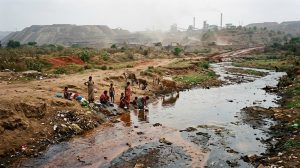
Where deep groundwater is unavailable or contaminated, communities turn to surface sources: shallow open wells, unlined ponds, and slow-moving streams.
These shared surface pools serve multiple competing purposes—bathing, washing clothes, watering livestock, and domestic drinking. As a result:
-
Health facilities serving tribal regions report high rates of gastrointestinal disease, particularly during the early monsoon when surface runoff sweeps organic waste and agricultural residues directly into shallow drinking pools.
-
In industrial mining corridors—such as the bauxite plateaus of Koraput, the iron ore ranges of Keonjhar, and the open-cast coal basins of Korba and Dhanbad—run-off from processing plants and overburden dumps discharges heavy metals and toxic sediments directly into downstream tributaries, turning clear waterways into turbid red or black slurry.
Evaluating Policy Interventions: Promises Versus Realities
Successive governments have recognized rural water access as an administrative priority. A review of major policy initiatives over recent decades shows an evolving strategic approach:
Historical Policy / Initiative |
Operational Period |
Primary Strategic Objective |
Accelerated Rural Water Supply Programme (ARWSP) |
Launched 1972 |
Basic provision via public community handpumps (e.g., India Mark II) in drought-prone areas |
Rajiv Gandhi National Drinking Water Mission (RGNDWM) |
Restructured 1991 |
Focus on water quality, scientific aquifer mapping,and community awareness |
National Rural Drinking Water Programme (NRDWP) |
2009 – 2019 |
Shifted focus to basic sustainability, decentralized management, and piped water access |
Jal Jeevan Mission (JJM) "Har Ghar Jal" |
2019 – Present |
Universal coverage through Functional Household Tap Connections (FHTC) providing 55 lpcd |
1. The Jal Jeevan Mission (JJM): Assessing Progress on the Ground
Launched in August 2019, the Jal Jeevan Mission set an ambitious goal: providing every rural household with a Functional Household Tap Connection (FHTC) delivering 55 liters of safe water per capita daily.
Official monitoring dashboards highlight historic logistical progress, reporting that national rural tap water coverage rose from just 16.7% in August 2019 to over 75%–80%. In Scheduled Tribe households, official data reports that tap water connections expanded to over 55%–65% during this period.
JAL JEEVAN MISSION REPORTED PROGRESS
                 Rural National Tap Coverage:
                 2019:  ~16.7%
                 2026:  ~80.0%+
THE IMPLEMENTATION GAP ON THE GROUND |
1. "Pipes Without Water": Dry taps installed, dry sources |
2. Grid Failures: Solar/electric pump downtime lasts months |
3. Settlement Exclusion: Distant hamlets left off main grid |
4. Single-Source Risk: Drying aquifers disable entire setups |
While this pipeline expansion represents a significant engineering effort, field investigations across tribal regions reveal persistent implementation gaps:
-
Pipes Without Water (Sookha Nal): Official dashboards record a tap once pipe connections reach the exterior of a home. In practice, many taps remain dry or deliver water only intermittently—running for an hour every few days or delivering murky, unpotable water.
-
Infrastructure Vulnerability: Systems relying on mechanized or solar-powered borewells often suffer extended downtime. When submersible pumps burn out, solar panels fail, or low-voltage lines drop, repairs can stall for months because spare parts and technicians are unavailable in remote locations.
-
Hamlet Dispersal: Piped infrastructure projects frequently prioritize dense village centers (gram basti), where dominant non-tribal groups often reside. Dispersed Adivasi hamlets located several kilometers away on hilltop ridges are routinely excluded from initial phases due to high per-household piping costs.
-
Neglect of Water Sources: Piped schemes often focus on laying pipes without adequately recharging the underlying aquifers. As groundwater tables drop each summer, high-yield borewells run dry, rendering village distribution systems useless.
Ecological Disruption: Large Dams and the Cost of Extraction
The water crisis in tribal India is closely linked to historical patterns of resource extraction and industrial displacement.
       RESOURCE EXTRACTION IN ANCESTRAL FORESTS
                            |
       +--------------------+--------------------+
       |                                         |
       v                                         v
 MEGA-RESERVOIR CONSTRUCTION           EXTRACTIVE OPEN-CAST MINING
- Millions of Adivasis displaced         - Deep open pits disrupt water table
- Water diverted to urban centers        - Dewatering drains regional springs
- Canal networks bypass local ridges     - Toxic heavy metals pollute streams
- Hamlets left dry beside reservoirs     - Aquifers permanently damaged
1. Displaced by Dams, Denied Their Water
Since 1947, India has built thousands of large dams. Disproportionately located in river gorges inhabited by indigenous peoples, these projects displaced an estimated 30 to 50 million people, over 40% to 50% of whom were Adivasis:
-
Projects like the Hirakud on the Mahanadi, the Sardar Sarovar on the Narmada, and the Indravati Dam in Odisha submerged fertile valley lands and ancestral communities.
-
Decades later, displaced communities resettled on higher, rockier elevations often find themselves overlooking vast reservoirs, yet lacking clean drinking water in their homes. Canal networks are engineered to carry water past their settlements to industrial hubs and commercial farming valleys downstream.
Major Dam Project |
River / State |
Enduring Local Tribal Consequence |
Sardar Sarovar Project |
Narmada River (Gujarat / MP / Maharashtra) |
Submerged dozens of tribal villages; uphill resettlement colonies rely on seasonal tankers |
Indravati Dam Project |
Indravati River (Kalahandi, Odisha) |
Submerged extensive Kondh lands; downstream indigenous villages face acute summer dry spells |
Subarnarekha Multipurpose Project |
Subarnarekha River (Jharkhand / Odisha / WB) |
Extensive displacement; altered local river ecology without securing reliable domestic taps |
2. Mining and Aquifer Depletion
India’s mineral resources—coal, bauxite, iron ore, and manganese—are concentrated in regions populated by indigenous communities. Open-cast mining disrupts local hydrology:
-
To access mineral seams, mining operations pump millions of liters of groundwater from deep pits daily.
-
This continuous dewatering lowers local water tables across a radius of 10 to 20 kilometers, drying up shallow dug wells, agricultural soil moisture, and natural springs.
-
In places like the iron-ore rich hills of Noamundi and Kiriburu in Jharkhand, communities that once had reliable perennial springs now face dry streambeds, leaving them dependent on corporate water tankers or contaminated mining run-off.
Reviving Indigenous Hydrology: Traditional Wisdom Under Siege
Before the advent of modern piped engineering, indigenous communities managed their water supplies using decentralized techniques suited to their local geography:
Indigenous Water Architecture |
Community / Region |
Hydrological Engineering Principle |
Apatani Wet-Rice Terracing |
Apatani Tribe (Ziro Valley, Arunachal Pradesh) |
Complex networks of bamboo channels divert mountain runoff evenly across terraced plots |
Phad / Bandhara Systems |
Western Maharashtra Tribes (Dhule, Nandurbar) |
Low masonry check dams built across seasonal streams divert gravity-fed flow into canals |
Dongs and Dungs |
Bodo & Mising Communities (Assam foothills) |
Community-excavated canals draw water from perennial mountain rivers across long plains |
Chuas and Jhorias |
Santhal, Ho, and Munda Communities
|
Shallow sand-bed scoops along seasonal rivers capture sub-surface seepage naturally |
Johads and Medhbandhi |
Meena and Bhil Communities
|
Earthen check-banks catch monsoonal runoff, raising regional groundwater tables reliably |
SUSTAINABLE INDIGENOUS HYDROLOGY |
|
PHYSICAL ANATOMY |
GOVERNANCE ANATOMY |
Earthen check dams, stone bunds |
Collective labor days (*Shramdaan*) |
Gravity-guided bamboo channels |
Managed by customary Gram Sabhas |
Natural vegetation filters preserved |
Equal distribution protocols |
Zero fossil fuel or electric inputs |
Resilient to seasonal shocks |
However, modern administrative policies have often disrupted these systems:
-
Centralized departments prioritized standardized concrete structures over local designs.
-
Top-down programs frequently bypassed traditional village leadership, weakening local stewardship.
-
As maintenance shifted to distant departments and contractors, traditional water assets fell into disrepair, accelerating community vulnerability when modern infrastructure failed.
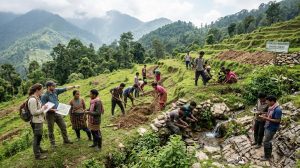
A Roadmap for Sustainable Tribal Water Security
Addressing the tribal water crisis requires moving beyond uniform engineering solutions toward decentralized, community-led approaches tailored to local realities:
1. Springshed Development (Dhara Vikas)
In hilly and undulating tribal areas, conventional deep drilling often yields poor results or taps contaminated aquifers. A more effective alternative is the Springshed Management approach, successfully demonstrated across parts of Sikkim and the Himalayan belt:
-
Teams of geologists, hydrogeologists, and trained local youths map the subterranean fracture lines feeding perennial mountain springs.
-
Targeted conservation work—including contour trenches, percolation pits, and native broadleaf tree planting—is carried out in the recharge zone.
-
This approach captures monsoonal runoff, allowing rainwater to recharge the mountain aquifer and maintaining perennial spring flows throughout the dry summer months.
2. Gravity-Fed Piped Systems (GFWS)
Rather than relying on electric or diesel pumps that are vulnerable to grid failures, high-elevation perennial springs can feed gravity-based piped water systems:
-
Water is collected at the springhead in clean filtration chambers and carried through insulated, buried pipes to downhill hamlets using gravity alone.
-
With zero operating costs, minimal mechanical wear, and simple valve mechanisms, these systems can be maintained directly by village youth trained in basic plumbing.
3. Institutional Autonomy: PESA and the Forest Rights Act
True water security requires decentralized control. The Panchayats (Extension to Scheduled Areas) Act (PESA) of 1996 and the Forest Rights Act (FRA) of 2006 provide a legal framework for local resource stewardship:
-
Under PESA, the Gram Sabha holds legal authority over minor water bodies and community resources within Scheduled Areas.
-
Village councils can plan and manage local water systems, conduct water audits, and restrict industrial over-extraction.
-
When rural water funds flow directly to Gram Sabhas rather than outside commercial contractors, infrastructure decisions can reflect community priorities, ensuring distant hamlets receive equal access.
Water as Human Dignity, Justice, and Constitutional Right
More than seventy-five years after India declared its independence, water access in tribal areas remains an unresolved challenge. The persistence of dry taps, contaminated wells, and long daily treks for water is not an inevitability of remote geography. It reflects decades of policy choices that have prioritized downstream industries and urban centers over the indigenous communities living in source watersheds.
MOVING FORWARD |
|
FROM: |
TO: |
- Centralized, top-down piped engineering |
- Decentralized, gravity-fed systems |
- Viewing water as an isolated utility |
- Managing water as an ecosystem base |
- Outside contractors and dry taps |
- Empowered Gram Sabhas and stewardship |
- Depleted aquifers and summer displacement |
- Restored watersheds and local life |
Water is more than an economic utility or engineering metric. For India’s Adivasi communities, it is the foundation of health, personal dignity, and cultural connection to their ancestral lands.
Ensuring safe, reliable, and accessible water for every tribal village is not merely a social development goal. It is an urgent constitutional obligation—a long-overdue debt owed to the communities that have protected the country’s natural watersheds for generations.
