
Introduction: Whispers from the Deep Past
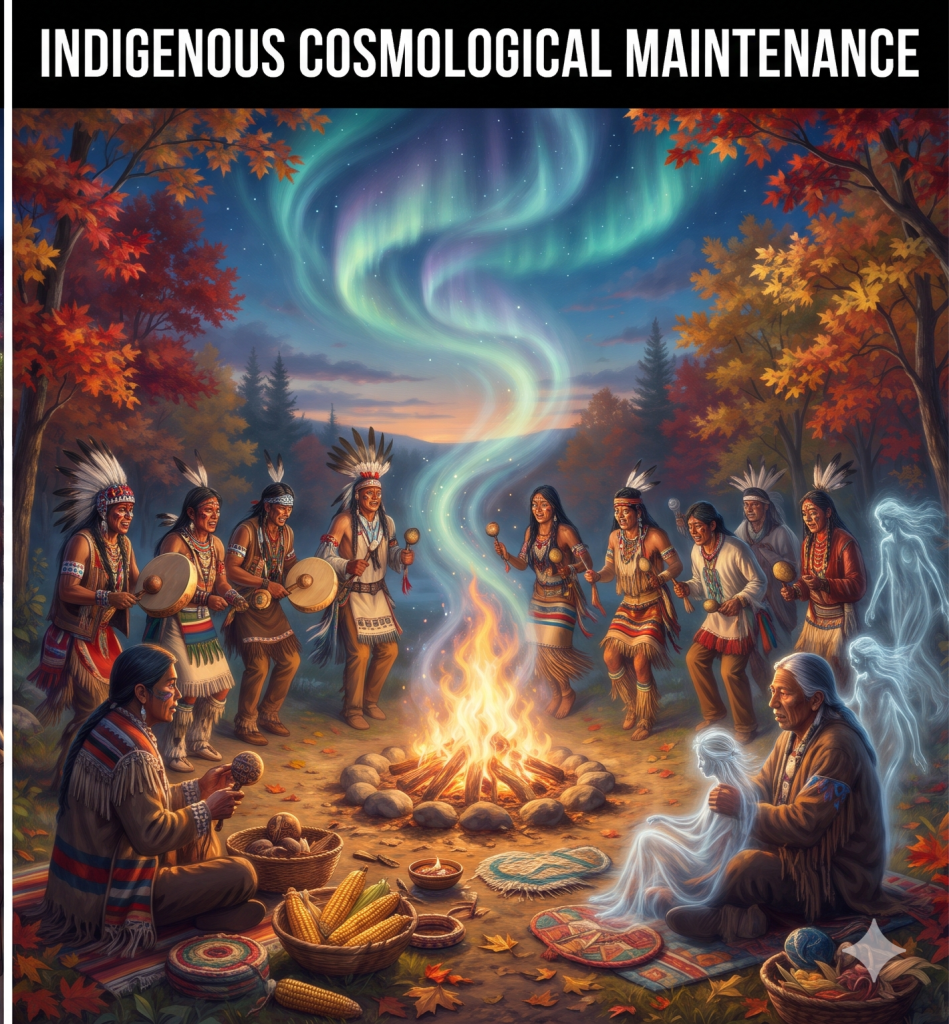
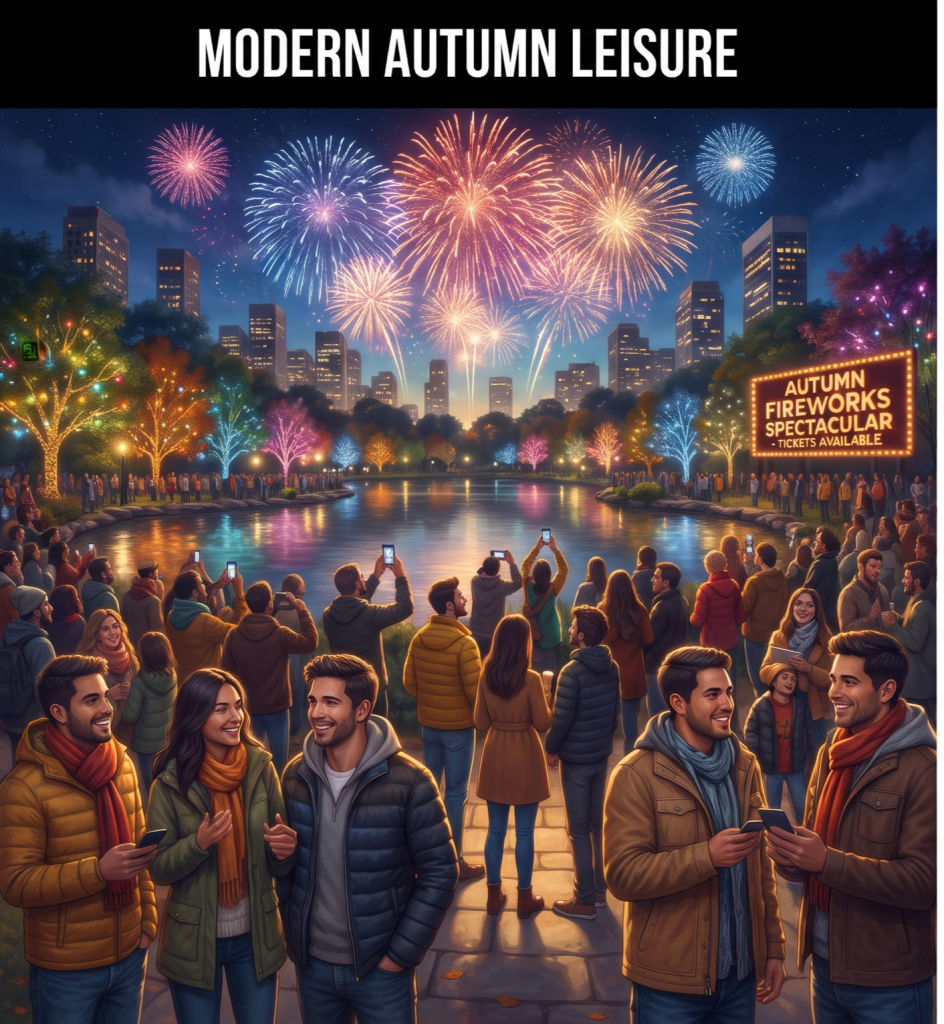
Thank you for reading this post, don't forget to subscribe!Every autumn, millions of people gather to watch vibrant autumn leaves fall, set off fireworks, or share large harvest feasts, rarely pausing to consider that they are performing rituals first codified ten millennia ago. Modern society often compartmentalizes festivals into holidays, days off from work, or secular celebrations of commerce and leisure.Yet, for indigenous peoples across the globe, a festival is not an interruption of time; it is the stitching together of the cosmos. It is an active cosmological maintenance mechanism designed to keep the sun rising, the rains falling, and the ancestors walking alongside the living.
For decades, popular culture and mainstream anthropology have reduced indigenous festivals to picturesque spectacles—tourist attractions characterized by colorful regalia, rhythmic drumming, and exotic dances. This superficial treatment strips these sacred gatherings of their profound intellectual, ecological, and philosophical weight.
Drawing from obscure ethnographic archives, archaeological site reports, oral history repositories, and peer-reviewed anthropological research papers, this comprehensive exploration dives deep beneath the surface. We will examine lesser-known indigenous festivals not merely as historical artifacts, but as sophisticated, living socio-ecological technologies that solved complex resource management problems, preserved ecological biodiversity, and maintained human psychological resilience for millennia.
SECTION I: The Ecological Architecture of Indigenous Festivities
1.1 indigenous festivals served as sophisticated, decentralized bioregional accounting and resource management systems.
According to landmark studies by anthropologists such as Roy Rappaport in his analysis of the Tsembaga Maring of Papua New Guinea, ritual cycles and associated festivals are tightly coupled with environmental carrying capacities. When population pressures or ecological degradation threatened a region’s resource base, festival cycles acted as homeostatic regulators.
A) Caloric Redistribution: During surplus years, massive multi-clan festivals functioned as economic leveling mechanisms. Wealth—measured not in fiat currency, but in stored tubers, dried proteins, livestock, and rare trade goods—was aggressively redistributed. This prevented socioeconomic stratification and ensured community survival during lean years.
B) Genetic and Cultural Cross-Pollination: Festivals were the primary nodes of regional information networks. Marriages were arranged, long-distance trade routes were negotiated, medicinal plant knowledge was cross-indexed, and tribal laws were updated.
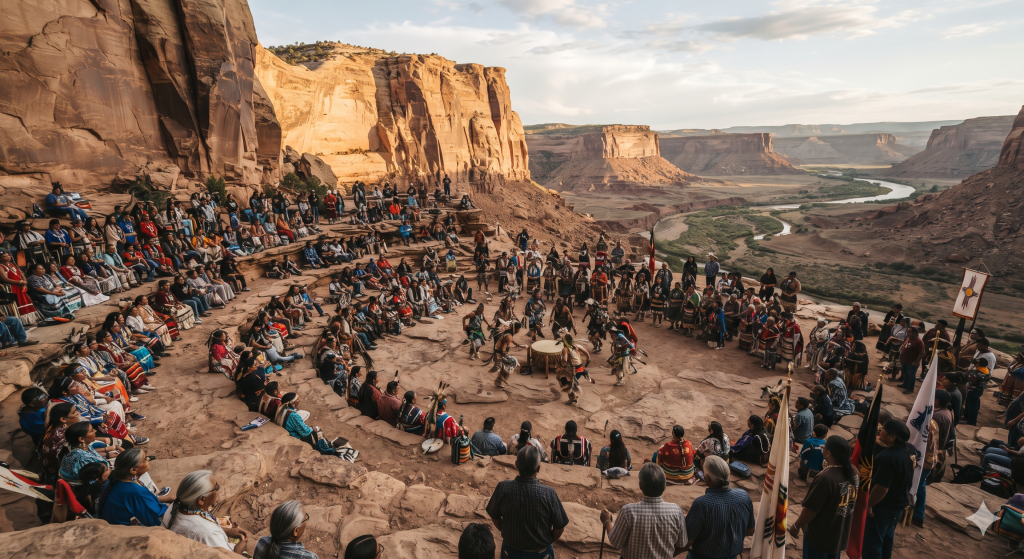
Acoustic and Spatial Mapping: Many indigenous festivals utilized specific geographic corridors, ancient trackways, and sacred acoustic spaces (such as canyon echoes or natural amphitheaters) to reinforce territorial stewardship boundaries without resorting to violent conflict.
1.2 Astronomical Precision: The Archaeoastronomy of Sacred GatheringThe timing of indigenous festivals was never arbitrary. It required profound, multi-generational observational astronomy. While Western science often separates astronomy from mythology, indigenous epistemologies view celestial mechanics as an active behavioral script.
Consider the Pleiades rising or the solstice alignments embedded within ancient earthworks across the Americas, Siberia, and Sub-Saharan Africa. Research published in the Journal of Archaeological Science indicates that indigenous calendar keepers maintained observational logs spanning centuries.
These logs tracked precession cycles, lunar nodes, and stellar heliacal risings with an accuracy that frequently rivaled or exceeded contemporary European measurements of the same eras.
For instance, the Pawnee star charts, preserved on tanned hide, map complex constellations that dictated when sacred corn-planting festivals could begin. Planting too early risked frost damage; planting too late risked monsoon or drought failure.
The festival was the collective trigger—a synchronized, ecological starting gun that ensured thousands of square miles of agricultural activity aligned perfectly with micro-climatic shifts.
SECTION II: Forgotten Rites of the Americas — Beyond the Corn a hund the Sun
2.1The Busk (Pee-cah-ul-gee) of the Mvskoke (Creek) Nation: Ritual Purging and Societal Reset
While Thanksgiving is widely mythologized in American history, the true indigenous template for communal renewal, debt forgiveness, and societal reset in North America is the Busk (or Pony / Green Corn Ceremony), practiced by the Mvskoke, Cherokee, Yuchi, and other Southeastern Woodlands peoples.Archival records from early 19th-century ethnographers like Benjamin Hawkins, combined with contemporary tribal oral histories, reveal that the Busk was an intensive, multi-day socioeconomic purification ritual lasting anywhere from four to eight days, timed precisely to the ripening of the first sweet corn in late summer.
The Architecture of the Busk:
1. The Great Extinguishing: On the first day of the ceremony, every single hearth fire in the town was deliberately extinguished. This physical act symbolized the absolute death of the old year, along with all its grudges, failures, and societal impurities.
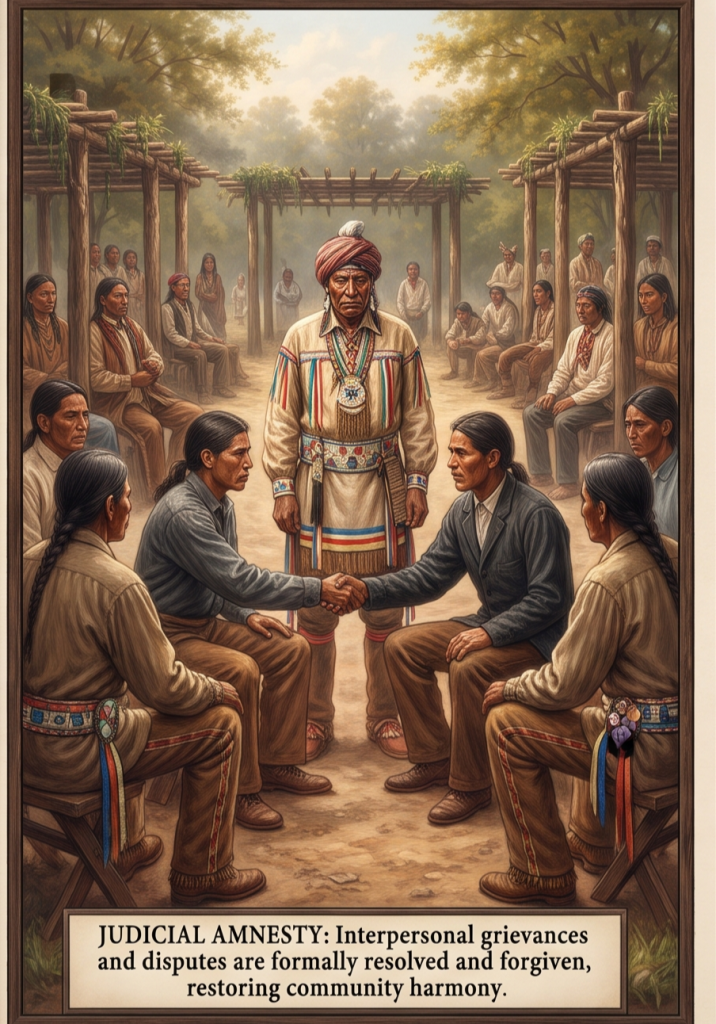
2. Judicial Amnesty: During the Busk, all minor crimes, legal disputes, and interpersonal grievances were wiped clean. Even capital offenses were subject to deep mediation and potential commutation if the offender partook in the sacred medicines and submitted to community rehabilitation. As historian Charles Hudson notes in The Southeastern Indians, the Busk was an ingenious mechanism that prevented blood-feud spirals from fracturing tribal cohesion.
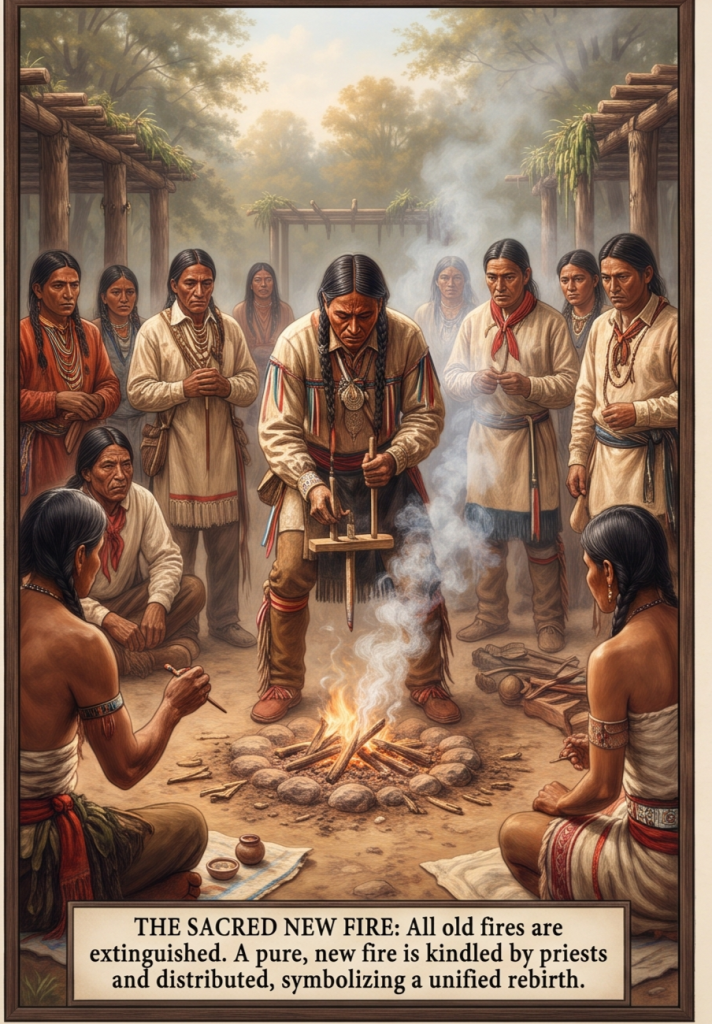
3. The Sacred New Fire: Using traditional fire drills, priests coaxed a brand-new fire into being at the center of the ceremonial square ground. From this single spark, runners distributed embers back to every family hearth, symbolizing a unified, reborn community.
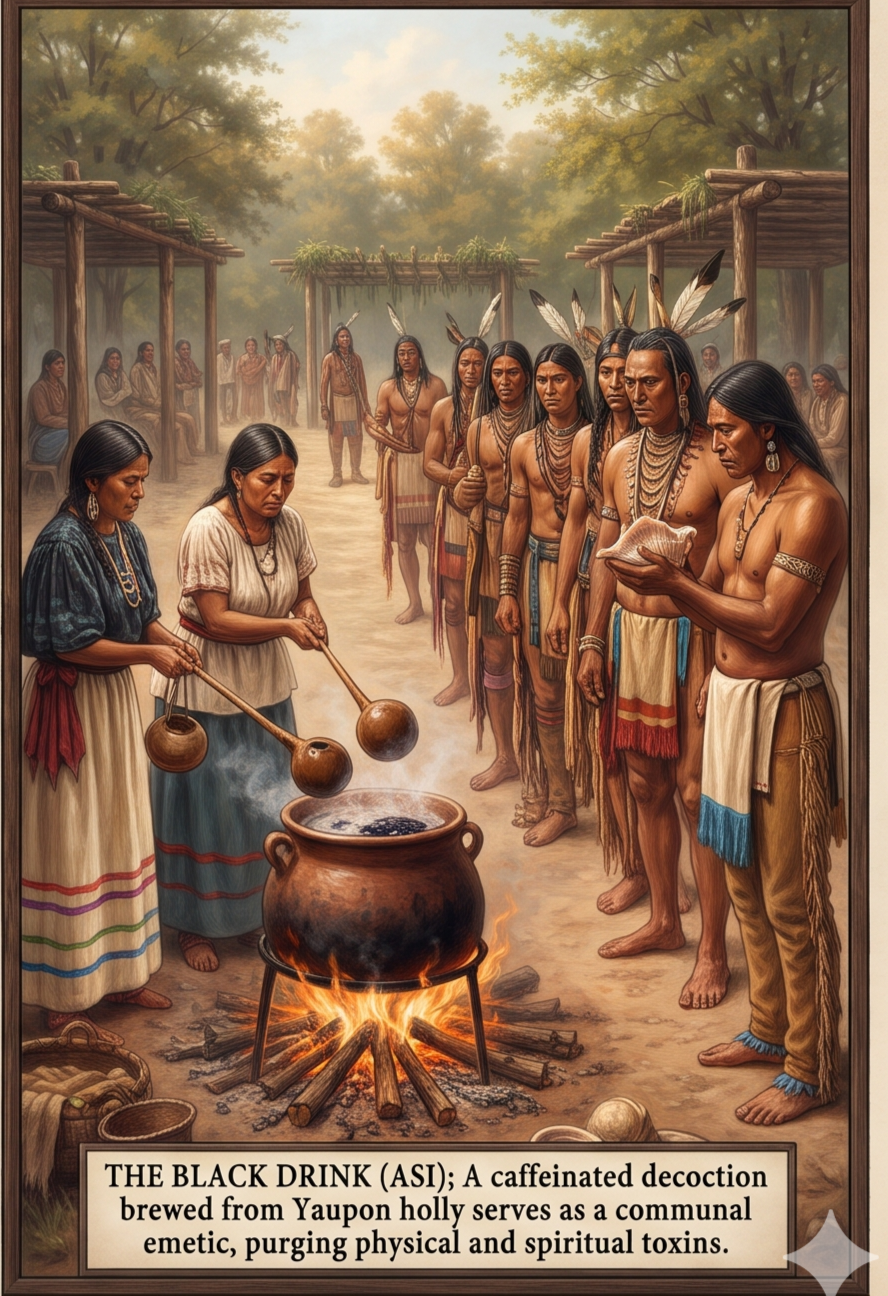
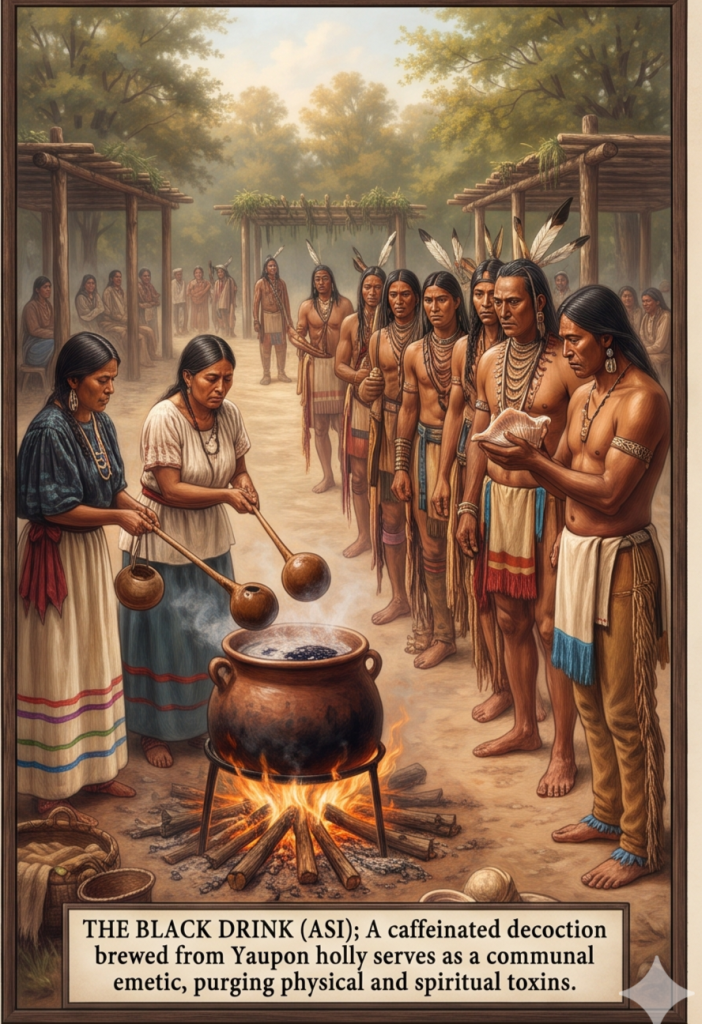
4. The Black Drink (Asi): Participants consumed a powerful, caffeinated decoction brewed from the leaves of Ilex vomitoria (Yaupon holly). This served as both a communal emetic (purging the body of physical and symbolic toxins) and a spiritual equalizer, binding participants into a singular corporate body.
2.2 The Inti Raymi Deep History: Astronomical Engineering of the Inca Empire
Every June 24th, modern Cusco plays host to a magnificent theatrical recreation of Inti Raymi, the Festival of the Sun. However, historical accounts from chroniclers like Garcilaso de la Vega and modern archaeological excavations at Sacsayhuamán reveal that the historical Inti Raymi was far more than a colorful pageant—it was an empire-wide biometric and logistical masterwork.
During the height of the Tawantinsuyu (Inca Empire), Inti Raymi marked the winter solstice—the turning point when the sun reached its furthest northern point and began its journey back toward the Southern Hemisphere.
Unsung Technical Dimensions of Inti Raymi:
A) Quipu-Based Demographic Audits: The festival served as the mandatory check-in point for provincial governors (tukuyniq). They brought detailed knotted-string records (quipus) documenting births, deaths, crop yields, and labor tribute quotas for the preceding year.
B) The Sapa Inca’s Redistribution Oath: The Emperor did not merely receive tribute; he redistributed vast stores of freeze-dried potatoes (ch’uñu), maize, textiles, and precious metals to representatives of conquered or allied ethnic groups, mathematically reinforcing imperial reciprocity.
C) Solar Alignment Architecture: Recent archaeoastronomical surveys using LiDAR technology around Cusco show that surrounding mountain peaks (usnus) were lined up with natural horizon markers so that the high priest could sight the exact moment of solar transit, validating the state’s divine mandate to govern.
SECTION III: Hidden Traditions of Eurasia and Siberia — Songs of the Taiga and Tundra
3.1 Yhyakh of the Sakha (Yakutia):
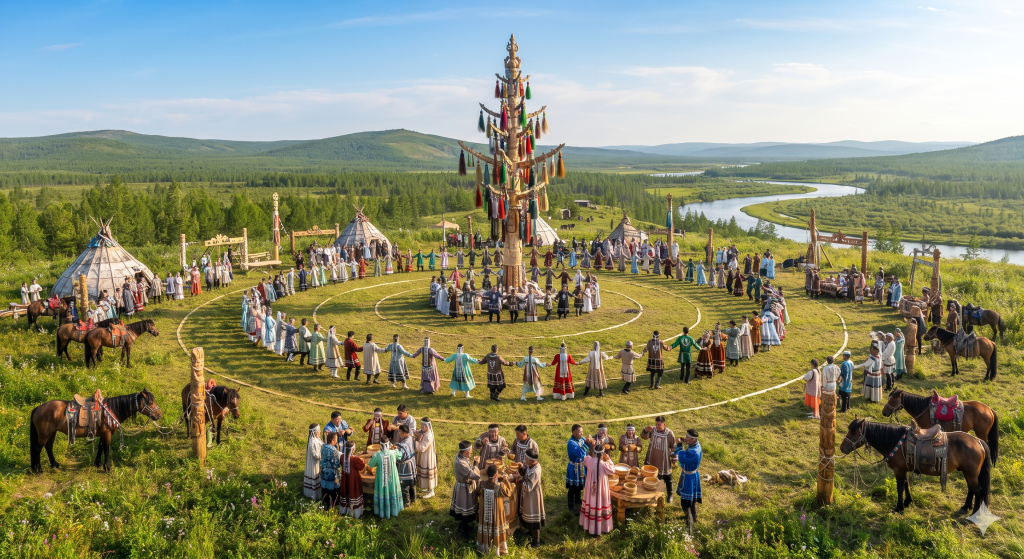
Recreating the Cosmos in the Sub-Arctic SummerIn the remote, sub-Arctic expanses of northeastern Siberia, the Sakha people celebrate Yhyakh (meaning “abundance”) during the summer solstice.
While outdoor summer festivals are common globally, the Sakha Yhyakh stands out for operating under extreme ecological constraints: surviving in a region where winter temperatures drop below minus 60 degrees Celsius, followed by a frantic, twenty-four-hour sunlit summer thaw.
Dating back over a millennium and documented meticulously by Russian and indigenous ethnographers in the late 19th century (such as W. L. Sieroszewski), Yhyakh is an architectural and spiritual blueprint for ecological resilience.
A) Key Elements of Yhyakh:
The Aal Luuk Mas (World Tree) Symbolism: The festival centers around the erection of intricately carved sacred poles (serge) and wooden altars that map the tripartite universe—the underworld, the middle world of humans, and the upper world of deities.
B) The Fermented Mare’s Milk (Kмыс / Kymys) Rite:
Drinking kymys is not merely dietary; it is a sacramental communion. The first libation is always poured onto the earth to feed Mother Anabar and appease the forest spirits (Bayanay), establishing an explicit reciprocal contract: humans take from the taiga, but they must continuously replenish its spiritual vitality through song and offering.
C) The Ohuokhai Circle Dance:
Thousands of people link arms, moving slowly in a solar direction while improvising poetic verses that recount the genealogy of their clans, historical migrations, and ecological lore. This continuous, hours-long collective chant acts as an oral library, transmitting survival knowledge across generations without written texts.
3.2 The Ainu Iomante (Bear Sending Ceremony) of Northern JapanFew indigenous festivals have been as deeply misunderstood, sensationalized, or unfairly maligned by colonial authorities as the Iomante (often translated as the Bear Sending Festival) of the Ainu people of Hokkaido, Sakhalin, and the Kuril Islands.Mainstream historical accounts often mischaracterized this ceremony as a barbaric sacrifice.
However, modern ethno-ornithological and anthropological studies (such as those by Arnold L. Krupat and contemporary Ainu scholars) reveal a deeply moving philosophy of interspecies kinship and reciprocal soul-exchange.
The Philosophy of Iomante:
The Divine Visitor (Kamuy):
In Ainu cosmology, brown bears (Kim-un-kamuy, the gods of the mountains and hunting) visit the human world temporarily by clothing themselves in flesh and fur to provide meat and pelts.Rearing and Nurturing: An orphaned bear cub was brought into the Ainu village, raised with immense tenderness—often nursed by human mothers—and treated as an honored family member for one to two years.
The message sent with the spirit was simple and profound: “We have honored you; please return to our lands next season so we may sustain our people.”
SECTION IV: African and Oceanic Mysteries — Rhythms of Earth and Sea
4.1 The Sharo Festival of the Fulani:
Rite of Passage and Stoic EnduranceIn the Sahelian grasslands of West Africa, the nomadic Fulani (or Fulbe) people practice Sharo, a public, high-stakes festival associated with the culmination of the dry season and the transition of young men into full warrior and marital status.
Documented in specialized West African sociological journals, Sharo is an extraordinary psychological and physiological crucible that tests pain tolerance, emotional self-control (Pulaaku), and community solidarity.
Dynamics of Sharo:
The Public Flagellation: Young suitors stand bare-chested in the center of a dense, singing crowd of families and prospective brides. They must endure powerful lashes from competitors using supple wooden switches without flinching, crying out, or showing any sign of physical pain.
Ethical Code of Pulaaku: The ability to withstand the ordeal is not merely about physical toughness; it is a public demonstration of moral discipline, patience, modesty, and courage—core tenets of the Fulani cultural code.
Music as Analgesic and Binder: The event is driven by polyrhythmic drumming, calabash percussion, and high-pitched vocal harmonies from female spectators. Ethnomusicological studies indicate that these specific rhythmic frequencies act as natural psychological trances, lowering perceived stress levels and reinforcing group cohesion among nomadic clans scattered across vast distances.
4.2 The Aropa and Yam Festivals of Melanesia:
Horticultural Magic and Social Equality
Across the islands of Papua New Guinea, Vanuatu, and the Solomon Islands, the yam (Dioscorea) is not just a root vegetable; it is treated as a sentient being with its own personality, lineage, and spiritual demands.
The Yam Harvest Festivals of the Trobriand Islands, famously studied by early anthropologist Bronislaw Malinowski and later re-analyzed by contemporary scholars like Weiner, reveal an intricate economic and magical system.
Key Mechanics:
Magic (M가가) as Agrarian Science: Ritual specialists performed specific verbal charms over the soil before planting. While modern observers once dismissed this as primitive magic, current ethno-botanical studies show that these chants served as mnemonic devices for complex crop rotation schedules, pest management techniques, and soil aeration protocols.
Display Warehouses (Bagi): During the festival, yams were not hidden away; they were displayed in specially constructed, elaborately decorated yam houses. The size and quality of a man’s yam harvest dictated his social standing, which he was then obligated to use not for hoarding, but for hosting massive feasts that reaffirmed community interdependence.
SECTION V: Comparative Analysis of Indigenous vs. Modern Secular Festivals
To fully grasp what modern society has lost—and what indigenous traditions can teach us about sustainability—we must contrast the foundational philosophies of ancient indigenous festivals with contemporary globalized celebrations.
Dimension Ancient Indigenous Festivals Modern Secular/Commercial Festivals
Primary Driver Ecological balance, spiritual reciprocity, and community survival. Commercial consumption, tourism revenue, and holiday retail sales.
