
The Untold Chronicle of the Saihriem Tribe: Heritage, Cultural Resilience, and the Quest for Identity in Modern India
Nestled within the undulating hills, fertile river basins, and mist-veiled forests of Northeast India lives one of the region’s most culturally distinctive yet frequently overlooked indigenous communities: the Saihriem people. Classified anthropologically within the broader Kuki-Chin-Mizo ethnolinguistic continuum, the Saihriem possess an ancient heritage, distinct customs, rich linguistic heritage, and an enduring social code that separates them from neighboring groups.
Despite their deep historical roots, the Saihriem navigate an intricate, high-stakes struggle in twenty-first-century India. Caught between linguistic assimilation, geopolitical shifts across state lines, ecological transformations, and the fight for constitutional recognition, the community stands at a vital historical crossroads.
This comprehensive study examines the world of the Saihriem tribe, exploring their legendary origin narratives, customary kinship systems, indigenous ecological knowledge, material culture, and the socio-economic challenges shaping their contemporary reality.
1. Ethno-Historical Origins, Migration Lore, and Geopolitical Geography
The history of the Saihriem is preserved through oral traditions, poetic chants, genealogical accounts (Hnam Dan), and folk epics passed down across generations. To comprehend who the Saihriem are, one must look deep into the migratory paths that cut across the Indo-Burma biodiversity hotspot and the hills of Northeast India.
The Legend of Chhinlung: Emergence and Migration
In line with many groups within the Zo/Kuki-Chin family, Saihriem oral history traces their primeval genesis to a mythical subterranean or cavernous realm known as Chhinlung (or Sinlung). Folklorists and historical linguists interpret Chhinlung not as an underground cavern, but rather as an ancient fortified city or mountain basin situated in southwestern China or northern Myanmar.
According to Saihriem oral ballads, ancestral groups emerged from this cradle following environmental catastrophes, tribal skirmishes, and dynastic upheavals. Their southward and westward journeys brought them through:
-
The upper valleys of the Chindwin and Irrawaddy rivers in Myanmar.
-
The rugged mountain spurs of the Chin Hills.
-
The riverine forests of the Barak Valley in Southern Assam, the Dima Hasao hills, and borders of Tripura.
[ Mythical Chhinlung / Sinlung ]│▼[ Chindwin River Valley ]│▼[ The Chin Highlands ]│┌──────────────────────┴──────────────────────┐▼ ▼[ Manipur & Mizoram Slopes ] [ Cachar Plains & Barak Valley ]│ │└──────────────────────┬──────────────────────┘▼[ Contemporary Saihriem Settlements in Assam & Beyond ]
Geographic Footprint in Contemporary India
Today, the Saihriem are concentrated primarily in the state of Assam, notably within the Cachar District, Hailakandi District, and the forested approaches of the Dima Hasao (North Cachar Hills) autonomous district. Small kin-clusters also live across neighboring border tracts of Manipur, Mizoram, and Tripura.
Living across low river valleys and abrupt foothill ridges has historically placed the Saihriem at an ecological and cultural crossroads. Unlike highland tribes isolated on inaccessible summits, the Saihriem interacted early on with:
-
The Dimasa Kachari rulers.
-
Bengali peasant communities of the Cachar plains.
-
Neighboring Hmar, Kuki, Lushai, and Meitei settlements.
This geographical location allowed them to develop an adaptive, dual-faceted economy balancing hill agriculture with lowland trade, while defending their unique clan identities against regional cultural pressures.
2. Kinship Architecture, Clan Lineages, and Traditional Governance
Internal Clan Subdivisions (Hnam)
The Saihriem are divided into specific sub-clans, each preserving distinct ancestor veneration narratives, ceremonial duties, and dialectal nuances. Prominent sub-clans and lineages include:
-
Keivom
-
Thiek
-
Lungtau
-
Khawbung
-
Darngawn
Marital customs traditionally require sub-clan exogamy, reinforcing reciprocal community alliances and preventing lineage insularity. Lineage identity descends strictly along the male line (Pate lam), but mothers and maternal uncles (Pute) maintain deep cultural authority, particularly in matrimonial discussions, gift-giving ceremonies, and conflict resolution.
┌──────────────────────┐│ The Village Chief ││ (Lal / Haosa) │└──────────┬───────────┘│┌───────────────┴───────────────┐▼ ▼┌───────────────────┐ ┌───────────────────┐│ Council of Elders │ │ Traditional Priest││ (Upate) │ │ (Thiempu) │└─────────┬─────────┘ └───────────────────┘│▼┌───────────────────┐│ Youth Cadre & ││ Community Helpers ││ (Tlangval / Val U)│└───────────────────┘
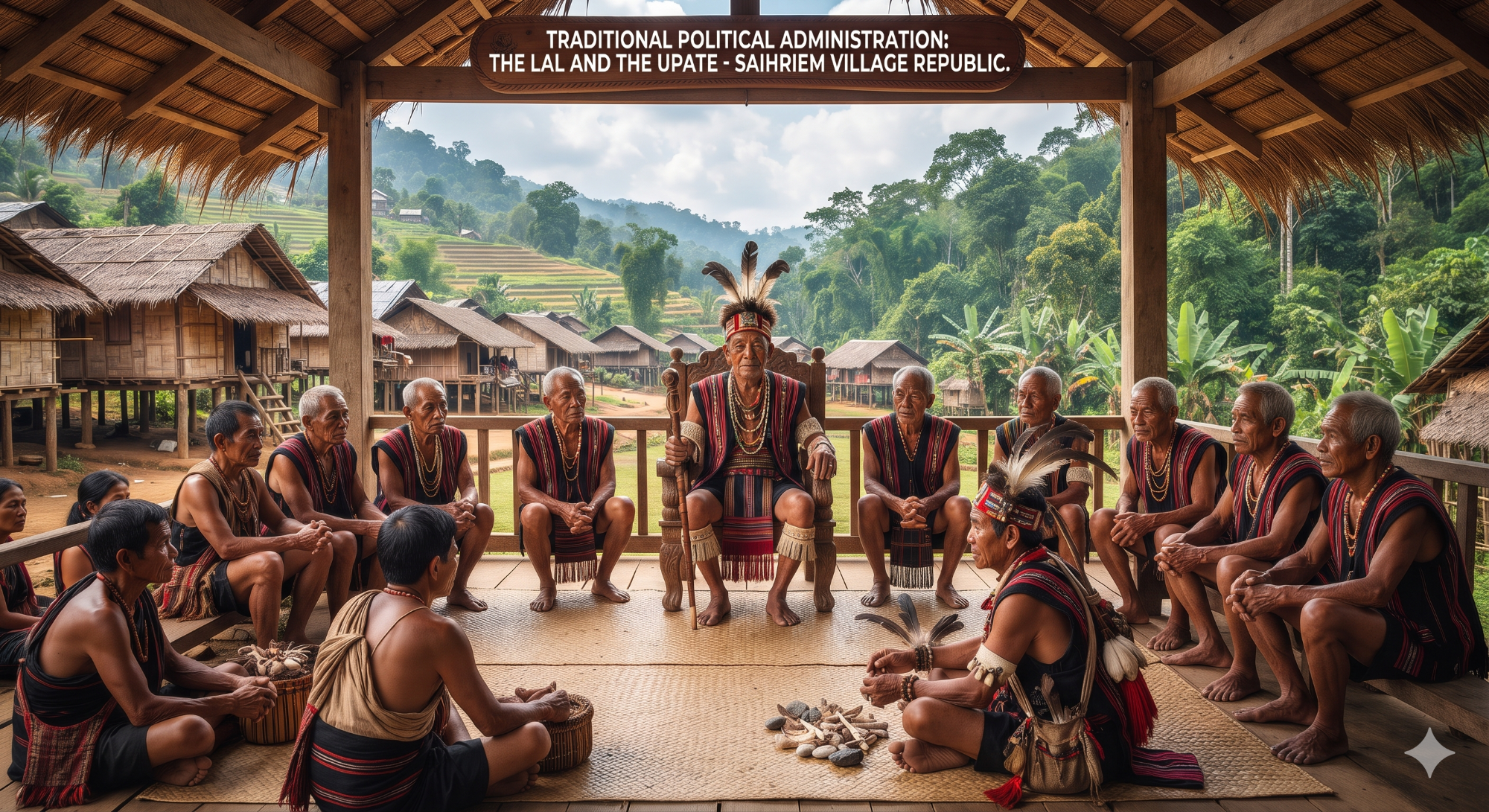
Traditional Political Administration: The Lal and the Upate
Before modern administrative institutions entered tribal regions, a Saihriem village (Khua) was a sovereign, self-contained sociopolitical republic. At the center of village life stood the Chief (historically referred to as the Lal or Haosa), advised by an assembly of elder statesmen known as the Upate.
-
The Chief (Lal): Upheld customary law, allocated farming tracts within communal village territories, received ambassadors from neighboring groups, and coordinated defense. The position was traditionally hereditary, resting upon personal integrity, valor, and generosity toward vulnerable villagers.
-
The Council of Elders (Upate): Chosen from the most respected clan heads. They settled civil disputes, clarified boundary disagreements, determined festival dates, and checked autocratic tendencies in the chief’s decisions.
-
The Traditional Priest (Thiempu): Served as the spiritual intermediary before Christian missions arrived. The Thiempu diagnosed illness, identified transgressions of taboo (Thianglo), and made offerings to nature spirits to preserve the village’s spiritual equilibrium.
The Village Dormitory: The Heart of Indigenous Education
Similar to the Zawlbuk of the Mizos or the Morung of the Nagas, the Saihriem preserved a traditional bachelor’s dormitory institution. This communal hall served as the training ground where young boys were introduced into adult life. Under the guidance of youth leaders (Val U), youths learned:
-
Tribal oral epics, war ballads, and genealogical lines.
-
Warfare tactics, tracking, archery, and jungle survival.
-
Wood carving, bamboo basketry, and weaving techniques.
-
Village defense protocols, emergency responses, and fire-fighting drills.
This communal living system instilled lifelong obligations of mutual aid, collective service (Tlawmngaina), and selfless commitment to community survival.
3. Indigenous Spirituality, Belief Systems, and the Christian Shift
To grasp the modern Saihriem mindset, one must explore their spiritual evolution: moving from an animistic worldview that saw spirits in every corner of the natural landscape, to widespread conversion to Christianity in the early-to-mid twentieth century.
┌─────────────────────────────────┐ ┌─────────────────────────────────┐│ Traditional Animism │ │ Contemporary Christianity │├─────────────────────────────────┤ ├─────────────────────────────────┤│ • Sky Creator God (Pathian) │ ───► │ • Centralized Church Governance ││ • Spirits of Woods & Water │ Shift │ • Scriptural Literacy & Hymns ││ • Shamanic Rites via Thiempu │ │ • Western Institutional Systems ││ • Sacred Taboos (Thianglo) │ │ • Decline of Earth-Spirit Rites │└─────────────────────────────────┘ └─────────────────────────────────┘
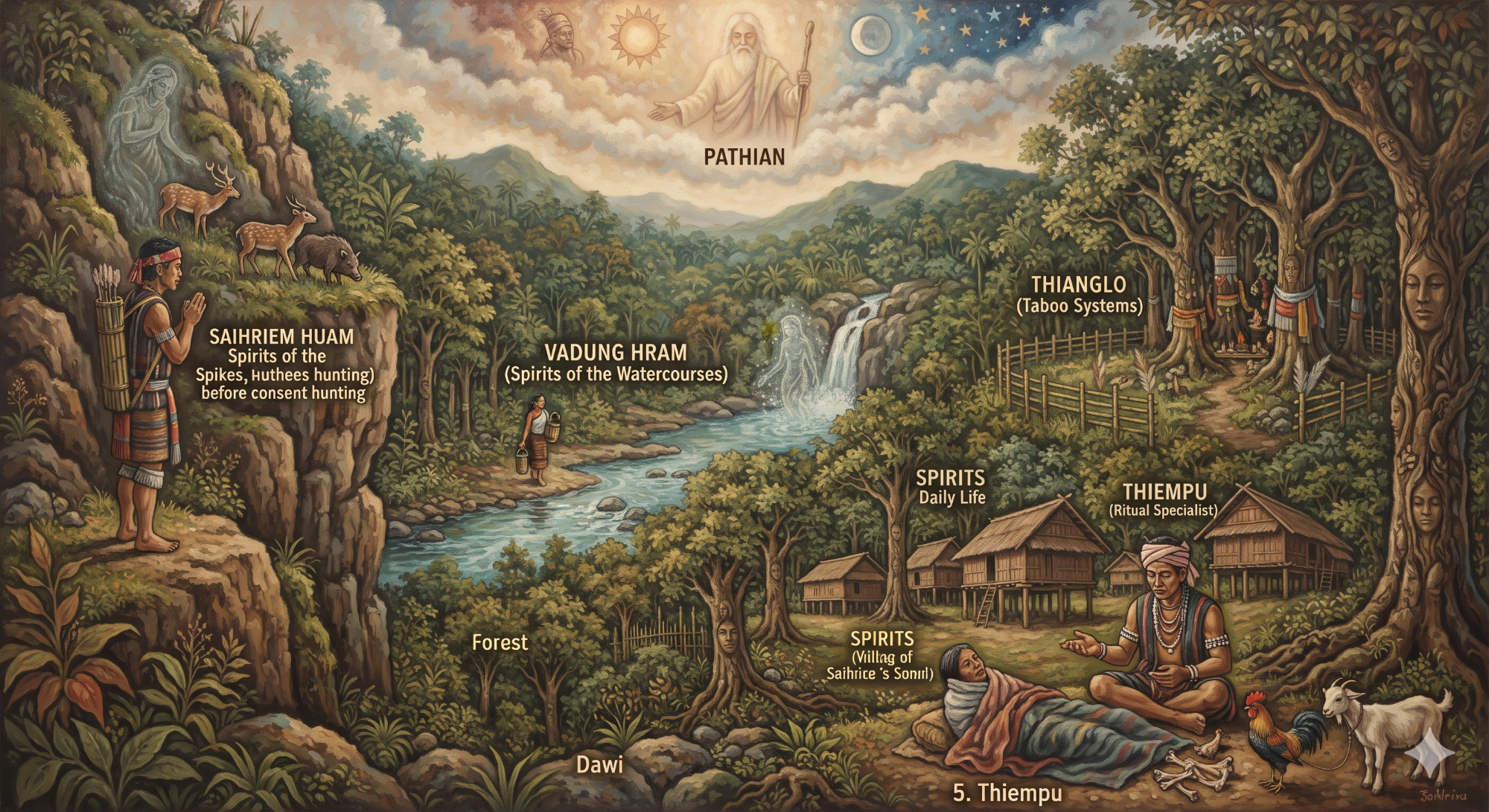
Cosmology of the Forest and the Supreme Being
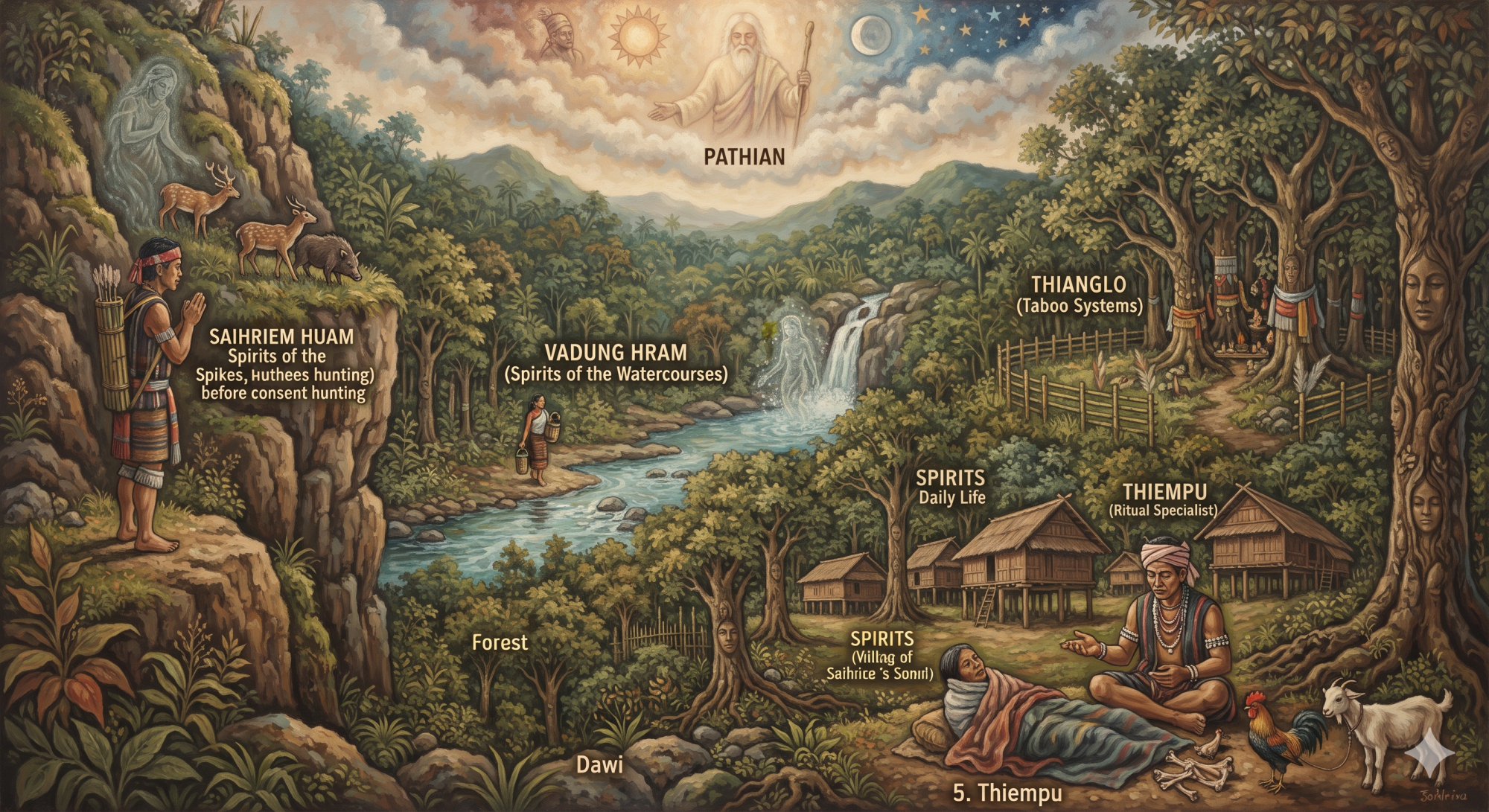
In pre-Christian Saihriem thought, the universe was ruled by a supreme creator god known as Pathian, an omnipotent yet distant force who brought forth the earth, celestial bodies, and humankind. Daily life, however, was shaped by an awareness of local spirits (Hram or Dawi) inhabiting forests, high cliffs, rivers, and old-growth trees.
Nature was viewed not as inert real estate, but as an inhabited ecosystem that demanded spiritual caution:
-
Spirits of the Mountain Spikes (Tlang Hram): Guarded game animals; hunters sought their consent prior to any hunt.
-
Spirits of the Watercourses (Vadung Hram): Could cause sudden fever or illness if polluted, blocked, or approached disrespectfully.
-
Taboo Systems (Thianglo): Strict prohibitions governed resource gathering, touching sacred plants, and farming specific parcels of land, providing an innate check against ecological exploitation.
Illness was interpreted as a sign that a spirit had captured an individual’s soul (Thlarau), requiring the Thiempu to conduct divination and make domestic animal offerings to restore balance.
The Evangelical Turning Point and Cultural Transformation
The early decades of the twentieth century brought Welsh Presbyterian, Baptist, and independent evangelical missionaries into the hill tracts of Southern Assam, Lushai Hills, and Manipur. The Saihriem embraced Christianity en masse within a few generations.
This spiritual shift carried profound consequences for community life:
-
Literacy and Education: Missionaries transcribed indigenous dialects into the Roman script, introduced the printing press, translated the Bible, and opened basic village schools.
-
A New Moral Framework: Ancient blood feuds, ritual animal offerings, and seasonal drunkenness linked to agricultural feasts were largely set aside.
-
Loss of Indigenous Practices: The Thiempu lost his community standing, traditional woodcarvings and ancestral altars were burned as pagan relics, and the bachelor’s dormitory fell into disuse as churches and village schools replaced its social functions.
Modern Saihriem thinkers are working to reclaim and document this lost ancestral heritage, reconciling traditional customs with contemporary Christian life.
4. Linguistic Heritage: Dialectal Nuances and Endangered Idioms
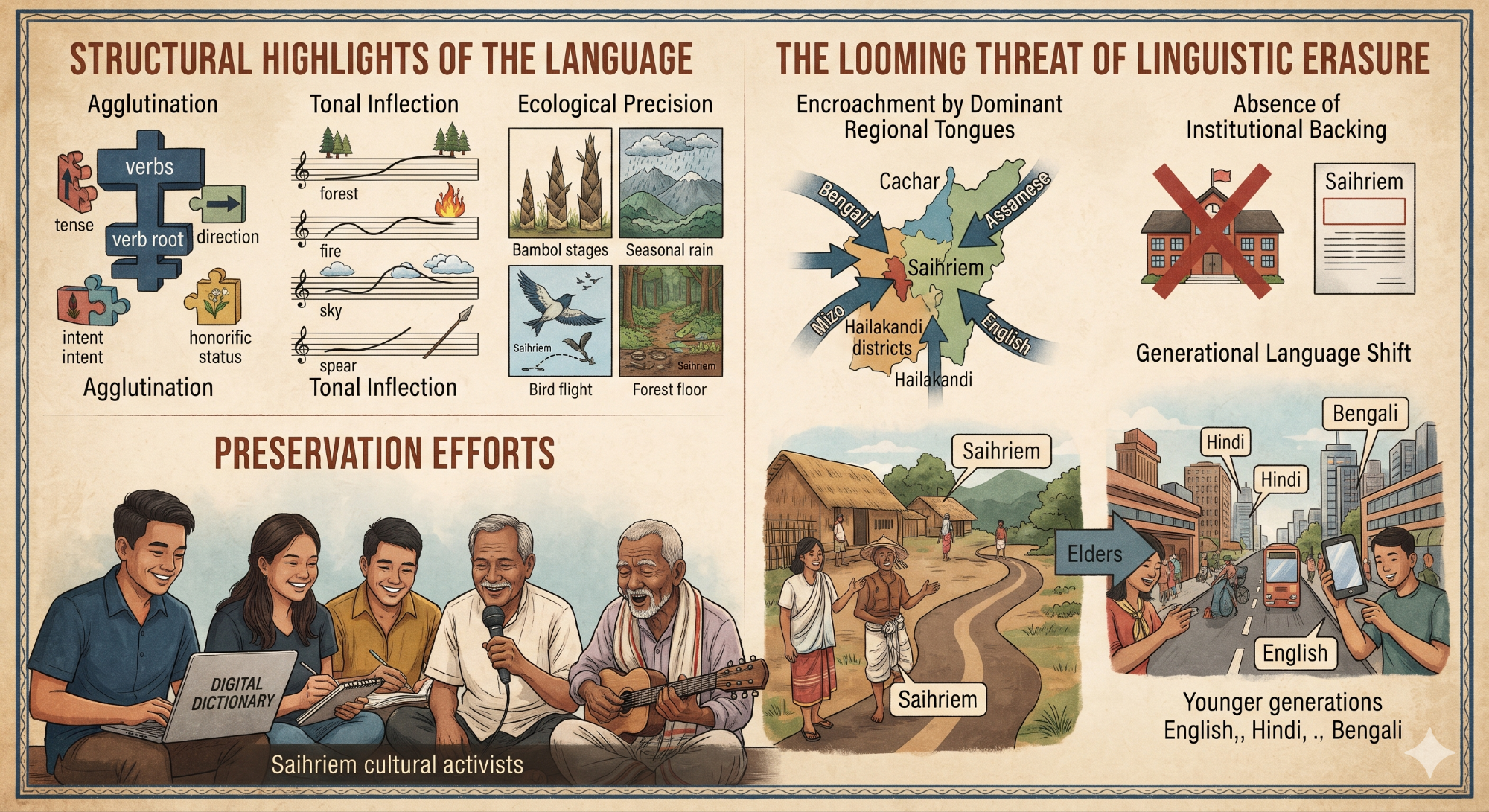
The Saihriem speak a distinctive language belonging to the Kuki-Chin-Mizo sub-branch of the Tibeto-Burman language family. Characterized by tonal variations, agglutinative verb combinations, and an extensive vocabulary for forest ecology, the Saihriem language holds the deep memory of the community’s environmental history.
Tibeto-Burman Language Superfamily│└── Kuki-Chin-Mizo Sub-Branch│├── Central Chin Sub-Group (Mizo, Hmar, etc.)│└── Saihriem Linguistic Group (Distinct, Endangered)
Structural Highlights of the Language
-
Agglutination: Complex verbs incorporate tense, direction, intent, and honorific status into a single root word.
-
Tonal Inflection: Pitch and voice modulation alter the meanings of monosyllabic words, distinguishing between concepts like “forest,” “fire,” “sky,” or “spear.”
-
Ecological Precision: The language preserves specific terms for different growth stages of bamboo, seasonal mountain rains, bird flight mechanics, and varied forest terrain.
The Looming Threat of Linguistic Erasure
The Saihriem language faces serious existential challenges today:
-
Encroachment by Dominant Regional Tongues: In the Cachar and Hailakandi districts, everyday commerce requires Bengali; official state affairs prioritize Assamese; and inter-tribal communication typically relies on standardized Mizo, Hmar, or English.
-
Absence of Institutional Backing: Saihriem lacks official inclusion under the Eighth Schedule of the Indian Constitution, receives no state pedagogical patronage, and is rarely taught in public primary schools.
-
Generational Language Shift: Young Saihriem people raised in multi-ethnic plains towns or migrating to Indian cities frequently converse in English, Hindi, or Bengali, leaving their ancestral tongue primarily with village elders.
Cultural activists are compiling Saihriem lexicons, transcribing traditional songs, and producing digital dictionaries to preserve their linguistic heritage before its last fluent native speakers pass away.
5. Material Culture, Weaving Traditions, and Artistic Heritage
The material culture of the Saihriem highlights their ability to transform bamboo, timber, wild cotton, and natural dyes into beautiful, functional everyday items.
Textile Arts: The Backstrap Loom and the Puan
For a Saihriem woman, the back-strap tension loom (Loin Loom) has historically been an instrument of artistic, economic, and cultural expression. Every young woman was expected to master weaving before marriage.
The Puan—the traditional wraparound skirt worn by men and women—is the centerpiece of this textile tradition:
-
Visual Iconography: Bold horizontal and vertical stripes dominated by black, crimson, indigo, and ivory whites.
-
Clan Signifiers: Subtle adjustments in border stripes, thread counts, and diamond-shaped embroidery allow trained community members to recognize an individual’s specific clan or lineage.
-
Ceremonial Gift-Giving: Finely woven Puans are essential in traditional weddings, handed to the bridegroom’s family as a sign of respect and honor.
Traditional Saihriem Weaving Motifs:┌────────────────────────────────────────────────────────┐│ [ Crimson Stripe: Courage, Bloodline, and Vitality ] ││ [ Ivory Field: Purity, Clouds, and Ancestral Spirit ] ││ [ Black Band: The Mother Earth and Deep Night Sky ] ││ [ Interlocking Diamond: Clan Alliances & Kinship Unity]│└────────────────────────────────────────────────────────┘
Bamboo and Cane Craftwork
Living alongside the bamboo-rich forests of the Indo-Burmese frontier, the Saihriem developed remarkable skill in manipulating bamboo:
-
The Universal Axe-Knife (Dao): Used with precision to split thick bamboo into delicate, pliable weaving strips.
-
Storage and Carrying Baskets: Craftsmen weave the Dawrn (a heavy-duty basket strapped over the forehead with a cane strap), alongside seed storage bins, fish traps, and rain capes made from wild palm leaves.
-
Architecture: Traditional Saihriem homes (In) stood on raised timber piles (Chang), featuring split-bamboo walls, woven floors that yielded gently underfoot, and thick thatched grass roofs that shed monsoon rains.
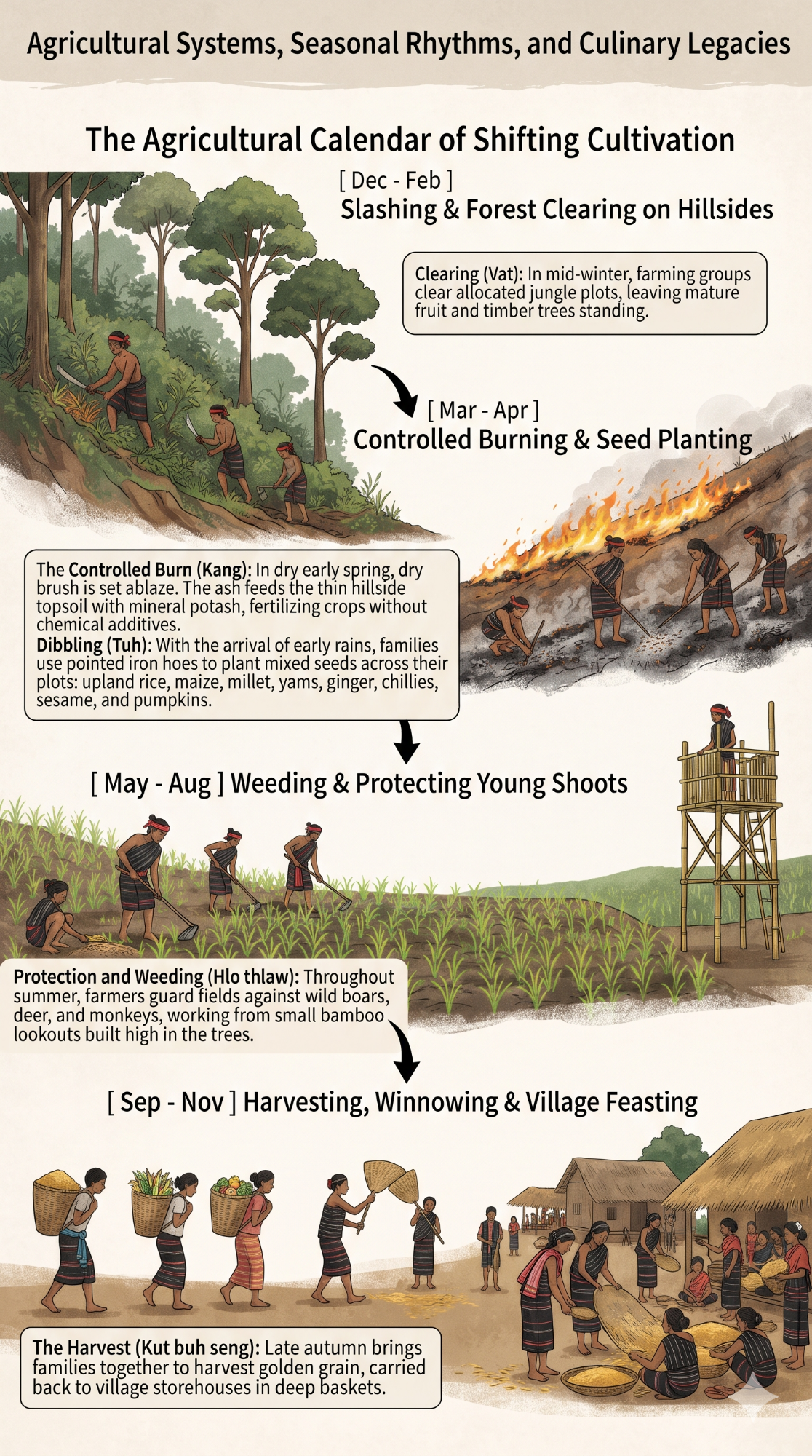
6. Agricultural Systems, Seasonal Rhythms, and Culinary Legacies
Historically, the Saihriem built their economy on seasonal Jhum (huan/lo), shifting slash-and-burn agriculture practiced on the slopes of their homeland.
The Agricultural Calendar of Shifting Cultivation
[ Dec - Feb ] [ Mar - Apr ] [ May - Aug ] [ Sep - Nov ]Slashing & Controlled Weeding & Harvesting,Forest Clearing ───► Burning & ───► Protecting ───► Winnowing &on Hillsides Seed Planting Young Shoots Village Feasting
-
Clearing (Vat): In mid-winter, farming groups clear allocated jungle plots, leaving mature fruit and timber trees standing.
-
The Controlled Burn (Kang): In dry early spring, dry brush is set ablaze. The ash feeds the thin hillside topsoil with mineral potash, fertilizing crops without chemical additives.
-
Dibbling (Tuh): With the arrival of early rains, families use pointed iron hoes to plant mixed seeds across their plots: upland rice, maize, millet, yams, ginger, chillies, sesame, and pumpkins.
-
Protection and Weeding (Hlo thlaw): Throughout summer, farmers guard fields against wild boars, deer, and monkeys, working from small bamboo lookouts built high in the trees.
-
The Harvest (Kut buh seng): Late autumn brings families together to harvest golden grain, carried back to village storehouses in deep baskets.
Traditional Culinary Heritage
The Saihriem kitchen values simple cooking that highlights the natural flavors of forest greens, smoked meats, and fiery peppers:
-
Fermentation: Fermented soya beans (Bekang) and fermented bamboo shoots (Tuai/Rau) are essential flavor bases for broths, lentil curries, and vegetable stews.
-
Smoked and Preserved Meats: Excess meat from wild game, domestic pork, or beef is hung high on bamboo racks above the central hearth (Tap). There, fragrant smoke from oak and pine wood cures it for long-term storage.
-
Botanical Foraging: Daily meals incorporate wild-foraged forest foods: tender fiddlehead ferns, bitter solanum berries, wild mountain mushrooms, and young ginger shoots.
-
Steamed Rice Variations: Fragrant sticky rice, steamed in banana leaves or cooked inside green bamboo tubes over open flames, remains a beloved dietary foundation.
7. Traditional Dances, Musical Expressions, and Communal Feasts
Saihriem celebrations reflect community solidarity, where music, movement, and poetry blur the line between performer and observer.
Communal Saihriem Celebrations:├── Seasonal Feasts (Agricultural Rhythms)│ ├── Early-Spring Sowing Gatherings│ └── Autumn Harvest Celebrations├── Rhythmic Performances│ ├── Bamboo Dances (Echoing across Village Squares)│ └── Circular Warrior Dances with Ceremonial Shields└── Indigenous Instruments├── Bronze Gongs (Khuang) Guiding the Community's Step└── Transverse Bamboo Flutes (Theile)
Festivals of Agricultural Continuity
Historically, celebrations honored key moments in the seasonal farming cycle:
-
Spring Sowing Celebrations: Held before clearing forest parcels, asking the earth for safety, abundant rain, and protection from animal raids.
-
Harvest Celebrations: Held after grain was safely stored in village barns. Over days of celebration, community members danced, sang ancient epics, reconnected estranged friends, and joined in communal meals.
Dances of Agility, Strength, and Skill
-
The Bamboo Dance: Men squat opposite one another on open ground, rhythmically clapping long green bamboo poles together to drum beats. Dancers step gracefully between the clapping poles, with tempo and complexity rising over time.
-
Warrior Reenactment Dances: Celebrates the courage of ancestral pathfinders. Dancers carry ceremonial iron knives and hide-covered shields, performing stylized hunting, stalking, and protective movements.
Traditional Instruments
-
The Khuang: A deep wooden drum hollowed from aged tree trunks and covered with deer or cowhide. Its rhythmic pulse anchors village dances, sacred ceremonies, and church services.
-
Bronze Gongs (Dar): Acquired down the centuries through cross-border trade, these gongs ring out with rich overtones, used to gather villagers for meetings or sound the alarm in times of danger.
-
The Theile: A traditional transverse flute made from mountain bamboo, played by solitary herders and young suitors to fill the forest valleys with soft melodies.
8. Modern Struggles: Socio-Economic Realities and the Fight for Recognition
Despite their ancient traditions, the contemporary reality of the Saihriem is shaped by serious socio-economic and political challenges.
Contemporary Saihriem Challenges│┌────────────────────────┬───────────┴───────────┬────────────────────────┐▼ ▼ ▼ ▼[ Fragmented Status ] [ Declining Jhum ] [ Geographic Isolation ] [ Cultural Dilution ]Lacking dedicated Soil degradation, Poor road links, Dominant media &tribal recognition low crop returns, scant clinic access, state languagesin home districts. need for cash crops. underfunded schools. eroding heritage.
1. Administrative Fragmentation and the Battle for ST Identification
One of the most pressing challenges facing the Saihriem is their complex, ambiguous constitutional status.
-
Under the Indian Constitution, affirmative action benefits, parliamentary representation, and cultural protections are channeled through the Scheduled Tribes (ST) framework.
-
While broader groupings like the Kukis, Hmars, and Mizos enjoy ST protections, smaller sub-groups like the Saihriem are frequently recorded under larger umbrella categories or omitted from state-specific lists entirely.
-
Living in the Cachar and Hailakandi districts of Assam—outside Sixth Schedule autonomous zones like Dima Hasao or Karbi Anglong—they often struggle to access targeted welfare funds, tribal scholarships, infrastructure budgets, and political representation.
Community leaders and youth organizations continue to petition state and central authorities, demanding explicit recognition as an independent Scheduled Tribe in Assam.
2. Land Insecurity, Vanishing Forests, and Economic Stagnation
The ecological foundation that long sustained the Saihriem is undergoing dramatic changes:
-
Pressures on Traditional Agriculture: Shortened fallow cycles have drained hillside soil fertility, lowering crop yields and rendering traditional shifting farming less viable.
-
Expansion of Monoculture: Vast tracts of ancestral land have been cleared for tea gardens, rubber groves, and betel nut plantations, concentrating land into fewer hands and turning self-sufficient tribal farmers into day laborers.
-
Infrastructure Deficits: Many interior Saihriem settlements lack all-weather roads, clean drinking water networks, reliable electric grids, and basic health centers. During monsoon floods, whole communities find themselves cut off from the rest of the world.
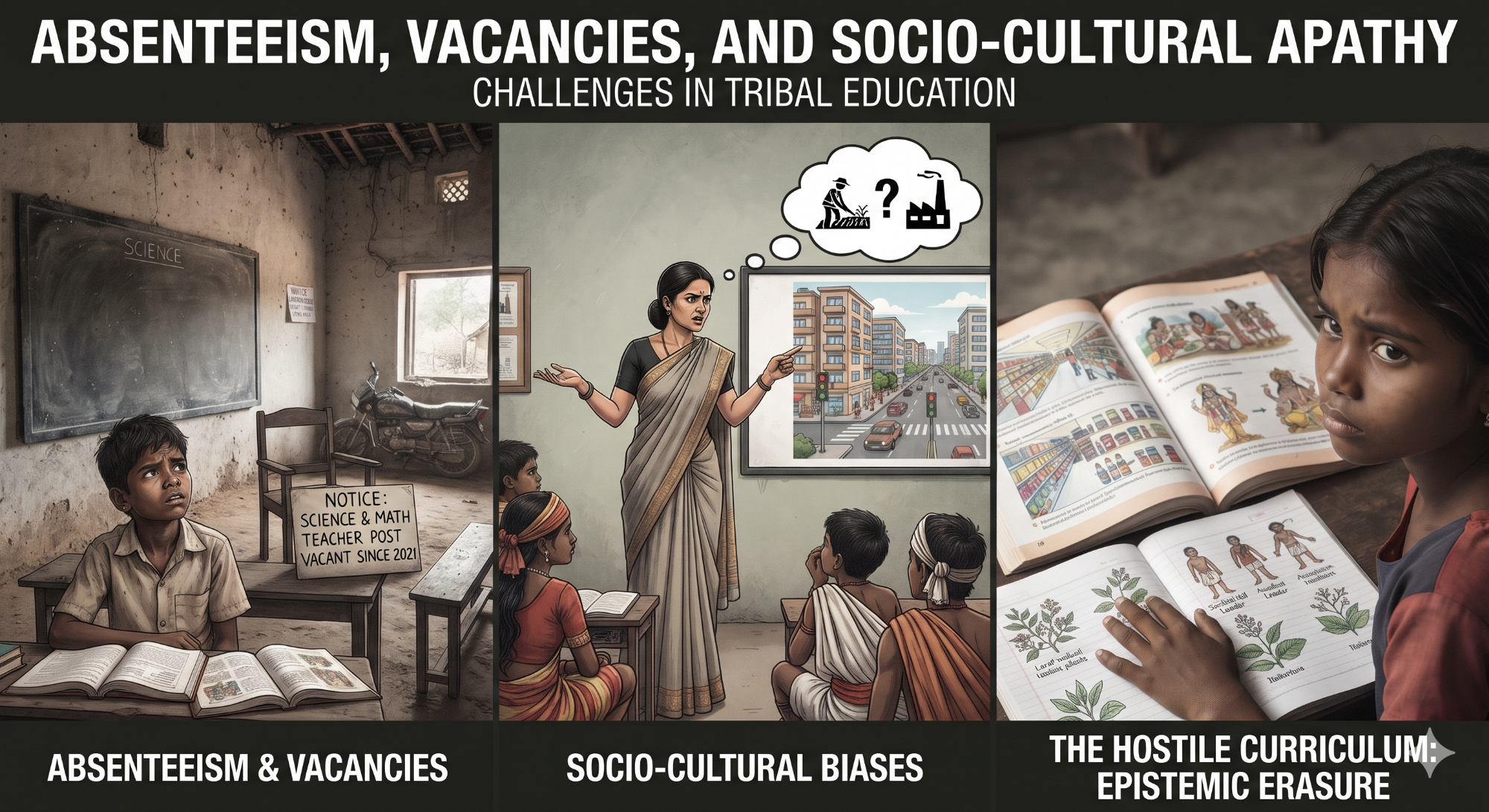
3. Educational Gaps and Urban Migration
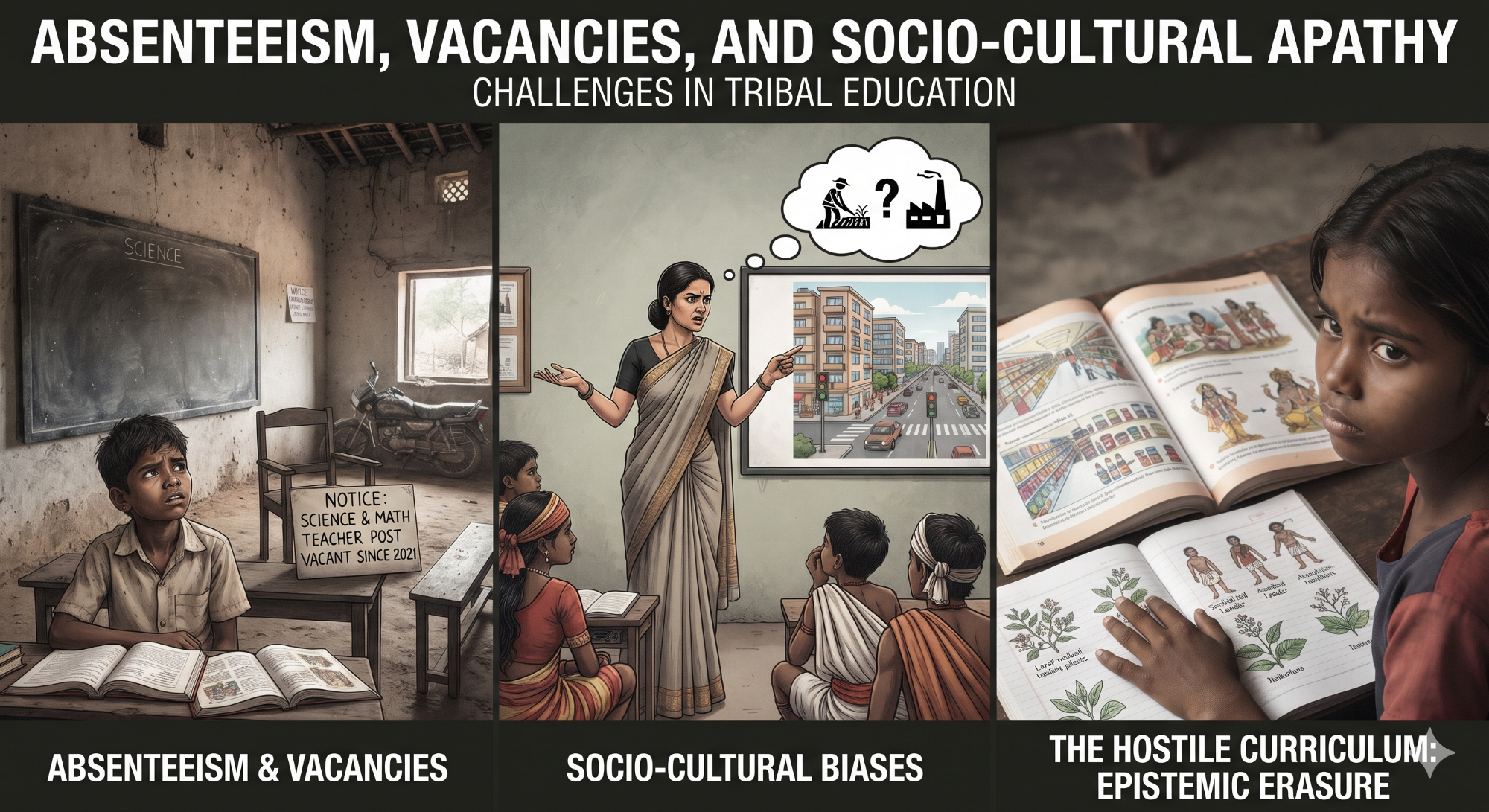
Rural Saihriem schools often face severe teacher shortages, lack digital learning resources, and use curricula disconnected from indigenous culture.
Consequently, young Saihriem people increasingly migrate to regional cities like Silchar, Guwahati, and Shillong, or distant metros like Delhi, Bengaluru, and Mumbai:
-
They work in hospitality, retail, customer support, and informal services.
-
While urban wages provide vital remittances for aging village families, this migration draws energetic young leadership away from ancestral villages, accelerating linguistic assimilation and cultural loss.
9. The Path Forward: Cultural Revitalization, Human Development, and Advocacy
The future of the Saihriem community will not be determined by passive observation, but through active, grassroots revitalization led by youth activists, village leaders, researchers, and policymakers.
A Roadmap for Sustainable Saihriem Self-Determination:[ Constitutional Recognition & Institutional Inclusion ]│▼[ Linguistic Archiving & Mother-Tongue Learning Materials ]│▼[ Eco-Tourism & Ethical Cooperative Craft Marketing ]│▼[ Infrastructure: Rural Roads, Clean Water, Digital Access ]
Grassroots Documentation and Digital Language Archives
Tribal youth organizations, working with linguistic researchers, must systematically record elderly speakers:
-
Transcribing oral folk epics, healing songs, and clan migration stories into searchable, open-access digital repositories.
-
Publishing illustrated Saihriem-English-Assamese lexicons to help children learn their ancestral language alongside national curricula.
Economic Empowerment Through Artisanal Collectives
The intricate weaving and bamboo craftsmanship of the Saihriem offer clear avenues for sustainable livelihood generation:
-
Setting up rural artisan cooperatives will help female weavers bypass exploitative middlemen and sell authentic back-strap textiles (Puans) directly to national handloom markets and ethical fashion brands.
-
Community-led eco-tourism programs can welcome travelers to experience authentic mountain landscapes, organic dining, and traditional dance performances, creating village income without destroying natural environments.
Targeted State Interventions and Inclusive Public Policy
State and central agencies must implement targeted policy interventions:
-
Administrative Inclusion: Clarify the community’s constitutional status to ensure all Saihriem families can access Scheduled Tribe quotas, welfare schemes, and development grants.
-
Rural Infrastructure: Pave all-weather rural roads, open staffed primary health centers, and install solar micro-grids to improve quality of life in remote foothill villages.
-
Land Rights Protections: Safeguard ancestral lands from speculative commercial acquisition, helping the community retain collective stewardship of their historical forests and waters.
10. An Enduring Voice in the Mosaic of India
The Saihriem tribe is not a relic of a bygone world. They are a resilient community whose rich story, social codes, and ecological wisdom offer vital lessons in an era characterized by climate disruption, cultural homogenization, and urban alienation.
Their history illustrates the deep cultural diversity of Northeast India, while their present challenges mirror the wider struggle of vulnerable indigenous populations across the subcontinent. As they bridge ancient migration lore with the aspirations of a connected world, the Saihriem continue to assert their presence with dignity, demanding recognition and self-determination under the Indian sky. Safeguarding their heritage is an investment in the human mosaic that defines India itself.
