
1. Introduction: The Great Symphony of Earth’s Living Cycles
Thank you for reading this post, don't forget to subscribe!If you stand at the edge of an ancient temperate forest as the bitter chill of winter begins to crack open, you can almost hear the gears of the planet shifting. For billions of humans living in concrete towers and digital bubbles, it is easy to forget that we remain intimately tethered to an ancient, non-negotiable biological calendar. The heartbeat of our planet is governed by the magnificent, relentless rhythm of the seasons. From the dormant stillness of winter to the explosive, chaotic rebirth of spring, the sun-drenched abundance of summer, and the rich, golden harvest of autumn, nature operates as an interconnected, living tapestry.At the very center of this terrestrial tapestry lie two of the most vital engines of life on Earth: forests and agriculture.
Forests act as the planet’s ancient lungs, stabilizing climates, filtering millions of gallons of freshwater, regulating regional hydrological cycles, and housing an astonishing 80% of global terrestrial biodiversity. Agriculture, on the other hand, is humanity’s most foundational and enduring partnership with nature—a deliberate, calculated cultivation of the earth’s biological bounty to feed a human population that has now surpassed 8 billion souls. Together, forests and agriculture form a delicate, seasonal duet.
When these systems are managed in harmony with nature’s rhythms, they create hyper-resilient ecosystems, robust food security, and stable climates. Conversely, when human greed or ignorance disrupts this delicate balance, we witness catastrophic soil erosion, devastating biodiversity loss, and volatile climate extremes.
This comprehensive guide is designed for anyone who looks at the changing leaves, the first spring sprouts, or the local farmers’ market and wonders about the massive, planetary machinery turning behind the scenes. We will explore the seasonal journey of nature, forests, and agriculture across all four quadrants of the year, analyze hard forestry and farming data, and discover how humanity can forge a regenerative relationship with the natural world before it is too late.
2. Spring: The Great Awakening, Phenology, and the Sowing of Seeds
The Ecological Awakening: When the Canopy Stirs
As winter’s frost slowly recedes, increasing daylight (photoperiod) and rising ambient temperatures trigger one of nature’s most awe-inspiring biological spectacles: spring. In temperate and boreal forests across the Northern and Southern Hemispheres, the forest canopy comes alive with a sudden, vibrant surge. Deciduous trees, which spent months in a state of deep physiological dormancy, break open their buds.
This is not a casual awakening; it is a meticulously timed race. Trees must leaf out rapidly to maximize their photosynthetic capacity just as early spring sunlight pierces the bare branches, and before closing overhead to shade the forest floor below.
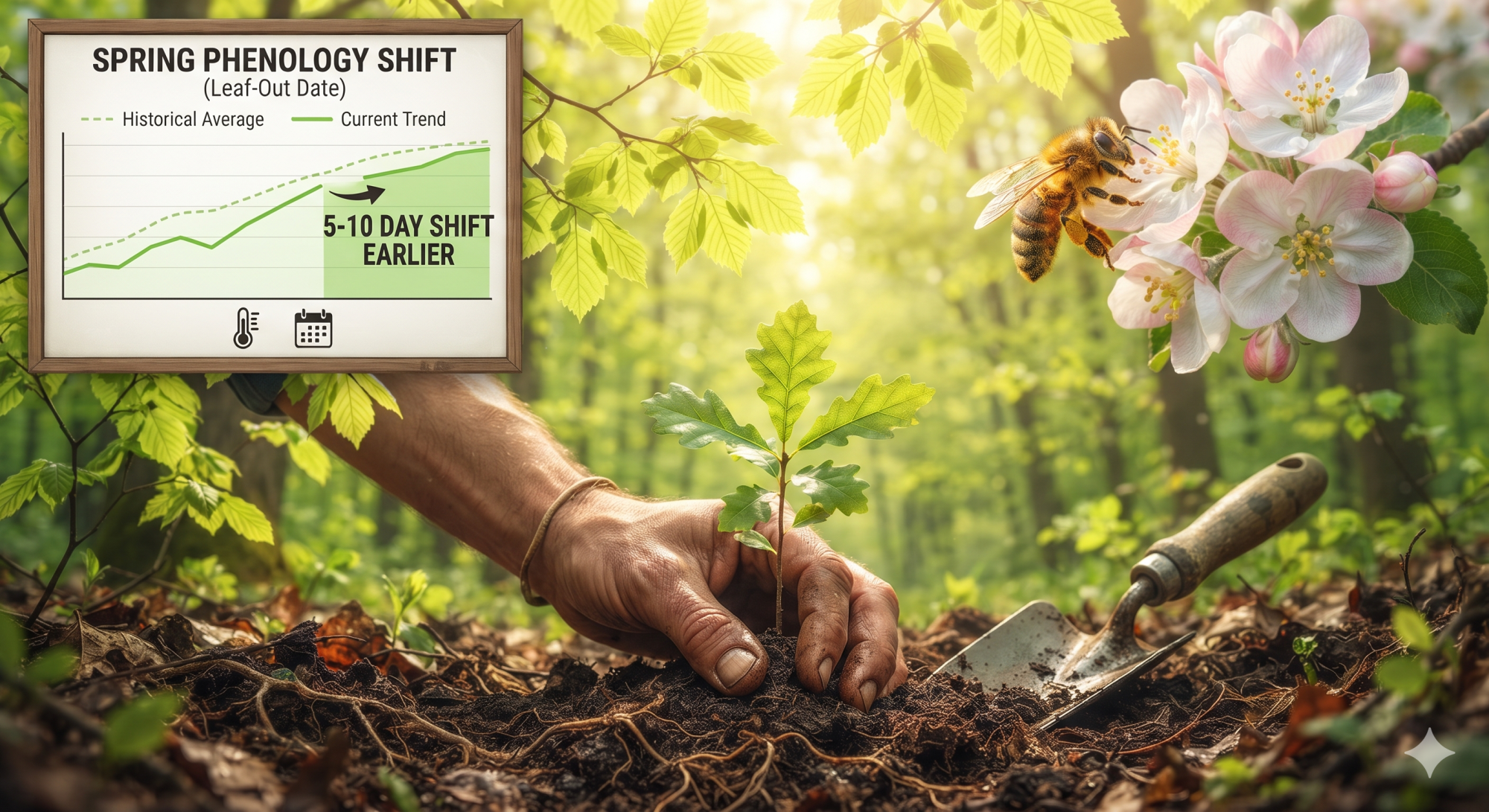
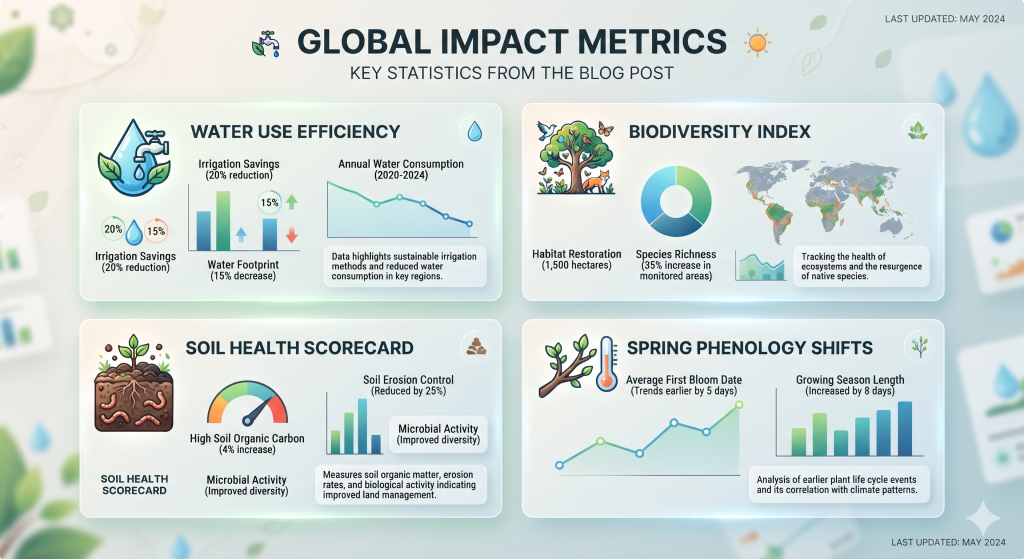
A) The Phenological Shift: Phenology—the study of cyclic and seasonal natural phenomena—has documented a profound climate-driven anomaly in recent decades. According to data from environmental monitoring networks like the USA National Phenology Network and European counterparts, leaf-out and flowering events across the Northern Hemisphere are occurring an average of 5 to 10 days earlier than they did in the 1980 baseline. While this might sound minor, it creates severe phenological mismatches: pollinators may emerge before flowers are ready, or birds may migrate north only to find their food sources already depleted.
B) The Pollinator Surge:
Insects such as native bees, butterflies, bumblebees, and hoverflies emerge synchronously with early-blooming flora (like willows, maples, and wild fruit tree blossoms). These insects are the indispensable spark plugs of both wild forest reproduction and agricultural crop yields. Without their synchronized emergence, entire ecosystems face reproductive collapse.
Agricultural Sowing and Soil Vitality
In the agricultural sector, spring is synonymous with grueling physical labor, cautious optimism, and the commencement of the annual crop cycle. Farmers cannot simply throw seeds into the ground based on a calendar date; they must listen to the soil.
A) Soil Temperature Thresholds: Traditional and modern industrial farming alike rely heavily on precise soil temperature metrics. For instance, commercial corn planting typically commences only when soil temperatures consistently reach 50°F (10°C) at a depth of 2 inches. If seeds are planted into cold, waterlogged spring soils, germination rates plummet, seeds rot in the ground, and vulnerability to fungal pathogens skyrockets.
B) Cover Crops Integration and Soil Biology:
Modern regenerative agriculture increasingly utilizes spring to manage cover crops—such as crimson clover, hairy vetch, or cereal rye—that were planted the previous autumn. Instead of plowing them under (which destroys delicate soil structure and releases stored carbon), farmers use roller-crimpers to lay the cover crops flat, creating a thick organic mulch layer. This suppresses weeds, retains precious spring soil moisture, and adds vital organic nitrogen back into the soil matrix.
C) The Underground Web (Mycorrhizae):
Beneath the spring plow line, fungal networks known as mycorrhizae wake up. These microscopic thread-like structures form symbiotic relationships with plant roots, trading minerals and water for plant-derived sugars. Spring tillage is often devastating to these networks, which is why a massive movement toward “no-till” farming is sweeping modern agriculture to preserve soil health.
3. Summer: Peak Vitality, Forest Canopies, and Crop Growth
The Lush Canopy and Global Carbon Sequestration
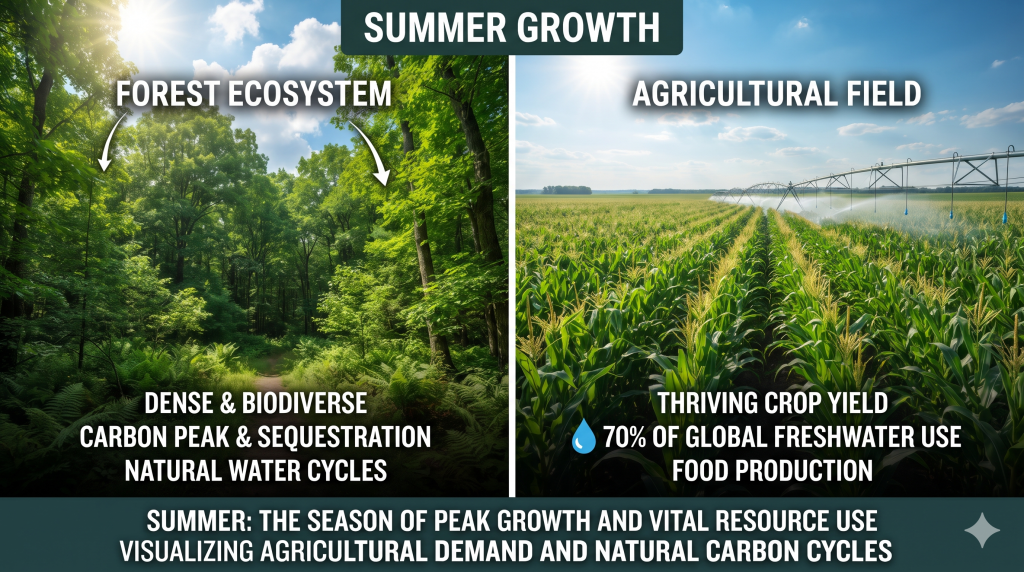
A) Carbon Sinking Powerhouses: During the peak summer months, global forests absorb a massive share of anthropogenic carbon emissions. Broadleaf and coniferous canopies pull in billions of tonnes of carbon dioxide (CO_2) to convert it into woody biomass, acting as critical planetary carbon sinks that slow the acceleration of global climate change.
Evapotranspiration and Microclimate Engineering: Forests function as the Earth’s natural air conditioners through a process called evapotranspiration. Roots pull water up from deep underground aquifers and release it as vapor through tiny pores (stomata) in their leaves. A single mature oak or maple tree can transpire over 40,000 gallons (151,000 liters) of water into the atmosphere annually. This massive moisture release cools surrounding microclimates, humidifies the air, and drives regional precipitation cycles (such as the famous “flying rivers” of the Amazon basin).
Agricultural Intensification and Irrigation Dynamics
Summer is a high-stakes, high-stress season for agriculture. Crops transition from vegetative growth into reproductive stages—flowering, pollination, and grain filling. This is when plants are most vulnerable to environmental stress.
A) Water Stress and Scarcity: Agriculture currently accounts for approximately 70% of total global freshwater withdrawals. Summer heatwaves, prolonged dry spells, and melting mountain glaciers put immense strain on irrigation systems. In major agricultural breadbaskets like California’s Central Valley or the Indo-Gangetic Plain, groundwater is being pumped out faster than winter rains can replenish it, posing a severe long-term threat to global food security.
B) The Pest and Disease Challenge: High temperatures and soaring humidity accelerate the lifecycles of agricultural pests (such as aphids, corn borers, and locusts) as well as fungal pathogens (like rusts and mildews). To combat these threats without destroying local ecosystems, modern farmers are shifting toward Integrated Pest Management (IPM), using beneficial predatory insects, crop rotation, and targeted biological controls rather than indiscriminate chemical pesticide spraying.
Key Takeaway: Summer tests the structural and physiological resilience of both wild forests and cultivated fields. Biodiversity acts as a biological insurance policy against extreme heat and drought, underlining why monoculture farming must integrate ecological diversity to survive future climate volatility.
4. Autumn: The Golden Harvest, Nutrient Resorption, and Forest Dormancy
The Science of Fall Foliage and Nutrient Retraction
As days shorten rapidly and temperatures drop, temperate and boreal forests undergo one of the most stunning physiological transformations on Earth: the creation of fall foliage. To the human eye, it is a breathtaking display of reds, golds, and oranges; to the tree, it is a masterclass in resource conservation.
A) Nutrient Resorption: Before leaves fall to the ground, deciduous trees actively shut down chlorophyll production (revealing hidden carotenoid and anthocyanin pigments) and reabsorb up to 50% of valuable nitrogen and phosphorus from their leaves back into their woody stems, branches, and root systems. These nutrients are safely stored over winter like money in a bank, ready to fund the explosive spring leaf-out.
B) The Forest Floor Litter Layer: Once leaves detach, they form a rich, complex organic blanket known as the litter layer. This layer insulates the soil against freezing winter temperatures, protects delicate fungal networks, and provides essential habitat and food for billions of macro- and microorganisms—from earthworms and beetles to fungi and bacteria—that cycle nutrients back into the earth.
AUTUMN AGRICULTURAL & FOREST METRICS
| Indicator | Average Data / Benchmark |
| Global Cereal Production | Regularly surpasses 2.8 billion tonnes/year |
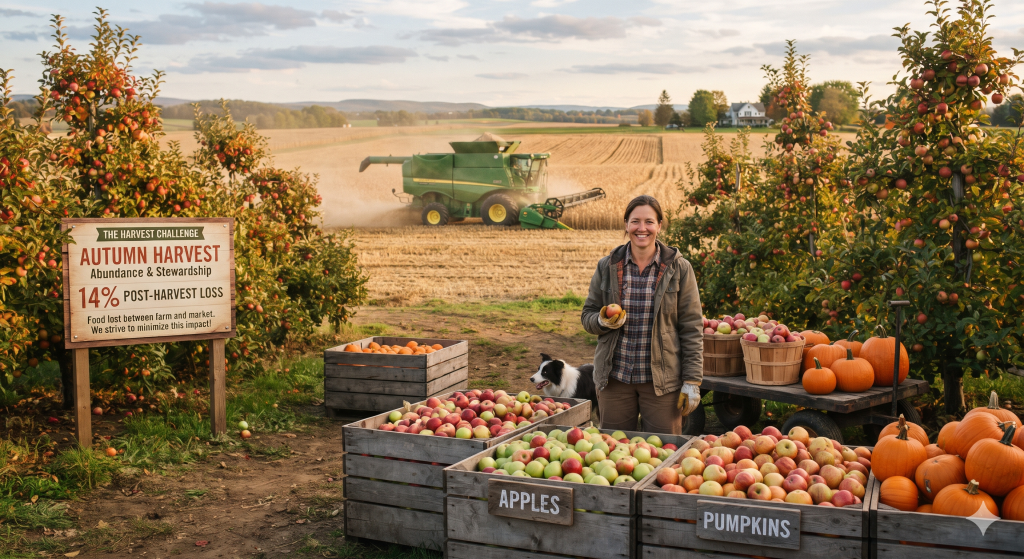
| Global Food Waste/Loss | Roughly 14% lost post-harvest |
| Nutrient Resorption Rate | Up to 50% of N & P recovered by trees |
The Global Harvest and Food Security
Autumn is the culmination of the agricultural calendar—the sacred time of gathering, storing, threshing, and market distribution. For thousands of years, human societies built their cultural festivals around the autumn harvest, recognizing that human survival depended entirely on the success of these few autumn weeks.
A) Major Global Yields: The vast majority of global staple cereal grains (such as corn, wheat, paddy rice, and soybeans) along with hard-rind winter squash, apples, and root vegetables are harvested during this window. According to Food and Agriculture Organization (FAO) metrics, annual global cereal production regularly surpasses 2.8 billion tonnes.
B) Post-Harvest Management and Loss: A critical global challenge in autumn is minimizing post-harvest losses. Globally, roughly 14% of the world’s food is lost between the farm harvest and the retail market due to inadequate cold storage, poor rural transport infrastructure, pest infestation, and fluctuating humidity levels. Improving post-harvest handling is one of the most effective ways to feed a growing world without clearing another acre of forest.
5. Winter: Sub-Surface Resilience, Forest Rest, and Strategic Planning
The Quiet Resilience of Boreal and Temperate Forests
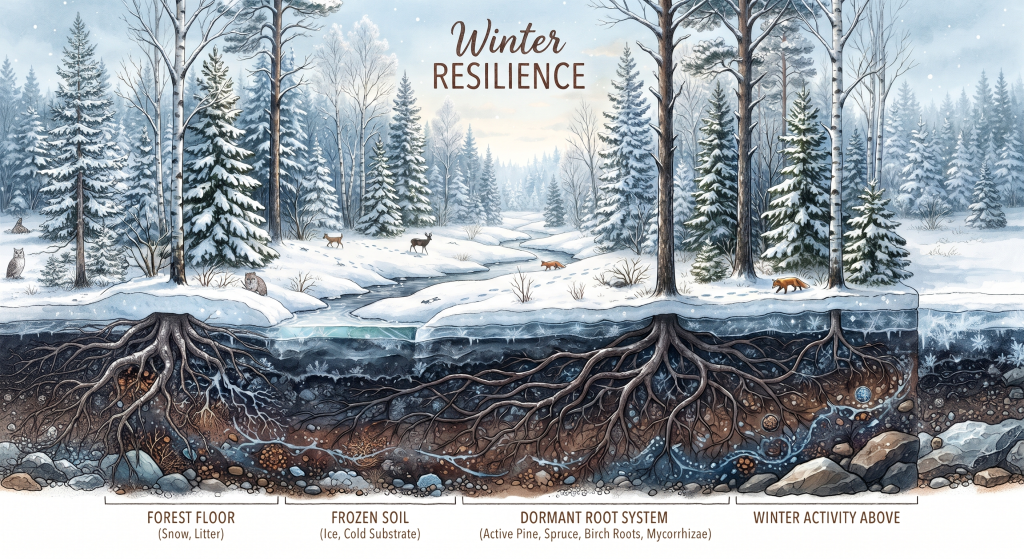
While winter often appears lifeless and desolate from a surface perspective—a monochrome landscape of snow and bare branches—sub-surface and structural resilience is actually operating at its absolute peak.
A) Winter Hardiness and Cellular Protection: Trees undergo a biochemical process known as “hardening.” During this phase, cells actively increase sugar, amino acid, and specific protein concentrations to act as natural organic antifreeze. This prevents the formation of sharp ice crystals that would otherwise rupture cell walls and kill the plant tissue.
B) Wildlife Adaptations and Keystone Predators: Forest mammals employ diverse survival strategies: some hibernate (like bears and certain rodents), some migrate to warmer latitudes (like many bird species), and others rely on stored food caches and thick winter coats (like wolves, foxes, and deer). Keystone predators regulate herbivore populations during winter, preventing deer and elk from overgrazing young tree saplings and stripping forest understories bare.
Planning, Maintenance, and Agroforestry Design
For farmers, winter is rarely a period of total rest; rather, it is a vital window for reflection, machinery maintenance, financial accounting, and strategic planning for the upcoming agricultural year.
A) Soil Health Assessments: Winter is the ideal time to conduct comprehensive soil nutrient testing, analyze organic matter percentages, and review yield maps from the previous harvest. Farmers use this data to plan crop rotations that will naturally replenish depleted minerals—such as planting legumes (beans, peas, alfalfa) that harbor nitrogen-fixing bacteria on their roots.
B) Agroforestry Expansion and Hedgerow Planting: Many forward-thinking farmers use the quiet winter months to plant windbreaks, establish multi-species hedgerows, or integrate perennial tree crops (such as chestnuts, apples, walnuts, and hazelnuts) into livestock pastures. This practice, known as agroforestry, bridges the historical gap between wild forestry and intensive farming.
5) The Power of Agroforestry Systems
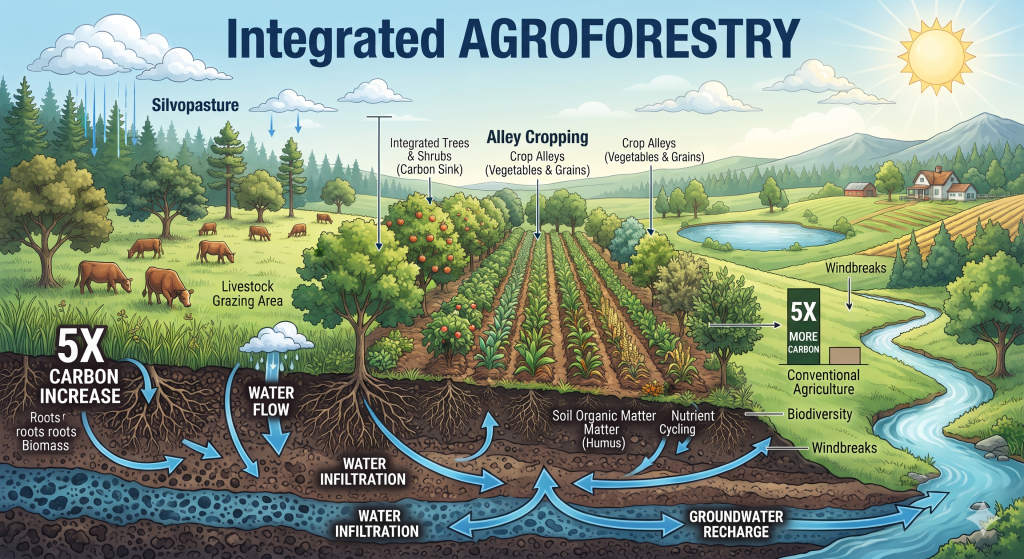
Agroforestry intentionally combines agriculture and forestry practices to create integrated, highly productive, and sustainable land-use systems that mimic natural forest architectures. The three most impactful models include:
1. Silvopasture: The intentional integration of trees, forage plants, and livestock (cattle, sheep, poultry) on the same parcel of land. Trees provide cooling shade and high-protein forage for animals, while livestock naturally fertilize the soil with manure, boosting biological activity without synthetic chemical fertilizers.
2. Alley Cropping: Planting rows of high-value trees or large shrubs (such as fruit trees or timber species) with companion annual crops (like vegetables or grains) grown in the wide alleys between them. This structural diversity dramatically reduces wind and water soil erosion, enhances water infiltration, and diversifies farm income streams.
3. Riparian Forest Buffers: Planting dense strips of native trees, shrubs, and deep-rooted grasses along agricultural waterways and riverbanks. These buffers act as biological filters, trapping agricultural fertilizer runoff (nitrates and phosphates) before they can enter and destroy aquatic ecosystems and marine life.
BENEFITS OF INTEGRATED AGROFORESTRY
| Benefit Area | Positive Impact |
| Soil Organic Matter | Increases by up to 30% over 5 years |
| Carbon Sequestration | 5x to 10x higher than conventional cropland |
| Biodiversity Index | Significant return of native pollinators |
| Water Infiltration Rate | Up to 40% improvement over monoculture |
Conclusion: Living in Harmony with Earth’s Rhythm
The seasonal celebration of nature, forests, and agriculture is much more than an aesthetic appreciation of changing landscapes; it is an absolute blueprint for human survival on a finite planet. For centuries, industrial civilization attempted to conquer and subdue nature, treating soil as a sterile chemical medium and forests as mere timber factories.
The consequences of that approach are now glaringly obvious in the form of climate instability, degraded soils, and failing yields. By respecting the seasonal cadence of the earth—planting in alignment with spring’s renewal, stewarding summer’s biological growth, honoring autumn’s harvest, and protecting winter’s necessary rest—we can heal our fractured ecosystems.
Transitioning toward regenerative agriculture, protecting old-growth forests from reckless destruction, and scaling agroforestry practices across millions of hectares will ensure that future generations continue to experience the rich, life-giving bounty of our seasonal world. We are not separate from nature; we are an active, responsible thread in its magnificent, seasonal web.
