
Child Education in Tribal Community: Pathways, Challenges, and Hope
Introduction
Education is far more than the simple act of learning how to read, write, or calculate sums. For India’s indigenous communities, historically designated in administrative terms as Scheduled Tribes (Adivasis and Janjatis), learning represents an essential tool for self-reliance, social dignity, legal awareness, and long-term community empowerment.
Tribal traditions have sustained intricate systems of ecological knowledge, oral literature, and community stewardship across generations. However, formal schooling bridges ancestral heritage with modern citizenship, equipping the younger generation to protect their collective interests, voice their rights, and participate in contemporary civic life.
Ensuring meaningful child education in tribal community settings requires a deep understanding of unique socio-cultural realities. Indigenous children do not arrive at school as clean slates; they bring rich oral histories, distinct mother tongues, and an intimate understanding of nature.
When modern educational institutions overlook these backgrounds or treat indigenous identities as deficiencies, schools risk alienating young learners. Conversely, when classrooms honor indigenous languages, provide reliable nutrition, build safe residential environments, and offer compassionate teaching, education becomes a powerful, transformative force.
Investing in the education of tribal children is both an ethical imperative and a constitutional obligation under the Right of Children to Free and Compulsory Education (RTE) Act and Article 46 of the Indian Constitution. A thorough examination of the educational realities across India’s tribal belts shows that systemic hurdles persist alongside notable progress.
Achieving universal, equitable, and respectful schooling requires sustained commitment from policymakers, educators, and grassroots communities alike.
Understanding Child Education in Tribal Communities
India is home to an extraordinarily diverse indigenous population, comprising over 700 distinct Scheduled Tribes distributed across nearly all states and union territories. According to official Census data, Scheduled Tribes account for approximately 8.6% of the national population, numbering more than 104 million citizens.
This population is not monolithic; it encompasses vibrant, diverse communities with distinct customs, languages, governance traditions, and livelihood systems.
A Spectrum of Diverse Geographies and Cultures
The lived experience of a tribal child varies widely depending on geography and community traditions:
-
In central and eastern India—including Madhya Pradesh, Chhattisgarh, Jharkhand, Odisha, and West Bengal—indigenous populations frequently live in close proximity to mining belts, commercial forests, and industrial zones, facing heightened pressures of displacement and environmental change.
-
In southern and western regions—including Kerala, Tamil Nadu, Maharashtra, Gujarat, and Rajasthan—communities range from settled agriculturalists to forest-dwelling groups, each navigating unique socio-economic transitions.
-
Particularly Vulnerable Tribal Groups (PVTGs), representing 75 specific communities across 18 states and the Union Territory of Andaman and Nicobar Islands, live with greater geographic isolation, traditional livelihoods, and specific health and literacy requirements.
Recognizing this internal diversity is the first step toward building sound educational policies. A strategy that proves successful in an urbanized tribal district of the Northeast cannot simply be transplanted into a remote forest hamlet of the Western Ghats or the dry scrublands of central India. Educational development must be context-sensitive, culturally aware, and adapted to local priorities.
Key Dimensions of Tribal Diversity in Indian Schooling |
||
Linguistic Heritage
|
Geographic Realities
|
Livelihood Cycles
|
Historically, literacy figures among Scheduled Tribes have lagged behind general national averages. While consecutive Census exercises and official educational surveys record steady growth in gross enrolment ratios at primary levels, persistent disparities emerge in learning retention, secondary school completion, and higher education entry.
These gaps reflect systemic underinvestment, linguistic exclusion, and geographic marginalisation, rather than any lack of interest or aptitude among tribal families.
The Importance of Education for Tribal Children
For children growing up in tribal areas, education serves as both an intellectual anchor and a protective shield. When accessible, safe, and culturally respectful, formal schooling produces far-reaching benefits across multiple spheres of community life.
1. Functional Literacy and Daily Life Skills
Foundational reading, writing, and numeracy provide essential practical protections. In rural and forest economies, individuals regularly interact with local revenue offices, cooperative societies, agricultural markets, and financial institutions.
A literate young person can read land documents, verify fair-price shop receipts, calculate agricultural wages accurately, and understand loan agreements. This literacy helps protect families from usurious debt cycles and unfair mercantile exchanges.
2. Expanding Sustainable Livelihood Opportunities
Education provides young people with real choices. While many youth take deep pride in traditional occupations—such as organic farming, horticulture, weaving, and non-timber forest produce gathering—formal credentials enable them to pursue vocational trades, modern technical careers, public administration, healthcare, and higher education.
When indigenous youth qualify as nurses, teachers, forestry officers, lawyers, and software engineers, they diversify household income, build economic resilience, and advocate effectively for their communities.
3. Health Awareness, Nutrition, and Well-being
Decades of public health research demonstrate that every additional year of schooling, especially for young girls, directly correlates with lower infant and maternal mortality, improved domestic nutrition, and higher immunisation rates.
Multi-Dimensional Value of Tribal Education |
|
Individual Autonomy |
Foundational literacy, numeracy, personal confidence, and critical reasoning |
Economic Security |
Protection from debt traps, fairer market access, and vocational diversification |
Community Advocacy |
Understanding of forest rights, Panchayati Raj laws (PESA), and constitutional rights |
Cultural Preservation |
Documentation of oral lore, native flora, traditional music, and tribal languages |
4. Cultivating Confidence and Active Civic Participation
Centuries of social marginalization can lead young people in remote areas to feel hesitant or intimidated when dealing with non-tribal institutions.
A supportive school environment nurtures self-assurance, articulacy, and leadership. Students learn about the Indian Constitution, grassroots governance through the Panchayats (Extension to Scheduled Areas) Act (PESA), and the Forest Rights Act (FRA). This knowledge transforms young learners from passive subjects into active citizens capable of democratic community leadership.
5. Preserving and Documenting Cultural Heritage
Major Challenges Facing Tribal Education in India
Despite meaningful strides in school establishment and student enrolment over the past two decades, tribal education in India faces a matrix of interconnected structural bottlenecks. These challenges stem from geographical, economic, institutional, and linguistic realities.
Geographic Remoteness and Dispersed Habitations
Unlike the clustered, densely populated villages of the river plains, tribal habitations—often known as padas, tolas, hamlets, or bastis—are frequently scattered over steep hill ridges, dense forests, or undulating plateau terrains.
-
In states like Odisha, Jharkhand, and Chhattisgarh, a village of 200 residents may be split across three distinct hamlets separated by streams, ravines, or forest tracts.
-
Establishing and staffing a viable primary school in every micro-hamlet presents significant logistical challenges.
-
Primary school children are often required to trek two to four kilometers across unpaved paths, forest canopies, or unbridged rivulets that become impassable torrents during the monsoon months.
-
These long, physically demanding commutes induce chronic fatigue, raise personal safety concerns, and drive high rates of seasonal absenteeism.
Severe Shortage and Absenteeism of Teachers
The effectiveness of any educational institution rests primarily on its teachers. In remote tribal schools, retaining qualified, committed educators remains a persistent difficulty:
-
Many teachers appointed to rural schools come from urban or non-tribal backgrounds, lack familiarity with local cultures, and do not speak the children’s home dialect.
-
Due to lack of paved roads, piped drinking water, electricity, and family accommodation in forest villages, educators often commute long distances from nearby towns.
-
In bad weather, transport breakdowns lead to frequent teacher absenteeism, reducing school operations to irregular sessions.
-
In many areas, single-teacher primary schools attempt to manage five distinct grades within a single room, placing an unsustainable burden on lone educators.
| Dimension | Primary Obstacle | Direct Impact on Children |
| Physical Access | Dispersed hamlets, lack of bridges, hill terrain | Exhausting daily walks, monsoon dropouts |
| Staffing | Teacher vacancies, non-resident staff, transfers | Single-teacher multi-grade classes, low contact hours |
| Infrastructure | Missing toilets, intermittent power, leaky roofs | Substandard learning spaces, early dropouts among girls |
| Curricular | Non-contextual texts, unfamiliar state languages | Rote memorization without comprehension, loss of interest |
| Economic | Agricultural dependence, seasonal family migration | Interrupted academic years, gradual disengagement |
Inadequate Infrastructure and Learning Resources
While flagships like the Sarva Shiksha Abhiyan and Samagra Shiksha have significantly expanded school facilities, deep regional gaps remain:
-
Many elementary schools in remote forest areas operate out of deteriorating structures with leaking roofs, broken doors, and uneven floors.
-
Reliable boundary walls, age-appropriate desks, functional libraries, and science kits are often absent.
-
The lack of clean, separate, lockable toilets with running water remains a major institutional failing that disproportionately affects adolescent girls, directly increasing dropout rates after puberty.
The Widening Digital Divide
While educational policies increasingly emphasize online learning platforms, virtual curricula, and smart classrooms, reality in tribal hinterlands tells a different story. In thousands of forest habitations, cell towers are distant or non-existent, and household electricity is intermittent.
Few tribal families possess smartphones, laptops, or internet subscriptions. Without careful, grounded planning, rapid transitions toward digital-first educational formats risk widening the learning divide between urban centers and tribal areas.
Language and Cultural Barriers in Tribal Schools
Among all structural impediments to education in tribal areas, the language divide remains one of the most critical yet frequently misunderstood. Language is not merely a mechanism of instruction; it is the medium through which a child conceptualizes reality, expresses emotion, and makes sense of the world.
The Shock of Linguistic Disconnect
When a six-year-old child from a Santhali, Gondi, Korku, Bhili, or Kui-speaking family enters a standard government primary school, they frequently encounter an alien linguistic environment. The teacher typically speaks the state language—such as standard Hindi, Odia, Marathi, Telugu, or Bengali—and textbooks are printed in scripts the child has never seen.
Linguistic Disconnect in Early Childhood Education
Linguistic Disconnect in Early Childhood Education |
||
Child's World
|
=====>
|
Classroom Reality
|
This situation can cause significant cognitive and emotional shock:
-
The child cannot decipher the teacher’s instructions, inquiries, or stories.
-
Natural curiosity is stifled, and the child falls silent out of fear or confusion.
-
Because the child cannot understand standard textbook phrases, they are often mislabeled as slow, inattentive, or unteachable.
-
Over time, school turns into an alienating, stressful place, and the child quietly disengages.
The Imperative of Mother-Tongue-Based Multilingual Education (MTB-MLE)
Decades of research by UNESCO, NCERT, and independent linguists confirm that children learn foundational reading, writing, and cognitive concepts best in their mother tongue. Once a solid conceptual foundation is established in the native language, acquiring second and third languages—such as the regional state language and English—becomes far more intuitive and successful.
Mother-Tongue-Based Multilingual Education (MTB-MLE) uses a phased, transitional approach:
-
Grades 1 to 2: Instruction is conducted predominantly in the child’s mother tongue. Textbooks use local folktales, native vocabulary, and familiar environmental themes. The state language is introduced gently through listening and speaking.
-
Grades 3 to 4: The regional state language is phased in for reading and writing, using bilingual picture cards, dual-language storybooks, and parallel texts.
-
Grade 5 onward: The state language becomes the primary medium of formal instruction, while the mother tongue is preserved for literature, cultural exploration, and conceptual clarification.
Linguistic Disconnect in Early Childhood Education
Child’s World
-
- Mother Tongue
-
- Rich Oral Knowledge
-
- Forest Ecology Lore
-
- Communal Dialect
Classroom Reality
-
- State Language
-
- Standardized Books
-
- Alien Examples
-
- Monolingual Teacher
Culturally Contextualized Curricula
Linguistic inclusion must be paired with cultural relevance. Standardized curricula often feature stories, domestic arrangements, urban landscapes, and technologies unfamiliar to a child in a remote forest hamlet. When instructional materials include native flora and fauna, tribal historic icons (such as Birsa Munda, Rani Durgavati, Veer Narayan Singh, or Tirot Sing), and indigenous agricultural practices, children feel seen, valued, and intellectually validated in their classrooms.
Poverty, Migration, and School Dropout
Seasonal Agrarian Distress and Family Migration
A primary driver of dropouts in tribal communities is seasonal distress migration. Many families farm small, rain-fed plots of land that produce food for only four to six months of the year. Once the harvest concludes in November or December, local employment dries up.
To survive, entire families migrate for months at a time to work in:
-
Commercial brick kilns on city outskirts
-
Distant sugarcane plantations for seasonal crushing
-
Urban construction projects and road-building crews
-
Salt pans and seasonal fishing harbors
When parents migrate, they face a difficult choice: leave young children behind in empty villages without adult supervision, or take them along to worksites. Most take their children. At these destinations, safe schools are rarely available, clean water and sanitation are scarce, and learning is completely interrupted. When families return to their home villages in May or June, children find themselves months behind their classmates, feel lost, and often drop out entirely.
Opportunity Costs and Sibling Care
In low-income tribal households, a child’s time carries tangible opportunity costs:
-
Older children, especially elder daughters, care for younger siblings while parents work as wage laborers or gather minor forest produce.
-
Children graze cattle, fetch firewood, walk long distances to draw water, and assist with seasonal field work.
-
When an impoverished household must choose between sending a child to an uninspiring school or keeping them home to support family survival, immediate economic demands often take precedence.
The Hidden Costs of Free Education
Although tuition in state-run elementary schools is entirely free under the RTE Act, ancillary costs add up. Families must purchase notebooks, stationery, geometry boxes, footwear, and modest school wear. For households living on irregular day-wages, purchasing multiple sets of supplies for three or four children every term presents a real financial strain, making ongoing school attendance difficult to sustain.
Education of Tribal Girls
Gender dynamics within tribal communities differ in important ways from non-tribal rural societies. In many indigenous traditions, girls and women enjoy higher degrees of social mobility, greater voice in community life, and an absence of practices like dowry. However, institutional and economic barriers continue to place tribal girls at a compounded disadvantage in the education system.
Compounded Vulnerabilities at Puberty
The primary school completion rate for tribal girls has improved nationwide, but the transition to upper primary and secondary levels reveals sharp attrition. As girls approach adolescence, the challenges multiply:
-
Physical Safety on Commutes: Secondary schools are often located five to ten kilometers away in larger village centers or roadside towns. Parents worry about their daughters’ safety on isolated forest tracks, quiet rural highways, and poorly lit bus stops, often choosing to keep them home if secure transport or residential hostels are unavailable.
-
Domestic Workloads: As girls grow older, household domestic responsibilities shift onto their shoulders. Cooking meals, washing clothes, caring for younger siblings, and collecting forest produce consume hours that could otherwise be dedicated to study.
Factors Affecting Secondary School Retention Among Tribal Girls: |
|
[+] Protective Factors: |
[-] Attrition Drivers: |
Accessible Kasturba Gandhi Balika Vidyalayas (KGBVs) |
Distant, unmonitored secondary school routes |
Secure bicycles / dedicated rural transport networks |
Lack of functional adolescent sanitation infrastructure |
Female tribal teachers and mentors in upper grades |
Heavy elder-daughter domestic and child-care burdens |
Clean, private, and running-water sanitation facilities |
Early marriage pressures in economically distressed areas |
Early Marriage Pressures in Distressed Regions
While some indigenous cultures historically favored adult marriages based on mutual consent, economic hardship and exposure to neighboring conservative norms have contributed to early marriages in certain regions. In struggling communities, marrying a daughter off young is sometimes seen as a way to ease household financial burdens.
Safe Residential Hostels as Gateways to Empowerment
Where safe residential educational facilities are established, outcomes change dramatically. Institutions like the Kasturba Gandhi Balika Vidyalayas (KGBVs)—residential schools specifically designed for girls from disadvantaged communities—demonstrate that when tribal girls are provided secure housing, nutritious meals, modern academic support, and sports facilities, their retention and performance soar.
Freed from heavy domestic chores and long, dangerous commutes, these young women complete their schooling, enter universities, and return to mentor their home communities.
Government Initiatives for Tribal Education in India
The Government of India, in coordination with state administrations, has introduced dedicated policy frameworks, constitutional allocations, and welfare programs to expand educational access across tribal areas.
Major Central Interventions for Tribal Education
National Education Policy (NEP) 2020 Targeted SEDGs, Mother Tongue Primary Instruction, Balvatikas |
||
EMRS Residential Schools (Class 6-12) |
Samagra Shiksha Infrastructure & Textbooks |
Targeted ST ScholarshipsPre & Post Matric Support |
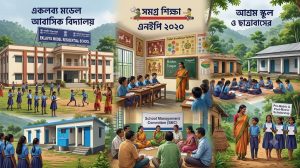
1. Eklavya Model Residential Schools (EMRS)
Initiated under the Ministry of Tribal Affairs, Eklavya Model Residential Schools represent one of the state’s most substantial investments in middle and higher secondary tribal education:
-
Focus and Structure: Modeled on the pattern of Jawahar Navodaya Vidyalayas, EMRSs are autonomous residential institutions catering to Scheduled Tribe students from Classes 6 through 12.
-
Objective: These schools aim to provide free, high-quality, modern education—including science labs, computer rooms, athletics, and cultural arts—in remote tribal areas.
-
Expansion Mandate: Central policy mandates an EMRS in every sub-district or block where the Scheduled Tribe population exceeds 50% and numbers at least 20,000 residents, helping talented tribal students compete effectively for engineering, medical, civil service, and university admissions.
2. Samagra Shiksha Scheme
The Ministry of Education’s overarching Samagra Shiksha program integrates pre-school through Class 12 education, focusing on equity and infrastructure development:
-
It funds the construction of school buildings, additional classrooms, drinking water facilities, and separate girl-friendly toilet blocks across tribal districts.
-
It covers free textbook distribution, uniform allowances, composite school improvement grants, and teacher training programs.
-
It funds residential hostels, transport allowances for students from remote habitations, and targeted remedial education programs.
3. National Education Policy (NEP) 2020
The National Education Policy 2020 places special emphasis on equity for Socio-Economically Disadvantaged Groups (SEDGs), explicitly highlighting tribal communities:
-
Instruction in the Mother Tongue: NEP 2020 underscores that, wherever possible, the medium of instruction until at least Grade 5 (and preferably through Grade 8) should be the child’s mother tongue, home language, or local dialect.
-
Special Education Zones (SEZs): The policy recommends designating regions with significant tribal populations as Special Education Zones to receive heightened funding, enhanced teacher ratios, and targeted institutional support.
-
Indian Knowledge Systems: NEP 2020 promotes integrating traditional tribal knowledge—ranging from ecological conservation to natural agriculture and arts—into mainstream school curricula.
4. Dedicated Scholarship Portfolios for Scheduled Tribe Students
Financial assistance is critical to preventing school dropouts at key educational transitions:
-
Pre-Matric Scholarships: Provided to eligible ST students studying in Classes 9 and 10 to help families cover incidental school costs and discourage early withdrawal.
-
Post-Matric Scholarships: Vital financial awards that cover tuition, exam fees, and maintenance stipends for ST scholars pursuing higher secondary, vocational, undergraduate, and postgraduate studies.
-
National Fellowship and Overseas Schemes: Highly competitive programs that fund tribal scholars pursuing advanced research degrees (M.Phil and Ph.D.) and international postgraduate education.
5. Ashram Schools and Dedicated Hostels
Under Centrally Sponsored Schemes, state tribal welfare departments run thousands of residential Ashram Schools across interior districts. These institutions combine primary and upper-primary schooling with boarding and lodging, providing students with quiet study areas, daily meals, and basic healthcare close to home.
The Role of Teachers, Parents, and Tribal Communities
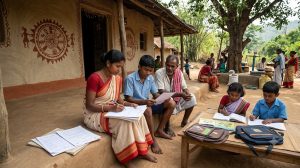
Educational interventions work best when schools operate as collaborative community hubs rather than distant, bureaucratic outposts.
Teachers as Empathetic Cultural Mentors
A teacher in a tribal school must be more than a subject instructor; they must serve as an empathetic mentor who respects local customs:
-
Educators who learn the basics of the community language build immediate trust with their students.
-
Special training in cross-cultural empathy helps teachers replace punitive, rigid disciplinary methods with compassionate, child-centered guidance.
Recruiting Local and Para-Teachers
One of the most effective strategies for reducing teacher absenteeism is recruiting educated youth directly from local tribal communities. Local teachers understand the village dialect, understand domestic livelihood patterns, and reside within the community, eliminating the daily commuting challenges that disrupt schooling. Serving as relatable role models, they show young learners that educational success is achievable.
Energizing School Management Committees (SMCs)
The Right to Education Act mandates that every government school maintain a School Management Committee (SMC), with parents comprising at least 75% of members.
-
In many tribal villages, SMCs remain inactive due to lack of information or intimidating administrative paperwork.
-
When non-governmental organizations and local leaders explain SMC functions, parents actively engage with school governance.
-
Parents review midday meal quality, track teacher punctuality, advocate for repaired toilets, and mobilize the community to build school fencing, transformating schools through local accountability.
Digital Education and Technology for Tribal Children
Digital learning holds genuine potential to enrich remote classrooms, provided it is deployed as an intentional, well-supported teaching tool rather than an improvised replacement for physical infrastructure.
Digital Enablers vs. Systemic Hurdles |
|
Structural Enablers |
Real-World Constraints |
• Offline-first learning software
|
• Unstable rural power grids
|
The Promise of Meaningful Digital Learning
When implemented thoughtfully, digital tools bring high-quality learning resources directly to isolated classrooms:
-
Offline Educational Platforms: Software suites like DIKSHA, loaded onto local, offline-capable storage devices, allow classrooms to access interactive math lessons, animated science experiments, and language modules without requiring steady internet connections.
-
Solar-Powered Audio-Visual Sets: Combining compact solar panels, long-life batteries, and durable projectors lets schools in un-electrified villages screen educational videos, wildlife documentaries, and history lessons.
-
Linguistic and Cultural Archiving: Microphones and tablets enable children to interview community elders, record local folklore, document native plant varieties, and build their own digital community encyclopedias.
Bridging the Digital Divide
To make technology genuinely useful in tribal schools, policymakers should focus on practical foundational solutions:
-
Prioritize solar micro-grids for interior school buildings to ensure steady power for basic lighting, fans, and digital teaching aids.
-
Emphasize asynchronous, offline-first educational content that updates automatically when a device connects to a network in a market town, avoiding reliance on continuous, high-speed streaming in remote valleys.
-
Provide sustained, hands-on digital training for teachers to help them confidently integrate technology into daily classroom routines.
The Role of NGOs and Community-Based Organisations
Non-Governmental Organisations (NGOs), social foundations, and community-based groups play an important complementary role in tribal education, serving as agile innovators and bridges between communities and the state.
Non-State Organizations: Catalysts and Collaborators
Community-Based NGOs & Foundations |
||
Curricular Innovation Bilingual primers & local lore |
Bridging Migration Seasonal hostels & mobile desks |
Community Mobilization Revitalizing SMCs & girls' retention |
Innovative Bilingual Curricula and Primers
Grassroots organisations frequently pioneer mother-tongue educational materials. Working alongside indigenous elders, artists, and linguists, these teams develop bilingual primers, picture dictionaries, and illustrated storybooks in indigenous languages like Santhali, Gondi, Ho, Kurukh, and Saora. These resources help bridge the linguistic gap long before centralized textbook publishers adapt their materials.
Seasonal Hostels for Migrant Children
To break the cycle of seasonal distress migration, dedicated non-profits collaborate with state administrations to operate seasonal village hostels:
-
During peak migration months, children remain safely in their home villages under the care of trained community wardens.
-
Students receive balanced daily meals, healthcare check-ups, evening tutoring, and emotional support, continuing their studies without disruption while parents migrate for seasonal work.
-
In other settings, organisations operate mobile learning centers near brick kilns and construction hubs, helping displaced children maintain literacy and numeracy skills.
Fostering Girls’ Education and Mentorship
Community groups regularly run village-level learning circles, mobile libraries, and mentorship programs for adolescent girls. By creating safe spaces to discuss health, hygiene, legal rights, and higher education paths, these initiatives help build community confidence, reduce early marriages, and support young women through secondary school completion.
Successful Approaches to Improving Tribal Education
Decades of field interventions across different states offer valuable, replicable lessons for strengthening tribal schooling.
Documented Multilingual Initiatives
In states like Odisha and Andhra Pradesh, systematic Mother-Tongue-Based Multilingual Education programs have achieved notable successes:
-
By hiring native-speaking tribal teachers and introducing primary textbooks written in languages such as Kui, Saora, and Koya (using regional scripts), primary schools saw immediate jumps in daily student attendance and classroom engagement.
-
Children who began learning in their mother tongue demonstrated stronger reading comprehension and math skills in later grades compared to peers thrust directly into unfamiliar state languages.
Key Components of Effective Tribal Education Models:
────────────────────────────────────────────────────────────────
1. Multilingual Instruction (Native language foundations -> State language transitions)
2. Community-Sourced Learning (Locally authored folk stories and ecological themes)
3. Direct Nutritional Support (Warm, locally adapted breakfasts and midday meals)
4. Safe Transportation Networks (Bicycles, mini-vans, community escorts)
5. Dignified Residential Hostels (Hygienic living spaces, tutoring, mentorship)
Locally Sourced Midday Meals and Community Kitchens
School nutrition programs directly impact classroom attendance. Where schools prepare fresh, culturally familiar meals—incorporating local millets, native greens, pulses, and eggs—student attendance stabilizes, child anemia decreases, and classroom alertness improves.
Sourcing vegetables and grains from local women’s self-help groups (SHGs) also stimulates village micro-economies and builds stronger community investment in school operations.
Practical Transport Solutions
In hilly, river-crossed areas where building new secondary schools takes years, providing free, durable bicycles to boys and girls completing Grade 5 has proven remarkably effective.
Bicycle access shortens long daily commutes, protects student energy, and dramatically reduces dropout rates between primary and upper-primary schooling. In other remote areas, community-coordinated shared vans or student escorts ensure children reach school safely.
Practical Solutions for Better Education in Tribal Areas
Transforming education in tribal areas from an ongoing policy challenge into a vibrant success story requires pragmatic, coordinated action across all levels of governance and society.
Strategic Roadmap for Action in Tribal Education
1. Policy & Governance: Fast-track MTB-MLE, flexible cycles |
2. School Operations: Local teacher hiring, solar utilities |
3. Community Engagement: Active SMCs, women SHG networks |
4. Student Support: Dignified hostels, cycling incentives |
For Central and State Governments
-
Institutionalize Mother-Tongue Education: Accelerate the creation of bilingual primers, picture dictionaries, and reading materials for all recognized tribal languages, making MTB-MLE standard practice across all elementary schools in tribal blocks.
-
Incentivize Rural Teacher Postings: Provide hardship allowances, quality family housing, and career incentives for educators serving in remote forest schools, while ensuring single-teacher schools are phased out and fully staffed.
-
Localize Academic Calendars: Allow regional district administrations to adapt school schedules around major local harvest periods and seasonal festivals, reducing recorded absenteeism and preventing academic disruption.
-
Scale Safe Residential Hostels: Expand the network of EMRS, KGBVs, and Ashram schools, ensuring facilities meet high standards for hygiene, nutritious food, clean water, and physical security.
For Schools, Headmasters, and Educators
-
Create Warm, Welcoming Classrooms: Eliminate corporal punishment, respect children’s native dialects, and encourage expressive learning through song, art, dance, and storytelling.
-
Bring Indigenous Culture into the Classroom: Invite village elders, traditional musicians, and craftspeople to lead interactive sessions, showing students that their community heritage is valued alongside modern academic subjects.
-
Track Student Absences Proactively: When a student misses class for three consecutive days, work with the local SMC to check on the family’s well-being and resolve issues before they lead to permanent dropouts.
For Civil Society Organisations and Community Leaders
-
Energize School Management Committees: Train tribal parents on their rights, responsibilities, and oversight roles under the RTE Act, ensuring SMCs take an active role in local school leadership.
-
Establish Village Study Centers: Set up solar-lit community study spaces where children can read, complete homework, and receive guidance from local youth mentors in the evenings.
-
Support Migrating Families: Coordinate seasonal hostels in home villages and establish learning centers at major seasonal worksites, ensuring children maintain educational continuity year-round.
The Future of Child Education in Tribal Communities
The future of tribal education in India must balance two fundamental priorities: full access to modern academic and economic opportunities, alongside the preservation of indigenous cultural identities.
A forward-looking educational framework should never require an indigenous child to assimilate by abandoning their roots. The emerging generation should feel equally confident discussing climate change, writing computer code, and honoring their native traditions, oral histories, and community values.
As digital connectivity reaches interior valleys and tribal youth increasingly step into universities, research institutions, civil services, and entrepreneurial ventures, the broader narrative is beginning to change. These young scholars are not merely beneficiaries of state welfare; they are dynamic changemakers who bring fresh perspectives to sustainable forestry, ecological stewardship, public administration, and social justice.
Investing in an indigenous child’s schooling transforms entire communities, providing the foundation for lasting self-reliance, dignity, and generational progress.
Conclusion
Ensuring quality, inclusive, and culturally respectful child education in tribal community settings remains one of India’s most important educational commitments. Indigenous children possess immense vitality, curiosity, and rich community traditions. However, geographic isolation, linguistic barriers, systemic poverty, and under-resourced schools have historically limited their educational journeys.
Addressing these issues requires moving beyond uniform, top-down policies. Sustainable progress demands a responsive educational system that embraces mother tongues, provides safe and hygienic residential environments, supports dedicated local educators, and treats tribal cultures with genuine respect.
Every child in India’s forest valleys, plateau villages, and mountain hamlets carries the right to learn, grow, and pursue their aspirations in a safe, affirming environment.
By uniting the strengths of committed educators, empowered parents, community organizations, and well-targeted public policies, we can build an inclusive educational landscape where every tribal child thrives—honoring their ancestral heritage while stepping confidently into the future.
