
Traditional Seeds and Tribal Farming in India: Safeguarding Heritage, Biodiversity, and Sustainable Food Systems
To understand “Traditional Seeds and Tribal Farming in India”, we must learn about the traditions and customs of this region. Traditional seeds represent far more than agricultural inputs across the forested tracts, undulating plateaus, and montane valleys of India. For millions of Indigenous and Adivasi cultivators, an open-pollinated seed is an ancestral inheritance, a living gene bank, and the central pivot of community self-reliance. Over millennia, tribal farmers have selected, nurtured, and conserved distinct crop landraces capable of producing yields under unpredictable monsoons, nutrient-poor soils, and minimal external inputs.
Today, industrial agriculture prioritises uniformity, relying on high-yielding varieties (HYVs) and hybrids that demand synthetic fertilisers, chemical pesticides, and regulated irrigation. In contrast, tribal farming systems demonstrate the resilience of agrobiodiversity. Understanding traditional seeds and tribal farming is not an exercise in romantic nostalgia; it is an exploration of sophisticated, ecological plant management refined through continuous observation and communal stewardship.
1. What Are Traditional Seeds?
To understand indigenous farming, one must distinguish between the biological and functional categories of planting materials found in Indian agriculture.
SEED CLASSIFICATION MATRIX |
|||
Attribute |
Traditional Seeds (Landraces) |
Modern Varieties |
Hybrid Seeds (F1) |
Genetic Diversity |
Heterogeneous, dynamic |
Homogeneous, pure |
Uniform, high vigor |
Reproducibility |
True-to-type from harvest |
Mostly true-to-type |
Loses vigor in F2 |
External Input Needs |
Low (organic/rainfed) |
High (N-P-K, water) |
High (intensive) |
Adaptability |
Site-specific microclimates |
Broad ecological |
Optimized zones |
Ownership / Stewardship |
Communal, open-source |
Institutional/PVP |
Proprietary (IPRs) |
Landraces, Farmers’ Varieties, and Heirlooms
Traditional seeds, often scientifically classified as landraces or farmers’ varieties, are dynamic populations of cultivated plants that possess historical origins, distinct identities, and lack formal crop improvement. Rather than being genetically uniform, landraces maintain internal genetic diversity. This intra-varietal variati
on buffers the crop against complete failure: if an emerging pest strain or a sudden drought strikes a field, a segment of the heterogeneous plant population retains alleles capable of surviving and setting seed.
These seeds are open-pollinated. When harvested, dried, and stored correctly, they breed “true to type,” allowing farmers to sow grain saved from their own harvest year after year without experiencing systemic yield collapses or genetic disintegration.
Modern Improved Varieties vs. F1 Hybrids
-
Modern Improved Varieties: Developed through conventional plant breeding by public institutions such as the Indian Council of Agricultural Research (ICAR) or State Agricultural Universities (SAUs). These lines are stabilised, pure-line selections bred for specific desirable traits, such as semi-dwarf stature, uniform maturity, or responsiveness to nitrogen fertilisers. Farmers can technically save seed from modern open-pollinated varieties for a few seasons, though genetic drift and outcrossing gradually reduce yield stability.
-
Hybrid Seeds (F1): The first-generation offspring of two distinct, highly inbred parent lines. F1 hybrids exhibit heterosis, or “hybrid vigour”, displaying high uniformity and rapid vegetative growth when supported by intensive watering, synthetic fertilisers, and chemical pest control. However, seed saved from an F1 crop segregates unpredictably in the second generation ($F_2$). Yield drops significantly, and plant characteristics diverge widely. Cultivators who plant hybrids must purchase fresh certified seed every season from commercial agribusinesses, transforming seed from a shared, self-renewing biological resource into a recurring cash expenditure.
-
Genetically Modified Organisms (GMOs): Altered through laboratory recombinant DNA technology to introduce traits from unrelated species (such as Bacillus thuringiensis crystal proteins in Bt cotton). Unlike landraces shaped by natural and human selection in field environments, transgenic crops are strictly proprietary, subject to domestic and international patents, and legally restricted from unapproved propagation.
2. The Relationship Between Tribal Communities and Traditional Seeds
The survival of indigenous crop varieties in India is inextricably linked to the sociocultural fabric of its tribal (Adivasi) populations. The Anthropological Survey of India recognizes hundreds of distinct tribal groups, each with unique customs, ecological settings, and linguistic lineages. While agricultural techniques vary across regions, common social institutions govern how seed diversity is managed.
Intergenerational Knowledge and Agronomic Lore
In tribal farming systems, seed selection is not treated as a mechanical post-harvest chore. It is an intentional cultural discipline transmitted through oral histories, community labor exchanges, and observational apprenticeships. Elders pass down qualitative diagnostic abilities: knowing precisely which panicles of upland rice matured during a brief dry spell, which millet stalks resisted fungal blast, or which pigeonpea pods were spared by the pod borer.
Seed selection is integrated into customary calendars, local songs, and proverbs that track seasonal markers like the blossoming of the Mahua tree (Madhuca longifolia), the emergence of winged termites, or subtle shifts in night temperatures. These biological cues signal sowing windows calibrated over generations to match local rainfall distributions.
Gender Dimensions: Women as Seed Guardians
Within many central and eastern Indian tribes, women serve as the primary seed selectors, curators, and handlers. While men often handle land clearing, plowing, and bund preparation, women maintain the seed repositories.
Women inspect standing crops prior to full harvest, walking through fields to rogue out diseased plants and tag vigorous, true-to-type specimens for seed collection. They oversee post-harvest curing, winnowing, sun-drying, and treatment with botanical insect repellents. In communities like the Kondh of Odisha, a woman’s social standing is connected to her stewardship of diverse seed stocks. An expansive domestic seed basket (Bihana) ensures that if an early dry spell withers a first sowing, alternative varieties can be planted without incurring commercial debt.
       [Standing Crop Evaluation] (Women tag resilient, pest-free panicles)
                   │
                   ▼
       [Selective Harvesting] (Hand-cut separately from commercial grain)
                   │
                   ▼
       [Moisture Control & Sun Curing] (Desiccation on clean threshing floors)
                   │
                   ▼
       [Botanical Treatment] (Neem oil, wood ash, Begunia leaves, Pongamia cake)
                   │
                   ▼
       [Hermetic Traditional Storage] (Mud-bamboo Dolis, straw Moras, terra-cotta)
                   │
                   ▼
       [Ritual Sowing & Communal Exchange] (Seed festivals, zero-cash seed loans)
Seed as Sacred Trust, Not Commodity
Seed is treated as a living entity passed down from ancestors and held in trust for future generations. Consequently, selling seed for immediate cash profit has historically been discouraged in many tribal traditions. Instead, seed is exchanged as a gift, bartered for alternative varieties, or loaned under customary arrangements: a farmer who borrows a basket of seed pays back an equivalent measure plus a small surplus after harvest to support the community safety net.
3. Traditional Farming Practices Across India’s Diverse Regions
Farming among Indian tribes does not follow a single, uniform template. Practices are shaped by local topography, rainfall, forest cover, and customary land tenure systems.
REGIONAL TRIBAL FARMING SYSTEMS IN INDIA |
|||
Geographic Zone |
Documented Tribal Groups |
Predominant Systems |
Key Crops Conserved |
Central India |
Baiga, Gond, Sahariya |
Bewar (shifting), Dahi, Settled terrace & bund |
Kodo, Kutki, Bewar Makka, Sikia rice |
Eastern India |
Santhal, Ho, Munda, Kondh |
Rainfed terraced lowland, Dongar (upland swidden) |
Indigenous paddy, Finger millet, Niger |
Northeast India |
Apatani, Angami, Konyak, Garo |
Jhum (swidden), Wet-rice fish agro-ecosystems |
Cold-tolerant rice, Perilla, Job's tears |
Southern Hills |
Irula, Kurumba, Soliga, Toda |
Forest-fringe mixed dry plots, shifting terraces |
Little millet, Foxtail millet, Wild tubers |
Central India: The Baiga and Gond Agroecosystems
In the Maikal Hills of Madhya Pradesh and Chhattisgarh, the Baiga community has historically practiced Bewar, an agroforestry swidden system practised on steep slopes. Rather than tilling the earth with iron ploughs—an act their oral traditions caution tears the bosom of Mother Earth—the Baiga broadcast diverse polycultures directly into ash beds created by selective, controlled clearing of underbrush.
A single Bewar plot may contain 12 to 20 different crop varieties sown together, including Kodo (Paspalum scrobiculatum), Kutki (Panicum sumatrense), local maize (Bewar Makka), and drought-hardy pulses like Dongar Kurthi (Macrotyloma uniflorum). Because different crops mature at staggered intervals between September and January, the system ensures a steady harvest and protects against total crop loss.
Among neighbouring Gond cultivators, settled terrace and upland agriculture incorporate complex rotations of indigenous short-duration rice and oilseeds like Niger (Guizotia abyssinica), maintaining soil fertility through farmyard manure and legume-driven nitrogen fixation.
Eastern India: The Kondh, Santhal, and Munda Systems
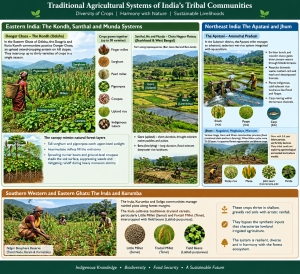
In the Eastern Ghats of Odisha, the Dongria and Kutia Kondh communities practice Dongar Chasa, an upland mixed-cropping system on hill slopes. Kondh farmers intercrop up to thirty distinct varieties of crops in a single season: finger millet, sorghum, pearl millet, pigeonpea, cowpea, and upland rice, alongside indigenous tuber varieties.
The structural diversity of the canopy mimics natural forest layers:
-
Tall sorghum and pigeonpea catch upper-level sunlight
-
Intermediate millets fill the mid-story
-
Sprawling runner beans and ground-level cowpeas shade the soil surface, suppressing weeds and mitigating runoff during heavy monsoon storms.
Further north in the Chota Nagpur Plateau of Jharkhand and West Bengal, the Santhal, Ho, and Munda communities farm along toposequences (Bari, Gora, Bad, and Bera lands). Upland plots (Gora) are sown with short-duration, drought-tolerant native paddies and pulses, while low-lying marshes (Bera) are planted with long-duration, flood-tolerant deepwater rice landraces.
Northeast India: The Apatani and Shifting Cultivation (Jhum)
Northeast India features a remarkable center of plant genetic diversity. In the Subansiri district of Arunachal Pradesh, the Apatani tribe manages an advanced, sedentary wet-rice cultivation system integrated with aquaculture. The Apatani use earthen bunds and wooden sluice gates to divert stream waters through hillside terraces, systematically recycling domestic waste, nutrient-rich soil wash, and decomposed biomass.
Within these flooded terraces, they plant indigenous, cold-tolerant rice landraces such as Emoh and Pyape, alongside carp rearing within the terrace channels.
In neighboring Nagaland, Meghalaya, and Mizoram, various Naga, Garo, and Khasi communities practice Jhum (rotational slash-and-burn farming). When fallow cycles were traditionally 10 to 20 years, Jhum supported sustainable forest regeneration while maintaining diverse varieties of sticky rices, maize, Job’s tears (Coix lacryma-jobi), and perilla. As land pressure contracts fallow periods to 3 to 5 years, soil fertility declines, prompting many tribal youth to explore agroecological and settled horticulture models.
Southern Western and Eastern Ghats: The Irula and Kurumba
In the Nilgiri Biosphere Reserve covering parts of Tamil Nadu, Kerala, and Karnataka, communities like the Irula, Kurumba, and Soliga manage rainfed plots along forest margins.
The Irula cultivate traditional dryland cereals, particularly Little Millet (Samai) and Foxtail Millet (Tenai), intercropped with field beans (Lablab purpureus). These crops thrive in shallow, gravelly red soils with erratic rainfall, bypassing the synthetic inputs that characterize lowland irrigated agriculture.
4. Major Crops Conserved Through Traditional Seeds
Tribal agriculture protects a broad spectrum of neglected and underutilized species (NUS) that conventional markets often bypass.
MAJOR INDIGENOUS CROP GENE POOLS |
||
Traditional Rices |
Indigenous Millets |
Native Pulses & Legumes |
Drought/Deepwater |
C4 Photosynthetic |
Atmospheric Nitrogen |
Medicinal / Aromatic |
Heat/Water Efficient |
Fixation |
High Fe/Zn, Low GI |
Mineral Dense |
Deep Taproots |
Traditional Rice Landraces (Oryza sativa)
India once cultivated over 100,000 distinct rice varieties, a vast number of which originated in the primary genetic diversity centers of the Koraput region of Odisha and Chhattisgarh. Many of these landraces survive in tribal field systems:
-
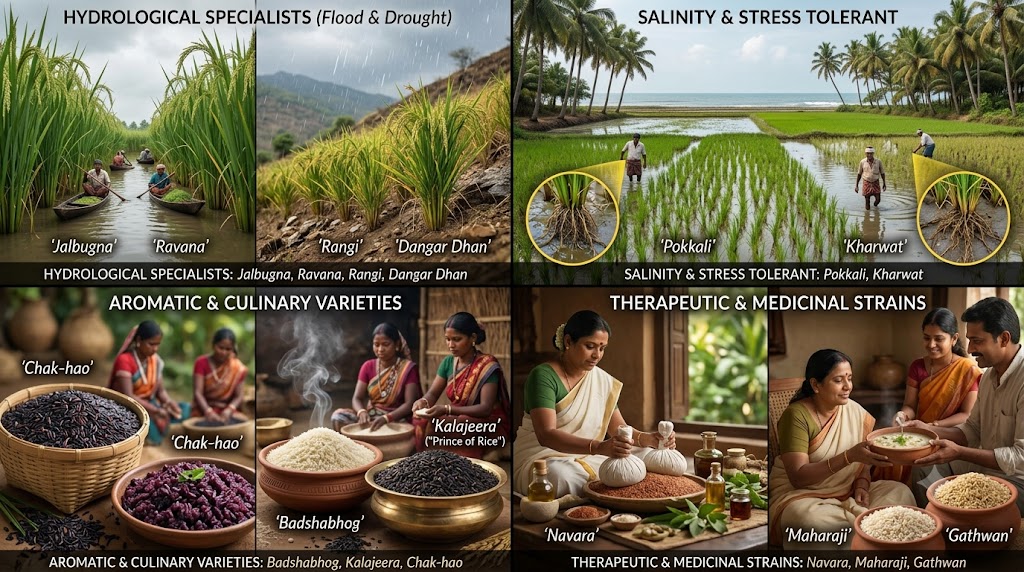
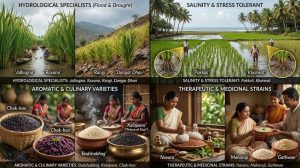
Hydrological Specialists: Deepwater rices like Jalbugna and Ravana feature rapid stem elongation that keeps leaves above rising floodwaters, while varieties like Rangi and Dangar Dhan mature in under 75 days, surviving on thin soils with brief rains.
-
Salinity and Stress Tolerant: Landraces such as Pokkali (Kerala coastal estuaries) and Kharwat manage brackish conditions through root-level sodium-exclusion mechanisms.
-
Aromatic and Culinary Varieties: Varieties like Badshabhog, Kalajeera (frequently dubbed the “Prince of Rice” in Koraput), and Chak-hao (a black glutinous rice from Manipur rich in anthocyanins) command high culinary and ceremonial value.
-
Therapeutic and Medicinal Strains: Indigenous varieties like Navara (Kerala) are utilized in traditional Ayurvedic treatments, while central Indian rices like Maharaji and Gathwan are traditionally prepared for convalescing mothers or individuals suffering from joint inflammation.
The Small and Minor Millets
Millets form the backbone of dryland tribal sustenance. Unlike modern wheat and rice, millets utilize $C_4$ photosynthetic pathways, which allow them to assimilate carbon and convert water into biomass with high thermal and drought efficiency:
-
Finger Millet / Ragi (Eleusine coracana): High in calcium (approximately 344 mg/100g) and dietary fiber, forming a staple for working communities.
-
Kodo Millet (Paspalum scrobiculatum): Extremely resilient, capable of producing grain on marginal, stony soils where other cereals fail.
-
Little Millet (Panicum sumatrense): Highly drought-hardy, with deep root systems capable of extracting moisture from compacted soils.
-
Foxtail Millet (Setaria italica): Low glycemic index, fast-maturing, and naturally resistant to a wide range of common field pests.
NUTRITIONAL PROFILE COMPARISON (Per 100g Raw Grain) |
||||
Grain Type |
Dietary Fiber (g) |
Protein (g) |
Calcium (mg) |
Iron (mg) |
Finger Millet (Ragi) |
11.2 - 11.5 |
7.3 |
344 |
3.9 |
Foxtail Millet (Tenai) |
8.0 |
12.3 |
31 |
2.8 |
Kodo Millet |
9.0 |
8.3 |
27 |
0.5 |
Polished White Rice |
0.2 - 0.4 |
6.8 |
10 |
0.7 |
Whole Wheat |
1.2 - 2.0 |
11.8 |
41 |
3.5 |
Source: Compiled from ICMR-National Institute of Nutrition (NIN) Indian Food Composition Tables (IFCT).Pulses, Legumes, and Oilseeds
Monoculture farming often separates grains from legumes, but tribal systems rely on their synergy. Indigenous varieties of Pigeonpea (Arhar/Tur), Horsegram (Kulthi), Cowpea (Lobia), and Blackgram (Urad) are routinely intercropped with cereals:
-
Soil Fertility Enhancement: The symbiotic association between legume roots and soil Rhizobium bacteria fixes atmospheric nitrogen directly into the rhizosphere, reducing the need for external fertilizers.
-
Nutritional Balance: Pulses deliver amino acids (notably lysine) that balance cereal proteins (which are richer in methionine), supporting balanced nutrition in remote households.
-
Indigenous Oilseeds: Crops such as Niger (Ramtill), Linseed (Tisi), and Sesame (Til) provide dietary lipids and essential fatty acids while flowering at intervals that attract native pollinators.
5. How Tribal Farmers Preserve Traditional Seeds
Seed storage in tribal villages relies on low-cost, decentralized techniques utilizing locally available, biodegradable materials. These methods optimize temperature moderation, moisture reduction, and non-toxic insect deterrence without synthetic chemical fumigants.
Selection and Sun-Drying
Preservation begins long before the seed reaches a storage vessel:
-
Field-Level Selection: The farmer cuts the best, fully mature panicles by hand in the field, setting them apart from the bulk grain destined for direct consumption or market sale.
-
Moisture Equilibrium: Seeds are spread out on woven bamboo mats and sun-dried over several consecutive, cloudless days. Farmers check moisture content through tactile tests: biting a grain until it fractures with a distinct snap, or pressing it with a thumbnail. Reaching a moisture content below 10–12% is critical to prevent mold sporulation, seed rot, and metabolic exhaustion during dormancy.
Traditional Storage Architecture
Storage structures are engineered from local materials to buffer against ambient temperature spikes and humidity fluctuations:
-
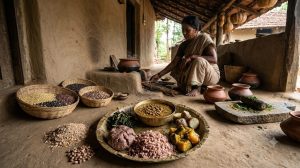
Mud and Bamboo Bins (Doli / Kothi / Petti): Woven split-bamboo cylinders plastered inside and out with a composite slurry of red clay, cow dung, and fine paddy chaff. The cow dung imparts natural antibacterial and insect-deterrent properties, while the clay seals tiny gaps to maintain low internal oxygen levels.
-
Straw Bundles (Puda / Mora): In eastern India, paddy seeds are wrapped tightly inside spirals of hand-twisted rice straw (Puda), secured with bamboo cords, and plastered externally with wet clay. These hanging bundles are stored under thatch roofs, isolated from soil moisture and burrowing rodents.
-
Terra-Cotta Vats and Gourd Flasks: Dried bottle gourds (Lagenaria siceraria) are scooped out, sun-cured, filled with small vegetable or pulse seeds, and sealed with beeswax or river silt to restrict airflow.
       [Mud-Plaster Layer] -> Barrier against insects, keeps air out
       [Woven Bamboo Body] -> Structural shape, permits gradual temperature moderation
       [Neem/Chaff Slurry] -> Natural insect deterrent, repels pests
       [Sealed Base Ring]  -> Elevated on stones to block damp earth and rodents
Natural Bio-Pesticides and Protective Agents
Rather than using synthetic organophosphates like aluminum phosphide or malathion, tribal farmers use local botanicals to protect stored seeds:
-
Neem (Azadirachta indica): Dried neem leaves are layered throughout the seed mass. Neem contains azadirachtin, which disrupts pest feeding and hormonal regulation.
-
Wood Ash: Mixing fine, cool wood ash with pulse seeds abrades the protective waxy cuticles of bruchid beetles (Callosobruchus chinensis), causing them to desiccate and die before they can lay eggs.
-
Aromatic Herbs: Leaves of Begunia (Vitex negundo), Pongamia pinnata, and wild mint are layered in bins to produce natural aromatic scents that deter storage pests.
-
Vegetable Oil Coating: Lightly coating pulse seeds with small amounts of edible mustard, castor, or linseed oil prevents insect eggs from adhering to seed coats, suffocating emerging larvae.
6. The Importance of Traditional Seeds for Biodiversity
The preservation of traditional seeds within tribal ecosystems directly protects agricultural biodiversity, or agrobiodiversity. Modern monocultures cultivate uniform fields that simplify farm ecology. In contrast, tribal agricultural landscapes maintain complex, layered ecological interactions.
ECOLOGICAL DIVERSITY COMPARISON |
|||
HYV / Hybrid Monoculture |
Tribal Polyculture Landraces |
||
[Single Crop Uniformity] |
Requires chemical pesticides |
[Multi-Tier Agro-Canopy] |
Variable root depths |
Destroys soil microbiome |
[Soil Depletion & Runoff] |
Feeds diverse soil biota |
[Continuous Canopy Cover] |
Eutrophication / Dead zones |
[Genetic Vulnerability] |
Enhances water retention |
[Intra-Species Plasticity] |
Single pathogen wiped field |
Catastrophic yield loss |
Catastrophic yield loss |
Buffer against failure |
Intra-Species Genetic Plasticity
The primary value of traditional landraces lies in their intra-species genetic diversity. While an industrial hybrid is genetically uniform across an entire planting, a landrace comprises an assemblage of closely related genotypes.
This internal genetic breadth provides evolutionary plasticity. When subjected to novel pathogens, variations in soil chemistry, or unseasonal weather patterns, the variety does not react as a fragile monoculture. Specific alleles within the population allow a portion of the plants to adapt and yield seed. These landraces represent active evolutionary lineages shaped by ongoing natural selection, rather than static museum specimens.
Below-Ground Biodiversity and Soil Health
Diverse above-ground polycultures directly support diverse subterranean biomes. Different crops feature distinct rooting structures:
-
Deep taproots of pigeonpea penetrate hard subsoil layers, opening channels for moisture infiltration.
-
Dense, fibrous roots of millets weave through topsoils, holding particles together against wind and water erosion.
These roots exude varied biochemical cocktails into the surrounding rhizosphere, supporting balanced communities of arbuscular mycorrhizal fungi (AMF), plant growth-promoting rhizobacteria (PGPR), and earthworms. This active soil food web cycles phosphorus, fixes nitrogen, and builds stable humus without synthetic chemical inputs.
7. Traditional Seeds and Climate Adaptation
As global weather patterns become more volatile, agriculture faces shifting rainfall distributions, prolonged dry spells, heat stress, and sudden downpours. Conventional varieties, optimized for stable conditions and precise irrigation schedules, are vulnerable to extreme weather events.
CLIMATE STRESSORS |
TRADITIONAL SEED ADAPTIVE TRAITS |
Extended Mid-Monsoon Drought |
Stomatal regulation, C4 pathway, deep xerophytic root architectures |
Cloudburst Flash Flooding |
Rapid internode elongation, Rapid internode elongation, |
Ambient Heat Waves |
Epicuticular leaf waxes, osmotic adjustment, early morning anthesis |
Understanding Local Adaptation
Traditional seeds are naturally adapted to their local microclimates. Through centuries of cultivation in rainfed uplands, rocky slopes, and flood-prone basins, farmers have selected seeds that tolerate regional climate stresses:
-
Drought Resilience: Upland rices and small millets feature physiological adaptations such as high water-use efficiency, rapid stomatal closure during midday heat, and cuticular leaf waxes that limit transpiration losses.
-
Submergence Tolerance: In the flood-prone plains of Assam, West Bengal, and Bihar, indigenous deepwater paddies elongate rapidly during sudden floods, keeping their vegetative tips above water. Modern geneticists discovered the crucial SUB1A gene—which enables rice to survive two weeks of complete underwater submergence—within FR13A, an indigenous landrace conserved by farmers in Odisha.
Avoiding Universal Resilience Claims
Not every traditional seed is inherently climate-resilient. A landrace adapted to high-altitude cold environments in the Eastern Himalayas will fail if planted in the semi-arid Deccan plateau. Similarly, an indigenous paddy adapted to coastal estuaries lacks the traits needed to survive prolonged upland droughts.
Traditional seeds are not an instant, universal climate cure. Instead, their value lies in their diverse genetic traits. They provide plant breeders and communities with the raw genetic materials required to select and breed crops adapted to evolving regional stresses.
8. Food Security, Nutrition, and Cultural Dietary Patterns
Food security involves more than simply producing bulk starch calories. The Food and Agriculture Organization (FAO) highlights that true food security requires continuous access to safe, nutritious foods that support an active and healthy life.
THE FOUR PILLARS OF FOOD SECURITY |
|||
Within Tribal Agro-Seed Systems |
|||
[Availability] |
[Accessibility] |
[Nutritional] |
[Stability] |
Continuous harvests via harvests via intercropping |
Zero cash debt; saved household seed reserves |
Mineral-rich, unpolished, low-glycemic staples |
Staggered harvests prevent seasonal famines |
Dietary Diversity Over Caloric Monoculture
The Green Revolution increased national production of polished white rice and refined wheat, but it often displaced mixed cropping systems. In many rural areas, this narrow focus reduced dietary diversity, giving rise to “hidden hunger”—chronic micronutrient deficiencies in iron, zinc, vitamin A, and essential folate.
Tribal systems that rely on traditional seeds help maintain dietary balance:
-
Balanced Food Groups: A typical meal from a traditional plot pairs a coarse grain (such as finger or foxtail millet) with diverse legumes (horsegram or blackgram), field greens (Saag), and native pumpkins or tubers.
-
Unrefined Nutritional Value: Because millets and traditional red or black rices are consumed unpolished or parboiled, they retain their bran, aleurone layers, and germ. These outer layers contain valuable concentrations of B-complex vitamins, dietary fiber, and essential minerals.
Addressing Famine Vulnerability
Because polycultures ripen at different times, they prevent the seasonal famines that can occur in monoculture communities:
-
Short-duration millets like Kutki ripen within 60 to 75 days, providing food during the late-monsoon “lean months” of August and September, when family food stores are often depleted and the main rice crop has not yet matured.
-
Long-duration pulses and root tubers remain in the soil, providing food well into the winter months.
9. Major Challenges Facing Traditional Seed Systems
Despite their documented agronomic and ecological value, traditional seed systems in India face significant institutional, economic, and social pressures.
PRESSURES ON TRADITIONAL SEED PRESERVATION |
|
Pressure Type |
Manifestation and Impact on Tribal Communities |
Market Penetration |
Aggressive marketing of F1 hybrids; debt cycles from input packages. |
Policy Disincentives |
PDS historically subsidizing only white rice/wheat; monoculture focus. |
Cultural Erosion |
Younger generations migrating; stigma labeling millets as "poor food." |
Climate Volatility |
Unprecedented rainfall swings outpacing natural varietal adaptation. |
Disappearing Landraces |
Irreversible loss of unique alleles as elderly seed keepers pass away. |
Market Penetration and Agronomic Debt Traps
Commercial seed enterprises have expanded into tribal farming areas, offering hybrid maize, Bt cotton, and high-yielding vegetable seeds. Backed by aggressive marketing campaigns that highlight potential yield gains, these seeds can draw resource-poor farmers into input-intensive agriculture:
-
Hybrids cannot be reliably replanted, requiring annual seed purchases.
-
Hybrid crops perform best with synthetic inputs, forcing farmers to take seasonal loans from private moneylenders or microfinance institutions.
-
If a drought occurs, crops may fail to meet yield expectations, leaving households trapped in cycles of debt.
Policy and Institutional Biases
For decades, public agricultural policy in India focused primarily on expanding irrigated, high-input monocultures to supply the Public Distribution System (PDS).
-
Minimum Support Prices (MSP) primarily incentivized common paddy, wheat, and select cash crops, giving farmers little economic incentive to cultivate traditional millets and landraces.
-
Subsidized white rice distributed through the PDS shifted local consumption patterns, even in tribal areas, gradually replacing diverse millet-based diets with polished carbohydrates.
-
Only recently, through initiatives like the National Millet Mission and the declaration of the International Year of Millets, has public policy begun to systematically promote indigenous coarse grains.
Cultural Shifts and Generational Disconnect
Formal education systems often overlook indigenous knowledge, while media and market narratives have sometimes stigmatized millets and local rices as backward “poverty foods.” When the elderly women who maintain seed collections pass away without apprentices, their community’s unique, locally adapted seed varieties can disappear in a single season.
10. Institutional, Legal, and Community Initiatives
Efforts to safeguard India’s traditional agricultural varieties operate across multiple levels, from formal state programs to grassroots community seed banks.
THE CONSERVATION CONTINUUM |
|
[Ex-Situ Gene Banks] |
[In-Situ / On-Farm Systems] |
NBPGR National Gene Bank |
Community Seed Banks (CSBs) |
Controlled cryo-chambers (-20°C) |
Continuous field selection |
Preserves long-term genetic viability |
Co-evolution with emerging pests |
Institutional access |
Community controlled, open-source |
Formal Research and the PPV&FR Act
India’s institutional framework includes both scientific research bodies and legal mechanisms:
-
ICAR-NBPGR: The National Bureau of Plant Genetic Resources (NBPGR) in New Delhi manages the Indian National Genebank, one of the largest ex-situ seed repositories in the world. It holds hundreds of thousands of accessions in cold storage chambers at –20°C to ensure long-term genetic preservation.
-
The PPV&FR Act (2001): India’s Protection of Plant Varieties and Farmers’ Rights Act is an internationally recognized legal framework that balances the rights of plant breeders with those of traditional farmers. Under Section 39, farmers are legally entitled to save, use, sow, resow, exchange, share, or sell farm-saved seed, even of protected varieties, provided it is not sold as branded, packaged merchandise. The Act also established the Plant Genome Saviour Community Award, which honors tribal and farming communities that discover, conserve, and develop valuable landraces.
Community Seed Banks: Grassroots Conservation in Practice
While ex-situ gene banks preserve genetic materials under static conditions, in-situ on-farm conservation keeps seeds active in living environments, allowing them to co-evolve alongside shifting climates, soils, and pest populations.
A primary vehicle for on-farm conservation is the Community Seed Bank (CSB):
-
A CSB is a locally managed, communal facility that collects, stores, multiplies, and distributes traditional, open-pollinated seeds to local farming families.
-
CSBs operate like community credit unions: a cultivator borrows a quantity of indigenous seed at sowing time and returns 1.5 to 2 times that amount after harvest. This system maintains viable, active seed stocks without cash transactions.
-
These facilities coordinate crop monitoring, organize seed-swapping fairs (Bija Pandum or Beej Melas), and document local varieties in Community Biodiversity Registers (PBRs).
NOTABLE GRASSROOTS SEED CONSERVATION ORGANIZATIONS |
||
Organization / Champion |
Core Operational Base |
Focus and Documented Milestones |
Navdanya |
Uttarakhand & National |
Focus and Documented Milestones |
Navdanya |
Uttarakhand & National |
Network of 150+ community seed banks; pioneer in organic transition and seed sovereignty |
Deccan Development Society (DDS) |
Zaheerabad, Telangana |
Dalit and tribal women-led seed collectives; revived millet farming, green grain banks |
MSSRF |
Koraput (Odisha), Wayanad (Kerala) |
Mobilized tribal communities in genetic conservation; supported 2012 Equator Prize win |
Rahibai Soma Popere |
Ahmednagar, Maharashtra |
Founded Kalsubai Parisar Biyanee Samvardhan Samiti; conserved dozens of indigenous landraces |
Living Farms |
Rayagada, Odisha |
Works with Kondh tribes to document and protect indigenous wild foods, rices, and millets |
11. Protecting Traditional Seeds for Future Generations
                 FOUR PILLARS OF SEED SOVEREIGNTY
                                │
    ┌───────────────────┬───────┴───────────┬───────────────────┐
    ▼                   ▼                   ▼                   ▼
[Legal Rights &      [Participatory      [Economic Viability  [Decentralized
 IP Protection]       Plant Breeding]     & Direct Markets]    Education]
Full community       Farmer-scientist    Value-added local    Integrating oral
prior informed       collaborations on   processing; short    lore into school
consent; no biopiracy true landraces      supply chains        agro-curricula
1. Strengthening Legal Rights and Prior Informed Consent
Tribal knowledge must be protected from exploitative biopiracy and unauthorized commercial extraction.
-
Biodiversity management committees (BMCs) operating under the National Biological Diversity Act (2002) should actively maintain People’s Biodiversity Registers (PBRs) in every Gram Panchayat.
-
If commercial entities or research facilities identify valuable genetic traits within a community’s landraces—such as resistance to salinity or high mineral concentrations—the community must provide Prior Informed Consent (PIC). Any subsequent commercialization must include equitable, transparent Access and Benefit Sharing (ABS) mechanisms.
2. Supporting Participatory Plant Breeding (PPB)
Rather than treating tribal farmers as passive recipients of centralized scientific research, agricultural universities should engage them through Participatory Plant Breeding (PPB).
In PPB projects, university-trained geneticists work directly alongside experienced tribal seed selectors in their fields. This collaborative approach combines formal Mendelian genetics with intuitive traditional knowledge, breeding resilient, locally adapted crops that retain their culinary, cultural, and low-input characteristics.
3. Developing Local Value Addition and Direct Markets
Preserving traditional seeds becomes economically viable when it helps farming families earn a dignified livelihood.
-
Raw, unprocessed millets are labor-intensive to de-husk by hand, which can deter young farmers. Supplying villages with small-scale, decentralized processing equipment reduces labor requirements and keeps processing revenues within the community.
-
Connecting tribal farmer-producer organizations (FPOs) directly with conscious urban consumers, fair-trade platforms, and institutional buyers creates stable, premium markets for native grains, heritage rices, and organic pulses, reducing reliance on exploitative middlemen.
4. Educational Integration and Intergenerational Knowledge Sharing
School systems in tribal regions should integrate local agroecology into their learning materials.
-
Rural primary and secondary schools can establish educational gardens where village elders teach students the names, seasonal habits, and care of indigenous crops.
-
Creating formal seed libraries in schools and community centers helps preserve agricultural lore as living, relevant knowledge, reframing traditional farming as a respected, skilled ecological discipline.
A Shared Agronomic Future
The story of traditional seeds and tribal farming is fundamentally about the relationship between human cultures and the natural world. Over centuries, India’s tribal communities have served as custodians of plant genetic diversity that benefits society as a whole. Their seed baskets hold adaptations developed through seasons of patient selection, careful observation, and collective stewardship.
As modern agriculture encounters mounting ecological challenges—soil depletion, water scarcity, rising temperatures, and the risks of genetic uniformity—the value of this indigenous knowledge becomes increasingly clear. Conserving traditional seeds is not about rejecting scientific progress; it is about recognizing that lasting agricultural resilience blends contemporary ecological understanding with ancestral farming traditions.
Protecting these living assets means supporting the fundamental rights, territories, and cultural heritage of the tribal communities who keep them alive. Every time an indigenous seed is saved, sown, and harvested in the red soils of Bastar, the high terraces of Arunachal Pradesh, or the mist-covered valleys of the Nilgiris, a vital thread of human heritage is preserved—keeping our shared agricultural future grounded, diverse, and resilient.
