

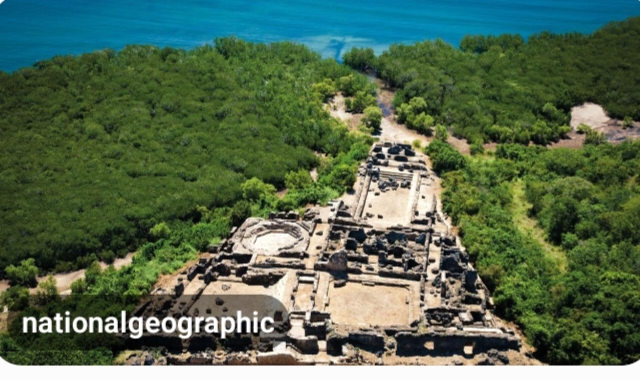
The historic Swahili coast and it’s Indian Ocean connection
Thank you for reading this post, don't forget to subscribe!Introduction: Africa – The Cradle of Humanity and Ancient Civilizations
Africa is a continent whose history stretches far beyond written records, modern political boundaries, and the familiar stories of ancient Egypt. Long before many of the world’s best-known civilizations emerged, African communities were developing sophisticated systems of agriculture, metalworking, architecture, trade, governance, spirituality, and cultural expression.From the grasslands of East Africa to the forests of Central Africa, from the deserts of the Sahara to the river valleys of West Africa, ancient African societies developed in remarkably different environments. Some communities followed seasonal migration routes with their livestock, while others established permanent agricultural settlements. Certain societies became powerful kingdoms with organized political institutions, while others built trading towns that connected distant regions through commercial networks.The ancient history of African tribes is therefore not one single story. It is a collection of interconnected histories involving migration, cultural exchange, technological innovation, environmental adaptation, and the formation of complex societies.Archaeological discoveries have transformed our understanding of these histories. Terracotta sculptures from Nigeria, monumental stone structures in Zimbabwe, pyramids in Sudan, and ancient settlements along the Niger River reveal a continent with extraordinary historical depth.Scientific research has also uncovered information that earlier historians could not access. Ancient DNA studies, radiocarbon dating, archaeological excavation, and linguistic reconstruction now allow researchers to investigate how populations moved, interacted, and adapted over thousands of years.One particularly interesting example comes from a 2024 study published in Nature. Researchers analyzed genetic information from 1,763 individuals, including 1,526 Bantu-speaking people representing 147 populations across 14 African countries. Their findings provide new insights into one of the largest population movements in African history.This article explores the ancient communities, kingdoms, migration patterns, technologies, and cultural traditions that helped shape Africa. It also examines lesser-known archaeological evidence and historical statistics that deserve greater attention.
1. Africa’s Earliest Communities: Life Before Ancient Kingdoms
To understand ancient African tribes, we must begin before the development of kingdoms and cities.For thousands of years, African communities lived as hunters, gatherers, fishers, pastoralists, and early agriculturalists. Their lifestyles were closely connected to environmental conditions, seasonal rainfall, animal movements, and the availability of natural resources.Archaeological evidence shows that prehistoric African societies were not culturally or technologically uniform. Different communities developed specialized tools, artistic traditions, food systems, and settlement patterns.
The San Communities of Southern Africa
The San peoples of southern Africa are associated with some of the world’s longest-documented hunter-gatherer cultural traditions.Their ancestors occupied extensive areas of southern Africa, including present-day Botswana, Namibia, South Africa, and neighboring regions.San communities traditionally developed detailed knowledge of plants, animal behavior, water sources, seasonal changes, and local landscapes.One remarkable aspect of their history is their artistic tradition.Rock paintings and engravings found across southern Africa depict wild animals, human figures, hunting scenes, and ceremonial activities. Some paintings are interpreted as having spiritual or ritual significance, although their meanings vary and cannot always be reconstructed with certainty.An interesting archaeological fact: Southern Africa contains an extraordinary concentration of prehistoric rock art sites. The Drakensberg region alone preserves thousands of rock paintings associated with San artistic traditions.These images are important historical records because they provide visual evidence of how people represented animals, social relationships, and the natural environment before written documentation became widespread.Another fascinating feature of San knowledge systems was their understanding of medicinal plants. Ethnobotanical research has documented traditional knowledge involving plants used for food, healing, and survival in challenging environments.However, it would be incorrect to assume that every modern San community follows exactly the same traditions as ancient hunter-gatherer populations. San identities and cultures have changed through centuries of interaction, displacement, and adaptation.
Ancient Communities Around Lake Turkana
The Lake Turkana region of northern Kenya is another important location for understanding early African history.Archaeological discoveries from this region have revealed evidence of prehistoric communities, early technological development, and changing subsistence strategies.One especially significant discovery is the Lothagam North Pillar Site, a monumental cemetery constructed by early pastoralist communities approximately 5,000 years ago.The site is remarkable because it demonstrates that communities dependent on livestock could organize substantial collective construction projects.The cemetery contains stone pillars, burial chambers, and other features associated with communal burial practices.Researchers have suggested that the monument may have served as a shared social and ceremonial space.Its existence challenges the assumption that monumental architecture could only emerge in large agricultural kingdoms with centralized rulers.The people who constructed it were part of pastoral societies, demonstrating that mobile or semi-mobile communities could also develop complex systems of cooperation and social organization.
The Importance of Pastoralism
Pastoralism became a major part of ancient African economic life, particularly in eastern and southern Africa.Cattle, sheep, and goats provided milk, meat, hides, and other resources. Livestock also carried social and symbolic importance.In many communities, cattle represented wealth, family relationships, marriage arrangements, and social status.A particularly important scientific investigation appeared in Science in 2019. Researchers examined genome-wide data from 41 ancient individuals associated with archaeological contexts in present-day Kenya and Tanzania.Their findings supported a multi-stage movement of early food-producing populations into eastern Africa.The research also demonstrated that incoming populations interacted genetically with existing local communities rather than simply replacing them.This is important because it reveals that African population history was shaped by repeated interaction and cultural exchange.Historical insight: The movement of livestock, farming techniques, languages, and people did not necessarily happen simultaneously. Different technologies and cultural practices spread through different networks and at different times.
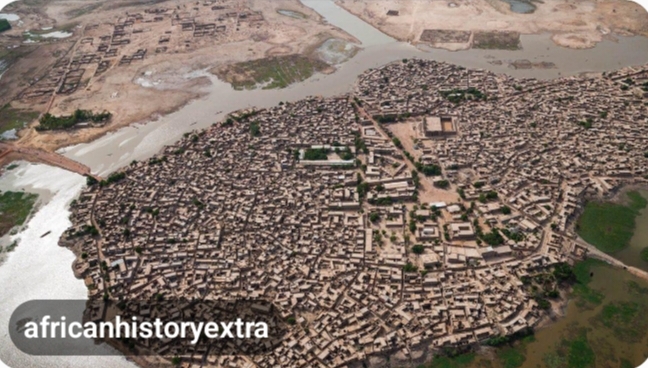
The ancient urban landscape of the Niger Inland Delta
2. The Bantu Expansion: One of Africa’s Most Important Historical Migrations
One of the most significant developments in African history was the expansion of Bantu-speaking populations.The Bantu expansion refers to a long process through which communities speaking related Bantu languages spread from areas around present-day Cameroon and Nigeria into large parts of Central, Eastern, and Southern Africa.Researchers generally place its beginnings around 6,000–4,000 years ago, although the exact chronology and routes remain subjects of scholarly discussion.This was not a single migration event. It involved multiple movements, settlement expansions, interactions with existing communities, and changes in language and technology.
How Did the Bantu Expansion Begin?
The ancestors of Bantu-speaking populations are generally associated with the border region between modern Nigeria and Cameroon.Over time, different groups moved through Central Africa and beyond.Agricultural practices, environmental changes, population growth, and technological developments probably contributed to these movements.The expansion was particularly significant because it transformed the linguistic landscape of much of sub-Saharan Africa.Today, Bantu languages are spoken across a vast geographical region, extending from Central Africa to the southern tip of the continent.The modern distribution of these languages reflects thousands of years of population movement and cultural interaction.
Research Statistics: The Genetic Evidence
A major study published in Nature in 2024, titled “The genetic legacy of the expansion of Bantu-speaking peoples in Africa,” provides valuable information.The research included:1,763 participants in the newly generated genetic dataset.1,526 Bantu-speaking individuals.147 Bantu-speaking populations.14 African countries.12 ancient individuals from Late Iron Age archaeological contexts.The researchers identified evidence supporting a serial-founder model of migration.In simple terms, this model suggests that populations expanded through successive movements, with communities establishing new settlements and gradually developing regional differences.The study also found significant genetic contributions from local populations in regions reached by Bantu-speaking communities.This finding is particularly important because it challenges simplistic explanations that describe the expansion as a straightforward replacement of one population by another.Instead, it suggests a complicated history involving migration, intermarriage, cultural exchange, and regional adaptation.
The Linguistic Legacy
Bantu languages belong to the larger Niger-Congo language family.Examples include Swahili, Zulu, Xhosa, Shona, Kinyarwanda, Kikongo, and many others.Although these languages share historical relationships, they developed distinct vocabularies, pronunciations, grammatical features, and cultural associations.Language can therefore provide important evidence for reconstructing ancient migration routes.However, linguists caution that language history does not always correspond directly to genetic history. A population may adopt a new language without experiencing large-scale biological replacement.The Bantu expansion remains one of the clearest examples of why archaeology, genetics, linguistics, and historical anthropology must be studied together.
3. The Nok Culture: Ancient Nigeria’s Mysterious Terracotta Artists
One of the most fascinating ancient societies in West Africa was the Nok culture of present-day central Nigeria.The Nok culture is famous for its extraordinary terracotta sculptures, especially human heads and figurines featuring carefully modeled facial features.These objects demonstrate a remarkable artistic tradition that developed long before many of the region’s better-known historical kingdoms.When Did the Nok Culture Exist?Archaeological research places the Nok cultural tradition broadly between the middle of the second millennium BCE and the last centuries BCE, although its different phases varied across locations.The culture is associated with farming communities living in dispersed settlements.The name “Nok” comes from the modern Nigerian location where important early discoveries were made.
Terracotta Sculptures: More Than Decoration
Nok terracotta sculptures often display distinctive features:
- Large and expressive eyes.
- Carefully shaped noses and mouths.
- Elaborate hairstyles.
- Decorative facial markings.
- Neck ornaments and other details.
- Highly individualized artistic forms.
These sculptures are historically important because they represent one of the earliest known large-scale sculptural traditions in sub-Saharan Africa.But their purpose remains partly uncertain.Researchers have investigated their possible relationships with ancestral practices, burial traditions, ritual activities, and community identity.Excavations have revealed connections between some terracotta deposits and stone arrangements interpreted as graves.This evidence suggests that the sculptures may have been involved in complex ceremonial and mortuary practices.
A Little-Known Scientific Detail About Nok Ironworking
The Nok culture is frequently discussed in connection with early African iron technology.For many years, researchers assumed that ironworking and terracotta production appeared together.However, more recent archaeological investigations have complicated that interpretation.Research summarized by archaeologist Gabriele Franke in the Oxford Research Encyclopedia of African History indicates that the earliest evidence for iron production appears at least a century after the earliest terracotta figurines.This is an important correction to older historical assumptions.It suggests that the artistic traditions of Nok communities were already developing before iron production became established in the archaeological record.At the Taruga site, excavations revealed evidence of iron smelting, including furnaces and metallurgical remains.Some early ironworking evidence in the Nok region dates to approximately the first millennium BCE.
Why Is Nok History Still Mysterious?
Despite decades of research, archaeologists still do not know the complete political structure of Nok society.There is currently insufficient evidence to establish that the Nok people lived under a centralized kingdom or powerful monarchy.Recent research instead points toward dispersed farming settlements with specialized production and complex ritual practices.This is an important distinction.A society does not need enormous palaces or royal tombs to develop sophisticated artistic and technological traditions.The Nok culture demonstrates that remarkable cultural achievements can emerge within relatively decentralized communities.
4. The Kingdom of Kush: Africa’s Powerful Nile Civilization
When people discuss ancient African civilizations, Egypt usually receives the greatest attention.However, immediately south of ancient Egypt developed another remarkable civilization: the Kingdom of Kush.Kush was centered in what is now Sudan and played an important role in the political, economic, and cultural history of the Nile Valley.Its history extended across many centuries, with major political centers including Kerma, Napata, and Meroe.
The Rise of Kush
The Kingdom of Kush became one of the most influential powers in northeastern Africa.Its strategic position allowed it to participate in trade between the African interior, the Nile Valley, the Mediterranean, and regions further south.
Kushite rulers controlled important agricultural territories and commercial routes.
The civilization developed distinctive artistic styles, religious practices, architecture, and political institutions.
The Twenty-Fifth Dynasty of Egypt
One of the most surprising chapters in African history occurred when Kushite rulers established control over Egypt.During the eighth and seventh centuries BCE, Kushite kings ruled Egypt as the Twenty-Fifth Dynasty.This period demonstrates that political and cultural influence in the ancient Nile Valley moved in multiple directions.
Kush was not simply a neighboring civilization influenced by Egypt. It became a major political power that directly governed Egypt for a period.Kushite rulers also promoted religious traditions connected with earlier Egyptian practices while maintaining their own political and cultural identity.
Meroe: The Industrial Center of Kush
Meroe became one of the most important cities in the later history of Kush.Located in present-day Sudan, it developed into a major political and economic center.Its archaeological remains include pyramids, temples, palaces, domestic buildings, industrial areas, and water-management installations.
UNESCO identifies Meroe as the heartland of the Kingdom of Kush, a major power from the eighth century BCE to the fourth century CE.The archaeological property includes three important areas:
- Meroe, the royal city and cemetery.
- Naqa, an important religious center.
- Musawwarat es-Sufra, another major ceremonial and archaeological complex.
An Extraordinary Fact About Ancient African Industry
Meroe is especially important because of its ironworking history.Archaeological research has identified extensive remains associated with iron production.A chapter by archaeologist Jane Humphris in The Oxford Handbook of Ancient Nubia explains that iron production in the Meroe region continued for more than 1,000 years.This is an extraordinary example of technological continuity.It also shows that African metalworking traditions were not isolated or primitive. They developed over long periods and responded to changing economic and political conditions.However, an interesting archaeological discovery complicates the traditional description of Meroe as a continuously active industrial center.A 2019 study published in Antiquity by Chris Carey, Frank Stremke, and Jane Humphris found that many of the known slag heaps belonged primarily to earlier Napatan or later post-Meroitic periods.The researchers identified relatively little evidence of ironworking activity between approximately 300 BCE and 300 CE in the particular deposits they studied.This suggests that industrial production may have been reorganized during the period when Meroe served as the Kushite capital.It is a valuable reminder that archaeological evidence can challenge long-established historical assumptions.
The Pyramids of Sudan
One of the most visually striking features of Kush is its pyramids.The pyramids of Sudan are generally smaller and steeper than the famous pyramids of Egypt.They were associated with royal and elite burials and formed part of distinctive funerary traditions.The archaeological landscape of Meroe demonstrates that pyramid building was not exclusive to ancient Egypt.Kushite communities developed their own architectural expressions while participating in broader Nile Valley cultural traditions.
5. The Kingdom of Aksum: An African Power Connected to the World
The ancient Kingdom of Aksum developed in the northern Ethiopian and Eritrean highlands.It became one of the most influential political and commercial powers in northeastern Africa.Aksum’s importance came from its geographical position between the African interior, the Red Sea, Arabia, and the Mediterranean world.
The Growth of Aksum
Aksum emerged as a powerful kingdom during the early centuries CE.Its political influence reached far beyond the immediate highlands.The kingdom participated in international trade networks and became particularly important because of its connections with the Red Sea port of Adulis.Merchants exchanged products such as ivory, agricultural commodities, precious materials, and other goods.Aksum also developed a distinctive monetary system.Its rulers issued gold, silver, and bronze coins, providing important evidence of organized economic and political institutions.
Aksum’s Monumental Stone Architecture
The kingdom is famous for its enormous stone stelae.These monuments were carved from single pieces of stone and erected as markers associated with elite burial complexes.Some were decorated with architectural designs representing multi-storey buildings.The largest surviving standing stelae rise more than 20 metres above the ground.This engineering achievement required advanced stone-working knowledge, planning, transportation, and organized labor.The monuments are especially significant because they reveal how Aksumite rulers expressed political authority through architecture.
The Christian Transformation
During the fourth century CE, Aksum adopted Christianity under King Ezana.This made Aksum one of the earliest states in the world to officially adopt Christianity.The transformation influenced architecture, religious institutions, writing, political identity, and regional connections.However, Aksum did not immediately abandon all earlier cultural practices.Religious change developed over time and interacted with existing traditions.
A Forgotten International Connection
Aksum’s history illustrates how ancient African civilizations were connected to global networks.The kingdom maintained relationships with the eastern Roman Empire, Arabia, and other Red Sea trading communities.It also produced coins that circulated beyond its immediate political territory.This provides tangible evidence that ancient African states participated in international commerce and diplomatic exchange.UNESCO recognizes Aksum as a major archaeological center whose surviving monuments date from the first to the thirteenth centuries CE, although the kingdom’s greatest political influence belongs particularly to its earlier centuries.
6. Great Zimbabwe: The Stone City That Challenged Colonial Historical Narratives
Great Zimbabwe is one of the most remarkable archaeological monuments in southern Africa.Located in present-day Zimbabwe, the site represents the achievements of Shona-speaking ancestors and the development of a powerful regional political and commercial center.The settlement developed during the medieval period and reached its greatest importance between approximately the eleventh and fifteenth centuries.
The Architecture of Great Zimbabwe
Great Zimbabwe is famous for its impressive dry-stone walls.Unlike many monumental buildings around the world, its major stone structures were constructed without mortar.Builders used carefully selected granite blocks and arranged them in stable, carefully fitted courses.The walls were not simply random piles of stones. They demonstrate considerable knowledge of construction techniques, material properties, and structural stability.
The major architectural areas include:
- The Hill Complex.
- The Great Enclosure.
- The Valley Ruins.
UNESCO identifies Great Zimbabwe as a major example of Shona civilization between the eleventh and fifteenth centuries.The protected archaeological landscape extends across nearly 800 hectares, while the central built-up area is much smaller.
Interesting Construction Statistics
The Great Enclosure contains one of the most impressive stone walls in the region.According to the Metropolitan Museum of Art, part of the enclosure wall extends approximately 820 feet, or around 250 metres.Some sections reach approximately 36 feet, or nearly 11 metres, in height.The scale of this construction demonstrates the organizational capacity of the society that built it.
How Large Was the Population?
Population estimates vary depending on the archaeological method and the geographical area being considered.The Metropolitan Museum of Art’s historical overview suggests that the settlement may have supported more than 10,000 people at its height.A more recent Metropolitan Museum discussion presents an estimate of approximately 20,000 people.These figures should be treated as scholarly estimates rather than precise census records.The population was not necessarily concentrated inside the massive stone enclosures. Many inhabitants lived in surrounding residential areas.
The Indian Ocean Trade Connection
Great Zimbabwe was connected to a broader commercial system involving the East African coast.Archaeological discoveries have revealed imported objects, including Chinese ceramics and glass beads.These materials indicate that the settlement participated in long-distance trade networks.Gold and ivory were important commodities in the wider regional economy.The city’s economic strength was connected to agriculture, livestock management, metalworking, and trade.
A Disturbing Chapter in the History of Archaeology
During the colonial period, some European writers refused to accept that Great Zimbabwe had been built by African communities.Various foreign-origin theories were promoted, despite the absence of reliable archaeological evidence supporting them.Scientific excavations eventually demonstrated the site’s African origins.Today, Great Zimbabwe stands as an important example of how archaeological research can challenge colonial historical narratives.Its architecture is not merely an ancient construction achievement. It is also evidence of the importance of correcting historical interpretations through scientific investigation.
7. Ancient West African Urban Life: Djenné-Djeno and the Niger River
When people imagine ancient African communities, they sometimes picture only villages or nomadic settlements.However, archaeological discoveries in the Inland Niger Delta reveal a different picture.The ancient settlement of Djenné-Djeno, near present-day Djenné in Mali, provides evidence of early urban development in West Africa.
A City Before the Famous Medieval Empires
UNESCO identifies Djenné as an inhabited settlement since approximately 250 BCE.Its archaeological history is particularly important because it predates the famous medieval empires of Ghana, Mali, and Songhai.The ancient settlement developed around the Niger River’s wider floodplain environment.This location provided opportunities for fishing, agriculture, livestock keeping, craft production, and regional exchange.Archaeological research has identified evidence of ironworking, pottery production, and organized settlement activity.
How Did the Settlement Survive Seasonal Flooding?
The Niger Inland Delta experiences substantial seasonal changes in water levels.Communities developed settlement strategies that responded to these environmental conditions.One important technique involved building settlements on raised natural or artificial mounds.These elevated areas helped protect residential spaces from seasonal flooding.This adaptation demonstrates a sophisticated understanding of local geography.
The Importance of Craft Production
Archaeological evidence from Djenné-Djeno reveals a diversified economy.Residents produced pottery, processed iron, caught fish, and participated in agricultural activities.Specialized craft production suggests that some residents were able to concentrate on particular occupations rather than relying entirely on subsistence activities.This is an important characteristic of urban development.The settlement was not simply a collection of houses. It was part of a wider economic landscape involving specialized production and exchange.
An Important Historical Lesson
The history of Djenné-Djeno challenges the assumption that urban civilization in West Africa began only with the medieval trans-Saharan trading empires.Archaeological evidence demonstrates that substantial settlement complexity existed centuries earlier.It also shows that African urban development followed different pathways from those found in ancient Mediterranean and Asian societies.
8. The Ancient Garamantes: Engineers of the Sahara Desert
The Garamantes were an ancient people who established a powerful society in the Fezzan region of present-day Libya.Their civilization developed in one of the world’s most challenging environments.The Sahara is generally associated with extreme heat, limited rainfall, and difficult agricultural conditions.Yet the Garamantes developed a system that supported agriculture and permanent settlements.
The Underground Irrigation System
One of the most extraordinary aspects of Garamantian civilization was its use of underground irrigation channels known as foggaras.These systems helped transport groundwater from underground sources to agricultural fields.Rather than depending entirely on surface rivers or seasonal rainfall, the Garamantes developed methods of accessing underground water reserves.This allowed agricultural production in areas where conventional irrigation would have been difficult.The system required careful engineering, regular maintenance, and an understanding of underground water movement.
Why Was This Technology So Important?
Water management was central to the survival of Garamantian settlements.Their irrigation system supported the cultivation of crops and helped sustain communities in the desert.It also demonstrates that ancient African technological innovation was not limited to metallurgy or architecture.Water engineering was equally important.
Trade Across the Sahara
The Garamantes also participated in regional trade.Their geographical position connected Mediterranean North Africa with communities further south.Trade networks involved agricultural products, livestock, and other commodities.The Garamantian example demonstrates that the Sahara was not always an impassable barrier.Under suitable political, technological, and environmental conditions, it could become a corridor connecting different regions.
9. The Swahili Coast: Ancient African Communities and Indian Ocean Trade
The Swahili coast developed along the eastern coastline of Africa, particularly in present-day Somalia, Kenya, Tanzania, and northern Mozambique.It became an important commercial and cultural region linking Africa with Arabia, Persia, India, and other parts of the Indian Ocean world.Swahili coastal communities developed distinctive urban cultures, architecture, languages, and commercial institutions
The Origins of Swahili Civilization
Swahili culture developed through long-term interaction among local African communities and overseas trading partners.The Swahili language belongs to the Bantu language family.Arabic, Persian, and other linguistic influences entered the coastal cultural environment through centuries of trade and contact.However, Swahili civilization was not simply imported from overseas.Its foundations were strongly rooted in African societies and their local economic and cultural systems.
Kilwa Kisiwani: A Powerful Trading Center
Kilwa Kisiwani, located in present-day Tanzania, became one of the most important medieval trading settlements along the East African coast.Its commercial connections extended across the Indian Ocean.Merchants traded gold, ivory, ceramics, textiles, and other goods.The city’s wealth was connected partly to its relationships with gold-producing regions in the African interior.Kilwa’s stone architecture, including mosques and residential structures, demonstrates the wealth and technical skill of its inhabitants.
The Dhow and the Monsoon System
Indian Ocean commerce depended heavily on seasonal wind patterns.Traditional sailing vessels known as dhows were adapted to the maritime environment.The monsoon winds helped sailors plan voyages between East Africa, Arabia, India, and other coastal regions.These seasonal patterns created predictable opportunities for trade.The Swahili coast therefore developed as part of a commercial world that depended on knowledge of wind direction, navigation, coastal geography, and maritime technology.
A Little-Known Historical Connection
The archaeological record of Swahili settlements contains imported ceramics from distant regions, including China and the Middle East.These objects are valuable because they provide material evidence of international trade.They also demonstrate that coastal African communities were active participants in the Indian Ocean economy rather than passive recipients of foreign influence.
10. Ancient African Metalworking: Technology Beyond Popular Historical NarrativesMetalworking played an important role in the development of many ancient African societies.Iron tools improved agricultural production, supported specialized craft industries, and contributed to the development of weapons and other technologies.However, African metalworking traditions were diverse.Different regions developed different production techniques, furnace designs, raw-material systems, and craft practices.
Ironworking in Central Africa
Communities in Central Africa also developed extensive ironworking traditions.Iron tools were important for agriculture, woodworking, construction, and everyday life.The development of these technologies interacted with population movements, trade networks, and local environmental conditions.
Ironworking in Central Africa
Communities in Central Africa also developed extensive ironworking traditions.Iron tools were important for agriculture, woodworking, construction, and everyday life.The development of these technologies interacted with population movements, trade networks, and local environmental Ironworking in the Kingdom of KushMeroe offers another important example.Its archaeological remains demonstrate the long history of iron production in the Nile Valley.
However, the evidence also warns against treating technological development as a simple, uninterrupted process.Production systems changed over time, and the distribution of industrial activity shifted in response to economic and political conditions.
They also supported specialized occupations and expanded the range of materials communities could process.In some regions, access to metalworking resources became an important source of political and economic influence.Nevertheless, metal technology alone did not create powerful kingdoms.Political organization, trade, agriculture, environmental conditions, and social institutions were equally important.
11. Ancient African Agriculture:
The Hidden Foundation of Powerful SocietiesAgriculture was one of the most important factors shaping ancient African communities.Different regions developed food systems adapted to their environments.The crops grown in the Sahel were not necessarily the same as those cultivated in tropical forests or the East African highlands.
Indigenous African Crops
Some important African crops include:
Sorghum: A drought-tolerant cereal that became important across many semi-arid regions.
Pearl millet: A crop well suited to hot and relatively dry environments.African rice: A domesticated crop associated with West African agricultural traditions.Finger millet: An important grain in parts of eastern and southern Africa.Cowpea: A protein-rich legume that became an important component of agricultural systems.Fonio: An ancient cereal cultivated in parts of West Africa.These crops helped communities adapt to different rainfall patterns and soil conditions.
