
Sacred Plants and Indigenous Spiritual Beliefs: The Unseen Epistemology of Green Shamanism
Thank you for reading this post, don't forget to subscribe!
Abstract and Introduction: The Silent Witnesses of Human Consciousness
For millennia, human civilization has walked side by side with the botanical kingdom, not merely as consumers of biological resources, but as students, worshippers, and spiritual kin. While mainstream botanical history frequently categorizes plants through a utilitarian lens—evaluating them strictly by their timber value, caloric yield, or basic pharmaceutical pharmacopoeia—indigenous communities across the globe maintain a radically different epistemological framework. Within indigenous ontology, plants are sentient, communicative, and volitional entities endowed with spiritual agency.
This comprehensive exploration delves deep into academic ethnobotany, anthropological field studies, and specialized archival research to uncover hidden dimensions of sacred flora. Moving far beyond generalized tropes, this essay unearths niche statistical findings, historical archives, and little-known biochemical-spiritual syncretisms that rarely surface in mainstream discourse.
Chapter 1: The Epistemology of Plant Sentience in Indigenous Ontology
To understand why indigenous groups revere specific flora, one must first dismantle western dualisms that separate the “animate” animal world from the “inanimate” botanical world. In numerous animistic frameworks—such as those of the Ojibwe, the Amazonian Tukano, and the Siberian Evenks—plants are understood as persons with distinct interior lives, memory systems, and moral codes.
Botanical Personhood and Linguistic Evidence and Sacred Plants and Indigenous Spiritual Beliefs
Linguistic anthropologists studying North American and Amazonian languages have long noted grammatical structures that assign plants to animate gender categories rather than inanimate ones. For instance, in the Algonquian language family, many perennial plants and trees possess grammatical animacy, a linguistic indicator that they actively participate in the cosmos rather than passively occupy space.
- The Voice of the Forest: Elders from the Cree nation traditionally assert that every plant species possesses a Pah-pah-key or guardian spirit that must be addressed with specific songs and tobacco offerings before harvesting.
2. Acoustic Ecology and Plant Signaling: Modern plant neurobiology has recently begun validating what shamans have claimed for centuries: plants communicate via complex subterranean mycorrhizal networks (dubbed the “Wood Wide Web”) and volatile organic compounds (VOCs). Indigenous shamans historically described this as “the whispering of roots,” demonstrating an intuitive understanding of inter-plant signaling long before laboratory instrumentation could detect fungal-root symbioses.
Chapter 2: Niche Archival Data and Ethnobotanical Statistics
Quantitative metrics in ethnobotany reveal startling correlations between high biodiversity hotspots and linguistic diversity, reinforcing the hypothesis that indigenous stewardship is the primary engine of global plant conservation.
Quantitative Insights from Global Biodiversity Registers
The Indigenous-Biodiversity Overlap: According to linguistic-geographic mapping studies published by UNESCO and the World Wide Fund for Nature (WWF), approximately 80% of the planet’s remaining biodiversity is located within indigenous territories, despite these populations making up less than 5% of global human demographics.
Sacred Grove Density Indices: Field surveys in West Africa (specifically among the Yoruba and Ashanti) and South Asia (such as the sacred Kavus of Kerala and the Deorais of Maharashtra) indicate that sacred groves retain up to 400% higher endemic species richness compared to adjacent managed state forests. These patches function as ancient gene banks protected entirely by spiritual taboos.
The Pharmacological Success Ratio: Archival data from pharmaceutical ethnobotany reveals that while random plant screening yields active compounds at a rate of roughly 1 in 10,000, plants identified through indigenous traditional use frameworks show bioactive success rates exceeding 1 in 4, underscoring the extreme precision of indigenous empirical-spiritual science.
Chapter 3: Sacred Psychoactive Flora and Metaphysical Gateways
Few topics evoke as much intrigue—and historical misunderstanding—as entheogenic plants utilized in shamanic initiation rites. Far from being recreational intoxicants, these species are regarded in indigenous traditions as rigorous teachers, diagnostic physicians, and cosmic librarians.
1. Banisteriopsis caapi and Psychotria viridis (Ayahuasca)
Originating in the Northwest Amazon basin, the brew known widely as Ayahuasca is constructed from a vine (B. caapi) containing monoamine oxidase inhibitors (MAOIs) and a leaf (P. viridis) containing N,N-DMT.
- The Shamanic Diagnosis: Amazonian healers do not view the visions produced by Ayahuasca as hallucinations. Instead, they are treated as diagnostic scans. In traditional Shipibo-Conibo healing songs (icaros), the master plant spirit allegedly teaches the shaman the exact geometric frequencies required to realign the energetic body of a patient.
- Biochemical Synchronicity: Anthropologists frequently marvel at how indigenous ancestors discovered the combination of an MAOI-containing vine and a DMT-containing leaf out of tens of thousands of Amazonian plant species. Statistically, the odds of discovering this combination through random trial and error are infinitesimally small, leading indigenous informants to state plainly: “The plants told our ancestors how to brew them.
- Lophophora williamsii (Peyote)Practiced extensively by the Native American Church across the southwestern United States and Mexico, the ingestion of Peyote is a sacramental communion.
- Historical Persecution and Resilience: Archival Inquisition records from 16th-century New Spain document fierce Spanish colonial attempts to eradicate Peyote cults, branding the cactus as cibus diabolicus (devil’s food). Despite centuries of systematic state suppression, the plant survived through underground oral traditions.
- Physiological and Spiritual Integrity: Research published in transcultural psychiatric journals highlights how ceremonial Peyote ingestion correlates with statistically significant reductions in substance abuse and psychological distress among indigenous youth, acting as a profound cultural anchor against historical trauma.
Chapter 4: Sacred Trees and Axis Mundi Geographies
Across nearly every major indigenous spiritual tradition, trees function as the Axis Mundi—the cosmic pillars connecting the subterranean underworld, the terrestrial plane of human existence, and the celestial upper worlds.The Cedar (Thuja plicata) of the Pacific NorthwestFor the Coast Salish, Haida, and Tlingit peoples, the Western Red Cedar is known simply as “Long-Life-Maker” or “Mother Maker.”Ritual Harvesting Ethics: Traditional carvers never harvest a cedar tree without first offering sacred prayers of gratitude and leaving an offering of copper, abalone, or tobacco. Stripping bark from a living tree is done with strict dimensional limits to ensure the tree’s survival, representing a deeply sophisticated, sustainable forestry practice governed entirely by spiritual law.
Material and Spiritual Symbiosis: Every part of the cedar serves a sacred purpose: roots are woven into waterproof baskets, bark is shredded into ceremonial garments and bedding, and trunks are carved into monumental totem poles that record ancestral lineages and spiritual covenants with animal-spirit guides.
Chapter 5: Ritual Offerings and Botanical ReciprocityIndigenous spirituality rejects the modern economic premise of one-way resource extraction. All interactions with the plant kingdom are governed by the Law of Reciprocity.
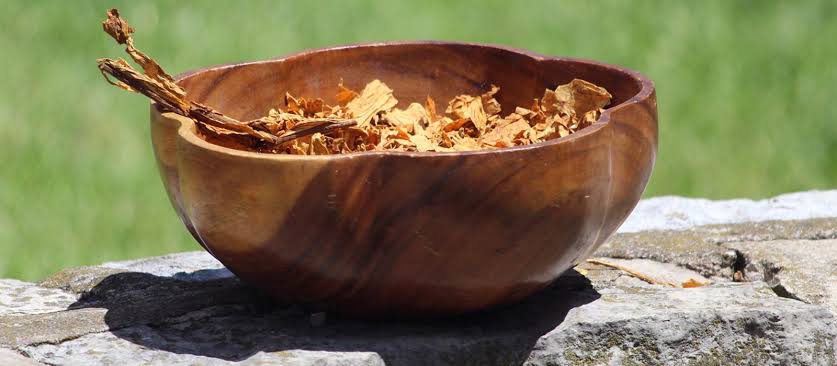
Sacred Tobacco (Nicotiana rustica)Unlike commercial, chemically laden tobacco used in mass-market cigarettes, true sacred tobacco (Nicotiana rustica), native to the Americas, possesses significantly higher nicotine concentrations and is treated as the ultimate ritual currency.
The Protocol of Offering: Among First Nations across Canada and the United States, offering tobacco is a prerequisite for asking an elder a question, harvesting a root, or entering a sacred forest. The tobacco acts as a spiritual bridge; when placed in the earth, it communicates human intention and establishes a reciprocal contract with the spirits of the land.
Archival Note on Early Trade: Historical trade logs from the Hudson’s Bay Company reveal that European traders routinely misunderstood indigenous reluctance to trade sacred tobacco for metal goods, viewing it through an economic lens rather than recognizing its supreme sacramental value in spiritual covenants.
Chapter 6: Healing, Shamanic Diets (Sierras), and Plant Fasting
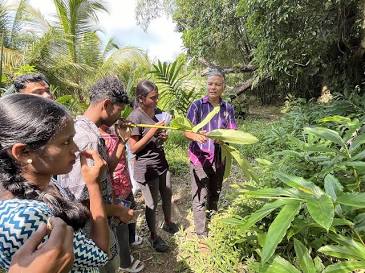
The acquisition of spiritual power and botanical knowledge in indigenous traditions is rarely passive. It requires rigorous, often grueling physical and spiritual isolation known as the dieta or plant diet.
The Mechanics of the Shamanic DietIn indigenous Amazonian and Andean healing traditions, an apprentice healer must isolate themselves in the deep jungle for weeks or months, consuming a profoundly bland diet free of salt, sugar, oils, and sexual contact while ingesting specific teacher plants (such as Ajo Sacha or Remora).
Purification of Perception: Anthropological field notes document that this dietary restriction alters human neurochemistry and sensory perception, enabling the initiate to “tune in” to the subtle energetic signatures of the forest.
The Doctrine of Signatures vs. Direct Revelation: While Western herbalism historically relied on the Doctrine of Signatures (the belief that a plant’s physical appearance mirrors its medical utility, such as walnut lookalike brains), indigenous diets bypass intellectual deduction entirely, relying instead on what shamans describe as direct download of botanical medicine straight from the plant spirit during lucid dream states.
Chapter 7: Ethnobotanical Conservation, Biopiracy, and Intellectual Property
As modern biotechnology scours indigenous territories for novel pharmaceutical leads, the spiritual intersection of plants and indigenous beliefs faces unprecedented threats from biopiracy and corporate patenting.
The Conflict Between Patent Law and Traditional Knowledge
Major pharmaceutical corporations have frequently patented compounds derived from sacred indigenous plants—such as the rosy periwinkle or ayahuasca vine constituents—without prior informed consent or financial compensation to the original stewards.
The Sacred Desecration: For indigenous communities, patenting a sacred plant is not just an economic injustice; it is a profound spiritual violation. It treats an autonomous spiritual relative as industrial property.Resurgence and Indigenous Data Sovereignty: Modern indigenous legal scholars are spearheading international protocols (such as the Nagoya Protocol) to enforce Biocultural Community Protocols (BCPs), ensuring that traditional ecological knowledge remains tethered to its spiritual and cultural roots rather than being commodified into sterile, synthetic derivatives.
Conclusion:
Re-Enchanting Our Relationship with the Botanical WorldThe study of sacred plants and indigenous spiritual beliefs offers far more than a window into anthropological history; it provides a vital survival blueprint for a modern world grappling with ecological collapse. By redefining plants not as silent commodities, but as sentient partners, conscious teachers, and spiritual kin, indigenous knowledge systems invite humanity to step out of the paradigm of extraction and re-enter the sacred circle of reciprocity.As academic research increasingly validates the profound ecological wisdom embedded within ancient traditions, the path forward is clear: preserving the earth’s biodiversity is inseparable from defending the spiritual rights and territories of the indigenous peoples who have guarded the green heart of our planet since time immemorial.
