
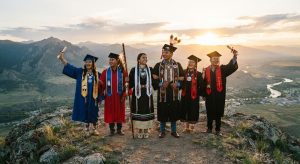
Future career opportunities of Indian Tribal children
The Silent Struggle: Questions Weighing on the Minds of Communities
Before discussing future career opportunities for indigenous children in India, we should pause to reflect on the extent to which we have managed to create an environment that fosters their healthy and robust well-being. Before we look toward the horizon of endless possibilities, we must first pause and confront the pressing, often painful realities faced by tribal children, parents, and educators across India today. These are the silent questions echoing in remote villages, ashram schools, and forest-fringed settlements:
-
Why do so many brilliant tribal minds drop out of school before reaching higher secondary education, and how can we bridge this devastating learning gap?
-
In an era dominated by artificial intelligence and high-speed digital infrastructure, are our remote tribal youth being left behind as mere spectators, or can they become active digital innovators?
-
How can a first-generation learner from a remote forest village successfully navigate competitive civil service exams and university admissions without breaking under financial strain?
-
What happens to ancestral wisdom, indigenous arts, and traditional ecological knowledge when corporate modernization demands standard corporate employment?
-
How do we dismantle the invisible barriers of systemic poverty, geographical isolation, and socio-economic exclusion that continue to restrict career ambitions?
-
Are government scholarships and tribal welfare schemes actually reaching the ground level, and how can families decode the complex bureaucratic maze to claim them?
-
How can young tribal women break free from dual layers of gender and tribal marginalisation to step into leadership, medical, tech, and entrepreneurial spaces?
-
How can we build a sustainable career ecosystem that honours tribal roots while opening doors to global tech, modern healthcare, environmental research, and corporate boardrooms?
Introduction: The Threshold of Transformation
India’s Scheduled Tribes (STs)—encompassing over 700 distinct communities and accounting for roughly 8.6% of the nation’s population—represent a profound reservoir of cultural richness, ecological wisdom, and human potential. Yet, for decades, the narrative surrounding tribal education and employment has been dominated by statistics of deprivation, high dropout rates, and geographical exclusion.
As we navigate a rapidly evolving global economy in 2026, the future of work is undergoing a tectonic shift. Traditional agrarian livelihoods are transforming through technology, emerging green economies demand deep ecological stewardship, and artificial intelligence is redefining skill requirements. For Indian tribal children, this dynamic era represents both a historic danger of further marginalisation and an unprecedented opportunity for leapfrogging into high-impact careers.
This comprehensive guide is designed to dismantle structural barriers, address the core problems outlined above, provide rigorous statistical backing, and lay out an actionable, empowering roadmap for the career futures of Indian tribal children.
1. General Questions Regarding the Future and Careers of Indigenous Children
The journey of an indigenous child begins at the intersection of rich cultural heritage and stark socio-economic realities. Understanding the trajectory of tribal youth requires looking closely at national data regarding educational progression and workforce entry.
Statistical Overview & Ground Realities
According to data from the Ministry of Education and the Unified District Information System for Education Plus (UDISE+):
-
Gross Enrolment Ratio (GER): While primary school enrolment among Scheduled Tribe children has crossed near-universal levels (over 95%), the GER drops precipitously at the secondary level (Classes IX–X) to around 78%, and further plummets at the higher secondary level (Classes XI–XII) to roughly 51%.
-
Dropout Rates: The annual average dropout rate at the secondary level for ST students hovers around 19.8%, significantly higher than the national average.
Educational Attrition Pipeline for ST Students |
|
Primary Level (Class 1-5): |
~95%+ Enrollment |
Secondary Level (Class 9-10): |
~78% Enrollment |
Higher Secondary (Class 11-12): |
~51% Enrollment |
Addressing the Problem: Solutions for Retention and Career Vision
To secure the future of indigenous children, systemic interventions must begin early:
-
Multilingual Primary Education: Implementing early-stage education in mother-tongue dialects (as recommended by the National Education Policy) drastically reduces early alienation and cognitive friction.
-
Mentorship Ecosystems: Establishing community-led mentorship programmes where successful tribal alumni return to schools to demonstrate tangible career pathways.
-
Career Counselling at Middle School: Introducing vocational and academic counselling by Class VIII prevents abrupt dropouts driven by economic pressures.
Image 1 Suggestion: A vibrant, naturalistic photograph of a young tribal girl in a rural Indian classroom attentively raising her hand during an interactive lesson, surrounded by modern learning aids and natural light.
2. Questions Related to School and Higher Education
School infrastructure and higher education accessibility are the twin pillars upon which sustainable careers are built. Without robust institutional support, bright minds remain undiscovered.
Challenges in Infrastructure and Access
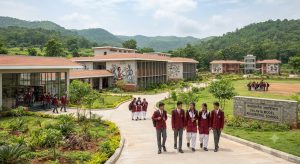
Many tribal habitations are located in hilly, forested, or Left-Wing Extremism (LWE)-affected districts where secondary schools are located miles away. Daily long-distance commutes discourage attendance, particularly for adolescent girls. Furthermore, the availability of science laboratories, computer rooms, and digital libraries in rural residential schools (such as Eklavya Model Residential Schools – EMRS) has historically lagged behind urban counterparts.
Strategic Solutions and Government Initiatives
-
Expansion of Eklavya Model Residential Schools (EMRS): The Government of India has ramped up EMRS development, targeting the establishment of a school in every block with a 50% or more ST population and 20,000 or more tribal persons. These schools provide free education, boarding, sports facilities, and computer labs.
-
Bridge Courses and Remedial Classes: Universities and higher education institutions must implement dedicated foundation years to help first-generation tribal learners adapt to rigorous academic standards without feeling overwhelmed.
-
Anti-Discrimination Cells: Strict enforcement of equal opportunity cells and anti-ragging measures in universities ensures a safe, inclusive campus culture.
Image 2 Suggestion: A wide-angle shot of a modern Eklavya Model Residential School building set against a lush green hill backdrop, with students walking cheerfully on the campus pathway.
3. Government Jobs and Competitive Examinations
Government employment has historically been one of the most reliable vehicles for socio-economic mobility and social security for marginalized communities in India.
The Reservation Framework and Current Landscape
Constitutional safeguards guarantee reservation for Scheduled Tribes (7.5% in central government jobs and educational institutions, and proportional reservations in respective state governments). However, representation in Group A and Group B executive services often falls short of the stipulated quotas due to gaps in specialized coaching and exam preparation awareness.
Actionable Roadmap for Civil Services and Competitive Exams
-
Early Foundation for UPSC/State PSC: Aspirants should build strong reading habits in current affairs, general studies, and analytical writing starting from their undergraduate years.
-
Utilising Free Coaching Schemes: The Ministry of Tribal Affairs operates the National Fellowship and Scholarship for Higher Education of ST Students and collaborates with premier coaching institutes to provide free, high-quality civil services coaching.
-
Targeted Recruitment Drives: Special recruitment drives (SRDs) conducted by central and state public sector undertakings (PSUs) must be aggressively publicised at the district tribal welfare office level.
Image 3 Suggestion: A dedicated young tribal university student studying late into the night at a quiet desk lit by a study lamp, surrounded by heavy reference books and preparation notes for competitive exams.
4. Science, Technology, and Modern Professions
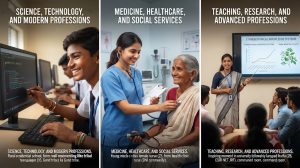
The stereotype that tribal youth are confined solely to traditional crafts or manual labor is actively being shattered. The fields of Science, Technology, Engineering, and Mathematics (STEM) hold massive potential for the next generation.
Bridging the Digital Divide
According to NSSO data on household social consumption related to education, access to computers and internet connectivity in rural ST households remains markedly lower than the national urban average. Without deliberate intervention, the AI revolution risks exacerbating inequality.
Pathways into STEM
-
Coding and Robotics in Tribal Schools: Expanding initiatives like Atal Tinkering Labs into rural residential schools introduces children to basic programming, 3D printing, and electronics early on.
-
Specialised STEM Scholarships: Corporate social responsibility (CSR) programmes funded by tech giants should sponsor full engineering and computer science scholarships specifically for meritorious tribal students.
-
Peer-Led Tech Clubs: Establishing coding clubs in district-level colleges fosters collaborative learning and confidence among rural youth.
Image 4 Suggestion: A close-up shot of a focused young tribal teenager in a computer lab, smiling as they write their first lines of code on a modern desktop monitor.
5. Medicine, Healthcare, and Social Services
Healthcare access in remote, tribal-dominated regions remains one of India’s most critical public health challenges. Who better to heal these communities than their own sons and daughters?
The Need for Indigenous Healthcare Professionals
Tribal communities often face language barriers, cultural hesitations, and geographic isolation when accessing mainstream modern healthcare. Doctors, nurses, pharmacists, and public health workers from tribal backgrounds bring inherent cultural empathy and linguistic familiarity, drastically improving health outcomes and vaccine compliance.
Educational Pathways in Healthcare
-
NEET Preparation Support: State governments must establish intensive, residential NEET coaching boot camps specifically tailored for rural ST science graduates.
-
Reserved Medical Seats: Fully optimising state and central medical college quotas for ST candidates.
-
Public Health Management Careers: Beyond clinical medicine, degrees in public health, epidemiology, and social work open doors to impactful careers with organisations like UNICEF, WHO, and the National Health Mission (NHM).
Image 5 Suggestion: A compassionate young tribal female nurse in scrubs checking a patient’s vitals in a clean, modern rural health clinic, displaying warmth and professional dedication.
6. Teaching, Research, and Advanced Professional Fields
Education is the greatest multiplier of generational upliftment. Becoming a teacher, professor, researcher, or scientist allows tribal professionals to shape the intellectual destiny of future generations.
Overcoming Academic Ceilings
While primary school teaching positions see healthy tribal participation, higher education faculty positions and top-tier research fellowships (such as CSIR-NET, ICMR, and IIT/IIM doctoral programs) see lower representation from ST scholars.
Strategic Interventions for Research Careers
-
Junior Research Fellowship (JRF) Support: Expanding specialized coaching for UGC-NET/JRF exams in central universities with high tribal student populations.
-
Participatory Ethnographic Research: Encouraging tribal scholars to lead research on indigenous pharmacology, ethnobotany, and tribal history, bringing authentic, insider perspectives to academic literature.
7. Private Sector Jobs and Corporate Employment
As the Indian economy expands toward a multi-trillion-dollar valuation, the private sector—spanning IT, manufacturing, finance, logistics, and hospitality—offers vast employment horizons.
Navigating Corporate Pathways
Private employers increasingly value diversity, equity, and inclusion (DEI). However, corporate recruitment often relies heavily on “soft skills,” fluency in English, and professional networking—areas where rural tribal youth may initially face disadvantages.
Building Corporate Readiness
-
Vocational English and Soft Skills Training: Integrating communication workshops, corporate etiquette, and interview preparation into final-year graduation syllabi.
-
Campus Placement Drives in Regional Colleges: Encouraging major corporations to conduct campus recruitment drives in tier-3 and tier-4 colleges rather than restricting them to elite metropolitan institutes.
-
Apprenticeship Programs: Leveraging the National Apprenticeship Promotion Scheme (NAPS) to place young tribal adults in structured corporate training pipelines.
8. Vocational Education and Skill-Based Professions
Not every student pursues a traditional academic degree; skill-based vocational training offers a fast, reliable route to gainful employment and financial independence.
The Skill India Mission Integration
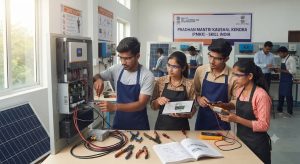
The Ministry of Skill Development and Entrepreneurship (MSDE), in coordination with the Ministry of Tribal Affairs, runs specialized Pradhan Mantri Kaushal Kendra (PMKK) training centers across tribal districts.
High-Demand Vocational Sectors for Tribal Youth
-
Automotive Repair & EV Maintenance: As electric vehicles grow, skilled technicians are in high demand.
-
Hospitality, Tourism, and Eco-Tourism: Training youth as certified nature guides, eco-lodge managers, and hospitality professionals in biodiversity hotspots.
-
Green Energy Technicians: Installation and maintenance solar panels and micro-grid systems in rural electrification projects.
Image 6 Suggestion: A group of focused young tribal adults undergoing practical vocational training in renewable energy technology, skillfully wiring a solar inverter panel in a modern workshop.
9. Traditional Knowledge, Culture, and Modern Employment
Modern careers do not require abandoning ancestral roots. In fact, traditional ecological knowledge (TEK), indigenous art, herbal medicine, and sustainable agriculture are experiencing global demand.
Monetizing and Protecting Cultural Heritage
-
Geographical Indication (GI) Tagging: Empowering tribal artisan cooperatives to protect and market traditional crafts (such as Dhokra metal casting, Warli painting, and textile weaving) through e-commerce platforms.
-
Ethnobotanical Research and Pharma: Collaborating with pharmaceutical researchers to study traditional medicinal plants sustainably, ensuring fair benefit-sharing with indigenous communities.
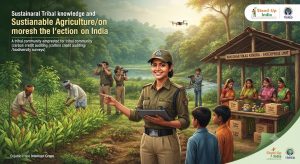
10. Agriculture, Forestry, and Environment-Related Professions
Tribal communities have historically been the greatest custodians of forests, water bodies, and biodiversity. Modern environmental crises make these traditional stewards vital leaders in climate action.
Emerging Green Careers
-
Forestry and Wildlife Conservation: Careers as forest rangers, wildlife biologists, and conservation officers.
-
Sustainable Agriculture & Organic Farming: Leading the transition toward chemical-free, climate-resilient farming, tapping into the booming domestic and international organic produce market.
-
Carbon Credit and Biodiversity Auditing: Training tribal youth to work with environmental NGOs and corporate ESG (Environmental, Social, and Governance) teams as field auditors and conservation specialists.
11. Entrepreneurship and Self-Employment
Job creation is superior to job seeking. Cultivating an entrepreneurial mindset among tribal youth transforms them into economic leaders in their regions.
Financial Support and Ecosystems
-
Tribal Cooperative Marketing Development Federation of India (TRIFED): Promoting tribal entrepreneurship through schemes like Van Dhan Vikas Kendra (VDVK), which organizes tribal gatherers into self-help groups (SHGs) for value addition of minor forest produce (MFP).
12. Digital Employment and Freelancing
The internet erases geographical boundaries. A young person sitting in a remote forested district of Jharkhand, Odisha, or Chhattisgarh can work for a client in New York, London, or Tokyo.
Digital Career Avenues
-
Content Creation & Translation: Documenting tribal languages, folklore, and cultural heritage through digital media, translation services, and digital archiving.
-
Graphic Design & Digital Marketing: Learning tools like Canva, Adobe Suite, and social media management through free online courses.
-
Data Annotation and AI Training: Working with global tech companies on data labeling and AI training tasks, which require minimal formal degrees but high attention to detail.
13. Careers for Indigenous Girls
Overcoming Gender Barriers
-
Kasturba Gandhi Balika Vidyalaya (KGBV) Expansion: Providing residential schooling up to Class XII with a strong focus on girls’ education in remote blocks.
-
Conditional Cash Transfers and Scholarships: State-backed incentives for families who keep girl children enrolled in secondary education.
Image 7 Suggestion: An inspiring portrait of a young tribal woman confidently wearing a professional blazer over traditional attire, leading a community meeting or seminar with a gentle, resolute smile.
14. Government Schemes, Scholarships, and Financial Assistance
A primary hurdle for tribal families is navigating the complex bureaucratic landscape of financial assistance. Awareness is the first step toward utilization.
Key Financial Schemes At a Glance
-
Pre-Matric and Post-Matric Scholarships: Direct Benefit Transfer (DBT) scholarships covering tuition, boarding, and maintenance expenses for school and college students.
-
National Overseas Scholarship (NOS): Financial support for meritorious ST students to pursue Master’s and Ph.D. degrees in top-ranked universities abroad.
-
Top Class Education Scheme: Full tuition fee waiver and living stipends for ST students enrolled in premier institutes like IITs, IIMs, AIIMS, and NITs.
15. Financial Barriers, Poverty, and Social Inequality
Poverty is not merely a lack of money; it is the deprivation of opportunity. Generational poverty restricts risk-taking and forces children into premature labor or early marriage.
Breaking the Cycle
-
Direct Benefit Transfers (DBT): Eliminating middlemen by transferring scholarship and welfare funds directly into Aadhaar-seeded bank accounts.
-
Legal Aid and Anti-Exploitation Measures: Protecting tribal families from predatory informal lending practices through robust rural banking inclusion (Jan Dhan accounts and micro-credit).
16. Future Job Market and Emerging Professions
As we look toward 2030 and beyond, the job market will reward adaptability, technological literacy, and emotional intelligence.
Future-Proof Careers for Tribal Youth
-
AI Ethics and Indigenous Data Sovereignty: Ensuring that artificial intelligence models respect indigenous cultural property and data rights.
-
Digital Cultural Archivists: Preserving dying tribal dialects, music, rituals, and oral histories using blockchain and cloud databases.
17. The Roles of Family, Society, Schools, and Government
No single entity can achieve systemic transformation in isolation. Building a thriving career ecosystem requires a synchronized, multi-stakeholder approach.
Multi-Stakeholder Support Ecosystem |
[Family & Community] ---> Encouragement & Cultural Grounding |
[Schools & Teachers] ---> Quality Education & Mentorship |
[Civil Society NGOs] ---> Grassroots Mobilization & Support |
[Government & Policy]---> Financial Aid, Infrastructure, Jobs |
-
Family and Community: Providing emotional encouragement, valuing education, and respecting children’s modern aspirations while keeping them anchored to their cultural identity.
-
Schools and Teachers: Acting as trusted mentors who identify hidden talents, provide psychological safety, and guide academic choices.
-
Civil Society and NGOs: Bridging the gap between government policy implementation and ground-level realities through remedial classes, legal aid, and career fairs.
-
Government and Policymakers: Ensuring transparent fund allocation, expanding digital infrastructure in remote zones, and enforcing inclusive employment policies.
Conclusion: Walking Boldly Into Tomorrow
The future career landscape for Indian tribal children is neither predetermined by past limitations nor restricted by geographic boundaries. By combining targeted government support, cutting-edge digital literacy, robust financial scholarships, and deep respect for ancestral wisdom, we can unlock an era where every tribal child has the opportunity to dream limitlessly and achieve extraordinarily.
The path forward requires collective resolve: from village elders to policymakers, from tech innovators to educators. Together, we can ensure that the next generation of indigenous youth does not merely survive in a changing world, but leads it.
