

What are Indigenous Medicinal Plants: Traditional Knowledge and Benefits
Indigenous Medicinal Plants: Traditional Knowledge and Benefits are botanical species that naturally occur within a specific region, ecosystem, or geographic locality, having evolved alongside local flora, fauna, and human populations over millennia. These plants possess intrinsic chemical constituents—often referred to as secondary metabolites—such as alkaloids, flavonoids, tannins, glycosides, and essential oils, which interact harmoniously with human biological systems to prevent, alleviate, or cure various ailments. Unlike introduced or invasive species, indigenous plants are deeply interwoven into the ecological fabric and cultural heritage of the indigenous communities that inhabit those lands.
To fully understand what makes a plant “indigenous” and “medicinal,” one must examine the intricate relationship between nature and human survival. Since the dawn of civilization, human ancestors relied entirely on their immediate surroundings for sustenance and healing. Through generations of rigorous, empirical observation, trial, and error, indigenous groups discovered which roots, barks, leaves, flowers, and saps could heal wounds, soothe internal inflammation, combat fevers, and ease chronic pain. This localized wisdom transformed ordinary wild vegetation into an invaluable pharmacopoeia.
From a botanical perspective, these plants grow wildly without requiring intensive agricultural domestication, though many have been brought into home gardens, sacred groves, and traditional agroforestry systems. They carry genetic resilience, having adapted to local soil compositions, climate fluctuations, rainfall patterns, and native pests.
Consequently, their medicinal potencies are often exceptionally high. For instance, species found in the Himalayan ranges, the Amazonian rainforests, the Western Ghats of India, or the dry outback of Australia possess unique adaptations that directly contribute to their therapeutic efficacy.
Moreover, indigenous medicinal plants serve as the foundation for modern pharmacology. A staggering percentage of contemporary life-saving pharmaceutical drugs are either direct derivatives of these plants or synthesized compounds modeled after their active phytochemical structures.
Drugs ranging from aspirin (derived from willow bark) to quinine (derived from cinchona bark) and artemisinin trace their lineage directly back to traditional indigenous knowledge systems. Thus, indigenous medicinal plants are not merely relics of ancient folklore; they are living, breathing storehouses of biochemical brilliance that continue to sustain global health and wellness.

How do indigenous communities preserve medicinal plant knowledge?
The preservation of medicinal plant knowledge within indigenous communities is a masterclass in cultural continuity, oral tradition, and sustainable stewardship. Because traditional societies historically lacked written scripts or standardized biochemical laboratories, their survival depended entirely on how effectively wisdom could be encoded, remembered, and transmitted across generations. This preservation matrix operates through a multifaceted framework encompassing oral literature, practical apprenticeship, sacred spiritual traditions, and community-managed ecological zones.
First and foremost, oral transmission is the primary vehicle for safeguarding this heritage. Elders, traditional healers, shamans, and medicine men or women serve as the living libraries of the community. Through deeply engaging storytelling, folklore, myths, and songs, botanical knowledge is passed down to the youth. Children learn to identify specific trees, shrubs, and creepers not as random weeds, but as living entities with distinct personalities, healing properties, and ritual boundaries. Every leaf has a name, a season of harvest, and a specific preparation method embedded within tribal nomenclature.
Secondly, experiential learning and rigorous apprenticeships ensure that theoretical knowledge translates into practical mastery. Young apprentices spend years shadowing seasoned herbalists. They participate in foraging expeditions, learning the precise lunar cycles, times of day, and weather conditions optimal for harvesting roots or leaves without harming the plant. They observe how raw materials are cleaned, sun-dried, pulverized, fermented, or infused into oils, ghees, and honeys. This hands-on mentoring guarantees that the subtle nuances of dosage, patient constitution, and contraindications are never lost.
Thirdly, spiritual and cosmological frameworks act as powerful conservation tools. In many indigenous cultures, medicinal plants are viewed as sacred gifts imbued with spirit or divine energy. Over-harvesting or careless destruction of a medicinal plant is strictly taboo, often believed to bring spiritual retribution or illness upon the offender. Rituals, prayers, and offerings of gratitude are invariably performed before a plant is harvested. This spiritual reverence prevents exploitation and ensures that harvesting remains sustainable, allowing plant populations time to regenerate naturally.
Finally, collective memory is preserved through community governance and customary laws. Sacred groves, forbidden forests, and protected community lands act as in-situ botanical conservatories. Within these designated sanctuaries, human intervention is strictly regulated, safeguarding rare medicinal flora from habitat destruction, commercial over-exploitation, and industrial encroachment. Through these ingenious cultural mechanisms, indigenous societies have successfully shielded their botanical heritage from the winds of modernisation for centuries.
Which medicinal plants are commonly used in India?
India stands as one of the world’s most prominent mega-diverse nations, boasting a rich heritage of traditional healthcare systems such as Ayurveda, Siddha, Unani, and countless folk healing traditions. Across the subcontinent’s diverse climatic zones—from alpine Himalayan slopes to tropical southern peninsulas—a vast array of indigenous medicinal plants are utilized in daily life and clinical practice. Here are some of the most prominent and widely used medicinal plants deeply rooted in Indian culture:
-
Tulsi (Holy Basil – Ocimum sanctum): Revered universally in India as a sacred plant, Tulsi is celebrated as the “Queen of Herbs.” Its leaves are packed with antioxidants, essential oils, and adaptogenic properties. Commonly used to manage respiratory disorders like asthma, bronchitis, and common colds, Tulsi also strengthens immunity, reduces stress, purifies the blood, and regulates blood sugar levels.
-
Neem (Azadirachta indica): Often called the “Village Pharmacy,” every part of the neem tree—bark, leaves, roots, and seeds—possesses potent medicinal properties. Renowned for its powerful antibacterial, antifungal, anti-parasitic, and blood-purifying qualities, neem is extensively used to treat skin conditions like acne, eczema, and psoriasis, as well as for oral hygiene and diabetes management.
-
Aloe Vera (Aloe barbadensis miller): Known locally as Ghritkumari, Aloe Vera is celebrated for its succulent, nutrient-rich gel. It is a premier remedy for soothing thermal burns, healing wounds, reducing skin inflammation, and promoting glowing skin. When consumed internally, it supports digestive health, relieves constipation, and detoxifies the gastrointestinal tract.
-
Turmeric (Curcuma longa): While primarily recognized as a culinary spice, turmeric is a powerhouse of traditional medicine due to its active compound, curcumin. Curcumin is a potent anti-inflammatory and antioxidant agent. It is widely used in India to accelerate wound healing, alleviate joint pain and arthritis, boost cognitive function, and support liver detoxification.
-
Ashwagandha (Withania somnifera): A cornerstone of Ayurvedic pharmacopeia, Ashwagandha is classified as a premier adaptogen. It helps the human body adapt to physical and mental stress, lowers cortisol levels, enhances energy, improves sleep quality, boosts male fertility, and strengthens overall vitality and immune response.
-
Brahmi (Bacopa monnieri): Regarded as a powerful brain tonic, Brahmi has been used for centuries to enhance memory, sharpen concentration, alleviate anxiety, and support neurological health. It contains active compounds called bacosides, which repair damaged neurons and promote cognitive longevity.
-
Amla (Indian Gooseberry – Emblica officinalis): Amla is one of the richest natural sources of Vitamin C and powerful antioxidants. It revitalizes body tissues, slows down aging, strengthens hair follicles, supports eye health, and bolsters immune resilience against seasonal infections.
-
Ginger (Zingiber officinale): Known as Adrak in Hindi, ginger is an indispensable household remedy for digestive distress, nausea, motion sickness, and inflammatory conditions. Its warming properties make it a primary treatment for relieving cold symptoms, sore throats, and muscular aches.

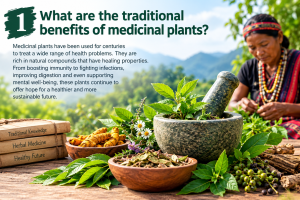
What are the traditional benefits of medicinal plants?
The traditional benefits of medicinal plants extend far beyond simple symptom relief; they offer a holistic, preventative, and sustainable paradigm of health and wellness. Unlike modern allopathic medicine, which frequently isolates active chemical compounds to target specific disease vectors, traditional herbal systems view the human body as an integrated whole connected to its environment. This holistic approach yields several profound health and lifestyle benefits:
-
Holistic Healing and Root-Cause Resolution:
-
Traditional remedies focus on correcting underlying constitutional imbalances, toxins (doshas or metabolic imbalances), and lifestyle flaws rather than merely suppressing symptoms. By addressing the root cause, herbal treatments promote long-term systemic recovery and prevent chronic disease recurrence.
-
Minimal Side Effects and Synergy:
-
Whole-plant extracts contain complex suites of phytochemicals that work in biological synergy. For example, a single herb may contain compounds that enhance absorption, buffer potential gastrointestinal irritation, or counteract minor side effects. This natural synergy often results in a safer therapeutic profile compared to synthetic, high-dose isolated molecules.
-
Cost-Effectiveness and Accessibility:
-
For millions of rural and economically disadvantaged populations across the globe, indigenous medicinal plants are readily accessible right outside their doorsteps. Gathering local herbs eliminates the heavy financial burden of commercial pharmaceutical drugs, democratizing healthcare and ensuring that basic wellness remains universally accessible.
-
Immune Modulation and Preventative Care:
-
Many indigenous plants function as daily tonics and adaptogens that fortify the immune system proactively. Regular consumption of herbal teas, infusions, and functional foods helps the body build robust physiological resilience against pathogens, environmental toxins, and oxidative stress before illnesses can manifest.
-
Nutritional Enrichment and Metabolic Support:
-
A vast majority of traditional medicinal plants double as wild leafy greens, tubers, seeds, and fruits. They supply vital micronutrients, dietary fiber, minerals, and trace elements that modern processed diets often lack, thereby supporting optimal metabolic function, gut health, and vitality.
-
Cultural and Psychological Well-being:
-
The practice of gathering, preparing, and consuming traditional herbal remedies fosters a deep psychological connection to nature. This eco-therapy reduces modern anxiety, grounds the individual, and reinforces cultural identity, which plays a scientifically proven role in psychological healing and overall longevity.

Are indigenous herbal remedies scientifically proven?
In recent decades, the intersection of traditional ethnobotany and modern biomedical science has generated immense research interest. Scientists, pharmacologists, and clinical researchers are increasingly investigating indigenous herbal remedies through rigorous laboratory assays, phytochemical screenings, animal models, and double-blind, randomized controlled clinical trials. The scientific validation of indigenous herbal remedies is a robust and growing field, revealing remarkable insights into traditional medical wisdom.
Modern science has successfully validated the mechanisms of action for numerous traditional plants. For instance, the cholesterol-lowering properties of garlic (Allium sativum), the anti-inflammatory efficacy of turmeric (curcumin), the memory-enhancing effects of Brahmi, and the blood-sugar-regulating properties of bitter melon (Momordica charantia) have all been rigorously confirmed through clinical trials. Researchers have mapped out the exact biochemical pathways, enzymatic interactions, and gene expressions influenced by these herbal compounds.
However, scientific validation of herbal remedies comes with unique challenges and nuances. Unlike single-molecule pharmaceutical drugs, traditional herbal preparations often involve complex mixtures of multiple herbs (polyherbal formulations) and whole-plant extracts. Isolating a single active constituent in a laboratory often diminishes its overall therapeutic efficacy because the healing power frequently relies on the synergistic interplay of multiple phytochemicals working in concert.
Furthermore, variations in soil chemistry, climate, geographic location, and harvesting seasons can influence the concentration of active constituents in medicinal plants. Standardization and quality control remain critical hurdles in translating traditional remedies into mainstream clinical protocols. Despite these challenges, international organizations like the World Health Organization (WHO) actively support traditional medicine integration, recognizing that rigorous scientific inquiry validates ancient safety profiles while ensuring quality, purity, and dosage precision for contemporary users.
How are medicinal plants connected to biodiversity?
The relationship between medicinal plants and global biodiversity is symbiotic, profound, and mutually sustaining. Medicinal plants do not exist in isolation; they are integral, irreplaceable components of complex ecological webs. Understanding this connection requires examining how plant diversity supports ecological health, how ecosystem degradation threatens human medicine, and why protecting natural habitats is vital for future pharmacological discoveries.
Biodiversity provides the evolutionary cradle for medicinal plant specialization. Ecosystems characterized by high species richness—such as tropical rainforests, alpine meadows, arid scrublands, and temperate woodlands—host an incredible diversity of plants that have evolved unique chemical defenses and adaptations against herbivores, fungi, and climatic extremes. These very chemical defenses constitute the active ingredients utilized in traditional and modern medicine. Therefore, destroying biodiversity is tantamount to destroying Earth’s most sophisticated chemical library.
Conversely, the sustainable harvesting and cultural valuation of medicinal plants actively protect biodiversity. Indigenous communities who rely on medicinal flora act as frontline conservationists. Because their livelihoods, health traditions, and cultural identities depend on healthy forests and ecosystems, they fiercely protect their local lands from destructive logging, mining, monoculture farming, and industrial pollution. Sacred groves maintained for medicinal plant gathering serve as vital havens for endangered wildlife, pollinators, and soil microbes.
Moreover, the loss of medicinal plant species creates cascading ecological failures. Many medicinal plants have co-evolved specialized relationships with specific native pollinators (such as bees, butterflies, bats, and birds) and soil mycorrhizal fungi. The extinction or severe depletion of a single medicinal shrub can disrupt entire food webs, leading to soil degradation, loss of genetic diversity, and diminished ecological resilience. Protecting indigenous medicinal plants is, therefore, an indispensable strategy for preserving global biodiversity and combating climate change.
What threats do indigenous medicinal plants face today?
Despite their immense historical, cultural, and therapeutic value, indigenous medicinal plants face an unprecedented wave of existential threats in the modern era. Rapid socio-economic shifts, environmental degradation, and commercial pressures are pushing many valuable botanical species toward the brink of extinction. Identifying these threats is the first crucial step toward implementing effective conservation and sustainable management strategies.
-
Habitat Destruction and Deforestation: Large-scale clearing of forests for industrial agriculture, urbanization, highway construction, mining projects, and timber logging is destroying the natural habitats of indigenous medicinal plants at an alarming rate. When a forest is bulldozed, countless species of rare herbs, trees, and creepers are eradicated permanently before their medicinal properties can even be fully studied.
-
Over-Exploitation and Commercial Poaching: The booming global demand for natural, organic, and herbal health products has turned wild medicinal plant gathering into an aggressive commercial enterprise. Unregulated, destructive harvesting—such as stripping entire barks, uprooting whole plants, or harvesting before seed dispersal—prevents natural regeneration. High-value species like Ashwagandha, Serpentina (Rauvolfia serpentina), and Himalayan Yew (Taxus wallichiana) have suffered severe population declines due to over-harvesting.
-
Climate Change and Environmental Shifts: Global warming, erratic rainfall patterns, prolonged droughts, rising temperatures, and shifting monsoons are severely altering ecosystems. Many medicinal plants have strict climatic and soil requirements. Rapid environmental changes disrupt their growth cycles, reduce active chemical concentrations, and force species to migrate to higher altitudes or cooler regions where suitable habitats may not exist.
-
Loss of Traditional Knowledge Holders: As younger generations in indigenous communities migrate to urban centers in search of modern employment and education, the transmission chain of traditional ethnobotanical knowledge is breaking down. When elderly healers pass away without apprentices, centuries of priceless botanical wisdom vanish with them, leaving communities detached from their botanical roots.
-
Invasive Alien Species: The introduction of aggressive, non-native invasive plant species outcompetes native flora for sunlight, water, and soil nutrients. These invasive weeds degrade native habitats, suppress the growth of delicate indigenous medicinal plants, and simplify complex ecosystems into monocultural wastelands.
How can we promote the sustainable use of medicinal plants?
Promoting the sustainable use of indigenous medicinal plants requires a collaborative, multi-layered approach involving indigenous communities, governments, scientists, conservationists, and consumers. To ensure that these vital botanical resources survive for future generations, we must adopt actionable conservation and management strategies across local, national, and international levels:
-
Empowering Indigenous Land Rights and Leadership: Indigenous communities are the most effective guardians of biodiversity. Granting legal land titles, protecting territorial sovereignty, and incorporating traditional ecological knowledge (TEK) into national conservation policies empowers local stewards to protect their natural pharmacopeia from illegal poaching and industrial encroachment.
-
Cultivating Medicinal Plants through Agroforestry: To reduce the pressure on wild populations, governments and agricultural organizations must promote the commercial cultivation of medicinal plants. Farmers can integrate high-demand herbs into agroforestry systems, home gardens, and organic farms, ensuring a steady, sustainable supply for the pharmaceutical and herbal industries without depleting natural ecosystems.
-
Implementing Ethical Wild-Harvesting Standards: The herbal industry must adopt strict certification standards—such as FairWild or organic certifications—that mandate ethical, sustainable wild-collection practices. Harvesters must be trained to collect only non-destructive parts (such as leaves or dropped fruits), leave sufficient populations intact for regeneration, and respect seasonal harvesting bans.
-
Establishing Botanical Sanctuaries and Gene Banks: Governments must expand protected areas, national parks, and community-managed sacred groves specifically targeting biodiversity hotspots rich in medicinal flora. Concurrently, establishing ex-situ gene banks, botanical gardens, and seed vaults safeguards rare and endangered medicinal species from extinction.
-
Integrating Education and Research: Educational institutions should integrate ethnobotany, traditional medicine, and conservation awareness into school and university curricula. Funding rigorous, ethical scientific research will validate traditional remedies, encourage bioprospecting that respects indigenous intellectual property rights, and foster global appreciation for plant-based medicine.
What is the future of indigenous medicinal plants in modern healthcare?
The future of indigenous medicinal plants in modern healthcare looks increasingly bright, dynamic, and integrative. As global populations face rising rates of chronic lifestyle diseases, antibiotic resistance, and the side effects of synthetic drugs, there is a profound paradigm shift toward preventive, natural, and holistic healthcare. Indigenous medicinal plants are poised to play a central role in shaping the future of global medicine through several key pathways:
-
Advanced Phytochemical and Genomic Research: Cutting-edge technologies—such as metabolomics, high-throughput screening, and genomic sequencing—are allowing scientists to decode the complex active compounds in medicinal plants with unprecedented precision. This enables the development of highly targeted, standardized herbal medicines that combine traditional wisdom with modern pharmacological safety and efficacy standards.
-
Ethical Bioprospecting and Benefit-Sharing: Future pharmaceutical development will rely on ethical bioprospecting agreements that ensure indigenous communities receive fair financial compensation and intellectual property recognition for sharing their traditional knowledge. This equitable model fosters mutual respect and supports community-led conservation efforts.
How can individuals safely use herbal remedies at home?
Using herbal remedies at home can be an empowering, health-enhancing practice that reconnects individuals with nature’s pharmacy. However, while natural remedies are generally safer than synthetic drugs, they are potent biological substances that require respect, knowledge, and caution. To ensure safety, efficacy, and optimal health outcomes when using herbal remedies at home, individuals should follow these essential guidelines:
-
Accurate Plant Identification is Paramount: Never forage or consume wild plants unless you are 100% certain of their exact botanical identification. Many toxic plants closely resemble harmless medicinal herbs. When in doubt, always purchase standardized, certified organic dried herbs or extracts from reputable, trusted sources rather than picking unknown wild specimens.
-
Understand Proper Dosage and Preparation: Natural does not mean harmless in unlimited quantities. Always adhere to recommended dosage guidelines for specific teas, tinctures, powders, or capsules. Understand the correct preparation method—whether a herb requires a hot water infusion (for delicate leaves and flowers) or a long decoction (for tough roots and barks).
-
Monitor for Allergic Reactions and Side Effects: When trying a new medicinal herb for the first time, start with a very small dose to test your body’s tolerance. Monitor for any signs of allergic reactions, such as skin rashes, digestive upset, dizziness, or respiratory discomfort. Discontinue use immediately if adverse reactions occur.
-
Exercise Special Caution for Vulnerable Groups: Pregnant women, nursing mothers, infants, young children, and elderly individuals must exercise extreme caution with herbal remedies. Many potent herbs possess uterine-stimulant, hormonal, or powerful physiological effects that can be dangerous for vulnerable populations unless specifically prescribed by an expert practitioner.
-
Source Quality and Purity: Ensure that any commercial herbal products you purchase are certified organic, free from heavy metal contamination, pesticides, and adulterants, and clearly labeled with expiration dates and batch testing information. Quality sourcing guarantees therapeutic potency and consumer safety.
