
NATURE: Some Traditional Indigenous Wisdom
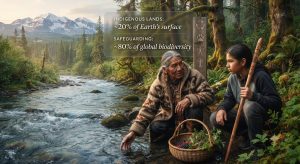
Some traditional Indigenous wisdom: knowledge systems are fundamentally rooted in an intricate, reciprocal relationship with the natural world. Far from viewing nature as a mere commodity or a passive resource pool to be exploited, indigenous worldviews across diverse geographical coordinates—from the Arctic tundra to tropical rainforests—conceptualise ecosystems as living, breathing networks of kinship.
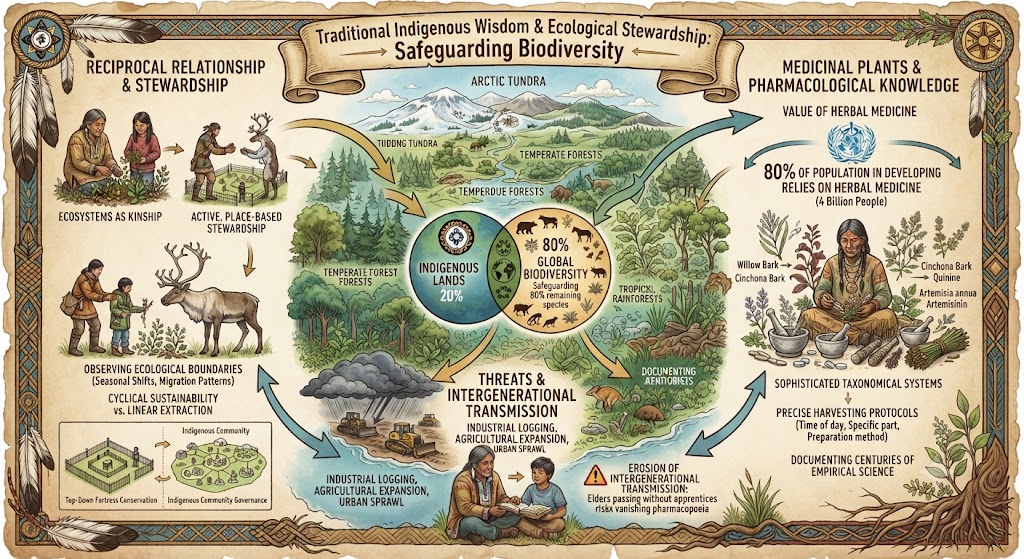
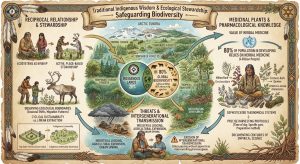
According to landmark reports by the Intergovernmental Science-Policy Platform on Biodiversity and Ecosystem Services (IPBES), indigenous territories encompass approximately 20 percent of the Earth’s terrestrial surface. Remarkably, these lands safeguard roughly 80 percent of the planet’s remaining biodiversity. This striking statistical correlation is not an accidental coincidence; it is the direct outcome of generations of active, place-based ecological stewardship.
Some Traditional Indigenous Wisdom operates through a philosophy of cyclical sustainability rather than linear extraction. Indigenous communities traditionally observe strict ecological boundaries dictated by seasonal shifts, animal migration patterns, and plant reproductive cycles. For instance, traditional resource management practices often incorporate intentional resting periods or temporary closures of specific hunting and gathering zones—effectively functioning as indigenous equivalents of modern conservation protected areas.
These strategies prevent the over-depletion of flora and fauna, maintaining ecological resilience even under changing climatic conditions. Furthermore, indigenous paradigms of nature reject the Cartesian dualism that separates humanity from the environment. Humans are understood to be integral components of the ecosystem, bound by reciprocal obligations to maintain ecological harmony.
When an animal is hunted or a plant is harvested, customary protocols—often expressed through ritual, prayer, or offering—reinforce an ethos of deep respect and gratitude. This psychological and cultural framing curtails overconsumption and ensures that nature’s regenerative capacity is never permanently compromised.
Modern conservation biology increasingly validates these ancestral frameworks, recognising that community-based monitoring and traditional governance are frequently more effective at preserving biodiversity than top-down, fortress-conservation models.
MEDICINAL PLANTS in Indigenous Wisdom
This reliance is not merely a consequence of restricted access to allopathic medical infrastructure; it reflects a deep, historically proven trust in the efficacy of plant-based remedies meticulously refined over centuries. Ethnobotanical research consistently reveals that indigenous healers possess highly sophisticated taxonomical systems that rival, and often predate, Western scientific classifications.
Some Traditional Indigenous Wisdom may utilize hundreds of distinct plant species for specialised treatments, ranging from anti-inflammatory poultices and febrifuges to complex concoctions addressing gastrointestinal disorders, respiratory ailments, and wound healing. For example, traditional pharmacopoeias utilized specialized plant compounds like alkaloids, glycosides, and flavonoids long before isolation in a laboratory setting.
Classic pharmaceutical breakthroughs—such as aspirin (derived from willow bark), quinine (from the cinchona tree), and artemisinin (from Artemisia annua, utilized in traditional Chinese medicine)—trace their origins directly back to indigenous ethnobotanical insights.
These steps ensure optimal chemical potency while minimising toxicity. However, this vast repository of medicinal knowledge faces severe modern vulnerabilities. As industrial logging, agricultural expansion, and urban sprawl encroach upon ancestral lands, countless medicinal flora species are driven toward extinction before their chemical properties can be documented or understood by science.
Moreover, the erosion of intergenerational transmission means that when an elder passes away without an apprentice, an entire pharmacopoeia compiled over millennia can vanish in a single instant.
AGRICULTURE
Some Traditional Indigenous wisdom is a masterpiece of ecological engineering, combining genetic diversity, soil conservation, and climate adaptation in ways that industrial monoculture struggles to replicate. Long before the advent of chemical fertilisers, synthetic pesticides, and large-scale mechanisation, indigenous farmers mastered regenerative agriculture through sophisticated polyculture techniques.
A premier example of this is the “Three Sisters” planting method—corn, beans, and squash—practiced by numerous Indigenous peoples across the Americas. In this system, the tall corn stalks provide natural scaffolding for climbing bean vines, the beans fix vital nitrogen into the soil, and the large, prickly leaves of the squash plant create a living mulch that suppresses weeds and retains soil moisture.
Intercropping and agroforestry systems maintain high levels of agrodiversity, shielding communities from total crop failure. If a particular pest decimates one species, alternative crops survive to ensure food security. Furthermore, indigenous seed-saving traditions have preserved thousands of distinct landraces—locally adapted crop varieties possessing unique genetic traits for drought tolerance, disease resistance, and nutritional density. These landraces represent an irreplaceable genetic library essential for breeding climate-resilient crops for the future global food supply.
These techniques enhance soil organic matter and microbial activity, sequestering vast quantities of carbon dioxide. In an era marked by climate instability and degraded arable land, transitioning toward indigenous agro-ecological paradigms offers a vital roadmap for achieving global food sovereignty and environmental sustainability.
ORAL TRADITIONS
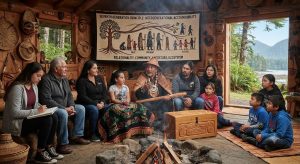
In the absence of widespread written scripts among numerous indigenous cultures, oral traditions served—and continue to serve—as the primary library for preserving, storing, and transmitting complex historical, scientific, and ecological knowledge. Oral traditions are far more than simple bedtime stories or myths; they are structured, multi-layered pedagogical systems encoded with sophisticated data regarding geography, meteorology, astronomy, navigation, and ecological ethics.
The structural integrity of oral traditions is maintained through rigorous mnemonic devices, including songs, chants, complex genealogies, ritual dances, and epic poetry. Master storytellers and designated knowledge-keepers undergo years of intensive training to memorise vast quantities of precise information without alteration.
These narratives serve as ancestral early-warning systems, embedding survival protocols deep into the cultural memory of succeeding generations. Furthermore, oral traditions weave ecological instruction seamlessly into moral and spiritual frameworks. Rather than presenting environmental science as dry, clinical data, oral narratives personify elements of nature—rivers, mountains, winds, and animals—as conscious agents with whom humans share reciprocal duties.
This narrative approach fosters an emotional and ethical bond, ensuring that listeners internalise the importance of conservation and moderation. When modern researchers collaborate with indigenous elders, they frequently discover that decades of empirical scientific observations regarding animal behaviour or seasonal weather patterns are already meticulously encoded within local oral histories, proving that oral archives are empirical repositories of profound intellectual rigour.
SOCIAL VALUES: The structural foundation of indigenous societies is anchored in a robust set of core social values that prioritise collectivism, egalitarianism, reciprocity, and intergenerational accountability over hyper-individualism and capital accumulation.
At the heart of these value systems is the principle of relationality—the understanding that an individual’s identity, well-being, and purpose are entirely inseparable from their community, their ancestors, and the surrounding ecosystem. Egalitarianism and consensus-based decision-making are hallmark features of traditional indigenous governance.
Many indigenous communities historically operated, and continue to operate, through deliberative councils where every voice—including those of women, youth, and elders—is heard and weighed before collective action is taken. Wealth accumulation is traditionally viewed not as a status symbol to be hoarded but as a responsibility to be shared.
Systems of redistributive gifting, such as the Potlatch ceremonies of the Pacific Northwest tribes, actively discourage severe economic stratification by compelling wealthy individuals or families to distribute their accumulated goods to the wider community, thereby reinforcing social solidarity and mutual aid. Intergenerational equity is another cornerstone value that fundamentally shapes indigenous decision-making frameworks.
This visionary perspective stands in stark contrast to short-term political and economic cycles that dominate modern industrial societies. By embedding long-term ecological and social sustainability directly into everyday ethics, indigenous social values provide a powerful ethical blueprint for navigating contemporary global crises.
THE ROLE OF WOMEN
Within the architecture of traditional indigenous knowledge systems, women have historically occupied central, foundational roles as primary stewards of biodiversity, seed keepers, healers, and primary educators. While colonial histories and patriarchal contact frequently distorted or marginalized these traditional roles, matriarchal structures and women’s councils remain vital organizing forces across numerous indigenous cultures worldwide.
As the traditional custodians of agricultural seeds and botanical gardens, indigenous women are the chief architects of food security and agricultural innovation. They possess specialized knowledge regarding seed selection, crop storage, and plant genetics, carefully curating varieties that withstand harsh weather and culinary preferences.
In the realm of healthcare, women frequently serve as primary herbalists, midwives, and spiritual counselors, holding comprehensive expertise in reproductive health, pediatrics, and preventive medicine.
Because their daily routines involve close observation of local ecosystems—gathering firewood, fetching water, and foraging for wild foods—women accumulate granular, real-time ecological data regarding environmental changes long before they register on macro-level scientific instruments.
Moreover, indigenous women are often the primary vectors for transmitting traditional values, languages, and oral histories to the younger generation. They anchor the social fabric of the community, mediating disputes, guiding spiritual ceremonies, and organizing cooperative labor pools. Recognizing and empowering the role of indigenous women is therefore not merely a matter of gender equity;
it is an absolute operational necessity for safeguarding traditional knowledge systems. Environmental policies and climate adaptation frameworks that fail to center the leadership and experiential expertise of indigenous women systematically overlook the most experienced ecological managers on the planet.
INTEGRATION WITH MODERN SCIENCE
In recent decades, the artificial dichotomy that once separated traditional indigenous knowledge from modern Western science has begun to dissolve, giving way to unprecedented paradigms of cross-cultural collaboration and methodological integration.
Scientists, academics, and international institutions increasingly recognize that TEK and Western empirical science are not mutually exclusive belief systems, but rather complementary ways of knowing that, when combined, offer a far more holistic understanding of complex environmental realities.
This integration is particularly evident in fields such as climate change research, wildlife management, and ecological restoration. For example, Arctic climate scientists working alongside Inuit communities have successfully combined satellite telemetry data with indigenous sea-ice observation frameworks to track polar ice degradation with unprecedented spatial and temporal accuracy.
Similarly, traditional controlled-burn practices—long dismissed or outright banned by colonial forestry departments—are now being enthusiastically re-embraced by contemporary fire-management agencies to mitigate catastrophic wildfires. By merging ancestral ecological fire management with modern meteorological modeling, land managers can safely reduce fuel loads and restore forest health.
International scientific bodies, including the United Nations and IPBES, now actively mandate the inclusion of Indigenous and Local Knowledge (ILK) in global environmental assessments. This convergence requires a paradigm shift: moving away from extractive research models—where indigenous communities were treated merely as passive data sources—toward equitable, co-production research partnerships.
In these collaborative frameworks, indigenous peoples direct the research questions, retain intellectual property rights over their data, and share co-authorship on scientific findings. Such integration validates indigenous epistemologies while enriching modern science with ethical depth, empirical nuance, and long-term historical context.
THE CHALLENGES OF PRESERVING THIS KNOWLEDGE
Despite its proven ecological efficacy and growing global recognition, traditional indigenous knowledge faces an unprecedented crisis of erosion, driven by a convergence of historical injustices, rapid modernization, and systemic policy neglect. The threats to this vital heritage are multifaceted, systemic, and occurring at an alarming velocity across every continent.
Foremost among these challenges is the rapid disappearance of indigenous languages. Linguistic data indicate that a vast majority of the world’s remaining languages—most of which are indigenous—are critically endangered and projected to vanish by the end of the century. Because traditional ecological knowledge, medicinal taxonomies, and philosophical concepts are deeply embedded within the specific grammar and vocabulary of native tongues, the extinction of a language invariably results in the permanent loss of an entire conceptual universe.
When a plant name or an ecological descriptor disappears from daily speech, the detailed operational knowledge associated with that entity is severed. Furthermore, aggressive industrial encroachment, deforestation, mining, and large-scale infrastructure projects continue to displace indigenous communities from their ancestral lands, severing the physical connection required to practice and transmit TEK.
When younger generations are uprooted from their traditional territories and forced into urban centers, they face intense pressures to assimilate into dominant globalized cultures, leading to a generational cultural disconnect.
Compounding these pressures is the pervasive issue of biopiracy—where corporate entities patent indigenous medicinal plants, agricultural seeds, or traditional designs without prior informed consent or fair benefit-sharing agreements.
Addressing these complex preservation challenges requires binding international legal protections, robust land-tenure rights, state-sponsored bilingual education programs, and global financial mechanisms that directly support indigenous youth in reclaiming, practicing, and celebrating their ancestral heritage.
