
Medicinal Plants in Indigenous Folk Medicine: Botanical Wisdom, Ethnoecological Conservation, and Modern Therapeutic Frontiers
Across the globe, indigenous folk medicine represents an uninterrupted chain of botanical science, empirical experimentation, and cultural custodianship spanning thousands of years. Long before the advent of synthetic organic chemistry, automated high-throughput drug screening, or mass commercial pharmacology, indigenous communities deciphered the complex biochemical languages of their local ecosystems.
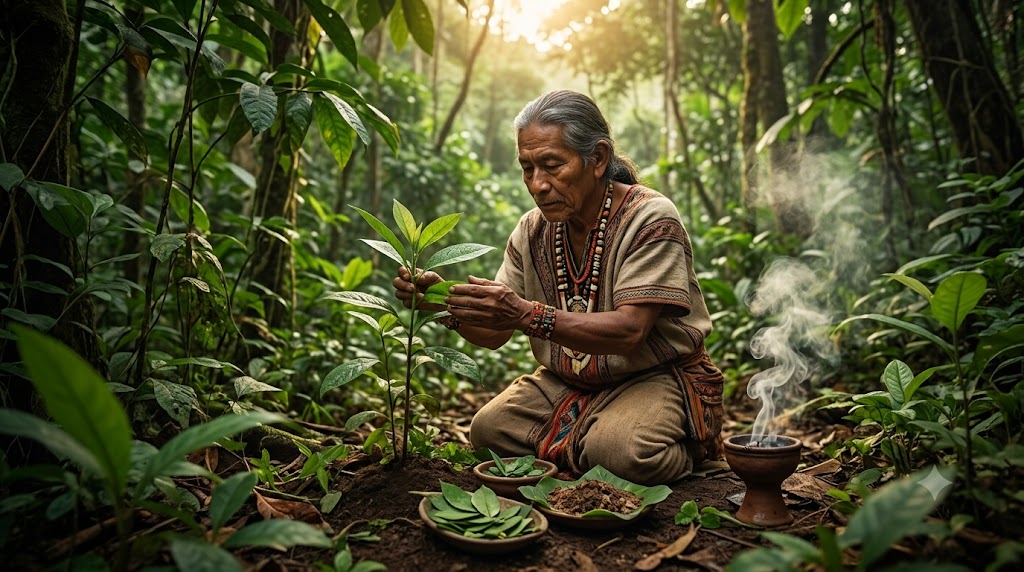
For these populations, flora has never been a passive backdrop of green foliage; it constitutes an active, dynamic pharmacy, an ancestral legacy, and an intricate spiritual ecology.
Furthermore, the global trade in medicinal plants, crude plant extracts, and botanical remedies has expanded past Rupees 13.23 lakh crore annually, with projections indicating a valuation exceeding 18,987,390 crores before 2030.
Yet, reducing indigenous folk medicine to mere raw phytochemical assets ignores the foundational worldview that sustains it. Indigenous ethnobotanical systems do not isolate a molecule from its habitat; they weave botanical science into spiritual cosmologies, strict customary tenures, and regenerative stewardship models.
This comprehensive investigation examines the foundational paradigms of indigenous herbalism through five core dimensions:
-
The historical and demographic reality of medicinal plants in traditional folk systems.
-
The complex agronomic, agroforestry, and swidden methods indigenous societies use to cultivate botanical resources.
-
The profound cultural, sacred, and spiritual epistemologies that position plants as sentient healing partners.
-
The integrated customary conservation laws and empirical pharmacological techniques used to extract, prepare, and deliver therapies safely.
-
The epistemological divergence in knowledge acquisition—specifically, how indigenous oral, sensory, and dream-based learning systems contrast fundamentally with mainstream academic botany.
1. Medicinal Plants in Traditional Folk Medicine: The Demographic and Pharmacological Baseline
Traditional folk medicine is neither a crude relic of antiquity nor an improvised placeholder for rural communities lacking access to urban hospitals. It is an expansive, structured, empirical methodology that has served as the baseline of human survival across every continent.
GLOBAL ETHNOMEDICINAL AT-A-GLANCE |
|
Documented Medicinal Plant Species |
28,187 to 35,000 species recorded in ethnomedical literature |
Primary Healthcare Dependency |
~80% of populations across parts of Africa, Asia, and LatAm |
Direct Plant-Derived Modern Drugs |
~25% to 28% of all FDA/EMA approved prescription medications |
Global Botanical Market Valuation |
$140B+ annually; expected to surpass $200B by late 2020s |
The Statistical Footprint of Healing Flora
Botanical taxonomists and ethnobotanists estimate that between 28,187 and 35,000 distinct vascular plant species have documented ethnomedicinal applications within human health traditions. The Royal Botanic Gardens, Kew, notes that of the roughly 374,000 documented plant species known to science, fewer than 15% have undergone systematic biochemical analysis for active therapeutic compounds, and barely 1% to 2% have undergone comprehensive clinical trials.
Despite this limited formal laboratory scrutiny, the direct contributions of native folk knowledge to the modern medicine cabinet are staggering:
-
Over 25% of all allopathic prescription medications prescribed globally are derived directly from vascular plants or contain synthetic compounds built precisely upon botanical templates first discovered and applied by indigenous herbalists.
-
When looking specifically at anti-cancer and anti-infective formulations developed over the last four decades, the National Cancer Institute (NCI) indicates that over 60% have structural origins tied directly to natural bioactive metabolites and ancestral leads.
Foundational Plant Genera Across Global Indigenous Landscapes
CROSS-CULTURAL INDIGENOUS PHARMACOPEIA: ICONIC EXAMPLES |
|||
Botanical Taxon |
Indigenous Custodians |
Traditional Context |
Active Phytochemistry |
Artemisia annua (Sweet Wormwood) |
Chinese Folk Herbalism (Qinghao tradition) |
Febrile & malaria chills; hot epidemics |
Artemisinin (Sesquiterpene lactone) |
Cinchona officinalis (Fever Tree Bark) |
Quechua & Aymara (Andean Amazon) |
Post-viral fever, muscle tremors, shiver |
Quinine & Cinchonine (Quinoline alkaloids) |
Rauvolfia serpentina (Indian Snakeroot) |
Adivasi / Ayurvedic (Indian Subcontinent) |
Insanity, agitation, snakebites, blood heat |
Reserpine & Ajmaline (Indole alkaloids) |
Harpagophytum procumbens (Devil's Claw) |
San & Khoi-San (Kalahari Desert) |
Chronic joint burning, pregnancy pain, guts |
Harpagoside (Iridoid glycoside) |
Catharanthus roseus
|
Malagasy Healers(Madagascar) |
High blood sweetness,acute organ disorders |
Vinblastine & Vincristine (Alkaloids) |
The Antimalarial Paradigms: Artemisia and Cinchona
Nowhere is the debt of global pharmacology to indigenous folk practice clearer than in the history of antimalarials. In the Andean slopes of modern Peru, Ecuador, and Bolivia, Quechua-speaking healers utilised the bitter ground bark of Cinchona officinalis (termed quina-quina) to counter shivering fits, digestive sepsis, and mountain fevers. When colonial Jesuit observers observed native practitioners preparing cold-water macerations of the bark in the 17th century, the material was carried to Europe, yielding quinine—a discovery that altered tropical public health and military geography for three centuries.
Concurrently, across East Asia, classical Chinese folk practitioners preserved the applications of Artemisia annua (sweet wormwood, or Qinghao). Documented systematically in the 4th-century handbook Zhouhou Beiji Fang (Handy Prescriptions for Emergencies) by trad
itional alchemist Ge Hong, Qinghao was prescribed specifically as a cold water juice press for intermittent fevers.
In the late 20th century, ethnopharmacologist Tu Youyou isolated artemisinin by strictly replicating the ancient text’s cold-extraction technique—avoiding boiling temperatures that degrade heat-sensitive peroxide bridges.
Alkaloid Milestones: Rauvolfia, Catharanthus, and Salix
In the rural heartlands of India, forest-dwelling Adivasi communities used the knotted roots of Rauvolfia serpentina (Sarpagandha) to alleviate venomous snakebites, reduce aggressive psychiatric states (“moon madness”), and soothe agitated sleep. By the early 1950s, Western pharmaceutical labs had isolated reserpine, synthesising the world’s first blockbuster antihypertensive and early antipsychotic medication, which fundamentally reshaped clinical neuropharmacology.
Similarly, traditional healers on the island of Madagascar recognised the systemic potency of Catharanthus roseus (Madagascar Periwinkle) for controlling symptoms analogous to diabetes mellitus. When researchers evaluated the folk preparations in search of oral hypoglycemic agents, they identified vincristine and vinblastine.
Indigenous folk traditions also pioneered the management of acute systemic inflammation. Native North American tribes—including the Ojibwe, Cherokee, and Iroquois—alongside Eurasian folk herbalists, made decoctions of Salix alba (White Willow bark) and Filipendula ulmaria (meadowsweet) to treat fevers, headaches, and joint stiffness. These plants are rich in salicin, the chemical scaffold synthesised by Felix Hoffmann in 1897 to produce acetylsalicylic acid—known globally as aspirin.
2. Cultivation and Agroecological Strategies: How Indigenous Peoples Grow Medicine
A persistent myth surrounding indigenous herbalism suggests that native gatherers rely entirely on opportunistic, passive collection from pristine wild landscapes. In reality, indigenous communities are sophisticated ecological managers who combine intentional agronomy, microclimate design, and polycultural landscape manipulation to produce potent medicinal harvests without degrading wild environments.
INDIGENOUS BOTANICAL MANAGEMENT CONTINUUM |
|||
[ Truly Wild ] |
[ Semi-Domesticated ] |
[ Agroforestry Plots ] |
[ Multi-Tier Homegardens ] |
- Deep canopy |
- Selective thinning |
- Swidden fallow systems |
- Dooryard polyculture |
- No clearing |
- Sowing along migration |
- Forest light gap mimicry |
- Kitchen refuse fertilization |
- Sacred groves |
- Pruning for vegetative vigor |
- Intercropped understory |
- Daily therapeutic access |
Forest Gardening and Complex Multi-Tier Polycultures
The indigenous home garden—exemplified by the pekarangan of Java, the kandyan gardens of Sri Lanka, the champa plots of Mesoamerica, and the dooryard agroforests of Kerala and northeastern India—is an advanced biomimetic agronomic design. Rather than clearing forest canopies to create open, sun-baked monocultures, indigenous cultivators build vertical farming strata that reproduce the structural layers of mature rainforests:
-
Canopy Layer: High-reaching trees (such as Azadirachta indica / Neem, Terminalia arjuna, and Moringa oleifera) provide partial shade, mitigate torrential rainfall, and act as dynamic nutrient pumps via deep taproots.
-
Intermediate Understory Layer: Shrub-layer species (such as Adhatoda vasica, Rauvolfia serpentina, and Piper nigrum trailing up tree trunks) thrive in filtered sunlight, sheltered from direct solar radiation that can volatilize delicate plant terpenes.
Studies across Southeast Asia and the Amazon basin indicate that indigenous homegardens often support over 100 to 250 distinct plant species within plots smaller than half a hectare. Up to 40% of these species are grown primarily for medicinal and preventative healthcare needs, while the rest supply food, fiber, structural timber, and sacred ceremonial matter.
CANOPY STRATIFICATION IN INDIGENOUS MEDICINAL HOMEGARDENS |
|||
Structural Tier |
Representative Taxa |
Microclimate Role |
Phytochemical Impact |
Overstory Canopy (15 - 30+ meters) |
Azadirachta indica, Terminalia chebula |
Shade casting; wind barrier; taproot pump |
High polyphenols from high upper-canopy UV-light |
Mid-Story Shrubs (2 - 5 meters) |
Adhatoda vasica, Psychotria viridis |
Intercepts dripline; temp moderation |
Retains volatile essential oils and delicate alkaloids |
Herbaceous Ground (0.2 - 1 meter) |
Zingiber officinale, Curcuma longa, Kaempferia |
Soil covering; organic carbon sequestration |
High rhizome curcuminoid & gingerol concentrations |
Swidden Ecology, Regenerative Fallows, and Micro-Disturbances
Traditional rotational agroforestry—often pejoratively labelled “slash-and-burn” agriculture—is recognised by contemporary agroecologists as a sophisticated system of rotational micro-disturbances. Indigenous cultivators, such as the Lacandon Maya of Chiapas, Mexico, create small forest clearings that undergo succession management across decades:
-
Phase I (Active Cultivation): Fast-growing staple crops (maize, beans, squash) are intercropped with companion medicinal herbs like Chenopodium ambrosioides (Epazote), an anthelmintic whose root exudates suppress parasitic nematodes in the soil.
-
Phase III (Mature Succession): Forest canopies reclose over 15 to 30 years, transitioning the plot into a mature reserve rich in slow-growing bark medicines and medicinal epiphytes.
Soil Micro-Ecology, Natural Inoculation, and Secondary Metabolites
Indigenous farmers consistently avoid synthetic chemical fertilizers and industrial pesticides, relying instead on organic additions like ash, decayed leaf mould, kitchen refuse, and biochar. Research reveals that this traditional approach directly shapes medicinal efficacy.
The therapeutic properties of medicinal plants depend on their secondary metabolites—including alkaloids, flavonoids, terpenoids, saponins, and glycosides.
Unlike primary metabolites (sugars, amino acids, and lipids) required for basic physiological growth, secondary metabolites function as an adaptive chemical immune defense. They are produced in response to environmental conditions, pest browsing, ultraviolet radiation, and interactions with native soil microbes:
When wild medicinal plants are moved into intensive, monocultural farming systems with heavy synthetic nitrogen fertilizers, their vegetative bulk increases, but secondary metabolite concentrations plummet.
Studies evaluating Panax ginseng (Asian Ginseng) and Withania somnifera (Ashwagandha) reveal that specimens grown in microbially rich forest soils show 25% to 50% higher concentrations of therapeutic ginsenosides and withanolides than counterparts grown with industrial chemical regimens. Indigenous practices that mimic natural forest soils, intercropping conditions, and symbiotic root inoculation preserve the biochemical integrity of the plant.
3. Cultural and Spiritual Epistemologies: The Plant as a Living Healer
In the dominant modern scientific paradigm, a medicinal plant is treated as a biochemical container: an inert cellulosic framework that synthesizes, houses, and delivers complex carbon molecules. In this view, chemical constituents function purely through mechanistic, receptor-ligand interactions within human tissue.
Animism, Sentience, and Interspecies Kinship
Throughout indigenous cosmologies—from the Amazonian Yanomami and the Haudenosaunee of North America to the San of Southern Africa and the Dayaks of Borneo—plants are recognized as subjective beings possessing their own lineage, awareness, and agency:
-
The Amazonian Master Plants (Plantas Maestras): In mestizo and indigenous Amazonian shamanism (vegetalismo), specific taxa—such as Banisteriopsis caapi (Ayahuasca vine), Psychotria viridis (Chacruna), and Nicotiana rustica (Mapacho tobacco)—are revered as Doctores or teaching masters. Healers enter structured diets (dietas) lasting months in forest isolation, abstaining from salt, sugar, alcohol, and sexual activity to attune their physical bodies and dreams to the plant’s spiritual instruction.
-
The Concept of Plant Kinship: Robin Wall Kimmerer, botanist and enrolled member of the Citizen Potawatomi Nation, details the grammar of animacy inherent to indigenous languages. In Potawatomi, plants are referred to with the same linguistic markers applied to human family members, rather than inanimate nouns like “it.” This semantic distinction shapes behavioral obligations: one does not exploit a relative; one maintains mutual, respectful exchange.
The Spiritual Etiology of Sickness
Indigenous diagnostic models recognize multi-dimensional origins of human illness, looking far beyond cellular pathology and viral exposure:
INDIGENOUS ETIOLOGY AND INTEGRATIVE HEALING |
||
Pathological State |
Presumed Underlying Cause |
Ethnobotanical Intervention |
Susto (Soul Loss) |
Severe emotional shock; trauma; spiritual displacement |
Cleansing infusions; aromatic smoke washes (*limpias*) via Tagetes lucida |
Mal de Ojo (Evil Eye) |
Energy envy; community imbalance; interpersonal malice |
Smudging with Salvia apiana, Rue, or defensive resinous decoctions |
Environmental Transgression |
Harvesting from taboo sacred groves without prayer or reciprocal gifts |
Pacification ceremonies, offerings, decoctions of ancestral bitter plants |
Because disease may stem from spiritual imbalance, energetic disharmony, community friction, or ecological transgressions, physical plant pharmacology must be accompanied by spiritual clearing. A chemical molecule may clear a pathogen from the bloodstream, but if the patient’s spiritual equilibrium remains destabilized, indigenous etiology holds that disease will simply manifest in another organ system.
Taboos, Ritual Harvesting, and Interspecies Etiquette
Harvesting a medicinal plant within indigenous folk traditions requires strict adherence to behavioral etiquette. Healers do not harvest indiscriminately. Instead, they operate under ancestral rules:
-
Temporal and Astrological Synchronization: Plants are frequently harvested at precise moments—at dawn before dew evaporates, at dusk, or during specific lunar cycles. Far from mere superstition, modern botanical physiology demonstrates that volatile oils, water pressure, and chemical storage within root and leaf structures fluctuate substantially between day and night based on diurnal cycles.
-
Sacred Offerings: In the Peruvian Andes, Kallawaya herbalists offer kintu (three sacred coca leaves) and drops of alcohol to Pachamama (Mother Earth) before cutting roots or stripping bark. Among Southern African Zulu healers (Izangoma), offerings of snuff (ugwayi) are left at the base of plants like Helichrysum (Imphepho) to ask the plant’s ancestral spirit for permission to share its healing energy.
4. Customary Conservation Laws and Empirical Therapeutic Practice
The survival of indigenous medicinal traditions across millennia is direct evidence of effective conservation systems. Had indigenous populations harvested forests unsustainably, their pharmacopeias would have collapsed centuries ago. Indigenous societies maintain ecological abundance by embedding conservation directly into cultural mandates, while deploying safe, empirical preparation methods that rival modern laboratory practices.
CUSTOMARY CONSERVATION MECHANISMS VS. DESTRUCTION DRIVERS |
|
Indigenous Conservation Architecture |
Destructive Pressures (Biopiracy & Industrial Extraction) |
• Sacred Groves (Complete no-take zones)
|
• Commercial clear-cutting and industrial timber operations
|
Customary Conservation Architecture: Sacred Groves and Taboos
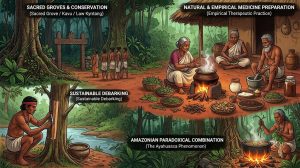
One of the most effective conservation tools created by human culture is the institution of Sacred Groves. Known as Kavu in Kerala, India; Law Kyntang in Meghalaya; Kayas in coastal Kenya; and Tromph in parts of Southeast Asia, these tracts of primary forest are protected by customary law:
-
Zero-Extraction Mandates: Entering a sacred grove with metal cutting tools or harvesting flora for commercial gain is taboo (forbidden). Sanctions for violations range from community fines to social banishment.
-
In-Situ Gene Banks: Modern biological surveys show that sacred groves act as critical refuges for endangered, slow-growing medicinal taxa that have vanished from surrounding landscapes. In India alone, an estimated 100,000 to 150,000 sacred groves persist, functioning as living gene banks that maintain original microclimates, mycorrhizal fungi, and seed stocks.
-
Selective Debarking Protocols: When bark is required for medicinal decoctions, customary practices forbid girdling (stripping a complete ring of bark around the trunk, which severs the phloem and kills the tree). Healers harvest only narrow, vertical strips from opposing directional quadrants (e.g., East and West), sealing the exposed wood with river clay or medicinal sap to prevent fungal infections and allow the tree to heal.
Empirical Pharmacology: Indigenous Extraction and Bioavailability
Indigenous healers understand that raw plant tissues often contain irritating, toxic, or poorly absorbed compounds alongside their active therapeutics. Through long empirical observation, traditional cultures developed refined preparation methods to maximize bioavailability while minimizing toxicity.
TRADITIONAL BOTANICAL PREPARATION MODES
Mode |
Empirical Biochemical Function |
Infusion (Cold) |
Preserves volatile aromatics and heat-sensitive peroxides/terpenes. |
Decoction (Boil) |
Extracts heavy, insoluble tannins, lignans, and complex alkaloids. |
Lipid / Milk Sol |
Dissolves hydrophobic, non-polar molecules into digestible fats. |
Fermentation |
Microbial breakdown transforms bound glycosides into free aglycones. |
Multi-Solvent Extraction
Indigenous practitioners use water, milk, plant-derived alcohols, animal fats, and plant oils based on the chemical solubility of target compounds:
-
In Ayurvedic and Adivasi traditions, water-insoluble fat-loving compounds—such as the curcuminoids in Curcuma longa (Turmeric) or withanolides in Withania somnifera (Ashwagandha)—are prepared by simmering the roots in whole milk or clarified butter (ghee). Lipids act as non-polar solvents, creating an emulsion that dramatically increases gastrointestinal absorption.
-
When addressing deep-seated infections or chronic joint inflammation, practitioners create alcoholic tinctures (Asavas and Arishtas), using natural yeast fermentations that produce low levels of ethanol (5% to 12%). This alcohol extracts hydrophobic resins and alkaloids while preserving the solution against bacterial spoiling.
Synergy, Bio-enhancement, and Antidote Formulation
Rarely does an indigenous healer prescribe a single plant in isolation (simpling). Most native remedies are multi-botanical compounds designed to balance competing physiological effects:
-
Trikatu Bioavailability Enhancement: A classical formulation of Black Pepper (Piper nigrum), Long Pepper (Piper longum), and Ginger (Zingiber officinale). Modern clinical pharmacology has confirmed that piperine (the active alkaloid in black pepper) inhibits hepatic glucuronidation and intestinal drug metabolism. Co-administering piperine with other botanical compounds can increase their systemic bioavailability by up to 2,000%, validating this ancestral combination.
-
The Ayahuasca Pharmacological Paradox: Amazonian healers combine the bark of the Banisteriopsis caapi vine with the leaves of Psychotria viridis. The active psychoactive compound in P. viridis is N,N-Dimethyltryptamine (DMT). When ingested orally, human stomach enzymes—specifically monoamine oxidase A (MAO-A)—rapidly degrade DMT, rendering it inert.
However, B. caapi contains potent Harmala alkaloids (harmine, harmaline, tetrahydroharmine), which act as reversible Monoamine Oxidase Inhibitors (MAOIs). By temporarily deactivating the patient’s gut enzymes, the brew allows DMT to cross the blood-brain barrier intact. The statistical probability of accidentally combining these two specific species out of roughly 80,000 Amazonian plant species underscores the depth of indigenous empirical testing.
5. Epistemology: How Indigenous Peoples Acquire Botanical Knowledge
How did indigenous communities discover intricate biochemical synergies without mass spectrometers, chromatography, or animal models? The mainstream biomedical world often assumes this knowledge arose purely through crude trial, error, and accidental poisoning across millennia.
While empirical trial and error certainly played a foundational role, indigenous practitioners explain that their discovery process relies on fundamentally different sensory, ecological, and epistemological frameworks.
MODES OF BOTANICAL KNOWLEDGE ACQUISITION |
|
Knowledge Pathway |
Manifestation & Operational Methodology |
1. Zoopharmacognosy
|
Systematic observation of animal self-medication during illness
|
Zoopharmacognosy: Learning from Animal Self-Medication
Indigenous peoples have long engaged in rigorous ethological tracking, observing the dietary adaptations of sick or wounded wild animals:
-
Primatologists and ethnobotanists documenting the roots of African traditional medicine have observed wild chimpanzees infected with intestinal nematodes (Oesophagostomum stephanostomum) deliberately seeking out and chewing the bitter pith of Vernonia amygdalina (Bitter Leaf). Local human populations use this exact plant to treat identical parasitic infections, stomach dysentery, and malaria.
-
Across North America, indigenous lore recounts hunters observing brown bears digging up and consuming the roots of Ligusticum porteri (now known as Osha or “Bear Root”) before rubbing the chewed paste through their fur to repel parasites and soothe wounds. Native tribes adopted the plant as a premier treatment for respiratory infections, skin abrasions, and pain.
Organoleptic Analysis: Taste and Texture as Biochemical Proxies
Indigenous herbalists undergo sensory training that allows them to assess a plant’s chemical families directly using taste, odor, and tactile cues:
ORGANOLEPTIC PROFILING AND CORRESPONDING PHYTOCHEMISTRY |
||
Extreme Bitterness |
Alkaloids, Sesquiterpene lactones, Iridoid glycosides |
Stimulates hepatic bile flow; antipyretic; antimicrobial; clears systemic heat |
Astringency (Puckering) |
Polyphenols, Condensed Tannins, Catechins |
Precipitates proteins; tightens mucous tissues stops active hemorrhages; treats diarrhea |
Acridity / Pungency (Tingly Heat) |
Volatile oils, Capsaicinoids, Mustard oils (Glucosinolates) |
Vasodilator; diaphoretic; breaks up pulmonary mucus; enhances peripheral blood flow |
Mucilaginous (Slimy / Gelatinous) |
Polysaccharides, Complex Plant Gums |
Demulcent; coats inflamed gut linings; soothes dry coughs; protects irritated membranes |
Using this sensory framework, an experienced herbalist encountering an unclassified plant can quickly deduce its therapeutic class without laboratory assays.
The Morphological Lexicon: Signatures Without Superstition
Often dismissed as magical thinking, the indigenous Doctrine of Signatures represents an applied visual mnemonic system:
-
Plants with yellow sap or roots (such as Hydrastis canadensis / Goldenseal, or Berberis vulgaris / Barberry) frequently contain the bright yellow alkaloid berberine, a potent antimicrobial compound used historically to treat jaundice, bacterial dysentery, and bile duct congestion.
-
Plants with lung-like morphology (such as Pulmonaria officinalis / Lungwort) or vascular-resembling branch networks often contain mucilaginous compounds that relieve respiratory bronchospasms. Rather than believing a plant physically morphed to imitate a human organ, indigenous scholars used these structural cues as an ecological indexing system, organizing generations of clinical data into memorable morphological markers.
Dream States, Shamanic Trances, and Altered Perception
Indigenous healers openly describe acquiring knowledge through non-ordinary states of consciousness, dreams, and shamanic trances induced by ritual, fasting, sensory deprivation, or entheogenic plants. Healers maintain that under these expanded sensory states, the plant speaks its utility directly to the human unconscious.
While western analytical frameworks historically dismissed these reports as hallucinations, cognitive anthropologists and neurobiologists offer a more nuanced interpretation:
-
The human unconscious processes complex environmental data far below conscious awareness.
-
Forest-dwelling practitioners spend lifetimes immersed in delicate ecological interdependencies. In altered states, the brain can synthesize subtle sensory inputs—micro-odors, leaf textures, animal behaviors, ecological patterns—into sudden, unified creative insights. What presents culturally as “the spirit of the plant speaking” represents the pinnacle of subconscious pattern-recognition, translating deep ecological observation into actionable medical hypotheses.
Intergenerational Transmission vs. Modern Institutional Education
Modern medical and botanical education relies on institutional, peer-reviewed, and text-based validation. Knowledge is depersonalized, codified into textbooks, and transmitted through classroom lectures, leaving practitioners separated from the physical living ecosystems where medicines grow.
EPISTEMOLOGICAL TRANSMISSION SYSTEMS: A COMPARISON |
|
Indigenous Ethnobotanical Model |
Academic Institutional Model |
• Experiential Apprenticeship
|
• Classroom lectures, laboratory assays, and textual exams
|
In contrast, indigenous transmission is experiential, lineage-based, and orally codified:
-
Oral Mnemonic Architecture: Extensive botanical information is preserved in oral cultures through epic songs, creation myths, chants, and rhythmic nursery rhymes. Among the Navajo (Diné), healing chants like the Hózhǫ́ǫ́jí (Blessingway) require years to master, preserving precise directions for finding, processing, and applying medicinal plants within ceremonial poetry.
-
Prolonged Apprenticeship: A novice herbalist typically studies beside an elder mentor for 10 to 25 years. Learning occurs through physical immersion: gathering plants in different seasons, tasting roots at various elevations, handling leaves, and monitoring clinical responses across patients. Knowledge is bound to character: an apprentice who displays greed, emotional instability, or disrespect for nature is withheld from higher medicinal training.
6. Contemporary Threats: Biopiracy, Intellectual Property, and Habitat Loss
Indigenous medicinal traditions face serious threats from environmental destruction and economic exploitation. The world is losing indigenous knowledge faster than it is cataloging it.
The United Nations Educational, Scientific and Cultural Organization (UNESCO) warns that of the world’s roughly 7,000 spoken languages, more than half may go extinct by the end of the 21st century. When an indigenous language dies, an entire library of specialized botanical and ecological vocabulary disappears with it.
PRIMARY THREATS TO INDIGENOUS FOLK PHARMACOPEIAS
[ Habitat Destruction ] |
Deforestation and mining eradicate rare medicinal endemics. |
[ Cultural Assimilation ] |
Disconnection of youth leaves oral lineages without successors. |
[ Biopiracy & Theft ] |
Multinational patents privatize traditional remedies without consent. |
[ Climate Instability ] |
Shifts in rainfall and temperature disrupt plant secondary chemistry. |
Biopiracy and Uncompensated Extraction
Historically, corporate and academic researchers have collected plant specimens and traditional knowledge from indigenous territories, isolated the active chemical entities, patented the resulting therapies, and generated immense profits without compensating or acknowledging the source communities.
-
The Neem Patent Controversy: In the 1990s, multinational corporations secured patents on fungicidal and insecticidal compounds extracted from the seeds of Azadirachta indica (Neem), a tree utilized across India for millennia for human hygiene and agricultural protection. It required a decade of international legal battles led by Indian scientists and civil groups to have the European Patent Office revoke the patent on grounds of prior art and lack of novelty.
-
The Hoodia Gordoni Exploitation: For centuries, the indigenous San people of the Kalahari Desert chewed pieces of Hoodia gordonii, a succulent plant, to stave off hunger and thirst during long desert hunting expeditions. In the late 1990s, research institutions patented the active appetite-suppressing molecule (P57), licensing it to major pharmaceutical corporations for millions of dollars. Only after sustained international advocacy did the San secure a profit-sharing agreement—though commercialization ultimately stalled in clinical development.
LANDMARK RESISTANCE TO BIOPIRACY |
||
Target Plant Taxon |
Indigenous Source Group |
Legal & Regulatory Outcome |
Azadirachta indica (Neem Tree) |
Indian Traditional Farming & Ayurvedic Knowledge |
European Patent Office revoked patents due to broad documentation of "Prior Art" |
Hoodia gordonii (Kalahari Succulent) |
San People (Southern Africa) |
Landmark benefit-sharing agreement negotiated; established ethical precedent for extraction |
Banisteriopsis caapi (Ayahuasca Vine) |
Indigenous Peoples of the Amazon River Basin (COICA) |
US Patent Trademark Office initially canceled a private patent following legal challenges |
The Legal Shield: The Nagoya Protocol
To help counter biopiracy, the international community established the Nagoya Protocol on Access to Genetic Resources and the Fair and Equitable Sharing of Benefits Arising from their Utilization, a supplementary agreement to the Convention on Biological Diversity (CBD):
-
Prior Informed Consent (PIC): Commercial pharmaceutical and academic researchers must obtain clear permission from indigenous communities and sovereign state bodies before accessing or collecting wild botanical varieties from native lands.
-
Mutually Agreed Terms (MAT): Research teams must negotiate fair benefit-sharing agreements ensuring that intellectual, technological, and monetary returns flow directly back to native custodians.
-
Traditional Knowledge Digital Libraries (TKDL): Initiatives pioneered by nations like India have systematically digitized, transcribed, and translated ancient medical scriptures into searchable databases for patent offices worldwide. This system establishes verifiable prior art, blocking predatory patent applications before they are granted.
7. The Integration Paradigm: Bridging Indigenous Knowledge and Modern Healthcare
Rather than treating modern allopathic medicine and traditional herbal systems as incompatible rivals, progressive public health leaders advocate for integrative healthcare frameworks that leverage the strengths of both worlds.
Complementary Strengths in Primary Healthcare
While modern biomedicine excels in acute emergency trauma, advanced surgery, intensive care, and diagnostic imaging, it struggles with the soaring costs of managing chronic, age-related, and lifestyle-driven conditions. Conversely, indigenous herbalism provides accessible, low-cost preventative care, manages chronic functional and digestive disorders, and supports mental well-being with minimal side effects.
Integrating traditional practitioners into primary healthcare networks empowers rural clinics to offer culturally trusted, locally sourced botanical treatments alongside essential modern interventions:
-
In South Africa, traditional healers (Sangomas and Inyangas) collaborate with public health campaigns to deliver early tuberculosis and HIV screenings, directing patients to clinics for testing while continuing to manage holistic supportive care.
-
In South America, cross-cultural hospitals in Chile and Bolivia feature parallel facilities where indigenous Mapuche or Aymara healers practice alongside allopathic doctors, allowing patients to draw on both traditions.
Phytochemical Synergy and Full-Spectrum Medicine
Modern drug discovery is transitioning away from the rigid “one target, one magic bullet” paradigm. Complex diseases like cancer, metabolic syndrome, and neurodegeneration involve multi-genic pathways that easily evade single isolated molecules.
Botanical preparations offer polyvalent phytochemistry: dozens of naturally occurring flavonoids, saponins, and bitter terpenes working together across multiple cellular pathways at once. By studying full-spectrum indigenous remedies rather than isolating single molecules, pharmacologists are discovering that whole-plant extracts often match single-molecule drugs in clinical efficacy while causing fewer negative side effects. The natural compounds buffer cellular toxicity and prevent rapid chemical resistance.
The Path Forward: Supporting Indigenous Custodianship
Protecting medicinal plants cannot be separated from defending the human rights, land titles, and sovereignty of the indigenous peoples who care for them. Preserving a rare medicinal herb in an urban botanical garden while allowing its native forest habitat to be clear-cut severs the vital link between plant, soil, and human culture. When an indigenous community is displaced from its ancestral lands, its living medical library disappears within a generation.
THE SUSTAINABLE MATRIX
INDIGENOUS LAND SOVEREIGNTY |
|
In-Situ Biodiversity Preservation |
Intergenerational Oral Knowledge Transmission |
RESILIENT, REGENERATIVE PHARMACY |
|
Preserving this irreplaceable botanical legacy requires concrete global action:
-
Legally securing indigenous land ownership: Protecting indigenous land rights is the single most effective, cost-efficient strategy for conserving biodiversity and protecting wild medicinal plants from industrial extraction.
-
Backing community-controlled education: Educational programs must support indigenous languages and allow youth to learn medicine directly from elder lineage-holders, preserving oral knowledge alongside formal studies.
-
Enforcing strict anti-biopiracy laws: Governments must strengthen intellectual property frameworks to prevent the exploitation of traditional knowledge, ensuring original communities retain complete ownership and control over their heritage.
-
Funding collaborative, decolonized ethnobotanical research: Modern research initiatives should prioritize equal partnerships with indigenous institutions, replacing exploitative extraction with cooperative science that values traditional practitioners as co-authors and equal colleagues.
Indigenous folk medicine is not an antiquated curiosity of the past. It is an enduring, sophisticated body of environmental science and holistic health that the world needs now more than ever. By honoring the land, respecting the sovereignty of indigenous peoples, and combining modern analytical science with ancestral botanical wisdom, humanity can build a resilient, equitable, and truly regenerative future for global healthcare.
