
THE STRUGGLES OF INDIAN TRIBAL WOMEN: SILENT PILLARS OF FOREST, HEARTH, AND HERITAGE
INTRODUCTION: THE UNSUNG ARCHITECTS OF INDIGENOUS SURVIVAL
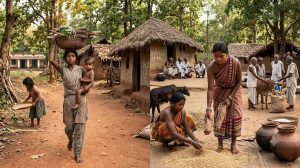
Deep within the sal-canopied hills of Jharkhand, across the undulating plateaus of Bastar, and through the misty river basins of the Northeast, dawn does not begin with an alarm clock. It begins with the rhythmic thud of a pestle striking stone, the crackle of dry twigs catching flame under a clay pot, and the steady, quiet footsteps of a woman walking barefoot into the forest twilight.
India is home to over 104 million indigenous people—officially designated as Scheduled Tribes (Adivasis)—comprising more than 705 distinct tribal communities. Within these diverse ecosystems, from the Santhals and Gonds to the Bhils, Baigas, Chenchus, and Misings, women form the social, ecological, and economic spine of communal life. Yet, mainstream narratives routinely alternate between two flawed extremes: either romanticising tribal women as exotic, carefree daughters of nature untouched by patriarchal baggage, or reducing them to helpless statistics of poverty and marginalisation.
The lived reality is far more complex, resilient, and demanding. Adivasi women endure a triple burden: their marginalized identity as indigenous people, the economic disenfranchisement of living in peripheral geographies, and the systemic vulnerabilities imposed by gender within and outside their communities.
From before dawn until long after the village elders have retired around the central fire, the tribal woman carries the weight of ecological stewardship, family survival, and socio-cultural continuity. This comprehensive exploration examines the life cycle of Indian tribal women—their grueling daily routines, primary sources of livelihood, contributions before and after marriage, maternal sacrifices, health challenges, and ultimate status as matriarchal elders in their twilight years.
THE DAWN-TO-DUSK CYCLE: A DAY IN THE LIFE OF AN ADIVASI WOMAN
To grasp the struggle of an Indian tribal woman, one must trace the hours of her day. While modern labor frameworks neatly separate productive work, domestic care, and leisure, the daily routine of a tribal woman blurs all boundaries into a continuous, 16-to-18-hour continuum of physical exertion.
The Pre-Dawn Awakening: Preparing the Hearth
The tribal woman’s day begins between 4:00 AM and 5:00 AM, hours before the morning sun breaks through the forest ridge. While her household sleeps, she rises from her woven mat. Her initial actions determine the day’s nourishment:
- Sweeping and Cleansing: The courtyard and the threshold of the mud-and-thatch home are swept clean with hand-tied broom grass. In many communities, cow-dung wash is applied to the front verandah to keep insects at bay and maintain structural hygiene.
- Pounding and Grinding Grain: Before motorised grain mills reached rural hubs, women ground minor millets (ragi, kodo, kutki) or de-husked paddy using heavy stone querns (jaanta) or foot-operated wooden levers (dhenki). Even today, in interior settlements, manual grain processing remains an exhausting physical ritual that demands immense upper-body and core strength.
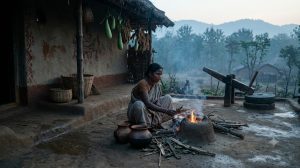
- Lighting the Sacred Hearth: The chulha (mud stove) is ignited using dried sal leaves, twigs, and cow-dung cakes. Lighting the fire is not merely culinary; it warms the damp, uninsulated home during cold highland mornings.
The Water Pilgrimage: The Arithmetic of Thirst
Perhaps no single chore epitomises the physical toll on indigenous women more acutely than the procurement of drinking and cooking water. In the interior hills of Odisha’s Koraput, the dry pockets of Maharashtra’s Melghat, or the arid tribal tracts of Rajasthan’s southern belt, groundwater is scarce and surface streams frequently recede.
The tribal woman balances two to three brass or aluminium pitchers (handas or degchis) stacked atop her head, cushioned only by a folded cotton ring (chumbal or penda). She treks down steep, rocky ravines to natural perennial springs (chuas), shallow dug wells, or riverbeds.
- The Physical Toll: A round trip of two to four kilometres, repeated two to three times a day, translates to carrying 20 to 30 kilograms of deadweight over uneven, slippery terrain. This lifelong physical strain leads to chronic lumbar trauma, pelvic organ prolapse, and severe degenerative disc disease by the time women reach their mid-thirties.
- The Seasonal Crisis: In peak summer months (April to June), local water points dry up entirely. Tribal women must wake as early as 2:30 AM to queue at slow-seeping hillside fractures, waiting hours for a single pitcher to fill, drop by painstaking drop.
The Afternoon Labor: Forest, Field, and Market
By 8:00 AM, having fed her children a watery rice starch broth (pej) or left-over fermented rice water (panta bhat), she steps outside the perimeter of the hamlet. The midday hours are rarely spent resting inside the home. Depending on the agricultural season, she transitions into one of two demanding roles:
- Agricultural Laborer: Working bent double in ankle-deep mud, transplanting paddy seedlings, weeding stony upland fields (tanr), or harvesting millets under a relentless tropical sun.
- Forest Forager: Marching deep into reserve or community forests to gather seasonal produce, her senses alert to forest wardens, wildlife, and treacherous topography.
The Evening Return: The Unfinished Shift
When the afternoon light softens into dusk, non-tribal male labourers often congregate at community squares or local haats. For the tribal woman, the second shift begins:
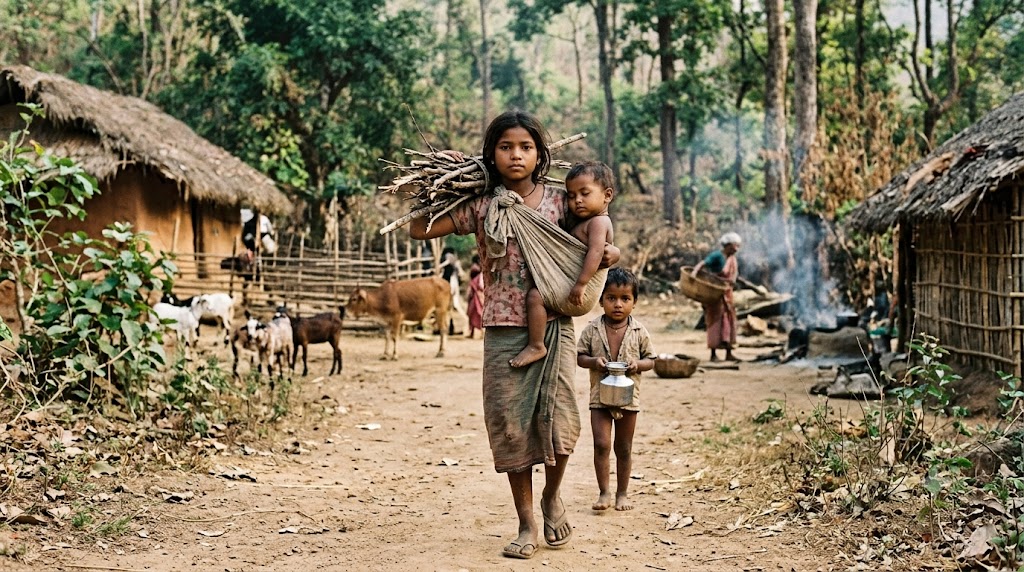
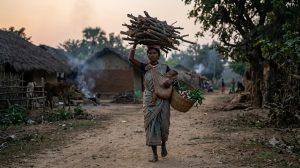
She returns to her hamlet balancing a heavy headload of dry fuelwood on her head, an infant tied securely to her torso with a faded cotton sari (gamcha), and a bamboo basket filled with edible forest leaves (saag), mushrooms, or roots tucked under her arm.
Arriving home, she immediately gathers the cattle, cleans the shed, bathes her toddlers at the community handpump or pond, and prepares dinner over a smoke-filled hearth. Biomass smoke in poorly ventilated huts creates an indoor air pollution environment equivalent to smoking dozens of commercial cigarettes daily, causing chronic respiratory illnesses and corneal irritation.
By the time the utensils are scoured with sand and ash and the family is fed, it is past 10:00 PM. She is the last person to eat—frequently sustaining herself on whatever meagre gruel remains—and the last to close her eyes, resting her exhausted body only to wake four hours later to repeat the cycle.
LIVELIHOOD DYNAMICS: FORESTS, SUBSISTENCE FARMING, AND INFORMAL LABOUR
The survival of tribal families rests on the multifaceted, microeconomic labour of women. Unlike industrialised societies where labour is largely monetised and documented, the economic production of Adivasi women is intricately entwined with their surrounding ecosystems.
LIVELIHOOD MATRIX OF THE ADIVASI TRIBAL WOMAN |
||
NON-TIMBER FOREST PRODUCE (NTFP) |
SUBSISTENCE AGRICULTURE & ANIMAL HUSB. |
MIGRATORY & INFORMAL LABOR |
• Mahua flow.
|
• Paddy sowing
|
• Brick kilns
|
Non-Timber Forest Produce (NTFP): The Forest as a Lifeline
For millions of tribal families across the central Indian tribal belt (Madhya Pradesh, Chhattisgarh, Jharkhand, Odisha, and Maharashtra), Non-Timber Forest Products (NTFPs) account for between 40% and 60% of annual household income. Upwards of 80% of all NTFP collection, processing, and value addition is undertaken solely by women.
1. Mahua (Madhuca longifolia) Season
During March and April, the deciduous forests shed pale, succulent mahua blossoms. Women and young girls spend weeks living under canopies, clearing forest floors with controlled burning—a practice carrying constant burn injury risks—and sweeping up blossoms from dawn until noon.
- The blossoms must be carried home in giant headloads, washed, and sun-dried over several days on bare rock surfaces.
- Mahua serves as a staple food supplement during lean summer months, cattle feed, and the raw ingredient for indigenous brewed beverages.
- Despite their relentless labor, women receive a fraction of market value from local forest traders (mahajans and beparis), who leverage predatory debt traps to undervalue the produce.
2. Tendu (Diospyros melanoxylon) Leaf Plucking
In peak summer (May to June), women harvest tendu leaves used for rolling beedis.
- Rising before daybreak, women walk 8 to 12 kilometres into thorny scrubland to harvest leaves when they are supple.
- Back in the village, they spend their late afternoons counting leaves, sorting them for blemishes, and binding them into bundles (pudas) of 50 or 100 leaves.
- Sitting cross-legged for hours on end causes musculoskeletal disorders, while exposure to sap and pesticide residue on leaves triggers chronic dermatitis.
- Although state-run forest federations have stepped in to guarantee Minimum Support Prices (MSP), procurement centers (phads) are often controlled by local middlemen, leaving women vulnerable to arbitrary quality rejections and delayed payments.
3. Minor Forest Gums, Resins, and Wild Greens
Throughout the year, women harvest lac, sal seeds, chironji nuts, tamarind, wild honey, and bamboo shoots. During lean monsoon and drought periods, wild tubers (kanda) and forest greens (saag) gathered by women prevent outright starvation. Indigenous women possess an encyclopedic, intergenerational botanical knowledge of edible versus toxic plants, an intellectual heritage that remains entirely uncompensated and unrecognised by modern intellectual property frameworks.
Subsistence Agriculture: The Unrecognised Farmers
In indigenous communities practising settled or shifting (podu/jhum) agriculture, women perform nearly all farming tasks except the initial act of mechanical ploughing with draft animals, which is traditionally tabooed for women across several central Indian tribes.
- Paddy Cultivation: Women perform seed germination tests, broadcasting, manual transplanting (ropani), weeding (nindai), and harvesting (katai).
- Millet Cultivation: Millets—the historical nutritional security of tribal India—are exceptionally labor-intensive to weed, de-husk, and process, responsibilities handled almost exclusively by female labor.
- Denial of Land Title: Despite contributing up to 70% of total agricultural labor hours, tribal women rarely hold legal land titles (patta). Patriarchal customary laws often reserve land inheritance strictly along male lineages to keep ancestral properties within the clan (gotra). Consequently, tribal women farmers cannot independently access institutional credit, subsidized fertilizer schemes, crop insurance, or government compensation following climate-induced crop failures.
Distress Migration and the Informal Economy
As deforestation, mining projects, and wildlife conservation enclosures restrict tribal access to forests, traditional livelihoods have collapsed. This ecological alienation triggers waves of seasonal distress migration.
VULNERABILITIES OF MIGRANT TRIBAL WOMEN |
||
Sector |
Operational Reality |
Human Rights Hazards |
Brick Kilns (UP, Punjab, WB) |
14-hour days mixing clay, carrying green bricks on heads |
No sanitation, debt bondage, infant exposure to toxic dust |
Urban Construction (Metro regions) |
Carrying concrete, manual digging, living in tarpaulin sheds |
Zero safety gear, non-payment of equal wages, molestation |
Domestic Work (Delhi, Mumbai, etc.) |
Placed via illegal placement agencies as live-in maids |
Physical confinement, wage theft, rampant sexual abuse |
When tribal women migrate alongside their husbands or brothers to work in peri-urban brick kilns, they are treated as auxiliary, unpaid labor within piece-rate wage models. The family unit is paid per 1,000 bricks made, forcing women to work through pregnancies and shortly after childbirth.
Young, unmarried tribal girls from states like Jharkhand, Chhattisgarh, and Assam are systematically targeted by unregulated domestic placement agencies. Promised training, respectable salaries, and safe housing in metropolitan hubs like Delhi, Mumbai, and Bengaluru, thousands find themselves trapped in conditions bordering on modern slavery—isolated from their communities, denied contact with their families, unpaid for years, and subjected to rampant physical, emotional, and sexual exploitation.
THE MAIDENHOOD: CONTRIBUTIONS TO THE NATAL FAMILY BEFORE MARRIAGE
The life of a tribal girl differs fundamentally from that of her urban or caste-Hindu counterpart. In many indigenous societies, maidenhood is neither a period of shielded childhood nor a time reserved for academic self-actualization; it is an early apprenticeship in collective survival.
The Young Girl as Caregiver and Economic Producer
In an Adivasi household where both parents must work in the forest or fields every single day, the eldest daughter (didi) assumes domestic leadership long before her physical maturity.
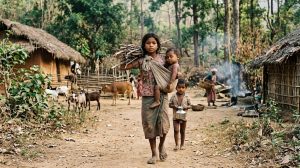
- Sibling Caretaking: By the age of six or seven, a young tribal girl is routinely entrusted with the complete care of younger siblings. She carries toddlers strapped to her hips, feeds them gruel, comforts them, and keeps them safe from hearth fires and livestock.
- Domestic Contributions: Little girls are introduced to small-scale foraging early. They accompany their mothers to collect dry twigs, pluck tender leafy greens along field margins, lead goats and cows to pasture, and fetch water in smaller vessels tailored to their frames.
- Sacrifice of Education: This structural reliance on girl children is the primary engine behind the staggering female drop-out rates in tribal primary and middle schools. When a family is pushed to the margins, the son is encouraged to walk the distance to a government school or ashram boarding facility, while the daughter is held back to secure the domestic base.
   Traditional Childhood Paradigm          Indigenous Girl-Child Reality
  +-------------------------------+       +-------------------------------+
  |   Play & Primary Education    |       | Sibling Care & Domestic Labor |
  |              v                |  vs   |              v                |
  | Secondary School Progression  |       | Early NTFP Gathering & Farming|
  |              v                |       |              v                |
  | Personal Career Cultivation   |       | Discontinued School & Marriage|
  +-------------------------------+       +-------------------------------+
The “Bride Price” Paradox: Respect vs. Commodity
Unlike mainstream Indian societies where the illegal yet ubiquitous practice of dowry (groom price) drains the bride’s family and turns girl children into perceived financial liabilities, many Indian tribal communities historically practice bride price (dahej, kanya-shulk, or gonong).
Under this system, the groom’s family compensates the bride’s parents with cattle, grain, brass vessels, and modest sums of money before the marriage can be solemnized.
At a surface level, anthropologists have long celebrated bride price as explicit proof that tribal communities value the female life:
- Recognition of Labor Value: The bride price is fundamentally an acknowledgment that the bride’s natal family is losing a vital, productive economic unit who gathered food, farmed land, and maintained the household.
- The Darker Evolution: In contemporary times, the monetization of bride price has created distorted dynamics. In impoverished pockets, daughters can be treated as capital assets by desperate families.
- The Reverse Contagion of Dowry: Tragically, as tribal communities undergo “Sanskritization” and assimilate into dominant, caste-stratified cultural spheres, bride price is rapidly being abandoned in favor of oppressive dowry demands. Tribal families who never possessed accumulated capital are now driven into predatory debt cycles simply to marry off their daughters, introducing female infanticide risks, dowry-harassment, and domestic violence into social fabrics where such atrocities were once entirely alien.
MARRIAGE AND BEYOND: THE DUAL BURDENS OF THE MARITAL HOMESTEAD
Marriage represents a massive geographic, social, and emotional rupture for an Adivasi woman. Leaving behind her familiar forest slopes and clan safety nets, she steps into a new family where her worth must be re-proven through unremitting physical output.
Assimilation into the Husband’s Clan
Upon crossing the threshold of her marital home, the young wife must master the ecological secrets of a new geography: where the perennial water sources lie, which forested tracks are safe, and the specific agricultural requirements of her husband’s kin.
- Loss of Autonomy: While tribal women have historically enjoyed greater autonomy than non-tribal women regarding divorce (chhad-chhut), widow remarriage (sagai), and premarital mingling (exemplified by traditional institutions like the Ghotul of the Muria Gonds), this relative freedom must not be mistaken for absolute gender parity.
- Exclusion from Traditional Governance: In village-level traditional self-governance institutions—such as the Munda-Manki system of the Hos, the Parha Panchayat of the Oraons, or the traditional councils of the Nagas—women have historically been barred from holding executive seats. Traditional village leadership (manjhi, pradhan, pahan) is strictly patriarchal. Tribal women do not pass down lineage names, nor do they inherit ancestral communal land.
- Double Shift Demands: Within the marital homestead, she must defer to parents-in-law, rise earlier than her husband, manage domestic livestock, brew traditional rice beer (haria, handia, or apong) for clan rituals, and labor shoulder-to-shoulder with men in field clearings.
Intimate Partner Violence and Substance Dependence
A critical, often unaddressed reality in tribal regions is the complex intersection between poverty, shifting social mores, indigenous alcohol consumption, and gender-based violence.
Traditionally, indigenous fermented brews (prepared from rice, millets, or mahua flowers) were dietary staples and sacred offerings deeply bound to community celebrations and agricultural festivals. They contained relatively low alcohol concentrations and significant caloric value.
However, the aggressive penetration of commercial, high-proof, illicit country liquor (desi sharab) manufactured by predatory outside syndicates has wrought devastation across tribal belts.
- The Cycle of Abuse: Chronic alcohol dependency among men absorbs meager daily wages, leaving mothers without resources to feed their children.
- Domestic Violence: Under the influence of illicit liquor, domestic abuse surges. Tribal women bear the brunt of this violence in secluded hamlets where access to police posts, formal legal aid, and domestic violence shelters is virtually non-existent.
- Grassroots Resistance: In response, some of the most heroic anti-liquor movements across India—from the anti-arrack agitations of Andhra Pradesh to indigenous women’s anti-liquor patrols in Jharkhand and Odisha—have been spearheaded entirely by organized tribal women (Mahila Mandals) wielding batons to smash illegal stills and protect their families from economic annihilation.
MOTHERHOOD AMIDST SCARCITY: REPRODUCTION, NUTRITION, AND HEALTH INFRASTRUCTURE
Motherhood in the indigenous heartlands of India is a trial carried out against staggering ecological, systemic, and physiological odds. The tribal mother must navigate childbirth without basic health amenities, high rates of maternal mortality, and devastating child malnutrition.
THE CHILDBIRTH JOURNEY IN DEEP TRIBAL BELTS |
||
Trimester / Event |
Environmental Reality |
Clinical & Systemic Risks |
1st & 2nd Trimester |
Daily 16-hr physical labor, carrying NTFP & water headloads |
Severe anemia, intrauterine growth restriction (IUGR) |
3rd Trimester |
Continued hard field labor until day of labor onset |
Spontaneous preterm labor, placental complications |
Delivery Event |
Unassisted home birth on floor, or trek via sling to road head |
Postpartum hemorrhage, neonatal sepsis, maternal death |
Postpartum Care |
Return to agricultural tasks within 7 to 14 days |
Chronic prolapse, lactation failure from caloric deficit |
The Maternal Health Landscape: Geography of Neglect
The geographic isolation of tribal settlements (paras, tolas, or padas) creates an extreme barrier to institutional maternal healthcare:
- The Infrastructure Void: Primary Health Centres (PHCs) and Community Health Centres (CHCs) in Scheduled Areas frequently exist only on paper. Those that stand are plagued by high absenteeism among doctors, lack of functional blood storage facilities for emergency transfusions, and zero electricity or clean running water.
- The “Doli” Phenomenon: When labor complications occur, paved all-weather roads under programs like PMGSY (Pradhan Mantri Gram Sadak Yojana) often terminate miles short of highland villages. Pregnant women in active labor are placed on makeshift bamboo-and-rope stretchers (dolis) and carried over precarious rope bridges, rocky mountain trails, and swollen monsoon rivers by village youths to reach an ambulance at the distant road head. Tragically, many mothers and unborn infants perish en route.
- Institutional Discrimination: When poor tribal women finally arrive at urban district hospitals, they face dismissive, culturally insensitive, and linguistic mistreatment by hospital staff. Alienated by an intimidating medical bureaucracy, many tribal women consciously choose the familiar sanctuary of an unassisted home delivery overseen by a traditional birth attendant (dai).
The Malnutrition Spiral: Stunting, Wasting, and Anemia
The biological burden of indigenous motherhood is compounded by severe, multi-generational undernutrition.
- Endemic Anemia: According to successive National Family Health Surveys (NFHS-4 and NFHS-5), over 65% to 75% of tribal women of reproductive age suffer from clinical anemia.
- This is driven by dietary deficits, high hookworm infestations, recurrent malaria endemicity, and genetic conditions like sickle-cell anemia and thalassemia, which are disproportionately concentrated among indigenous populations.
- The “First 1,000 Days” Crisis: Because an anemic, undernourished tribal mother enters pregnancy with low body mass, she gives birth to low-birth-weight infants. Stunting (low height for age) and wasting (low weight for height) among tribal children under five routinely surpass 40% in pockets of Madhya Pradesh, Maharashtra, and Jharkhand, creating an intergenerational cycle of physiological vulnerability.
- Postpartum Recovery Deficits: Traditional taboos in certain tribes dictate restrictive postpartum diets, depriving recovering mothers of critical protein and micronutrients precisely when lactation demands peak caloric intake.
- Furthermore, economic necessity forces the mother to return to grueling agricultural and forest labor just one or two weeks after giving birth.
TWILIGHT YEARS: THE STATUS OF AGING TRIBAL WOMEN
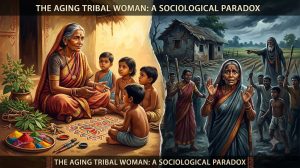
The status of the elderly woman in indigenous societies presents a profound sociological paradox: she is respected as a repository of folk wisdom and ancestral knowledge, yet she is uniquely vulnerable to total material abandonment and violent superstition.
THE AGING TRIBAL WOMAN:A SOCIOLOGICAL PARADOX |
|
CULTURAL VENERATION |
VULNERABILITY & VIOLENCE |
• Custodian of oral histories
|
• Dispossession of forest access
|
Custodians of Heritage and Botanical Medicine
In the traditional village sphere, an aging tribal woman commands substantial informal authority.
- Oral Historians: Without a written script in many ancestral dialects, the collective history, lineage sagas, songs, and folktales of the tribe survive solely through the memories of grandmothers (Dadi, Aaji, Budhi). They preserve linguistic integrity and transmit spiritual cosmologies to children through bedtime recitations.
- Traditional Healers (Vaidyas) and Midwives: Older women serve as traditional healers. Over decades of observation, they have memorized the precise medicinal applications of roots, bark, wild fungi, and seeds to treat snakebites, gastrointestinal disorders, fevers, and labor complications. They are the community’s de facto pharmacists.
- Ritual Mentors: In marriage ceremonies, puberty rituals, and ancestral festivals (such as Sarhul, Karma, or Bhagoria), the elder woman presides over ceremonial preparations, cooking ritual breads, designing traditional body tattoos (godna), and ensuring customs are adhered to without error.
The Shadows of Aging: Witch-Hunting (Dayan Pratha)
The most horrifying human rights violation targeting elderly tribal women is the persistence of witch-hunting (referred to variously as Dayan, Dakan, or Chudail Pratha), concentrated primarily in Jharkhand, Odisha, Chhattisgarh, Assam, and parts of Rajasthan.
Witch-hunting is rarely a consequence of mere superstition. Sociological investigations consistently reveal that it is a weaponized socio-economic mechanism deployed against vulnerable, isolated women:
- The Classic Target: The typical victim of a witch accusation is an elderly, widowed tribal woman living alone, without adult sons to protect her, who happens to hold customary or de facto possession of a fertile patch of agricultural land or a homestead plot.
- The Catalyzing Crisis: When sudden misfortune strikes a village—an outbreak of cholera, the death of a child from malaria, or cattle dying from drought—the village witch-doctor (Ojha, Sokha, or Gunia) is summoned. Corrupted by male relatives or local elites eager to seize the widow’s land, the Ojha divines that an evil eye has cast a spell over the village, pointing directly to the defenseless elder woman.
- The Brutal Execution: Branded as a Dayan, the elderly woman is subjected to unspeakable atrocities by organized mobs: public strippings, beatings, forced consumption of human excrement, torture, and horrific lynching.
- The Ultimate Goal: Land Dispossession: Once the woman is driven out of the village or murdered, her land and homestead are divided up among her deceased husband’s male relatives. Witch-hunting stands as an extreme, violent manifestation of patriarchal land-grabbing disguised as religious ritual.
Physical Abandonment and Economic Invisibility
Even in the absence of explicit violence, the physical realities of aging in an indigenous ecosystem are devastating.
- Lack of Social Safety Nets: Old Age Pensions provided under government schemes (like the Indira Gandhi National Old Age Pension Scheme) provide meager stipends that are frequently delayed for months or swallowed by corruption at rural banking kiosks.
- Erosion of Kinship Care: As younger families migrate to cities for industrial labor, elderly tribal women are left behind in deserted highland hamlets. Weakened by decades of continuous manual labor, suffering from untreated cataracts, skeletal deformities, and severe arthritis, they must still forage for their own fuelwood and walk miles for water. When bodily infirmity permanently prevents them from carrying water or working fields, their survival hinges on the precarious charity of neighbors living near starvation themselves.
TRANSFORMATIVE PATHWAYS: EMPOWERMENT, LEGAL FRAMEWORKS, AND GRASSROOTS MOVEMENTS
Addressing the multi-layered struggles of Indian tribal women requires moving beyond token welfare initiatives toward structural empowerment, institutional accountability, and legal enforcement.
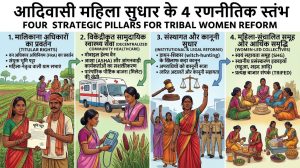
FOUR STRATEGIC PILLARS FOR TRIBAL WOMEN REFORM |
||
1. TITULAR RIGHTS
|
2. DECENTRALIZED COMMUNITY HEALTHCARE
|
3. INSTITUTIONAL LEGAL REFORMS
|
1. Enforcing Titular Rights Under the Forest Rights Act (FRA, 2006)
The Scheduled Tribes and Other Traditional Forest Dwellers (Recognition of Forest Rights) Act, 2006, represents a historic opportunity to correct structural gender inequities.
- Joint Titling: The FRA explicitly mandates that all individual land titles (pattas) issued under the Act must be registered jointly in the names of both spouses, or solely in the name of a single woman/widow.
- Community Forest Rights (CFR): By legally vesting the governance of NTFPs in the hands of the entire village assembly (Gram Sabha), and requiring that at least one-third (and preferably one-half) of the Forest Rights Committees (FRC) comprise women, the law creates a statutory framework for tribal women to control the collection, processing, and pricing of their forest resources.
- Action Required: State governments must aggressively fast-track the distribution of titles, prevent arbitrary rejections of women-headed claims by forest department bureaucracies, and guarantee that women receive direct digital payments for NTFP sales.
2. Revolutionizing Rural Healthcare via Indigenous Intermediaries
Mainstream urban healthcare delivery systems will never effectively serve remote tribal communities without indigenous intermediaries.
- Empowering Tribal ASHAs and Anganwadi Workers: Female Community Health Workers (ASHAs) recruited directly from local tribal communities bridge the linguistic and cultural chasm. When ASHAs are provided with real-time digital diagnostic tools, steady salaries instead of meager piece-rate incentives, and basic medical supplies, institutional delivery rates and immunization coverage rise rapidly.
- Mobile Mountain Clinics and Birthing Waiting Homes: In high-altitude, roadless terrains, states must establish Maa Gruhas (Maternity Waiting Homes) situated near functional CHCs. Pregnant tribal women from interior hamlets can be housed, fed, and monitored with dignity two to three weeks before their expected delivery dates, eliminating the need for emergency transit via bamboo slings.
- Nutritional Revival of Indigenous Millets: The resurgence of millets through initiatives like the National Millet Mission and state-specific programs (e.g., the Odisha Millets Mission) should be directly channeled through tribal women’s farming groups. Revitalizing ragi, kodo, and kutki restores dietary diversity, combats anemia, and provides climate-resilient crop security managed by women.
3. Dismantling Witch-Hunting and Gender-Based Violence
Legislation alone cannot eradicate atrocities like witch-hunting without rigorous village-level enforcement and cultural transformation:
- Stringent National Legislation: While states like Jharkhand, Odisha, and Rajasthan possess specific Prevention of Witch-Hunting Acts, penalties remain light and prosecution rates abysmally low. A comprehensive, non-bailable central law modeled after the SC/ST (Prevention of Atrocities) Act is urgently required.
- Targeting the “Ojha” Network: Legal systems must shift focus toward prosecuting the village witch-doctors (Ojhas) and conspirators who orchestrate accusations for land grabs, making them co-defendants subject to mandatory minimum prison terms.
- Rapid Eviction Reversals: Women dispossessed of land following witchcraft allegations must be provided immediate police protection, fast-tracked judicial restitution of their properties, and state-funded legal representation.
4. Scaling Women-Led Collectives (SHGs) and Economic Value Addition
The Self-Help Group (SHG) revolution under the National Rural Livelihoods Mission (NRLM) has demonstrated unprecedented power in the tribal interior.
- Breaking the Merchant Debt Trap: When tribal women pool small savings into community-managed funds, they free themselves from predatory moneylenders who demand triple-digit interest rates.
- Local Processing Units: Rather than selling raw mahua, tamarind, or chironji to visiting traders at exploitative prices, women-led producer enterprises can establish localized micro-processing units—making certified organic honey, cold-pressed oils, packaged herbal remedies, and bamboo handicrafts.
- Market Access through TRIFED: Agencies like the Tribal Cooperative Marketing Development Federation of India (TRIFED) must expand direct procurement from women-led cooperatives, eliminating middlemen and redirecting retail profits directly into the bank accounts of indigenous women.
CONCLUSION: RECLAIMING DIGNITY FOR THE DAUGHTERS OF THE FOREST
The story of the Indian tribal woman is not a pastoral poem of pristine wilderness, nor is it merely a lamentation of endless destitution. It is a testament to extraordinary, everyday human resilience under the crushing pressures of ecological transformation, social invisibility, and systemic exclusion.
She is the silent engineer who ensures that her children survive on lean hillside clearings, that the hearth remains lit through freezing plateau nights, and that ancestral biodiversity is preserved for future generations. She labors without pensions, harvests without land deeds, motherlands through famine, and guards folk memories against cultural erasure.
To truly honor India’s indigenous heritage, society must look beyond tokenistic imagery of traditional dances during state ceremonies. True honor demands direct, tangible transformation:
- It requires ensuring that no young tribal girl drops out of school to balance water pots on her head.
- It demands that no mother bleeds to death on a makeshift stretcher while trying to reach a road.
- It necessitates that no elderly widow is terrorized as a witch simply because she holds a patch of earth.
- It requires legal land titles in her hands, living wages for her forest harvest, and a seat of power at the center of the village assembly.
The tribal woman has sustained India’s ecological frontiers for millennia. It is time for the nation to stand behind her—safeguarding her rights, amplifying her voice, and securing her dignity under the sheltering canopy of equal justice.
SUMMARY COMPARISON: THE LIFE-STAGE JOURNEY OF TRIBAL WOMEN
| Life Stage | Core Responsibilities & Labor | Primary Vulnerabilities | Key Empowerment Interventions Needed |
|---|---|---|---|
| Girlhood (Ages 5–15) | Sibling care, water fetching, cattle grazing, small-scale forest foraging | High school drop-out rates, child domestic labor, early trafficking risks | Residential schools (EMRS) in deep rural belts; nutrition support via Anganwadis |
| Maidenhood (Ages 15–20) | NTFP collection, agricultural sowing/weeding, distress family migration | Shifting to exploitative dowry systems; loss of educational access | Vocational skill building; legal protections against unregulated domestic placement agencies |
| Marital Years (Ages 20–45) | 18-hour daily routine; NTFP harvesting; manual farming; fuel & water hauling | Domestic violence; high maternal mortality; severe clinical anemia; absence of land titles | Joint land titling under FRA; localized birthing homes; village-level anti-liquor support |
| Elderly Years (Ages 45+) | Traditional healing; preservation of folklore; grandchild care; ritual leadership | Witch-hunting (Dayan Pratha); land grabbing by kin; physical isolation and lack of pensions | Stringent national anti-witch-hunt laws; assured door-to-door pensions; universal cataract and geriatric healthcare |
