

The Unsung Custodians of Water and Hill: A Comprehensive Chronicle of the Bhoi Tfibe
Thank you for reading this post, don't forget to subscribe!Deep within the layered mosaic of Indian social anthropology lies a profound paradox: groups who share identical names across regional borders often embody vastly divergent historical trajectories, cultural systems, and constitutional classifications. Few identities illustrate this phenomenon more compellingly than the Bhoi.
To an anthropologist exploring the lush, mist-draped ridges of Meghalaya, the Bhoi represent one of the primary sub-groups of the Austroasiatic Khasi people—custodians of sacred forests, practitioners of matrilineal kinship, and keepers of age-old terrace systems. Yet, travel across the Deccan plateau into Maharashtra, Gujarat, Madhya Pradesh, and Odisha, and the term Bhoi evokes a completely different, equally profound social reality: a traditional riparian, inland-fishing, boat-plying, and palanquin-bearing community classified among Nomadic/De-Notified Tribes (NT/DNT) or Other Backward Classes (OBC), navigating environmental displacement, water privatization, and livelihood erosion.

Understanding the Bhoi tribes requires an intentional unraveling of both worlds. Both reflections—the indigenous hill tribe of the Northeast and the historical water-bound community of the river basins—are linked by a shared existential reality: an intrinsic connection to fragile ecological commons and an ongoing struggle for self-determination, socio-economic equity, and cultural preservation in modern India.
1. Demystifying the Bhoi Identity: Two Cultural Realities
When examining the Bhoi in contemporary discourse, one must begin with ethnographic clarity. Unlike monolithic ethnic groups, “Bhoi” functions across two distinct societal landscapes:
                               THE BHOI LANDSCAPE
                                        |
       +--------------------------------+--------------------------------+
       |                                                                 |
       ▼                                                                 ▼
THE BHOI OF NORTHEAST INDIA                               THE BHOI OF CENTRAL & WESTERN INDIA
• Sub-tribe of the Khasi (Hynniewtrep)                     • Indigenous Riparian / Inland Fishing Community
• Primarily Ri-Bhoi District, Meghalaya                    • Maharashtra, Gujarat, MP, Odisha, Rajasthan
• Austroasiatic / Mon-Khmer linguistic roots               • Indo-Aryan linguistic heritage (Marathi, Gujarati, Odia)
• Matrilineal kinship & ancestral customary laws           • Historically Nomadic / Semi-nomadic (NT/DNT/OBC)
• Scheduled Tribe (ST) under Constitution Order            • Water commons, wetland cultivation, river stewardship
The Hill Bhoi of Meghalaya (The Austroasiatic Lineage)
They speak Bhoi, a distinct dialect of the Mon-Khmer branch within the wider Austroasiatic language family. Recognized constitutionally as a Scheduled Tribe (ST) under the broader Khasi umbrella, the Khasi-Bhoi occupy the northern lowlands and undulating hills leading down toward the Brahmaputra Valley. Their social fabric is guided by matriliny, clan affinity (Kur), village durbars, and intimate forest ecology.

The Riparian Bhoi of Central and Western India (The Water Stewards)
Across Western, Central, and Eastern India—predominantly Maharashtra, Gujarat, Madhya Pradesh, parts of Rajasthan, and coastal/interior Odisha—the Bhoi are an ancient community whose civilizational vocation has been tethered to water bodies.
Historically recorded as Palkhiche Bhoi (bearers of litters and palanquins) and Jalchar (water workers: inland fishers, boatmen, ferry operators, and water-chestnut cultivators), they belong to the ecological guild of India’s interior waters.
In colonial ethnographies (such as those by R.V. Russell and R.E. Enthoven), they were documented alongside allied inland groups like the Koli, Dhiwar, Kahar, and Kewat. In Maharashtra and Gujarat, they are frequently recognized as Nomadic Tribes (NT-B) or Special Backward Classes/OBCs, caught in a generational struggle for formal Scheduled Tribe recognition due to their historic isolation and primitive hunting-gathering modes of water harvesting.
2. Cultural Architectures, Kinship, and Worldviews
The Matrilineal Bastion: The Khasi-Bhoi Social Matrix
In an Indian subcontinent dominated by patrilineal and patriarchal traditions, the Khasi-Bhoi of Meghalaya preserve an extraordinary sociological model: Matriliny (Ka Niam Khasi / Ka Dustur).
┌────────────────────────────────────────────────────────────────────────┐
│               THE MATRILINEAL KINSHIP CIRCLE (KHASI-BHOI)              │
├────────────────────────────────────────────────────────────────────────┤
│                                                                        │
│               [KPENG / KUR] (Ancestral Maternal Clan)                  │
│                                 ▲                                      │
│                                 │ Traced through the Great-Grandmother │
│                                 │ (Ka Iawbei Tynrai)                   │
│                                 │                                      │
│                  +--------------+---------------+                      │
│                  │                              │                      │
│                  ▼                              ▼                      │
│            [KA KHADDUH]                   [U KNI]                      │
│         Youngest Daughter              Maternal Uncle                  │
│    • Custodian of Clan Property   • Moral & Legal Counselor            │
│    • Performs Ancestral Rites     • Presides Over Clan Durbars         │
│    • Keeper of the Sacred Hearth  • Political Representative           │
│                                                                        │
└────────────────────────────────────────────────────────────────────────┘
Lineage through the Mother (Ka Iawbei)
Descent is traced exclusively through the female line. Children adopt their mother’s clan title (Jait). The founding ancestor of every clan is celebrated as Ka Iawbei Tynrai (the ancestral great-grandmother). Within this framework, a man is venerated as a protector and economic provider, but lineage and spiritual belonging belong to the woman.

Property Custodianship vs. Ownership: The Role of Ka Khadduh
Contrary to popular misconceptions that equate matriliny with matriarchy, women do not rule authoritatively over men. Rather, property inheritance serves a fiduciary, ancestral role.
The ancestral property (Ka Nongkynti) is inherited by the youngest daughter, the Ka Khadduh. She is not an absolute owner in the modern capitalist sense; she is a custodian. She cannot alienate or sell clan lands without the unanimous consent of her maternal uncles (Ki Kni) and brothers. In exchange for her custodianship, she bears the non-negotiable social responsibility of caring for aged parents, unmarried siblings, orphaned nieces and nephews, and hosting clan religious rituals.
Traditional Governance: The Dorbar Shnong
While kinship is matrilineal, traditional civic administration has historically remained male-represented. The village level council—the Dorbar Shnong—is led by the Rangbah Shnong (Headman). The larger territorial confederacies (such as the Syiemships and Sirdarships of Ri-Bhoi, like Nongpoh and Mylliem) function through customary democracy, balancing village consensus with hereditary chieftainships.

The Riparian Bhoi: The Clan and River Nexus
In central-western India, the Bhoi community’s cultural world is organized through exogamous clans (Kul) with strong totemic foundations.
Riverine Animism and Sacred Guilds
Before their assimilation into mainstream regional folk Hinduism, the Bhoi practiced a specialized animism rooted in freshwater ecosystems. They venerate:
-
Kalyani / Jal-Devata (Water Deities): Before casting nets or ferrying pilgrims, libations and offerings of turmeric, coconuts, and betel leaves are made to appease the waters.
-
Hinglaj Mata and Goddess Bhavani: Widely revered by western Bhois as protector goddesses against wild currents and river beasts.
-
Totemic Clans: Surnames often link directly to natural elements, riverine flora, or animals, functioning as strict barriers against endogamous marriage unions.
The Palkhi Legacy
The term Palkhiche Bhoi carries historic weight in Maharashtra. During the Maratha Empire and through the pre-colonial era, Bhois were prized as the most trustworthy, physically resilient royal retinue. They carried the palanquins (Palkhis) of royalty, saintly icons, and brides across rugged Sahyadri mountain passes, renowned for an intricate system of rhythmic marching songs (Bhoi Git) designed to coordinate respiration and movement across miles of treacherous terrain.
3. Livelihoods, Indigenous Knowledge, and Ethno-Ecology
The Bhoi, across both regional expressions, demonstrate how indigenous technology and environmental stewardship are deeply intertwined.
┌────────────────────────────────────────────────────────────────────────┐
│                   BHOI TRADITIONAL KNOWLEDGE SYSTEMS                   │
├────────────────────────────────────────────────────┬───────────────────┤
│ KHASI-BHOI (MEGHALAYA)                             │ RIPARIAN BHOI     │
├────────────────────────────────────────────────────┼───────────────────┤
│ • Ryngkew (Sacred Village Groves)                  │ • River Current   │
│ • Handcrafted 'Tlieng' Cane-Mat Weaving            │   Navigation      │
│ • Eri Silk Culture & Zero-Waste Dyeing             │ • Selective Mesh  │
│ • Wet-Rice Terracing & Agroforestry                │   Netweaving      │
│ • Indigenous Bamboo Fish Traps (Khasi: 'Khur')     │ • Water-Chestnut  │
│                                                    │   Cultivation     │
└────────────────────────────────────────────────────┴───────────────────┘
The Khasi-Bhoi Forest-Agricultural Economy
Ri-Bhoi is celebrated as the agrarian breadbasket and sericulture heart of Meghalaya. Their subsistence practices reflect a sustainable relationship with their terrain:
Eri Silk Culture (Ryndia)
The Bhoi women are masters of Eri silkworm (Samia ricini) rearing and weaving. Unlike common commercial silks where the silkworm pupa is boiled alive, Eri silk is traditionally cultivated as “peace silk” (Ahimsa silk). The moth leaves the cocoon naturally before processing. The silk is hand-spun using wooden spindles and colored using plant-based mordants—such as turmeric root, wild madder, teak leaves, and iron-rich river mud. The resulting fabric, Ryndia, is thermal (warm in winter, cool in summer), water-absorbent, and prized across India.
Cocoon Rearing (Castor / Kesseru leaves)
                   │
                   ▼
Moth Emerges Unharmed (Peace / Ahimsa Harvest)
                   │
                   ▼
Hand-Spinning via Wooden Spindles ('Takli')
                   │
                   ▼
Botanical Dyeing (Turmeric, Madder, Iron Mud)
                   │
                   ▼
Backstrap / Floor-Loom Weaving (Durable 'Ryndia' Shawls)
Agroforestry and Wetland Terracing
While the high Khasi plateau practiced slash-and-burn (Jhum), the Bhoi occupying valleys pioneered intricate low-impact wet-rice terracing alongside multi-tiered homestead agroforests (Kper). Here, areca nuts, betel vines, black pepper, ginger, and wild turmeric are cultivated under native canopy trees without artificial fertilizers.
Sacred Groves (Law Kyntang)
Integral to Bhoi life are the pristine sacred forest pockets managed by customary village councils. Extraction of any organic matter—even a single dead twig or leaf—is prohibited (Sang), preserving biodiversity reservoirs that harbor rare medicinal herbs, orchid species, and ground-water aquifers.

The Riparian Bhoi Ecological Knowledge
In the river basins of the Godavari, Narmada, Tapi, and Adan, the Bhoi community developed hydro-ecological expertise passed down over centuries:
River Geometry and Net Crafting
A master Bhoi fisherman reads hydrological currents, silt depth, and fish spawning behaviors without technical instruments. Net fabrication is done by hand:
-
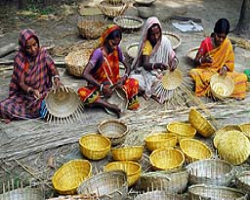
Pelni (Cast Nets): Balanced with iron or lead sinkers, thrown in a circular fan across shallow eddies.
-
Mahajal (Large Drag Nets): Deployed across wide stretches, woven with specific mesh sizes designed to allow juvenile fingerlings to escape while retaining mature specimens.
Wetland Foraging and Singhada (Water Chestnut) Farming
Beyond fish, the Bhoi utilized aquatic margins. They lease shallow village tanks and backwaters to cultivate water caltrop (Trapa natans or Singhada), requiring round-the-clock diving, floating log maneuvers, and manual weeding without disturbing the underlying lakebed ecology.
4. Socio-Economic Realities: A Comparative Matrix
To see how modern legal structures shape everyday life, consider this systemic comparison between the two groups bearing the Bhoi name:
| Analytical Parameter | The Khasi-Bhoi (Meghalaya / Assam) | The Riparian / Riverine Bhoi (Maharashtra, Gujarat, MP, Odisha) |
| Linguistic Family | Austroasiatic (Mon-Khmer branch) | Indo-Aryan (Marathi, Gujarati, Hindi, Odia) |
| Constitutional Status | Scheduled Tribe (ST) under Khasi, Jaintia, Synteng, War, Bhoi classifications | Predominantly Nomadic Tribe (NT-B), Special Backward Class (SBC), or OBC |
| Kinship & Inheritance | Matrilineal; custodial inheritance passes through the youngest daughter (Ka Khadduh) | Patrilineal; patriarchal inheritance passes through the male line |
| Primary Economic Anchor | Agriculture, Eri silk agro-enterprise, spice farming, forest foraging | Inland fisheries, water-chestnut cultivation, sand mining labor, river transport |
| Land Tenure Security | Protected by Sixth Schedule; restrictions on land transfers to non-tribals | Minimal communal land security; historical displacement from public water commons |
| Primary Contemporary Crisis | Land alienation, border disputes (Assam-Meghalaya), unregulated highway corridor growth | Industrial river pollution, dam impoundments, commercial mechanized water leasing |
5. The Modern Crisis: Development, Displacement, and Ecology
Despite constitutional protections and ancient cultural roots, the modern chapter of the Bhoi story is defined by severe ecological and structural vulnerabilities.
The Khasi-Bhoi Frontline: Highways, Border Disputes, and Agrarian Transition
Ri-Bhoi serves as the physical gateway to Meghalaya. National Highway 6 runs straight through the district, connecting Guwahati to Shillong and onward to the Barak Valley, Mizoram, and Tripura. This infrastructure corridor has accelerated trade, but it has introduced complex challenges:
Land Alienation and the Sixth Schedule Dilemma
Under the Sixth Schedule of the Indian Constitution, tribal land is legally safeguarded against alienation to non-tribals. However, economic incentives have led to land aggregation via long-term, non-formal leases. Wealthier urban elites and industrial establishments along the Guwahati-Shillong corridor acquire prime agrarian Bhoi flatlands for resorts, private universities, dry docks, and bottling plants, pushing local subsistence farmers into precarious tenancy or daily wage labor.
The Lingering Assam-Meghalaya Border Conflicts
Ri-Bhoi district shares an extensive, undulating border with Assam’s Karbi Anglong and Kamrup districts. Certain border pockets—often termed “Areas of Difference”—have seen friction over administrative jurisdiction, taxation, and forest extraction.
Border villages often struggle to access welfare schemes: schools, health centers, and electrification projects can be stalled by bureaucratic standoffs over territorial claims.
Transition to Monocultures
Traditional multi-crop homestead farming is giving way to intensive monocultures of broom grass (Thysanolaena latifolia) and rubber plantations. While offering rapid cash returns, broom grass exhausts soil nutrients, leading to biodiversity loss and reduced availability of wild foraging plants that once cushioned families against food price shocks.
       ECOLOGICAL PRESSURE POINTS IN BHOI HABITATS

       [Central / Western Riverine Basins]
       Pollution & Dams ────► Fish Stock Collapse ────► Urban Distress Migration

       [Meghalaya Lowlands (Ri-Bhoi)]
       Highway Corridors ───► Farmland Commodification ─► Loss of Common Forest Land
The Western/Central Bhoi Frontline: The Death of Inland Waters
For the Bhoi communities along mainland rivers, the crisis is ecological, spatial, and constitutional:
Large Dams and River Fragmentation
The damming of Indian rivers has disrupted freshwater river systems. Large impoundments submerge traditional riparian villages while cutting off the seasonal migration paths of native fish species like the Mahseer. Riverbeds downstream of dams are often reduced to trickles for much of the year, eliminating the natural deep-water pools (Dohs) where Bhoi fishermen once sustained their families.
Toxic Runoff and Fish-Kill
Industrial effluents, pesticide residues from agricultural runoff, and untreated municipal sewage dumped into rivers like the Godavari, Krishna, Mula-Mutha, and Adan have decimated inland aquatic life. Where a Bhoi fisherman once netted several varieties of indigenous carp and catfish in a morning’s work, catches now frequently yield invasive species like African catfish (Clarias gariepinus) and tilapia, which command low market values and disrupt local aquatic food webs.
Privatization of Water Bodies and Lease Monopolies
Historically, rural village tanks and reservoirs were common pool resources managed by traditional fishing collectives under customary user rights. Over the last four decades, state fishery departments have shifted toward commercial auction models.
Capitalized contractors, corporations, and political figures routinely outbid small local Bhoi cooperatives for multi-year reservoir leases. Stripped of access to local waters, Bhoi fishers are often reduced to low-wage contract laborers on the very reservoirs their ancestors harvested for generations.
The Sand Mining Scourge
Indiscriminate, often illegal riverbed sand mining has stripped away natural fish nesting grounds, lowered riverbed levels, and caused water tables to collapse. For the Bhoi, the destruction of the riverbed means the direct destruction of their economic lifeline.
6. The Battle for Human Development and Justice
CRITICAL GAPS IN HUMAN DEVELOPMENT INDICES
─────────────────────────────────────────────────────────────────────────
Indicator               Ground Reality & Bottlenecks
─────────────────────────────────────────────────────────────────────────
Educational Pipeline    High primary enrollment; sharp drop-off at secondary
                        level due to language barriers & tuition costs.

Healthcare Access       Persistence of waterborne illnesses in mainland slums;
                        geographical isolation in interior Ri-Bhoi hamlets.

Livelihood Security     Inland fishers lack formal legal recognition comparable
                        to marine workers under coastal relief funds.

Identity Documentation  Nomadic Bhoi families face documentation deficits,
                        hindering access to caste certificates and benefits.
─────────────────────────────────────────────────────────────────────────
The Constitutional Quagmire: The Demand for ST Status
One of the most persistent political struggles among the Bhoi in Maharashtra, Gujarat, and central states is the fight for formal inclusion in the Scheduled Tribes (ST) list.
Community organizations argue that the inland Bhoi:
-
Have historically lived in social and geographic isolation.
-
Maintain primitive economic practices rooted in hunting, gathering, and non-mechanized fishing.
-
Lack proportional representation in higher education and civil services.
Currently categorized in many states under Nomadic Tribes (NT) or Other Backward Classes (OBC), they compete for reservations and welfare resources against dominant, landowning agrarian communities. Community leaders point to historical archival records from the early 20th century where Bhois were classified among indigenous forest and riparian communities, asserting that their present grouping denies them protections under the Scheduled Castes and the Scheduled Tribes (Prevention of Atrocities) Act.
Education and the Generational Divide
While elderly Bhois carry detailed ecological knowledge, illiteracy rates remain high among nomadic and semi-nomadic inland groups. Modern Bhoi youth face difficult choices:
-
Their ancestral vocation of inland fishing has suffered economic contraction, making it harder to sustain a family on fishing alone.
-
Urban labor markets often relegate them to informal sectors: driving auto-rickshaws, municipal sanitation, or daily-wage construction work.
In Ri-Bhoi, educational access has expanded through mission institutions and state schools, producing a growing class of civil servants, educators, and social entrepreneurs. Yet, remote hamlets in the district still lack properly staffed secondary schools and technical training centers, prompting an exodus of youth toward Shillong or Guwahati.
Healthcare: Between Geography and Urban Deprivation
In Ri-Bhoi’s rugged interior, primary healthcare centers (PHCs) are often difficult to reach due to unpaved roads and scarce rural transport. Maternal health indicators, while improving, still lag behind state targets.
Conversely, for the urbanized Bhoi living in informal settlements along riverbanks in cities like Pune, Nashik, and Ahmedabad, health hazards stem from urban pollution: contaminated groundwater, vector-borne infections (dengue, malaria), and chronic respiratory illnesses caused by localized industrial smoke and damp living environments.
7. Grassroots Resilience and Movements for Change
The Bhoi have consistently organized at the grassroots level to assert their rights, adapt their cultural traditions, and build mutual aid networks.
       Pathways of Community Mobilization
       ├── Inland Fisheries Cooperatives (Legal battles for water body rights)
       ├── Youth Collectives (Eri-silk branding & ecological tourism)
       ├── Cultural Revitalization (Folk preservation, Palkhi oral histories)
       └── Constitutional Advocacy (Demands for ST certification & representation)
Revival of Inland Fisheries Cooperatives
In Maharashtra and Madhya Pradesh, community leaders have organized regional federations of Bhoi fishers. Through persistent public litigation and demonstrations, these cooperatives demand:
-
Priority Leases: Re-establishing the statutory right of traditional fishing castes over mechanized commercial contractors for all village ponds, irrigation reservoirs, and canal networks.
-
Closed-Season Compensation: Granting inland fishers social security stipends during the monsoon breeding months (Prajnan Kaal), matching policies available to coastal marine fishers.
-
Pollution Accountability: Demanding that state pollution control boards levy fines on industrial units discharging untreated waste into fishing waters, with revenues redirected to local river cleanup.
The Ri-Bhoi Eri Silk Renaissance
In Meghalaya, Khasi-Bhoi women are using their weaving traditions to achieve financial independence:
-
Weavers’ Cooperatives: Groups across villages like Umden-Diwon have formed collectives to directly market naturally dyed Ryndia silk to design houses in India and abroad.
-
Eco-Cultural Tourism: Transforming Ri-Bhoi villages into hubs of experiential tourism, where travelers learn about traditional silkworm rearing, natural dye extraction, and community-managed sacred forests. This model provides an alternative revenue stream that keeps land within tribal custody.
Cultural Reclamation and Digital Documentation
A generation of educated Bhoi youth is turning to digital tools to document their heritage:
-
Recording elderly oral storytellers singing the Palkhi march songs and river ballads before they are lost to history.
-
Establishing village archives of indigenous fishing methods and bamboo trap designs (Khur, Siej).
-
Using social platforms to connect regional chapters of the Bhoi diaspora, organizing conventions to discuss policy developments, competitive exam preparation, and communal support systems.
8. Policy Recommendations: Building a Sustainable Future
Real progress for the Bhoi across both regional expressions requires systemic policy shifts that recognize indigenous rights and environmental interdependencies.
┌────────────────────────────────────────────────────────────────────────┐
│                   POLICY REFORM ROADMAP FOR THE BHOI                   │
├────────────────────────────────────────────────────────────────────────┤
│                                                                        │
│   [1. WATER COMMONS]   Statutory first-right-of-refusal for inland     │
│                        reservoirs given to traditional cooperatives.   │
│                                                                        │
│   [2. IDENTITY AUDIT]  Comprehensive anthropological evaluation of     │
│                        NT/DNT Bhoi communities for ST scheduling.     │
│                                                                        │
│   [3. CUSTODIAL LAW]   Strengthen Sixth Schedule land transfer rules   │
│                        against shadow long-term commercial leases.     │
│                                                                        │
│   [4. GREEN VALUE]     Subsidize botanical dye supply chains and       │
│                        handloom infrastructure for rural Eri weavers.  │
│                                                                        │
│   [5. SOCIAL SAFETY]   Create dedicated inland fisheries relief        │
│                        funds during seasonal monsoon fishing bans.     │
│                                                                        │
└────────────────────────────────────────────────────────────────────────┘
-
Codify an Inland Water Rights Framework (Jal Adhikar):
Much like the Forest Rights Act (FRA) of 2006 restored ancestral land access to forest dwellers, India needs a comprehensive National Inland Water Commons Policy. This framework should give traditional fishing communities like the Bhoi statutory first-right-of-refusal over public water bodies, protecting water bodies from private corporate auctions.
-
Conduct an Anthropological Audit of NT/DNT Bhoi Communities:
The central Ministry of Tribal Affairs, in collaboration with state Tribal Research Institutes (TRIs), should conduct rigorous, field-grounded ethnographic evaluations of the mainland Bhoi. Resolving long-pending demands for ST or enhanced nomadic welfare protections will give younger generations equitable access to higher education and public employment opportunities.
-
Safeguard Matrilineal Land Custodianship:
In Northeast India, tribal autonomous district councils (ADCs) must address legal ambiguities surrounding long-term land leases. Institutional frameworks should support the custodial role of the Ka Khadduh, providing legal and technical support so tribal families can retain their ancestral holdings rather than being pressured into distressed leases.
-
Invest in Sustainable Value Addition (Eri Handlooms & Eco-Fisheries):
Targeted investments should support decentralization: decentralized solar-powered spinning mills, cluster-level cold-storage units for freshwater fish catches, and micro-grants for community-owned processing facilities.
-
Expand Seasonal Social Security for Inland Fishers:
State governments should extend seasonal welfare schemes—such as monsoon livelihood assistance, subsidized safety gear, and dedicated accidental life insurance—to inland fishers, matching protections long provided to deep-sea fishers.
The Path Forward: Listening to the Voices of Hill and River
The story of the Bhoi is the story of India’s ecological margins: the riverbank, the valley basin, the sacred grove, and the wet terrace.
Whether standing in the green hills of Nongpoh watching an artisan spin golden Eri silk, or watching a fisherman cast his net into the calm waters of the Godavari at sunrise, one sees communities that have sustained balanced relationships with nature for centuries.
Their modern challenges—displacement, urban precarity, environmental damage, and struggles for legal recognition—are not isolated issues. They are early warnings of what happens when natural commons are commodified and indigenous stewardship is ignored.
Recognizing the Bhoi means honoring their dual identities: supporting the self-governance of the Khasi-Bhoi in the Northeast, and securing the rights and dignity of the riparian Bhoi across the rest of the country. Supporting their survival is more than an act of historic justice—it is an investment in the long-term health of India’s rivers, forests, and cultural heritage.
