
The Kachari Tribe: History, Cultural Heritage, Human Development, and the Struggle for Survival in Modern India
Introduction: The Bedrock of Northeast India’s Indigenous Tapestry
Thank you for reading this post, don't forget to subscribe!The Brahmaputra and Barak valleys of Assam, along with the undulating foothill tracts stretching into Meghalaya, Nagaland, and Tripura, hold the cultural footprints of one of South Asia’s most foundational indigenous conglomerates: the Kachari tribe (historically catagorised under the broader Bodo-Kachari ethno-linguistic umbrella).
Far from being a uniform, isolated clan, the Kacharis represent an expansive constellation of Tibeto-Burman peoples whose ancestral lineage shaped early agrarian civilisation, architectural masonry, statecraft, and spiritual cosmology across Northeast India.
Historically recognised as the earliest known settlers of the Brahmaputra Valley, the Kacharis built sophisticated polities, pioneered wet-rice terracing and valley agriculture, engineered advanced irrigation canal systems (dongs), and maintained unique, dual-clan social frameworks.
Yet, modern narratives around Indian indigenous groups frequently overlook the sheer scale and enduring influence of the Kachari legacy.In contemporary India, the descendants of the ancient Kachari confederacy—including the Dimasa, Bodo, Sonowal, Thengal, Sarania, and Hojai—find themselves at a critical intersection.
While they fight to preserve linguistic heritage, protect customary land tenure, and revitalise indigenous institutions, they also grapple with uneven human development, historical displacement, and evolving struggles for constitutional autonomy.
Etymology, Classification, and the Bodo-Kachari Spectrum
The term Kachari has been historically applied as an overarching ethnonym, predominantly by external chroniclers, Ahom court scribes (Buranji writers), and British colonial administrators, to describe the diverse group of indigenous peoples belonging to the Tibeto-Burman linguistic stock who occupied Assam and adjacent regions.
The Origin of the Name of Kachari Tribe
Linguistic and historical interpretations offer multiple hypotheses regarding the etymology of the word “Kachari”:
Geographical Linkage to Cachar: One school of thought suggests an association with the Cachar district (Kachar) in southern Assam, where the Dimasa Kachari rulers established their final capital at Khaspur. However, many historical linguists argue the reverse—that the region derived its name from the people rather than vice versa.
The “Kots” or “Kach-ar” Hypothesis: Linguistic scholars, including Suniti Kumar Chatterji and Edward Gait, noted that the term may be an Assamese phonetic adaptation of an indigenous self-designation or a regional term denoting inhabitants of riverbank foothills (ka-char meaning borderland or alluvial margin).
Self-Identity and Internal Nomenclature:
Most constituent groups originally identified through endonyms rooted in ecology, water, and ancestry:
Dimasa: Translates directly to “Children of the Great River” (Di meaning water/river, Ma meaning big/great, and Sa meaning sons or children), referring to the mighty Brahmaputra.
Bodo / Boro: Signifies “man” or “human being” across numerous related dialects.

Sub-Groups Within the Kachari Fold
Over centuries of migration, geographic partitioning, and varying degrees of Sanskritisation and regional synthesis, the Kachari ethno-cultural matrix crystallised into several distinct communities:
| Kachari Sub-Group | Primary Geographic Strongholds | Key Distinguishing Cultural Features |
|---|---|---|
| Dimasa Kachari | Dima Hasao, Cachar, Karbi Anglong (Assam), Dimapur (Nagaland) | Double-clan descent system (Sengphong & Jaddi), stone monolith heritage |
| Bodo (Boro Kachari) | Bodoland Territorial Region (Kokrajhar, Chirang, Baksa, Udalguri) | Bathouism, Dokhona weaving, large-scale socio-political mobilisation |
| Sonowal Kachari | Dibrugarh, Tinsukia, Sivasagar, Lakhimpur, Dhemaji | Historical association with gold-washing in river sands; strong neo-Vaishnavite synthesis |
| Thengal Kachari | Jorhat, Golaghat, Nagaon, Karbi Anglong | Distinct rural agrarian customs, silver-craft, unique historical guild structure |
| Sarania Kachari | Kamrup, Nalbari, Barpeta, Baksa | Formal adoption of Saran (spiritual initiation under Mahapurushiya Dharma) |
| Hojai Kachari | Hojai, Nagaon, West Karbi Anglong | Dialectical continuity with Dimasa, riverine agricultural specialisation |
Historical Architecture: The Medieaval Kachari Kingdoms
The Kachari civilisation boasts an extensive history of state-building that predated the arrival of the Shan/Ahom invaders in the 13th century. At its zenith, the Kachari realm extended across central and upper Assam, encompassing the Dhansiri Valley, the Kopili Valley, and broad plains bordering contemporary Nagaland and Meghalaya.
The Capital Trajectory: From Dimapur to Khaspur
Faced with geopolitical shifts, internal conflicts, and sustained military engagements with the expanding Ahom Kingdom, the seat of Kachari sovereign power retreated southward over the centuries:
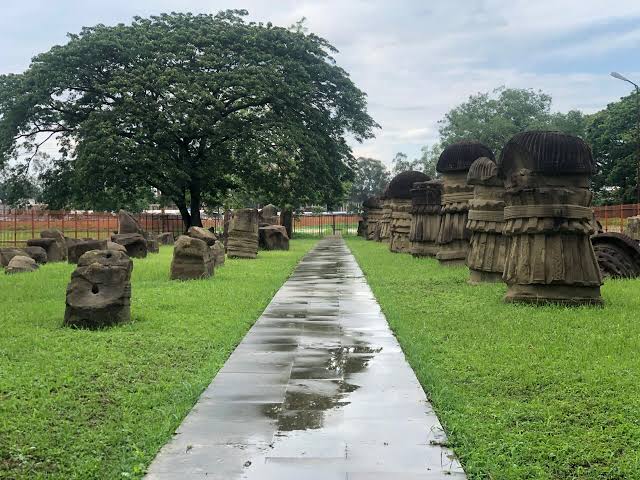
Dimapur (The City of the River People): Established along the banks of the Dhansiri River, Dimapur served as the premier fortified capital of the Kachari kingdom until the mid-16th century. The archaeological remains preserved at Dimapur—characterised by colossal carved mushroom-shaped and V-shaped sandstone monoliths—stand as architectural testaments to indigenous structural engineering, featuring animal motifs, fertility symbolism, and intricate relief carvings found nowhere else in the Indian subcontinent.
Maibang: Following the sacking of Dimapur by the Ahoms in 1536, the rulers withdrew into the Mahur river valley within the North Cachar Hills, establishing their capital at Maibang. Here, Kachari royal architecture embraced rock-cut stone sculpting, exemplified by the famous 18th-century monolith temple known as the Ek Patharer Mandir.
Khaspur: Continual conflicts forced a final royal migration down into the fertile Barak Valley plains at Khaspur (near modern Silchar), where the kingdom maintained sovereign autonomy until the death of the last monarch, Raja Govinda Chandra Hasnu, in 1830. Under the Doctrine of Lapse, the British East India Company formally annexed the Kachari territory in 1832, fracturing its ancestral administrative zones into colonial revenue districts.
Social Architecture, Kinship, and Kachari Community Governance
The social framework of the Kachari communities—especially the Dimasa—features distinct kinship structures within Indian sociology, balancing patriarchal and matriarchal lines.
The Dual Descent System (Sengphong and Jaddi)
While most indigenous groups in India follow strictly patrilineal or matrilineal patterns, the Dimasa Kacharis maintain a rare bilineal (double-clan) kinship system:
Sengphong (Patriclan): Every individual belongs to the father’s clan. Male progeny inherit patriclan identity, ancestral male duties, and specific political roles within village councils. Historically, there are 40 recognised Sengphongs. Jaddi or Zuluk (Matriclan): Simultaneously, every female inherits her mother’s distinct matriclan. There are 42 recognised Jaddis. Customary Property Inheritance: Real property, such as homestead land and livestock, passes primarily through paternal lineage, while personal effects, handloom apparatus, jewellry, and distinct ancestral weaves transfer through the maternal line.
Exogamy Enforcement: Marriage is strictly regulated by double-exogamy. An individual cannot marry anyone sharing either their own Sengphong (father’s clan) or their own Jaddi (mother’s clan). Violating this customary rule historically resulted in social excommunication (Khun).
Traditional Kachari Tribe Village Governance: The Nangbar and the Khadang
Long before modern statutory Panchayati Raj institutions or constitutional councils were established, Kachari settlements operated as direct participatory democracies:
The Hada (Village Unit): The village council is headed by a village headman, traditionally known as the Gaonburha or Nangbar, selected by consensus based on integrity, mastery of customary law, and dispute arbitration skills.
Youth Dormitory (Nodrung): Similar to the Ghotul of Central India or the Morung of the Nagas, the Kacharis historically operated youth dormitories. The Nodrung served as an educational hub where younger generations learned agricultural cycles, oral lore, handloom weaving, tribal defence techniques, drumming (Khram), and community ethics.
Religious Traditions, Spiritual Cosmology, and Syncretism
The spiritual worldview of the Kachari people is rooted in animism, deep reverence for ancestral forces, and an intimate communion with natural phenomena, which later converged with classical Hinduism to form a distinct syncretic ethos.
Bathouism and the Worship of the Five Elements
Among the Boro-Kacharis, indigenous spirituality centres on Bathouism, an ancient cosmological belief system:
The Sijou Sacred Cactus (Euphorbia neriifolia): The central altar of every traditional Kachari household features a living Sijou plant, fenced neatly with bamboo splits tied in sets of five rings.
Bathou Bwrai: Regarded as the supreme deity, the primordial creator associated abstractly with nature and ancestral spirit authority, later analogised to Shiva (Mahadeva) within the regional pantheon.
Dimasa Deities and Regional Syncretism
Among the Dimasa Kacharis, religious practice involves ancestral deities led by Sibrai (equated with the supreme benevolent progenitor), Braishiv, and regional protector spirits inhabiting hill passes, waterfalls, and river confluences.
Animal sacrifices (daos, goats) and libations of indigenous rice beer (Judima) historically accompanied major rites conducted by specialized hereditary priests called Hojais. Over centuries, this ancestral framework assimilated elements of Shakta and Shaiva Hinduism, producing architectural monuments such as the Ranachandi temples of medieval Maibang and Khaspur.
Material Culture, Folk Expressions, and Celebrations
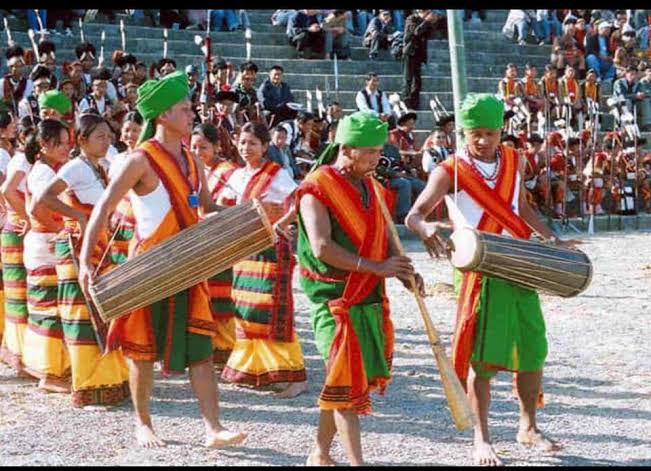
The aesthetic identity of the Kachari people is expressed through handloom weaving, rhythmic folk percussion, and agrarian seasonal festivals.
The Handloom Tradition: Living Art and Economic Lifeline
Weaving is deeply tied to indigenous identity for Kachari women. Almost every rural home maintains an indigenous frame loom (Taat-Xal or Daophang).
Traditional Attire:
Rigu and Bathormai: The characteristic Dimasa lower wrap-around garment, dyed in natural earth tones, often paired with the Rikhaosa (a handwoven chest-wrapper of fine cotton or silk).
Dokhona and Jwmgra: The iconic attire of Boro-Kachari women, renowned for bright saffron, golden-yellow, and vermillion palettes, adorned with nature-inspired motifs (Agor) like floral vines, butterfly wings, and tortoises.
Endi (Eri) Silk Production: The Kacharis are credited with pioneering the cultivation of Eri silk—often referred to as “peace silk” because the pupae are removed without boiling the cocoon alive. Eri shawls offer thermal insulation against damp winter hill climates and remain an important craft export.
Festivals of Renewal: Busu Dima and Bwisagu
Agricultural cycles dictate the communal festival calendar across all Kachari branches:
Busu Dima (Dimasa): Celebrated post-harvest, typically in late January. Communities gather for days of feasting, communal sports, and traditional social dances such as the Baidima. Central to Busu Dima is the sharing of Judima (a naturally brewed sweet rice wine fermented with indigenous herbal cakes called Humao), which received the geographical indication (GI) tag in 2021 as a recognized traditional product of Dima Hasao.
Bwisagu (Boro Kachari): Welcomes the Assamese New Year (mid-April) and the onset of the spring cultivation cycle. Celebrations feature the energetic sounds of the Sifung (a long bamboo flute with six holes), the Kham (a leather drum), and the Serja (a traditional violin-like instrument), marking the rejuvenation of both nature and society.
The Human Development Paradigm : Health, Education, and Rural Realities
Examining the Kachari people in modern India requires moving beyond cultural aesthetics to assess the socioeconomic realities shaping their daily lives. Socioeconomic data from tribal blocks across Assam, Dima Hasao, and the Bodoland Territorial Region (BTR) highlights persistent structural imbalances.
Education and Literacy Disparities
While general literacy rates across the plains-dwelling Kacharis (such as the Sonowals and plain-dwelling Boros) have increased—often exceeding 75%—sharp disparities persist in remote hill interiors:
Infrastructural Deficits in Hill Districts: In interior pockets of Dima Hasao, Karbi Anglong, and the Indo-Bhutan border tracts, primary schools often lack basic infrastructure, running water, and adequate teacher-to-student ratios.
Medium of Instruction Challenges: Decades of marginalisation of indigenous languages in primary education created early learning barriers. While Bodo gained official recognition under the Eighth Schedule of the Indian Constitution in 2003, other variants such as Dimasa and Sonowal are only gradually gaining formal representation in localized bilingual primary curricula.
Public Health and Nutritional Realities
Indigenous communities across Northeast India confront distinct health challenges influenced by remote geography and under-resourced healthcare infrastructure:
Primary Healthcare Access: Villagers in remote hill tracts often travel miles over rugged terrain to reach the nearest Primary Health Centre (PHC), compounding maternal health risks and delaying emergency treatments.
Prevalence of Vector-Borne Diseases: Forested and riverine foothill habitats historically have higher burdens of endemic malaria, Japanese encephalitis, and seasonal waterborne infections.
Maternal and Child Nutrition: Indices from district-level health surveys continue to indicate elevated rates of stunting, wasting, and anaemia among women and young children in tribal-majority rural blocks.
Socio-Economic Infrastructure and Livelihoods
The economic architecture of the Kachari people remains anchored in agrarian systems, though resource extraction and urbanisation are altering traditional lifestyles.
Agrarian Practices: Wet-Rice and Shifting Cultivation
The Valley Cultivators: Plain-dwelling Kacharis specialise in settled wet-rice farming, utilising sophisticated community canal works known as dongs to divert river waters across paddy fields.
The Hill Cultivators: In Dima Hasao and Karbi Anglong, Dimasa villages historically practiced regulated jhum (shifting cultivation) on hill slopes. As population pressures shrink fallow cycles from fifteen years down to three to five years, soil nutrient loss and declining crop yields pose ongoing challenges to local food security.
Forest Resources and the Informal Economy
Kachari communities maintain an intimate relationship with forest ecosystems, relying on minor forest produce for food, medicine, and construction:
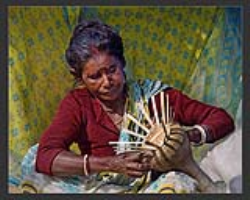
Bamboo and Cane Crafting: Bamboo serves as the structural foundation of rural Kachari existence, used for home architecture, riverine fishing gear (Zelik, Jakhoi), and everyday utensils.
Micro-Enterprise Fragility: While traditional handloom weaving produces high-value textiles, rural weavers often lack direct market access. Middlemen frequently capture profit margins, leaving village artisans with limited economic returns.
Modern Political Struggles: Autonomy, Land Alienation, and Constitutional Governance
The 20th and 21st centuries have seen sustained, sometimes volatile, struggles by Kachari communities to secure territorial autonomy, retain linguistic survival, and protect ancestral lands from outside acquisition.
The Quest for Autonomy and Identity Assertion
Following India’s independence, indigenous groups across the Northeast sought structural protections to preserve their distinct cultural identities and guard against demographic dilution:
The Bodo Movement: Spanning several decades, the Bodo mobilisation evolved from initial demands for linguistic protection and a separate state of “Bodoland” into armed insurgency, counter-insurgency operations, and ultimately comprehensive political settlements. The creation of the Bodoland Territorial Council (BTC) under the Sixth Schedule of the Indian Constitution, renewed under the Bodo Peace Accord of 2020, established a framework for localised legislative, economic, and administrative self-governance.
Dimasa Territorial Mobilisation: Simultaneously, the Dimasas pressed for territorial autonomy across the North Cachar Hills. Tensions culminated in periods of armed insurgency led by groups like the DHD (Dima Halam Daogah) seeking a separate homeland (Dimaraji). The subsequent signing of tripartite peace accords transformed the North Cachar Hills Autonomous Council into the Dima Hasao Autonomous Council, although discussions surrounding power-sharing, village empowerment, and institutional funding remain active.
Land Alienation and Demographic Transformations
A central concern running through the socio-political movements of the Kachari people is the steady erosion of their ancestral land base:
Loss of Protected Tribal Belts and Blocks: Under Chapter X of the Assam Land and Revenue Regulation Act of 1886, several administrative belts and blocks were designated to protect indigenous tribal populations from non-tribal encroachment. Over decades of immigration and urban expansion, these protective regulations have seen significant encroachment, fueling local anxieties over losing ancestral soil.
Environmental Degradation: Industrial stone-quarrying, unscientific rat-hole coal mining in adjacent regions, and massive railway and highway earthworks across vulnerable hill terrains have caused topsoil degradation, silted historic fisheries, and altered mountain river flows, impacting community ecosystems.
Synthesizing Heritage with Modern Development: Pathways Ahead
Preserving the heritage of the Kachari tribe while expanding access to human development opportunities requires a multi-pronged approach rooted in cultural dignity and localized governance:
1. Strengthening Sixth Schedule Autonomy and Customary Systems
Rather than centralizing institutional power in regional administrative centers, development funding should flow directly to empowered village councils (Hada). Integrating customary conflict resolution mechanisms into local development initiatives helps bridge the gap between formal state law and indigenous community practices.
2. Mother-Tongue Education and Cultural Documentation Preserving the Dimasa, Bodo, and other Kachari languages requires ongoing support : expanding early childhood and primary schooling in native mother tongues to help children build strong foundational literacy.
Digitizing oral epics, botanical knowledge, kinship lexicons, and folk melodies to ensure traditional knowledge remains accessible to future generations.
3. Sustainable Agrarian and Weaving Ecosystems
Economic resilience can be strengthened through community – centreed enterprise:
Scaling up decentralised weaver cooperatives for Eri silk and traditional garments (Dokhona, Rigu) by establishing direct-to-consumer digital channels and fair-trade partnerships.
Protecting GI products like Judima and supporting indigenous organic farming networks to help youth build viable livelihoods without being forced into distress migration.
4. Community-Driven Healthcare Delivery
Addressing healthcare disparities in remote hill districts requires localised strategies:
- Deploying mobile health clinics to remote forest villages and upgrading rural sub-centres.
2. Partnering with trusted local institutions, such as village women’s collectives, to improve maternal care, nutrition tracking, and early childhood interventions.
The story of the Kachari tribe is not a closed chapter in medieval history books or an archaeological curiosity preserved solely in the stone ruins of Dimapur and Maibang. It is the lived experience of millions of indigenous citizens who continue to navigate the demands of modern development while striving to preserve their ancestral roots, language, and cultural autonomy within India’s democracy.
