

The Khowa (Bugun) Tribe of Arunachal Pradesh: Culture, Ecology, Human Development, and the Modern Struggle for Survival
Thank you for reading this post, don't forget to subscribe!Tucked deep within the mist-clad folds of the Eastern Himalayas in West Kameng, Arunachal Pradesh, lives one of India’s most culturally rich yet demographically fragile indigenous groups: the Khowa community, officially recognized across scholarly literature and global conservation circles as the Bugun.With an estimated population hovering between 1,500 and 3,000 individuals, the Khowa people represent the precarious balance between deep ecological wisdom and the encroaching forces of globalization. Their story is not merely one of ethnic isolation; it serves as a living lens into how ancient mountain societies negotiate indigenous land tenure, environmental degradation, linguistic endangerment, education, and modern statehood.
Who Are the Khowa? Unraveling Origins, Identity, and Geography
The name Bugun is an autonym that the people use to identify themselves within their own speech, while the neighboring Monpa and Sherdukpen communities have traditionally referred to them as Khowa. Historically categorized within the Scheduled Tribes of Arunachal Pradesh, the Khowa inhabit high-altitude valleys, riparian zones, and subtropical pine-oak ridges situated along the lower slopes of the Eastern Himalayas.
Territorial Footprint and Valley Settlements
The traditional homeland of the Khowa is concentrated within the Singchung administrative circle of West Kameng District. Key historic villages include:Singchung:
The cultural, commercial, and administrative nerve center of the tribe.
Wanghoo: An ancient village preserving oral traditions, ancestral megaliths, and elder icouncils.
Namfri, Dikhiyang, and Kaspi: Smaller valley clusters sustained by terraces and forest extraction.
Surrounded by culturally dominant neighbors—the Mahayana Buddhist Monpas to the north and northwest, the Sherdukpen to the southwest, and the Aka (Hrusso) and Miji (Sajolang) to the east—the Khowa developed an adaptive cultural identity. They preserved distinct linguistic structures, animist rituals, and customary laws while acting as vital intermediaries along ancestral trade networks linking the high plateau of Tibet with the plains of the Brahmaputra Valley in Assam.
Linguistic Classification: The Endangered Bugun Language
The native tongue, Bugun (Khowa), belongs to the Sino-Tibetan language family. Linguists categorize it under the proposed Kho-Bwa (or Kamengic) cluster alongside neighboring languages such as Puroik (Sulung), Sartang, and Sherdukpen.
The Kho-Bwa group presents a significant linguistic puzzle: while its lexicon features Tibeto-Burman cognates, its core vocabulary and syntax carry non-Tibeto-Burman substrata. This suggests that the Khowa may descend from an ancient Paleolithic or early Neolithic population indigenous to the eastern Himalayan foothills who later absorbed Sino-Tibetan migrants.UNESCO and linguistic surveys categorize the Bugun language as critically endangered. Because Bugun is traditionally an oral language lacking an indigenous script, knowledge transmission has depended entirely on intergenerational storytelling, shamanic chants, and everyday domestic usage—all of which face severe strain from regional lingua francas like Hindi, Assamese, and English.
Traditional Social Structure: Clans, Governance, and Customary Law
The Khowa society is organized around kinship networks that emphasize collective responsibility, ecological stewardship, and mutual aid.
| Dimension | Structural Foundation | Contemporary Status |
| Descent & Kinship | Patrilineal, patrilocal, exogamous clans | Clans intact; nuclearization of households rising |
| Village Governance | Nimiyang (Council of Elders) | Shared authority with statutory Panchayati Raj |
| Headmanship | Thikphak or village chief (consensus-driven) | Diminishing judicial role, largely symbolic |
| Land Tenure | Communal ownership (Khyep) with usufruct rights | Privatization pressures from cash-crop farming |
| Dispute Resolution | Restorative justice through compensation (Sual) | Growing reliance on formal civil courts |
Clan Systems and Exogamy
Khowa society is strictly patrilineal and exogamous. The community divides into distinct paternal clans (sub-lineages), such as the Khabro, Phiyang, Kharak, and Lali. Marrying within one’s paternal clan is strictly taboo (nyok), carrying social sanctions that historically included exile.Clans function as mutual-aid societies. When a household prepares a forest clearing, builds a timber-and-bamboo home, or hosts an elaborate funeral feast, members of the clan provide labor, grain, and domesticated livestock through a reciprocal exchange network.
The Nimiyang: Indigenous Direct Democracy
Long before statutory village councils or district collectors operated in Arunachal Pradesh, the Khowa governed their affairs through the Nimiyang—an egalitarian assembly composed of clan elders, household heads, and recognized village leaders
- Consensus Over Majority Rule: The Nimiyang does not function by simple majority votes. Deliberations continue until a consensus (tathat) emerges, ensuring that minority clan voices are preserved.
- 2. Restorative Justice: Customary legal principles center on restitution rather than physical detention. Violations—ranging from boundary theft to personal injury—are redressed through fines paid in livestock (primarily Mithun, Bos frontalis), hand-woven textiles, or copper brassware to compensate the aggrieved party and restore equilibrium.
- 3. Resource Management: The Nimiyang establishes open and closed hunting seasons, allocates communal forest tracts for shifting cultivation, and maintains village paths and bamboo water conduits.
Indigenous Economy: Shifting Cultivation, Forest Ecology, and the Sacred Mithun
Historically, the Khowa economy was subsistence-oriented, centered on shifting cultivation (jhum), highland valley agriculture, animal husbandry, and regulated forest foraging.
Jhum (Slash-and-Burn) Agriculture
The Khowa practiced multi-crop jhum farming fine-tuned to steep mountain slopes. Plots were cleared during the dry winter months, left to dry, and burned before the onset of pre-monsoon showers.
Crop Diversity: Unlike monoculture, a traditional Khowa farm plot contained up to fifteen distinct crops planted simultaneously: finger millet, foxtail millet, highland maize, buckwheat, upland dry rice, root tubers (taro, yams), chilies, and squashes.
Fallow Management: Historical jhum cycles lasted from 10 to 15 years, giving the fragile mountain topsoil time to recover organic nutrients and secondary forest canopy.
Terrace Systems: In flatter riparian zones along the Tenga River and its tributaries, the Khowa constructed wet-paddy stone terraces irrigated by diverted mountain streams.
The Mithun: Wealth, Ritual, and Ecological Co-existence
In Khowa socio-economic life, the Mithun (Bos frontalis) serves as both a form of cultural currency and an ecological keystone.
Semi-domesticated, Mithuns browse freely in broadleaf subtropical forests, returning to villages periodically to lick salt blocks provided by their owners. The value of a Khowa family was traditionally measured not by land acreage, but by the number of Mithuns owned. The animal functions as:
- The standard bridal gift (khee) sealing marriage contracts between clans.
- The primary fine paid in customary judicial settlements.
- The supreme sacrificial offering required to appease mountain and forest deities (Pham-glang) during crises, illnesses, and seasonal fertility rites.
Spiritual Worldview: Donyi-Polo, Animism, and the Natural Landscape
The spiritual foundation of the Khowa is animistic and naturalistic, closely aligned with the broader pan-Arunachal indigenous philosophy of Donyi-Polo (Sun-Moon worship). For the Khowa, the cosmos is not an inanimate collection of resources, but an inhabited landscape populated by spirits (Diyung), ancestral souls, mountain sentinels, and elemental forces.
Shamanism and the Sacred Healer (Phabi)
Ritual life centers on the Phabi—the community’s traditional priest and shaman. The Phabi acts as a mediator between human villages and the spirit realm.
Divination: Using bamboo slivers, broken eggshells, and the examination of fowl livers, the Phabi diagnoses spiritual imbalances, determines which spirit has caused an illness, and prescribes remedial sacrifices.
Oral Epics: Shamans preserve the sacred oral poetry of the tribe, chanting genealogies that trace Khowa origins back through mythical ancestors to the creation of the cosmos.

Healing Ceremonies: Illness is understood as spirit-theft or spirit-offense. Healing requires the shaman to enter an altered state of consciousness to locate and retrieve the wandering soul (Aro) of the patient.
Pham-Khowa: The Celebration of Harvest and Renewal
The defining cultural festival of the Khowa people is Pham-Khowa, celebrated annually in early January. It serves as both a thanksgiving celebration for the autumn harvest and an invocation for communal health and agricultural fertility in the upcoming season.
During Pham-Khowa:
Appeasement of the Mountain Deities:
Rites honor the mountain peaks framing the Bugun ancestral lands, acknowledging the soil, water, and forests that sustain human life.
Appeasement of the Mountain Deities: Rites honor the mountain peaks framing the Bugun ancestral lands, acknowledging the soil, water, and forests that sustain human life.
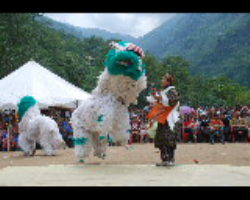
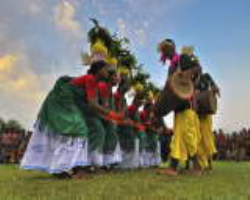
Sacred Chants and Dances: Men and women don traditional hand-woven attire—the Khowa Phun—to perform rhythmic circle dances that emulate the movements of birds, leaping deer, and the swaying of mountain trees.
Community Feasting: Villages brew indigenous millet and rice beer (Pha or Apong) and share community feasts that redistribute food supplies among poor and wealthy families alike.
Men and women don traditional hand-woven attire—the Khowa Phun—to perform rhythmic circle dances that emulate the movements of birds, leaping deer, and the swaying of mountain trees.
The Bugun Liocichla: How a Rare Bird Changed Indigenous Conservation
In 2006, the Khowa (Bugun) community gained international recognition through an unexpected ecological event: the discovery of a new, brightly colored avian species, the Bugun Liocichla (Liocichla bugunorum).Discovered within the tribe’s traditional territory near the Eaglenest Wildlife Sanctuary by professional astronomer and bird-watcher Dr. Ramana Athreya, this was the first bird species discovered in mainland India in more than five decades. Significantly, the scientist named the species after the tribe, recognizing that the bird survived solely because the Khowa had conserved their ancestral broadleaf forests for centuries.
The Singchung Bugun Village Community Reserve (SBVCR)
Realizing that the Bugun Liocichla had a wild population of fewer than 30 to 50 individuals restricted to a tiny pocket of forest, the Khowa chose a path distinct from standard Indian forest management.
Instead of allowing the state government to claim the land as a state-run sanctuary—which historically stripped tribal people of forest rights under the Wildlife Protection Act—the community formed the Singchung Bugun Village Community Reserve (SBVCR) in 2017.
Community-Owned Reserve: Covering 17 square kilometers of pristine, high-altitude cloud forest, the reserve was carved directly from village-owned clan lands.
Democratic Conservation: The reserve is managed entirely by an indigenous committee comprising village elders, women’s leaders, and youth, working alongside conservation biologists and the state forest department.
Indigenous Patrolling: Local Khowa youth are trained and hired as forest rangers. Combining deep indigenous tracking skills with GPS units and camera traps, they guard the forest against illegal timber felling, poachers, and unauthorized road cutting.
Global Accolades and Grassroots Ecotourism
The SBVCR earned the prestigious India Biodiversity Award (2018) in the Conservation of Wild Species category.By building low-impact eco-tourism camps, training indigenous youth as high-altitude nature guides, and directly channeling birdwatching revenues into village schools, medical clinics, and elders’ pensions, the Khowa demonstrated a sustainable model: indigenous communities can preserve critically endangered biodiversity without divorcing themselves from their ancestral homelands.
Modern Struggles: Identity, Demographics, and Land Under Siege
Despite their ecological achievements, the Khowa face severe structural crises that threaten their long-term survival as a distinct ethnic identity.
The Demographic Crisis: A Micro-Community Under Threat
With a total population estimated between 1,500 and 3,000 individuals, the Khowa represent one of the demographically smallest scheduled tribes in Northeast India.
Genetic Isolation and Healthcare Shortfalls: The small population size, combined with limited high-altitude healthcare infrastructure, elevates vulnerabilities to maternal mortality, infant health issues, and hereditary diseases.
Intermarriage and Cultural Dilution: As educational migration accelerates, younger Khowa increasingly marry into larger, demographically dominant neighboring tribes (such as the Monpa, Aka, or Nyishi) or mainland Indian communities. Because customary identity is tied to patrilineal language transmission and village lands, intermarriage without strong local mother-tongue schooling creates rapid assimilation pressures.
Infrastructure Development, Roads, and Territorial Fragmentation
West Kameng occupies a strategically sensitive location near the Line of Actual Control (LAC) with China (Tibet). Consequently, the Indian state has dramatically increased defense and civil infrastructure investments throughout the region.
Highway Expansions: The broadening of major transit corridors—such as the Balipara-Charduar-Tawang (BCT) road and related trans-Himalayan links—has bisected ancestral Khowa hunting grounds and farming slopes.
Explosive Blasting and Landslides: Heavy hill-cutting and explosive blasting destabilize fragile Himalayan mountain slopes, precipitating seasonal landslides that wash away terraced farms and choke water streams with sediment.
Defense Requisitions: Extensive tracts of river-valley and plateau lands have been acquired for military bases, supply transit camps, and artillery staging grounds, permanently converting ancestral clan commons into restricted, barbed-wire security zones.
The Breakdown of Intergenerational Language Transmission
The status of the Bugun language remains one of the community’s most urgent cultural crises:

Dominance of Hindi and English: In government and missionary-run boarding schools, the media of instruction are English and Hindi. Children are immersed in these languages early in life, leading them to speak Hindi even among their tribal peers.
Loss of Shamanic Vocabulary: As elder shamans (Phabi) pass away without apprentices, the complex ritual language—rich with metaphors, mythological geography, and botanical terminology—is lost, because everyday conversational Bugun lacks these specialized archaic forms.
Absence of Written Pedagogy: Despite ongoing efforts to develop a Romanized or Devanagari script for Bugun, school primers and systematic language-learning programs in primary schools remain limited in scope.
Human Development Deficits: Health, Education, and Youth Disillusionment
While Arunachal Pradesh has made notable strides in state-level aggregate statistics, micro-tribal populations like the Khowa frequently fall through administrative cracks. Aggregate district indicators often mask deep disparities between dominant regional tribes and vulnerable populations.
Healthcare Realities in High-Altitude Settlements
Khowa villages face chronic deficiencies in primary healthcare infrastructure:
Shortage of Medical Personnel: Primary Health Centers (PHCs) in the Singchung circle often function without permanent doctors, pathology technicians, or life-saving emergency medicines, leaving rural posts managed by overburdened auxiliary nurse-midwives (ANMs).
Emergency Transportation: When high-altitude obstetrical emergencies or acute trauma occur, families must navigate mountain roads for 4 to 8 hours to reach tertiary hospitals in Tezpur (Assam) or district facilities in Bomdila. During the monsoon season, road blockages turn these journeys into life-threatening delays.
Changing Disease Profiles: As processed foods and packaged goods displace traditional diets centered on wild greens, millets, and fresh meats, rates of hypertension, diabetes, and alcohol-related liver diseases have risen rapidly among working-age adults.
Education: Access, Literacy, and the Identity Gap
While basic literacy rates have risen among the Khowa youth over the past two decades, the educational model presents several structural challenges:
Cultural Alienation in School Curricula: Textbooks follow standardized NCERT frameworks centered on mainland Indian realities, giving little attention to local indigenous history, Himalayan biodiversity, or ancestral folklore. Children emerge from formal schooling educated for urban desk jobs, yet disconnected from their native ecological traditions.
The Secondary-to-Higher Education Drop-Off: While primary school attendance is relatively high, completion rates decline at the secondary and higher secondary levels. Families struggle with the costs of hostel accommodations and private tutoring required to send teenagers to Bomdila, Itanagar, or Shillong.
Youth Unemployment and Substance Abuse: Educated Khowa youth face high regional unemployment rates. Disconnected from ancestral farming, which many now view as obsolete manual labor, yet unable to secure stable government jobs or corporate employment, young people in roadside settlements face growing risks of depression, alcoholism, and synthetic drug abuse.
The Economic Transition: From Subsistence Farming to Cash-Crop Dependency
Over the past three decades, the traditional Khowa subsistence economy has shifted toward market-integrated cash-crop agriculture. This economic transition has delivered direct cash income while introducing new ecological and financial vulnerabilities.
The Cash-Crop Boom: Apples, Kiwis, and Off-Season Vegetables
Encouraged by state agricultural missions, many Khowa farmers converted diverse jhum terraces into commercial fruit orchards and vegetable farms:
Encouraged by state agricultural missions, many Khowa farmers converted diverse jhum terraces into commercial fruit orchards and vegetable farms:
Horticultural Shifts: High-altitude slopes were planted with temperate fruits—primarily apples and kiwifruits—alongside commercial crops like cabbage, tomatoes, and ginger destined for wholesale markets in Assam.
Rising Household Incomes: Successful harvest seasons enabled families to build tin-roofed or concrete homes, purchase motorcycles and cars, and fund higher education for their children.
Climate Disruptions and Market Risks
This reliance on cash-crop monocultures has left Khowa farmers vulnerable to environmental and economic shocks:
Warming Winters and Declining Apple Chilling Hours: In recent years, unpredictable winter precipitation and rising temperatures have reduced winter chill hours across the lower reaches of West Kameng. As a result, traditional apple crops have experienced declining yields, forcing farmers to abandon lower-elevation orchards.
Pest Pressures and Chemical Inputs: Monoculture vegetable farming has brought new pest attacks and fungal blights, prompting farmers to adopt chemical pesticides and inorganic fertilizers. This dependence degrades mountain soils and contaminates local watersheds.
Middlemen and Price Volatility: Lacking direct cold-chain transport networks or farmer-owned processing facilities, Khowa growers are forced to sell perishable goods to intermediary cartels from the Assam plains at low farm-gate prices, absorbing the risks of highway blockages and seasonal price crashes.
Preserving Khowa Heritage: A Sustainable Road Map for the Future
The survival of the Khowa people requires balanced interventions that protect their indigenous cultural legacy while ensuring access to modern human development, economic opportunity, and healthcare services.
1. Systematic Linguistic Documentation and Mother-Tongue Education
Developing Mother-Tongue Learning Materials: The State Council of Educational Research and Training (SCERT), working alongside tribal linguists and Bugun elders, should complete an accessible, standardized writing system to publish illustrated primary-school primers.
Community Language Nests: Modeled on New Zealand’s Maori Kohanga Reo (Language Nests), village-level pre-schools should be staffed by tribal elders. This surrounds young children with conversational Bugun, oral poetry, and song before they enter formal English-Hindi school systems.
Digital Audio-Visual Archiving: Tribal cultural departments must finance comprehensive digital recording projects to document the oral prayers, healing chants, folklore, and genealogical histories held by the surviving Phabi shamans.
2. Strengthening Community Forest Rights and Expanding the SBVCR Model
Formal Legal Recognition under FRA (2006): While the community reserve was established under the Wildlife Protection Act, administrative bodies must formally record community forest rights under the Scheduled Tribes and Other Traditional Forest Dwellers (Recognition of Forest Rights) Act, 2006 (FRA). This legally shields ancestral clan forests from future infrastructure land acquisitions and mining leases.
Carbon Offsets and Direct Conservation Dividends: State mechanisms should connect the Singchung Bugun Village Community Reserve to international and national carbon-offset markets. This provides steady, verifiable payments directly to village councils for maintaining intact old-growth forests, funding local healthcare and education without relying solely on tourist revenues.
3. Culturally Sensitive Healthcare and Telemedicine Networks
High-Altitude Mobile Healthcare Units: Deploying dedicated medical vans equipped with modern diagnostics, maternal-monitoring equipment, and emergency trauma supplies to rotate through rural Khowa villages each week.
Telemedicine Links: High-speed satellite broadband connections (such as VSAT systems installed through central tribal funds) at the Singchung Primary Health Center can connect local nurses directly to medical specialists in Itanagar, Guwahati, and New Delhi for rapid diagnostics.
Integrating Indigenous Medicine: Documenting and safeguarding Khowa ethnobotanical treatments for bone-setting, wound management, and digestive ailments, allowing traditional healers to work alongside modern clinical staff.
4. Sustainable, Community-Owned Economic Infrastructure
Farmer Producer Organizations (FPOs): Organizing Khowa vegetable and fruit growers into tribal cooperatives eliminates intermediary cartels, enabling the community to negotiate collectively with national retail chains and organic markets.
Localized Value-Addition: Providing state-backed micro-grants for fruit-processing units within Singchung allows the community to convert fresh kiwi, apple, and wild berry harvests into jams, juices, and wines locally, capturing manufacturing margins and creating jobs for educated tribal youth.
Regulated, Low-Impact Ecotourism: Extending the community-run birdwatching and homestay model beyond the Eaglenest corridor into broader Khowa territory ensures that ecotourism revenue flows directly to family homestays and community funds, rather than outside commercial operators.
Surviving the Century: The Lessons of the Khowa Tribe
The Khowa are far more than a demographic footnote in the complex ethnic tapestry of India’s Northeast. They demonstrate how a micro-society can develop deep social resilience, mountain agro-ecological systems, and participatory democracy over centuries of mountain isolation.
Their response to the discovery of the Bugun Liocichla—creating a self-regulated, community-governed wildlife reserve—proves that indigenous stewardship often succeeds where top-down conservation struggles. The Khowa have shown that biodiversity protection does not require removing indigenous peoples from their ancestral homelands; it thrives when customary forest-dwellers are empowered as its primary guardians.
Yet, the Khowa stand at a delicate historical crossroads. The forces confronting them—linguistic decline, climate variability, infrastructure-driven displacement, and demographic fragility—are systemic and accelerating.Preserving this ancient community requires more than symbolic cultural celebrations. It demands targeted public policies: legally secured land tenure, mother-tongue primary education, accessible healthcare, and economic models that convert indigenous conservation into long-term community prosperity.
Ensuring that the Khowa continue to thrive along the slopes of the Eastern Himalayas is not simply an exercise in tribal welfare—it is a moral imperative for preserving human cultural diversity, ecological wisdom, and the living heritage of India’s indigenous peoples.
